• Skip to primary navigation
  • Skip to main content
  • Skip to footer
Chaminade University of Honolulu

Chaminade University of Honolulu

  • VISIT
  • APPLY
  • GIVE
  • STUDENTS
  • PARENTS
  • ALUMNI
  • FACULTY/STAFF
  • Admissions
    • Admissions Home
    • Undergraduate Students
      • First-Year Students
      • Transfer Students
      • Admitted Students
    • Graduate Students
    • Flex Online Undergraduate Program
    • Military Students
    • Non-Degree/Visiting Students
    • Experiential Honors Program
    • Early College Program
    • New Student Orientation
  • Tuition & Aid
    • Financial Aid Home
    • Tuition & Expenses
    • Federal Updates & Changes
    • Scholarships
    • $5,000 Graduate Scholarship
    • VA Education Benefits
    • Net Price Calculator
  • Academics
    • Academics Home
    • Academic Programs
    • Office of Student Success
      • Academic Advising
      • Records and Registrar
    • Kōkua ʻIke (Support Services)
      • ADA Accommodations
      • Career Services
      • Proctoring Services
      • Tutoring Services
    • Sullivan Family Library
    • Undergraduate Research & Pre-Professional Programs
    • Commencement
  • Campus Life
    • About Campus Life
    • Student Engagement
    • Student Government Association
    • Residence Life and Housing
      • Summer Conference Housing
    • Health Services
    • Marianist Leadership Center
    • Counseling Center
    • Campus Ministry
    • Campus Security
    • Dining Services
    • Bookstore
  • Athletics
  • About
    • Chaminade University News
    • Our Story
    • Leadership
    • Chaminade University Strategic Plan 2024-2030
    • Mission & Rector
    • Association of Marianist Universities
    • Facts & Rankings
    • CIFAL Honolulu
    • Accreditation & Memberships
    • Montessori Laboratory School
Search
×

Search this web site

Students

Bringing Filipino Language and Culture Back to Hawaii

September 21, 2022

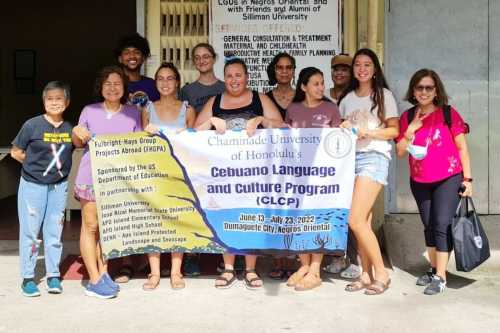
Cebuano Language and Culture Program

It was a trip of a lifetime for a group of Hawaii educators and teachers-in-training.

And Communication Professor Eva Washburn-Repollo, Ph.D. was overjoyed to be their guide.

Over the summer, Washburn-Repollo led participants of her Cebuano Language and Culture Program on a six-week adventure to the Philippines, offering them an immersive experience designed to broaden their perspectives and understanding of the country’s diverse languages and rich cultures.

The teachers visited indigenous herbal gardens, mangroves and coral reefs, attended language workshops, and participated in educational sessions at local universities and other institutions. But they weren’t just there to learn. Along the way, they developed cultural-based resource materials and curricula for their own classrooms—lessons aimed at weaving in their students’ perspectives.

Roughly a quarter of Hawaii public school students identify as Filipino.

“We all need to lift each other up,” said Washburn-Repollo, whose academic scholarship includes a focus on the positive impacts for students of cultural appreciation in classrooms. “When a student has a teacher who values their culture, they feel as if they can be anything they want to be.”

The trip was made possible thanks to a $100,000 grant from the Fulbright-Hays Group Projects Abroad (GPA) Program. Washburn-Repollo took the group of eight participants to the islands of Negros Oriental and Cebu in the central Visayas region of the Philippines. That’s where the Cebuano language is primarily spoken—Washburn-Repollo’s first language and one of more than 120 found in the Philippines.

Those on the trip included current educators with years of experience and those just starting out.

Brittni Friedlander began her third year of teaching this fall and jumped at the chance to make the journey to the Philippines. She said she’s passionate about weaving science and technology education into her classroom and recently wrote a children’s book called Puff Saves Paradise.
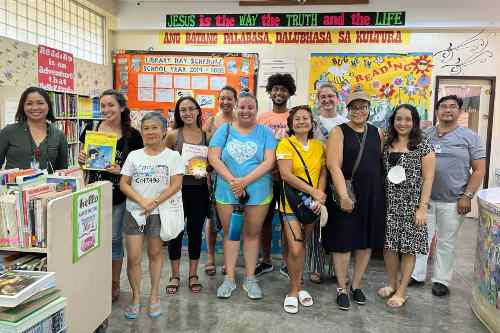
Cebuano Language and Culture Program

“About 70% percent of my classroom last year were students of Filipino descent and I’m also half-Filipino,” Friedlander said. “It was an amazing opportunity to not only truly connect with my students, but learn a bit about my cultural heritage as well and incorporate that into my classroom genuinely.”

She said the most memorable part of the trip was the closing ceremony, during which all the participants got the chance to share their final lesson plans. Friedlander also enjoyed learning about the customs of the region, from the delicious cuisine to the herbal remedies communities use.

“As a teacher, I think it’s so very important to connect with one’s students on a relational level,” Friedlander said. “From here, I would like to use the knowledge garnered during this journey and share it in my classroom with cultural units or ‘around the world’ day with my students.”

Participant Clarissa Torres just finished her Master of Arts in Teaching degree at Chaminade and was quickly hired to teach eighth-grade science at Mililani Middle School. She wanted to make the trek to the Philippines so she could make more (and stronger) connections with her students. “I also wanted to learn more about my own Filipino culture and wanted to gain new perspectives as an educator,” Torres said.

She added that the program wasn’t easy—by any stretch.

Torres struggled with getting out of her comfort zone and developing a lesson plan.

“I created an original Cebuano song about the collectivism of the community in Apo Island as well as how they conserve water,” Torres said. “This experience expanded my ideas on how to incorporate all of my students’ cultures in my classroom and music is one thing I would like to weave in.”

She said by learning just a few simple phrases in Cebuano, she was already making relationships with people she met. “They appreciated our efforts to learn the language,” Torres said. “My biggest takeaway was I have a greater understanding of the beauty of learning a new language.”
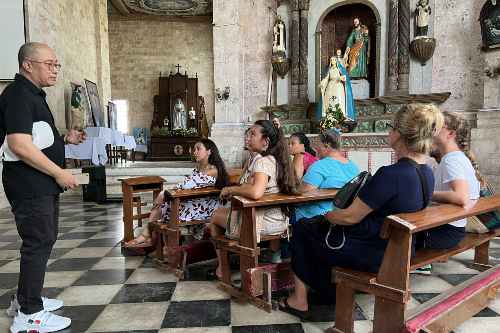
Cebuano Language and Culture Program

Washburn-Repollo agreed what moved her the most about the people that the group met on their adventure is just how excited they were to share their time—and wisdom. “Everyone we met wanted to share their language with us,” she said. “Every preserved language is a door to a new solution to diseases, it’s a door to alternatives to happiness and peace. We have so much to learn.”

This wasn’t the first group Washburn-Repollo has taken to the Philippines. It’s actually the fourth, though the previous treks weren’t funded by Fulbright. The professor has also accompanied nursing students for a clinical immersion and organized trips focused on community building and finance.

Her central focus is helping people realize that broadening their own perspective and learning from groups who have no voice on the world stage has the power to unearth rich gifts of knowledge. And in classrooms, she said, it can do a wonderful thing: to ensure students from all backgrounds feel welcome.

“The key is making all students feel valued,” she said.

Participant Kalika Ayin couldn’t agree more. She’s an English Learner teacher at Pearl City High School and applied to the Cebuano Language and Culture Program because she wanted to learn more about her own students. “Many of my students are from the Philippines … so I wanted to learn about Filipino culture so I could improve my teaching and my communication with their families,” Ayin said.

She added that she was particularly interested in the program’s language immersion component “because I knew it would help me understand what my students experience when they move to Hawaii. I also wanted to learn enough of their language to make them feel welcome and seen in my classroom.”

The most memorable part of the trip for Ayin was graciously being invited into her Filipino teacher partner’s home and meeting her family. “She bridged me into her culture and helped me practice the Cebuano language,” Ayin said, reflecting on the trip. “Her hospitality and patience deeply impacted me. Our partnership fostered an international teaching network—and an international friendship.”

She also said that the experience of learning a new language through immersion helped her see the world a little better through her students’ eyes. For example, when she was using the Cebuano language in conversation but couldn’t find the right word right away, her stress levels rose. “It helped me understand how my students likely feel immersed in U.S. classroom settings,” she said.
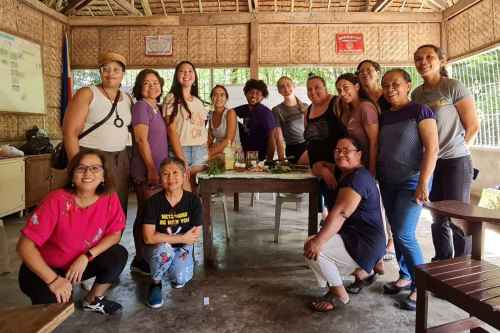
Cebuano Language and Culture Program

And Ayin is looking forward to one lesson, in particular, this coming school year.

She plans to show her students a video she co-wrote and produced with her Filipino teacher partner detailing how to make the Cebuano dessert binignit, a fruit stew made with coconut milk, sweet potato, bananas and other fruits and vegetables at hand. “The video includes a narrative about the rich symbolism between the ingredients in binignit and the Cebuano culture,” she said.

Ayin said she’ll use the video to launch into a unit of study exploring food staples across the Pacific.

And then her students will get to work in the kitchen (and classroom), producing a cookbook to share broadly with families in Pearl City that incorporates Pacific dishes. “My goal is to foster pride in multilingualism,” she said, “and help students own their languages with confidence.”

LeAndre Browne, a doctoral student in education at Chaminade who teaches first grade in Georgia, wishes every teacher could go on a trip like the one Washburn-Repollo organized. “I’m a lifelong learner and was extremely interested in learning another language and experiencing another culture,” she said.

“Despite being from different places, people can share similar interests bringing them closer, like a love of plants,” she said, adding that she is particularly grateful for all of the relationships she was able to forge with people the group learned from over the course of six weeks.

Jessica Watkins doesn’t have a classroom of her own yet but said she can’t wait to bring what she learned in the Philippines to her future lesson plans. Watkins is majoring in Elementary Education at Chaminade and said there were so many memorable moments on the trip, that it’s hard to pick a favorite.

Learning Cebuano songs and then singing them at their final presentation. Staying on Apo Island, which has no cars and limited hours of electricity service. Getting to enjoy the region’s stunning coastlines. “I now know enough of the language to have basic communication with someone,” Watkins added.

“And that could help my students feel more comfortable in my future classroom.”
Posted by: University Communications & Marketing Filed Under: Campus and Community, Diversity and Inclusion, Education, Faculty, Featured Story, Students Tagged With: Grants

Student’s Passion to Malama Ka ‘Aina Resonates Inside and Outside the Classroom

August 26, 2022

Lihau Keoneula Stender ’24 loves the outdoors.

On any given weekend, she’ll hit the beach, go for a hike or volunteer for a clean-up.

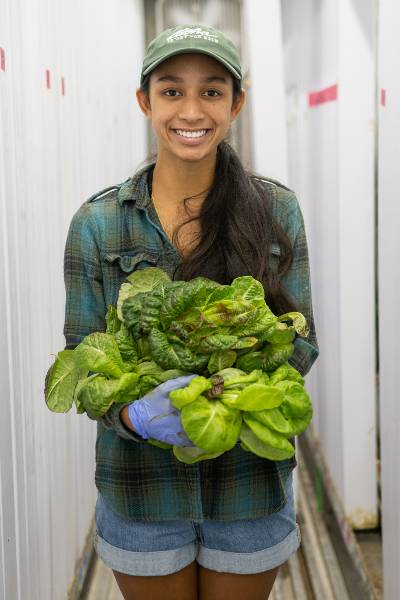
Lihau Stender working at Bee's Greens Co.

That passion for Hawaii’s natural environment drove Stender to double-major in both Biology and Environmental Sciences at Chaminade. And it inspired her to put the skills and knowledge she was learning into action, both as a volunteer and as an intern at a hydroponics company in the islands.

“When I would go to the beach or hiking, I noticed a lot of people were not taking care of the environment like they should be,” Stender said. “I thought, ‘Maybe I should focus on that and do some good for the community.’ I really like helping out and feeling as if I’m part of the solution.”

Stender, who graduated from Punahou School and lives in Palolo, chose to attend Chaminade after being selected for Ho’oulu Scholarship. The scholarship covers all four years of tuition, and includes career development advising, connections to paid internships, wraparound academic support and service-learning projects.

“Chaminade is five minutes from where I live. I was super-excited about the scholarship and about attending a university with a strong Biology program. Here, I can stay home and save money,” she said.

Stender kicked off her Chaminade career at the beginning of the pandemic, which meant her first semester was online. To shake off stress, she’d get outdoors—and notice things she didn’t like. People leaving their trash behind on the beach, on hiking trails and along the side of the road.

She knew she needed to do something about the problem.

And she got the chance in one of her Environmental Studies classes when she participated in the Waiale’e Volunteer Workday, a special opportunity from the North Shore Community Land Trust to help restore native ecosystems and traditional Hawaiian agriculture. The volunteer day is held on the third Saturday of each month. And after her first volunteering experience, Stender was hooked.

“I’m continuing to volunteer with this project, which is so hands-on,” she said. “Most times, we’re clearing California grass and dead trees. Last month, I brought a friend of mine and we had so much fun clearing this little marsh pit. I just love doing manual labor sometimes. You feel like you’re helping.”

Stender also helps in another important way. Through Chaminade, she was able to secure a full internship with Bee’s Greens Co., an aquaponics company that sells their locally grown lettuce to Roy’s restaurants and other eateries and donates everything they can’t use.

Stender said she was delighted to learn the manager at Bee’s Greens is a Chaminade graduate.

And shortly after starting at the company, which operates an urban farm using vertical hydroponic growing systems, Stender realized the joy of caring for plants as they grow and thrive. “It helps me make that connection—between what I’ve learned and what I can do,” she said. “It’s one thing to learn about sustainable farming in the classroom. It’s another thing to actually help a sustainable farm.”

She added that her internship has gotten her to think about other ways that Hawaii could grow significantly more of its own food. Today, more than 90% of food sold in the islands is shipped in. But it wasn’t always that way. “We used to be very self-sustainable,” Stender said. “And we can do it again.”

As she continues her journey at Chaminade, Stender is also excited about life after college.

She’s not sure whether she wants to jump into the workforce or seek a graduate degree.

But she does know she wants to continue making a positive impact. “My advice to other young people is: if you’re not doing something good, you’re kind of hindering it, in a way,” she said. “Serving the community really benefits others and also yourself—because you’re growing, too.”

Posted by: University Communications & Marketing Filed Under: Featured Story, Natural Sciences & Mathematics, Students Tagged With: Biology, Environmental Sciences, Internship

Education Behind Bars: A Better Future Awaits

August 12, 2022

Dr. Janet Davidson is a leader in criminology. She has spent decades researching in the field, mentored hundreds of students, published a long list of peer-reviewed papers in scholarly journals. Put simply, she’s seen it all—so she was surprised to be surprised when she started teaching behind bars.

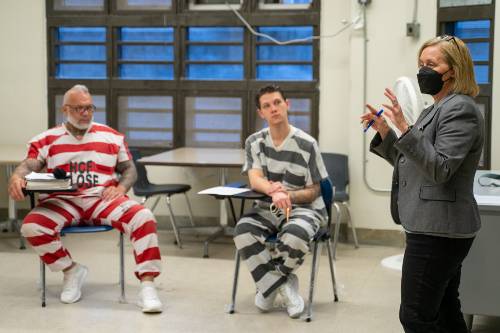
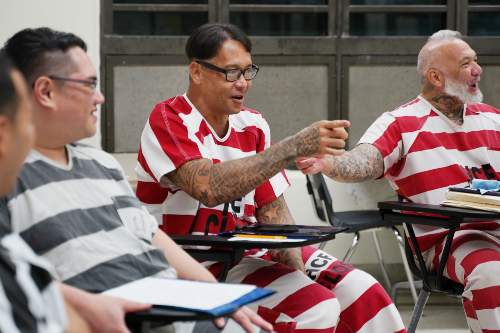
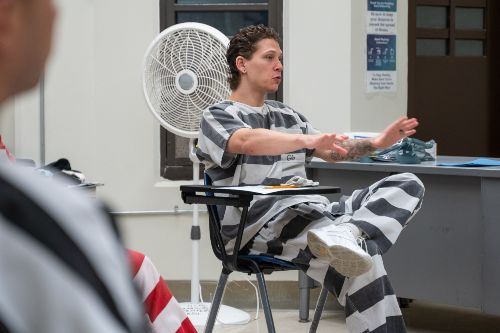
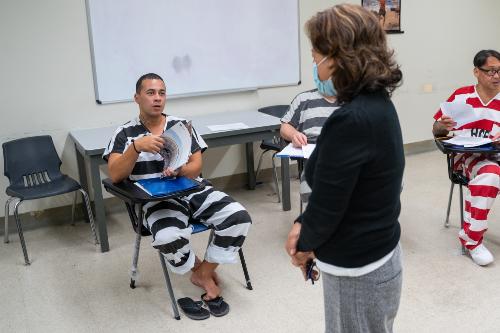
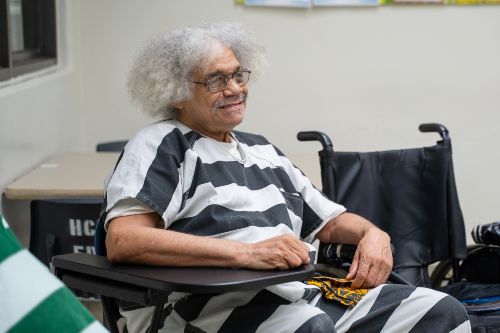
Last year, she spearheaded Chaminade’s innovative effort to launch a Second Chance Pell Grant program at Halawa Correctional Facility. Inmates are given the opportunity to earn an associate’s degree in Business Administration after completing core and major-specific courses over two and a half years.

Second Chance Pell cohort

In addition to overseeing administration of the initiative, Davidson is one of the teachers for participants—nine in all after some natural attrition in the inaugural cohort. She expected classes with the inmates to be interesting, exciting and different. But she didn’t count on learning so much, too.

“It’s incredibly rewarding,” said Davidson, who is also vice provost for Academic Affairs at Chaminade. “They’re eager and they want to learn and they do their homework. I’m so proud Chaminade was able to launch this program. We educate for service, justice and peace and this program does that.”

Davidson said years of research have shown educational programs in prisons help bolster job opportunities for people once they get out of prison and decrease the chances they’ll re-offend.

And while there’s a stigma around inmates, Davidson said, the students in the cohort continue to impress her. “They’re just the best,” she said. “They’re not distracted by cell phones. They know this is a privilege so they’re engaged. It’s just a pleasure to have them in the classroom.”

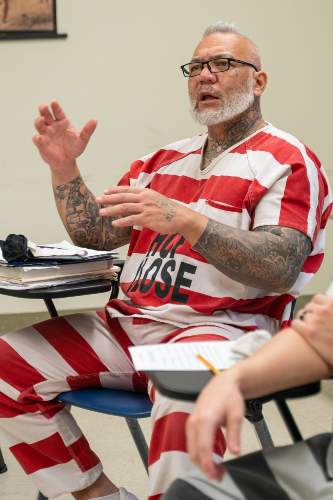
Second Chance Pell student

Albert Batalona is one of those students. He said he applied to participate in the “second chance” program because he wants to be able to secure a better-paying job after he gets out of prison. He also hopes society sees his degree as proof that he can make a positive contribution to society.

“I’m really trying my best to learn all I can and take this seriously,” Batalona said, adding he’s enjoyed being able to connect with professors. “They have come to really teach us, not just go through the motions. They held no prejudice against me for my past mistake, something I’m not used to.”

Participant Anthony Chatman said it’s tough to always be judged by those past mistakes, but he’s hopeful Chaminade’s program could help change that. “Many in our community feel that we shouldn’t be given a second chance at freedom, let alone given the opportunity to educate ourselves,” he said.

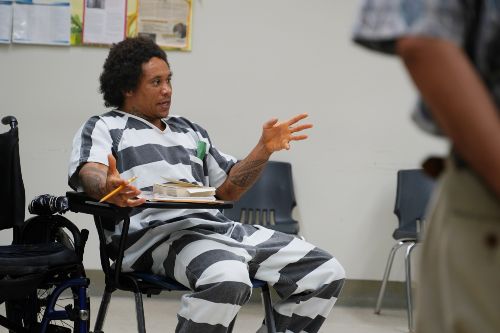
Second Chance Pell student

That’s something John Granger has grappled with, too.

The 37-year-old said earning an associate’s degree through the prison program will give him an opportunity to start over. “I have for a while had some good ideas, but I lacked the resources to convert those ideas into dreams and those dreams into goals,” said Granger, a Maui resident. “I believe that not only if you know better you do better, but if you know deeper you will achieve greater.”

Kelson Akeo said he wanted to apply for the program for a simple reason: he wanted to be the first person in his family to get a college degree. “I wanted to prove to myself that I can be more than just a construction worker,” he said. “I can be a person who can utilize both mind and body.”

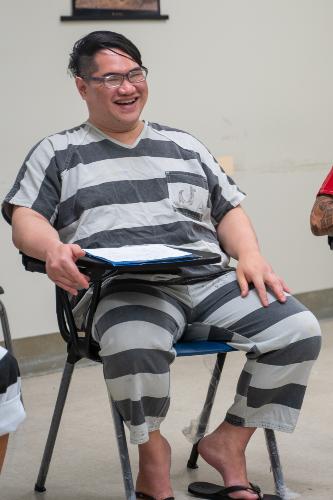
Second Chance Pell student

Akeo said while he is still serving his time, he’s beginning to see a new and brighter future for himself.

“Earning this degree will show me that I am worthy of having a brilliant future,” he said, adding his experience so far in the program has been a “rollercoaster” of emotions. Sometimes, he’s feeling proud about how far he’s made it. Other times, he feels overwhelmed and wants to give up.

“But then I hear that little voice saying to me, ‘you got this’ since enrolling into this program and working towards my degree changed me to be more appreciative to those who believe in giving second chances,” he said, adding he is so thankful to his professors and their belief in him.

“These instructors make me feel free again and that is a very rare feeling to have in prison.”

Davidson said it has been incredibly rewarding to see the program’s students build their confidence bit by bit as they tackle new assignments and grasp new concepts. Together, the cohort has completed a variety of courses since launching in Fall 2021, including business administration, accounting, English, communication, biology and math.

Davidson says it’s a joy teaching at the prison especially in her most recent course, Contemporary Issues in Criminal Justice. She says while the participants obviously bring personal experiences to the topic, they have focused on broadening their perspective with readings and class discussions.

“They wanted to understand the larger context and that’s powerful,” she said.

She called one of the students her “encyclopedia” because he’s so well-read and frequently brings newspaper clippings to class that connect with what’s being taught. Another student finished his GED in prison and can’t wait to finish the AA. “I’ve seen him coming into his own,” Davidson said.

Second Chance Pell student

Keola Rapoza chose to join the program because he wanted his years behind bars to count for something. He will also be the first person in his family to earn a college degree. “My experience so far has been awesome even though I’m doing a college program in prison and not in a college campus setting,” he said. “What I like most about this program is the professors are patient with us.”

Patient, he added, as in understanding inmates can’t always get access to the prison’s learning center and are sometimes further restricted by COVID lockdowns. And Rapoza said he’s proud to be paving the way for other inmates in the islands and setting a positive example. “Education is the most important thing in life,” he said. “I feel if everybody in this world was educated, there would be world peace.”

Second Chance Pell student

Nikkos Gordon has wanted to pursue a college degree since he was sentenced in 2012, and the Chaminade program has allowed him to think about what’s next in life. “I wanted to prove to others and myself that I can do this and I’ve always been able to do this,” Gordon said. “I wanted to show myself that I’ve changed and grew from the teenage boy who didn’t care much about pursuing a higher education. This program has shown me there are people who won’t treat me like an animal.”

Gordon added while he’s faced many obstacles on his academic journey, he’s determined to move forward. “I feel like knowledge is power and we can only change through education,” he said. “Society is so focused on retributivism it forgets that we’re still people even though we’ve made mistakes.”

Second Chance Pell student

Raphael Holley is so engaged in soaking up new knowledge he frequently writes down the books his professors mention so he can ask his family to order them and send them his way. “The experience has been a blessing for me,” he said. “It helps me to stay out trouble and it has given me another chance. Enrolling in this program and working towards my degree has changed my perspective.”

As part of the program, federal Pell Grant funding—through a pilot program—and private donations cover the costs of all tuition, books, and fees. Students had to apply and be selected for the first cohort. 

COVID presented an additional obstacle, including frequent pandemic-prompted lockdowns.

Davidson said the cohort will graduate in Spring 2023 and the next group will begin that Fall.

“If we want safer communities, if we want healthier families, if we want people who are incarcerated to have a chance when they come out, these are the types of rehabilitative programs we should be offering,” she said. “The idea is to shift the mindset. It will cost society less in the end.”

Second Chance Pell student

Ronald Page can attest to the power of the program.

He said the classes and discussions keep his mind sharp—and leave him wanting more.

“I know I’m doing something positive for myself,” he said.

Posted by: University Communications & Marketing Filed Under: Business & Communication, Campus and Community, Featured Story, Students Tagged With: Business Administration

Student Finds Marketing Internships to Support Her Passion for Politics

August 8, 2022

Halia Carlbom

If you want to follow Hali’a Carlbom ‘25 around for the day, you’d better put on your tennis shoes.

She is always on the run.

In addition to a full course load as a Historical and Political Studies major (with a minor in Political Science), Carlbom is in the Chaminade Experiential Honors Program and is also honing her social media marketing and communications skills with not one but two separate internships.

Did we mention she’s just about to start her sophomore year?

“I like to stay busy and get involved in the community,” Carlbom said, adding that she’s excited about voting for the first time in the upcoming election. “It’s so important to participate, to vote. I’m doing my research now—trying to read up on the candidates and attend their events. I’m doing my homework.”

Carlbom graduated from Kaiser High School and decided to follow in her sister Trinity’s footsteps to Chaminade. Hali’a Carlbom said she really wanted a university experience with small classes, where she could forge strong relationships with her professors and peers. “I really thrive on classroom discussions and I am absolutely hooked on studying history, looking into the past to understand today,” she said.

Just how much of a history buff is she?

Carlbom said she’s not ashamed to say she’s watched “Hamilton” at least four times.

Halia Carlbom '25 at first year retreat

At Chaminade, Carlbom said the Experiential Honors Program has helped her pursue her academic passions. The program connected her with a mentor and has allowed her to tackle service and research projects through the university’s United Nations-affiliated CIFAL Honolulu Center. “It’s been stressful but in a good way,” Carlbom said. “It’s all about thinking critically and really expanding your perspective.”

Carbom is also actively building her skills with two internships.

She said she found both through Chaminade internship fairs. The first is with Mana Up Hawaii, an initiative to support local entrepreneurs and products. The second is with the Future Collective, a youth culture creative marketing agency based in Tokyo, Japan. Carlbom said she has jumped into both head-first, creating marketing content for social media and helping to craft messaging across platforms.

“It’s about knowing the brand, the mission, what words to use, the design,” she said.

She added, “It’s not easy—but it’s a good challenge.”

Carlbom added she especially likes what Mana Up Hawaii represents and is proud to be supporting an organization that helps local and young business owners get their start. “I’m doing engagement on social media. I’m helping to promote events. I’m putting together posts. It’s really cool,” she said.

Despite her busy schedule, Carlbom is still finding time to remain active in the upcoming Hawaii elections. “Politics really interests me and today, social media is so important to campaigns to be able to speak directly to their audience,” she said. “I’m trying to learn as much as I can.”

And while Carlbom isn’t yet sure what her future career will be, she’s certain about one thing.

“I want to get involved,” she said, “and make a difference.”

Posted by: University Communications & Marketing Filed Under: Featured Story, Humanities, Arts & Design, Students Tagged With: Historical and Political Studies, Internship

From Chaminade to Paris to Nashville and Back

August 1, 2022

Tommianne Brockert '23 studying abroad in Paris, France

Tommianne Brockert ‘23 loves studying, working and living in Hawaii.

But she jumped at the chance to study abroad—and she hopes to convince others to do the same.

Brockert, a Psychology major who is minoring in Business Administration, spent the Spring 2022 semester in France through Chaminade University’s study abroad program. She stayed with a host family, took classes at the American Business School in Paris and, she said, tried to squeeze in as many opportunities to learn about French language, culture, society and day-to-day life as she possibly could.

“I took French in high school, but it was a huge learning curve,” she said. “And I was not afraid to play tourist. I visited every famous Parisian landmark that I possibly could … from the Arc de Triomphe to the Notre Dame Cathedral to the Siene. I wanted to really get a feel for the city and its people and I did.”

Brockert also broadened her experience by working, including at an insurance firm and as a babysitter.

She said the thing that surprised her the most was how affordable and seamless study abroad was at Chaminade. She was able to earn credit toward her degree and her tuition was nearly the same. “I did my homework and realized this was a great way to broaden my learning and see the world,” she said.

But Brockert’s whirlwind year didn’t stop there.

Before she jetted off to Paris, Chaminade’s Undergraduate Research and Pre-Professional Programs team encouraged Brockert to apply for a summer Leadership Alliance internship. The program is designed to prepare underrepresented minorities for academic research and graduate study.

It was while she was studying abroad that Brockert learned she had been selected to conduct psychology research at Vanderbilt University over the summer. Reached on an afternoon in July, Brockert was packing for a conference in Connecticut, where she would present her summer work.

At Vanderbilt, she studied misinformation in social media and how to reduce its spread.

“I’d love one day for social media companies to implement what I’ve found,” she said.

The Leadership Alliance opportunity included a full scholarship, covering Brockert’s room and board while studying in Nashville. She also got to enjoy a new city—and she wasn’t disappointed. “There is so much happening here,” she said. “It’s just really opened up my eyes and given me confidence.”

Tommianne Brockert '23 studying abroad in Paris, France

Brockert heads back to Chaminade this Fall for her senior year.

And she’s looking forward to encouraging her peers to try study abroad for themselves.

“It’s been so fun. If you’re a go-getter and you’ve always wanted to study abroad, Chaminade is the perfect place to get going and do that. They’re flexible and they want to make it work for you,” she said.

She added, “If you let go of your fears, so many opportunities are going to open up for you.”

After graduation, she intends to “hit the ground running.”

“Eventually I really want to start my own business,” said Brockert, who was born and raised on Oahu and attended La Pietra-Hawaii School for Girls. She also has the travel bug and is excited about pursuing new opportunities—potentially even overseas. “You have to make the world your oyster. It’s not just going to happen,” she said. “With a positive outlook and spirit, you can accomplish anything.”

Spoken like a true Parisian.

Posted by: University Communications & Marketing Filed Under: Behavioral Sciences, Featured Story, Students, Undergraduate Research & Pre-Professional Programs Tagged With: Internship, Psychology, Study Abroad

Celebrating the Past and Future: Nursing Pinning and White Coat Ceremonies

May 23, 2022

The journey to becoming a nurse requires hard work, endurance—and plenty of support along the way.

It’s a lot like a marathon.

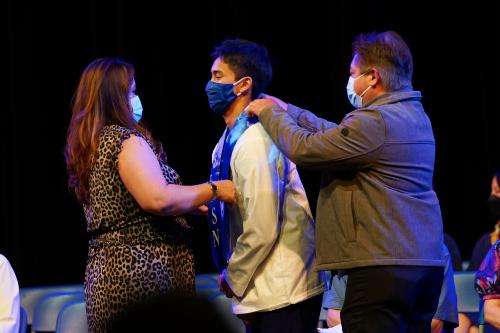
Nursing students receiving his stole and pin from her parents during the Nursing Pinning Ceremony

And leading up to the finish line, there are milestone moments aimed at recognizing students’ achievements. That’s exactly what the Pinning and White Coat ceremonies are all about, two time-honored traditions in the field that underscore just how important nurses are to the community, congratulate students on their accomplishments, and help forge a strong nursing fellowship.

This year, Chaminade’s School of Nursing and Health Professions held the ceremonies in-person, welcoming not only nursing students but members of their families and faculty mentors to celebrate.

The Pinning Ceremony for 57 graduating seniors in Nursing was on May 7, and loved ones had the opportunity to do the pinning honors. As Nursing and Health Professions Dean Rhoberta Haley, PhD, explained at the event, the roots of the tradition date to the 1860s when Florence Nightingale—known as the founder of modern nursing—was awarded the Red Cross of St. George for her service.

Pinning ceremonies later grew to mark the beginning of a nurse’s career.

Nursing students receiving his stole and pin from her parents during the Nursing Pinning Ceremony

“A pinning ceremony is a time to welcome newly graduating nurses to the profession,” Haley told attendees. “We gather for this occasion to mark the transition from student nurse to graduate nurse, and to celebrate the start of a professional practice in nursing.” Haley added Chaminade’s unique Nursing pin symbolizes a life dedicated to professional health care and service to others.

“Please wear it proudly,” she told graduates, “and with our very best wishes.”

Leilani Higashi intends to do just that. She said the ceremony was the perfect conclusion to her preparation as a nurse and the perfect beginning to her life as a nurse. “Pinning to me is like the final recognition. There’s no more, ‘Let me check with the nurse.’ We are the nurses,” she said.

Higashi said she went into nursing after growing up taking care of her grandfather.

“I got to meet so many amazing nurses that were part of his care team,” Higashi said. “I wanted to provide that same care and comfort that they did for us to other people. Now I’m looking forward to new adventures and I can’t wait to get out into the workforce and help my community.”

Graduating senior Zane Biscocho was beaming after the ceremony.

“This is a congratulations and a ‘you made it,’” he said, adding that he hopes to serve in Hawaii.

Katelyn Toba also described the Pinning Ceremony as a celebration. She said the four years of nursing school have been difficult, but she has appreciated the support of her loved ones, friends and professors. “Chaminade has that family spirit and it helped me over the years,” she said.

Graduate Taryn Sagapolu said the gathering “felt like an accomplishment after all the hard work.”

Sagapolu attended the ceremony with her parents, both of whom are nurses.

“We know it’s the hardest thing ever,” said her mother, Sharon, after the event. “She saw us both come home exhausted, especially during the COVID pandemic. But she never gave up.” Sagapolu’s father, Kamaki, agreed. “We are so proud of you,” he told his daughter, giving her a big hug.

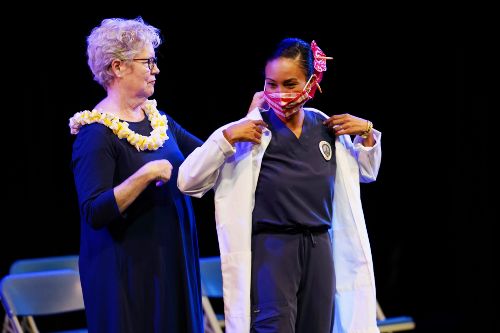
Nursing student putting on her white coat during the Nursing White Coat Ceremony

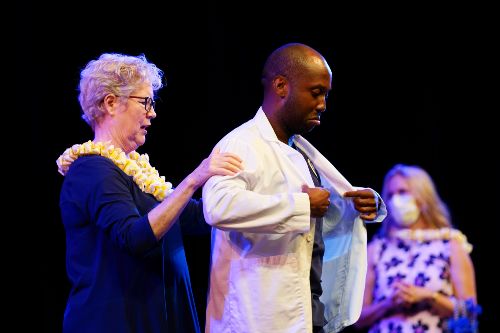
A day before the Pinning Ceremony, 122 members of Chaminade’s Nursing junior class and their relatives and friends gathered for the White Coat Ceremony. The event recognizes students’ entry into the health profession as they undertake clinical education. After receiving their white coats, students took the International Council of Nurses pledge to uphold nursing ethics and deliver the best care.

In her address to attendees, Haley pointed out that nursing is the most trusted profession in the country. It is critical to maintain that bond of trust, she added, and for every nursing student to fully understand the duties and obligations of the profession before they ever see their first patient.

“Nursing is both a respected science and a caring art,” Haley said. “Your success will depend on your ability to understand and apply ethical and professional values. Over a lifetime in nursing, you will repeatedly turn to these values, depending on them as the foundation of your practice.”

Among those key values: responsibility, trustworthiness, honesty and respect. “At Chaminade, we believe in these values and are committed to helping you achieve your highest level of performance and providing assistance when needed,” she said. “It is a privilege for Nursing faculty and staff to promote professionalism and share what we know and love about nursing with our students.”

Nursing student putting on his white coat during the Nursing White Coat Ceremony

The White Coat Ceremony is traditionally conducted in students’ sophomore year, but the COVID pandemic meant the event couldn’t be held last year. A ceremony for sophomores will be held this Fall.

Junior Autumn Fairall was moved after getting her white coat.

She said she has wanted to be a nurse since she was 10, when she diagnosed with leukemia and “blessed with a kind and capable medical team. The nurses who took care of me daily inspired me.”

Fairall said that day-to-day, it’s easy to focus on the challenges of nursing school.

But the ceremony reminded her of all that she has overcome and accomplished. “The White Coat Ceremony was a time of celebration, both of the hard work complete and the blessings that will come,” she said. “I am looking forward to working as a nurse and giving back what previous nurses gave me.”

Student Hannah Hovestol said she went into Nursing because she wants to serve her community, especially in the areas of mental health and psychiatric nursing. After receiving her white coat, she said she was proud and humble. “The ceremony was a confirmation and validation of the hard work that I have devoted to my studies and nursing obligations,” she said. “Attending this ceremony also demonstrated the communal nature of the profession, being there with my classmates.”

She said those classmates are like family now.

“It reminded me that even when I graduate and become a nurse, I will never be alone as there is a community in the healthcare team to collaborate with,” she said. “The end of my educational chapter is near, but my future nursing chapter is yet to be written. I am so excited to see what the future holds.”

Posted by: University Communications & Marketing Filed Under: Featured Story, Nursing & Health Professions, Students Tagged With: Nursing

  • « Go to Previous Page
  • Page 1
  • Interim pages omitted …
  • Page 13
  • Page 14
  • Page 15
  • Page 16
  • Page 17
  • Interim pages omitted …
  • Page 40
  • Go to Next Page »

Footer

Chaminade University Logo

3140 Waialae Avenue
Honolulu, Hawaii 96816

Contact Us
Phone: (808) 735-4711
Toll-free: (800) 735-3733

facebook twitter instagram youtube linkedin

Visit

  • Plan Your Visit
  • Campus Map (PDF)
  • Events

Resources

  • Campus Security
  • Student Consumer Information
  • Concerns, Feedback, and Reporting
  • Institutional Review Board
  • Title IX / Nondiscrimination Policy
  • Compliance
  • Emergency Information
  • Careers
  • Institutional Statement

People

  • Students
  • Parents
  • Alumni
  • Faculty & Staff

Policy

  • Privacy Policy
  • Terms and Conditions of Use


© Chaminade University of Honolulu