• Skip to primary navigation
  • Skip to main content
  • Skip to footer
Chaminade University of Honolulu

Chaminade University of Honolulu

  • VISIT
  • APPLY
  • GIVE
  • STUDENTS
  • PARENTS
  • ALUMNI
  • FACULTY/STAFF
  • Admissions
    • Admissions Home
    • Undergraduate Students
      • First-Year Students
      • Transfer Students
      • Admitted Students
    • Graduate Students
    • Flex Online Undergraduate Program
    • Military Students
    • Non-Degree/Visiting Students
    • Experiential Honors Program
    • Early College Program
    • New Student Orientation
  • Tuition & Aid
    • Financial Aid Home
    • Tuition & Expenses
    • Federal Updates & Changes
    • Scholarships
    • $5,000 Graduate Scholarship
    • VA Education Benefits
    • Net Price Calculator
  • Academics
    • Academics Home
    • Academic Programs
    • Office of Student Success
      • Academic Advising
      • Records and Registrar
    • Kōkua ʻIke (Support Services)
      • ADA Accommodations
      • Career Services
      • Proctoring Services
      • Tutoring Services
    • Sullivan Family Library
    • Undergraduate Research & Pre-Professional Programs
    • Commencement
  • Campus Life
    • About Campus Life
    • Student Engagement
    • Student Government Association
    • Residence Life and Housing
      • Summer Conference Housing
    • Health Services
    • Marianist Leadership Center
    • Counseling Center
    • Campus Ministry
    • Campus Security
    • Dining Services
    • Bookstore
  • Athletics
  • About
    • Chaminade University News
    • Our Story
    • Leadership
    • Chaminade University Strategic Plan 2024-2030
    • Mission & Rector
    • Association of Marianist Universities
    • Facts & Rankings
    • CIFAL Honolulu
    • Accreditation & Memberships
    • Montessori Laboratory School
Search
×

Search this web site

Students

Student Wins SC21 Data Science Competition

March 7, 2022

Taylor Ishisaka loves to unlock the secrets hidden in data.

There’s nothing more satisfying or rewarding, she says, than translating big data sets into clear, actionable information that communities can use to understand themselves better or tackle existing problems anew. “The world of data science has so much to offer,” said the Chaminade senior.

That passion isn’t only infectious, it’s getting noticed.
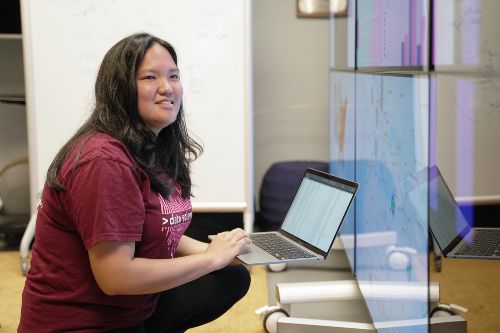
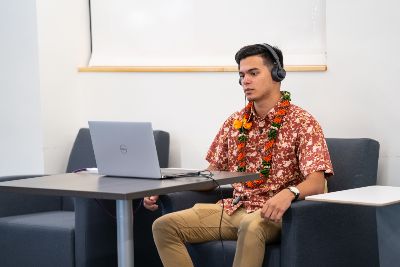
Taylor Ishisaki reviewing data science information

Most recently, she was part of a team that took home top honors in the inaugural data science competition at SC21, one of the biggest international conferences on high-performance computing. The competition, held over two phases in October and November 2021, was designed to give students a chance to showcase their computing, problem-solving and data analysis skills in a team dynamic.

Ishisaka, who is a Ho’oulu Scholar and Data Science major at Chaminade, said the competition started with a meet-and-greet opportunity over Zoom followed by details on the expectations for participants. She was put into a team with students from around the nation, including Washington State University and Central Texas College.

The first phase of the competition required students to perform analysis on a data set using a high-performance computing cloud. Ishisaka said the task was designed to test participants’ time management skills, teamwork, and ability to work effectively in the cloud platform.

The data set was a compilation of agricultural and livestock data from the U.S. Department of Agriculture database. Ishisaka’s team looked at crop production and fertilization data over several years, and Ishisaka created a color-coded heat map showing changes over time. A teammate, meanwhile, crafted several graphs that showed crop and soy production over specific Census years.

Ishisaka and her teammates put together a report in order to move to Phase 2, during which participants were challenged to find their own datasets to highlight problems in specific regions. Ishisaka’s team focused on Missouri data, specifically looking at data on bison populations. They took a multi-state view, tying in figures on climate and other environmental factors in their analysis.

The challenges were tough enough, but Ishisaka’s team also lost members over the course of the competition. Two didn’t show up again after the initial Zoom session. A third team member dropped off the map in Phase 2. That left the original team of five with just two members.

“As there were only two of us left in the most critical phase, my team member and I met with our mentor for hours each day discussing our progress on the project and next steps,” Ishisaka said. “We had to retrace our steps and rediscover our project purpose in order to put together our presentation.”

It was no easy task—but Ishisaka wasn’t deterred.

“After hours of putting together our presentation and rearranging everything to make sure that our story flowed, we created a product that we were proud of,” she said, adding that she stayed up all night before presentation day so she could memorize her talking points and deliver a clear message.

She delivered the presentation via Zoom with the judges and other teams all there. When everything was done, she was proud to have completed what she set out to do—and wasn’t thinking all that much about whether she’d actually be recognized for her efforts. “I was honestly surprised when we won,” she said. “I attended presentations of the other competitors and their projects were phenomenal.”

Ishisaka said she’s very happy with what she and her teammate were able to accomplish.

“I decided to keep on going throughout the competition because for one, I was representing Chaminade. And secondly, I know that my progress in the competition was a reflection of the skills and values that I learned throughout my academic journey in data science,” she said.

Ishisaka added she’s not one to leave things unfinished.

“Once I commit to a project, I am in it for the long haul,” she said.

The same goes for her commitment to data science, a major she fell into after participating in the Supporting Pacific Indigenous Computing Excellence (SPICE) Summer Institute in Summer 2019. SPICE, a partnership between Chaminade and the Texas Advanced Computer Center, gives students from all different majors and backgrounds a chance to explore data science and its many applications.

Ishisaka said that she entered the SPICE program not knowing anything about data science, “or that it even existed.” She added, “The following semester, I went to academic advising and switched my major from biochemistry to data science, and honestly it was probably one of the best choices I ever made.”
Posted by: University Communications & Marketing Filed Under: Featured Story, Natural Sciences & Mathematics, Students Tagged With: Data Science, Honors and Awards

Chaminade Students ‘Build Bridges’ with Pope Francis

March 1, 2022

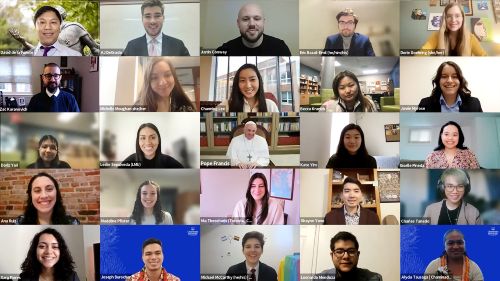
College students with Pope Francis on Zoom

It’s not every day that a Zoom meeting is also a once-in-a-lifetime opportunity.

But then, it’s also not every day that your virtual meeting features Pope Francis.

That’s exactly what two Chaminade students got the chance to experience recently. The historic encounter with the Pope was part of a dialogue with students from North, Central and South America on the economic and environmental pressures contributing to migration and displacement.

Chaminade junior Alycia Tausaga, who is majoring in Environmental Science, and senior Joseph Durocher, a Biochemistry major, were part of a group of about 20 students in the West and Pacific Region. In total, the Pope met with about 100 students from across the three regions during the virtual meeting on February 24.

Tausaga said she felt inspired after listening to the Pope speak directly to her group.

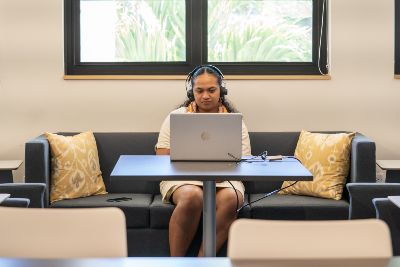
Alycia Tausuga participating in the Building Bridges event with Pope Francis

“He took his time out to come to this historic encounter and to listen to what university students have to say and provide encouragement for the youth,” Tausaga said. “It was such a good opportunity to build the bridge, and it also allowed me to connect with other students from around the globe.”

The meeting was organized as part of an initiative called Building Bridges. University students were challenged to come together to seek ways to overcome the walls separating the peoples and cultures of South, Central and North America and provide opportunities for authentic dialogue and leadership.

Chaminade’s Rector and VP for Mission Bro. Edward Brink learned about the program after reading an article in the National Catholic Reporter. He reached out to Loyola University Chicago and was able to secure spots for two Chaminade representatives in a group of students from Catholic universities in the West and Pacific. Loyola University Chicago hosted the event in collaboration with the Argentinian theologian, Emilce Cuda, the head of the office of the Pontifical Commission for Latin America, who asked the Pope to participate.

Tausaga and Durocher were selected because of their interest in climate change.

Joseph Durocher participating in the Building Bridges event with Pope Francis

Durocher, who is a Ho’oulu Scholar, said students in the group coordinated before the meeting to discuss key issues and put together a presentation. “People are already aware that are migration and environmental issues,” he said. “This was about starting actual change.”

He added that he felt honored and “very special” to have been included in the dialogue.

“We have to stop just talking and not doing anything,” he said.

Tausaga, who is a National Science Foundation S-STEM Scholar at Chaminade, said as a Pacific Islander she’s seen the impacts of climate change firsthand. She said the meeting with the Pope reminded her of a well-known Hawaiian proverb: Huli ka lima i lalo or “turn the hand down.” In other words, instead of turning your palms out expecting something from others, turn them down and get to work in the soil.

“Turn your hands down to give and to work in the community,” said Tausaga. “Have heart and compassion for others. Be the voice to allow others to bring about change. That’s what this meeting with the Holy Father really highlighted for me. It strikes at the heart.”


Building Bridges Recording

Media Coverage

Posted by: University Communications & Marketing Filed Under: Catholic, Featured Story, Students Tagged With: Marianist

E+ID Class Project Becomes Career-Launching Opportunity

February 14, 2022

It’s not every day an assignment in class turns into a career-launching opportunity.

Kailani Torres, Environmental + Interior Design

But that’s exactly the kind of project Kailani Torres is just wrapping up—and her good work (and innovative design) will be appreciated by countless members of the community for years to come.

Torres, who is from Mililani, Hawaii, is now a senior in the Environmental + Interior Design program and is leading a major makeover of the main conference room at Sacred Hearts Academy. The project had her doing just about everything a professional does, from working with contractors to incorporating feedback into her design.

“It was very empowering to do this project,” Torres said. “Being able to work with and learn from professionals as well as building connections was so incredible. What better way to gain some exposure than while I’m still completing my degree? This gave me the confidence to know I’m on my way.”

The project was born when Sacred Hearts Academy reached out to Chaminade’s Environmental + Interior Design program to solicit proposals from students to redesign a key conference room on their Kaimuki campus. Students in Professor Junghwa Suh’s EID 271: Materiality in Interior Design class were invited to take up the project for class credit—and the chance to work on a real-world design.

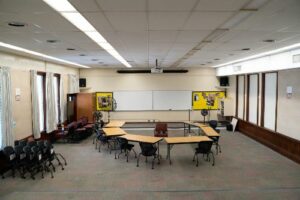
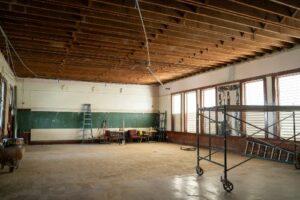
  • Sacred Hearts Academy Conference Room
    Sacred Hearts Academy conference room (pre-renovation)
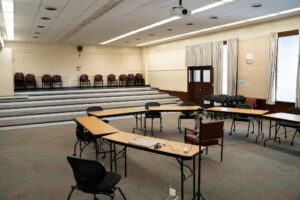
  • Sacred Hearts Academy Conference Room
    Sacred Hearts Academy conference room (pre-renovation)
  • Sacred Hearts Academy Conference Room
    Sacred Hearts Academy conference room (pre-renovation)
  • Sacred Hearts Academy Conference Room
    Sacred Hearts Academy conference room (pre-renovation)
  • Sacred Hearts Academy conference room (mid-renovation)
  • Sacred Hearts Academy conference room (mid-renovation)

Torres jumped at the opportunity to participate but tried not to get her hopes up.

“I thought it was just a wonderful opportunity to gain some experience with a real client,” she said, adding students visited the Sacred Hearts campus, “feel out the space,” and interview those who use the conference room. After putting everything together, she set to work on a design proposal that would not only reflect the school’s identity but be practical and flexible for conference room users.

Envisioning what she wanted and actually finishing her proposal turned out to be two different things.

Just as she started jumping into the design software required to craft her proposal, the pandemic started and lockdowns went into place. Virtual learning meant Torres had to troubleshoot more than she was used to. But she says the experience helped her build confidence in her skills.

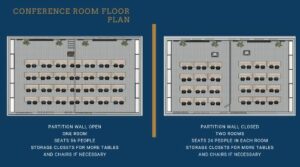
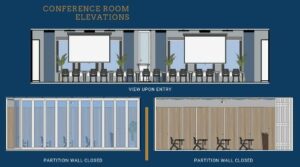
  • Kailani’s original design proposal
  • Kailani’s original design proposal
  • Kailani’s original design proposal
  • Kailani’s original design proposal

At the end of the semester, it was go time: students in the class presented their conference room proposals to Sacred Heart’s board and leadership. Torres was nervous about her final product but knew she’d done her best. After that final presentation, she waited for news. And waited. And waited.

It was several months later that Torres received an email from her professor that her design had been selected. Her reaction: “Complete disbelief.” She added, “I read that email over and over again trying to make sure I had read it right. I even had moments of denial,” she said. Torres later got a follow-up message that Sacred Hearts was proceeding with the renovation and ready to work with her.

“Needless to say, excited was an understatement,” she said.

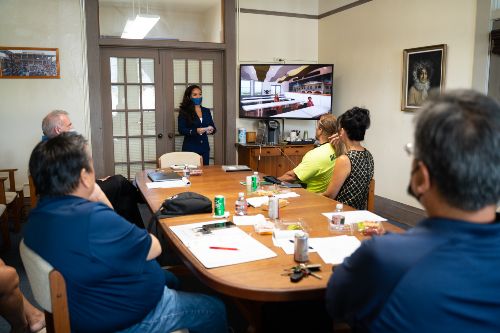
In the weeks that followed, Torres would find herself working directly with Sacred Hearts Academy President Scott Schroeder and the school’s leadership on changes to her design to meet new needs. She made a new presentation to the board in September 2021—and they loved it. From there, Torres was connected with the project’s contractor to make her conference room design a reality.

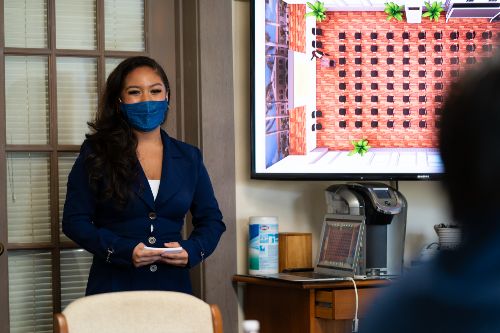
  • Kailani Torres (E+ID major) presenting her design to Sacred Hearts Academy
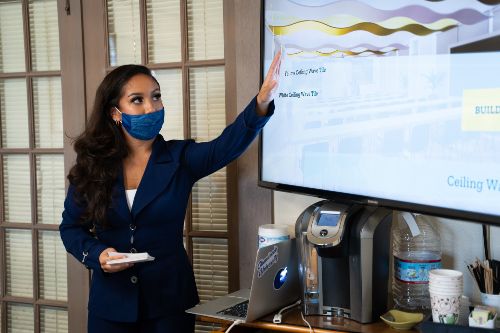
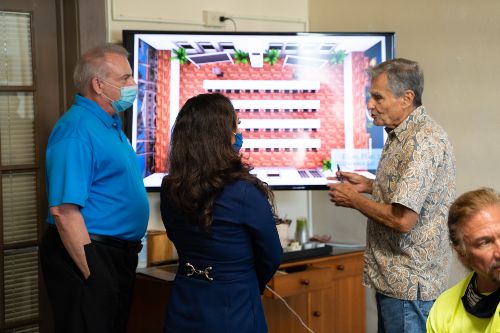
    Kailani presenting her conference room design to Sacred Hearts Academy
  • Kailani Torres (E+ID major) presenting her design to Sacred Hearts Academy
    Kailani presenting her conference room design to Sacred Hearts Academy
  • Kailani Torres (E+ID major) presenting her design to Sacred Hearts Academy
    Kailani presenting her conference room design to Sacred Hearts Academy
  • Kailani Torres (E+ID major) presenting her design to Sacred Hearts Academy
    Kailani presenting her conference room design to Sacred Hearts Academy

The rectangular space is about 1,500 square feet with 11-foot-high ceilings. Torres’ challenge was to make the conference room feel warm but not stifling, flexible without feeling temporary, and completely in line with Sacred Hearts’ character as a school and a community.

To make that happen, Torres’ design includes chairs at long tables that can be easily reconfigured.

Her favorite part of the design: acoustic ceiling wave tiles that not only serve a great function—preventing sound from echoing—but evoke a strong sense of place. She said her original design also incorporated a wave element in the carpet, but that was changed based on client feedback.

Torres is okay with that. After all, it’s her design but it’s the client’s space.

“Design is not just about how the space looks, it’s also the feeling of changing somebody’s life,” Torres said. “I am filled with an immense amount of gratitude knowing that professionals in the field see potential in me. Sacred Hearts Academy took a chance on a small-town girl with big dreams.”

Torres added she still gets chicken skin when she thinks about all the thousands of students and educators in the coming years who will use the conference room and get some joy from her design. “And who knows?” she said. “Maybe one of those students will be a daughter or a niece.”

Posted by: University Communications & Marketing Filed Under: Featured Story, Humanities, Arts & Design, Students Tagged With: Environmental + Interior Design, Experiential Learning

Students’ Stress-Related Project Awarded First Place in National Competition

November 5, 2021

Stress is a fact of life, but two innovative Silverswords want people to know the story doesn’t end there.

And their work is getting wide recognition.

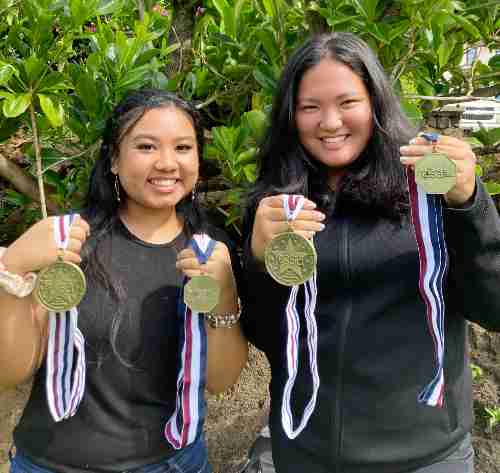
Aloha Lei Garo and Taylor Ishisaka with their first-place medals

Earlier this year, Aloha Lei Garo ‘22 and Taylor Ishisaka ’22 embarked on a research project aimed at helping their fellow students recognize when their anxiety levels were getting too high and giving them new tools to manage stress, build resilience and seek out opportunities for self-calming and reflection.

The two then spent long hours preparing to present their research at the HOSA-Future Health Professionals’ Virtual International Leadership Conference over the summer. The event features a competition with postsecondary students from around the nation and the globe, all spotlighting their work and detailing its potential implications for the field. Garo and Ishisaka were pleasantly surprised by all the positive feedback they got — and then were even more wowed by their first-place win.

The two took home the top prize in the Health Education category.

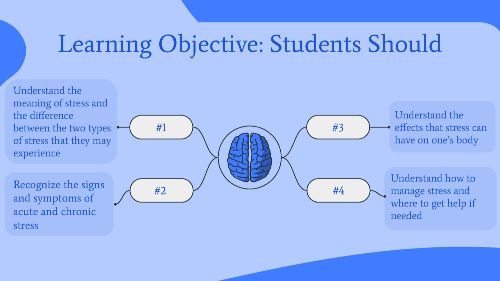
The title of their project was “Finesse Your Stress,” and included self-assessments for students, information on why stress can impact your overall health and easy activities anyone can do — from fun games to movement exercises to guided meditation — aimed at boosting resilience.

The presentation also included guidance on when to get professional help.

Lei Garo is studying Biology at Chaminade while Ishisaka is pursuing a degree in Data Science. Both got involved in HOSA (Health Occupations Students of America) and its leadership development programming in high school and have remained active members at Chaminade.

“I was very shocked and surprised that we won first place in our category,” Lei Garo said. “It was wonderful to see that all of our hard work has paid off to have this moment for us. I’m glad to not only have represented Chaminade University but also the state of Hawaii.”

Aloha Lei Garo and Taylor Ishisaka's HOSA research presentation

Ishisaka added she’s hoping to continue sharing their research and positive message more broadly, including “just how important it is to take care of yourself because we all get stressed. It is something we all face and it is vital to take control of it. It was our goal to educate young adults on the meaning of stress, how to recognize it and supply them with resources so they can maintain a healthy lifestyle.”

Ishisaka also said they had to remember their own advice as they put together their presentation, especially in overcoming no shortage of obstacles presented to them by COVID. Because of the pandemic, they had to prepare remotely and frequently chatted with each other over Zoom.

“We adapted to every obstacle,” she said.

“And started to expect the unexpected,” added Lei Garo.

Lei Garo said she wants her fellow students and the broader community to know taking breaks and caring for your mental health is just as important as doing well in school or succeeding in sports. “We get so caught up in the moment that we forget we should stop for a bit and take care of ourselves,” she said. “Taking at least a 10-minute break from stress is sometimes all you need to rejuvenate.”

Posted by: University Communications & Marketing Filed Under: Featured Story, Natural Sciences & Mathematics, Students Tagged With: Biology, Data Science, Honors and Awards

Veterinarian Internship takes Biology Student to South Africa

September 28, 2021

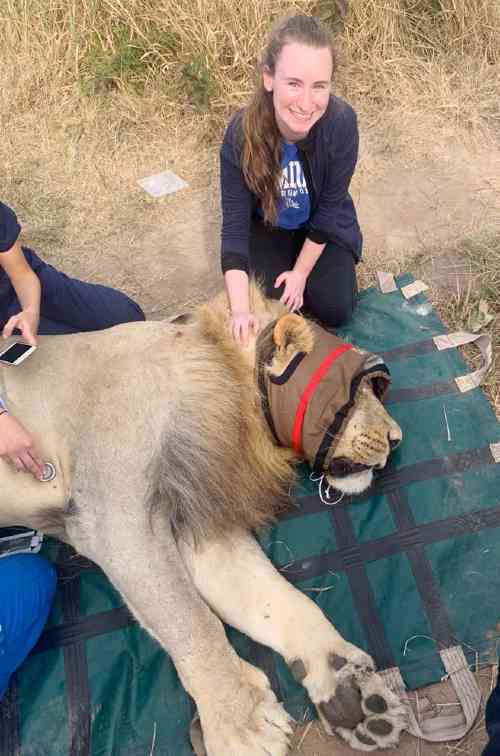
Izzie Krupa '22 helps with taking care of a lion during her South African veterinarian internship

Getting chased by a rhino – that’s something Izabelle “Izzie” Krupa ’22 will never forget.

It’s one of the answers she gives when asked what she did over the summer.

“Oh, nothing less than an internship in South Africa for young people interested in becoming veterinarians,” she’ll answer. In addition to taking care of cows and goats and chickens, plus a few dogs and cats, Krupa got to help draw blood from penguins, assist in medical procedures on lions and cape buffalo, and capture wildebeest and antelope. And, of course, there were the rhinoceros, Krupa said. They needed to be sedated and fitted with tracking collars. And one woke up just a bit too soon.

Krupa was never in danger, but she was left with a great story to tell.

And great experience to share.

Krupa, a senior majoring biology with a cellular and molecular concentration, jumped at the chance to apply for the summer internship after hearing about. She got back to Hawaii a week before the Fall 2021 semester started, and said the opportunity helped her solidify her choice to pursue a future caring for animals.

“For the small and large animals, we visited high-need townships and provided free veterinary care for animals whose owners couldn’t afford to go to a clinic,” she said. “Flea- and tick-borne diseases are very prevalent so we provided free flee and tick prevention to all of the dogs and goats we could catch.”

Krupa said that while the experiences with African wildlife—those penguins and lions and rhinos (oh my!)—were incredible, the most transformative part of the internship was working closely with residents. During her time in South Africa, she said, she not only gave but received. 

“I loved going to those communities, using my skills and knowledge to help those in need and also getting to talk to the locals and learn more about their culture,” Krupa said. “I learned so very much.”

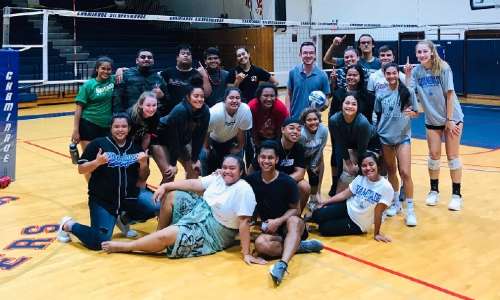
Izzie Krupa '22 posing for the camera with other Chaminade Silverswords after an intramural volleyball game

Krupa came to Chaminade from a Marianist high school in Omaha, Nebraska and was “pleasantly surprised to find that Chaminade had the same welcoming spirit.” She added, “I immediately felt like I belonged here and a part of the strong community that’s been built here at Chaminade.”

In addition to balancing a full course load, Krupa is on the “animal care team” and a receptionist at a veterinary clinic in Windward Oahu. And when she’s not busy with her studies or work, she’s active on campus. She participates in Campus Ministry and the Filipino Club, and plays intramural volleyball.

How does she do it all?

“A lot of time management,” she quipped.”

With all that she’s done (and is doing) at Chaminade and beyond the classroom, she’s excited to see where the next chapter takes her after graduation.

Posted by: University Communications & Marketing Filed Under: Featured Story, Natural Sciences & Mathematics, Students

Data Science SPICE Summer Institute

August 18, 2021

For a third year, budding data scientists from across Hawaii and the mainland came together for Chaminade’s Supporting Pacific Indigenous Computing Excellence (SPICE) Data Science Summer Institute.

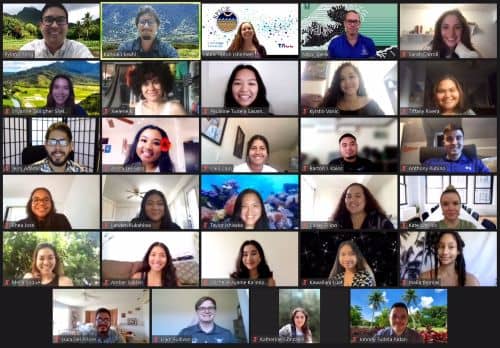
2021 Data Science SPICE Summer Institute virtual class meeting

The 2021 program, held virtually, included 21 participants and four student mentors. In addition to Chaminade, students hailed from Stanford University, Borough of Manhattan Community College, the University of Hawaii Maui College, College of the Marshall Islands and Northern Marianas College. They also came from a diversity of academic backgrounds, from Nursing to Environmental Studies to English.

The month-long seminar is focused on helping students use data as they seek to make a positive difference in their communities and includes immersive experiences, collaboration and a final project. Institute organizers say students walk away not only with new skills, but with a new appreciation of how data science can be used across disciplines to help spotlight problems and highlight potential solutions.

SPICE is held in partnership with the Texas Advanced Computing Center. Program leader Dr. Kelly Gaither is associate director at the center. Other faculty who helped make the institute possible include Chaminade Assistant Professor Dr. Rylan Chong, director of the University’s Data Science program, and Chaminade Vice President of Innovation Dr. Helen Turner, who is also a professor of Biology.

Students took up all sorts of questions and issues in their final projects for the SPICE institute, from socioeconomic factors linked to heart disease in Hawaii to the potentially positive relationship between video games and social anxiety to the impacts of wildfires in California on chronic diseases.

2021 Data Science SPICE Summer Institute Sarah Carroll's presentation

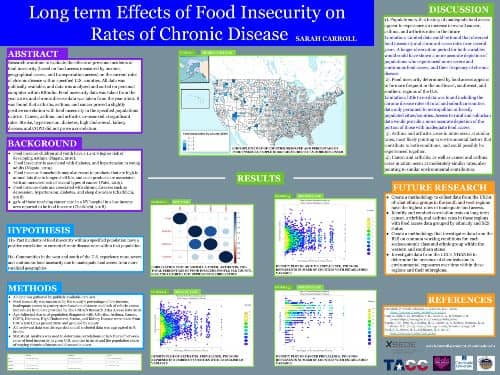
The overall project and poster winner was Chaminade student Sarah Carroll, who looked into whether the long-term impacts of food security in the United States include higher rates of chronic disease. Using publicly available data sets, she mapped out food insecurity in the US and found a slightly positive correlation between food insecure individuals and rates of arthritis, asthma and cancer.

She noted further study is needed to determine what’s driving chronic diseases in food insecure populations, along with which US ethnic groups have the highest rates of inadequate food access.

There were also three track winners named.

In the healthcare track, Chaminade student Caili Cain took the top prize. She sought to investigate implicit bias in the medical field, including how medical school pedagogy might be endorsing false beliefs about biological differences between Black and white patients. Specifically, she was interested in how official and informal medical school curricula contribute to bias about how patients manage pain.

Chaminade student Rhea Jose was the track winner for Environment, with a presentation that explored whether food availability and consumption in the US can show food loss or waste. She said the next step in her research might include investigating food waste per capita in order to make local level changes. And Chaminade’s Amber Sablan was recognized for her social justice-focused presentation. In her project, she sought to determine whether gentrification on Oahu could be contributing to homelessness by driving up home prices and bringing in new higher-income tenants. She said the lack of available data from 2020 limited her research, but she is interested in furthering her study into the issue. More specifically, Sablan wants to look at the number of unoccupied homes on Oahu along with outmigration rates.

Posted by: University Communications & Marketing Filed Under: Diversity and Inclusion, Featured Story, Natural Sciences & Mathematics, Students Tagged With: Data Science, Summer Institutes

  • « Go to Previous Page
  • Page 1
  • Interim pages omitted …
  • Page 12
  • Page 13
  • Page 14
  • Page 15
  • Page 16
  • Interim pages omitted …
  • Page 36
  • Go to Next Page »

Footer

Chaminade University Logo

3140 Waialae Avenue
Honolulu, Hawaii 96816

Contact Us
Phone: (808) 735-4711
Toll-free: (800) 735-3733

facebook twitter instagram youtube linkedin

Visit

  • Plan Your Visit
  • Campus Map (PDF)
  • Events

Resources

  • Campus Security
  • Student Consumer Information
  • Concerns, Feedback, and Reporting
  • Institutional Review Board
  • Title IX / Nondiscrimination Policy
  • Compliance
  • Emergency Information
  • Careers
  • Institutional Statement

People

  • Students
  • Parents
  • Alumni
  • Faculty & Staff

Policy

  • Privacy Policy
  • Terms and Conditions of Use


© Chaminade University of Honolulu