• Skip to primary navigation
  • Skip to main content
  • Skip to footer
Chaminade University of Honolulu

Chaminade University of Honolulu

  • VISIT
  • APPLY
  • GIVE
  • STUDENTS
  • PARENTS
  • ALUMNI
  • FACULTY/STAFF
  • Admissions
    • Admissions Home
    • Undergraduate Students
      • First-Year Students
      • Transfer Students
      • Admitted Students
    • Graduate Students
    • Flex Online Undergraduate Program
    • Military Students
    • Non-Degree/Visiting Students
    • Experiential Honors Program
    • Early College Program
    • New Student Orientation
  • Tuition & Aid
    • Financial Aid Home
    • Tuition & Expenses
    • Federal Updates & Changes
    • Scholarships
    • $5,000 Graduate Scholarship
    • VA Education Benefits
    • Net Price Calculator
  • Academics
    • Academics Home
    • Academic Programs
    • Office of Student Success
      • Academic Advising
      • Records and Registrar
    • Kōkua ʻIke (Support Services)
      • ADA Accommodations
      • Career Services
      • Proctoring Services
      • Tutoring Services
    • Sullivan Family Library
    • Undergraduate Research & Pre-Professional Programs
    • Commencement
  • Campus Life
    • About Campus Life
    • Student Engagement
    • Student Government Association
    • Residence Life and Housing
      • Summer Conference Housing
    • Health Services
    • Marianist Leadership Center
    • Counseling Center
    • Campus Ministry
    • Campus Security
    • Dining Services
    • Bookstore
  • Athletics
  • About
    • Chaminade University News
    • Our Story
    • Leadership
    • Chaminade University Strategic Plan 2024-2030
    • Mission & Rector
    • Association of Marianist Universities
    • Facts & Rankings
    • CIFAL Honolulu
    • Accreditation & Memberships
    • Montessori Laboratory School
Search
×

Search this web site

Campus and Community

Designed for What’s Next: Chaminade Launches New Applied Arts & Digital Media Major

November 13, 2026

Interested in a career in the creative arts? Chaminade University will soon guide students looking to gain positions in visual communications and applied arts, with greater career focus and a clearer path to success.

Beginning in Fall 2027, Chaminade students will have the option to pursue the university’s first Bachelor of Arts in Applied Arts & Digital Media degree. The program is designed to prepare students for careers in creative design, technical media creation, graphic arts, and related fields.

Chaminade already boasts creative majors. This new degree program now consolidates existing course offerings and introduces new fields of study to better prepare students for the working world, in keeping with the university’s 2030 strategic plan of improving the relevance of degree programs and student outcomes post-graduation.

College of Arts & Science co-Dean Cheryl Edelson, Ph.D., said the new Applied Arts & Digital Media degree program is designed to maximize opportunities for students to gain hands-on experience, a task made easier by the university’s size relative to other institutions.

“We’re small enough that you’re going to get to use the video cameras,” Edelson said. “You’re going to get to do analog photography still, and we’ve got cameras.”

The program is also unique, she said, in its incorporation of English, writing, and other curricula which the faculty feels will better prepare students for what the workforce demands today.
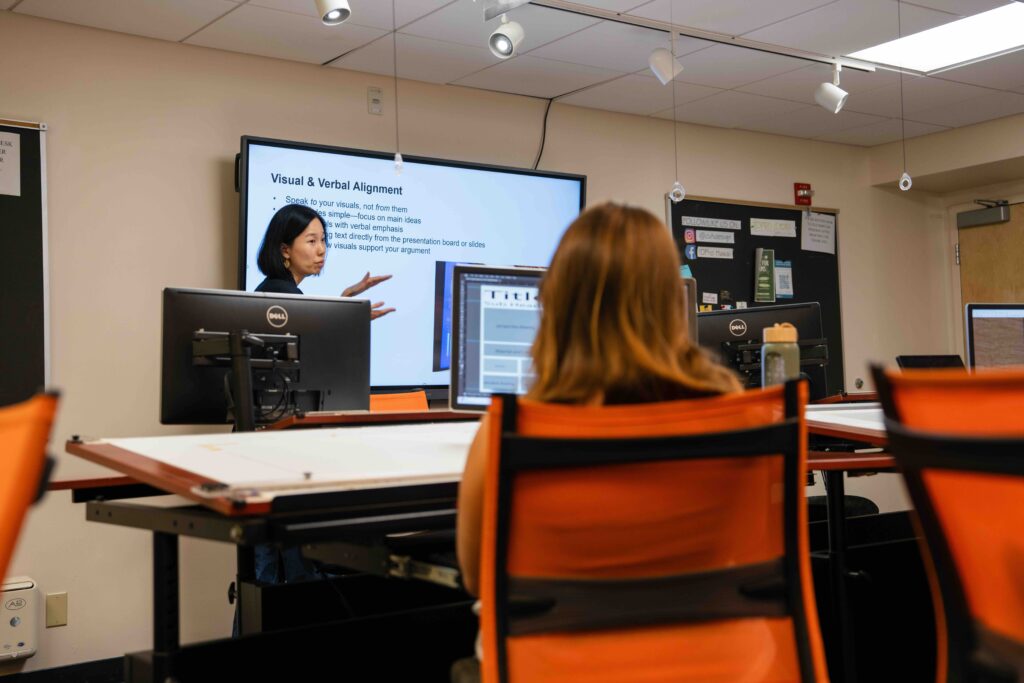
The major is a mix of technical and applied skills training.

“We do have some graphic art classes in there, some digital,” Edelson said. “They’ll have to do some studio courses, but there’s also journalism built in.”

Junghwa Suh, D.Arch., Chaminade’s Associate Professor of Arts and Design, helped design the curriculum for the Applied Arts & Digital Media degree alongside Edelson and other colleagues. She said the program is best understood as a mix of artistic expression and design studies with training in practical communications skills.

“It is a combination of art, design, English, media, and communication,” she explained. “So, it’s a very interdisciplinary program. We are trying to introduce the practical application of a creative process, preparing students for careers in design, storytelling, or any kind of creative industries.”

As the online information portal for the program states, the major is designed to teach students “how to turn your creativity into work that connects, communicates, and makes an impact.”

“They are going to have hands-on projects, and they’re going to learn about aspects of graphic design, illustration, publishing, and advertising,” Suh added. “We wanted to see how we can bring in very practical aspects of those fields.”

Introductory courses include applied arts and an arts practicum course.

Other classwork covers colors for interior design, creative work portfolios, creative fiction and poetry writing, nature writing, and studio work for publications. Applied Arts & Digital Media students will also be afforded opportunities to acquire applied training in journalism, digital photography, and digital media management, among other subjects.

The coursework covers “visual design, visual media, creative writing, and writing to build skills in narrative development, technical production, and collaboration,” Suh explained. “Those are the main areas.”

Students can also broaden their horizons through several elective courses taken alongside the core curriculum. By graduation, students will find that their creative instincts are honed while, at the same time, they’re mastering the technical skills necessary to succeed in creative arts and digital media fields.

Suh said she’s excited for the launch of the new Applied Arts & Digital Media undergraduate major, saying it aligns precisely with the changes and evolutions in the creative industries underway today.

“We can allow students to really explore, to create their own niche with this tool set that we’re going to provide,” she said.

“Moving forward in our society,” Suh said, “I think we need more powerful, creative thinkers, and this program is nurturing those creative thinkers, designers out there.”


Posted by: University Communications & Marketing Filed Under: Business & Communication, Campus and Community, Catholic, Education, Faculty, Featured Story, Homepage, Innovation, Institutional, Students Tagged With: new degree program

Remains of Hawaiʻi Saints Secured by Forensics Lab Returned to Catholic Church

November 12, 2026

A years-in-the-making partnership of science and faith culminated this Monday at the offices of Chaminade University’s Forensic Sciences Unit.

Father Damien of Molokaʻi, canonized in 2009, is the revered saint who sacrificed his life to care for Hansen’s disease patients at the Kaulapapa leper colony in the late 1800s. By his side stood Sister Marianne Cope, who was canonized as a saint by Pope Benedict XVI in 2011.

Some remains of Saint Marianne and Saint Damien–tiny bone fragments painstakingly collected from their graves–will now be laid to rest and venerated as holy relics at Catholic churches throughout Hawaiʻi thanks to the meticulous work of Chaminade University forensic scientists and forensic science students.

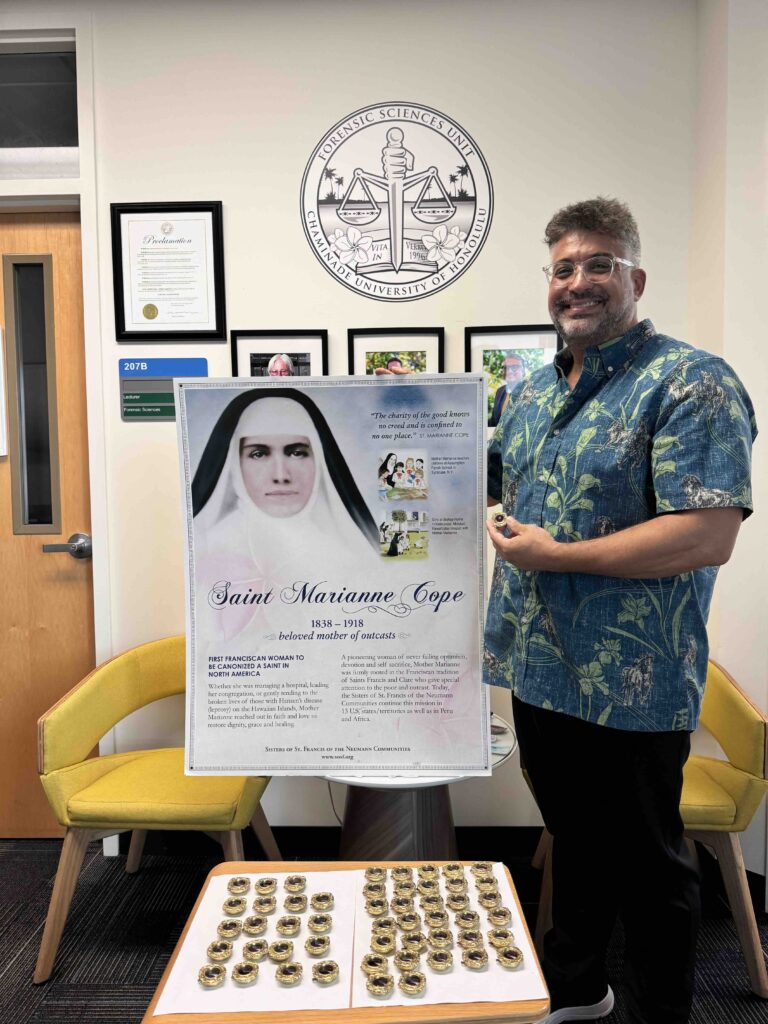
On November 10, Sister Davilyn Ah Chick of the Diocese of Honolulu stopped by campus to claim 52 relics prepared by Dr. Carlos A. Gutiérrez Ayala, Department Chair and Assistant Professor of Forensic Science.

Of the relics, 32 contain bone fragments of Saint Damien of Molokaʻi. The other 20 hold the remains of Saint Marianne, secured by Chaminade forensic scientists in a project that began at the start of the year.

“We started in January, early January this year, and now we’re in November, finishing the first round of the first batch of relics,” Gutiérrez said. “We never knew if we’d be able to do all of these.”

The effort at Chaminade’s Forensic Sciences Unit to sort and secure bone fragments from Saint Marianne’s grave for use in holy relics marks the first time that a university forensic sciences department has been enlisted by the Catholic Church for such work. Chaminade carried out this work for the Church on a pro bono basis, in keeping with the university’s Marianist tradition of service to the community.

Given the unprecedented nature of the effort, Gutiérrez prepared a procedures manual for other universities to follow should the Church ask for their support in securing the remains of other saints in the future. This procedural and protocol manual can be used by any university forensics department throughout the world, Gutiérrez said.

“I developed a methodology which didn’t exist for this,” he explained. “So now in the future, if other forensic scientists or the Catholic Church need to do this, at least now we have a protocol.”

Dr. Carlos A. Gutiérrez Ayala, Department Chair and Assistant Professor of Forensic Science

He said this experience has proven to be a once-in-a-lifetime opportunity for his career.

“I never did something like this before, and I don’t know if other forensic scientists have done something like this before ever,” Gutiérrez said. “I’m privileged, and all of us are privileged here.”

Gutiérrez will present the entire project and experience at an international forensic science conference happening in Orlando, Florida early next year.

Sister Davilyn described the opportunity to enlist Chaminade University’s forensic sciences lab for assistance with securing the remains and producing the relics as “providential.”

“Chaminade University has been very generous to allow us to use it,” she said.

Sister Davilyn said they will make more relics from Saint Marianne’s remaining bone fragments. She will provide the relic encasements, while Gutiérrez will ensure that remaining bone fragments are properly placed and secured using a special adhesive that takes 24 hours to cure.

The relics will then be distributed throughout the islands for each church to display and venerate as they see fit.

“Each of the vicariates we have in the diocese will be getting this at the convocation,” she explained.

Gutiérrez said his experience helping the Church with this important project has been a welcome respite from the usually dark nature of forensic sciences work.

“Usually you work on cases helping victims in terrible situations, but doing this type of job brings some light,” he said.

“It’s a unique situation where faith and science go together and bond.”

Posted by: University Communications & Marketing Filed Under: Campus and Community, Catholic, Faculty, Featured Story, Homepage, Marianist Tagged With: Campus Event, Forensic Sciences

Designed for What’s Next: Chaminade Introduces New Path to Marine Conservation Careers

November 12, 2026

Life in Hawai‘i is defined by the Pacific Ocean.

The ocean is the bedrock of the economy and plays a significant role in local and Native Hawaiian culture. The state is an ideal place to study and research the marine world, and Chaminade University students now have the opportunity to do just that.

Beginning Fall 2027, students can apply to the new Bachelor of Arts in Marine & Oceanic Sustainability program. The new degree aligns with Chaminade’s strategic vision to improve academic excellence and marks a step change in the university’s embrace of its Pacific heritage, exposing students to the rigors of scientific discovery and thoughtful inquiry through humanities traditions.

“The new degree program prepares students for careers in the burgeoning ‘blue economy,’” said College of Arts & Sciences co-Dean Gail Grabowsky, Ph.D.

“According to the United Nations, as well as the National Oceanic and Atmospheric Administration, jobs in the blue economy are growing more rapidly than in other major fields,” Grabowsky explained.

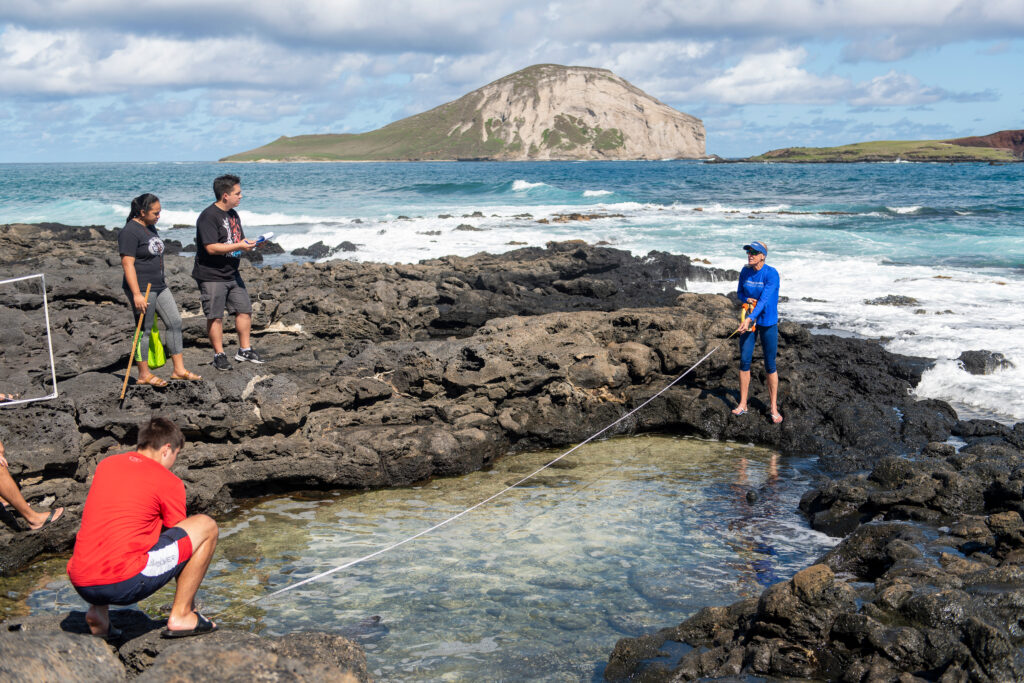
The Marine & Oceanic Sustainability degree program is the only one of its kind in Hawai‘i, preparing students for careers in marine-oriented fields by combining studies in the natural sciences, including biology and oceanography, with humanities disciplines like psychology, law, and art.

“It is highly interdisciplinary, bringing together the sciences and humanities in meaningful and exciting ways,” explained Justin Wyble, Ph.D., and Assistant Professor of English at Chaminade University. “This program is quite unique for this reason.”

Wyble, who helped design the new undergraduate major with colleagues and university leadership, said the program’s coursework and schedule are designed to give students greater awareness and appreciation of Hawai‘i and Oceania while training them to conduct real, impactful marine science research and investigations.

The program is very much career-oriented, he stressed. Marine & Oceanic Sustainability students will be taught to apply their education and training toward clear career paths in the expanding marine policy, conservation, restoration, and tourism economies.

“This program is a great opportunity to highlight the unique ocean cultures of Hawai’i and the Pacific,” Wyble added. “It prepares our students for many popular ocean-related careers here and throughout Oceania.”

The coursework underpinning the Marine and Oceanic Sustainability major reflects this.

Pre-major courses include a first-year science seminar. That foundation prepares students for subsequent class and lab work in marine science, environmental science, fisheries science, biology, oceanography, and conservation science.

Upon becoming better grounded in natural sciences, students are then immersed in the rich humanities fields as they relate to the Pacific and the world’s oceanic environments. For instance, the path also includes coursework in law, anthropology, and psychology.

The major also incorporates study of oceanic arts and literature–how the oceans are depicted in popular fiction and film. Housed within the new College of Arts & Sciences, the Marine & Oceanic Sustainability major is as practical as it is artistically enriching. 

Foundational study of the sciences and humanities combined prepares Marine & Oceanic Sustainability majors for further fine-tuned training in marine policy, regenerative tourism, data science, and communications, among other offerings.

Wyble said that planners are emphasizing a strong balance between disciplines.

“As we were developing the curriculum for this program, we were committed to finding an equal balance between the science courses and the humanities courses, as well as related disciplines from the other colleges,” he said. “I see it complementing other major and minor programs across campus, especially Environmental Science; Environmental Studies; Law, History & Culture; and Applied Arts & Digital Media.”

Graduates of Chaminade’s Marine & Oceanic Sustainability program will be qualified to pursue work in fisheries management and science, natural resources management, coastal management and restoration, coastal recreation, ecotourism, coral reef restoration, education, advocacy and conservation, and even marine and coastal journalism, among a host of other potential paths.

The major also leans on the best of Polynesian and Native Hawaiian knowledge and experience to ground students with a better sense of purpose, place, and community wellbeing, in keeping with Chaminade’s 2030 strategic plan.

“We want them to know the ocean,” said Grabowsky. “We want them to know the ocean from the Pacific Islanders’ perspective as much as possible; that the ocean is a connector for them.

“It’s the blue continent, not a divider.”

Wyble says he hopes the new major will attract students looking to effect real and positive changes at home and abroad, considering the tremendous challenges facing the world’s ocean environments and communities.

The program’s organizers expect it to draw interest from not only Hawai‘i, but across the Pacific Rim and Oceania, especially from people “who want to give back to their home island’s cultures, economies, and ecologies after graduation,” Wyble said.

“If you love and care about the ocean, this major will prepare you to give back to it in meaningful ways: environmentally, economically, and culturally,” he said.

Posted by: University Communications & Marketing Filed Under: Campus and Community, Catholic, Education, Faculty, Featured Story, Homepage, Humanities, Arts & Design, Innovation, Institutional, Natural Sciences & Mathematics, Students Tagged With: new degree program

Four Chaminade Veterans Find New Paths After Military Service

November 10, 2026

Three Chaminade students and an adjunct professor reflect on their transitions from military service to college and new careers.

By Justin Siliva

For military veterans, leaving the service can mean adjusting to a different routine, returning to school, or preparing for a new career. 

At Chaminade University of Honolulu, four veterans have taken different paths after serving in the U.S. Army and Air Force. With Veterans Day approaching on Nov. 11, they share how their experiences have shaped their Chaminade education, leadership, and career goals. 

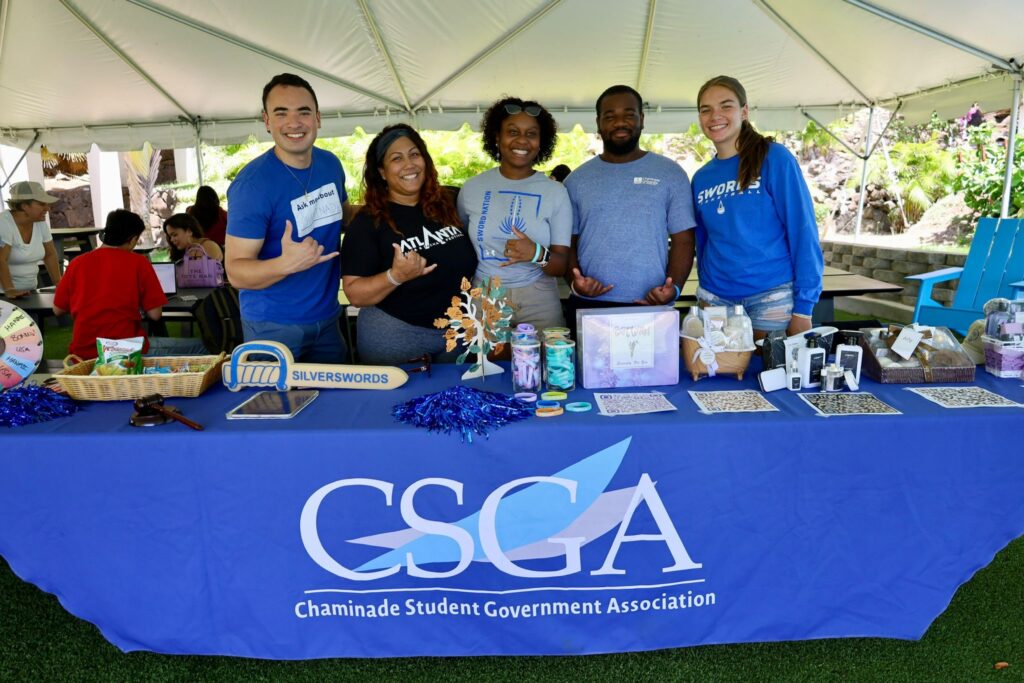
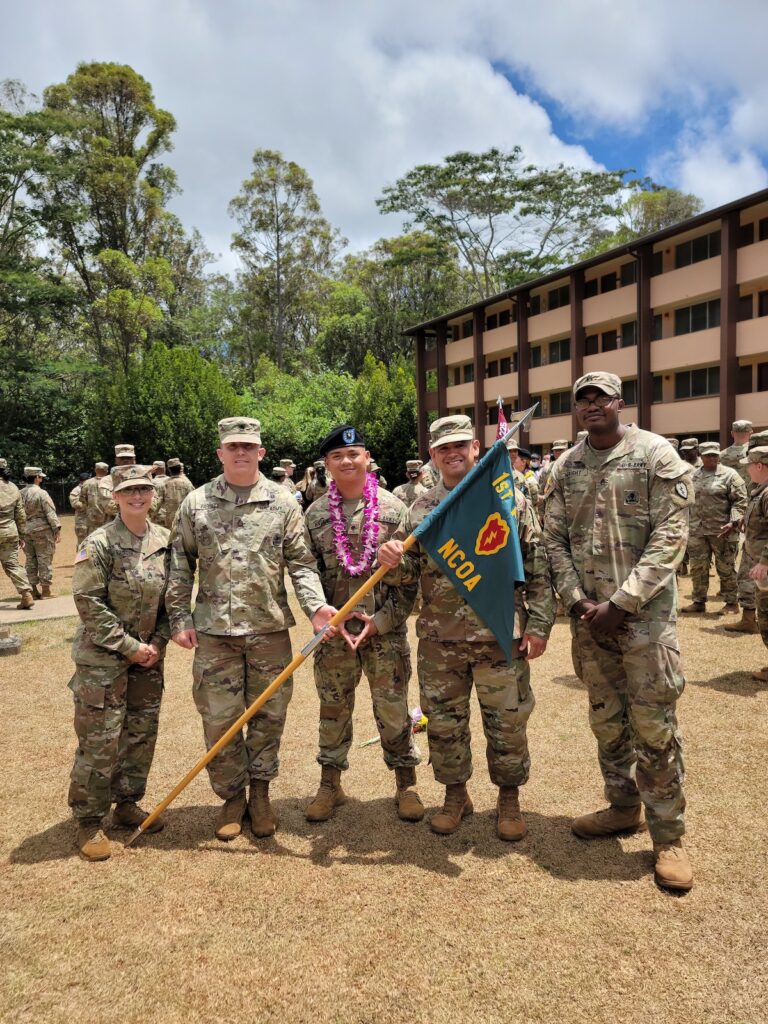
Victoria Francois (second from left and top photo).

Victoria Francois: Bringing Army Lessons to Chaminade

Victoria Francois, 40, grew up in Fayetteville, North Carolina, where she enlisted in the Army at 18 in April 2004. She served nearly 19 years before leaving in February 2023, reaching the rank of sergeant first class (E-7). Francois spent about 17 years of her military career as a surgical technician, assisting with operating room procedures.

The Army brought Francois to Hawaiʻi in 2017, where she was assigned to Tripler Army Medical Center. She later became the perioperative noncommissioned officer in charge, overseeing four departments: same-day surgery, the operating room, post-anesthesia care, and sterile processing. 

While she was still serving, Francois enrolled at Chaminade in 2019 and attended evening classes at Tripler. She began taking classes on campus in 2023. 

Initially concerned about returning to college as an adult learner, Francois has found opportunities to get involved. She served as a senior senator in the Chaminade Student Government Association (CSGA) and participated in the university’s Sustained Undergraduate Research Experience (SURE) program. 

Through the program, Francois met Dr. Abby Halston, who became her mentor. Halston later nominated Francois for the 2024 Sue Wesselkamper Award, which she won. 

Francois earned her bachelor’s degree in psychology from Chaminade in May 2024 and is now pursuing a master’s degree in counseling psychology. She also serves as president of Chaminade’s Psi Chi chapter, a psychology honor society, where she applies her military leadership experience to working with other student officers.

“I may know how to get things done and execute, because that’s just what the military has taught me over and over,” Francois said. “But collaboration is everything, right?”

Francois expects to finish her master’s program in May 2027. Then, she plans to pursue a doctorate in educational psychology while continuing to work as a behavioral health specialist with the Hawaiʻi Department of Education. 

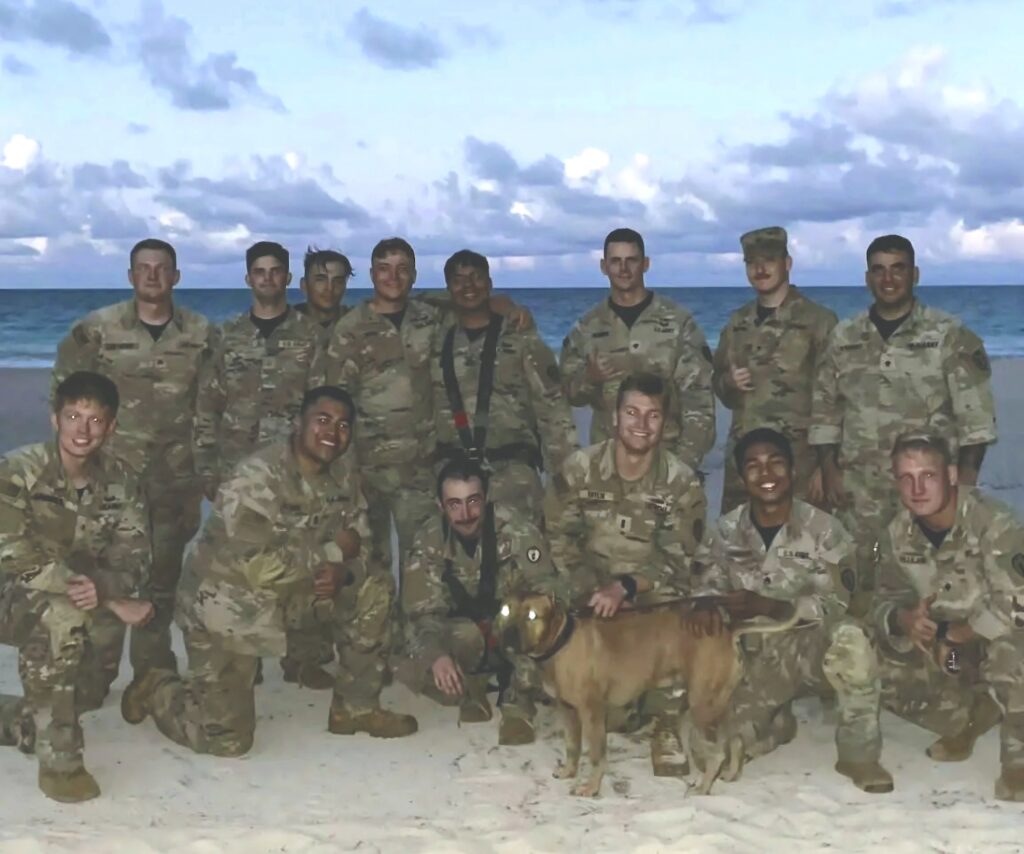
Jonah Martell (back row, second from left).

Jonah Martell: Finding His Way Back to School

Jonah Martell, 22, of Las Vegas, Nevada, joined the Army in 2023 and served as a cavalry scout at Schofield Barracks on Oʻahu. He reached the rank of specialist (E-4) before an injury led to his medical discharge in 2025, ending his military career after about two years. 

As a cavalry scout, Martell conducted reconnaissance, monitored potential threats, and provided security for infantry units. His training also included clearing buildings and operating as a gunner on a Humvee.

One of his most memorable experiences came during a five-day training exercise in Georgia. Martell spent four days in heavy rain, responding to simulated nighttime attacks with little to no sleep. The exercise ended with a 12-mile overnight march carrying a roughly 30-pound rucksack.

After leaving the Army, Martell decided to stay in Hawaiʻi and attend Chaminade because it offered a Sports and Event Management program; that option wasn’t available at other universities he considered.

Now a freshman, he hopes to work in the front office of a professional sports team or become a college athletic director. He also plans to add criminal justice as a second major, giving him another career option in law enforcement. 

Before joining the Army, Martell hadn’t seriously considered attending college. He said his military experience changed how he approached school, leaving him more focused on preparing for a career.

“So, ever since I joined, now I’m more focused and, like, okay, I need to get this done, to start my career, and help myself,” Martell said. “So I think the military really changed my mindset.”

Adam Haley (center).

Adam Haley: Discovering a Passion for Psychology

Adam Haley, 28, grew up in Madison, Alabama, and attended the University of Alabama from fall 2017 to spring 2018, studying management information systems. He left college to join the Army to gain job skills, travel, and avoid student loan debt.

Haley spent six and a half years in the Army working in communications and information technology. He achieved the rank of sergeant (E-5), then worked supervising junior soldiers and maintaining communication networks used during military operations. The Army brought him to Hawai‘i for his first duty station.

After leaving the military, he became a network engineer, putting the technical skills he learned in the Army to use.

But he soon realized the work wasn’t as fulfilling as he’d expected.

While serving in the Army, Haley often found himself listening to fellow soldiers who came to him for advice or needed someone to talk to. As a noncommissioned officer (NCO), he held monthly counseling sessions but preferred talking to people over formal paperwork. He enjoyed those conversations and began to recognize his interest in understanding and helping people.

That interest eventually brought him to Chaminade, where he is now a junior majoring in psychology.

Haley chose the university for its smaller classes, psychology program, and opportunities to interact with professors. He hopes to become a psychologist and pursue a doctoral degree in clinical psychology.

Compared with his previous experience at a larger university, Haley said he now enjoys being back in college and studying something he cares about.

“I never thought I’d be the type to say I love coming to school, love school, or anything like that, but I genuinely look forward to coming to Chaminade,” Haley said. “I really look forward to all my psychology classes.” 

Michael Rose: From the Air Force to the Classroom

Originally from Buffalo, New York, Michael Rose joined the U.S. Air Force in 2001 following the Sept. 11 attacks. He served for 20 years before retiring in 2021 as a senior master sergeant (E-8).

During his military career, Rose worked in special operations and completed several deployments. His service took him to 58 countries, where some of his most meaningful experiences involved providing humanitarian assistance to women and children in war-torn areas.

Rose said his time in the Air Force helped him develop leadership skills and changed how he viewed his responsibilities to others. After retiring, he initially pictured himself using those skills in the business world, possibly as an executive or someone managing a company division.

With family connections to Hawai‘i, Rose eventually made Oʻahu his home and enrolled at Chaminade to further his education in business and leadership.

During his graduate studies, Rose worked closely with Dr. Eduard “Eddie” Merc, an assistant professor of business analytics and supply chain management and director of Chaminade’s MBA program. Merc’s dedication to teaching and research encouraged Rose to explore opportunities in higher education.

Rose earned his Executive Master of Business Administration degree from Chaminade in 2023. From 2023 to 2025, he worked as a researcher at the university’s School of Business and Communication, studying technology, leadership, and business operations.

Although Rose initially planned to pursue a career in business leadership, he eventually found himself on the other side of the classroom.

He now serves as an adjunct professor at Chaminade, teaching EC 201, Principles of Macroeconomics, through the university’s Early College program at Sacred Hearts Academy.

Not too long ago, Rose was the one sitting in class, listening to lectures and preparing for exams. Now that he’s the one leading the lessons, Rose said the experience has shown him how much preparation goes into teaching, especially when students have questions he needs to answer.

As Veterans Day approaches, Rose hopes people remember the sacrifices military members make throughout their service.

“I think it’s just to not take it for granted,” Rose said. “And to really think about the sacrifice that military members make on a daily basis.” 

Posted by: University Communications & Marketing Filed Under: Alumni, Campus and Community, Education, Featured Story, Homepage, Marianist, Student Life, Students Tagged With: Alumni, veteran students

Designed for What’s Next: Hawai‘i’s First Pre-Law Degree Launches at Chaminade University

November 10, 2026

Students interested in pursuing a career in legal affairs or a law degree now have the option to pursue a major that gets them closer to their dreams.

Starting Fall Semester 2027, Chaminade University will begin offering a new undergraduate pre-law training program, the first and only one of its kind in Hawai‘i. Applications for the new Bachelor of Arts in Law, History & Culture program will be accepted in the current cycle, and enrollment will likely begin starting late Spring through Summer 2027.

College of Arts & Sciences co-Dean Cheryl Edelson, Ph.D., said the new bachelor program is explicitly designed to steer students toward legal professions or law school.

“It’s a pre-law program,” she said. “A lot of students are interested in law, so we built this into our curriculum.”

The new major is designed to fulfill Chaminade University’s strategic plan of enhancing academic excellence and the career relevance of degree programs while improving student outcomes, gearing graduates toward career success. It marks a milestone in Hawai’i’s higher education landscape as Chaminade continually adjusts to meet the needs of the community it serves. 

The Law, History & Culture program prepares students for law school and/or the paralegal profession. Graduates will also be primed for success in business legal compliance offices and law administration, among other pathways.

The new major combines training in criminology, criminal justice, and forensic science with history, communications, and writing to create an applied, career-oriented education that meets expanding workforce needs. Students will learn legal and criminal justice concepts while honing their written and verbal rhetorical skills–at this while gaining a firm grounding in the historical contexts in which society’s laws emerged.

Edelson said the first pre-law program in the state is a natural fit with Chaminade University’s strong position in forensic science and criminal justice education, now with additional layers added in.

“The pre-law path is something that students have wanted for a long time,” she explained. “We have a good history of our students in historical, political studies, criminal justice, or criminology going into law school, but we’ve tried to build in more policy, especially policy about the Pacific region.”

Housed within the College of Arts & Sciences, Chaminade’s faculty leadership plans to introduce new courses over time as the new degree program is fully integrated into the broader university educational architecture.

“There are going to be some new courses developed as we move along,” said Frank Bailey, Ph.D., Associate Professor of Historical and Political Studies.

Yet the program is ready to accept students now, he emphasized, with existing and retooled courses meeting pre-law educational standards and goals.

“At the moment, it has selected history courses that are already developed, that are ready to go, and selected criminal justice courses already developed, ready to go,” said Bailey, who will co-chair the new degree program. “There are some forensic science courses, and then we also try to make it very interdisciplinary.”

Meaning Law, History & Culture students’ studies will couple their practical legal training with coursework in relevant humanities disciplines. About half the course load will be specific to the major, while students will be free to choose from a list of electives to fold into their major depending on where their interests and passions lie.

Pre-law foundations


The new four-year BA in Law, History & Culture degree is carefully designed to prepare students for the rigors of a juris doctorate (JD) program.

Of course, students interested in advancing to formal legal training must first gain admission to a law school. That’s why Chaminade’s new pre-law program includes solid preparation for the Law School Admission Test, or LSAT.

“That’s one of the things that is really important,” said program co-chair and Historical and Political Studies Professor Michio Yamasaki, Ph.D. “That’s central to our degree.”

Yamasaki noted the College of Arts & Sciences is working with LSAT preparation training companies to give Law, History & Culture students access to preparation materials and even full LSAT prep courses, in addition to the advantages they’ll get from the program’s curriculum.

Chaminade University has also secured an articulation agreement with St. Mary’s University, our sister Marianist Catholic institution in Texas, whereby St. Mary’s School of Law has agreed to fast-track acceptance of Chaminade’s Law, History & Culture pre-law graduates, so long as they meet entrance requirements.

Yet, one does not have to be law school-bound to pursue this specialization.

The curriculum is designed for students interested in pursuing careers in legal professions that do not require a law degree immediately upon graduation, including opportunities in government services and the private sector.

Scoping research conducted prior to launching the program unveiled an expanding job market for legally trained college graduates. Opportunities include jobs for new paralegals, legal researchers, claims adjusters, court clerks, compliance officers, and public affairs specialists. The program also offers applied training for those interested in becoming law enforcement officers, social service workers, child advocates, legal writers, and law and crime journalists.

“Paralegal, obviously that’s one,” Professor Bailey noted. “But there are also a bunch of jobs in business where they can use somebody with a law background.”

Pre-law students will also benefit from practical internship experiences before graduating. The faculty is leveraging connections to Hawai‘i’s legal and business communities to secure internship opportunities.

High school students, recent graduates, and working professionals interested in learning more about the new BA in Law, History & Culture degree program are invited to read up on its structure and degree requirements on Chaminade University’s website.

“There’s flexibility to enjoy college in the fields that you want, while getting a well-rounded education focused on legal studies,” Bailey said.

Posted by: University Communications & Marketing Filed Under: Business & Communication, Campus and Community, Catholic, Education, Faculty, Featured Story, Homepage, Humanities, Arts & Design, Innovation, Institutional, Students Tagged With: new degree program

‘Just Get Involved’: Chaminade’s Hogan Students Hear Life Lessons From Nonprofit Leader

November 5, 2026

“Surfing is a metaphor. You fall off your board; you get back on. That’s life.”

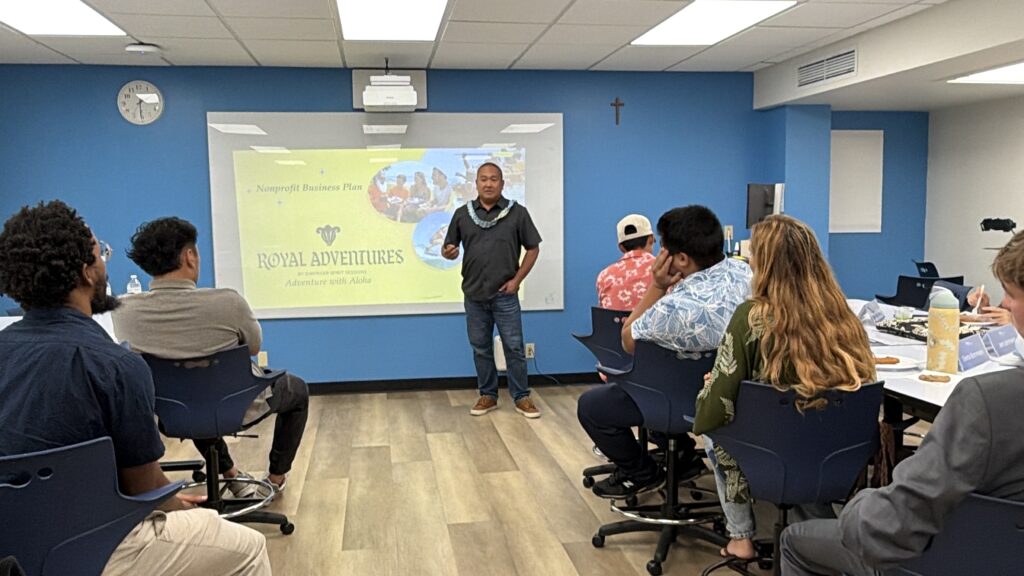
So advised Dr. Richard Kebo, Executive Director of Surfrider Spirit Sessions, at Wednesday night’s Hogan Entrepreneurial Leadership Program guest lecture held on campus.

The Hogan Entrepreneurial Leadership lecture series invites business and community leaders, including Hogan alumni, to Chaminade University to share their experiences in entrepreneurship and to impart words of wisdom, advice, and encouragement. The series aims to expose Chaminade students to real-world examples of entrepreneurial success in Hawaii, demonstrating how what they are learning leads to real career outcomes post-graduation.

The last Hogan lecture of the 2026 speaker series featured a former consultant to Hawaiian Airlines and current entrepreneur, educator, and nonprofit leader.

In his talk, Dr. Kebo told Hogan students that success in all areas of life depends on commitment, hard work, and approaching endeavors not with the mindset of what you can get out of it, but rather what you can give.

Kebo assumed the leadership role at Surfrider Spirit Sessions just four weeks before he visited Chaminade University. Surfrider Spirit Sessions, established 20 years ago, is a not-for-profit organization that engages and mentors adjudicated and at-risk youth through surfing, exposing troubled young people to the ocean’s healing and equalizing power and the determination it takes to learn to surf.

As in surfing, success in life, entrepreneurship, and career depends on perseverance, Kebo said, a lesson just as relevant to all of us as it is to the youth partners Surfrider Spirit works with.

You also must be willing to show up, get involved, and chase opportunities wherever they may turn up, he said.

“I’m a local boy,” Kebo told the Hogan students. “Us local kids, sometimes we don’t get as many opportunities, but I’ve figured out a way to find those opportunities, and it’s just getting involved.”

During his lecture, Kebo shared the struggles his own operations are currently experiencing.

He owns a local surfboard and paddle board manufacturing company that’s still fighting to turn a profit. Kebo took over as leader of Surfrider Spirit at a time when it’s increasingly struggling to find outside financial support to keep serving the community.

“As a nonprofit, you have to find funding,” Kebo said.

Furthermore, a spinoff nonprofit founded to financially support Surfrider Spirit, a cultural tour company called Royal Adventures, is facing its own challenges in the current downturn in Hawaii’s tourism industry. Royal Adventures markets ocean sports adventures and other excursions to tourists with an emphasis on culturally relevant activities, or activities that educate guests on Hawaiian culture and history.

The challenges are real, but Kebo remains undeterred, sharing several initiatives he and his team are working on to turn their difficulties around.

Facing a tough, competitive, and shrinking market in Waikiki, Royal Adventures is branching out, marketing tours to active military members on the island. The nonprofit is also pursuing potential partnerships with schools.

In addition, Royal Adventures reached out to other local nonprofits to seek room for collaboration and growth. This effort is now bearing fruit, he said, taking tourists away from Waikiki and into the mountains of Oahu, where partner organizations are getting them involved in ecological restoration and invasive species eradication.

Never underestimate the potential power of collaboration, he said. “If you can amplify the people that you are collaborating with, it’s a win-win situation all the way around,” Kebo said. “It’s not easy to do.”

‘Flipping the Script’

Kebo keeps busy running his manufacturing business while leading two nonprofits, as both organizations work to find firmer footing in a difficult economic climate. The adventure isn’t over, but Kebo reflected on his more than two decades of success in business and community involvement, and said he regrets nothing. 

One winning strategy for success, he said, is counterintuitive: when pursuing any venture, don’t think about money first.

He called it “flipping the script,” approaching new ventures thinking about “not what I could get, but what I could offer.” Money will come from the value of your output and contributions, he advised.

That, and perseverance.

“It’s like surfing,” he said. “If you want to catch that wave, you’ve got to commit.”

“The same thing with business.”

Posted by: University Communications & Marketing Filed Under: Business & Communication, Campus and Community, Education, Featured Story, Hogan Entrepreneurial Program, Homepage, Innovation Tagged With: Campus Event, Guest Speakers, Hogan Entrepreneurs Program

  • Page 1
  • Page 2
  • Page 3
  • Interim pages omitted …
  • Page 56
  • Go to Next Page »

Footer

Chaminade University Logo

3140 Waialae Avenue
Honolulu, Hawaii 96816

Contact Us
Phone: (808) 735-4711
Toll-free: (800) 735-3733

facebook twitter instagram youtube linkedin

Visit

  • Plan Your Visit
  • Campus Map (PDF)
  • Events

Resources

  • Campus Security
  • Student Consumer Information
  • Concerns, Feedback, and Reporting
  • Institutional Review Board
  • Title IX / Nondiscrimination Policy
  • Compliance
  • Emergency Information
  • Careers
  • Institutional Statement

People

  • Students
  • Parents
  • Alumni
  • Faculty & Staff

Policy

  • Privacy Policy
  • Terms and Conditions of Use


© Chaminade University of Honolulu