Humanity can cope with the rise of artificial intelligence technology, as it has with other technological revolutions, without losing what makes us human. But we must first fully understand what AI is and how it should be used.
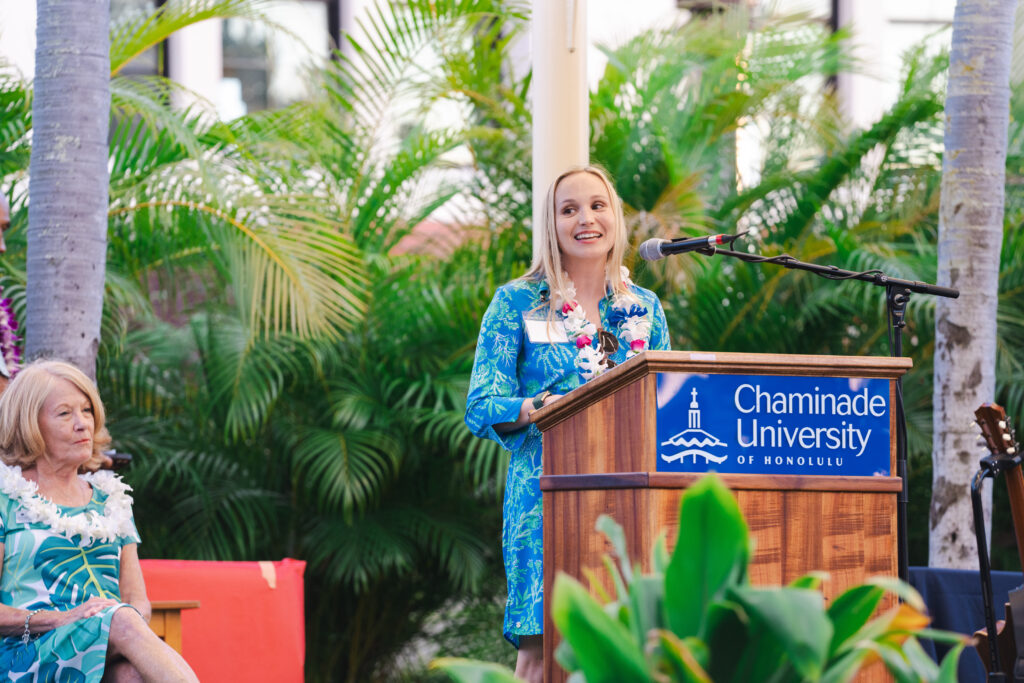
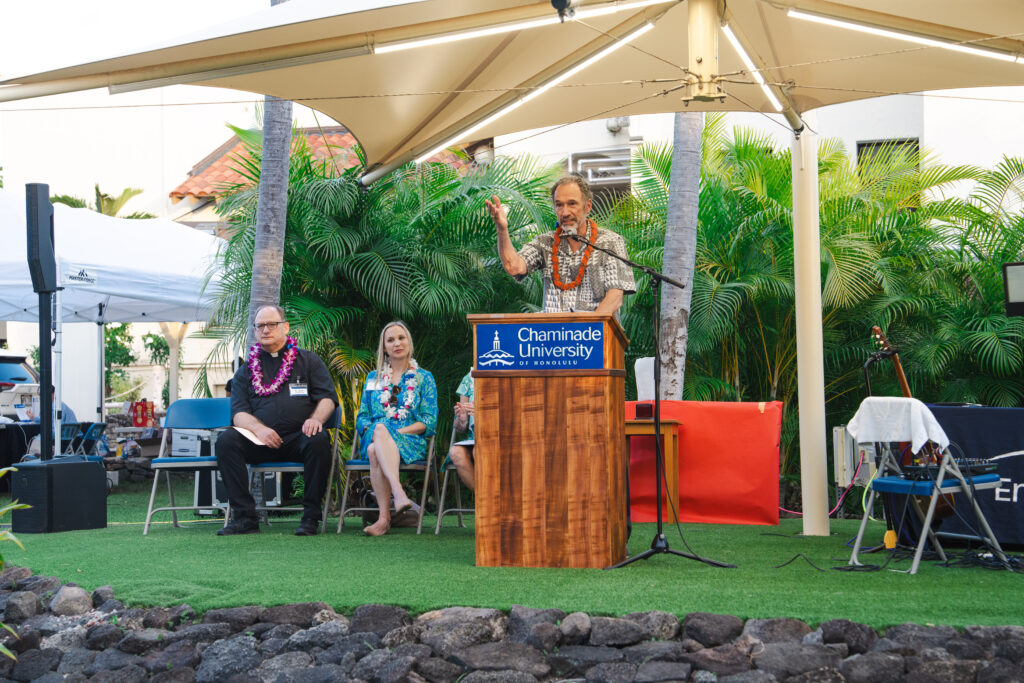
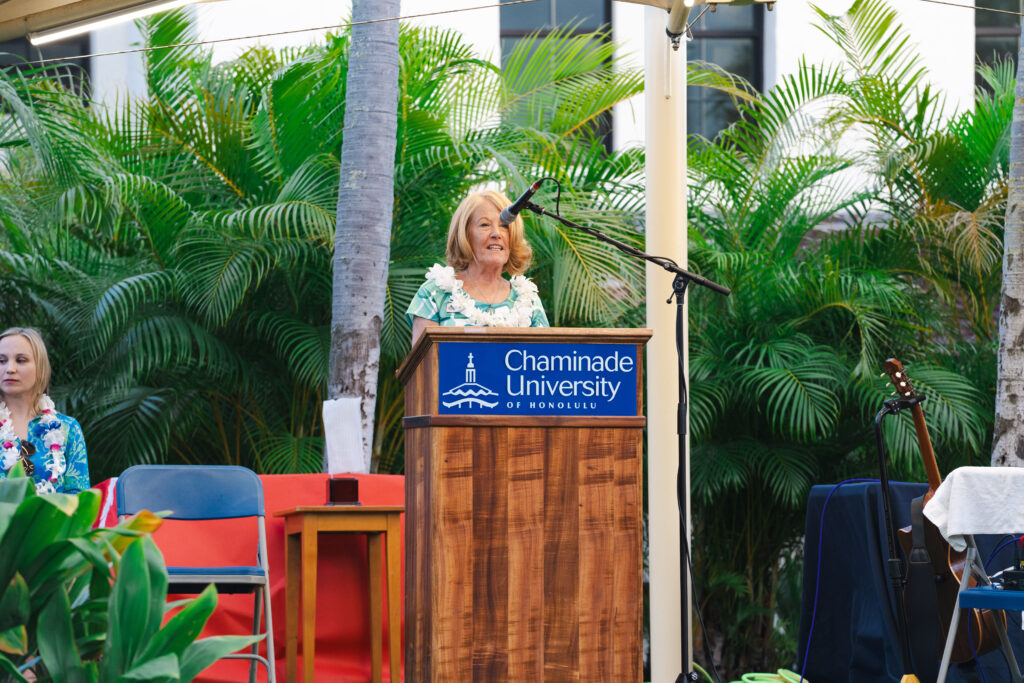
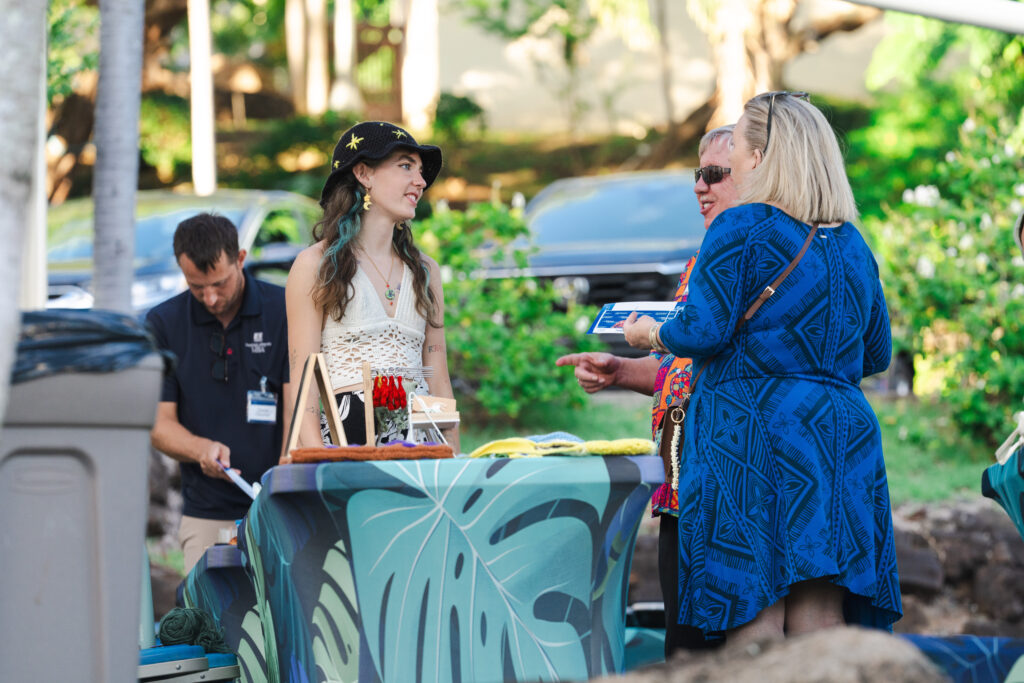
That was the greatest takeaway from this semester’s Marianist Lecture, held this past Sunday at Chaminade University and featuring two experts on AI and the Catholic Church’s position on this technology. The 2026 Marianist Lecture was titled “Timely Technology, Timeless Questions: AI and the Human Person.”
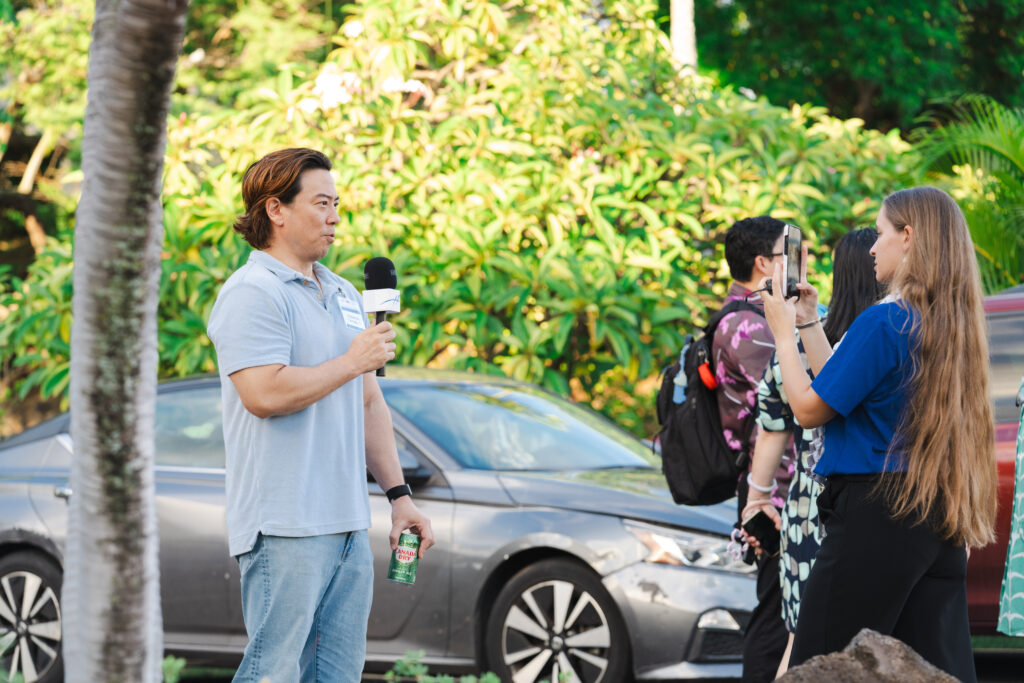
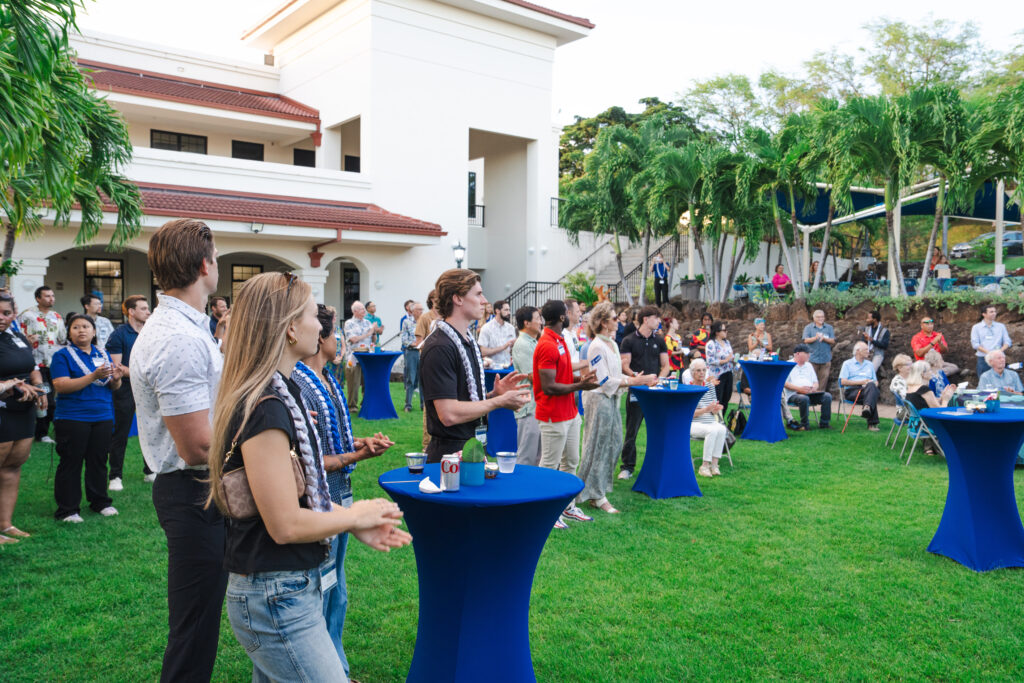
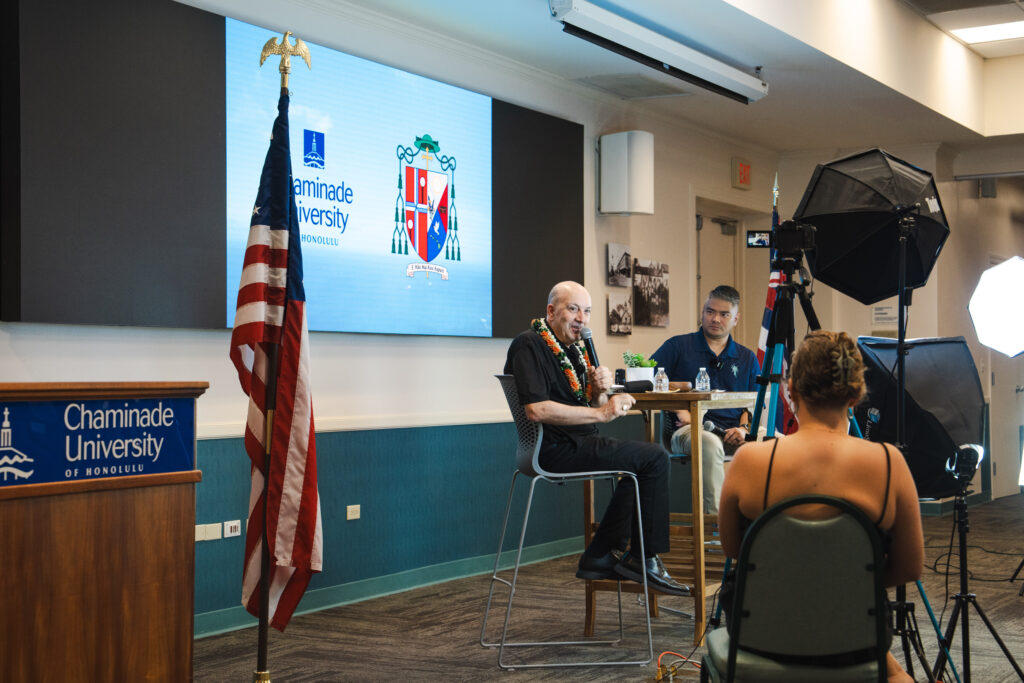
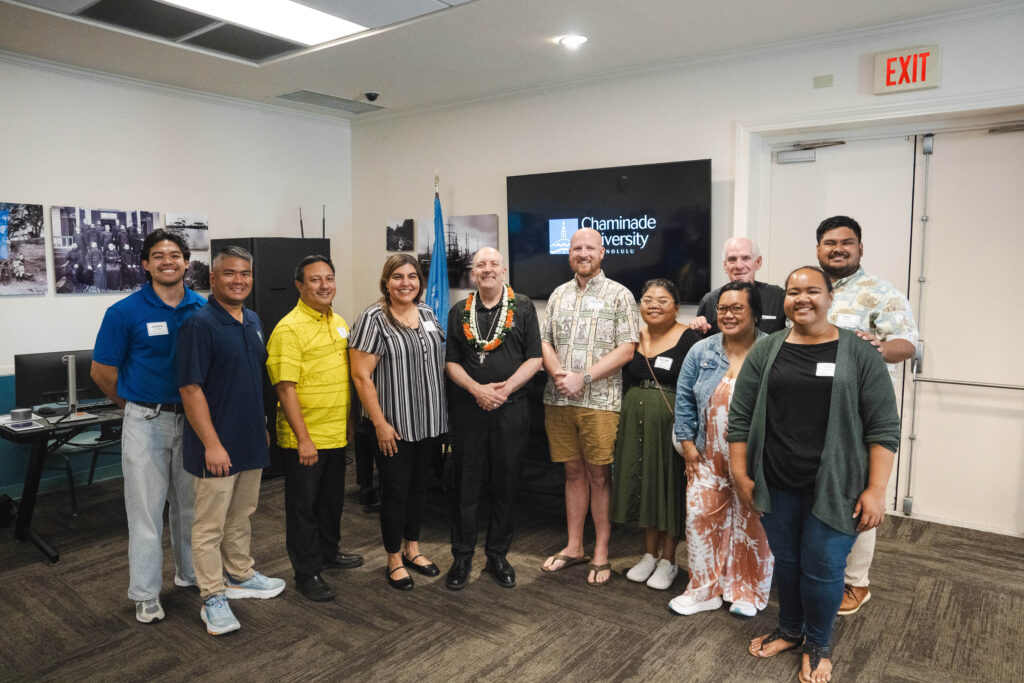
Kyle Ballarta is a venture capitalist and entrepreneur who has written extensively on the intersection of faith and technology. Louis Kim is an executive, technology advisor, and theologian with the Duke Divinity School. Both were this year’s guest lecturers, drawing hundreds to the Mystical Rose Oratory for a Sunday afternoon discussion on AI and human dignity.
Ballarta and Kim had earlier spoken to students and faculty last Friday to discuss AI as part of the University’s Wellness Week enrichment event. Sunday’s Marianist Lecture involved more formal presentations followed by a brief question-and-answer session with audience members.
Back in May, His Holiness Pope Leo XIV released his landmark encyclical letter, Magnifica Humanitas. In it, Pope Leo discusses AI technology at length, rejecting arguments that it represents some new form of consciousness similar to human self-awareness while accepting that AI is a powerful tool that must be managed responsibly.
“We cannot consider AI to be morally neutral,” the Pope’s encyclical states.
Ballarta imparted the same words of wisdom during his Marianist Lecture presentation. “We choose values, and those values choose technologies,” he said.
In other words, how this technology is used depends on the values of the people both building it and applying AI. Ballarta reminded the audience that new technologies have always drawn concern throughout human history–from Gutenberg’s printing press to the telephone–yet humanity has always found a way through these changes, incorporating new groundbreaking technologies into everyday life without losing ourselves.
“This has always been about how machines impact humanity,” Ballarta said.
Kim echoed Ballarta’s reflections, acknowledging the anxiety many are feeling about AI, particularly over its potential impact on jobs and human connections.
“What is precious about being human?” he asked the audience. “When AI gets so powerful, what are we going to hold on to?”
AI technologies, in particular the most popular large language models (LLMs) or chatbots, are based on computer processing architectures that empower computers to recognize and replicate common patterns and relationships between data points. Whereas computers could once only process text word-by-word, modern LLMs can read entire paragraphs and even books and recognize how the words and phrases contained within them relate to one another, enabling these machines to generate their own human-like responses to queries.
As impressive as this technology is, we should not mistake this processing power for actual human thought or consciousness, Ballarta cautioned during his talk, echoing one of the main points delivered in Pope Leo XIV’s encyclical. “We are more than numbers and data,” he said.
Meanwhile, Kim offered words of encouragement to people feeling overwhelmed by the rapid progression of AI technology and its intrusion into our daily lives. He argued that faith very much still has a seat at the table for this broader discussion, and that the Catholic Church in particular has a role to play.
The Church “has the power of cultural change,” Kim reminded everyone.
Ballarta agreed. Catholicism “can be a serious instrument in addressing these questions,” he said.
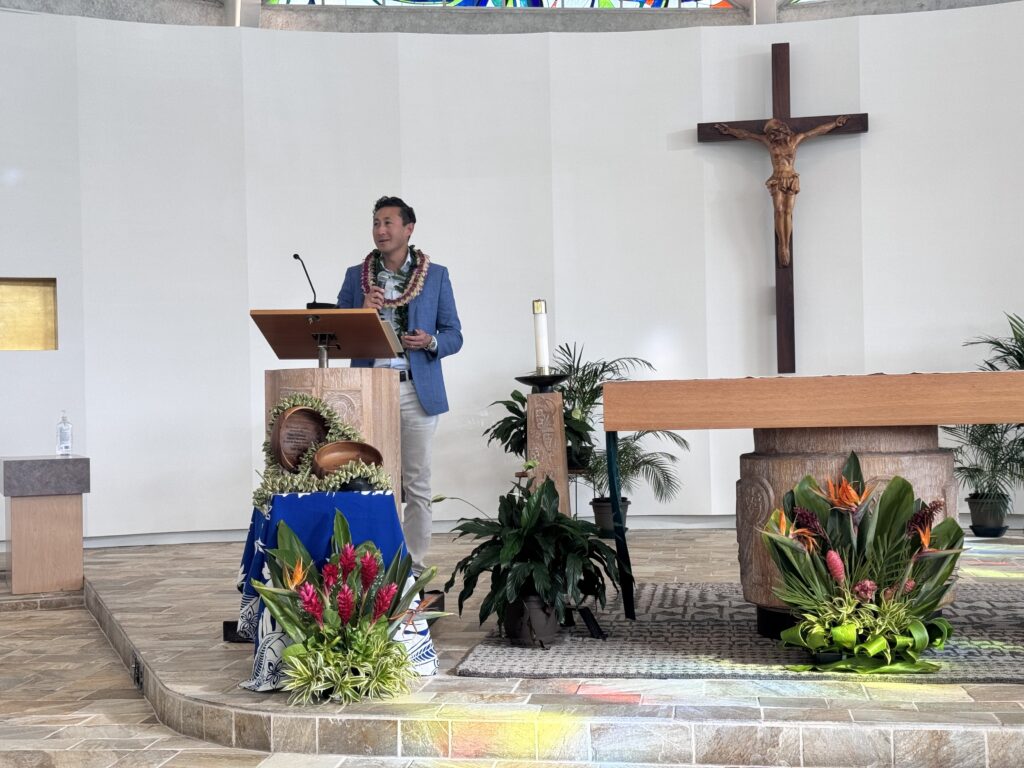
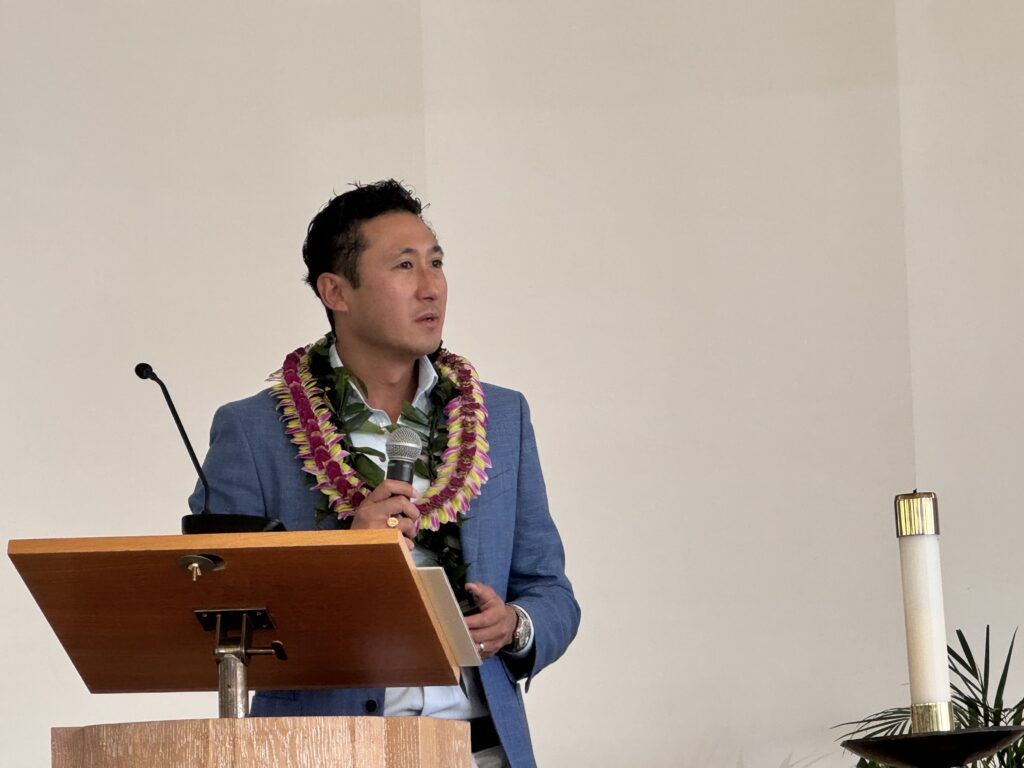
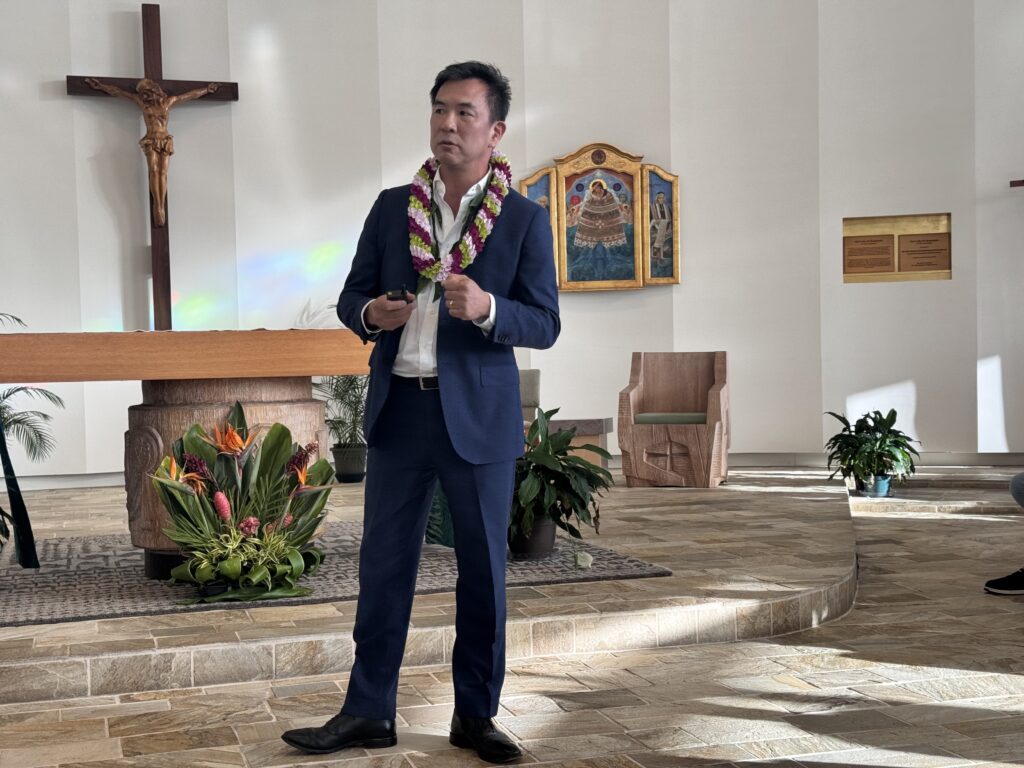
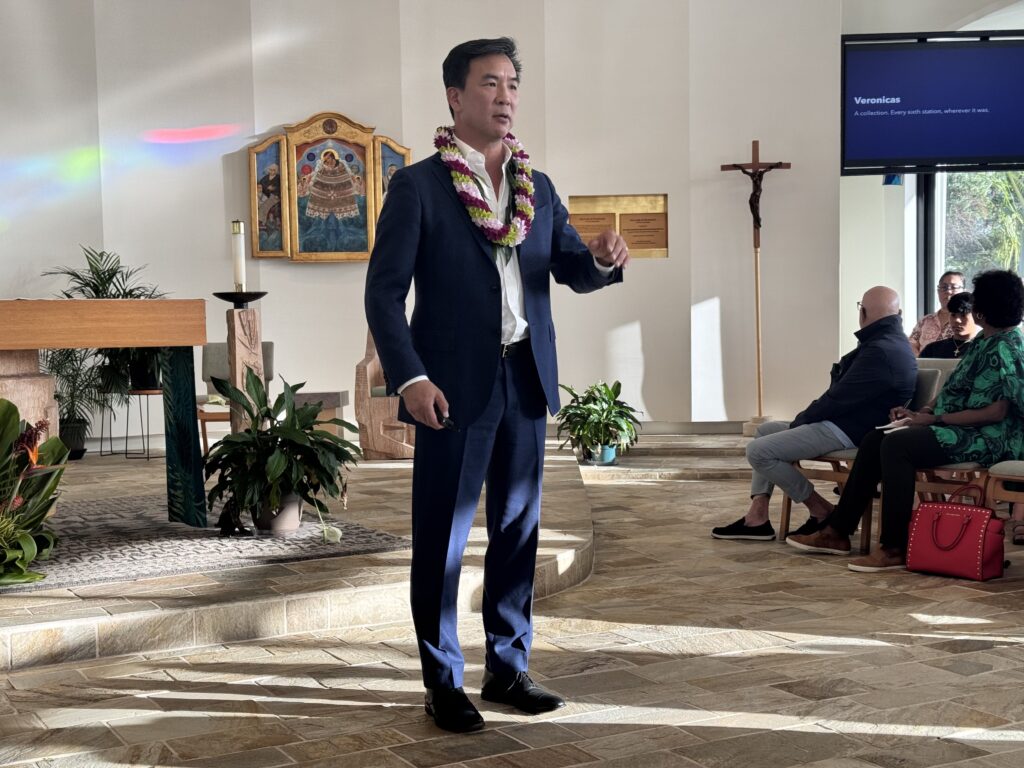
A powerful tool to be managed
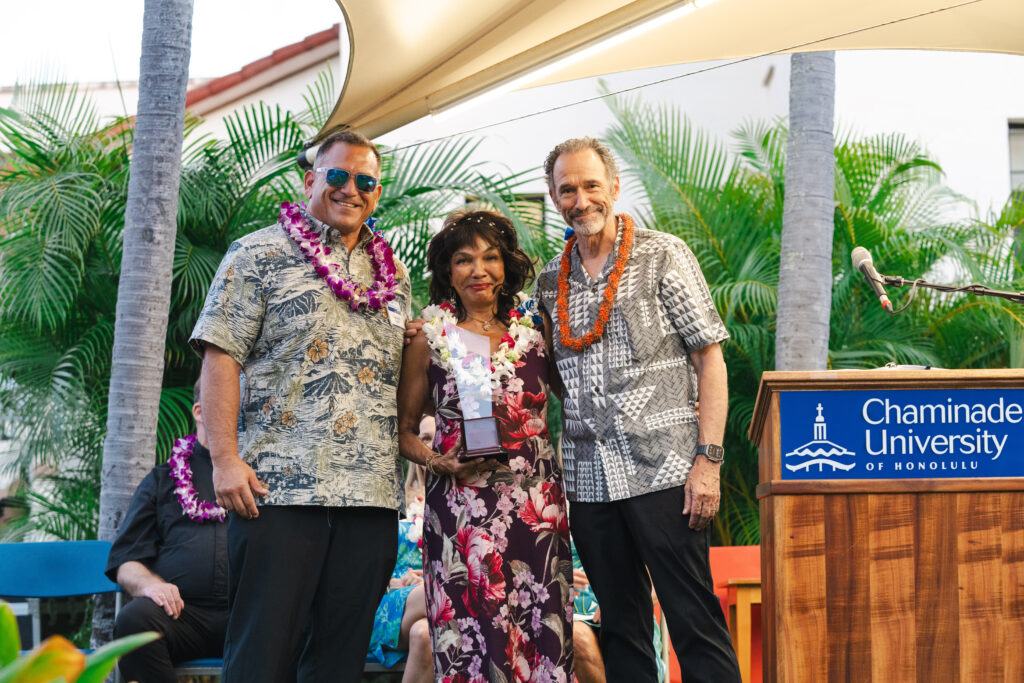
On Sunday, Bishop Michael Thomas Tupou Castori, the sixth and presiding Bishop of the Diocese of Honolulu, returned to the Chaminade campus to hear Ballarta and Kim discuss AI and the Church’s position on its rise.
Questions from the audience reflected both general confusion over what AI technology is and genuine concern about how it may negatively impact society. Audience members reminded Kim and Ballarta that the people in Silicon Valley and beyond developing AI technologies do not necessarily have the best intentions in mind.
Kim said he has encountered both good and bad actors in his interactions with Silicon Valley technology company executives. Yet he acknowledged that this concern is legitimate. He said the only response is thoughtful and appropriate regulation of AI technology.
Ballarta agreed, saying governance will matter a great deal in determining how AI technologies ultimately impact humanity. “Does the technology serve us, or are we serving the technology?” he asked, asserting that AI must, of course, serve humanity and not undermine it.
Other audience members expressed anxiety that, given enough time, generative AI technology will become so powerful that it will be difficult, if not impossible, to know when an image, video, or audio recording is real or not.
On this point, Kim offered optimism, recalling his own experiences allowing AI to generate writing on his behalf; no matter how good it is, he said, the AI cannot quite imitate his voice and writing style, suggesting that people will be able to recognize when something is off in encountering AI-generated content.
Humans are keen enough to recognize when something doesn’t quite fit the world we know.
The next Marianist Lecture will feature Msgr. John Paul Kimes and a local panel on “The Saints of Hawaiʻi” and will take place on Sunday, February 21, 2027, at 4 pm.