• Skip to primary navigation
  • Skip to main content
  • Skip to footer
Chaminade University of Honolulu

Chaminade University of Honolulu

  • VISIT
  • APPLY
  • GIVE
  • STUDENTS
  • PARENTS
  • ALUMNI
  • FACULTY/STAFF
  • Admissions
    • Admissions Home
    • Undergraduate Students
      • First-Year Students
      • Transfer Students
      • Admitted Students
    • Graduate Students
    • Flex Online Undergraduate Program
    • Military Students
    • Non-Degree/Visiting Students
    • Experiential Honors Program
    • Early College Program
    • New Student Orientation
  • Tuition & Aid
    • Financial Aid Home
    • Tuition & Expenses
    • Federal Updates & Changes
    • Scholarships
    • $5,000 Graduate Scholarship
    • VA Education Benefits
    • Net Price Calculator
  • Academics
    • Academics Home
    • Academic Programs
    • Office of Student Success
      • Academic Advising
      • Records and Registrar
    • Kōkua ʻIke (Support Services)
      • ADA Accommodations
      • Career Services
      • Proctoring Services
      • Tutoring Services
    • Sullivan Family Library
    • Undergraduate Research & Pre-Professional Programs
    • Commencement
  • Campus Life
    • About Campus Life
    • Student Engagement
    • Student Government Association
    • Residence Life and Housing
      • Summer Conference Housing
    • Health Services
    • Marianist Leadership Center
    • Counseling Center
    • Campus Ministry
    • Campus Security
    • Dining Services
    • Bookstore
  • Athletics
  • About
    • Chaminade University News
    • Our Story
    • Leadership
    • Chaminade University Strategic Plan 2024-2030
    • Mission & Rector
    • Association of Marianist Universities
    • Facts & Rankings
    • CIFAL Honolulu
    • Accreditation & Memberships
    • Montessori Laboratory School
Search
×

Search this web site

Education

Passion for Montessori Lands Alumna Coveted Research Position

September 13, 2021

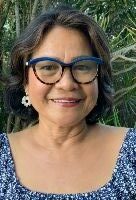
Emily Yerington, MAT '19, smiling at the camera with a floral background

Emily Yerington, MAT ‘19, has fond memories of the Montessori school she attended as a child. Now, she’s on a mission to add to the body of knowledge about the educational philosophy—known for its focus on student-guided learning—as part of a journey that’s taken her from Chaminade to Harvard.

Yerington enrolled at Chaminade’s Master of Arts in Teaching (MAT) program with a concentration in Montessori education after seeking more information from several universities that offered what she was looking for: a graduate degree with both Montessori and state teaching credentials. “I didn’t know much about Chaminade’s program,” said Yerington, who was living in Washington, D.C. at the time. “But they personally reached out to me, answered all my questions, and made sure it was a good fit.”

As part of Chaminade’s MAT program, Yerington attended class online and then participated in summertime sessions on Chaminade’s campus with other members of her cohort. She said those in-person opportunities really made a difference, allowing her to get field experience, learn more about the educational passions of her peers and build strong relationships with her professors.

Emily Yerington, MAT '19, wearing a Chaminade shirt and smiling at camera

Among those professors: Dr. Elizabeth Park, the director of Chaminade’s Early Childhood and Montessori programs, who couldn’t be prouder of all Yerington has accomplished since graduating from the university. She said it has been especially wonderful to see someone who was educated in the Montessori approach pursue research questions about Montessori education. “Seeing how she approaches learning was just very striking for me. This philosophy really works,” Park said.

The Montessori approach to education, developed by Italian doctor Maria Montessori, seeks to put children at the center of their learning. “She believed every child had their own pace of development,” Park said. “She also really believed in the importance of helping students become independent.”

It’s an educational philosophy that Yerington has seen the benefits of firsthand.

After graduation from Chaminade, Yerington started teaching at a public Montessori school in her neighborhood. It gave her the real-life knowledge she needed to take her next step: returning to school to pursue research into the effectiveness of Montessori education. She applied to a master’s degree program at Harvard, seeking references from Chaminade professors, and was accepted. She recently graduated with her Master’s of Education in Human Development and Psychology degree.

Emily Yerington, MAT '19, sitting with a student teaching

And after completing that program, focusing on Montessori educational practices along the way, Yerington landed a coveted research position under a Harvard professor at the Boston Children’s Hospital’s Nelson Laboratory, where she is currently studying cognitive function in children from infancy to age three. The goal: to develop an assessment at the earliest years of development, when interventions are most effective.

Yerington is also planning to pursue doctoral studies to further delve into research of Montessori programs, especially now that more are offered in public schools. “Now that we have more of these programs, I want there to be more evidence about how effective or ineffective they are,” she said.

While Yerington said she’d never heard of Chaminade before she found its MAT program with a Montessori concentration and applied, she is so happy she attended. “I tell everyone how much I loved Chaminade,” Yerington said. “I’ve been to three universities, one of which is probably the most well-known in the world. But I was absolutely best supported at Chaminade.”

She added, “That level of support, it came from everyone. It’s a high-quality education.”

That’s music to Park’s ears.

“I feel like a proud mom,” she joked. “Emily is so incredible, and I am so happy we were able to contribute to her success, even just a little bit. I cannot wait to see what she does next in her research.”

Posted by: University Communications & Marketing Filed Under: Alumni, Education, Featured Story Tagged With: Master of Arts in Teaching

Alumna Motivated to Reframe Literacy

August 27, 2021

Only 9% of students at Waianae High School can demonstrate competency in English Language Arts.

It’s an alarming statistic.

Shay Zykova, MEd '00

But for Shay Kaleo’oluho’iloliokawaipahe Zykova, MEd ’20, it’s also a motivator.

The ninth-grade English teacher says she’s on a mission to not only bolster her students’ reading comprehension and literacy skills, but help them develop a passion for words. That’s why she joined forces with her colleagues in 2020 to form a literacy team at her school with the intention of reshaping the Language Arts curriculum at Waianae High. She hopes to eventually take the model statewide.

“There’s a big need for literacy intervention and development,” said Zykova, who has designed her curriculum to put students at the center of their learning. They get to choose—as a class—what novels and other texts they want to read and what topics they want to write about. And along the way, they get intensive literacy instruction aimed at dramatically improving their reading and writing skills.

“We couldn’t stick with the status quo,” she said. “How can we read Shakespeare if I’ve got kids struggling to read words like ‘cat’? I want to give my students complete control over the novels they’re reading in class. It’s really exciting, a little bit stressful and 100% student-directed.”

Zykova’s work hasn’t gone unnoticed.

The National Council of Teachers of English recently named her a recipient of its 2021 Early Career Educator of Color Leadership Award. The recognition includes mentorship support, career development opportunities and an invitation to attend and present at upcoming NCTE conferences.

Zykova is delighted at the chance to build her skills—and build out her program.

“The real goal is to reframe what literacy is. I want my students to read things for fun,” she said.

Zykova started teaching in Hawaii in 2018, after a stint as an ESL instructor in St. Petersburg, Russia. (Her husband is Russian.) “It really was the starting point for everything,” Zykova said, of teaching English overseas. “I got that job and realized, ‘I don’t really know English as well as I thought I did.’

“That was my introduction to teaching.”

At the same time, Zykova was in contact with friends back in Hawaii who were teaching in public and charter schools. She said she realized that she needed to return to the islands—and pursue a degree in teaching. During her first year in Hawaii schools, she served as a long-term substitute at Kuuelawela Elementary in Kalihi. The following year, she was selected for the Teach for America (TFA) program and assigned to Waianae High. At the same time, as part of a partnership with TFA, she enrolled in Chaminade’s Master of Education in Instructional Leadership cohort program.

She said that first year of teaching was anything but easy. “I had high school students reading at the kindergarten and preschool level. I thought, ‘What is going?’ I was completely lost,” she said. But she got through it, thanks to the relationships she was building at her school and at Chaminade.

She quickly realized that the “prescribed curriculum” would need some tweaking.

And she started to look for ways to make reading and writing relevant to students. For her students’ argumentative essays, for example, she encouraged them to choose topics that were of consequence to them. Some considered the debate over the Thirty Meter Telescope at Mauna Kea. Others wrote about being multi-ethnic in Hawaii. One student wrote about the benefits of slippers over shoes.

As Zykova continuously tweaked the trajectory of her class, she says she was thankful to have Chaminade peers and mentors who could offer additional insight and guidance. She said Chaminade instructor Ralph Keahi Renaud inspired her to reflect on her Native Hawaiian identity and how it informs her teaching. After his course, she enrolled in Hawaiian language classes (and is still taking them).

Zykova also found mentors in Chaminade instructor Jessica Martinez, who taught language development, and Associate Professor and Director of Teacher Preparation Programs Katrina Roseler, who oversaw her capstone experience.

The preparation helped Zykova through 2020, a tough year for everyone—especially students and teachers. She said remote learning allowed her to throw her old plan out the window entirely and try a new direction aimed at getting students engaged (and keeping them engaged).

It worked.

“My attendance was 85 to 95%. The majority of students were in class every single day,” she said, adding one of her many future goals is to help her students not only expand what they’re reading but start telling their own stories. “I’m hoping my students will publish,” Zykova said.

Posted by: University Communications & Marketing Filed Under: Alumni, Diversity and Inclusion, Education, Featured Story Tagged With: Master of Education

Blessing Our New EdD Program

June 30, 2021

Doctor of Education inaugural cohort

The gathering celebrated the end of a long journey—and the beginning of so many others.

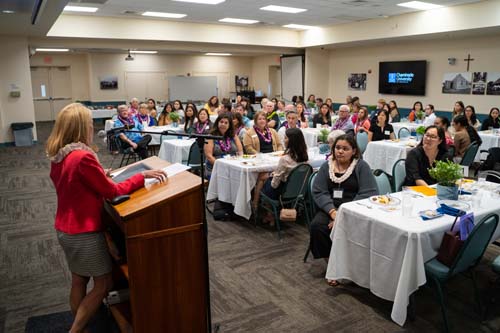
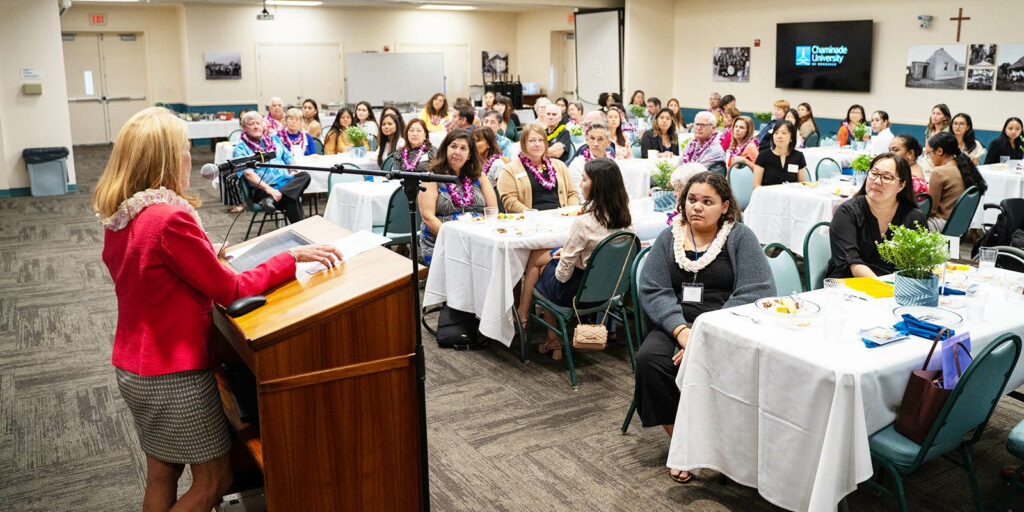
In a special ceremony on campus recently, some of the members of the inaugural cohort of Chaminade’s Doctorate of Education in Organizational Leadership for Adaptation and Change joined with faculty members, administrators and others to mark the much-anticipated kickoff of the new program. 

Kumu Keahi Renaud delivered a Hawaiian blessing followed by Father Marty Solma, SM, Chaminade’s chaplain, who led attendees in prayer. Several Chaminade administrators then took to the microphone to touch on just how much planning and commitment it took to make the day a reality.

Speaking to incoming cohort members, Chaminade President Dr. Lynn Babington said that the new doctoral degree program is “all about leadership.” She continued, “You come from such different perspectives. The richness of your learning together will be something very, very special.”

Indeed, the 33 members of the program’s first class hail from a diversity of backgrounds and professional interests. Dr. Hans Chun, director of education leadership programs, added there was particularly strong interest in the program in Hawaii. The majority of participants are in the islands.

Doctor of Education commemorative pin

The first term for the doctoral students, who will be learning fully online, begin July 6.

At the ceremony, students were given a commemorative coin with the Chaminade seal to mark the special day along with a kukui nut lei, signifying wisdom and enlightenment. Dr. Dale Fryxell, School of Education and Behavioral Sciences dean, also dedicated a turtle-shaped bench honoring the launch. He said the turtle represents knowledge and he hoped the symbolism inspired the doctoral students.

Dr. Lance Askildson, provost and vice president for Academic Affairs, said the journey students are embarking on is an exciting—and important—one. The program’s inaugural cohort will learn, work, and grow together over the course of three years, the expected completion time for the degree.

Askildson said the doctoral program is focused on leadership development across disciplines.

“But it’s also about leadership by some very courageous faculty and administrators—to bring this program forward after a number of years of advocacy,” Askildson said, speaking to the group. “The legacy that underlies … Chaminade University is of a brand of education holistic in nature, dedicated to educating the whole person, but driven by something more than just a transaction of knowledge.”

He said that individualized, whole-of-person experience is integrated into the program’s very curriculum.

And that, he added, is exactly what attracted so many professionals to the program.

To those incoming students, he said, “I applaud you and I congratulate you.”

Posted by: University Communications & Marketing Filed Under: Campus and Community, Diversity and Inclusion, Education, Featured Story, Students Tagged With: Doctor of Education

Maryknoll School Teacher Receives Teacher of the Year Award

June 15, 2021

Hawaii Catholic Schools Teacher of the Year awardee Mary Vannatta

From working late to offer one-on-one tutoring to incorporating exciting new digital tools into her classroom to inspiring students to be passionate about learning, Maryknoll School seventh-grade math and religion teacher Mary Jane Vannatta goes above and beyond to make sure her students succeed.

And all that hard work hasn’t gone unnoticed, especially during the pandemic.

For her selfless dedication to students and tireless mentorship to fellow educators, the 40-year veteran of Hawaii Catholic schools was named the 2021 Hawaii Catholic Schools Teacher of the Year.

After being honored in a virtual ceremony May 27, Vannatta received the award in-person June 2.

Hawaii Catholic Schools Teacher of the Year awardee Mary Vannatta

In addition to accepting the Golden Pineapple Trophy from Chaminade University, Vannatta was awarded $1,000 from John C. and Marilou Brogan through Chaminade, a one-year car lease from Aloha Kia and $1,000 in gas gift cards from Hele-Par Hawaii. The Augustine Education Foundation also awarded $1,500 to Maryknoll School for faculty appreciation in recognition of Vannatta’s achievement.

Nominators said Vannatta is a caring, loving educator whose world revolves around her students.

One said that she incorporates a host of different tools to ensure students thrive in the subjects she teaches, including math. And during the pandemic, her workload increased exponentially as she learned new devices and programs to teach both distance learning and in-person students at the same time.

What she doesn’t know how to do, the nominator said, she’ll figure out so she can help her students.

Another nominator said Vannatta never hesitates to put in extra time for students—before school, after school and with remote help at all hours. If they need help, she’s there for them. And she’s done the same for her fellow educators, including as a mentor to new teachers and grade level chairperson.

Vannatta is an active member of the broader school community and of her parish.

And she can often be spotted at school events, many of which she has helped to plan.

Vannatta is also a lifelong learner, frequently attending professional development opportunities, looking to improve her religion instruction. She has completed courses to reach the Master Catechist level as she seeks to help guide her students to be thoughtful, ethical citizens of strong moral character.


Mary Jane Vannatta was also featured in MidWeek. Read the article here.

Posted by: University Communications & Marketing Filed Under: Campus and Community, Catholic, Education, Featured Story Tagged With: Hawaii Catholic Schools Teacher of the Year

Students Showcase Work at Annual Na Liko Na‘auao

April 19, 2021

Na Liko Naauao virtual event 2021 screenshot

Chaminade undergraduates across all disciplines gathered virtually in early April to present their ongoing research across a broad array of exciting areas, from Native Hawaiian traditional medicine to data science database development to the microbiome, coral bleaching and cancer cell research.

The undergraduate conference, Na Liko Na‘auao, is an annual event at Chaminade to showcase exceptional original work by students seeking bachelor’s degrees and underscores the breadth and depth of academic scholarship at the University. Fields represented at this year’s conference, which included 23 presentations in all, ranged from Biology to Data Science to the Forensic Sciences.

The Na Liko Na‘auao symposium was first held at Chaminade in 2002.

Among the impressive topics students tackled this year:

  • “Modeling The Microbiome Of Aa In Vitro Taro Digestion Model,” from Ava Dysarz
  • “Seasonal Difference In Carcass Decomposition On Oahu,” presented by Marietta Lee
  • And “Keawawa Water Analysis And Restoration,” from Dorie Sanborn and Trinity Young

Organizers say Na Liko Na‘auao not only gives undergraduates an opportunity to offer the broader University community a glimpse into what they’re working on. It also gives them a chance to hone their presentation and speaking skills, synthesizing their research for a general audience.

The public forum also gives students an opportunity to take questions, giving them insight into their research strengths along with potential areas for improvement, further exploration and collaboration.

Also at Na Liko Na‘auao, the recipients of two prestigious Chaminade awards were announced.

Dr. Lynn Babington, Darian Balai and Dr. Rylan Chon

The President Sue Wesselkamper Prize, which recognizes a student who has displayed academic scholarship beyond the classroom and has a record of service learning volunteerism and leadership, was awarded to Data Science student Dairain Balai, who is also minoring in Biology and Criminal Justice.

In nominating her for the award, Data Science program Director Dr. Rylan Chong said Dairain has participated in a host of leadership and research growth opportunities—and excelled in each of them.

And her work is already getting noticed. To continue her research on Native Hawaiian women’s health, Dairain was selected for a competitive spot as a paid research assistant at the University of Texas in Austin Texas Advanced Computing Center, where she is also serves as a mentor to other students.

Chong said Dairian, who graduated from Waianae High and is a Ho’oulu Scholar, “represents what Chaminade is all about locally, in her community, and on the mainland by going beyond the expectations of her service to community and education, development of her moral character, personal competencies, and commitment to build a more just and peaceful society.”

Danson Oliva, Dr. Kate Perrault and Dr. Lynn Babington

Also announced at the event: the recipient of the President Mackey Prize, which recognizes a faculty member at Chaminade with a record of student mentoring and a strong, ongoing commitment to providing students with research or creative experiences that go beyond the classroom.

This year’s awardee: Dr. Kate Perrault, an assistant professor of Forensic Sciences and Chemistry.

Undergraduate researcher Danson Oliva nominated Perrault for the honor, saying the professor is “extraordinarily passionate about the course material and wants every student to succeed.” Oliva added that working in a lab under Perrault has been a wonderful growth experience, allowing her to flex her scholarship muscles while also getting helpful and instructive feedback and mentoring.

“As a research mentor, she guides us but also helps us troubleshoot problems when they arise,” Oliva wrote. “With the help of Dr. Perrault, I have gone on to give two conference presentations on my project. It wouldn’t have happened if Dr. Perrault didn’t truly believe in our ability to succeed.”

Posted by: University Communications & Marketing Filed Under: Behavioral Sciences, Business & Communication, Campus and Community, Education, Faculty, Featured Story, Humanities, Arts & Design, Institutional, Natural Sciences & Mathematics, Nursing & Health Professions, Students

New Doctorate of Education Trains Leaders for Adaptation and Change

March 12, 2021

Professionals who are ready to step onto that highest rung of the educational ladder and earn a doctoral degree have a new online option.

Chaminade University’s new Doctorate of Education (EdD) in Organizational Leadership for Adaptation and Change is for working professionals in industries such as education, business and healthcare. The 60-credit program is being offered for the first time starting in July.

Dr. Dale Fryxell (dean, School of Education and Behavioral Sciences) standing in classroom

“We developed this program to meet the needs of busy, active, working adults who have careers and families,” says ​Dr. Dale Fryxell​, Dean of the School of Education and Behavioral Sciences. “An online program lets them fit school into their schedules because they can do the coursework on their own time. It just gives people so much more flexibility. It’s a more efficient way for busy people to get a degree and improve their opportunities as a professional.”

A Doctorate in Education helps people build an impressive skill set and advance their careers. It also generally means a higher pay level.

According to Chaminade President Dr. Lynn Babington, leadership is both an art and a science, and she says the new EdD program has a strong foundation in both.

“Here at Chaminade, we believe that transformational leaders are not born that way but are developed,” she says. “To that end, we designed our new, online EdD program to prepare students to become inspirational leaders who are extremely skilled at adapting to changing conditions and new variables while also motivating people and communities.”

That focus on adaptation and change is one factor that sets Chaminade’s new program apart from other EdD in Organizational Leadership programs. “Educating for adaptation and change” is one of the essential Marianist principles that guide Chaminade University in all its decision-making.

While the COVID-19 pandemic has emphasized the importance of pivoting and finding creative solutions, being skilled at working with adaptation and change has always been critical in organizational leadership and always will be.

EdD for educators, business professionals and leaders of indigenous-serving organizations

Chaminade’s new EdD program prepares students in organizational transformation for success, growth and positive impact in one of three concentrations—educational leadership, indigenous leadership or organization development.

The educational leadership track primarily targets experienced education professionals—teachers and administrators—who want to develop their leadership skills and advance in their careers. Fryxell says there are many career paths for those with a doctorate in education, including going into post-secondary education and becoming a professor or moving into administrative positions at K-12 or higher education schools. Others may become director of a religious organization or school or move up to a district- or state-level education position.

Dr. Blendine Hawkins teaching a class

The educational leadership concentration helps develop action-oriented leaders who are well-equipped to lead person-centered learning communities and promote social justice and positive change. Courses specific to this track include Leadership for Educational Administrators, and School Community Relations.

The indigenous leadership concentration focuses on preparing leaders, especially Native Hawaiians and other Pacific Islanders, who work in indigenous cultural organizations.

Fryxell points out there are different indigenous leadership styles and approaches to leading people. A positive aspect of this concentration is what he calls “cross-pollination,” or sharing how different cultural groups approach leadership or create pathways.

Specific courses in the track include Indigenous Leadership and Organizational Management, and Power, Politics and Policy: Historical and Contemporary Perspectives.

There is also an indigenous leaders speakers series, which students in any of the concentrations can attend to learn from indigenous leaders around the world.

Fryxell says it’s common for people on the U.S. mainland to follow the third track, an EdD in organization development, after earning an MBA.

“That’s what a lot of MBAs do,” he says. “They lead organizations. This program is an opportunity for them to focus even more on developing leadership skills, looking at and using data for decision-making and learning how to streamline their organization and make it more effective.”

The organization development track provides an interdisciplinary approach for professionals in the business, healthcare, nonprofit and public sectors who want to drive positive change and transform their organization for success.

Many nurses get an EdD in organization development, says Fryxell, and use that as a springboard into teaching at the college level. This concentration also attracts training and development managers, human resources personnel, nonprofit directors and high-level management staff. Its track-specific courses include Leading Organizational Change, and Consulting Skills.

Mentorship and real-world problem solving

Program directors will work closely with each student, looking at their career goals and aspirations and helping them plan their path through the doctorate.

Professor teaching online to her students

The fact that the new student-centered Chaminade EdD program is 100 percent online does not constrain its emphasis on mentorship. The program is designed to foster mentor relationships that promote personal growth, critical thinking and robust dialogue. In addition to working online with professors, students are also welcome to meet with them in-person on campus.

Every dissertation committee, chaired by the EdD director, will also consist of a faculty member and someone from the community. “For example, if a student is going to do their dissertation on, say, DOE leadership, they might ask an assistant superintendent to be on their dissertation committee; somebody that’s working in the field and really knows the field to help them through that process,” says Fryxell.

“Then they also have the faculty member who’s going to help them with the academic rigor, the writing process, and the dissertation development process,” he says. “And then the chair, the EdD director, who will shepherd them through the entire dissertation process, keeping them motivated and on target so they can get that dissertation done and finish up the program.”

He says a goal of the EdD program is for students to identify a real-world problem or issue that their organization—whether it’s a school, business or indigenous organization—is currently facing and turn that into a research project. They will determine the problem, come up with a testable hypothesis, research data about the problem and develop a solution. That allows them to come up with innovative solutions in a real-world setting.

“As they go along in leadership positions throughout their careers, they will have to make decisions,” he says. “And looking at an action research process will help them be good users of previous knowledge and data to take their organizations to where they want to lead them.”

All dissertation work happens as part of a student’s coursework, and students can finish the entire EdD program in 36 months.

Fryxell says the program is an excellent opportunity for anyone looking to further his or her career and also advance themself as a person.

“I think they’ll be able to take what they learn in this program and make positive changes in everything they do. I think it’s going to be a great program and have a big impact, not only on our students but also on the community and Hawai‘i and across the Pacific.”

Networking and collaboration for resilient leadership

Throughout the EdD program, students will be able to participate in enrichment activities. A virtual brown bag series, for instance, will feature leaders who speak on various topics.

Virtual professional practice writing circles will break classes into small groups that can work together on their writing. “A lot of doctoral work involves writing,” says Fryxell, “and this way students can bounce their ideas and papers off their classmates.”

Dr. Hans Chun speaking

He stresses the importance of students supporting each other, discussing each other’s ideas, and being resources for each other.

“A lot of being successful throughout a career has to do with networking and your ability to form and keep relationships, so we’re hoping this program will really enhance that,” he says.

An EdD student organization will allow students to coordinate social or community service events, whether in-person when possible or else online. “We’re expecting there will be students from the mainland and from throughout the Pacific, but there will be various ways for them to connect.” 

An annual Research Symposium will provide opportunities to participate in local and national conferences, offering more opportunities for students to meet, interact and support one another.

Educating the whole person

While the academics at Chaminade are innovative, modern and up-to-date, it’s never only about academics. A central Chaminade principle, built into every academic program, is to educate the whole person.

“To be a well-rounded person and a good leader,” says Fryxell, “you have to have psychological strength, intellectual strength and certainly moral strength. You have to take care of your body through exercise and diet. With all our programs, we try to help people remember it’s not about any one area of your life. It’s really about improving all areas of your life in order to be a better, more effective person.”  

The school’s professors, themselves leaders and experts in their field and the community, aim to develop future leaders who lead with open minds and understanding in their hearts, are part of the solution, and make a difference in their community. Ideally, students not only move their careers forward but also become changemakers.

A Chaminade education is also about values and ethics, including social justice. That’s one of Chaminade’s defined values—educating for service, justice and peace—and it’s an important focus of the EdD program.

“The need for social justice is infused throughout our whole program,” he says, “because no matter what organization you’re working for or what environment you’re in, that’s what you have to keep top-of-mind: What am I doing to help my community? What am I doing to help my workers? How am I contributing to the betterment of mankind?”

Online EdD offers flexibility and access

“If there’s one thing we’ve all learned during the COVID-19 pandemic, it’s how to pivot,” says Fryxell. “How to make things fit into our new lives. How to make it happen.”

As we move forward, he says, organizations also must adapt to new and continually changing environments and situations.

“What we hope to do in this program is really prepare students to be able to make those continuous changes they’re sure to face in their careers,” he says. “I think COVID brought this issue to the forefront—that you have to be adept at changing the way your organization does things, or your organization won’t survive. That’s why the ability to adapt and change is the focus of our entire program. But it’s not only because of COVID. Those abilities were important before the pandemic, and they’ll still be important afterward.”

He predicts we’re going to continue seeing significant changes at all levels of education as technology keeps moving forward.

“I think online programs will continue to grow and develop, and as technology advances and new software comes up, it will be amazing. We can do things online now that you couldn’t do even a year ago. Hardly anybody even knew what Zoom was one year ago.”

He says there’s already been a strong online presence at Chaminade for some time. “So many of our professors, including myself, have been teaching online since the beginning of online education. So with COVID and the forced move to technology, it just really had to do with bringing more people along into a modern online world. It’s something we’re really well-prepared for, and I think it’s going to keep evolving and developing.

“And at Chaminade, we’ll be there continuing to evolve and develop right along with it.”

For more information, see the EdD in Organizational Leadership. Applications for the first online EdD session, which starts on July 6, 2021, are due on June 18.

Posted by: University Communications & Marketing Filed Under: Education, Featured Story, Innovation, Institutional Tagged With: Doctor of Education

  • « Go to Previous Page
  • Page 1
  • Interim pages omitted …
  • Page 8
  • Page 9
  • Page 10
  • Page 11
  • Page 12
  • Interim pages omitted …
  • Page 17
  • Go to Next Page »

Footer

Chaminade University Logo

3140 Waialae Avenue
Honolulu, Hawaii 96816

Contact Us
Phone: (808) 735-4711
Toll-free: (800) 735-3733

facebook twitter instagram youtube linkedin

Visit

  • Plan Your Visit
  • Campus Map (PDF)
  • Events

Resources

  • Campus Security
  • Student Consumer Information
  • Concerns, Feedback, and Reporting
  • Institutional Review Board
  • Title IX / Nondiscrimination Policy
  • Compliance
  • Emergency Information
  • Careers
  • Institutional Statement

People

  • Students
  • Parents
  • Alumni
  • Faculty & Staff

Policy

  • Privacy Policy
  • Terms and Conditions of Use


© Chaminade University of Honolulu