• Skip to primary navigation
  • Skip to main content
  • Skip to footer
Chaminade University of Honolulu

Chaminade University of Honolulu

  • VISIT
  • APPLY
  • GIVE
  • STUDENTS
  • PARENTS
  • ALUMNI
  • FACULTY/STAFF
  • Admissions
    • Admissions Home
    • Undergraduate Students
      • First-Year Students
      • Transfer Students
      • Admitted Students
    • Graduate Students
    • Flex Online Undergraduate Program
    • Military Students
    • Non-Degree/Visiting Students
    • Experiential Honors Program
    • Early College Program
    • New Student Orientation
  • Tuition & Aid
    • Financial Aid Home
    • Tuition & Expenses
    • Federal Updates & Changes
    • Scholarships
    • $5,000 Graduate Scholarship
    • VA Education Benefits
    • Net Price Calculator
  • Academics
    • Academics Home
    • Academic Programs
    • Office of Student Success
      • Academic Advising
      • Records and Registrar
    • Kōkua ʻIke (Support Services)
      • ADA Accommodations
      • Career Services
      • Proctoring Services
      • Tutoring Services
    • Sullivan Family Library
    • Undergraduate Research & Pre-Professional Programs
    • Commencement
  • Campus Life
    • About Campus Life
    • Student Engagement
    • Student Government Association
    • Residence Life and Housing
      • Summer Conference Housing
    • Health Services
    • Marianist Leadership Center
    • Counseling Center
    • Campus Ministry
    • Campus Security
    • Dining Services
    • Bookstore
  • Athletics
  • About
    • Chaminade University News
    • Our Story
    • Leadership
    • Chaminade University Strategic Plan 2024-2030
    • Mission & Rector
    • Association of Marianist Universities
    • Facts & Rankings
    • CIFAL Honolulu
    • Accreditation & Memberships
    • Montessori Laboratory School
Search
×

Search this web site

CIFAL Honolulu

Cutting-edge GIS Certification

June 10, 2024

The certification is designed to tailor data science training with community and workforce needs.

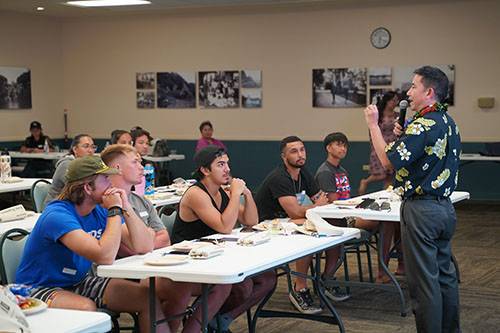
Biology Professor Dr. Helen Turner is the Principal Investigator for Chaminade’s NSF Alliance Supporting Pacific Impact through Computational Excellence (ALL-SPICE) program.

When Chaminade University introduced its Data Science & Analytics degree in 2018, the University became among the first in the nation to offer such a curriculum at the undergraduate level.

Today, in partnership with the National Science Foundation (NSF), the Pacific Intelligence Innovation Initiative (P3I) and Chaminade University’s United Nations CIFAL Honolulu Center for Sustainability, the University offers various sought-after certificates in Geographic Information Systems (GIS), which are accredited by the United Nations Institute for Training and Research (UNITAR) and the NSF.

“GIS leads to a very desirable skill set with applications relevant to the Department of Defense sector and defense contractors, and nonprofits and agencies working in agriculture, on sustainability and resilience,” said Dr. Helen Turner, Biology Professor and Principal Investigator for Chaminade’s NSF Alliance Supporting Pacific Impact through Computational Excellence (ALL-SPICE) program.

“It also has applications in public health (geospatial mapping of outbreaks, provider and resource allocation, and health disparities and inequities), and policy and planning (State and Federal planning efforts in transportation, housing, natural resource management and disaster/emergency management.”

According to P3I co-chair Jason Chung, the company’s mission is about developing careers for the people of Hawaii, allowing island residents to work, live and stay in Hawaii.

It’s also about building a more resilient economy through diversification, and creating opportunities for the growing demand for information technology, cybersecurity, data science and intelligence professionals within Hawaii’s defense sector—the second leading economic driver in the state.

Prior to interning with P3I, Kawailani Luat ’23 was resigned to the fact that she would have to leave her home state to find a job in her field of data science that would pay her a decent wage.

However, the experience with P3I changed her mind, opening her eyes to the many potentials, locally, where she can focus her career toward.

Now working as a data analyst with Huntington Ingalls Industries (HII)—an all-domain defense and technologies partner, recognized worldwide as America’s largest shipbuilder—the Mililani native credits her internship with P3I as leading to this opportunity of a lifetime.

“By providing opportunities locally, I could stay in Hawaii, and I know a lot of local kids who want to stay home,” Luat said. “Without P3I, I would not have the career that I have today.”

Managed by the Hawaii Defense Alliance (HDA) and supported by Hawaii congressional delegates, P3I is committed to supporting economic development in Hawaii by creating jobs and opportunities for Hawaii’s students, businesses and military.
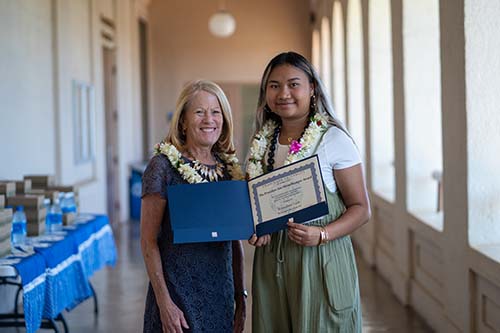
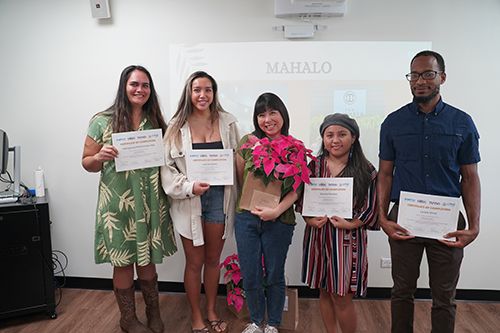
Chaminade President Dr. Lynn Babingto presented Kawailani Luat with her President Sue Wesselkamper Award during last year's Na Liko Na’auao.
Chaminade President Dr. Lynn Babington presented Kawailani Luat with her President Sue Wesselkamper Award during last year’s Na Liko Na’auao.

“P3I connects individuals to educational and certificate programs, and internships, to prepare them with the experience and skill sets needed to succeed in these high-paying careers,” Chung said. “P3I is a collaboration with public, private and academic institutions across the state.”

Over the past five decades, geographic information systems have transformed from a simple concept into a sophisticated science. This remarkable evolution, from a basic tool to a powerful platform for comprehending and planning our world, is one of the fastest growing—and highly consequential—technological tools.

GIS, by definition, is exclusively used to refer to a particular kind of geospatial technology that stores geographic information in layers and integrates that data with software programs.

These software programs can then create, store, manipulate, analyze and even visualize the data for further use. Conversely, geospatial studies and practices set themselves apart with three unique practices: a particular focus on the management, analysis and representation of geographic data.

These elements create the three essential levels of geospatial practice:

  • Data management naturally includes acquiring, cleaning and integrating data into a system.
  • Data analysis refers to choropleth mapping, overlay and spatial query.
  • Data representation refers to producing representational maps, charts and graphs of geographic information.

“While data science analytics and visualization has been around for 15 to 20 years, it was only a decade ago that it really impacted higher education,” said Dr. Lance Askildson, Chaminade’s Provost and Senior Vice President, during a Hawaii Defense Alliance-hosted webinar about geospatial analytics careers and workforce development.

“From my perspective, I can see that we’re reaching a point where there’s so much data to disaggregate that we’re having to develop new tools, new methodologies and new credentialing pathways for professionals to make sense of it.”

In response, universities, like Chaminade, are fulfilling this niche demand by offering comprehensive curricula that blend theoretical knowledge with practical skills gained through experiential internships. Also a panel member of the geospatial analytics career webinar, Data Science Professor, Dr. Mark Speck, addressed the lack of supply of good candidates who are trained in the geospatial field.

“It’s difficult enough to find one person trained in a certain discipline, like geospatial and geospatial intelligence,” Speck said.

“It is even more difficult to try to find more of them on an island. Local contractors can hire people from the mainland, but they have trouble keeping them on island, and it’s also very expensive for them to bring people to Hawaii.

“So, it’s much easier and cheaper for them to train and invest in candidates who are from Hawaii and who are more likely to stay,” Speck added. “One of the focus of HDA is to hire local kids and keep them on island with good-paying jobs.”
Posted by: University Communications & Marketing Filed Under: Alumni, CIFAL Honolulu, Diversity and Inclusion, Featured Story, Innovation Tagged With: Alumni, Data Analysis & Visualization, Data Science, Internship

Sustainable Entrepreneurship

April 2, 2024

New ENV 490 Sustainability Innovation class stimulates paradigm shift

Aside from being tongue twisters when said in succession, the terms sustainability and entrepreneurship are indeed big words, as pointed out by ’Inana Sustainability Entrepreneurship Program’s coordinator, Mariane Uehara. Tasked with creating a curriculum for the inaugural ENV 490 Sustainability Innovation course, Uehara admitted that she “jumped into the unknown” when she joined the United Nations’s CIFAL Center at Chaminade University.

At the core of the ENV 490 is a student-driven project that’s in partnership with a local company. The goal was to balance the triple bottom line—people, planet and profit—while addressing the long-term impact of business activities on the environment and society. Sustainable entrepreneurship recognizes the interdependence of economic development, social well-being and environmental health, and seeks to create value in a way that is responsible and ethical.

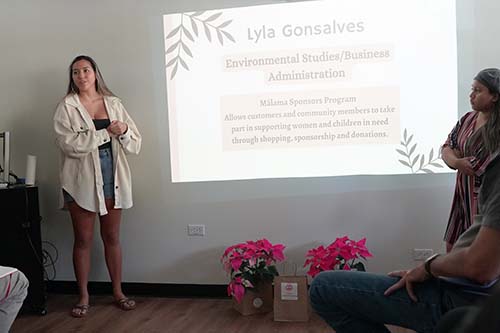
Lyla Gonsalves, left, and Jasmine Mondelo discussed possible solutions for Ten Tomorrow to become more sustainable.
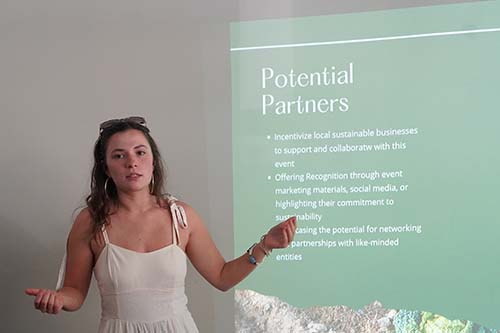
Sarah Carroll '25 identified potential partners that could help Re-use Hawaii and its sustainable efforts.
Sarah Carroll identified potential partners that could help Re-use Hawaii gain greater community support.
Ten Tomorrow designer Summer Shiigi, center, liked the ideas presented by Chaminade students, from left, Ka‘I‘inipu‘uwai “Mini” Keli‘iho‘omalu-Holz ’24, Lyla Gonsalves ’25, Jasmine Mondelo ’25 and LaVelle White ’26.
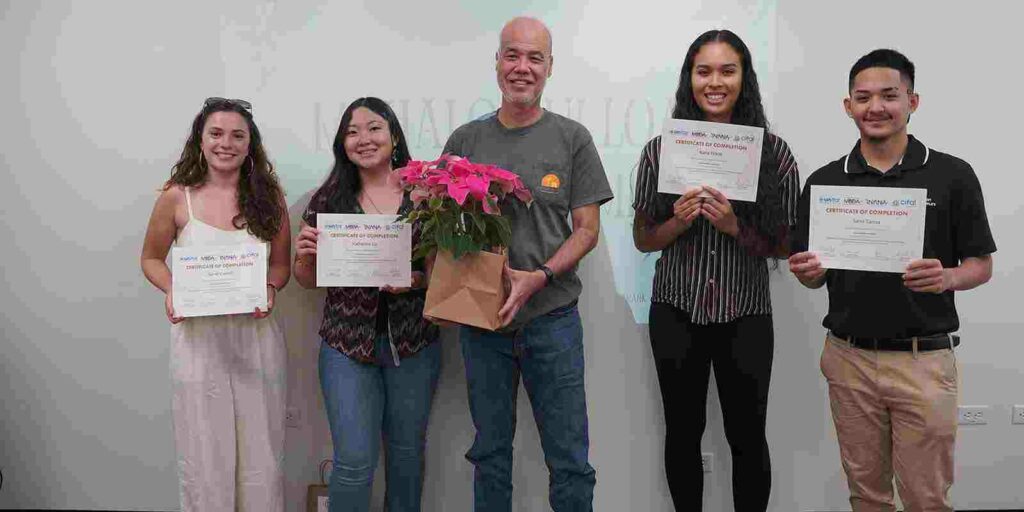
Re-use Hawaii's Workforce Development Coordinator Nathaniel Pak saw value in Chaminade student's sustainable efforts for the nonprofit. Team members included, from left, Sarah Carroll '25, Katherine “Kat” Liu ’26, Kaila Frank ’24 and Sano Tanna ’24.
Re-use Hawaii’s Workforce Development Coordinator Nathaniel Pak saw value in Chaminade students’ sustainable efforts for the nonprofit. Team members included, from left, Sarah Carroll ’25, Katherine “Kat” Liu ’26, Kaila Frank ’24 and Sano Tanna ’24.

“All the students’ projects had to align with at least one of the United Nations’s 17 Sustainable Development Goals (SDGs),” Uehara explained. “Although the vision was blurry at first, we figured out the puzzle together, and we had fun while doing so.”

According to Uehara, the three goals of the ’Inana Program are: 1) To develop and implement programs for the education and training of undergraduate students in subjects directly relating to successful entrepreneurship; 2) To support minority business enterprises (MBEs), including building a diverse entrepreneurial pipeline to grow the number of MBEs; and 3) to create a UN Certificate program in sustainability entrepreneurship.

Divided into three teams, 14 students presented their final entrepreneurial projects, working alongside with Ten Tomorrow, Re-use Hawaii and Plantoem. Under the mentorship of Uehara, and Cort Isernhagen and Jamie Lui of Diamond Head Research—a company that helps small companies track and assess their activities to identify trends and innovative business models that best support Corporate Social Responsibility, Environmental, Social and Corporate Governance, and philanthropic initiatives—the aspiring entrepreneurs demonstrated their ability to think outside the box.

“First of all, who are you guys,” rhetorically asked Lui after listening to the students’ presentations. “You’re a completely different group from when we started this class a few months ago.”

Exuding confidence, Sarah Carroll ’25 proposed a “Hanau Hana Aloha Event,” which would advertise Re-use Hawai’i as a community-based nonprofit worthy of long-term patronage and donation. Additionally, it would also pose these solutions: Engage an eco-conscious audience; showcase Re-use Hawaii’s mission beyond social media; and connect with long-term donors through a captivating experience.

“Hosting an upcycle consignment event for Re-use Hawaii would present an innovative solution to address several pressing challenges,” the Data Science and Visualization major said. “It would help Re-Use connect with the community and give it more visibility, as well as broaden its donor pool.”

Other Re-use Hawaii members included Katherine “Kat” Liu ’26, Sano Tanna ’24, Lihau Keoneula ’24 and Kaila Frank ’24.

Pairing with Ten Tomorrow designer Summer Shiigi, Jasmine Mondelo ’25, Ka‘I‘inipu‘uwai “Mini” Keli‘iho‘omalu-Holz ’24, Lyla Gonsalves ’25 and LaVelle White ’26 aligned their entrepreneurial proposals with the local clothing company’s line of modern resort wear. An Environmental Studies major, Keli‘iho‘omalu-Holz identified the problem of having to bring in fabric, which contributes to carbon emissions, microplastics and landfills.

Keli‘iho‘omalu-Holz’s solution was to source fabric that would be less harmful to the environment. She cited such alternatives as hemp, organic cotton, bamboo, recycled material and Tencel fabrics, which are produced with environmentally responsible processes from sustainably sourced natural raw wood fibers. Tencel textiles are also certified biodegradable.

“I have a really keen interest in fashion, which is why I chose Ten Tomorrow ,” Keli‘iho‘omalu-Holz noted. “I wanted to find cost-effective solutions and sustainable fabrics that didn’t have a negative impact on our environment.”

Alexandra Zingarelli ’24, Sydney Danielson ’25, Pūnohu Keahi ’25, Aleeyah Lemons ’24 and Conor McMahon ’24 partnered with Zoe Zhang of Plantoem, a portmanteau of plant and poem, and suggested a “Plantoem’s Appreciation March 2024.” Each week would tackle a different aspect, from the significance of native plants and “Aloha ʻĀina: Environmental Health Talk Story Event” to carbon offset, plant therapy and sustainable living workshops.

“They really listened to what I had to say,” said Zhang, who founded Plantoem because of her love for plants and poetry. “Their proposal to me is highly viable. Since we came up with the awareness month idea during their second visit, I have already been in touch with some of the speakers who are interested in participating. The basic structure of the event month has already been sketched out. And the students are coming back to help work on the events in March.”

In his closing remarks, Isernhagen commented on the diversity of ideas and the prototypes the students developed. “I liked the fact that you met the businesses where they were,” he concluded. “Your lenses were all sharply focused around sustainability. And I liked the fact that you collectively approached one problem but each of you came up with your own individual solution.”

Posted by: University Communications & Marketing Filed Under: Business & Communication, CIFAL Honolulu, Diversity and Inclusion, Featured Story, Hogan Entrepreneurial Program, Innovation, Institutional Tagged With: CIFAL, CIFAL Center, Hogan Entrepreneurs Program, School of Business and Communication

Iceland Beer Spa

December 11, 2023

E+ID students enter International Architecture/Design Contest

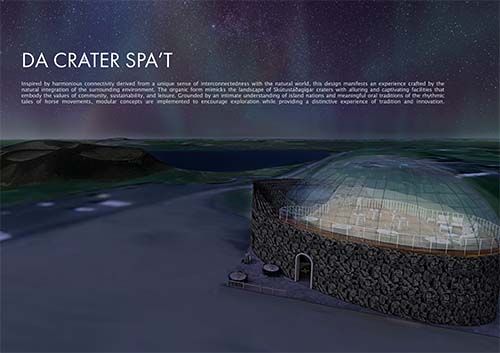
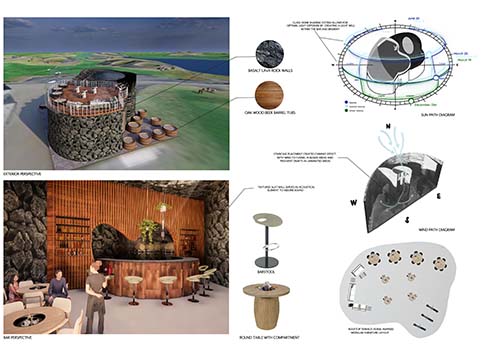
E+ID students' presentation board for the Iceland Beer Spa International Architecture/Design Competition.
E+ID students’ presentation board for the Iceland Beer Spa International Architecture/Design Competition.
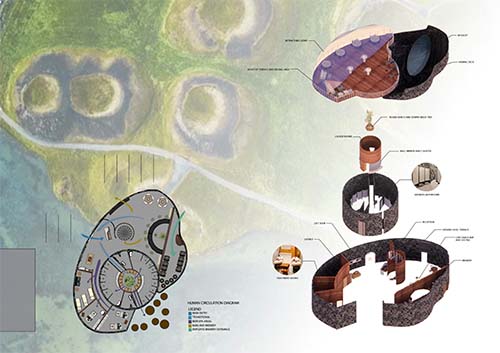
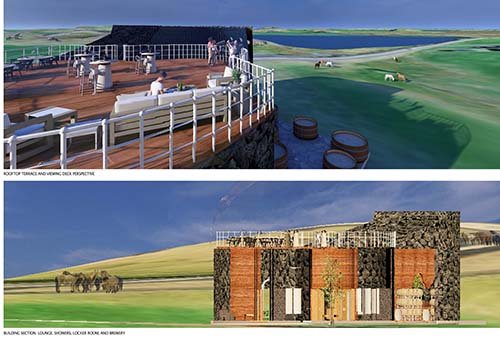
E+ID students' presentation board for the Iceland Beer Spa International Architecture/Design Competition.
E+ID students’ presentation board for the Iceland Beer Spa International Architecture/Design Competition.
E+ID students' presentation board for the Iceland Beer Spa International Architecture/Design Competition.
E+ID students’ presentation board for the Iceland Beer Spa International Architecture/Design Competition.
E+ID students' presentation board for the Iceland Beer Spa International Architecture/Design Competition.
E+ID students’ presentation board for the Iceland Beer Spa International Architecture/Design Competition.

After electronically submitting their final design concept to the Iceland Beer Spa International Architecture Competition, Katherine Liu ’26, Farrah Dinh ’25, Jazlynne Williamson ’25 and Soraya Ortiz ’25 were finally able to breathe a sigh of relief. For the past several weeks, the Chaminade Environmental + Interior Design majors were busy conceptualizing an eco-friendly space that would include a brewery, café snack bar, souvenir shop and full-service day spa facility.

“I asked them if they wanted to enter the competition, and they jumped at the chance,” says associate professor of Arts and Design Junghwa Suh, D.Arch, of the four students in her EID 384 class that focuses on sustainability in design. “It’s really impressive what they’ve been able to come up with in such a short amount of time.”

The overall competition was to replace an existing building on the property of the Sel Hotel, a family-run establishment, which is situated right in the Lake Myvatn area next to the legendary Skutustaoagigar craters, offering a prime location for a groundbreaking multi-purpose facility.  The competition sought to create a landmark destination that reflects the spirit of the region and provides an unforgettable experience for both tourists and locals alike.

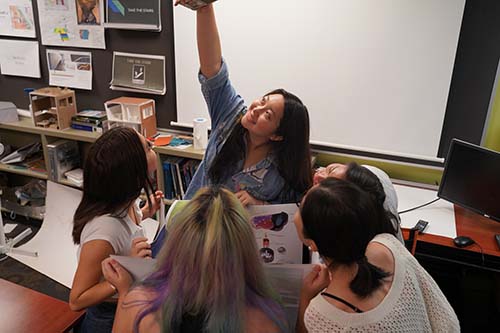
Katherine Liu ’26, Farrah Dinh ’25, Jazlynne Williamson ’25, Soraya Ortiz ’25 and Dr. Junghwa Suh take a selfie before submitting their final design concept to the Iceland Beer Spa International Architecture Competition.

“Dr. Suh informed us that during her trip to Iceland, a tour guide explained how horses huddle and have formations to maintain warmth,” explains Liu, who initially wanted to pursue a degree in industrial engineering. “We wanted to integrate this idea into our design somehow since Icelandic culture values horses a great deal, and our project was strongly based off of organic forms and the idea of ‘life emulating nature.’

“The showers and bathrooms, for example, represent a cell or ecosystem within the organic crater shape of the building,” Liu adds. “Since we needed a modular element in our design, we decided to have our terrace furniture mimic the horse formations, showing the different groupings, which could be easily rearranged.” 

According to organizers, the competition was a rare opportunity to contribute to the evolution of hospitality and wellness in one of Iceland’s most enchanting regions. Designs had to be innovative and environmentally sensitive with the potential of making a lasting impact on the Myvatn Lake area and the world of architecture and design.

“This was the first time that Chaminade design students entered an international competition of this magnitude,” Suh says. “They’ve worked really hard and I’m proud of the final presentation.”

Praising Dinh, Williamson and Ortiz for their contributions, Liu says there was a lot of trust among them. “Jaz even let me take her laptop home because mine didn’t have some of the functions I needed to edit the design,” adds Liu, a student representative with the American Society of Interior Designers and a former intern with G70, a Honolulu architecture firm. “I even had her remotely take over my computer so we could finish this project on time.”

The finished design, “Da Crater Spa’t” creates a cohesive, functional and inviting space that caters to the various needs of guests. More importantly, the final product harmoniously incorporates the environs of Lake Myvatn, featuring basalt lava rock, natural ventilation, and eco-friendly finishes and materials that balance the serene beauty of the environment with the functional requirements of the project.

“They were super motivated and ambitious,” Suh says. “For three juniors and one sophomore, the level of their work is beyond impressive, and I hope they win.”

However, Liu, Dinh, Williamson and Ortiz acknowledge it’s going to be a difficult path. The competition, after all, is open to international licensed architects and designers who have years of experience in their respective fields. Still, the four Siverswords remain optimistic.

“If we win, we get to go to Iceland,” says Liu who plans on participating in a study abroad program in Florence, Italy next year. “After completing this project, my biggest takeaway was understanding the balance of adhering to a competition project timeline while continuously evolving design concepts through rigorous collaborative efforts.”

Posted by: University Communications & Marketing Filed Under: CIFAL Honolulu, Homepage, Humanities, Arts & Design, Institutional, Student Life Tagged With: Environmental + Interior Design, Honors and Awards

Cybersecurity Workshop

December 8, 2023

Expert warns of maintaining healthy online hygiene

Similar to what you would hear at a dentist office, Liam Wesley dispensed advice about the importance of daily hygiene during a Cybersecurity Workshop at the Data Science Center in Tredtin Hall. But for the cybersecurity expert, this means never using the same username nor the same password ever! Just like you would never keep using the same strand of floss.

In an era dominated by digitization, Wesley described the importance of robust cybersecurity measures that cannot be overstated. As online users navigate an increasingly interconnected world, the guardians of our digital realm are facing new challenges and adapting strategies to protect against evolving cyber threats. Wesley is among them fighting the digital perils.

The 90-minute Cybersecurity Workshop was hosted by the National Science Foundation ALL-SPICE Alliance, which includes the United Nations CIFAL CENTER of Honolulu, Information Technology and Services Department (senior director Jules Sukhabut), the Networking Department (director Joseph Rosario), Data Science, Analytics and Visualization Program (director Rylan Chong, Ph.D.) and the Computer Science Department.

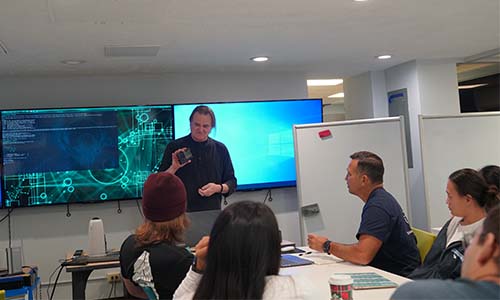
Liam Wesley—a penetration tester and cybersecurity engineer with High Tech Hui, LLC and Cyberruptive—demonstrated some of the tools that professional hackers keep in their arsenal.

“We brought in Liam to demonstrate real cyberattacks, and discuss how a student can protect themselves for educational purposes and build awareness,” said Chong, Co-Principal Investigator of the National Science Foundation’s Alliance Supporting Pacific Impact through Computational Excellence (ALL-SPICE) grant. “Joe and I plan to pilot this cybersecurity workshop to Natural Sciences and Mathematics students to gauge interest. This will help us understand if there is interest for future workshops, larger workshops and/or a need for a cybersecurity course or program.”

Cybersecurity experts, like Wesley—a penetration tester and cybersecurity engineer with High Tech Hui, LLC and Cyberruptive—warn of the escalating sophistication of cyber threats, ranging from ransomware attacks that cripple essential services to targeted phishing campaigns exploiting the remote work landscape. The proliferation of Internet of Things (IoT) devices—AI voice assistants like the Amazon Echo and Google Home—coupled with the rise of artificial intelligence in cyberattacks, adds a layer of complexity to the battlefield.

In the face of these evolving threats, organizations are doubling down on best practices to fortify their defenses. This includes regular employee training to recognize and thwart phishing attempts, implementing multi-factor authentication, and keeping software and systems up-to-date with the latest security patches.

“Patching is absolutely necessary,” Wesley said. “But wait a few days to avoid the potential for buffer overflow, which are memory storage regions that temporarily hold data while it is being transferred from one location to another.”

Initially limited to Rosario’s computer science networking class, the workshop was eventually opened to all Natural Sciences and Mathematics students due to the importance of the topic and the large interest from Chong’s previous presentation on the topic.

One of the workshop’s primary goals was to bring awareness and introduce education innovation. Chong explained that the topic is very important for the University’s DSAV, CS and NSM students, as many of them are doing research, working with data and sensitive data at various organizations for jobs and internships, and using computers.

“Instead of traditionally just bringing in someone to talk about cybersecurity in general, our goal was to make this relevant to the students to build awareness, address on the national security level the lack of cybersecurity education in schools, and an approach to work on better securing our campus,” Chong said. “In addition, we are planning to take an innovative educational approach by actually demonstrating how easy it is to hack and simulate how bad a cyberattack can be to an organization.”

The landscape of cybersecurity is indeed dynamic and ever-evolving. Experts agree that a collaborative, proactive approach—comprising technological innovation, regulatory compliance and ongoing education—is essential to safeguarding our digital world against the relentless tide of cyber threats.

“There was a lot of information, which was hard to keep up with,” said data science and visualization major LaVelle White ’26. “He explained pretty well how hackers get into systems, even though I can’t hack, but I understood the concept.”

Posted by: University Communications & Marketing Filed Under: Campus and Community, Center for Strategy and Innovation, CIFAL Honolulu, Homepage, Innovation, Institutional, Natural Sciences & Mathematics Tagged With: Campus Event, Data Analysis & Visualization, Data Science, Guest Speakers

‘Inana Innovators Program

October 13, 2023

Chaminade students participate in sustainability entrepreneurship

Madison Makishima ’25 was able to make adaptive surfboards out of recyclable materials and ocean plastics so people —like her—with disabilities could have access to the ocean. As part of Chaminade University’s ‘Inana Sustainability Entrepreneurship Program, Makishima and eight other fellow students, including Aleeyah Lemons ’24 and Carly Wieczorek ’24, were able to participate in a 10-week summer program that paired them with businesses that align with the United Nation’s Sustainable Development Goals (SDGs).  

“I learned a lot, especially how to effectively network,” said Makishima, whose project was titled Surf Sesh. “The mission of the project—which aligns with the UN’s SDGs—was to help people with disabilities gain access to surfing while recycling and reusing ocean plastic, and educating everyone about living sustainable lives.”  

After winning a two-year $600,000 Minority Colleges and Universities Grant Competition from the U.S. Department of Commerce’s Minority Business Development Agency (MBDA), a hui of Chaminade professors developed the ‘Inana Sustainability Entrepreneurship Program, which aims to spark minority entrepreneurial innovation among Hawaii-Pacific undergraduates.

According to ‘Inana Sustainability Entrepreneurship Program’s coordinator, Mariane Uehara, the  three goals of the program are: 1) To develop and implement programs for the education and training of undergraduate students in subjects directly relating to successful entrepreneurship; 2) To support minority business enterprises (MBEs), including building a diverse entrepreneurial pipeline to grow the number of MBEs; and 3) to create a UN Certificate program in sustainability entrepreneurship.  

With the help of Rhea Jose, outreach coordinator for CIFAL Honolulu at Chaminade, Aleeyah Lemons ’24 pursued a project titled “Gender Equity through Malama Mai” or, cleverly, GEMM, and provided menstrual products in the women’s restrooms at Chaminade University.  

“GEMM is a program developed to provide resources, care and education on menstrual health to those at Chaminade University, its surrounding community and across the Pacific,” wrote Lemons in her final report. “We aim to end period poverty on campus, and allow our students who menstruate to feel comfortable and supported by GEMM and their peers.”  

Meanwhile, Carly Wieczorek ’24 designed a sustainable rooftop hydroponics system. “One major aspect of my activities was actively participating in exchanging ideas with local experts on hydroponics farming, visiting hydroponics farms on Oahu, and entrepreneurial skill workshops with industry professionals,” Wieczorek noted. “I’ve also been investigating innovative business approaches to urban agriculture, such as rooftop hydroponics, and examining how these practices align with the UN’s SDGs.”  

The focus of the ‘Inana program is to nurture sustainability entrepreneurs in Hawaii, who will develop businesses that diversify and grow our economy while attending to the health of the planet. This, of course, is consistent with Chaminade’s United Nations CIFAL Center, which is focused on supporting progress toward the UN’s 17 SDGs in Hawai‘i and the Pacific region.  

Three of the 17 SDGs in particular are addressed within the program: Promote sustained, inclusive and sustainable economic growth, full and productive employment and decent work for all; build resilient infrastructure, promote inclusive and sustainable industrialization and foster innovation; and improve education, awareness-raising and human and institutional capacity on climate change mitigation, adaptation, impact reduction and early warning.  

“Our first cohort consisted of nine students,” said Uehara, a Certified Health and Wellness Coach and former co-founder and director of Lanikai Juice Co. “This second cohort will focus on App creation with eight students. It’s great to see students—who all come from different disciplines—collobarate and solve problems.”

Posted by: University Communications & Marketing Filed Under: CIFAL Honolulu, Featured Story, Innovation, Institutional, Students Tagged With: CIFAL, CIFAL Center, Grants

Dean’s Speaker Series

September 20, 2023

Eric Fujimoto ’94 advises students to persevere and show humility

The best rate of return and the stock market ticker symbol to keep a close eye on is YOU or ME. Sage advice from Ho‘ea Wealth Advisory Group Principal Eric Fujimoto, the guest speaker of the School of Business and Communication’s inaugural Dean’s Speaker Series. In his address to students, the 1994 Chaminade MBA graduate and Board of Regents member advised attendees to double down and invest in themselves.  

“There is nothing wrong with making money,” said Fujimoto, who was ranked Barron’s Top 1,200 Financial Advisors and #1 in Hawai‘i and Forbes Best-in-State Wealth Advisors from 2018-2023. “But, do it ethically and use it to better your community. Shift the focus from money to people.”  

The Dean’s Speaker Series is designed to bring private, nonprofit and public sector leaders who have achieved recognition in their respective fields to share their expertise and insights on a broad range of timely issues, as well as share the highlights, challenges and turning points of their individual career paths.

The intent of the forum is to bring a diversity of social, cultural, economic and other business-related perspectives to the Chaminade community in order to engage in ways that inform and encourage sustainable business for good.  

Ho‘ea Wealth Advisory Group Principal Eric Fujimoto Eric Fujimoto shared his story and advice with students.

“The impetus for the Series is to provide co-curricular and extra-curricular opportunities for students to augment what they are learning in the classrooms with relevant and high-impact experiences,” said School of Business and Communication Interim Dean Annette Santos. “Ultimately, this event has an underlying call to action to students who are reminded that they are empowered to create a sustainable future that reflects the values and the priorities of their communities through the knowledge they glean from their educational experience at Chaminade.”  

Awarded the US Small Business Administration’s Small Business Person of the Year for the City and County of Honolulu in 2020, Fujimoto’s wealth of experience not only includes offering solid financial advice to his clients, but also serving as a member of various nonprofit organizations, including Drug Free Hawai‘i, Central Union Church and, one that he is particularly eager to help, Unity Prom, which is an effort to provide students with disabilities the experience of a normal high school prom.  

“We were the students and they were the teachers,” said Fujimoto, choking up in a video address that he played during his Monday evening talk. “The Ho‘ea Foundation is a proud sponsor of this event, which gives these high schools the chance to enjoy what other kids their age experience every year. And we’re always looking for dates, so if anyone wants to be a prom date, contact her—pointing to Jill Higashi, Chaminade’s Assistant Vice President of Advancement.”  

After Fujimoto’s talk, freshman baseball player Jacob Villacorte said he learned a lot, and the message of perseverance and giving back to the community especially meant a lot to him. “There were things I didn’t know about,” said Villacorte. “It was a good learning experience.”  

Consistent with Chaminade’s mission of community service, the Speakers Series is framed around the theme, “Sustainable Business for Good,” which also aligns with Chaminade’s CIFAL designation. Speakers are selected based on their demonstrated commitment to transforming lives and advancing communities.  

“I’ve had the privilege to visit other universities, but Chaminade is the only one where you feel a sense of community that genuinely wants you to succeed,” Fujimoto said. “The people here care about you; they put great ideas in front of you; so you were right to choose Chaminade.”  

Santos hopes students will feel the same way after they attend the Speakers Series.  

“There are several takeaways that I hope will resonate with students,” Santos said. “The first is to be inspired by the personal and professional journey of the featured speakers in ways that enhance their educational experience; the second is to understand that personal and professional growth is a process that involves challenges and turning points on the way to wins and transformation; and the third is to provide opportunities for them to build their network, possibly creating meaningful connections with speakers or those in attendance.”  

Gesturing as if he was steering a car on the H-1 freeway, Fujimoto made one final point to the students: they are in the driver’s seat and they determine the course of their destiny. “If you were just to turn the car by one degree, what do you think would happen,” he posed to the students. “You will end up at a different destination.”        

Posted by: University Communications & Marketing Filed Under: Alumni, Athletics, Business & Communication, Campus and Community, CIFAL Honolulu, Homepage, Institutional Tagged With: Alumni, Campus Event, Guest Speakers

  • « Go to Previous Page
  • Page 1
  • Page 2
  • Page 3
  • Page 4
  • Page 5
  • Go to Next Page »

Footer

Chaminade University Logo

3140 Waialae Avenue
Honolulu, Hawaii 96816

Contact Us
Phone: (808) 735-4711
Toll-free: (800) 735-3733

facebook twitter instagram youtube linkedin

Visit

  • Plan Your Visit
  • Campus Map (PDF)
  • Events

Resources

  • Campus Security
  • Student Consumer Information
  • Concerns, Feedback, and Reporting
  • Institutional Review Board
  • Title IX / Nondiscrimination Policy
  • Compliance
  • Emergency Information
  • Careers
  • Institutional Statement

People

  • Students
  • Parents
  • Alumni
  • Faculty & Staff

Policy

  • Privacy Policy
  • Terms and Conditions of Use


© Chaminade University of Honolulu