• Skip to primary navigation
  • Skip to main content
  • Skip to footer
Chaminade University of Honolulu

Chaminade University of Honolulu

  • VISIT
  • APPLY
  • GIVE
  • STUDENTS
  • PARENTS
  • ALUMNI
  • FACULTY/STAFF
  • Admissions
    • Admissions Home
    • Undergraduate Students
      • First-Year Students
      • Transfer Students
      • Admitted Students
    • Graduate Students
    • Flex Online Undergraduate Program
    • Military Students
    • Non-Degree/Visiting Students
    • Experiential Honors Program
    • Early College Program
    • New Student Orientation
  • Tuition & Aid
    • Financial Aid Home
    • Tuition & Expenses
    • Federal Updates & Changes
    • Scholarships
    • $5,000 Graduate Scholarship
    • VA Education Benefits
    • Net Price Calculator
  • Academics
    • Academics Home
    • Academic Programs
    • Office of Student Success
      • Academic Advising
      • Records and Registrar
    • Kōkua ʻIke (Support Services)
      • ADA Accommodations
      • Career Services
      • Proctoring Services
      • Tutoring Services
    • Sullivan Family Library
    • Undergraduate Research & Pre-Professional Programs
    • Commencement
  • Campus Life
    • About Campus Life
    • Student Engagement
    • Student Government Association
    • Residence Life and Housing
      • Summer Conference Housing
    • Health Services
    • Marianist Leadership Center
    • Counseling Center
    • Campus Ministry
    • Campus Security
    • Dining Services
    • Bookstore
  • Athletics
  • About
    • Chaminade University News
    • Our Story
    • Leadership
    • Chaminade University Strategic Plan 2024-2030
    • Mission & Rector
    • Association of Marianist Universities
    • Facts & Rankings
    • CIFAL Honolulu
    • Accreditation & Memberships
    • Montessori Laboratory School
Search
×

Search this web site

CIFAL Center

Team Explores ‘Data Suppression’ in Journal Article

September 2, 2025

Data analytics is increasingly being used as a key decisionmaking tool, including in Pacific communities. But a practice of statistical data suppression (SDS) aimed at privacy protection runs the risk of negatively impacting small island populations, leading to “statistical invisibility.”

In a new peer-reviewed paper published in the journal Pacific Health Dialog, the Chaminade/CIFAL Honolulu Data/AI Research Team (DART) explores the issue and seeks to provide Hawaiʻi and Pacific stakeholders with a framework to better navigate SDS. Importantly, “Navigating Protection and Presence: Trade-offs around data suppression for small Pacific populations” shines a light on data suppression practices in Census and CDC datasets.

The research was supported by National Science Foundation funding and conducted in partnership with the University of Hawaiʻi John A. Burns School of Medicine, the University of Waikato, and the UH Center for Indigenous Innovation and Health Equity.

Helen Turner, Ph.D., lead author for the article and research director at Chaminade’s UN CIFAL Honolulu, said she is proud of the research “because it surfaces an important and often hidden issue in science that may be specifically impacting our regional communities as they start to engage data analytics, AI and machine learning in their decision-making processes.”


Never miss a post! Follow Chaminade University on Facebook and Instagram.


In the article, the authors recommend inclusive, transparent practices to prevent data suppression and propose alternative strategies grounded in “critical data theory” as a way to inform policies that balance the protection of individual privacy with representation of small populations.

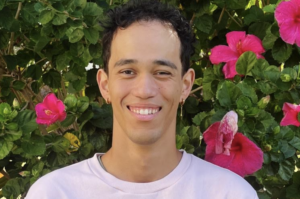
Turner applauded the members of the DART team exploring the issue, including lead analyst Connor Flynn ’21, an author on the paper who started the work with his sister—co-author Lilliana Flynn ’21—when they were Chaminade undergraduates.

“It’s amazing to now see them as data professionals working on both the practice and policy issues that affect our communities,” Turner said.

Flynn note that the real-world projects he tackled while studying data science as an undergraduate inspired him to pursue a master’s degree in environmental data science at the University of California, Santa Barbara and then return to Chaminade to work with DART.

“Now that I mentor undergraduates in research experiences and teach data science classes myself, I’m bringing that same approach to my teaching,” he said.

“I’m hoping many more students can make these kinds of meaningful contributions by being involved in applied data science research for Hawaii and the Pacific region.”

Pacific Health Dialog is the Journal of Pacific Research for the Pacific region, and is the only Medline listed medical and public health journal published specifically for Pacific Island countries.

Also in August, DART announced that a separate research paper exploring data on ahi consumption and mercury levels in the blood was accepted for the Toxicology and Pedagogy tracks of the SSRN eJournal. Lead author Alii Napoleon ’25, a Hoʻoulu and NSF S-STEM Scholar, completed the research as part of his data science studies at Chaminade.

The paper uses advanced statistics to probe a national nutritional dataset and offers a risk-benefit framework relevant to communities that consume deep sea fish.

Grant awards that supported this work: NSF HRD-2217242, NSF DUE-2030654.
Posted by: University Communications & Marketing Filed Under: CIFAL Honolulu, Featured Story, Homepage, Natural Sciences & Mathematics Tagged With: CIFAL Center, Data Science

Sparking Sustainability Innovation in Students

December 19, 2024

A cutting-edge program at Chaminade aimed at sparking innovation in students through sustainability entrepreneurship opportunities was selected to receive a $300,000 non-competitive increase in its federal grant, underscoring the importance of the effort and its impact in the community.

The ’Inana Innovators Program was originally funded with $600,000 in 2022 from the Minority Business Development Administration and the additional funding allows the program to be extended through 2025.

Principal Investigator Helen Turner, Ph.D., professor of Biology and research director at Chaminade’s CIFAL Honolulu Center, said the program is focused on attracting the next generation to sustainability-focused tech opportunities and growing the innovation sector in Hawai’i and the Pacific Islands.

“When you look at the long-term goals for Hawai’i’s economy, there are a lot of conversations about the defense sector, tourism, agriculture—those traditional mainstays,” Turner said.

“In addition to growing large new sectors like clean energy and aquaculture, we need to focus on developing individual entrepreneurs. Growing the innovation sector means starting early—with programs that teach both the mechanics of entrepreneurship and build the confidence to try.”

Federal funding for the ’Inana Innovators Program covers student compensation for innovation internships, entrepreneurship courses, and other salary support and activities.


Never miss a post! Follow Chaminade University on Facebook and Instagram.


Mariane Uehara, ’Inana Innovators sustainability entrepreneurship coordinator at Chaminade, said participating students are excited about bringing new solutions to longstanding sustainability challenges, from climate change to the proliferation of plastic waste. In addition to courses and internships, the program offers valuable opportunities for students to get mentorship from industry experts.

Students are even challenged to create their own apps to showcase their work.

“Sustainability and entrepreneurship are big words,” Uehara said, adding, “The only way to get these things done is by doing it. Entrepreneurship is about having courage and excitement to solve problems. The tools and skills to do that, that’s what we want to teach and spark.”

Program participant Kyle-Jacob La’akea Gamiao ‘26 is working to develop an app called Lāʻau Friends. He said users will be able to use the app to identify native plants, get details on cultural protocols and practices, and serve as a platform to share stories and indigenous knowledge.

“The main goal is to do all of this in a fun and interactive way that entices not only our target demographic—children and educators—but people of all ages and places,” he said. “The app will function as a way to preserve Hawaiian culture, inform others about ways to take care of the ‘āina, and serve as a possible framework for other parts of the Pacific to use as well.”

Gamiao said during the Fall semester, his work with the ’Inana Innovators Program included everything from developing an AI chatbot to animating a character for his app to learning about how to attract sustainable funding for a project.

“I’ve learned how to be flexible but ethical in how I solve problems that approach me,” he said. “I’ve learned how to work with others and to outsource during the ideation process. I’ve also learned to balance flexibility and determination.”

Gamiao is pursuing a degree in Environmental Science and hopes to go on to graduate studies.

He also plans to continue developing Lāʻau Friends.

For Uehara, the ’Inana Innovators Program is about showing all students—from many different backgrounds—that they have the power to apply their talents and skills to society’s shared sustainability challenges.

“All of us could use an entrepreneurial mindset,” she said.


The `Inana Innovators program is funded by MBDA grant #MB22OBD8020275-T1. You can reach Principal Investigator Dr. Helen Turner at [email protected].

Posted by: University Communications & Marketing Filed Under: CIFAL Honolulu, Featured Story, Homepage, Innovation Tagged With: CIFAL Center, Innovation, Office of Sponsored Programs

Sustainable Entrepreneurship

April 2, 2024

New ENV 490 Sustainability Innovation class stimulates paradigm shift

Aside from being tongue twisters when said in succession, the terms sustainability and entrepreneurship are indeed big words, as pointed out by ’Inana Sustainability Entrepreneurship Program’s coordinator, Mariane Uehara. Tasked with creating a curriculum for the inaugural ENV 490 Sustainability Innovation course, Uehara admitted that she “jumped into the unknown” when she joined the United Nations’s CIFAL Center at Chaminade University.

At the core of the ENV 490 is a student-driven project that’s in partnership with a local company. The goal was to balance the triple bottom line—people, planet and profit—while addressing the long-term impact of business activities on the environment and society. Sustainable entrepreneurship recognizes the interdependence of economic development, social well-being and environmental health, and seeks to create value in a way that is responsible and ethical.

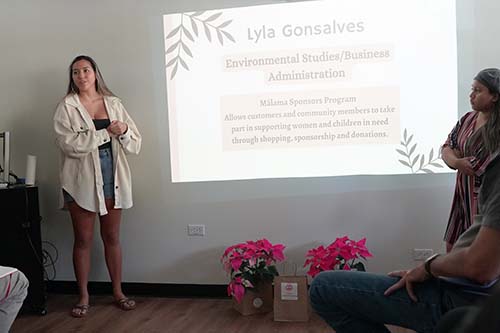
Lyla Gonsalves, left, and Jasmine Mondelo discussed possible solutions for Ten Tomorrow to become more sustainable.
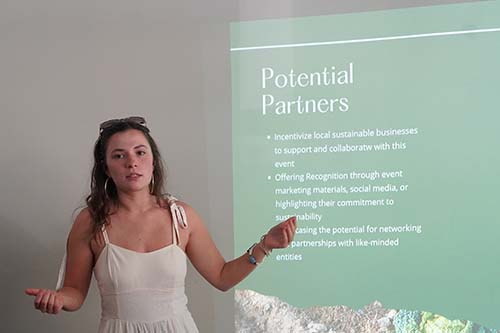
Sarah Carroll '25 identified potential partners that could help Re-use Hawaii and its sustainable efforts.
Sarah Carroll identified potential partners that could help Re-use Hawaii gain greater community support.
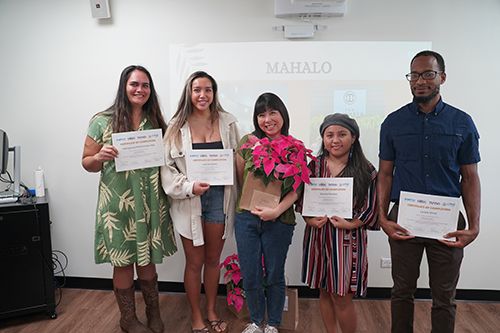
Ten Tomorrow designer Summer Shiigi, center, liked the ideas presented by Chaminade students, from left, Ka‘I‘inipu‘uwai “Mini” Keli‘iho‘omalu-Holz ’24, Lyla Gonsalves ’25, Jasmine Mondelo ’25 and LaVelle White ’26.
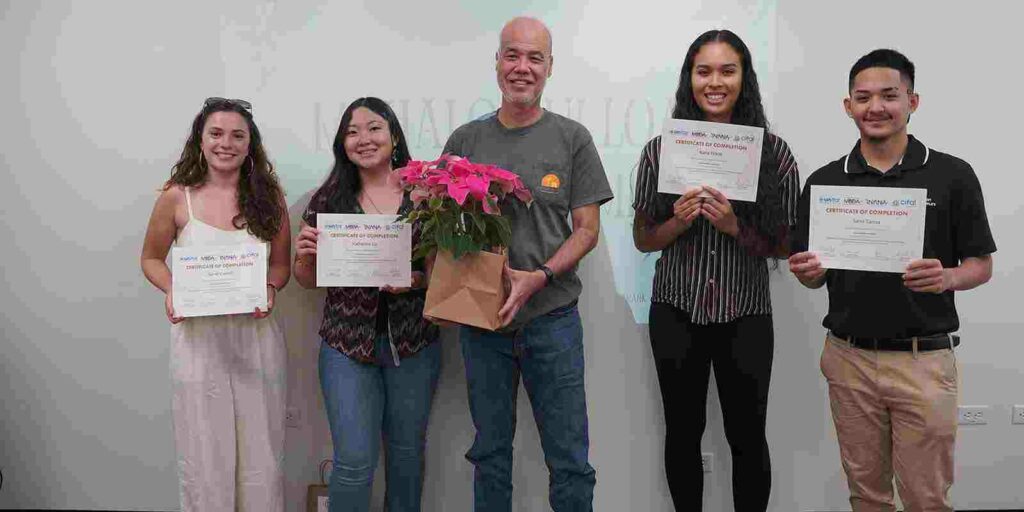
Re-use Hawaii's Workforce Development Coordinator Nathaniel Pak saw value in Chaminade student's sustainable efforts for the nonprofit. Team members included, from left, Sarah Carroll '25, Katherine “Kat” Liu ’26, Kaila Frank ’24 and Sano Tanna ’24.
Re-use Hawaii’s Workforce Development Coordinator Nathaniel Pak saw value in Chaminade students’ sustainable efforts for the nonprofit. Team members included, from left, Sarah Carroll ’25, Katherine “Kat” Liu ’26, Kaila Frank ’24 and Sano Tanna ’24.

“All the students’ projects had to align with at least one of the United Nations’s 17 Sustainable Development Goals (SDGs),” Uehara explained. “Although the vision was blurry at first, we figured out the puzzle together, and we had fun while doing so.”

According to Uehara, the three goals of the ’Inana Program are: 1) To develop and implement programs for the education and training of undergraduate students in subjects directly relating to successful entrepreneurship; 2) To support minority business enterprises (MBEs), including building a diverse entrepreneurial pipeline to grow the number of MBEs; and 3) to create a UN Certificate program in sustainability entrepreneurship.

Divided into three teams, 14 students presented their final entrepreneurial projects, working alongside with Ten Tomorrow, Re-use Hawaii and Plantoem. Under the mentorship of Uehara, and Cort Isernhagen and Jamie Lui of Diamond Head Research—a company that helps small companies track and assess their activities to identify trends and innovative business models that best support Corporate Social Responsibility, Environmental, Social and Corporate Governance, and philanthropic initiatives—the aspiring entrepreneurs demonstrated their ability to think outside the box.

“First of all, who are you guys,” rhetorically asked Lui after listening to the students’ presentations. “You’re a completely different group from when we started this class a few months ago.”

Exuding confidence, Sarah Carroll ’25 proposed a “Hanau Hana Aloha Event,” which would advertise Re-use Hawai’i as a community-based nonprofit worthy of long-term patronage and donation. Additionally, it would also pose these solutions: Engage an eco-conscious audience; showcase Re-use Hawaii’s mission beyond social media; and connect with long-term donors through a captivating experience.

“Hosting an upcycle consignment event for Re-use Hawaii would present an innovative solution to address several pressing challenges,” the Data Science and Visualization major said. “It would help Re-Use connect with the community and give it more visibility, as well as broaden its donor pool.”

Other Re-use Hawaii members included Katherine “Kat” Liu ’26, Sano Tanna ’24, Lihau Keoneula ’24 and Kaila Frank ’24.

Pairing with Ten Tomorrow designer Summer Shiigi, Jasmine Mondelo ’25, Ka‘I‘inipu‘uwai “Mini” Keli‘iho‘omalu-Holz ’24, Lyla Gonsalves ’25 and LaVelle White ’26 aligned their entrepreneurial proposals with the local clothing company’s line of modern resort wear. An Environmental Studies major, Keli‘iho‘omalu-Holz identified the problem of having to bring in fabric, which contributes to carbon emissions, microplastics and landfills.

Keli‘iho‘omalu-Holz’s solution was to source fabric that would be less harmful to the environment. She cited such alternatives as hemp, organic cotton, bamboo, recycled material and Tencel fabrics, which are produced with environmentally responsible processes from sustainably sourced natural raw wood fibers. Tencel textiles are also certified biodegradable.

“I have a really keen interest in fashion, which is why I chose Ten Tomorrow ,” Keli‘iho‘omalu-Holz noted. “I wanted to find cost-effective solutions and sustainable fabrics that didn’t have a negative impact on our environment.”

Alexandra Zingarelli ’24, Sydney Danielson ’25, Pūnohu Keahi ’25, Aleeyah Lemons ’24 and Conor McMahon ’24 partnered with Zoe Zhang of Plantoem, a portmanteau of plant and poem, and suggested a “Plantoem’s Appreciation March 2024.” Each week would tackle a different aspect, from the significance of native plants and “Aloha ʻĀina: Environmental Health Talk Story Event” to carbon offset, plant therapy and sustainable living workshops.

“They really listened to what I had to say,” said Zhang, who founded Plantoem because of her love for plants and poetry. “Their proposal to me is highly viable. Since we came up with the awareness month idea during their second visit, I have already been in touch with some of the speakers who are interested in participating. The basic structure of the event month has already been sketched out. And the students are coming back to help work on the events in March.”

In his closing remarks, Isernhagen commented on the diversity of ideas and the prototypes the students developed. “I liked the fact that you met the businesses where they were,” he concluded. “Your lenses were all sharply focused around sustainability. And I liked the fact that you collectively approached one problem but each of you came up with your own individual solution.”

Posted by: University Communications & Marketing Filed Under: Business & Communication, CIFAL Honolulu, Diversity and Inclusion, Featured Story, Hogan Entrepreneurial Program, Innovation, Institutional Tagged With: CIFAL, CIFAL Center, Hogan Entrepreneurs Program, School of Business and Communication

Environmental Science

January 25, 2024

After earning her bachelor’s, Casidhe Mahuka joins CRAG in American Samoa

In recent years, scientists, world leaders, politicians and environmentalists have been warning us about a dire existential threat, noting that climate change poses a grave risk that needs to be urgently addressed and mitigated. As an invasive species coordinator (ISC) at the Coral Reef Advisory Group (CRAG) in American Samoa, Casidhe Mahuka ’22 is doing her part in monitoring and protecting the waters encircling the small U.S. territory.

Since graduating with a BS in Environmental Sciences, the American Samoa native has used her Chaminade education to make an impact in her community. As the ISC for CRAG, Mahuka collects ocean data and implements bi-monthly phytoplankton monitoring in association with the National Oceanic and Atmospheric Administration’s National Phytoplankton Monitoring Network (PMN), which is a community-based network of volunteers who monitor marine phytoplankton and harmful algal blooms (HABs).

Mahuka explains that she has three overarching goals: 1) Integrate community-based methods to restore village-level ecosystems using ridge-to-reef approach in Aua and Fagasa; 2) increase invasive species management policy and activity coordination in and among local and regional organizations; and 3) bolster invasive species management in other priority sites.

“Other priorities include monitoring ballast water, biofouling, reef flats, and testing the water’s salinity, turbidity and overall quality,” Mahuka further describes. “I also work with the US Coast Guard to stay informed on stony coral tissue loss disease, the Vessel Incidental Discharge Act (VIDA) and other regional biosecurity issues.”

Covering more than 70 percent of our planet, the world’s oceans play a crucial role in regulating climate and supporting diverse ecosystems. However, the alarming rise in ocean temperatures due to climate change is threatening marine life, particularly the delicate balance of coral reefs.

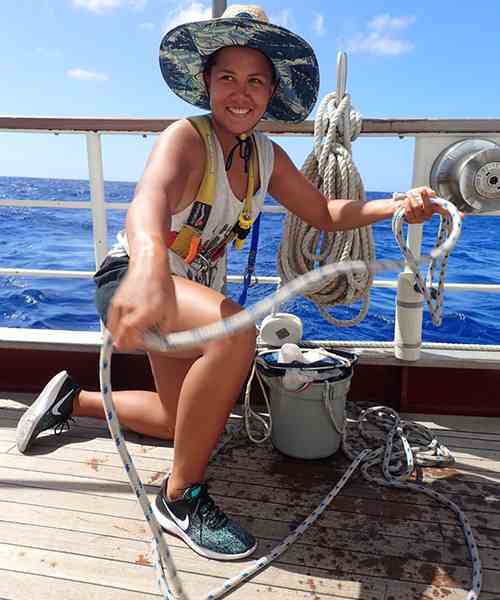
Casidhe Mahuka prepares to tie an Anchor Bend knot.
In the summer of 2018, Casidhe Mahuka participated in the SEA Semester, which is Boston University’s Study Abroad Program. The ship traveled from Tahiti to the Hawaii islands.

Primarily driven by human activities such as the burning of fossil fuels and deforestation, climate change has led to a significant increase in global temperatures. As a result, the world’s oceans are also experiencing warming trends, the consequences of which are far-reaching and affect marine ecosystems in various ways.

“Our ecosystems are fragile,” Mahuka says. “Although they cover only a small fraction of the ocean floor, coral reefs support about 25 percent of all marine species. The intricate structures of reefs provide habitats and food for a vast array of marine life, including fish, invertebrates and microorganisms.”

Furthermore, coral reefs act as natural barriers that protect coastlines from the impacts of storms, hurricanes and erosion. The complex structures of coral reefs also dissipate wave energy, reducing the intensity of waves that reach the shore.

Mahuka has had a passion for ocean science ever since she visited the National Marine Sanctuary of American Samoa in the 7th grade. It was the first time that she discovered that she could not only breathe underwater, but she could also breathe underwater for a living.

“That was it; I was totally hooked,” Mahuka says. “I was determined to be an ocean scientist because I have always loved being in the water. And to get paid for it, I was all in.”

As a member of the first cohort of students who majored in Environmental Science at Chaminade, Mahuka mirrors a growing trend among students who are pursuing their degrees in this field, marking a 24 percent increase in degrees awarded since 2016. Data from the U.S. Department of Education shows a steady uptick over five years. In the 2017–2018 academic year—the most recent year for which aggregate data is available—a total of 6,697 students earned bachelor’s degrees in environmental science. That means 1,155 more graduates earned such degrees than did five years earlier.

The trend is illustrated by Chaminade’s School of Natural Science and Mathematics’s introduction of an Environmental Science major four years ago. While a major in Environmental Studies has existed since 2000, the decision to focus on hard sciences was a natural progression for such programs.

While there is an overlap that exists between the two majors, Environmental Science is an interdisciplinary science-based major, which combines biological, ecological, chemical, geological and mathematical principles often used to solve environmental challenges or manage natural resources. Conversely, Environmental Studies is an interdisciplinary social science and humanities-based major. It focuses on the human relationship with the environment, and how environmental challenges intersect with politics, economics, society and culture. 

For 10 days in November, Mahuka was aboard the Exploration Vessel Nautilus surveying previously unmapped seafloor in U.S. waters south of the Hawaiian Islands. She was selected as a Seafloor Mapping Intern by Ocean Exploration Trust (OET), an organization that works to explore the ocean, seeking out new discoveries, while pushing the boundaries of STEAM education (Science, Technology, Engineering, the Arts, and Math) and technological innovation.

“It was a great experience after I found my sea legs,” Mahuka says. “I definitely chose the right career because marine science allows you to travel around the world, where you get to meet and learn from amazing and intellectual people who have the exact same passion as you do!”

Posted by: University Communications & Marketing Filed Under: Alumni, Diversity and Inclusion, Homepage, Innovation, Natural Sciences & Mathematics Tagged With: CIFAL, CIFAL Center, Environmental Studies

‘Inana Innovators Program

October 13, 2023

Chaminade students participate in sustainability entrepreneurship

Madison Makishima ’25 was able to make adaptive surfboards out of recyclable materials and ocean plastics so people —like her—with disabilities could have access to the ocean. As part of Chaminade University’s ‘Inana Sustainability Entrepreneurship Program, Makishima and eight other fellow students, including Aleeyah Lemons ’24 and Carly Wieczorek ’24, were able to participate in a 10-week summer program that paired them with businesses that align with the United Nation’s Sustainable Development Goals (SDGs).  

“I learned a lot, especially how to effectively network,” said Makishima, whose project was titled Surf Sesh. “The mission of the project—which aligns with the UN’s SDGs—was to help people with disabilities gain access to surfing while recycling and reusing ocean plastic, and educating everyone about living sustainable lives.”  

After winning a two-year $600,000 Minority Colleges and Universities Grant Competition from the U.S. Department of Commerce’s Minority Business Development Agency (MBDA), a hui of Chaminade professors developed the ‘Inana Sustainability Entrepreneurship Program, which aims to spark minority entrepreneurial innovation among Hawaii-Pacific undergraduates.

According to ‘Inana Sustainability Entrepreneurship Program’s coordinator, Mariane Uehara, the  three goals of the program are: 1) To develop and implement programs for the education and training of undergraduate students in subjects directly relating to successful entrepreneurship; 2) To support minority business enterprises (MBEs), including building a diverse entrepreneurial pipeline to grow the number of MBEs; and 3) to create a UN Certificate program in sustainability entrepreneurship.  

With the help of Rhea Jose, outreach coordinator for CIFAL Honolulu at Chaminade, Aleeyah Lemons ’24 pursued a project titled “Gender Equity through Malama Mai” or, cleverly, GEMM, and provided menstrual products in the women’s restrooms at Chaminade University.  

“GEMM is a program developed to provide resources, care and education on menstrual health to those at Chaminade University, its surrounding community and across the Pacific,” wrote Lemons in her final report. “We aim to end period poverty on campus, and allow our students who menstruate to feel comfortable and supported by GEMM and their peers.”  

Meanwhile, Carly Wieczorek ’24 designed a sustainable rooftop hydroponics system. “One major aspect of my activities was actively participating in exchanging ideas with local experts on hydroponics farming, visiting hydroponics farms on Oahu, and entrepreneurial skill workshops with industry professionals,” Wieczorek noted. “I’ve also been investigating innovative business approaches to urban agriculture, such as rooftop hydroponics, and examining how these practices align with the UN’s SDGs.”  

The focus of the ‘Inana program is to nurture sustainability entrepreneurs in Hawaii, who will develop businesses that diversify and grow our economy while attending to the health of the planet. This, of course, is consistent with Chaminade’s United Nations CIFAL Center, which is focused on supporting progress toward the UN’s 17 SDGs in Hawai‘i and the Pacific region.  

Three of the 17 SDGs in particular are addressed within the program: Promote sustained, inclusive and sustainable economic growth, full and productive employment and decent work for all; build resilient infrastructure, promote inclusive and sustainable industrialization and foster innovation; and improve education, awareness-raising and human and institutional capacity on climate change mitigation, adaptation, impact reduction and early warning.  

“Our first cohort consisted of nine students,” said Uehara, a Certified Health and Wellness Coach and former co-founder and director of Lanikai Juice Co. “This second cohort will focus on App creation with eight students. It’s great to see students—who all come from different disciplines—collobarate and solve problems.”

Posted by: University Communications & Marketing Filed Under: CIFAL Honolulu, Featured Story, Innovation, Institutional, Students Tagged With: CIFAL, CIFAL Center, Grants

Environmental Leaders

September 13, 2023

Changemakers discuss their path to policymaking

One is nicknamed by her husband as the “Irresistible Force.” The other is known as “The Enforcer.” And the third has a spouse who wholeheartedly stands behind him—even if it means wielding a tire iron. Together, Althine Clark, Celeste Connors and William Aila, Jr., respectively, represent a “super power” to contend with when it involves environmental policy and activism in the islands.  

“The goal of this session is to have our guest speakers talk about how they got where they are today,” said Clark, a Chaminade adjunct professor who recently retired as the National Oceanic and Atmospheric Administration’s (NOAA) superintendent of Papahānaumokuākea Marine National Monument. “You’ll hear real-life examples of what it’s like to live a life in environmental policy.”  

In his opening story, Aila recalled a time when he was young with a fervent commitment to do whatever it took to preserve the aina–even if it meant physical confrontation. “I saw these three guys one day and I confronted them because they were mistreating a cultural site,” Aila shared with the students. “I asked them to stop and I started to move towards them. When you’re about to get into a fight, you look at the person’s eyes and then watch their shoulder. But these guys kept looking behind me so I thought I was going to be ambushed. And when I had a second to look back, I saw my wife standing there with a tire iron in her hands.”  

Today’s environmentalists are faced with many forms of violence—and even death at times. The non-governmental organization Standing Firm has published an annual report on the killings of land and environmental defenders around the world every year since 2012, after the murder of Chut Wutty, a Cambodian environmentalist who worked with the Global Witness CEO Mike Davis investigating illegal logging.  

While stationed in Greece as an economics officer with the U.S. Mission to the United Nations, Celeste Connors once remembered seeing a bullet lodged in her office window. “There was so much anti-American sentiment at the time,” said Connors, Executive Director of Hawaiʻi Green Growth, which is a United Nations Local 2030 hub that brings together diverse stakeholders committed to economic, social and environmental priorities. “But when I told them I was from Hawaii, everyone started reaching out because they can connect with Hawaii.”

Indeed, Hawaii holds a special place with Connors who decided to come home in 2015 after serving as a diplomat in Saudi Arabia, Greece, Germany and U.S. Mission to the UN. She later was named the Director for Environment and Climate Change at the National Security Council and National Economic Council in the White House (2008-2012), where she helped shape the Administration’s climate and energy policies, including the Sustainable Development Goals (SDGs). Connors also worked with the United Nations on the Paris climate agreement that was signed in 2016, which she sees as inspiration for Hawai‘i Green Growth’s goals.  

“The world is at a point where we desperately need solutions,” Connors asserted. “Since I left home, there has been a cultural renaissance, and other nations are now looking to indigenous models, such as Hawai’s ahupua‘a system, to become sustainable and independent. Think locally but act globally.”  

With a background in urban and regional planning, Clark understands the complexity of environmental law and policy, a class (ENV 300) that she is currently teaching to sophomores and juniors. Her introductory course outlines environmental policy and law—specifically its nature, development, flexibility, and growth, and to the ethical dimensions surrounding the creation of state, national and international environmental policy and law.  

“No is not an option nor an answer,” Clark said. “I’m now seeing lots of communities get engaged. One of the reasons I agreed to teach at Chaminade is because the University encourages students to get involved in projects that benefit society.”  

Asked by a student how to deal with climate change deniers, Aila said try to first reason with them. “And if that doesn’t work, go around him, go above him, go below him,” he advised. “Don’t let anyone tell you, you can’t. Instead, use those words as a motivator, and go out and make a difference.”                

Posted by: University Communications & Marketing Filed Under: Campus and Community, CIFAL Honolulu, Diversity and Inclusion, Homepage, Institutional, Students Tagged With: Campus Event, CIFAL Center, Environmental Sciences, Environmental Studies

  • Page 1
  • Page 2
  • Go to Next Page »

Footer

Chaminade University Logo

3140 Waialae Avenue
Honolulu, Hawaii 96816

Contact Us
Phone: (808) 735-4711
Toll-free: (800) 735-3733

facebook twitter instagram youtube linkedin

Visit

  • Plan Your Visit
  • Campus Map (PDF)
  • Events

Resources

  • Campus Security
  • Student Consumer Information
  • Concerns, Feedback, and Reporting
  • Institutional Review Board
  • Title IX / Nondiscrimination Policy
  • Compliance
  • Emergency Information
  • Careers
  • Institutional Statement

People

  • Students
  • Parents
  • Alumni
  • Faculty & Staff

Policy

  • Privacy Policy
  • Terms and Conditions of Use


© Chaminade University of Honolulu