• Skip to primary navigation
  • Skip to main content
  • Skip to footer
Chaminade University of Honolulu

Chaminade University of Honolulu

  • VISIT
  • APPLY
  • GIVE
  • STUDENTS
  • PARENTS
  • ALUMNI
  • FACULTY/STAFF
  • Admissions
    • Admissions Home
    • Undergraduate Students
      • First-Year Students
      • Transfer Students
      • Admitted Students
    • Graduate Students
    • Flex Online Undergraduate Program
    • Military Students
    • Non-Degree/Visiting Students
    • Experiential Honors Program
    • Early College Program
    • New Student Orientation
  • Tuition & Aid
    • Financial Aid Home
    • Tuition & Expenses
    • Federal Updates & Changes
    • Scholarships
    • $5,000 Graduate Scholarship
    • VA Education Benefits
    • Net Price Calculator
  • Academics
    • Academics Home
    • Academic Programs
    • Office of Student Success
      • Academic Advising
      • Records and Registrar
    • Kōkua ʻIke (Support Services)
      • ADA Accommodations
      • Career Services
      • Proctoring Services
      • Tutoring Services
    • Sullivan Family Library
    • Undergraduate Research & Pre-Professional Programs
    • Commencement
  • Campus Life
    • About Campus Life
    • Student Engagement
    • Student Government Association
    • Residence Life and Housing
      • Summer Conference Housing
    • Health Services
    • Marianist Leadership Center
    • Counseling Center
    • Campus Ministry
    • Campus Security
    • Dining Services
    • Bookstore
  • Athletics
  • About
    • Chaminade University News
    • Our Story
    • Leadership
    • Chaminade University Strategic Plan 2024-2030
    • Mission & Rector
    • Association of Marianist Universities
    • Facts & Rankings
    • CIFAL Honolulu
    • Accreditation & Memberships
    • Montessori Laboratory School
Search
×

Search this web site

Humanities, Arts & Design

Immersive Experiences Through Summer Institutes

August 13, 2021

Dozens of Hawai’i public high school students converged on Chaminade’s campus over the summer for a host of immersive learning opportunities—trying their hand at everything from spoken word poetry to marine conservation to designing a safehouse for a zombie apocalypse.

Chaminade’s Summer Institutes 2021 offerings, part of the University’s ongoing commitment to early college programming, gave rising juniors and seniors at two public high schools the chance to do a deep dive into disciplines of high interest.

The intensive, 10-day courses were free to McKinley and Kaimukī high school students and also included standalone college preparatory sessions on how to pay for higher education, apply for financial aid, select an academic pathway and build leadership skills.

Dr. Janet Davidson, Chaminade Vice Provost for Academic Affairs, said 37 students participated across five Summer Institutes courses. The offerings were made possible in part thanks to a US Department of Education GEAR UP grant.

Davidson said GEAR UP is focused on boosting college attendance among low-income students. To promote that goal, she said, the Summer Institutes program at Chaminade offered participants a high-quality, engaging college-level experience.

“The students had rewarding experiences on our campus—with each other and with their faculty and peer mentors,” Davidson said, adding that enrollees also benefitted from co-curricular sessions with the University’s advising, financial aid and admissions offices.

“Through our Summer Institutes, we aimed to support the academic growth of students, but also provided a series of college readiness sessions. We look forward to growing on our successes this year and provide even more institutes next summer.”

Doing It Yourself: A New World
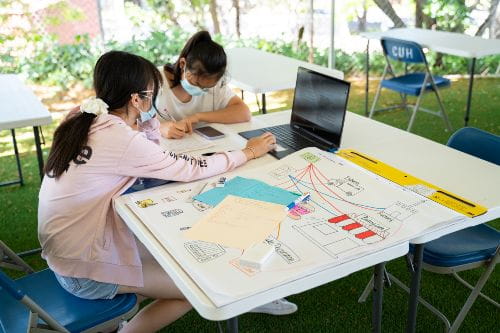
high school students working together on a business plan project during the business summer institute

Among the available academic sessions was a course—taught by Accounting Professor Aaron Williamson—on entrepreneurship, business modeling and communication skills. “Doing It Yourself: A New World” also included an emphasis on leadership and team building.

Williamson said he wanted the immersion program to give students a “taste of what business really is. At its root, business is the thoughts, dreams and initiatives of a multitude of folks from history to present who simply had an idea and acted on it.”

He added that he was most excited to watch students tap into their passions and personal interests—and then figure out how to direct that energy into a business plan.

“I fully expect to be walking into a few of their establishments one day,” he added.

Word Wizards: The Magic of Poetry and Hip Hop
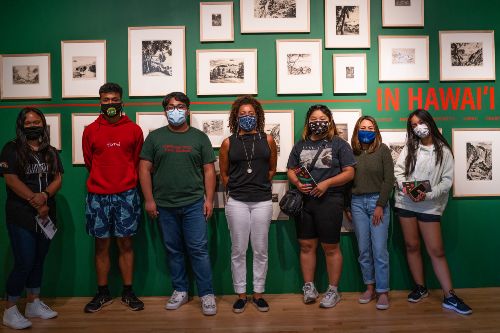
high school students at the museum of art during a field trip for the english summer institute

English Professor Dr. Allison Paynter drew from English 256 (Poetry and Drama) to design her summer institute course entitled, “Word Wizards: The Magic of Poetry and Hip Hop.” In addition to analyzing hip hop lyrics, traditional poetry and verse-driven dramas, students wrote poetry and then put on spoken word performances.

Paynter, herself a performance poet, said she most enjoyed seeing her student participants collaborate with one another on writing.

“I also loved watching my students perform their original poetry during our Spoken Word event,” she said. “I would like to believe each student felt empowered through the process of writing creative pieces.”

Marine Science Immersion
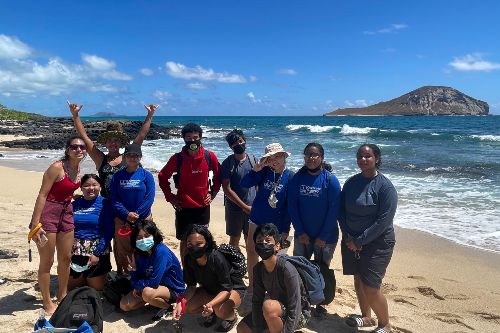
high school students at the beach looking at marine life during the marine science summer institute

Dr. Gail Grabowsky, dean of the School of Natural Sciences and Mathematics at Chaminade, co-taught a “Marine Science Immersion” summer course with Dr. Lupita Ruiz-Jones, an assistant professor of Environmental Sciences. Students in the session spent the first week exploring the ocean environment from the perspective of a marine scientist and the second considering the impacts of humans on marine ecosystems.

Participants spent time in the classroom, lab and, of course, the ocean.

Ruiz-Jones said students took field trips to Waimea Bay, Sharks Cove, Makapuu, Makaha and Ala Moana Beach. They even took a walk from campus to nearby Pālolo Stream, inspiring three students to return the following weekend for a stream cleanup project.

Grabowsky said a central takeaway of the course for students was just how incredible marine systems are—and how important they are to preserve.

“I wanted them to walk away with a knowledge of the ocean, of course, but also a feeling that college is wonderful and an understanding of how it works,” she said. “I hope they all came away loving Chaminade!”

Psychology Studies
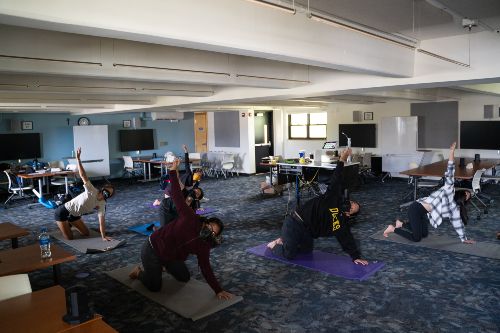
Psychology Associate Professor Dr. Darren Iwamoto led a course in Psychology Studies, challenging students to take a journey of self-discovery and self-awareness to understand the importance of mental health in everyday life.

Iwamoto, who is clinical director of the School Counseling and Undergraduate Psychology programs at Chaminade, said he kicked off the course with two questions: Why do we do what we do? And why do we think what we think?”

It was through those lines of inquiry that Iwamoto encouraged students to consider how they tackle stress, handle change and plan for the future—and how they might apply new and healthier coping strategies in their own lives to promote personal wellbeing.

“It was so memorable to watch so much personal and academic growth in just two weeks,” he said, adding that he also learned so much about his own teaching from the experience.

“I had to learn different strategies of student engagement because I didn’t have grades being the underlying motivator,” he said. “I really like how this Summer Institute flowed and how students experienced psychology versus being told about it.”

Visualizing the Future
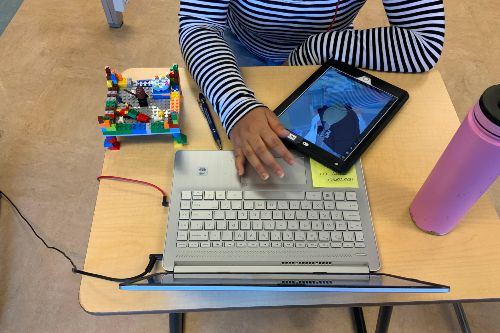
high school student working on their zombie apocalypse safehouse during the art and design summer institute

The fifth offering over the summer was called “Visualizing the Future.”

Dr. Junghwa Suh, an associate professor of Arts and Design at Chaminade, led the course—modeled after Art 103 or Visual Design. Students were introduced to the power of visualizations and used problem-solving skills and design tools to create models.

After learning the basics of hands-on modeling tools, Suh set the students to work in groups to create a zombie safehouse—yes, you read that right. Suh said the engaging project required students to think about space planning while trying to figure out how to protect the safehouse’s occupants from a decidedly horrific fate.

“I wanted my students to get a clear and dynamic overview of arts and design, see the connection of arts and design to various disciplines … and use their creativity and logical processing to execute design solutions to given problems,” she said.

Suh added that the students’ final safehouse designs were impressive.

“I hope these creative minds gained some new perspectives in arts and design and understand various possibilities they can pursue with this study,” she said.

And she’s already looking forward to next summer’s courses. “It is so beneficial for students to see how different disciplines come together to solve world problems,” she said. “These types of institutes help high school students in making decisions on what they want to study.”
Posted by: University Communications & Marketing Filed Under: Behavioral Sciences, Business & Communication, Early College, Faculty, Featured Story, Humanities, Arts & Design, Natural Sciences & Mathematics Tagged With: Accounting, English, Environmental + Interior Design, Environmental Sciences, Environmental Studies, Psychology, Summer Institutes

Coming Home to Chaminade and Paying it Forward

August 9, 2021

As part of an effort to open theological studies to more laypeople, Chaminade has significantly broadened its Master of Pastoral Theology (MPT) program to include opportunities for those interested in education, ethics, campus ministry, pastoral counseling and other direct service positions.

The MPT master’s degree at Chaminade has traditionally been geared toward a diaconate track.

But the program now welcomes those outside of that cohort—and is already seeing more students.

Dustyn Kainoa Ragasa

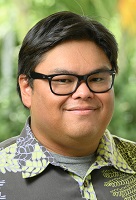
Dr. Dustyn Ragasa, director of the Pastoral Theology master’s degree program, said difficult philosophical and ethical questions facing our communities have driven up interest in theological studies programs nationally. He added that the MPT program at Chaminade is individualized to each student, offering a diversity of pathways and a curriculum designed to promote personal growth.

“Someone once told me that Hawaii is not a melting pot, but a mixed plate,” Ragasa said.

“Each culture’s specific contribution is not homogenized or boiled down to a set of common denominators, but preserved in their integrity so as to enrich through diversity. The MPT recognizes the specific gifts of culture that our students make to the learning experience. This kind of ‘mixed plate theology’ draws upon our heritages (and place-based theologies) so as to share them.”

Finding his way

Ragasa ‘07, who is also an assistant professor of Religious Studies at Chaminade, followed his own unique pathway to leadership at the university. He said he came to Chaminade a bit lost after dropping out of Waimea High on Kauai and then completing his GED. On his first day on campus—as the first student in his family to ever attend college—he wasn’t sure if he would be able to “hack it.”

“I thought, ‘I’m going to fail my first week.’ But the professors I had were so supportive from the beginning. When I was struggling, I knew they would be there,” he said, adding he was determined to succeed. And that’s exactly what he did—so much so that his professors encouraged him to pursue graduate studies and then helped him plot a course to a theology program on the mainland.

“They identified strengths in me that I couldn’t see in myself,” Ragasa said.

After graduating from Chaminade, Ragasa went on to earn a master’s degree from The Dominican School of Philosophy and Theology and a doctoral degree from the Graduate Theological Union. He said while earning his graduate degrees, he pledged to himself to use all he was learning to do two things: “I knew I wanted to be of service to my community and I knew I wanted to help other students.”

And after receiving his doctoral degree, an opportunity at Chaminade just happened to open up.

Chaminade homecoming

He quickly applied and Ragasa joined Chaminade’s School of Humanities, Arts and Design faculty in August 2019.

For Ragasa, returning to Chaminade was an opportunity to give back—just as his mentors at the University offered guidance and inspiration to him. And he jumped at the chance to reimagine the MPT program, widening its scope and potential impact to bring in more students.

He said he wanted to focus on helping MPT students apply what they were learning to real-life problems. He also wanted to integrate laypeople in the program with those on the diaconate track, creating a rich and robust dialogue and building relationships that last long after graduation.

“Laypeople and candidates preparing for the diaconate learn side-by-side,” he said. “Contact with candidates helps laypeople to think more pastorally. Similarly, contact with laypeople helps candidates remain grounded, and many candidates will often learn from the academic insights of the lay students.”

Ragasa is also looking for new ways to expand and enrich the program.

Moving the MPT program forward

He said he’s interested in striking up partnerships with Chaminade’s Education and Data Science programs to offer Pastoral Theology students hands-on learning opportunities, such as in-classroom teaching experiences. And he wants to build relationships with theology programs on the mainland so that students who are interested could get the chance to study at another university for a semester.

Whatever the additions, Ragasa is confident the program’s faculty members—who come from a diversity of academic backgrounds—will continue to provide a rich and individualized experience for each student that includes both robust academic study and direct service opportunities.

With fieldwork and academic contemplation combined, he said, “it’s my hope that someone who reflects on theology will approach their ministry empowered by the intellectual tradition of the church.”

Posted by: University Communications & Marketing Filed Under: Alumni, Faculty, Featured Story, Humanities, Arts & Design Tagged With: Master of Pastoral Theology, Religious Studies

Alum and Domestic Violence Advocate Stresses Self-Care

July 20, 2021

Luana Moreno, BA Religious Studies '17

Luana Moreno ’17 practices what she calls little “acts of self-care” every day.

It’s how the Hawaii Domestic Violence Action Center advocate ensures the difficult emotional and physical trauma she helps other people process doesn’t begin to impact her own mental health.

It’s also how she makes certain she can continue to be there for them, week in and week out.

When things get a little too heavy, she takes a walk. Treats herself to a coffee. Picks up her coloring pencils. Sometimes, all she needs is to go outside, take in a deep breath and enjoy the sunshine.

“You can’t help other people become better if you are not helping yourself,” said Moreno, who graduated with a bachelor’s degree in Religious Studies with a minor in Psychology from Chaminade.

Moreno, who is originally from San Diego, California, knew at an early age that she wanted to find a career that would allow her to help others—like she and her mother once needed help.

“I was raised by my mom, who showed me that there are ways to leave and survive abusive relationships,” Moreno said. “My work goes hand-in-hand with my journey because it has allowed me to learn and heal as well as help other survivors learn and start their own healing journey.”

When she was in high school, Moreno stumbled across Chaminade as she was looking online for potential universities to attend. She immediately felt a connection with the school—not least of which because of her name. “My great-grandparents’ best friends were from Hawaii and that’s how I got my name, Luana,” she said. “My great-grandmother was never able to come here and when she passed away I wanted to accomplish her dream and give more to the special place that provided me my name.”

Luana Moreno, BA Religious Studies '17, playing softball for Chaminade

Moreno jumped at the chance to play softball for Chaminade.

And she was delighted that she could pursue the subjects she was interested in at the University.

She combined Religious Studies with Psychology because she wanted to learn more about the impacts of trauma on people’s lives and unpack how belief systems can help people through difficult experiences.

“Having a religious upbringing, I was taught to see trials as a piece of a bigger picture, where you learn lessons and come out of it better and stronger,” she said.

“I wanted to know more about why and what people believe and how it can help throughout life.”

Moreno added that her Religious Studies degree gave her a broader perspective on the world, too. “The inclusive knowledge of religion, spirituality and psychology allowed me to approach people in crisis in a kinder and more effective way,” she said. “It made me more accepting and open to people.”

It was actually through the pageant world that Moreno found her role in domestic violence.

She was part of the Miss Latina Hawaii Scholarship Organization and learned about the Domestic Violence Action Center from a friend she was coaching high school softball with.

As part of Miss Latina Hawaii, she was challenged to think about her social impact.

And so she started to volunteer with the action center. In short order, she was offered a full-time position with the nonprofit as a campus survivor advocate. 

Her advice to others seeking careers in advocacy is simple: “Self-care! Self-care! Self-care!”

That’s an especially important lesson, she adds, amid the pandemic—which has left many more members of the community in need of social services. “Be mindful of how heavy the work can feel and find an outlet that helps release the emotions that can be held giving to others,” she said.


If you or someone you know is experiencing domestic violence, you can call the Hawaii Domestic Violence Action Center helpline at (800) 690-6200 or text (605) 956-5680.

Posted by: University Communications & Marketing Filed Under: Alumni, Athletics, Behavioral Sciences, Featured Story, Humanities, Arts & Design Tagged With: Psychology, Religious Studies

Students Showcase Work at Annual Na Liko Na‘auao

April 19, 2021

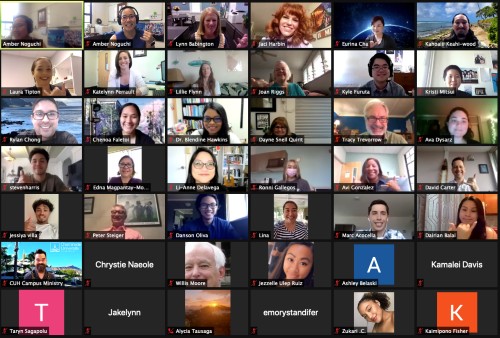
Na Liko Naauao virtual event 2021 screenshot

Chaminade undergraduates across all disciplines gathered virtually in early April to present their ongoing research across a broad array of exciting areas, from Native Hawaiian traditional medicine to data science database development to the microbiome, coral bleaching and cancer cell research.

The undergraduate conference, Na Liko Na‘auao, is an annual event at Chaminade to showcase exceptional original work by students seeking bachelor’s degrees and underscores the breadth and depth of academic scholarship at the University. Fields represented at this year’s conference, which included 23 presentations in all, ranged from Biology to Data Science to the Forensic Sciences.

The Na Liko Na‘auao symposium was first held at Chaminade in 2002.

Among the impressive topics students tackled this year:

  • “Modeling The Microbiome Of Aa In Vitro Taro Digestion Model,” from Ava Dysarz
  • “Seasonal Difference In Carcass Decomposition On Oahu,” presented by Marietta Lee
  • And “Keawawa Water Analysis And Restoration,” from Dorie Sanborn and Trinity Young

Organizers say Na Liko Na‘auao not only gives undergraduates an opportunity to offer the broader University community a glimpse into what they’re working on. It also gives them a chance to hone their presentation and speaking skills, synthesizing their research for a general audience.

The public forum also gives students an opportunity to take questions, giving them insight into their research strengths along with potential areas for improvement, further exploration and collaboration.

Also at Na Liko Na‘auao, the recipients of two prestigious Chaminade awards were announced.

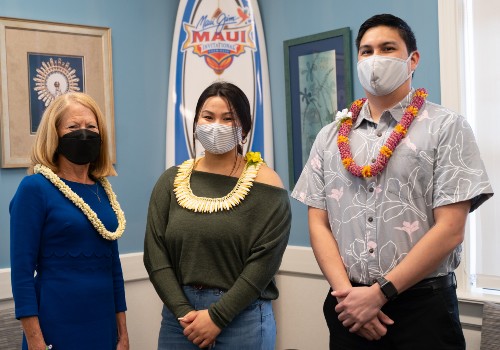
Dr. Lynn Babington, Darian Balai and Dr. Rylan Chon

The President Sue Wesselkamper Prize, which recognizes a student who has displayed academic scholarship beyond the classroom and has a record of service learning volunteerism and leadership, was awarded to Data Science student Dairain Balai, who is also minoring in Biology and Criminal Justice.

In nominating her for the award, Data Science program Director Dr. Rylan Chong said Dairain has participated in a host of leadership and research growth opportunities—and excelled in each of them.

And her work is already getting noticed. To continue her research on Native Hawaiian women’s health, Dairain was selected for a competitive spot as a paid research assistant at the University of Texas in Austin Texas Advanced Computing Center, where she is also serves as a mentor to other students.

Chong said Dairian, who graduated from Waianae High and is a Ho’oulu Scholar, “represents what Chaminade is all about locally, in her community, and on the mainland by going beyond the expectations of her service to community and education, development of her moral character, personal competencies, and commitment to build a more just and peaceful society.”

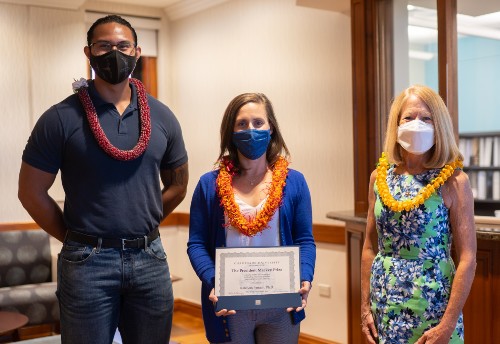
Danson Oliva, Dr. Kate Perrault and Dr. Lynn Babington

Also announced at the event: the recipient of the President Mackey Prize, which recognizes a faculty member at Chaminade with a record of student mentoring and a strong, ongoing commitment to providing students with research or creative experiences that go beyond the classroom.

This year’s awardee: Dr. Kate Perrault, an assistant professor of Forensic Sciences and Chemistry.

Undergraduate researcher Danson Oliva nominated Perrault for the honor, saying the professor is “extraordinarily passionate about the course material and wants every student to succeed.” Oliva added that working in a lab under Perrault has been a wonderful growth experience, allowing her to flex her scholarship muscles while also getting helpful and instructive feedback and mentoring.

“As a research mentor, she guides us but also helps us troubleshoot problems when they arise,” Oliva wrote. “With the help of Dr. Perrault, I have gone on to give two conference presentations on my project. It wouldn’t have happened if Dr. Perrault didn’t truly believe in our ability to succeed.”

Posted by: University Communications & Marketing Filed Under: Behavioral Sciences, Business & Communication, Campus and Community, Education, Faculty, Featured Story, Humanities, Arts & Design, Institutional, Natural Sciences & Mathematics, Nursing & Health Professions, Students

Mulatta—Not So Tragic

March 8, 2021

To commemorate Black History Month, Chaminade English Professor Dr. Allison Francis recently collaborated with Karla Brundage, an adjunct professor at the university, to present a thought-provoking virtual renshi poetry reading session entitled, “Mulatta—Not So Tragic?”

Mulatta—Not So Tragic Poetry Reading - Allison Paynter

As part of the event, Francis and Brundage also engaged in a conversation with participants on the history of “mulatta”—which they described as a controversial label “traditionally used to signify progeny of African and European parents.” In unpacking the term and its history, the two also touched on their own life experiences and those of family members seeking to grapple with identity and race.

Renshi poetry is also known as “linked poetry.” It’s a contemporary form of verse that relies on collaboration to uncover new understandings of the world and explore shared themes. Collaborators connect their poems by repeating the last line of the previous author’s work.

Francis and Brundage said renshi poetry was uniquely equipped to allow them to explore the “sometimes devastating and celebratory dynamics of being bi-racial women in the 21st century.” Brundage noted that renshi poetry doesn’t just connect verses, it links the poet collaborators.

Mulatta—Not So Tragic Poetry Reading - Karala Brundage

She said the two started examining the theme of “being mulatta or being mixed” about a year ago.

It was Francis who started the spoken word performance of their poem, “We Feel the Thunder.”

“Such a brave woman,” the poem begins, “Rolling words through our heads like boulders.”

Following the reading, Francis and Brundage delivered a joint presentation to further explore the themes of “being mulatta.” Francis noted that Hawai’i presents unique—and refreshing—conversations about “hapa” identity, but stressed it is not a place devoid of racism or discrimination.

“I think there is a space that many of us can create here living in the islands that allows for us to embrace both worlds and not have to entirely dismiss one or the other,” Francis said, as she showed a photo of her daughter and explained she grew up in Hawai’i. “But,” Francis added, “that might just be a bubble we created for her and it’s something we continue to explore in this poetry.”

Francis teaches and conducts research across a range of topics, including Victorian and Scottish literature, African-American and Caribbean Women’s literature from the 19th century, and women’s literature with a focus on science fiction and fantasy. She has published extensively, is a performance poet and playwright, and is currently collaborating on a scholarly collection on Scottish literature.

Brundage publishes poetry, short stories, and critical essays. In 2020, her poem “Alabama Dirt” was nominated for the Pushcart Prize. She holds a Master’s in Fine Arts in Poetry from Mills College and is currently working to co-create a Hawaii-based publishing company, Pacific Raven Press.

Watch their full renshi poetry reading and related presentation below.

Posted by: University Communications & Marketing Filed Under: Campus and Community, Diversity and Inclusion, Faculty, Featured Story, Humanities, Arts & Design, Student Life

Making Lemonade Out of Lemons

February 16, 2021

Like many of us, Blaze Mancillas’ 2020 didn’t go quite as he had planned.

The pandemic meant that the actor and comedian, a 2009 graduate of Chaminade, wasn’t able to audition as much as he had hoped, couldn’t do many comedy shows or other events and had to spend more time than he ever has in his (somewhat cramped) New York apartment.

But lockdowns and COVID precautions didn’t keep Mancillas from staying busy.

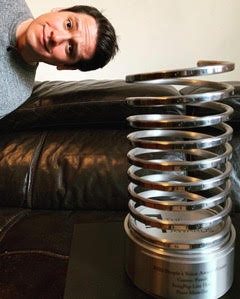
In fact, his work as a host on app-based music trivia game show “SongPop Live” earned him a 2020 Webby Award, which honors the “best of the internet” in everything from websites to apps. He also launched a podcast, called “Let’s Get Lit” that combines two of his loves—comedy and literature. 

Mancillas’ Webby Award

Reached on recent day, Mancillas was hopeful about 2021 would bring.

As the number of COVID infections in New York declined, auditions have slowly resumed—and he’s looking forward to new opportunities. He said that after a very difficult year for everyone, he’s grateful for what he has and is charged up to seek out new ways to hone his acting chops and share his comedy.

Mancillas scored a hosting role on “SongPop Live” before the pandemic started. When the city shut down, he was sent home with a lot of technical equipment and instructions on what to do next. He and the other three hosts finished out their work for the game show from the comfort of their living rooms.

It was a transition for Mancillas, who said before the pandemic he rarely spent much time at all in his apartment. Instead, he would always be out in the city—enjoying all that it has to offer. But he made the most of it and in October launched his new must-listen podcast, in which he reads from a classic book (the first season features “War of the Worlds”) and invites comedians on to offer commentary.

The podcast is already getting some buzz, including in Paste Magazine and on the Comedy Cake website. Mancillas describes it as a chance to actually read those books you were supposed to read in high school, with some great comedians to join you to keep things light and keep you laughing.

In a recent interview, Mancillas remembered his time at Chaminade fondly.

It was there that Mancillas discovered his love of acting. He scored leading roles in Chaminade productions of “The Elephant Man,” “Amadeus,” “Pippin” and “The Pirates of Penzance,” to name a few. From Chaminade, he headed to New York to study acting at Columbia University. He graduated with a Master’s in Fine Arts from Columbia in 2012, and has been building his career ever since.

In addition to doing stand-up comedy and hosting for “SongPop Live,” Mancillas has appeared on TV episodes, commercials and done motion capture acting for video games. He’s interested in doing more on-screen acting work but also wants to continue to build his chops as a game show host, he said.

Mancillas with Bro. Gary Morris

At Chaminade, Mancillas was a communication major with a minor in performing arts. He credits three mentors—Music Professor Tim Carney, Father Robert Bouffier and Brother Gary Morris—with recognizing his talent, helping him muster the courage it takes to get out in front of an audience, and then challenging him to apply for graduate school on the mainland.

“They left a profound impact on me,” he said. “They were really wonderful.”

Mancillas is also thankful to Chaminade for giving him the space to find his passions—and not just in acting. At the university, Mancillas was also on the cross country and golf team, and was an announcer for basketball games. “I was running all over the place,” he said, adding that Chaminade helped him grow as a person and an artist. “There are lots of opportunities to try different things.”

To learn more about Mancillas’ work, including his new podcast, head to his website.

Posted by: University Communications & Marketing Filed Under: Alumni, Business & Communication, Featured Story, Humanities, Arts & Design Tagged With: Communication, Performing Arts

  • « Go to Previous Page
  • Page 1
  • Interim pages omitted …
  • Page 4
  • Page 5
  • Page 6
  • Page 7
  • Page 8
  • Interim pages omitted …
  • Page 15
  • Go to Next Page »

Footer

Chaminade University Logo

3140 Waialae Avenue
Honolulu, Hawaii 96816

Contact Us
Phone: (808) 735-4711
Toll-free: (800) 735-3733

facebook twitter instagram youtube linkedin

Visit

  • Plan Your Visit
  • Campus Map (PDF)
  • Events

Resources

  • Campus Security
  • Student Consumer Information
  • Concerns, Feedback, and Reporting
  • Institutional Review Board
  • Title IX / Nondiscrimination Policy
  • Compliance
  • Emergency Information
  • Careers
  • Institutional Statement

People

  • Students
  • Parents
  • Alumni
  • Faculty & Staff

Policy

  • Privacy Policy
  • Terms and Conditions of Use


© Chaminade University of Honolulu