• Skip to primary navigation
  • Skip to main content
  • Skip to footer
Chaminade University of Honolulu

Chaminade University of Honolulu

  • VISIT
  • APPLY
  • GIVE
  • STUDENTS
  • PARENTS
  • ALUMNI
  • FACULTY/STAFF
  • Admissions
    • Admissions Home
    • Undergraduate Students
      • First-Year Students
      • Transfer Students
      • Admitted Students
    • Graduate Students
    • Flex Online Undergraduate Program
    • Military Students
    • Non-Degree/Visiting Students
    • Experiential Honors Program
    • Early College Program
    • New Student Orientation
  • Tuition & Aid
    • Financial Aid Home
    • Tuition & Expenses
    • Federal Updates & Changes
    • Scholarships
    • $5,000 Graduate Scholarship
    • VA Education Benefits
    • Net Price Calculator
  • Academics
    • Academics Home
    • Academic Programs
    • Office of Student Success
      • Academic Advising
      • Records and Registrar
    • Kōkua ʻIke (Support Services)
      • ADA Accommodations
      • Career Services
      • Proctoring Services
      • Tutoring Services
    • Sullivan Family Library
    • Undergraduate Research & Pre-Professional Programs
    • Commencement
  • Campus Life
    • About Campus Life
    • Student Engagement
    • Student Government Association
    • Residence Life and Housing
    • Health Services
    • Marianist Leadership Center
    • Counseling Center
    • Campus Ministry
    • Campus Security
    • Dining Services
    • Bookstore
  • Athletics
  • About
    • Chaminade University News
    • Our Story
    • Leadership
    • Chaminade University Strategic Plan 2024-2030
    • Mission & Rector
    • Association of Marianist Universities
    • Facts & Rankings
    • CIFAL Honolulu
    • Accreditation & Memberships
    • Montessori Laboratory School
Search
×

Search this web site

Featured Story

Welcome to the New Normal

July 10, 2020

Spanish Mission architecture. Large expanses of green. Blooming bougainvillea.

Classroom set up per COVID-19 guidelines

At first glance, Chaminade doesn’t appear to have changed much in the last several months. But a closer look reveals a myriad of upgrades—all aimed at keeping people safe.

In classrooms and other shared spaces, seating is kept 6 feet apart and markings on the floor offer a guide for how to space out. Signage posted all over campus reminds everyone to wear a mask and practice social distancing. At strategic locations, you’ll find sanitation stations and no-contact thermometers. And Chaminade’s maintenance team is busy throughout the day, keeping high-traffic areas and frequent touchpoints sanitized and well-cleaned.

Contactless temperature station

It’s all part of the university’s commitment to ensuring a safe and healthy environment for everyone—and is thanks to a large team of Chaminade faculty and staff who worked tirelessly to develop and execute a campus reopening plan that put a priority on community wellbeing.

The university has already taken some major steps in that plan.

Like most campuses around the country and in Hawaii, Chaminade went fully to online instruction in March amid “stay-at-home” orders and a push to flatten the coronavirus infection curve. Shortly after closing campus, however, Chaminade got to work to craft a strategy—and a timeline—for safely welcoming people back.

Health screening checkpoint

Staff returned first—in June. Then, on July 6, in-person graduate instruction resumed. Undergraduate and Doctor of Clinical Psychology students come back to campus for the fall Aug. 24.

A COVID-19 task force was convened to gather data-informed safety protocols locally and nationally, determine what needed to be done—and then figure out how to do it. They tackled a host of projects in a short period, including a campus-wide effort to reconfigure classrooms, residence halls and common areas to accommodate social distancing requirements.

COVID-19 signage

The university also focused on other areas, including by posting bold signage with health reminders and communicating regularly with members of the Chaminade ‘ohana to keep them up to date with what was going on. The appeal to everyone: when you’re on campus, you’ll need to do your part to keep it safe by wearing a mask and practicing social distancing.

As more people have returned, it’s a message that has resonated across a university community that prides itself on a mission of service to others. Everyone understands they share the responsibility of creating a safe campus and that their actions protect not only themselves but other members of the Silversword ‘ohana—and their family members and friends, too.

Posted by: University Communications & Marketing Filed Under: Campus and Community, Featured Story, Institutional

Dr. William Rhey Named Dean

July 10, 2020

After an extensive search, Chaminade is excited to announce the appointment of Dr. William Rhey as the University’s new Dean of the School of Business and Communication.

Dr. William Rhey, dean of the School of Business and Communication

Rhey comes to Chaminade with years of experience in university leadership roles, including most recently as the Dean of Hawaii Pacific University’s College of Business.

In addition to an impressive resume and a history of fostering development and growth at business schools, Rhey also brings a strong enthusiasm and belief in Chaminade’s strong public service mission.

He is especially passionate about the role of ethics in business development and entrepreneurship.

Rhey takes on this new challenge as the state faces an uncertain economic future. Chaminade looks forward to the School of Business and Communication serving as a hub of expertise and solutions as Hawaii looks to diversify its economy and bolster new and emerging growth areas.

In his new role, Rhey also hopes to explore opportunities for growing the School of Business and Communication in ways that meet community needs, including by offering new graduate programs and tracks, micro-credential and certificate programs, and other continued learning opportunities.

Rhey’s scholarly pursuits include entrepreneurship, business ethics, and international marketing.

He received his doctoral degree in Marketing at the University of Mississippi, and has master’s and bachelor’s degrees in Business Administration from Baylor University and Bucknell University, respectively.

Rhey is also proud to volunteer his time at several organizations that serve the community, including the Hawaiian Council for Economic Education and the Metro Honolulu Rotary Board.

Chaminade looks forward to Rhey’s leadership at the Dean of the School of Business and Communication, and welcomed him to campus on July 1.

Posted by: University Communications & Marketing Filed Under: Business & Communication, Featured Story, Institutional

Pivoting During a Pandemic

July 8, 2020

In early March, Alyssa Nagai was living a good life. The 2015 Chaminade alumna would work her nursing shifts at Maui Memorial Medical Center, and always enjoyed coming home to her little dog who would jump on her as soon as she walked through the door. She loved living on Maui, and it was an easy and short flight to see her family back home in Oahu.

She felt comfortable at her job. Her time at Chaminade had prepared her well, and had given her the skills and knowledge she needed to be successful.

But nothing could have prepared her for what came next.

Alyssa Nagai in her face mask

“The nursing and the schooling part of Chaminade definitely prepared me to be a nurse,” says Nagai. “But I don’t know if anyone was really ready for a pandemic to hit.”

When COVID-19 made its way to the Islands, overnight her days became longer and her job became a lot scarier.

Her hospital floor was quickly turned into a COVID unit, and chaos ensued. Policies and procedures kept changing—no one really knew what to expect or what to do. The disease was still so new and unpredictable. 

“It was really scary,” says Nagai. “I think every day, or sometimes every hour, things were changing when it came to PPE, or just everything. Policies kept changing and it was really frustrating.”

Her unit converted into a closed unit, meaning team members weren’t allowed to come and go from the floor. It also meant nurses were doing total care for their patients, without help from nurse aides and patient care specialists.

It made for really long, emotionally draining days.

“You see what people are going through, and it’s scary on their end too,” says Nagai. “It was hard emotionally, for everyone.”

Alyssa Nagai and her co-workers

It was particularly hard when she saw her coworkers fall ill. “We all kind of saw this coming, we knew that we had the risk of getting sick,” says Nagai. “But it’s scary because you see these people every day and you can’t really help it.”

It was also lonely. For Nagai, the hardest part was staying away from the people she loved and cared about.

“I’d be afraid to hang out with people, and I knew they were afraid to see me too, because no one knew if they had it.”

When she would return home from her shift, she’d immediately shower off and try to stay away from people as much as possible. “I’d try to shower before my little dog would jump on me,” recalls Nagai. “You just feel dirty coming out of there.”

Nagai felt good about what she was doing. She knew she was helping. But she wasn’t sure other people saw it that way. Fears and anxieties were high all around the Island. It didn’t help hearing stories of how people were treating other healthcare professionals, like the story she heard about a nurse who went to the grocery store and had things thrown at her.

Now that COVID numbers have begun to slow down in Hawaii, Nagai’s unit is mostly back to normal. “There are still some changes in place, like the break rooms are different. We can’t be around a bunch of people anymore.”

Nagai has a positive outlook on what the future brings. She’s hopeful there won’t be too much of a second wave, and she’s enjoying the new teamwork and collaboration that has come out of the hospital. Everyone seems to have a new perspective and appreciation for everyone else now.

“When we were doing total care for our patients, I gained a whole new perspective on what nurse aides do,” admits Nagai. “It feels really good to be back to normal (or the “new normal).”

Posted by: University Communications & Marketing Filed Under: Alumni, Featured Story, Nursing & Health Professions Tagged With: Nursing

Gary Cordova Named VP of Advancement

July 6, 2020

Gary Cordova, a longtime leader in higher education, has been selected as the Chaminade’s new Vice President of Advancement.

Gary Cordova

Cordova brings over 20 years of experience in public and private universities and independent private schools, including as the head of Chaminade’s advancement office from 2002 to 2007.

He returns to Chaminade from Mid-Pacific Institute, where as head of advancement he tripled its annual fund and quadrupled its major gifts from 2013 to today, launched major gift and international fundraising programs and oversaw a strategic initiative for long-term financial planning.

Cordova’s resume also features successful work in advancement and strategic development in higher education, including at the University of Oregon, Williamette University and the University of Chicago.

Donor support is critical to Chaminade’s ability to meet its mission, and Cordova steps into the advancement role at a critical time.

He looks forward to collaborating with existing donors and forming partnerships with new ones, all the while underscoring Chaminade’s direct impact on the lives of students.

Cordova, who describes himself as a team player and an out-of-the-box thinker, is also interested in generating new opportunities for philanthropy that tap into donor interests.

A graduate of the University of Northern Colorado, Cordova also received a master’s degree in English from Stanford University.

He began his new role on July 1. Please join us in welcoming him back to Chaminade!

Posted by: University Communications & Marketing Filed Under: Featured Story, Institutional

Called Into Darkness

June 29, 2020

When the coronavirus pandemic hit the mainland U.S. in March, the hospital in El Paso, Texas where Shannon Wright ‘15 worked as a nurse was already experiencing troubles. But when elective procedures were canceled, the hospital began laying people off.

Shannon Wright '15 in her PPE

It was a weird feeling—Wright kept hearing about the nationwide shortage of healthcare professionals elsewhere, but she couldn’t get hours at her hospital.

“At the time, I was working in a facility that just kept calling me off and I wasn’t getting hours,” says Wright. “I kept seeing on the news that everyone needed help, and I kept getting called off. I really wanted to help the people who needed me most.”

So on Saturday, April 4, she hopped on the phone with a FEMA recruiter. They were recruiting healthcare professionals from around the U.S. to help the nation’s hardest-hit city, New York.

“The recruiter said ‘we need you and we need you to get here on Monday if you’re doing it,’” remembers Wright. “It only left me two days to make a decision.”

By April 6, she was on an empty plane to New York City.

Her parents and her boyfriend didn’t want her to go. The disease was so unknown, and stories of medical professionals getting sick and dying were flooding the airwaves.

“Everyone was like, ‘you should just write your will now,’” says Wright. “I was super freaked out signing up, and I cried the whole way to New York. I kept wondering if I was making the wrong decision,” says Wright. She was one of only three people on the flight from Texas to New York. It was an eerie feeling. But she was driven by her desire to serve those who needed her the most.

When she landed at the empty airport, she immediately grabbed a taxi to her hotel in Times Square.

“The cab ride through the city was beautiful—I had never been to New York before,” says the California native. “I started to feel much better. But then we got to Times Square which was completely empty and I got really scared again.”

The hotel was reserved for other FEMA healthcare professionals and there were strict safety restrictions in place. Residents weren’t allowed to socialize or have people in their rooms, and other than a cleaning crew once a week and one person at the front desk, there was no hotel staff. The kitchen was also closed, so Wright used delivery services for most of her meals.

Right away she went to an orientation where she met a few other new arrivals. They formed a text message chain, and throughout their time regularly texted each other to check in on one another.

Wright was assigned to a hospital in the Bronx. Every day, a bus would come to pick up her and the other nurses and drop them off at the hospital.

Her first day was eye-opening, and set the tone for what was to come. She was immediately placed on a team that was tasked with creating a brand new ICU unit.

Shannon Wright '15 in her PPE

“They had an overflow unit connected to their emergency room, so my team and I had to create a coronavirus ICU unit,” describes Wright. “We made a whole ICU unit from scratch within a day.”

They worked quickly to get the extra basement space ready and gather all necessary supplies, but they couldn’t work fast enough. Halfway through the day, before the unit was ready, hospital staff started wheeling in patients. They had run out of room in other parts of the hospital and were desperately trying to find places to put people.

“They were wheeling in patients while we were trying to get set up, and we were realizing things that we didn’t have, all at the same time. Patients were coding on us, and we didn’t have the right supplies.” Wright’s voice goes soft as she describes what it was like to have patients who suddenly couldn’t breathe while she and her colleagues frantically tried to find the right equipment to respond.

Supplies were scarce throughout the city—not just at her hospital. One of her friends worked at a hospital that completely ran out of oxygen, which was in high demand. Sometimes they just couldn’t get what they needed and had to figure out how to make do with what they had. In Wright’s unit, they were putting patients on really old ventilators that should have been retired, because the new ones were already being used.

Personal protective equipment (PPE) also quickly became a scarce commodity.

“At the start, we had amazing PPE and they were letting us change out our N95 respirators every day,” says Wright. “But halfway through the contract, things changed and they were making us reuse N95s and weren’t letting us use hair covers. They wanted us to use the same gown for 5 days. They made a full switch, and all of a sudden we didn’t have what we needed any more.”

It was up to each individual to figure out how to make it work.

Wright had signed a contract to work 12-hour shifts, seven days a week for 21 days. The long days without a break were exhausting.

“The whole time you can’t really breathe, and you can’t really talk,” says Wright. “You have a surgical mask over your N95, and you’re using tape around the edges to seal it off, and you’re breathing in your own CO2 and getting really really bad headaches for 12-hours straight.”

During the days, adrenaline would kick in and Wright was focused on her patients. But at the end of the day, when she’d go back to her quiet hotel room, the fatigue would come crashing down and the anxiety hit hard.

“When I got home every single night I would scrub my body nonstop,” says Wright. “I felt like I was dying, I thought I was dying. I would call my family all the time. I think I was just exhausted and run down.”

The physical exhaustion was real, but it was the emotional drain that was really taking a toll on Wright’s wellbeing.

In the month of April, the death toll in New York was six times higher than its average for that time of year. Wright’s first week at the hospital was the deadliest week on record. News stories of patients being turned away from hospitals, doctors making unthinkable life and death decisions and refrigerated trucks being called in to store bodies shocked households across the nation.

Wright had worked in a level 1 trauma center before but had never seen anything like what she saw in New York.

“I would go to lunch and leave the hospital, and outside I’d see the refrigerated trucks because the morgues were so overwhelmed,” she recalls.

She did her best to be a calming presence for her patients, all the while feeling anything but calm.

“They would wheel a patient in and sometimes they would be really scared,” said Wright. “You’d be talking to them and they’d be fine, and within that same minute all of a sudden you had to intubate them because they couldn’t breathe. And you’re wondering if you’re going to be the last face they see.”

For Wright, the hardest part was watching patients suffer alone, without having their families by their sides. She would try to set up FaceTime calls for her patients so families could see their loved ones.

“Just sitting there knowing these are people, you feel hopeless,” describes Wright, her voice shaking audibly over the phone. “You’re doing everything you can, but you don’t know enough about this disease yet to know if they’re going to come out of it.”

When asked about her mental health, Wright admits it’s taken a toll.

“Chaminade prepared me to be a nurse, but I don’t think anything could have prepared me for seeing that many people die at once,” she says. “You just see people nonstop who were there one second, and alive, and then gone the next. You’re body-bagging so many people who you were just caring for. It’s definitely traumatic.”

But Wright persisted. And when her 21-day contract was over, she agreed to stay another week. Because in between all the darkness, Wright was able to find moments of beauty.

Like when a patient recovered and had their ventilator removed.

“When we extubated a patient, they’d play a fight song over the hospital PA system so everyone knew there was good news, and we would all start crying.”

Her hospital was also one of the first to participate in antibody plasma trials, where patients who were on ventilators received donated plasma from individuals who had already recovered from COVID-19 and had antibodies. She noticed a drastic improvement in the patients who received the trial treatment.

“There were patients who had been on the ventilators for a month and weren’t showing any signs of improvements,” she says. “But then we gave them the blood and within a week everything started to look like it was improving.”

When her time in New York had come to a close, Wright initially struggled to find a flight home—everything was canceled. But she ultimately found an airline who let her fly for free as a first responder. When she got back to El Paso, she booked a vacation rental to quarantine herself for two weeks and recuperate before returning home and seeing her boyfriend.

She had given up her job at the hospital, so after spending some time at home she ventured out to visit her family in California. At the time of her interview in June, she had been with them for three weeks, relaxing and recovering, and making sure they wore their masks.

“I’m more scared of getting coronavirus in public now because I’ve seen how bad it can get—and it wasn’t just elderly people or immunocompromised people. It was healthy, young people.”

While she is no longer afraid of caring for a coronavirus patient, she is much more cautious about being in public. Wright acknowledges that things have gotten better and healthcare professionals have a better idea of what they’re doing now, but the illness is still very unpredictable.

As for her career, she doesn’t know what will come next. She’s slowly starting the job hunt, but she’s also just trying to take time to process everything she felt and witnessed in New York. Part of her wants a slower-paced job now, but long term she knows that she would miss the thrill of the emergency room.

In the meantime, life definitely feels more precious now and she’s just trying to spend time with her family.

“A lot of it was a blur and I have trouble expressing exactly how it was,” shares Wright. “But I am beyond glad that I went. It was one of the most rewarding experiences I’ve ever had in my life. I met some amazing nurses and people that I will remember for the rest of my life.”

Posted by: University Communications & Marketing Filed Under: Alumni, Featured Story, Nursing & Health Professions

Alum’s Passions Turn into Business Ventures

June 26, 2020

It’s not often that our childhood fantasies turn out to be true. For many of us, our dreams of going to the moon one day or riding on the back of a garbage truck are never realized.

But for the lucky ones, like Dan Mangum ‘18, the life they envision as a child turns out to be exactly what adulthood is all about. 

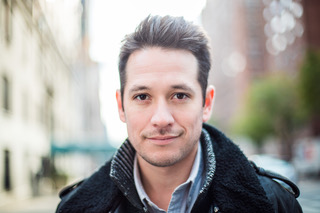
Dan Mangum '18

Growing up, Mangum had two passions in life: music and basketball. And a family trip to Hawaii in the fourth grade left him determined to make the islands his home as an adult.

Now, as a young professional, Mangum has made a career for himself in both music and basketball, all from his island home in Honolulu.

As a high-school senior in New York, eight years after that life-changing trip to Hawaii, Mangum had his eyes set on studying in the Islands. He explored a few schools, but Chaminade stood out. He liked that the classes were small and that he would be able to form relationships with his professors and classmates.

“I didn’t want to be just another statistic in the classroom,” describes Mangum. “I was hoping to develop long-term relationships with my professors and classmates, which, looking back, was absolutely the case.”

His parents were also impressed with how responsive and attentive the Chaminade staff was. It’s not easy for a parent to agree to let their child travel 5,000 miles away and across the Pacific for school. But the Chaminade admissions team took the time to answer all of their questions, no matter how small they were. That put his mom at ease.

At first, Mangum was struck with culture shock. Hawaii was polar opposite to New York—he had grown up with long, cold winters and a fast-paced energy, and suddenly he was surrounded by a warm tropical climate where everything operated on island-time.

Chaminade was also the most diverse school he had ever attended.

“At Chaminade, my immediate group of friends included people from American Samoa, Guam, Hawaii and Australia,” says Mangum. “I don’t think you’re going to get diversity like that many other places.”

It didn’t take long for Mangum to adjust to the island lifestyle. He’s always been an outdoorsy person, and Oahu had so much to offer. He knew a lot of people that went off to college and started spending a lot of time at parties and at bars, but he didn’t want that for himself.

“I didn’t want to fall into the trap of just going to bars for four years,” he recalls. “Being on an island gave me healthier choices and provided alternative sources of fun, like hiking, surfing and diving.”

He remembers one of his philosophy professors, Dr. Peter Steiger, taking him and a few of his friends out surfing one morning during his freshman year.

“He woke us up at 5 a.m. and took us to this awesome local surf spot,” says Mangum. “He spent the day surfing with us and teaching us about local culture. I don’t think there’s a better place to learn philosophy than during sunrise on the ocean.”

But Mangum’s favorite class was news writing with Adjunct Professor Kim Baxter. He liked the class so much that he took it twice. Mangum was a writer for the student newspaper, the Silversword, and Baxter used to work for ESPN. She knew Mangum was a huge sports fan, so when the Clippers came to Honolulu for their pre-season games, she got Mangum a press pass to attend the team’s games and practices.

“I remember sitting courtside at this game, and I was right next to the reporters from the L.A. Times and ESPN. And here I was this 21-year-old kid from Chaminade,” says Mangum. “Not only was it an experience that I don’t think you can get at any other school, but it really gave me confidence that a professor who I had a lot of respect for was willing to put her reputation on the line for me.”

Dan Mangum '18 with Bro. Bernie Pleoger (9th president of Chaminade University)

At Chaminade, Mangum was also part of the Hogan Entrepreneurial Program. Students who participate in the program meet several times a week to learn the ins and outs of starting and running a business, and they network with business leaders around the Island. He found a second family through the Hogan program and a true mentor in retired Hogan director Dr. John Webster, and it gave him the connections he needed to launch one of his companies post-graduation—an adult basketball league.

Today, the league meets weekly at the Honolulu Club and encompasses four teams and over 30 players. The sales manager at the club was familiar with the Hogan program, and had faith enough in Mangum to offer up the space for the league’s games. One of Mangum’s Hogan mentors now also plays in the league.

Dan Mangum '18

As a communications major, Mangum took away two key lessons: how to write and how to market. He believes he’ll use those skills for the rest of his career.

After graduating he became the full-time marketing director for Nextdoor, a cinema lounge and concert hall in Honolulu’s Chinatown. He promotes their concerts, secures sponsorships and works with musicians to encourage them to visit Honolulu while on tour.

He also started his own company to book shows for musicians on the neighbor islands, and to market and promote events and small businesses. He loves his job—it puts him in contact with some of the musicians he used to idolize as a teenager.

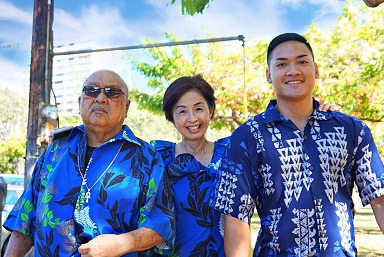
Dan Mangum '18 and his parents

“These are all musicians that I was a huge fan of in high school,” says Mangum. “And now, just a few years later, I am able to be in business and work with them, which was a pretty cool realization.”

Coronavirus lockdowns have put much of his career on hold—concert venues are closed, musicians have paused their tours and the basketball league is postponed. But as a Chaminade graduate, the importance of adaptation and change is deeply ingrained in him. The core Marianist value has proved crucial as he finds ways to navigate the future.

“We’ve been adapting with various strategies to make sure we stay relevant, to find new ways to operate,” says Mangum. “I definitely credit Chaminade’s core values for helping me think through that.”

Mangum doesn’t know what the future holds, but if he can continue on his current path, he’ll be a happy man.

“I really love what I do now,” says Mangum. “I just hope to keep expanding and do it on a larger scale. Some day, I’d love to sell out something like the Blaisdell Arena. For now, I’ll just keep working harder and doing more.”

Posted by: University Communications & Marketing Filed Under: Alumni, Business & Communication, Featured Story Tagged With: Communication, Hogan Entrepreneurs Program

  • « Go to Previous Page
  • Page 1
  • Interim pages omitted …
  • Page 68
  • Page 69
  • Page 70
  • Page 71
  • Page 72
  • Interim pages omitted …
  • Page 85
  • Go to Next Page »

Footer

Chaminade University Logo

3140 Waialae Avenue
Honolulu, Hawaii 96816

Contact Us
Phone: (808) 735-4711
Toll-free: (800) 735-3733

facebook twitter instagram youtube linkedin

Visit

  • Plan Your Visit
  • Campus Map (PDF)
  • Events

Resources

  • Campus Security
  • Student Consumer Information
  • Concerns, Feedback, and Reporting
  • Institutional Review Board
  • Title IX / Nondiscrimination Policy
  • Compliance
  • Emergency Information
  • Careers
  • Institutional Statement

People

  • Students
  • Parents
  • Alumni
  • Faculty & Staff

Policy

  • Privacy Policy
  • Terms and Conditions of Use


© Chaminade University of Honolulu