• Skip to primary navigation
  • Skip to main content
  • Skip to footer
Chaminade University of Honolulu

Chaminade University of Honolulu

  • VISIT
  • APPLY
  • GIVE
  • STUDENTS
  • PARENTS
  • ALUMNI
  • FACULTY/STAFF
  • Admissions
    • Admissions Home
    • Undergraduate Students
      • First-Year Students
      • Transfer Students
      • Admitted Students
    • Graduate Students
    • Flex Online Undergraduate Program
    • Military Students
    • Non-Degree/Visiting Students
    • Experiential Honors Program
    • Early College Program
    • New Student Orientation
  • Tuition & Aid
    • Financial Aid Home
    • Tuition & Expenses
    • Federal Updates & Changes
    • Scholarships
    • $5,000 Graduate Scholarship
    • VA Education Benefits
    • Net Price Calculator
  • Academics
    • Academics Home
    • Academic Programs
    • Office of Student Success
      • Academic Advising
      • Records and Registrar
    • Kōkua ʻIke (Support Services)
      • ADA Accommodations
      • Career Services
      • Proctoring Services
      • Tutoring Services
    • Sullivan Family Library
    • Undergraduate Research & Pre-Professional Programs
    • Commencement
  • Campus Life
    • About Campus Life
    • Student Engagement
    • Student Government Association
    • Residence Life and Housing
      • Summer Conference Housing
    • Health Services
    • Marianist Leadership Center
    • Counseling Center
    • Campus Ministry
    • Campus Security
    • Dining Services
    • Bookstore
  • Athletics
  • About
    • Chaminade University News
    • Our Story
    • Leadership
    • Chaminade University Strategic Plan 2024-2030
    • Mission & Rector
    • Association of Marianist Universities
    • Facts & Rankings
    • CIFAL Honolulu
    • Accreditation & Memberships
    • Montessori Laboratory School
Search
×

Search this web site

University Communications & Marketing

Dr. Joseph Allen: Reevaluating Our Criminal Justice System

July 28, 2021

What does it look like to pursue social justice in the American justice system? 
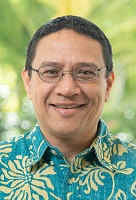
Joseph Allen

Social justice movements across the US have prompted many to ask that question—and then quickly realize the answer is far more complicated and nuanced than they initially imagined. But that, says Dr. Joseph Allen, shouldn’t deter us from doing the hard work of reevaluating our criminal justice system.

The director of Criminology and Criminal Justice at Chaminade notes that critical research into the justice system is unpacking the actions of law enforcement agencies and how they can develop policies and practices that serve to protect communities while also committing to fairness and transparency.

Unfortunately, Allen notes, there are no quick fixes in this regard.

That’s because injustice isn’t hidden in a single institution or policy—or person. But Allen, who is also an associate professor at Chaminade, believes action research and dialogue across communities can help to drive positive change and highlight constructive and proactive (rather than reactive) solutions.

Allen recently sat down for a conversation on the justice system, the long history of social justice movements in the US and recent changes to the Master of Science in Criminal Justice Studies program that reflect modern developments and academic inquiry around the justice system in America.

How has crime changed over the past few years?

It really hasn’t changed a lot recently. Overall, crime rates are down almost across the board, and they have been on a general decrease over the past 25+ years. The rates of crime we are experiencing today are similar to the rates of the 1960s-1970s. This is hard for most people to reconcile because crime is, more often than not, the lead story on much of our news and media feeds. But, it’s true. Again, everything today is generally low, to begin with. That said, we have seen a slow down in the decreases in aggravated assault and sexual assault — these have leveled off a bit over recent years.

Our official crime data (via the FBI) lags behind about a year or two due to the large data compilation and analysis efforts. So, our most recent data comes from 2019. Data and trends will be interesting to see for 2020 and 2021 when they come out. Due to the pandemic, I expect what could be a noticeable drop in crime overall (as opposed to the general gradual decreases). I then expect that this will “correct” itself a bit in 2021 and increase to “expected” levels. 

Early indicators from the recent year and a half point to potential increases in domestic violence, substance abuse, and cases involving mental health. Albeit rare, we have seen some increases in gun and mass or workplace shootings. Lastly, white-collar and computer crimes are becoming more sophisticated and put those of us who are online at increased risk of having our personal information stolen or compromised. Many large corporations, online platforms, and government agencies have been hacked in various ways and are really in a struggle to keep up with digital security concerns. We each need to do our part and be safe when online.   

How does social media play a role in criminal justice?

Social media spreads word of events far and wide, especially if the news is sensational. This is good for simple news and awareness, but I think it unnecessarily creates increased levels of fear and anxiety in all of us when it comes to extremely unlikely events. Rare events are taken out of context and we tend to feel more vulnerable. This is in spite of the probabilities of these rare events happening to us being very minuscule. It is good that we learn from these events that are often tragic, but we need to keep in perspective that, again, we’re essentially living 1960s/1970s rates of crime. 

How has accountability changed?

With increased information, we become exposed to things that we may not have had in the past. Smartphones and social media have been the driving forces behind the amplification of this effect. To this end, we are all to some extent put under more pressure to act and behave accordingly. More so now than in the past, the criminal justice field has been forced to reflect on its policies and procedures. This has been the most noticeable in law enforcement due to several high-profile national cases. To say that many or even most of these cases were as “cut and dried” as some think, I believe is an understatement, but the truth of the reality is that there is almost always something to learn about, clarify, or update professional training when it comes to policies and procedures. These unfortunate incidents have made jurisdictions and agencies reevaluate legal policy and sometimes change procedures, especially when engaging citizens physically.

As for body-worn cameras (BWC), when I last studied the topic, a few things struck me as interesting. First, there was hesitation among most officers when first using body cameras (e.g., some felt that they would not react as instinctively and that the camera may put them at risk). Second, after using the cameras and getting used to them, most officers welcomed their use (e.g., could corroborate evidence, fewer complaints, less unfounded lawsuits). Third, everyone acts a bit “better” when they know the camera is on, both the officer(s) AND the individuals being engaged by the officer; in other words, things tend to not escalate as much with cameras in use. Lastly, and probably most importantly, is that the public felt that by putting BWCs on officers, there would be more transparency. This last point is vital when it comes to the citizenry trusting those charged with enforcing and carrying out the law.

When it comes to law enforcement, does a “bad egg” reflect that entire organization?

Law enforcement is not a profession for the weary. You must be prepared to face dangerous situations and dangerous people. When these things come together, the likelihood of someone having been victimized and there is a confrontation with police increases, and sometimes things can escalate. Mistakes can happen, whether it be the officer’s decision or following a bad policy/procedure, or something that is unclear or leaves a lot to interpretation. The leaders in our law enforcement field definitely feel the pressure to “get it right.” And I think that the vast, vast majority of the rank and file feel the same way, too. So, going back to the question, “does one bad egg [or incident] reflect the rest of the force?” To this, I say unequivocally, “Absolutely not.” No field is perfect, and you will always have bad actors or unfortunate incidents. To some extent, and rightfully so, I think that law enforcement gets put under the microscope at a higher magnification due to the core elements of being representatives of the law who are charged with protecting the public and property and serving the citizenry. In terms of government agencies and performance, the criminal justice system/field needs to continue to evolve and change so that integrity and trust are maintained, and results are shown. The police and other law enforcement agencies are not “off-the-charts bad” when it comes to efficiency, decision-making, and leadership. Like any other government agency and oversight, some cases bring about much-needed change and we all should agree that the law should apply to everyone equally, with law enforcement being held to the highest standard.         

Over the past few years, there has been more interest in criminology and criminal justice programs—why do you think that is?

The main thing that I see from students and those entering the criminology and criminal justice field is a desire to help make communities safer and our society a better place. The range of positions run the gamut from law enforcement to legal work to corrections and treatment to things like working with underserved or marginalized populations (e.g., children, impoverished, homeless, substance abusers, offenders looking to get back on the right path). Also, there is always the presence of preventing people from becoming victims of crime and to help them if they do end up being victimized. So, prevention and treatment efforts across-the-board and increased investigation/legal efforts are stressed in order that we have less crime to begin with, that the crime we do have is accounted for and there is a proper balance of treatment and justice for offenders in order to have less repeat offending in the future.

Those who are looking at the field nowadays I think feel a bit more extra pressure to hold their positions with the highest level of integrity. Additionally, I feel some who have entered the field recently or are looking to enter the field in the future are also looking to be part of changing things for the better. For what it’s worth, I think now and going forward is a great time for going into the field. There will continue to be bumps in the road, but our students will undoubtedly be part of needed changes in the system.    

Chaminade’s Criminology and Criminal Justice department updated its master’s program (M.S. Criminal Justice Studies). How does the new curriculum respond to the current criminal justice environment and community needs? 

During this past year, we updated our Master’s degree program in CJ. Previously, it was known as the “Master of Science in Criminal Justice Administration.” It is now the “Master of Science in Criminal Justice Studies.” In general terms, we’ve made our curriculum more contemporary with a focus on not just the advanced pillars of the field, but also on contemporary issues that are entrenched in the criminal justice landscape today—ethics, research, civil rights, forensic psychology, terrorism, cybercrime and trauma and crisis intervention. The field is broadening from law and order to a sort of safety net for a host of social issues; those in the field, especially on the frontlines, dealing with a wider array of matters than in the past. This also includes more emphasis on the front-end (prevention efforts) and the back-end (treatment and reintegration). We feel that our curriculum better reflects these shifts in the field.

Lastly, on a practical note, a master’s degree gives students a leg up when they enter the field and during their careers. As things in the field open up as the mass exodus of the Baby Boomer generation continues to occur, advanced degrees will separate one from their peers even more. For entree into the field, a master’s degree will often help in terms of being able to substitute for years of experience (e.g., common is equivalent to 2-3 years of experience). Then, once in the field, opportunities that require or desire a master’s degree will come up; moreover, advancement and promotion in certain fields can get pushed up or given advantages because of the advanced degree. As time goes on and one becomes more entrenched in their career, a master’s degree in today’s work field is seen as a must if one is being considered for higher-level positions (e.g., director, supervisory, managerial). I feel that the “payback” or return on investment from obtaining a master’s degree is high in the long run for graduates; roughly a little over a year of studies will put the graduate in an advantaged position for the rest of their careers.
Posted by: University Communications & Marketing Filed Under: Behavioral Sciences, Faculty, Featured Story Tagged With: Criminology and Criminal Justice

Chaminade University’s “Community First” Approach Sparks an Innovative Data Science Collaboration

July 24, 2021

A Collaborative Vision: Waianae Coast Community Scorecard and Dashboard Project

As part of an innovative partnership, Data Science students at Chaminade University are teaming up with community groups in the Waianae Coast to develop a Waianae Coast Community Scorecard and Dashboard. This project is designed to be regularly conducted to measure community sentiment and report results that are easy-to-use, meaningful and actionable. The results will shine a spotlight on areas of opportunity and community wellbeing, and will help prioritize initiatives. Dr. Helen Turner, vice president of Chaminade’s Center for Strategy and Innovation and faculty of the Data Science program says, “this project is part of a broader vision that embraces Chaminade University’s ‘community first’ approach and the work done at the Center to foster an Innovation Moku in the Waianae Coast to build a refreshed economic reality that is resilient and fits with community priorities and wishes.”

This project is advised by Dr. Rylan Chong, director of the Data Science program and assistant professor at Chaminade University and by Joseph Lapilio, the executive director of the Waianae Economic Development Council and Waianae Moku Navigators.

Joseph Lapilio says “the Waianae Moku Navigators, made up of more than two dozen community organizations, is excited about the Chaminade Innovation Moku partnership and the prospect of having a reliable—and replicable—tool for gauging public opinion, welfare, wellbeing and key quality of life metrics in the Waianae Coast. A lot of what we do now is based on anecdotes or emotional reaction to issues going on. But actual data,” Lapilio said, “has power that could incite real action.”

The Partnership: Working, Learning, and Growing Together

The Waianae Coast Community Scorecard and Dashboard project was first piloted in fall 2020 and continued through spring 2021. Students enrolled in the Data Science 301: Community-Engaged Computing class worked with the Waianae Moku Navigators and the Waianae Economic Development Council to create an initial scorecard and dashboard.

Lapilio said he’s been “very impressed with how hard Rylan and his students have worked on the project. Rylan has been extremely open to community input,” he said. “Our long-term goal is not only in terms of a scorecard. It is also in terms of—how do we connect community members to data collection so it is more than just us? How do we work together? How do we connect?” The scorecard hasn’t merely been an academic exercise, but a growing experience for Chaminade students and for members of the community. “They need to be able to engage with the community, to see the community as a partner in this work,” Lapilio said.

The next step for this project is launching the initial scorecard to a test group before taking the scorecard community-wide to collect responses. The scorecard incorporates a host of data points, including information on food security, household income, housing, health, feelings about safety, technology infrastructure and acceptance, and a sense of belonging.

The Experience: Hands-On, Collaborative, Meaningful

Dr. Gail Grabowsky, dean of the School of Natural Sciences and Mathematics at Chaminade  says, “real-world projects and partnerships like the Innovation Moku get our students involved and allows them to apply their data science skills in a collaborative environment to address the wellbeing of their communities.” Chong adds, “the Waianae Coast Community Scorecard and Dashboard project is about providing the students with a taste of what data science can actually do and the positive impacts they could have in the Data Science discipline.”

Students participating in this project say the effort has been fulfilling.

“My biggest takeaway from the project was how far-reaching an effect data science can have,” Chaminade Data Science senior Aaron Walden said. He assisted with the effort in Fall 2020 and said it helped him understand how “data science can be used to identify community initiatives.” The scorecard, he said, “is a tool to visually see trends to support prioritization of the community initiatives.”

Senior Hunter Yamanaka, who is majoring in Biochemistry with a minor in Data Science, also participated in the scorecard and dashboard project in Fall 2020. He said “working with the community while digging into the numbers helped him understand how similar efforts could benefit organizations and the public. Data Science has endless ways of improving society,” he said.

“For instance,” says Data Science major Taylor Ishisaka, “data science can turn lists of data points and numbers into something visual and meaningful that everyone can understand. It can shape how we see the world.” Ishisaka, who participated in the scorecard and dashboard project Spring 2021, said “it has been eye-opening to see how much work and collaboration goes into a project like this.” Data science in Hawaii and the Waianae Coast Community Scorecard and Dashboard project is more than collecting data, programming, and analyzing data. When data science is applied to this project, it’s clearly a powerful discipline that can be applied to any field, provide a platform for a community to voice their opinions, inspire discovery and innovation, connect communities, and has the potential to confirm or make ethical societal or policy changes. As Ishisaka and Lapilio said, “when it comes to data science, the possibilities are endless, with real potential for inciting action and implementing positive change in our communities.”

Posted by: University Communications & Marketing Filed Under: Campus and Community, Featured Story, Innovation, Natural Sciences & Mathematics Tagged With: Data Science

Kosasa Foundation Awards Grant for Emerging Scholars Program

July 22, 2021

Through the Center for Strategy and Innovation, Chaminade University recently received a $25,000 grant from the Kosasa Foundation to support its Emerging Scholars pilot program aimed at promoting pathways to college for rural high school students on Kauai. The first cohort of students will begin the year-long program in the fall.

Prior to the pandemic, Chaminade offered a number of early college programs as part of the statewide Hawaii P-20 initiative promoting pathways to college. When the University pivoted to online learning, dual-enrollment and pre-college courses were canceled due to COVID-19 restrictions. Chaminade has revamped and redesigned its college readiness programs to be offered online or through a mixed online/in-person format.

There will be two types of Emerging Scholar programs: 1) a non-credit Summer Institute for high school students, which will mostly be paid for by the federal college-readiness initiative, GEAR UP, and 2) an academic year dual-enrollment program for high school students to take courses and receive both high school and college credits that can be used toward a college degree.

“We are excited to initiate this pilot program for Kauai students this fall,” said Chaminade President Dr. Lynn Babington. “The pandemic has created significant educational challenges for those residing in rural areas, including the neighbor islands. A lack of technology and broadband access has made online learning difficult for many students. The Emerging Scholars program will ensure students who are disproportionately disadvantaged by distance learning will have everything they need to excel online.”

Program administrators have identified a basic technology package—laptop, headphones, storage and backup—that will be provided on loan to its high-need college students, including those in the Emerging Scholars programs.

During the program, 40 students from Kauai high schools will take four dual-enrollment, introductory courses each semester. The courses will be enhanced with guest speakers who will participate in each course. Faculty will fly to Kauai to physically meet the students prior to each semester start. At the end of the year, Chaminade will fly the participating students to Oahu to stay overnight in the residence hall. During their stay, they will meet with advisors and faculty from each division, and participate in college prep workshops.

Chaminade is reimagining the COVID-19 crisis as an opportunity to adapt to changing learner needs, and to rethink and transform approaches to higher education. This program seeks to provide students on Kauai with new opportunities and ensure success in pursuit of learning.

# # #

Chaminade University of Honolulu provides a collaborative and innovative learning environment that prepares graduate and undergraduate students for life, service and successful careers. Established in 1955, the university is guided by its Catholic, Marianist and liberal arts educational traditions, which include a commitment to serving the Native Hawaiian population. Chaminade offers an inclusive setting where students, faculty and staff collectively pursue a more just and peaceful society.

Posted by: University Communications & Marketing Filed Under: Campus and Community, Featured Story, Innovation, Institutional, Press Release

Alum and Domestic Violence Advocate Stresses Self-Care

July 20, 2021

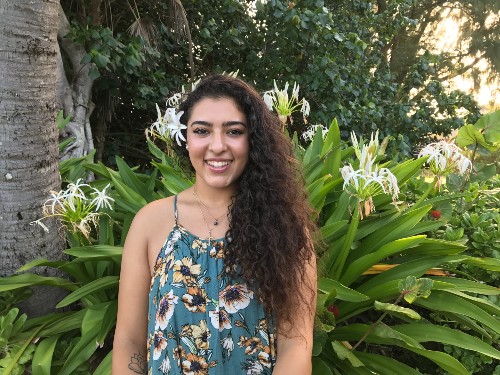
Luana Moreno, BA Religious Studies '17

Luana Moreno ’17 practices what she calls little “acts of self-care” every day.

It’s how the Hawaii Domestic Violence Action Center advocate ensures the difficult emotional and physical trauma she helps other people process doesn’t begin to impact her own mental health.

It’s also how she makes certain she can continue to be there for them, week in and week out.

When things get a little too heavy, she takes a walk. Treats herself to a coffee. Picks up her coloring pencils. Sometimes, all she needs is to go outside, take in a deep breath and enjoy the sunshine.

“You can’t help other people become better if you are not helping yourself,” said Moreno, who graduated with a bachelor’s degree in Religious Studies with a minor in Psychology from Chaminade.

Moreno, who is originally from San Diego, California, knew at an early age that she wanted to find a career that would allow her to help others—like she and her mother once needed help.

“I was raised by my mom, who showed me that there are ways to leave and survive abusive relationships,” Moreno said. “My work goes hand-in-hand with my journey because it has allowed me to learn and heal as well as help other survivors learn and start their own healing journey.”

When she was in high school, Moreno stumbled across Chaminade as she was looking online for potential universities to attend. She immediately felt a connection with the school—not least of which because of her name. “My great-grandparents’ best friends were from Hawaii and that’s how I got my name, Luana,” she said. “My great-grandmother was never able to come here and when she passed away I wanted to accomplish her dream and give more to the special place that provided me my name.”

Luana Moreno, BA Religious Studies '17, playing softball for Chaminade

Moreno jumped at the chance to play softball for Chaminade.

And she was delighted that she could pursue the subjects she was interested in at the University.

She combined Religious Studies with Psychology because she wanted to learn more about the impacts of trauma on people’s lives and unpack how belief systems can help people through difficult experiences.

“Having a religious upbringing, I was taught to see trials as a piece of a bigger picture, where you learn lessons and come out of it better and stronger,” she said.

“I wanted to know more about why and what people believe and how it can help throughout life.”

Moreno added that her Religious Studies degree gave her a broader perspective on the world, too. “The inclusive knowledge of religion, spirituality and psychology allowed me to approach people in crisis in a kinder and more effective way,” she said. “It made me more accepting and open to people.”

It was actually through the pageant world that Moreno found her role in domestic violence.

She was part of the Miss Latina Hawaii Scholarship Organization and learned about the Domestic Violence Action Center from a friend she was coaching high school softball with.

As part of Miss Latina Hawaii, she was challenged to think about her social impact.

And so she started to volunteer with the action center. In short order, she was offered a full-time position with the nonprofit as a campus survivor advocate. 

Her advice to others seeking careers in advocacy is simple: “Self-care! Self-care! Self-care!”

That’s an especially important lesson, she adds, amid the pandemic—which has left many more members of the community in need of social services. “Be mindful of how heavy the work can feel and find an outlet that helps release the emotions that can be held giving to others,” she said.


If you or someone you know is experiencing domestic violence, you can call the Hawaii Domestic Violence Action Center helpline at (800) 690-6200 or text (605) 956-5680.

Posted by: University Communications & Marketing Filed Under: Alumni, Athletics, Behavioral Sciences, Featured Story, Humanities, Arts & Design Tagged With: Psychology, Religious Studies

Blessing Our New EdD Program

June 30, 2021

Doctor of Education inaugural cohort

The gathering celebrated the end of a long journey—and the beginning of so many others.

In a special ceremony on campus recently, some of the members of the inaugural cohort of Chaminade’s Doctorate of Education in Organizational Leadership for Adaptation and Change joined with faculty members, administrators and others to mark the much-anticipated kickoff of the new program. 

Kumu Keahi Renaud delivered a Hawaiian blessing followed by Father Marty Solma, SM, Chaminade’s chaplain, who led attendees in prayer. Several Chaminade administrators then took to the microphone to touch on just how much planning and commitment it took to make the day a reality.

Speaking to incoming cohort members, Chaminade President Dr. Lynn Babington said that the new doctoral degree program is “all about leadership.” She continued, “You come from such different perspectives. The richness of your learning together will be something very, very special.”

Indeed, the 33 members of the program’s first class hail from a diversity of backgrounds and professional interests. Dr. Hans Chun, director of education leadership programs, added there was particularly strong interest in the program in Hawaii. The majority of participants are in the islands.

Doctor of Education commemorative pin

The first term for the doctoral students, who will be learning fully online, begin July 6.

At the ceremony, students were given a commemorative coin with the Chaminade seal to mark the special day along with a kukui nut lei, signifying wisdom and enlightenment. Dr. Dale Fryxell, School of Education and Behavioral Sciences dean, also dedicated a turtle-shaped bench honoring the launch. He said the turtle represents knowledge and he hoped the symbolism inspired the doctoral students.

Dr. Lance Askildson, provost and vice president for Academic Affairs, said the journey students are embarking on is an exciting—and important—one. The program’s inaugural cohort will learn, work, and grow together over the course of three years, the expected completion time for the degree.

Askildson said the doctoral program is focused on leadership development across disciplines.

“But it’s also about leadership by some very courageous faculty and administrators—to bring this program forward after a number of years of advocacy,” Askildson said, speaking to the group. “The legacy that underlies … Chaminade University is of a brand of education holistic in nature, dedicated to educating the whole person, but driven by something more than just a transaction of knowledge.”

He said that individualized, whole-of-person experience is integrated into the program’s very curriculum.

And that, he added, is exactly what attracted so many professionals to the program.

To those incoming students, he said, “I applaud you and I congratulate you.”

Posted by: University Communications & Marketing Filed Under: Campus and Community, Diversity and Inclusion, Education, Featured Story, Students Tagged With: Doctor of Education

Second Chance Pell Program

June 29, 2021

Following federal approval, Chaminade University will launch an innovative “second chance” Pell Grant program this fall that will give Halawa Correctional Facility inmates an opportunity to earn an associate’s degree in Business Administration.

While the Pell Grant will not fully cover the cost of tuition and fees, generous donations from Atherton Family Foundation, First Hawaiian Bank and Sidney Stern Memorial Trust to the University, will help fill some of the financial gaps to make the program a reality for the students.

As part of the initiative, inmates will be eligible for federal Pell Grants in order to seek the degree. The US Department of Education invited Chaminade to submit an application for its Second Chance Pell Experiment in January 2020, which waives Pell Grant restrictions for incarcerated students.

And this spring, the federal government gave Chaminade the green light to move forward.

“We are proud to offer this new Second Chance program to incarcerated students at Halawa Correctional Facility, giving them an opportunity to build their skills so they can seek to rebuild their lives,” said Dr. Janet Davidson, Chaminade’s Vice Provost of Academic Affairs. “We cannot thank all our donors enough for their generous support of this program and are also incredibly appreciative of our strong partnership with the Hawaii Department of Public Safety.”

The program will officially launch August 23, with a cohort of 15 to 20 students.

Chaminade professors will deliver instruction in a hybrid model—with in-person classes and supplementary learning through an online platform. In order to participate, the professors are getting special training from the state so they can safely teach at the medium-security prison.

The University is offering incarcerated students a significantly reduced tuition rate; with their Pell Grant awards, they will not be responsible for any out-of-pocket costs. Meanwhile, correctional staff are evaluating prospective students for college readiness, using various reasoning assessments.

The associate’s degree itself will be 60 credits, and take about two years to complete. In addition to completing their general education coursework, the students—attending full-time—will tackle Business Administration courses that cover everything from accounting to statistics to macroeconomics. “Students will move through the program as a cohort, graduating after two years with an associate’s degree in Business Administration,” Davidson said. “We are looking forward to working with this community to help them expand their skills so they can access new opportunities.”

Posted by: University Communications & Marketing Filed Under: Business & Communication, Campus and Community, Diversity and Inclusion, Featured Story Tagged With: Business Administration

  • « Go to Previous Page
  • Page 1
  • Interim pages omitted …
  • Page 70
  • Page 71
  • Page 72
  • Page 73
  • Page 74
  • Interim pages omitted …
  • Page 148
  • Go to Next Page »

Footer

Chaminade University Logo

3140 Waialae Avenue
Honolulu, Hawaii 96816

Contact Us
Phone: (808) 735-4711
Toll-free: (800) 735-3733

facebook twitter instagram youtube linkedin

Visit

  • Plan Your Visit
  • Campus Map (PDF)
  • Events

Resources

  • Campus Security
  • Student Consumer Information
  • Concerns, Feedback, and Reporting
  • Institutional Review Board
  • Title IX / Nondiscrimination Policy
  • Compliance
  • Emergency Information
  • Careers
  • Institutional Statement

People

  • Students
  • Parents
  • Alumni
  • Faculty & Staff

Policy

  • Privacy Policy
  • Terms and Conditions of Use


© Chaminade University of Honolulu