• Skip to primary navigation
  • Skip to main content
  • Skip to footer
Chaminade University of Honolulu

Chaminade University of Honolulu

  • VISIT
  • APPLY
  • GIVE
  • STUDENTS
  • PARENTS
  • ALUMNI
  • FACULTY/STAFF
  • Admissions
    • Admissions Home
    • Undergraduate Students
      • First-Year Students
      • Transfer Students
      • Admitted Students
    • Graduate Students
    • Flex Online Undergraduate Program
    • Military Students
    • Non-Degree/Visiting Students
    • Experiential Honors Program
    • Early College Program
    • New Student Orientation
  • Tuition & Aid
    • Financial Aid Home
    • Tuition & Expenses
    • Federal Updates & Changes
    • Scholarships
    • $5,000 Graduate Scholarship
    • VA Education Benefits
    • Net Price Calculator
  • Academics
    • Academics Home
    • Academic Programs
    • Office of Student Success
      • Academic Advising
      • Records and Registrar
    • Kōkua ʻIke (Support Services)
      • ADA Accommodations
      • Career Services
      • Proctoring Services
      • Tutoring Services
    • Sullivan Family Library
    • Undergraduate Research & Pre-Professional Programs
    • Commencement
  • Campus Life
    • About Campus Life
    • Student Engagement
    • Student Government Association
    • Residence Life and Housing
      • Summer Conference Housing
    • Health Services
    • Marianist Leadership Center
    • Counseling Center
    • Campus Ministry
    • Campus Security
    • Dining Services
    • Bookstore
  • Athletics
  • About
    • Chaminade University News
    • Our Story
    • Leadership
    • Chaminade University Strategic Plan 2024-2030
    • Mission & Rector
    • Association of Marianist Universities
    • Facts & Rankings
    • CIFAL Honolulu
    • Accreditation & Memberships
    • Montessori Laboratory School
Search
×

Search this web site

Nursing & Health Professions

Healthcare Forum: Building a Healthy Community after COVID-19

April 7, 2021

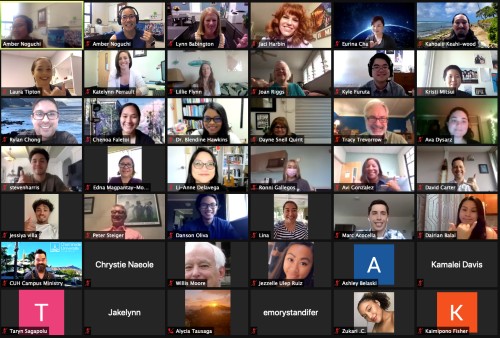
Chaminade President Dr. Lynn Babington hosted an engaging and timely forum at the University on April 6 to explore the post-pandemic healthcare needs of Hawai‘i’s communities, how innovation can play a role in addressing inequities in care, and what type of healthcare workforce the state should build to address gaps in services and ensure the best outcomes for patients and their families.

The University’s School of Nursing and Health Professions organized the event—called “Looking Forward: Building a Healthy Community After COVID-19″—to mark National Public Health Week. Lt. Gov. Josh Green, an emergency room physician and Hawai‘i’s COVID-19 Liaison, The Queen’s Health Systems President and CEO Dr. Jill Hoggard Green, Waimānalo Health Center CEO Dr. Mary Frances Oneha, and Hilton Raethel, Healthcare Association of Hawai‘i President and CEO, tackled key questions as the event’s panelists.

COVID’s exposure of vulnerabilities

All of them agreed the pandemic exposed significant vulnerabilities in Hawai‘i’s healthcare system, including a shortage of key medical professionals in disadvantaged and rural communities. The health impacts of COVID on the hardest-hit populations, they added, could be felt for years and years to come.

But, said Dr. Jill Hoggard Green, there is reason for optimism.

“As we step out of this, we have learned so much,” she said. “The innovation and the ability for us to lean in—between government, business leaders, healthcare and all of our communities—have helped us demonstrate we can do so much more. We need the next generation and we need a lot of innovation.”

Oneha added that it’s important to note that healthcare inequities don’t happen in a vacuum. Addressing social community needs, including unemployment, poverty, food insecurity, homelessness and education, are all part of working to ensure healthier outcomes.

Lt. Gov. Josh Green agreed that addressing the healthcare provider shortage is key to helping communities meet post-pandemic needs, and said the surge in telehealth services because of COVID-19 could be a real opportunity to expand access to care. “It’s particularly good that programs like Chaminade are ramping us up and creating more nurses, nurse practitioners,” he added.

Raethel said the healthcare system also needs more investment, including from government, and a renewed focus on preventative care centered around innovation. “We need to move in that direction. We need to invest in communities,” he said. “It’s a real challenge getting equal access to care.”

Preparing for tomorrow

So how can the state prepare a healthcare workforce to meet Hawaii’s needs today and tomorrow?

Babington noted that the “team-based” model to care has shown the best outcomes, stressing collaboration between primary care physicians and other healthcare professionals, including nurses, mental health counselors or psychologists, specialists, and healthcare educators or coaches.

Dr. Jill Hoggard Green also expressed support for the team-based model, saying that focus will be especially vital as Hawai‘i healthcare organizations and their patients “catch up” on health screenings—for everything from cancer to diabetes—that were missed because of the pandemic.

Oneha expressed similar concerns, pointing out that many families are also behind in childhood immunizations and wellness screenings and that health maintenance efforts also need to be addressed.

“We need to be lifetime partners to individuals,” Green said.

She noted the success of telehealth during the pandemic is a real high point—and a “dramatic opportunity for us to improve access” to underserved areas. Before the pandemic, Queen’s was getting about 400 telemedicine visits a month. But in April 2020, that surged to 14,000.

“We know we can use technology. I believe it’s one of our greatest opportunities.”

Raethel also underscored the promise of telehealth in improving health outcomes and broadening access. “The pandemic has created these alternative ways of providing care. So many more people have tried telemedicine,” he said. “It really demonstrated how effective telemedicine can be.”

Importance of healthcare professionals

In discussing how to improve health outcomes, Babington also touched on the importance of community health workers—health educators, coaches, advocates and others who serve as partners to patients and help support them “to achieve their highest level of wellness.”

Oneha said those professionals are a vital part of the healthcare workforce. Healthcare information needs to be provided in a diversity of languages, she said, and delivered by trusted health partners. She said the community also needs to be part of the conversation—”and part of the solution”—in discussions about expanding care and delivering innovations in health and wellness.

During a question-and-answer session, the panelists tackled more elements of Hawai‘i’s healthcare response to the pandemic and what the future could hold. One participant asked about the potential for burnout among healthcare workers on the frontlines of the pandemic and how to support them.

Dr. Jill Hoggard Green, of Queen’s, said during the height of the pandemic healthcare workers were moving quickly to learn whatever they could about the disease, improve patient care and get all the necessary supplies. She held back tears as she recalled the “inspiring courage and great compassion” of healthcare teams who came into work, day after day, despite the personal health threats they faced.

“When you think about the amount of pain and suffering our caregivers saw, of course there is a dramatic potential for burnout,” she said. “Most of our caregivers put all of their energy into taking care of the person.” Throughout the pandemic until today, she added, Queen’s has been providing a significant amount of mental health and other supports to its healthcare workers.

“Our teams are working extraordinarily hard,” she said.

Investing in Hawai‘i’s healthcare

Raethel added that while Hawai‘i must expand access, invest in healthcare and embrace innovation, the state should also be proud of its response to COVID. Throughout the pandemic, Hawai‘i has had the nation’s lowest infection and death rates. He noted that early estimates put the number of possible fatalities from COVID in the islands at between 2,000 and 8,000 in a year.

Instead, Hawai‘i is currently below 500.

He attributes that to the response of healthcare workers, mitigation measures and on a sense of community responsibility in the islands. “It’s one of the great things about Hawai‘i: That sense of ‘ohana, the aloha spirit,” he said, adding that gives him great hope for Hawai‘i’s healthcare system in the future.

“I believe a number of the issues that we’re talking about are solvable in the state of Hawai‘i, whether it’s homelessness, whether it’s mental health. These are finite problems and there are solutions to these problems. It’s going to require collaboration and cooperation between the public and private sector, but there’s an incredibly strong desire to address these issues. We can make these things happen.”

Looking Forward: Building a Healthy Community after COVID-19

Posted by: University Communications & Marketing Filed Under: Campus and Community, Diversity and Inclusion, Featured Story, Institutional, Nursing & Health Professions, President

Doctor of Nursing Practice Program: More Than a Degree—An Opportunity to Make a Difference

April 2, 2021

The first students in Chaminade’s new online Doctor of Nursing Practice (DNP) program start in August.

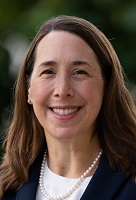
Dr. Pamela Smith (Associate Dean, School of Nursing and Health Professions)

The new doctoral degree is designed for the registered nurse or advanced practice nurse who wants to provide evidence-informed practice to culturally diverse populations and take a leadership role as an advocate for health and social justice using the latest technology for learning and practice.

Dr. Pamela Smith, Associate Dean of Chaminade’s School of Nursing and Health Professions, says potential students should know the school truly cares that each student has a positive and successful experience. 

She says that’s why interviews are part of the application process. “We want to know what a student’s goals are, so we know we can help them succeed. We want it to be a good match.”

Three DNP degree paths

Students will choose one of three Doctor of Nursing Practice tracks: Family Nurse Practitioner (FNP), Psychiatric Mental Health Nurse Practitioner (PMHNP) or Executive Leader (EL). 

The FNP and PMHNP, both nurse practitioner tracks, will allow graduates to work as advanced practice registered nurses (APRNs) who manage patients’ conditions. Smith says APRNs diagnose, provide treatment and manage patients’ care in a holistic, comprehensive manner.

“They’ll have the tools and learn the skills to provide quality improvement in their patient population in their clinics and hospitals,” she says. “They’ll be able to review the evidence-based literature and make clinical decisions based on that evidence.”

“The focus is on being able to determine a need and create a plan, implement that plan and evaluate its effectiveness in terms of looking at organizational improvement, or patient outcomes improvement or delivering care as a Nurse Practitioner.” 

The nurse practitioner tracks are for nurses who have their BSN and are ready to advance their nursing education and clinical practice.

The Executive Leader track is for the qualified nurse who wants the skills, knowledge and career opportunities that come with a DNP degree but chooses to focus on nursing leadership. 

“Executive leaders are nurse managers and leaders in a hospital, or clinical nurses looking to be able to lead their organization or their unit to improve patient outcomes,” she says. “These nurses have their master’s degrees and want the education and career advancement that the DNP provides but do not have the desire to become a nurse practitioner. They want to take their nursing role to an advanced level.”

The Post-MSN to DNP option is designed for the advanced practice nurse or registered nurse who already has a Master of Science degree in Nursing (MSN) and wants to follow the Executive Leader track.

The need for DNPs: shortage of healthcare professionals

There’s a shortage of primary care providers not only in Hawai‘i right now but throughout the country, says Smith, and nurse practitioners can help meet the needs. “Nurse Practitioners can deliver accessible care as a provider.”

The COVID-19 pandemic highlighted the need for strong healthcare and nursing leadership. “Many advanced practice registered nurses pivoted to providing patient care via telehealth in order to provide accessible care and serve the patient population safely.”

And, she says, Chaminade will have the state’s only psychiatric mental health nurse practitioner program. “There’s a huge need for this program because of an increased need for mental health services.”

Healthcare needs keep changing, and she points out that “adaptation and change” is one of the Marianist values that Chaminade embraces. “That’s exactly what is happening with COVID,” she says. “We continue to learn new information about COVID. How do we keep our patients and our staff safe? What do we need to do to make a new policy, implement it and carry it through until we realize we have to change it again? These are the problems being solved by well-prepared DNPs.” 

She says the DNP program is positioned to deliver content that will adapt and change as healthcare and nursing evolves. “We’re very willing to implement new technologies and new evidence-based material as they present.”

The pandemic, she says, has illuminated the need for strong nursing leadership skills. “Nurse leaders know what their staff and patients need. They know what the day-to-day and system needs are, and our graduates will have the skillset to come up with effective solutions.”

An online DNP program with wraparound support

“We wanted to provide a personable, online program that’s accessible to people in many different areas across the nation,” says Smith. “Many of our students might be from the neighbor islands, and we might have students from rural parts of America, where it’s challenging to drive to a campus while balancing family and work in order to receive a high quality education.” 

The year-round DNP program consists of two 15-week sessions (in the fall and spring) and a 12-week summer session. The two nurse practitioner programs take three years to complete, and the executive leader program can be completed in just under two years. There are three annual multi-day immersion sessions on campus.

“The immersions will provide an opportunity for connectedness to the community and for students to gain a sense of place, of where we are. We serve the Native Hawaiian and Pacific Islander populations, and as a university, we feel it will be valuable for all our students to understand the culture in which we provide care, even if they’re from the mainland. Because understanding the culture, the health and health disparities of a specific region allows that information to be applied to other communities of need. 

“Say somebody is coming from another state, and they learn about the populations we serve here in Hawai‘i,” she says. “They can take many of those models of care, or awareness, and apply them where they live for the cultures they serve. We’re hoping the immersions will bring light to many of the vulnerabilities our community faces, so that students will recognize the vulnerabilities in their own patient populations.”

The DNP program focuses on serving high-need communities. Smith says they want students to learn how to address health disparities and plan optimal and comprehensive care. 

“One of our Marianist values is social justice—service, justice, and peace.” She says they wove those values into the new curriculum and program goals. 

“Vulnerabilities need to be identified, and we need to pay attention to the people that need care the most. Not only for their benefit, but for the community as a whole. By determining high need areas, and learning how to provide care and striving for health equity, we improve the health of all people.”

The first immersion session, in August, will be an introduction to the islands’ culture, an opportunity to connect with peers, and a time to strengthen writing and statistical skills. “They’ll meet the faculty and leadership team, and learn about library resources and other components of our university,” says Smith.

Dr. Lynn Babington

Chaminade President Dr. Lynn Babington says that although the degree program is online, students will have close relationships with faculty and students of their cohort. “The faculty will support students and connect them with a network of field experts and opportunities.”

The second and third immersions will continue to offer unique learning opportunities such as standardized patient simulations, suturing, casting and splinting and project management. “It’s some of the nuts and bolts of what the students are going to see in their clinical environments,” says Smith.

The cohort model, in which small groups of students progress through the program together, creates a supportive peer-learning environment. Each student is also paired with a DNP faculty member, who will provide guidance and support through the program until they successfully complete a scholarly project. 

“The student can come with a project already in mind, something they’d like to implement in their own workplace, or we will assist them in selecting from a menu of projects needed in our community that are appropriate for their specific track and their specific interests,” says Smith.

She says they want students to do scholarly projects they’re interested in. “And they’ll all learn how to truly care for patients and their populations and communities in a way that is meaningful.”

She stresses that the program is very hands-on. “Students are treated as individuals, in terms of what their interests and strengths are, and we will have writing and statistical support for them. It sounds so cliché, but they are not just a number. This is a personalized and intimate university program where we have a lot of collegial support and also opportunities for networking.” 

She says the potential applicants she’s been meeting with have so far been unique and very strong candidates. 

“In terms of where they’ve been as nurses so far, they come with strong backgrounds and have much to offer the world. We want to cultivate those strengths and also discover what their deficiencies are, their gaps, so we can fill those for them.”

That’s the purpose of the interview, she says. “We want it to be a good match between the student and our organization. We really do care about each individual and optimizing their pathway.”

A Marianist foundation

The new program’s goals fit well with Chaminade’s Marianist values and the idea of improving one’s community. Another Marianist value carefully woven into the new degree program is educating the whole person. And then there’s Chaminade’s family spirit, of course, which means caring for each other at the university as well as in the community.

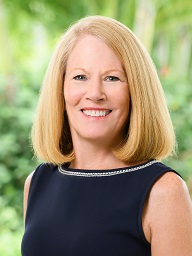
Rhoberta Haley Dean of Nursing Chaminade University

Dr. Rhoberta Haley, Dean of the School of Nursing and Health Professions, says they will care for the DNP students by offering them all the support they need. “Advanced degrees at that level take time and dedication. We want the students to be successful, and that takes time, dedication, and a lot of support, which we’ll give them.”

Smith points out one more benefit of the DNP degree—that it opens doors. “That advanced practice degree on your resume can help even if you don’t change jobs. You’ll have the tools and skills to perform better, to look at things from a different lens, and to be able to problem-solve with more capabilities. 

“It’s not just a degree,” she says. “It’s an opportunity to improve yourself, and therefore improve others.”

Posted by: University Communications & Marketing Filed Under: Featured Story, Institutional, Nursing & Health Professions Tagged With: Doctor of Nursing Practice

Chaminade University Names Pamela Smith as Associate Dean of the School of Nursing and Health Professions

March 4, 2021

Dr. Pamela Smith (Associate Dean, School of Nursing and Health Professions)

Chaminade University has named Pamela D. Smith, EdD, APRN-Rx, FNP-BC, as Associate Dean of the School of Nursing and Health Professions. She will lead Chaminade’s Community and Public Health program and the planned Doctorate of Nursing Practice* (DNP) program. The DNP program was developed in response to student demand for health-related professional degrees and will help nurses advance their careers.

“We are pleased to welcome Pamela to our Silverswords ‘ohana,” said Dr. Lynn Babington, President of Chaminade University. “Her extensive expertise and diverse background will prove invaluable to our students working toward careers in the health care.”

Smith brings more than 20 years of nursing, health sciences, and administrative experience to the position. Most recently, she served as chief nursing administrator, chair of Nursing Department at Hawai‘i Pacific University. She also held a number of other positions within the university, including family nurse practitioner coordinator, director of clinical facilities, faculty, and associate chief nurse administrator. She has worked as a nurse practitioner at various clinics and hospitals on O‘ahu in primary care and surgical practice.

Active in professional and community organizations, Smith serves in the Hawai‘i Medical Reserve Corp to assist with COVID response and vaccine administration. She also serves on state-wide committees and task forces with the Hawai‘i State Center for Nursing.

Smith received her Doctorate of Education in Educational Leadership from the University of New England; Master of Science in Nursing from Hawai‘i Pacific University; Bachelor of Science in Nursing from Johns Hopkins University; and a Bachelor of Science in Nutrition from Bastyr University.

Chaminade University’s School of Nursing and Health Professions offers a variety of learning opportunities. The curriculum of both the nursing program as well as the community and public health program prepares students for the unique challenges they’ll face in the healthcare sector, with hands-on preparation, state-of-art tools, and a robust mentorship component. For more information, visit chaminade.edu/nursing-health-professions/.

* Chaminade’s Doctor of Nursing Practice program is pending WSCUC approval

# # #

Chaminade University of Honolulu provides a collaborative and innovative learning environment that prepares graduate and undergraduate students for life, service and successful careers. Established in 1955, the university is guided by its Catholic, Marianist and liberal arts educational traditions, which include a commitment to serving the Native Hawaiian population. Chaminade offers an inclusive setting where students, faculty and staff collectively pursue a more just and peaceful society.

Posted by: University Communications & Marketing Filed Under: Featured Story, Nursing & Health Professions, Press Release

Students and Professor Co-Author Publication

March 3, 2021

Two Nursing students at Chaminade and a recent graduate are making important academic contributions to the field, with separate co-authored publications in a noted peer-reviewed nursing journal that focuses on nursing trends, policy issues and clinical practice in Asia and the Pacific.

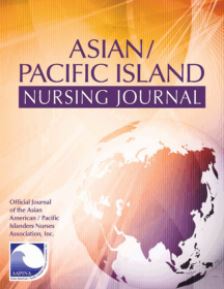
The publications appeared in the December 2020 issues of Asian/Pacific Island Nursing Journal.

Asian/Pacific Island Nursing Journal

Nursing student Nainoa Gaspar-Takahashi, a sophomore, was the lead co-author with Nursing and Health Professions Professor Dr. Edna Magpantay-Monroe of an article entitled, “Experiential Lens in Nursing Education and Thriving Lahui (Community): A Native Hawaiian and Pacific Islander Student Experience.” The piece explores high-impact, community-centered learning that benefits nursing students, allowing them to hone critical thinking skills and empathy for those they serve.

In the article, Gaspar-Takahashi discusses how he has taken to heart Chaminade’s commitment to service learning and described two recent community projects he contributed to, including one that focused on Native Hawaiian ways of learning and knowing with hands-on service in the community.

“The ability to inspire others, leaving their comfort zone to learn about other communities and recognize the strength of it can form deeper understanding and acknowledge the place students call home,” Gaspar-Takahashi wrote with Magpantay-Monroe, in the journal article.

“The impact to nursing as a profession is the integration of evidence-based care to clinical practice.”

Dr. Edna Magpantay-Monroe

The same issue of the Asian/Pacific Island Nursing Journal included an article in which Magpantay-Monroe joined Nursing student Kamaile Aipa and recent Chaminade Nursing graduate Ofa-Helotu Koka to underscore the importance of community engagement in forming nursing students’ professional identities and helping them become “well-rounded,” community-minded future nursing leaders.

The trio also discussed how vital it is to ensure students participate in professional development opportunities so they can see themselves as active participants in a robust learning community. “Being an active participant of professional conferences allow students to be a part of conversations with those who have practiced in different aspects of nursing,” exposing them to situations that help them “think more critically and professionally, guiding their actions as future nurses,” the three wrote in the piece.

Magpantay-Monroe is also adding to the body of research in Nursing in other ways. She recently contributed and co-wrote a chapter in the professional resource, “Veteran-Centered Care in Education and Practice: An Essential Guide for Nursing Faculty.” She intends to use the text for supplementary material in the Nursing elective course, “Introduction to Veterans and Military Health Care.”

Posted by: University Communications & Marketing Filed Under: Faculty, Featured Story, Nursing & Health Professions Tagged With: Nursing, Publications

Nursing Students Part of Hawaii’s COVID Vaccination Efforts

February 18, 2021

One vaccine at a time, Hawaii is beating back COVID-19.

And Chaminade University is proud to be part of the effort.

Working with community healthcare partners, the University has deployed senior Nursing students to clinics on O‘ahu to administer COVID-19 vaccines.

Dr. Lynn Babington, Chaminade President, said the project underscores the University’s public service mission and its commitment to build a healthier Hawai‘i. “Being part of the community and being able to serve our community is part of our mission,” she said, adding that the vaccines are a “light at the end of a long tunnel” and offer hope that many of the activities we used to consider normal will soon be resumed. She said it’s heartening to see students play a key role in “helping to bring the pandemic under control.”

Dr. Lorin Ramocki, Chaminade University School of Nursing and Health Professions Assistant Professor and clinical/academic partnership coordinator, said the students giving vaccinations are seniors in their Public Health Nursing rotation. To prepare for the challenge, they participated in mock clinics on campus, studied CDC and facility training modules, and attended on-site orientations.

The students will be administering vaccines through the duration of vaccination efforts.  

Nursing senior, Serina Lipman, is among those serving as vaccinators. She said she feels incredibly fortunate to participate in a vaccination clinic and do her part to stop the spread of COVID-19. “It felt humbling knowing that we were out in the community making a difference,” she said.

Lipman added her training and preparation at Chaminade helped her feel up to the challenge.

“Through this experience, I have learned about how much effort and planning it takes to set up a massive vaccination clinic,” she said. “This experience was one of the best I have had throughout school and I hope that I get the opportunity to continue to vaccinate even after graduation.”

Dr. Rhoberta Haley, School of Nursing and Health Professions Dean, said the vaccination project highlights the importance of experiential learning and strong partnerships in the community. “For our nursing students to play a role in the State’s vaccination efforts not only strengthens our partnerships with healthcare organizations, it gives our students additional first-hand experience,” Haley said.

Ramocki said the vaccination clinics are powerful educational experiences, offering students a strong appreciation of the value of focusing on population health, and of the role of community education and disaster response during periods of disease outbreak. “By participating in these efforts, they will be able to make the connection between what they are learning in the classroom and the importance of these topics,” Ramocki said. “They get to be a part of these efforts during one of the greatest public health crises in our lifetime. This is what public health nursing is all about, responding to and meeting the needs of the community.”

Posted by: University Communications & Marketing Filed Under: Campus and Community, Featured Story, Nursing & Health Professions, Students Tagged With: Nursing

Bridging the Age Gap

January 26, 2021

Relationships are one of the critical ingredients in our happiness and wellbeing—bonding not only with partners and peers, but also with those spanning different ages.

Nursing students participating in their service learning project with Purpose Pals

Thirty-two Chaminade nursing students did just that by connecting with kūpuna through Purpose Pals, a pilot program designed to foster friendships across generations through the click of a mouse.

“The biggest takeaway from our talks was that I don’t know everything there is to life,” says freshman Kaylen Fernandez. “My kūpuna gave valuable advice in balancing work-life, and the importance of enjoying what you do. If you don’t love it, then it’s time for a change.”

Engaging across generations, benefits kūpuna and helps students learn and grow as healthcare professionals.

“This experience provides the nursing students with a more positive attitude toward aging,” says Purpose Pal organizer Dr. Christy Nishita. “In their future careers, many of their patients will be from our oldest age groups. We hope this experience gives them awareness and empathy toward kūpuna that translates to better care.”

Connectedness is important now more than ever, especially since COVID has created social isolation. With an increase of loneliness and stress, Purpose Pals has played a critical role in helping kūpuna stay socially active.

Purpose Pals was made available through a service-learning project in Dr. Edna Magpantay-Monroe’s NUR 200 Introduction to Nursing Concepts course. The project not only provided students with an experiential learning opportunity but also forged meaningful relationships with their kūpuna. Many have been inspired to stay in touch with their pals beyond the commitment of the project.

Students’ participation in the pilot program has provided a number of key insights for Purpose Pal’s development and capacity building. The goal is to continue to attract new volunteers each semester and continue Chaminade’s mission serving the community and being an active participant in it.

Posted by: University Communications & Marketing Filed Under: Featured Story, Nursing & Health Professions, Service Learning Tagged With: Nursing

  • « Go to Previous Page
  • Page 1
  • Interim pages omitted …
  • Page 7
  • Page 8
  • Page 9
  • Page 10
  • Page 11
  • Interim pages omitted …
  • Page 15
  • Go to Next Page »

Footer

Chaminade University Logo

3140 Waialae Avenue
Honolulu, Hawaii 96816

Contact Us
Phone: (808) 735-4711
Toll-free: (800) 735-3733

facebook twitter instagram youtube linkedin

Visit

  • Plan Your Visit
  • Campus Map (PDF)
  • Events

Resources

  • Campus Security
  • Student Consumer Information
  • Concerns, Feedback, and Reporting
  • Institutional Review Board
  • Title IX / Nondiscrimination Policy
  • Compliance
  • Emergency Information
  • Careers
  • Institutional Statement

People

  • Students
  • Parents
  • Alumni
  • Faculty & Staff

Policy

  • Privacy Policy
  • Terms and Conditions of Use


© Chaminade University of Honolulu