• Skip to primary navigation
  • Skip to main content
  • Skip to footer
Chaminade University of Honolulu

Chaminade University of Honolulu

  • VISIT
  • APPLY
  • GIVE
  • STUDENTS
  • PARENTS
  • ALUMNI
  • FACULTY/STAFF
  • Admissions
    • Admissions Home
    • Undergraduate Students
      • First-Year Students
      • Transfer Students
      • Admitted Students
    • Graduate Students
    • Flex Online Undergraduate Program
    • Military Students
    • Non-Degree/Visiting Students
    • Experiential Honors Program
    • Early College Program
    • New Student Orientation
  • Tuition & Aid
    • Financial Aid Home
    • Tuition & Expenses
    • Federal Updates & Changes
    • Scholarships
    • $5,000 Graduate Scholarship
    • VA Education Benefits
    • Net Price Calculator
  • Academics
    • Academics Home
    • Academic Programs
    • Office of Student Success
      • Academic Advising
      • Records and Registrar
    • Kōkua ʻIke (Support Services)
      • ADA Accommodations
      • Career Services
      • Proctoring Services
      • Tutoring Services
    • Sullivan Family Library
    • Undergraduate Research & Pre-Professional Programs
    • Commencement
  • Campus Life
    • About Campus Life
    • Student Engagement
    • Student Government Association
    • Residence Life and Housing
      • Summer Conference Housing
    • Health Services
    • Marianist Leadership Center
    • Counseling Center
    • Campus Ministry
    • Campus Security
    • Dining Services
    • Bookstore
  • Athletics
  • About
    • Chaminade University News
    • Our Story
    • Leadership
    • Chaminade University Strategic Plan 2024-2030
    • Mission & Rector
    • Association of Marianist Universities
    • Facts & Rankings
    • CIFAL Honolulu
    • Accreditation & Memberships
    • Montessori Laboratory School
Search
×

Search this web site

University Communications & Marketing

Data Mining

December 21, 2022

Alumna sifts through databases to produce Hawaii’s Uniform Crime Reporting
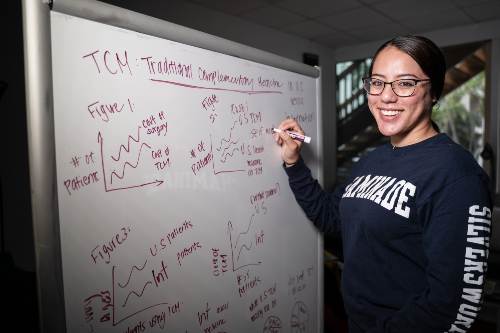
Zoey Kaneakua '22

For most of us, a dashboard primarily indicates a vehicle’s rate of speed, RPMs, engine temperature, gas gauge, mileage and maybe even a personal playlist. However, for Zoey Kaneakua ’22, an instrument panel means something completely different. A 2022 Chaminade University alumna with a degree in Data Science, Analytics and Visualization (DSAV), the 22-year-old Kauai native implements dashboards to measure crime statistics in Hawaii.

“In my sophomore year, I considered leaving Chaminade because I wasn’t enjoying my choice of major,” recalls Kaneakua, a recipient of the Ho‘oulu Scholarship, which is awarded to Native Hawaiian students pursuing a career in Science, Technology, Engineering and Mathematics (STEM). “Then my mom suggested that I major in data science, which I wasn’t sure about, but I’m glad I listened to her. She was right.”

In middle school, Kaneakua developed an interest in computer coding just so she could personalize her Tumblr profile. Data science, though, was not in her purview nor in her future. But forensics was, or so she thought. Now she’s a self-described “research geek,” who prefers math over the arts, and enjoys designing dashboards with custom colors and functions.

“I really grew an interest in juvenile justice and criminal justice data when I was at Chaminade,” Kaneakua asserts. “I wanted to use data science—using statistics and computer science—to make it more understandable, interactive and accessible to the public.” 

Zoey Kaneakua '22

Kaneakua was the ideal candidate for the Data Science program, which encourages students to work in grassroots and community organizations, a fundamental principle in the pedagogical approach at Chaminade, which the National Science Foundation (NSF) INCLUDES Alliance selected to lead a groundbreaking $10 million grant project aimed at creating new opportunities in STEM and data science careers for historically underrepresented populations across Hawai‘i and the Pacific Region.

“You can apply data science to every field—education, healthcare and mental health, environmental science and climate change, and criminal justice,” explains Dr. Rylan Chong, director of Chaminade’s Data Science program. “It’s not just about crunching numbers, but ensuring the numbers reflect different viewpoints and getting those numbers into the right hands.”

Sitting in front of two screens at her office in the Department of the Attorney General’s Crime Prevention and Justice Assistance Division, Kaneakua demonstrates how she monitors and reports crime statistics in Hawaii and then uploads the data to the Federal Bureau of Investigation’s National Incident-Based Reporting System (NIBRS), an incident-based reporting system in which law enforcement collects data on each crime occurrence.

“When I was in school, all my research was in criminal justice,” Kaneakua says. “And I was especially interested in looking at juvenile justice.”

Zoey Kaneakua '22 at her computer

Ironically, the crime reports that Kaneakua once poured over are now her kuleana (responsibility). She also now understands how there could be discrepancies in the numbers. Hired in September as a data analyst with the Crime Prevention and Justice Assistance Division, the former Silversword is now the point person, to whom police departments on Oahu, Maui, Hawaii Island and Kauai submit their monthly crime reports. Citing her education at Chaminade—and specifically her mentor Dr. Chong—as reasons for being in her current position, Kaneakua points out that she wasn’t even aware that this position was open.

“This was one of the hardest jobs to pursue because the state requires any new hires to have at least one-year experience,” Chong says. “In Zoey’s case, she needed at least one year of experience in both data science and criminal justice since she was filling the role of a database specialist and a data analyst.”

In her junior year, Kaneakua joined aspiring data scientists from across Hawaii and the mainland to participate in Chaminade’s monthlong Supporting Pacific Indigenous Computing Excellence (SPICE) Data Science Summer Institute. 

“That was my first independent research involving juvenile justice,” Kaneakua says. “And I think I built my first dashboard in three days using Python (a high-level, general-purpose programming language).”

For her next project, Kaneakua participated in C4C (Computing for Change), looking at domestic violence across the U.S., and trying to make sense of the data and its limitations. Today, she works on real-time projects, which allow her to use all the skills and knowledge that she learned and honed while attending Chaminade.

“None of this would have been possible without Rylan,” says Kaneakua in praise of Chong. “He believed in me and helped me navigate and find my niche. I am eternally grateful for this opportunity and I am proud to represent Chaminade’s DSAV program as I continue to conduct criminal justice research in Hawaii.”


Posted by: University Communications & Marketing Filed Under: Alumni, Featured Story, Natural Sciences & Mathematics Tagged With: Criminology and Criminal Justice, Data Science

Man on a Mission

December 16, 2022

Alumnus Continues to Pursue Social Justice Passion

Antonio Bonnetty '19 studying

When Antonio Bonnetty ’19 started at Chaminade University, he wasn’t even sure if college was for him.

By the time he graduated, he was inspired to head to law school.

And in Spring 2022, the new dad—married to fellow Silversword Maria Weisser ’19—graduated from the Thomas R. Kline School of Law at Duquesne University. In short order, he passed the Pennsylvania bar and was accepted into the prestigious U.S. Army Judge Advocate General (JAG) Corps. 

It’s an impressive trajectory—that he never would have imagined for himself before starting at Chaminade. “When I was graduating from high school, I didn’t have all my ducks in a row,” he said. “But Chaminade prepared me for adjustments later in life. It took me a little bit to get there, but I did.”

Growing up, Bonnetty moved around a lot as a “military brat,” and graduated from Moanalua High.

Antonio Bonnetty '19 running cross country

He decided to apply to Chaminade after a friend told him about the university. Bonnetty says he was intrigued by the idea of smaller class sizes and strong relationships with mentors. And it didn’t take long for him to realize he’d made the right decision: he joined the cross country team and student government, eventually becoming president, and was also active in campus ministry.

What he appreciated most about Chaminade, he said, was the strong connections to the community. 

He said that he’s still moved when he thinks about a service learning project he participated in as a freshman in which he joined with other students to provide meals at homeless shelters. “When you’re homeless, there’s such a stigma. But for the overwhelming majority, it’s just bad luck and cards,” Bonnetty said, adding that message resonates with him as he begins his law career.

“The government as it stands can do a lot better to support people like that,” he said.

Bonnetty said he also grew his confidence at Chaminade—as he took on new challenges with the support of his professors. His interest in the justice system drove him to pursue a Bachelor of Science in Criminology and Criminal Justice degree. He also double majored in Environmental Studies because of a personal passion for gardening and the outdoors. It was a perfect combination, he said.

“It was a culmination of different things in my life,” he said. 

And it led him to his future career: law. At Chaminade, he said, several professors encouraged him to consider law school and underscored its value to projects of social justice. “I see such great opportunities in law to change policies and help improve people’s lives,” he said.

Also at Chaminade, he met his future wife—on day one of a student retreat for freshmen.

They started dating as sophomores, married after graduation and soon, they’re hoping their story together will come full circle: by baptizing their first baby at Chaminade. “For both of us, Chaminade was just a big part of our lives and our lives together,” Bonnetty said. “There are so many good memories.”

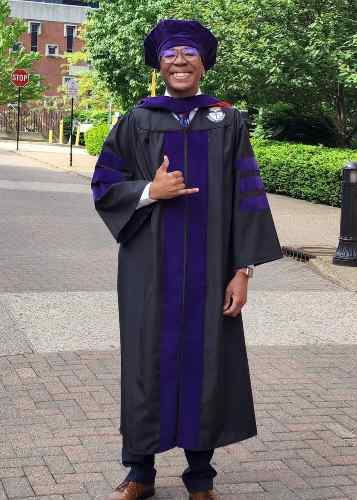
Antonio Bonnetty '19 in his regalia at his Duquesne University graduation

Bonnetty said he also decided to attend Duquesne University, rather than the University of Pennsylvania, because of his experience at Chaminade. “It just seemed similar to Chaminade; the people were so nice and the vibe was perfect,” he said. “It immediately felt like home.”

Looking to the future, Bonnetty said he’s honored to serve with JAG.

Before graduating from high school, Bonnetty said he had actually applied to every branch of the military but was denied for all of them because of a medical condition. “At the time, I was discouraged. But it turned out to be the best thing that could have happened. I got into Chaminade and got a chance to really thrive,” he said, adding he is looking forward to serving his country in a different capacity.

“After learning I might be considered for JAG, I applied and got in,” he said.

Now he’s gearing up for what’s next—at work and at home.

He recently took to Facebook to announce he’d gotten a letter in the mail officially confirming his admission to the Pennsylvania bar. The notification, he said, “cemented trust in myself” and had him giving thanks to the people who have supported him through good days and tough ones. He expressed gratitude to his wife and extended family, to his newborn baby “for being my purpose,” and to his professors. “I am so thankful,” he wrote, “for all the help I had along this journey.”

Posted by: University Communications & Marketing Filed Under: Alumni, Behavioral Sciences, Featured Story, Natural Sciences & Mathematics, Student Life Tagged With: Campus Ministry, Criminology and Criminal Justice, Environmental Studies, Student Government

Years of Service 

December 15, 2022

Faculty and staff reach impressive milestones 

The mood was anything but Bah-Humbug. In fact, it was the complete Dickensian opposite. Soap bubbles floated through the air, greeting guests as they climbed the steps to the Sullivan Library Lawn. Staff, faculty, family and friends competed in friendly games of cornhole. Music blared and the atmosphere was convivial. Even the Grinch (Richard Kido) showed up in a bright pine green suit wearing his Santa Claus hat. 

Meanwhile, in the background, Christine Denton and her merry elves—Clair Weichhaus, Lisa Trumbull, Lloree Gamiao and Makana Craig—could be seen scurrying around in preparation for the evening’s festivities, laying out trays of food, stacking beverages into coolers and arranging koa bowls in anticipation of the annual Years of Service ceremony.

‘Twas an event that not only marked Chaminade’s annual Christmas party but also afforded the university the chance to recognize the years of service of some of its faculty members and staff. Among them was Joshua Thinsew ’12, who quipped that he now has twins: a five-year honor and now one for 10. Holding up his koa bowl with gold inscription, the decade-long IT specialist said he was going to proudly place this one next to his other. 

President Lynn Babington, Ph.D., was also recognized for her fistful of years of service, remarking that she is proud to serve Chaminade. “Joining the Chaminade ‘ohana has been a tremendous honor and privilege, and I’m grateful for all of your hard work and commitment to our educational mission,” Dr. Babington said. “My commitment to our students, faculty and staff remains steadfast, and I look forward to continuing to lead with compassion, vision and a community-first approach.”

Christmas Party Slideshow
Celebrating Years of Service

Below is the complete list of Chaminade employees celebrating their years of service milestones:

Five-Year Award

  • Lynn Babington, President
  • Jonathan Baker, School of Natural Sciences & Mathematics
  • Hilary Corcoran, School of Natural Sciences & Mathematics
  • Guanlin Gao, School of Business and Communication
  • Blendine Hawkins, School of Education and Behavioral Sciences
  • Kahoalii Keahi-Wood, Center for Strategy & Innovation
  • Makepa Matin, Facilities
  • Travis Mukina, School of Education and Behavioral Sciences
  • Claire Nishiguchi, School of Humanities, Arts and Design
  • Katelynn Perrault, School of Natural Sciences & Mathematics
  • Lorin Ramocki, School of Nursing and Health Professions
  • Claire Reddy, ’19, Chaminade University Montessori Lab School

10-Year Award

  • Deven Bukoski, ’18, Human Resources & Legal Affairs
  • David Carter, School of Natural Sciences & Mathematics
  • Denise Cooper, School of Nursing and Health Professions
  • Gail Grabowsky, School of Natural Sciences & Mathematics
  • Abby Halston, ’05, School of Education and Behavioral Sciences
  • Kahala Kabalis-Hoke, ’18, Athletics
  • Chrystie Naeole, School of Natural Sciences & Mathematics
  • Pamela Silva-Patrinos, School of Education and Behavioral Sciences
  • Mark Speck, School of Natural Sciences & Mathematics
  • Joshua Thinsew, ’12, Client Services
  • Aaron Williamson, School of Business and Communication

15-Year Award

  • Dayna Bareng, Residential Life
  • Derek Chung, Network and Desktop Services
  • Darren Iwamoto, ’98, School of Education and Behavioral Sciences
  • Hieu Nguyen ’09, Institutional Research
  • Helen Turner, School of Natural Sciences & Mathematics

20-Year Award

  • Ronald Becker, School of Education and Behavioral Sciences
  • Clifford Bieberly, School of Business and Communication
  • Janet Davidson, Vice Provost of Academic Affairs
  • Philamerico Dela Cruz, ’10, Management Information System
  • Richard Kido, School of Business and Communication
  • Sharon Lepage, Sullivan Family Library
  • Tomasa Pillos, Campus Maintenance

25-Year Award

  • Collin Lau, School of Education and Behavioral Sciences
  • Tracy Trevorrow, School of Education and Behavioral Sciences

Posted by: University Communications & Marketing Filed Under: Campus and Community, Featured Story, Institutional Tagged With: Honors and Awards

Sticking Point

December 13, 2022

Pinning Ceremony marks rite of passage for graduating nursing students

“Let us never consider ourselves finished nurses … we must be learning all of our lives.”
Florence Nightingale

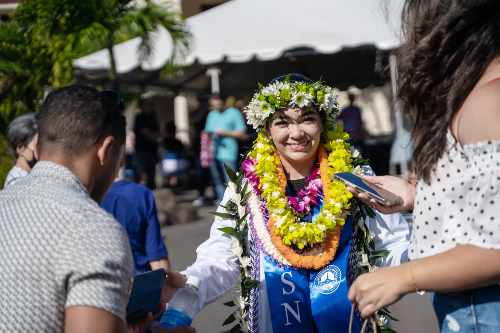
2022 Nursing Pinning cermeony

Minutes after completing his final exam, Nainoa Gaspar-Takahashi ’22 began to muse about his remarks for the time-honored Nursing Pinning Ceremony, a rite of passage for soon-to-be graduates or graduating Nursing School students.

“After all the obstacles, especially when COVID happened, I can finally see the end of the tunnel,” says Gaspar-Takashi, referring to the ritual ceremony. “It has been a long journey for me and I can finally breathe a sigh of relief.”

A total of 49 nursing students received their stoles and pins during the ceremony, which occurs at the end of a student’s program in a school of nursing, and signifies the completion of this level of education and an official initiation into the profession. 

Gaspar-Takahashi points out that this official observance is different from the commencement that he will participate in May 2023, adding that many of his peers share the opinion that this ritual is even more significant for them. For the Kaneohe native, the Pinning Ceremony symbolizes that a student is now formally a member of the sisterhood and brotherhood of nurses, and is ready to serve the community as a healthcare professional. 

“Nursing has often been referred to as a ‘calling’ and this Pinning Ceremony is based on the history of this respected profession,” Gaspar-Takashi says. “I now feel like I’m now on the frontline of helping people get better.”

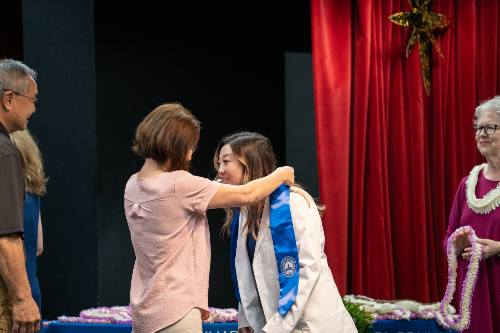
Nursing student receiving her stole at the Nursing Pinning ceremony

In Chaminade’s School of Nursing and Health Professionals version of the Pinning Ceremony, it’s a student’s family member—and not faculty like at some celebrations at other schools—who presents the Chaminade-blue stole and offers words of congratulations. 

“It’s very meaningful for the student to have a parent or loved one place the stole around their neck,” says School of Nursing and Health Professions Dean, Rhoberta Haley, Ph.D. “My late mom was a nurse and when she attended my Pinning Ceremony, she wore hers. It’s very symbolic and we take great pride in our pins.”

The history of the Pinning Ceremony dates back to the 12th century when the Crusaders were cared for by the Knights of the Order of the Hospital of St. John the Baptist. When new monks entered the order, they vowed to serve the sick soldiers in a ceremony during which each monk was given a Maltese cross badge.

The modern ceremony started in the 1860s when Queen Victoria awarded Florence Nightingale the Red Cross of St. George to recognize her service as a military nurse during the Crimean War. To share the honor, Nightingale —whom many deem the founder of modern nursing—later presented medals of excellence to her brightest nursing students.

In 1916, the Pinning Ceremony became standard practice for new graduates in the United States as a way to welcome them into the profession. While once reserved for outstanding students, today it includes all students who successfully complete their nursing education.  

The last time that guest speaker Bridget Lai spoke at a Pinning Ceremony was her own in May 2001. “It’s been a long time, but when I received the invitation from Dean Haley, not only was I thrilled and excited, but all the memories of that day–over 20 years ago—came rushing back to me,” said Lai, Hawaii Pacific Health’s Nursing Education Manager. “While I absolutely value my degree, the Pinning Ceremony spoke directly to me and the personal calling that I answered to become a nurse. Your pin tells the world—you can do anything, four words that have stayed with me, and grown and evolved with my professional nursing practice.”

In addition to the pinning, some ceremonies often include a candle- or lamp-lighting to symbolize the nighttime care Nightingale gave to wounded soldiers by candlelight. Graduates also recite the International Pledge for Nurses. 

“We take this oath seriously,” Gaspar-Takahashi says with sincerity. “And now I look forward to being present as an employee and not a student, and making a difference in a patient’s care.”

Gaspar-Takahashi’s education, though, isn’t quite over. His next classroom will be the emergency room at Straub Medical Center, where he will be the graduate nurse before officially obtaining his Registered Nurse license.

“This nursing program instilled in us the Marianist values of service and compassion,” Gaspar-Takahashi asserts. “I’m grateful for the opportunities I’ve been given. I was not only taught the nursing academy but I learned a lot about life lessons.”

Posted by: University Communications & Marketing Filed Under: Featured Story, Institutional, Nursing & Health Professions, Students Tagged With: Nursing

One and Done

December 9, 2022

Program offers business students a fast track to an MBA degree

One Year MBA students in New Zealand for their international study trip

Unlike the contestants in the “Amazing Race,” Chaminade students did not encounter any detours nor face any roadblocks when they visited Aukland, New Zealand. The adventure was part of the new One Year MBA program that the University introduced in the fall of 2021.

“I had experience with such programs at three other universities,” says Dr. Bill Rhey, dean of the School of Business and Communication. “The data points out that when students look for an MBA program, they consider time of completion, cost, convenience and quality of faculty. This MBA meets all four.”

The cohort model for the One Year MBA program differs greatly from the traditional 18-month track. Foremost, as Rhey explains, students enrolled in this 12-month curriculum are in “lockstep,” which means they all must take the mandatory classes together.

“They start here and they finish here—together,” Rhey emphasizes. “This first cohort of students really bonded and supported each other every step of the way.”

The advantages of enrolling in a one-year program are many. But perhaps one of the most salient reasons refers back to an old adage: time is money. Obviously, paying a year’s tuition—versus two—saves a lot of cash. Tuition also includes books, meals on Saturdays and the international trip. Secondly, classes meet on alternate Saturdays and through online coursework. And thirdly, this type of educational model fosters collaboration and helps develop close bonds with fellow classmates.

One Year MBA students in class

“When I was packing my bags, I began to question my decision, asking myself ‘Why am I doing this,’” recalls Katelin Korman, who moved to Hawaii from her hometown of Surrey, British Columbia. “I didn’t know anyone in Hawaii but it turned out to be the best experience of my life and I have no regrets.

“The hybrid model also meant that I could continue working while also completing my studies,” Korman further notes. “I loved the idea of having a small cohort and a more personalized experience.”

The idea of being in a tight-knit group also drew Rebecca Miller. “I was so fortunate to have been part of this particularly amazing group of people, and I mean that sincerely,” says Miller, a licensed optician with LensCrafters. “Having been able to share this time together helped us learn how we worked with each other as individuals.”

Initially accepted into the traditional MBA program, Mario Macagba later learned about the accelerated alternative and decided this option would work best for his circumstance. The trip to New Zealand was another alluring factor.

“In preparation for the trip, professor Callahan provided us assignments that allowed us to learn about New Zealand,” Macagba says. “We learned about its culture and did research about Hawaii’s link to New Zealand and the similarities with regards to tourism and culture.”

In the past, Rhey has led other student groups on similar trips to Malawi and South African but never to Auckland. According to Rhey, New Zealand was chosen because it’s an island country, which has a Polynesian history and a large tourism/hospitality sector.

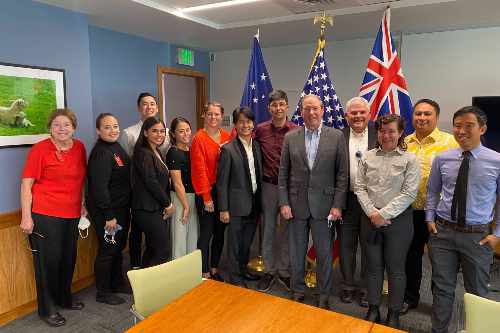
One Year MBA students in New Zealand for their international study trip

“It is, also, an English-speaking country with direct flights from Honolulu,” Rhey points out. “I have a friend (Rob Scharar) who is engaged with many leaders and businesses in New Zealand, and he was happy to help design the tour.”

A supporter of MBA programs and education overall, Scharar’s invaluable knowledge and connections provided students with an insider’s look into the New Zealand economy and politics.

“It was a mini business seminar for four days,” asserts Scharar, President of FCA Corp., a 50-year-old leading global investment management and financial advisory firm that also owns a stake in Unparalleled Journeys, which arranged the itinerary. “We had guest speakers from the New Zealand Stock Exchange, U.S. Embassy,  FCA Corp’s investment team, Representatives from the U.S. Commercial Service for Australia and New Zealand, and Commonwealth Australia-New Zealand investment managers. The goal was to give these students some exposure to international trade and business.”

After discussing the impact of COVID on the travel industry, Unparalled Journeys tasked the students to prepare a presentation and summary of strategies and protocols that could possibly mitigate the effects of another potential global pandemic.

“The students had a lot of great ideas, from the use of technology to strategic messaging in anticipation of another COVID-like pandemic,” Scharar says. “They all passed. This was a wonderful group of young adults who were pretty humble and grounded, which made it fun for me.”

“Traveling with Mr. Rob Scharar was a fantastic experience,” Miller says. “He really brought to life a sense of what we were working to achieve. Watching him command a room, and interact with individuals everywhere from Parliament to the Stock Exchange was very enlightening.”

One Year MBA students in New Zealand for their international study trip

Macagba’s biggest takeaway from the trip was a pointed lesson in leading. “Servant leadership is valuable,” he says, “and we need to make sure we serve and lead in our community, home, work and social circles, and to view our culture not as black and white but gray.”

Korman was most impressed with the level of awareness that Kiwis hold for their surroundings, giving her a new perspective on the quality of life and living in general.

“I learned that New Zealand is a lot like Canada where I am from,” says the British Columbia native. “It is extremely similar in the way it’s run and governed, the landscape, environment and climate, as well as the people and their interests and hobbies. Our money and tax system are also alike and both countries are part of the British Commonwealth.”

The one-year program is targeted—but not limited—to mid-management professionals who are already working in a specific industry, and seek a track to the executive level. Its goal is to provide growth, leadership, thoughtful decision-making, engagement and new opportunities.

Before obtaining her MBA, Korman had only worked at small companies with few employees and even fewer opportunities for professional growth. However, this changed in November when she landed a marketing coordinator position with Save-On-Foods, one of Western Canada’s largest supermarket chains.

“I think the MBA definitely helped me get this job,” says Korman, who believes this is her first step to upward mobility. “I learned so much more about business, including data science, analytics, strategic thinking and marketing.”

During a banquet dinner to celebrate their graduation, students from the 2021 class had the opportunity to welcome the next cohort of MBA graduates, passing the torch on to some of the incoming class members.

“I know the students took away a sense of confidence in their ability to make recommendations as business consultants for our host company, Unparalled Journeys,” Rhey concludes. “I also believe that most had their horizons broadened, and experienced a greater appreciation for how business is done, and how different life is outside of Hawaii.”

Posted by: University Communications & Marketing Filed Under: Business & Communication, Featured Story Tagged With: One Year MBA

Hogan Entrepreneurial Leadership Program Celebrates 20 Years

December 6, 2022

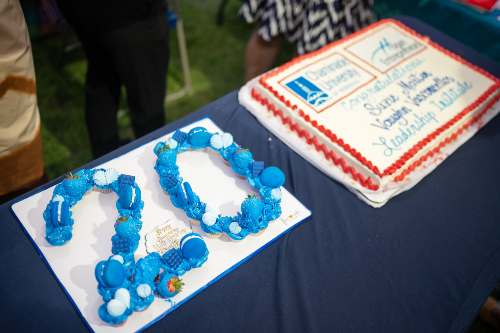
Not even a torrential downpour could dampen the moods of attendees who celebrated the 20th anniversary of the Hogan Entrepreneurial Leadership Program. Since its inception, Gary Hogan has been committed to the idea of mentoring students in leadership and inculcating the entrepreneurial spirit. These are two qualities that were instilled in him by his late parents, Ed and Lynn Hogan, founders of Pleasant Hawaiian Holidays.

“We tried to establish a travel and tourism school in California, but it never took off,” Hogan recalls. “During that same time, my dad had become dear friends with Fr. Spitzer (then president of Gonzaga University), who helped establish the Hogan Entrepreneurial Leadership Program at that university.”

Wanting to give back to the Hawaii community, Hogan thought of Chaminade because of its mission to educate for service, justice and peace, and to do so with an integral, quality education. He was also fond of the late, former Chaminade president Sue Wesselkamper.

Hogan Entrepreneurial Leadership Program 20th anniversary

“Sue liked the idea so I spoke to my mom and dad about the opportunity, and we all agreed that it would benefit the local community,” says Hogan, Chairman and CEO of Pleasant Travel Series. “This 20-year milestone is an achievement that we can all be proud of.”

Dr. Roy Panzarella certainly is. As the program director for the past two-and-a-half years, the one-time Lockheed Martin chief executive looks to strengthen the school’s partnerships with local businesses and its leaders and to bring in new ideas on how to problem-solve.

“Twenty-one is the legal age right, so we still have a minor we’re raising,” Panzarella quips. “We’re in the infancy, phase-one stage, and we’re going to take the crawl-before-you-run approach.”

Choosing to enroll in an entrepreneurial program bears a lot of factors. While rankings may be an important one, another should be what’s behind the ranking. Teaching methodology matters and so, too, does the experiential component to the entrepreneurial journey. 

According to Panzarella, it’s critical to differentiate between starting a business and learning the skills of entrepreneurship as a springboard to success. 

“Entrepreneurship is not just about starting a business, though it’s that, too,” he explains. “Entrepreneurship is about acquiring the skills of success, and we try to teach those skills in the context of entrepreneurship.”

With a diagram resembling a three-tiered wedding cake in hand, Panzarella points out the significance of each layer, starting with the base, which he refers to as the “direct” impact that the program has on its students. At this level, the engagement includes Wednesday Guest Lecture Series, internships, social media value and mentorship.

The second tier features the operational side of the program—the nuts-and-bolts structure of running an entrepreneurial curriculum. And the top layer involves the strategic component, which lays out the future transformation roadmap, the mission, the vision, the values and the people of Hogan.

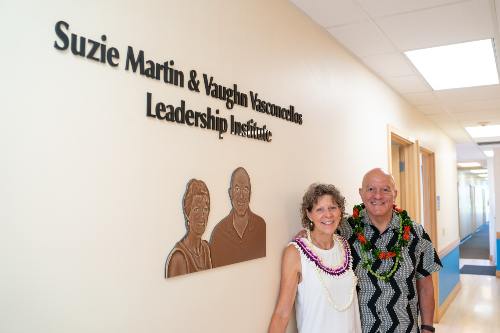
Suzie Martin & Vaughn Vasconcellos Leadership Institute

Embedded in the larger Hogan program is the new Suzie Martin & Vaughn Vasconcellos Leadership Institute, named after Vaughn Vasconcellos, a former Chaminade Board of Regents Chair and a current member of the Board of Governors.

“Vaughn has agreed to return in the coming months as the first chair of the institute, during which he will lecture and host meetings and socials in an attempt to broaden the exposure of the institute, as well as Hogan and Chaminade,” Panzarella says. “The institute will also sponsor an entrepreneurial mission abroad in the next year or two.”

Poised to expand in the future, the Hogan Entrepreneurial Leadership Program, now in concert with the Suzie Martin & Vaughn Vasconcellos Leadership Institute, will train and mentor tomorrow’s leaders and entrepreneurs. The education that students will receive will prepare them to lead with empathy, morality, compassion, and a drive to identify problems and create scalable solutions that can benefit individuals, communities and the globe. 

“The goal is to develop a Minor in entrepreneurship and then a Major,” Panzarella asserts. “My dream is for the program to be recognized as the ‘Pearl of the Pacific,’ which will attract people from across the region.”

In partnership with American Savings Bank, the bi-annual Nonprofit Business Plan Competition (the next one will be held in 2024) has already appealed to a diverse group of entrepreneurs across the main Hawaiian islands, including Lawai‘a Naihe, executive director for this year’s first-place winner, Hoakeolapono Trades Academy and Institute on Kauai, and AALII Mentoring, a charitable business that was formed to help students from underrepresented populations to navigate, persist and succeed in higher education. 

“We can’t lose perspective of what we set forth, which is to mentor future entrepreneurs in the Jesuit tradition,” Hogan says. “This has been the goal for the past two decades, and we just want to build on that momentum and continue to serve the community.”

Other positive community relationships involve Catholic Charities and the Institute for Human Services. Both have previously participated in the annual “Job Preparation Workshop” for homeless and near-homeless individuals. Hogan students, including previous participant and now an MBA candidate Savannah Lyn Delos Santos ’22, work alongside the participants to help construct their resumes, and to assist in improving their job interviewing skills. 

Hogan Entrepreneurial Leadership Program 20th anniversary

“While most of society shuns them because they have nothing, they are just doing what they can to move forward and rise up,” Delos Santos says. “They made me realize how sometimes one chance is all someone needs to create a better life for both them and their families.”

By connecting entrepreneurial education with service and ethical leadership, students can build on their interests and abilities to create a positive difference in the community. The program offers extensive hands-on experience and networking opportunities with like-minded aspiring entrepreneurs and industry champions.

“From day one, we want students to understand leadership and entrepreneurship,” Hogan affirms. “We want to teach them good ethics and morals with an emphasis on long-term leadership.”

Asked what he expects during the next 20 years, Panzarella says he wants to build capacity and nurture more international partnerships. He also aims to have the program focus more on a practical than theoretical direction.

“Yes, business plans and a solid business foundation are important,” Panzarella says. “And we know that IQ (intelligence quotient) and EQ (emotional intelligence) matter, but we need to know more about cultural intelligence. We want students to become better versions of themselves. We want them to walk away with the necessary tools in their toolbox or arrows in their quiver— whatever the metaphor may be—to succeed in their lives.”

Posted by: University Communications & Marketing Filed Under: Campus and Community, Featured Story, Hogan Entrepreneurial Program

  • « Go to Previous Page
  • Page 1
  • Interim pages omitted …
  • Page 54
  • Page 55
  • Page 56
  • Page 57
  • Page 58
  • Interim pages omitted …
  • Page 150
  • Go to Next Page »

Footer

Chaminade University Logo

3140 Waialae Avenue
Honolulu, Hawaii 96816

Contact Us
Phone: (808) 735-4711
Toll-free: (800) 735-3733

facebook twitter instagram youtube linkedin

Visit

  • Plan Your Visit
  • Campus Map (PDF)
  • Events

Resources

  • Campus Security
  • Student Consumer Information
  • Concerns, Feedback, and Reporting
  • Institutional Review Board
  • Title IX / Nondiscrimination Policy
  • Compliance
  • Emergency Information
  • Careers
  • Institutional Statement

People

  • Students
  • Parents
  • Alumni
  • Faculty & Staff

Policy

  • Privacy Policy
  • Terms and Conditions of Use


© Chaminade University of Honolulu