• Skip to primary navigation
  • Skip to main content
  • Skip to footer
Chaminade University of Honolulu

Chaminade University of Honolulu

  • VISIT
  • APPLY
  • GIVE
  • STUDENTS
  • PARENTS
  • ALUMNI
  • FACULTY/STAFF
  • Admissions
    • Admissions Home
    • Undergraduate Students
      • First-Year Students
      • Transfer Students
      • Admitted Students
    • Graduate Students
    • Flex Online Undergraduate Program
    • Military Students
    • Non-Degree/Visiting Students
    • Experiential Honors Program
    • Early College Program
    • New Student Orientation
  • Tuition & Aid
    • Financial Aid Home
    • Tuition & Expenses
    • Federal Updates & Changes
    • Scholarships
    • $5,000 Graduate Scholarship
    • VA Education Benefits
    • Net Price Calculator
  • Academics
    • Academics Home
    • Academic Programs
    • Office of Student Success
      • Academic Advising
      • Records and Registrar
    • Kōkua ʻIke (Support Services)
      • ADA Accommodations
      • Career Services
      • Proctoring Services
      • Tutoring Services
    • Sullivan Family Library
    • Undergraduate Research & Pre-Professional Programs
    • Commencement
  • Campus Life
    • About Campus Life
    • Student Engagement
    • Student Government Association
    • Residence Life and Housing
      • Summer Conference Housing
    • Health Services
    • Marianist Leadership Center
    • Counseling Center
    • Campus Ministry
    • Campus Security
    • Dining Services
    • Bookstore
  • Athletics
  • About
    • Chaminade University News
    • Our Story
    • Leadership
    • Chaminade University Strategic Plan 2024-2030
    • Mission & Rector
    • Association of Marianist Universities
    • Facts & Rankings
    • CIFAL Honolulu
    • Accreditation & Memberships
    • Montessori Laboratory School
Search
×

Search this web site

Students

‘Inana Innovators Program

October 13, 2023

Chaminade students participate in sustainability entrepreneurship

Madison Makishima ’25 was able to make adaptive surfboards out of recyclable materials and ocean plastics so people —like her—with disabilities could have access to the ocean. As part of Chaminade University’s ‘Inana Sustainability Entrepreneurship Program, Makishima and eight other fellow students, including Aleeyah Lemons ’24 and Carly Wieczorek ’24, were able to participate in a 10-week summer program that paired them with businesses that align with the United Nation’s Sustainable Development Goals (SDGs).  

“I learned a lot, especially how to effectively network,” said Makishima, whose project was titled Surf Sesh. “The mission of the project—which aligns with the UN’s SDGs—was to help people with disabilities gain access to surfing while recycling and reusing ocean plastic, and educating everyone about living sustainable lives.”  

After winning a two-year $600,000 Minority Colleges and Universities Grant Competition from the U.S. Department of Commerce’s Minority Business Development Agency (MBDA), a hui of Chaminade professors developed the ‘Inana Sustainability Entrepreneurship Program, which aims to spark minority entrepreneurial innovation among Hawaii-Pacific undergraduates.

According to ‘Inana Sustainability Entrepreneurship Program’s coordinator, Mariane Uehara, the  three goals of the program are: 1) To develop and implement programs for the education and training of undergraduate students in subjects directly relating to successful entrepreneurship; 2) To support minority business enterprises (MBEs), including building a diverse entrepreneurial pipeline to grow the number of MBEs; and 3) to create a UN Certificate program in sustainability entrepreneurship.  

With the help of Rhea Jose, outreach coordinator for CIFAL Honolulu at Chaminade, Aleeyah Lemons ’24 pursued a project titled “Gender Equity through Malama Mai” or, cleverly, GEMM, and provided menstrual products in the women’s restrooms at Chaminade University.  

“GEMM is a program developed to provide resources, care and education on menstrual health to those at Chaminade University, its surrounding community and across the Pacific,” wrote Lemons in her final report. “We aim to end period poverty on campus, and allow our students who menstruate to feel comfortable and supported by GEMM and their peers.”  

Meanwhile, Carly Wieczorek ’24 designed a sustainable rooftop hydroponics system. “One major aspect of my activities was actively participating in exchanging ideas with local experts on hydroponics farming, visiting hydroponics farms on Oahu, and entrepreneurial skill workshops with industry professionals,” Wieczorek noted. “I’ve also been investigating innovative business approaches to urban agriculture, such as rooftop hydroponics, and examining how these practices align with the UN’s SDGs.”  

The focus of the ‘Inana program is to nurture sustainability entrepreneurs in Hawaii, who will develop businesses that diversify and grow our economy while attending to the health of the planet. This, of course, is consistent with Chaminade’s United Nations CIFAL Center, which is focused on supporting progress toward the UN’s 17 SDGs in Hawai‘i and the Pacific region.  

Three of the 17 SDGs in particular are addressed within the program: Promote sustained, inclusive and sustainable economic growth, full and productive employment and decent work for all; build resilient infrastructure, promote inclusive and sustainable industrialization and foster innovation; and improve education, awareness-raising and human and institutional capacity on climate change mitigation, adaptation, impact reduction and early warning.  

“Our first cohort consisted of nine students,” said Uehara, a Certified Health and Wellness Coach and former co-founder and director of Lanikai Juice Co. “This second cohort will focus on App creation with eight students. It’s great to see students—who all come from different disciplines—collobarate and solve problems.”

Posted by: University Communications & Marketing Filed Under: CIFAL Honolulu, Featured Story, Innovation, Institutional, Students Tagged With: CIFAL, CIFAL Center, Grants

Kenneth and Diane Matsuura Foundation

October 3, 2023

Scholarship fund helps future nurses

After consistently hearing about the need for nurses during the pandemic, Kenneth and Diane Matsuura decided to do something about it. Rather than park their money in investments, the couple was driven to establish a foundation that would support future healthcare workers, knowing the essential role nurses play in and outside of hospital settings.  

“During the pandemic, we saw the perseverance of nurses,” says Diane Matsuura, a retired music teacher. “I could never do what they do; they work tirelessly to help their patients heal. And we’re fortunate enough to be able to start this foundation to help future nurses attain their degrees.”  

The COVID-19 pandemic was not in sight when the World Health Organization (WHO) declared 2020 as the Year of the Nurse and Midwife, with a goal to raise awareness of the need for “nine million more nurses and midwives to achieve universal health coverage by 2030.”

In Hawaii, there are currently 1,000 vacant nursing positions across the state, according to the State Department of Labor and Industrial Relations. State data further shows the demand for more nurses will grow by more than 100 positions each year.  

Tiannah Ohta and Genie Reutirez heard that calling and decided to answer it by applying to Chaminade’s nursing program. As part of the cohort of students in the accelerated track to earn a bachelor of science in nursing, Ohta, Reutirez and their fellow nursing students will complete their degrees in five back-to-back terms (20 months, as opposed to the traditional four years) through a rigorous academic schedule.

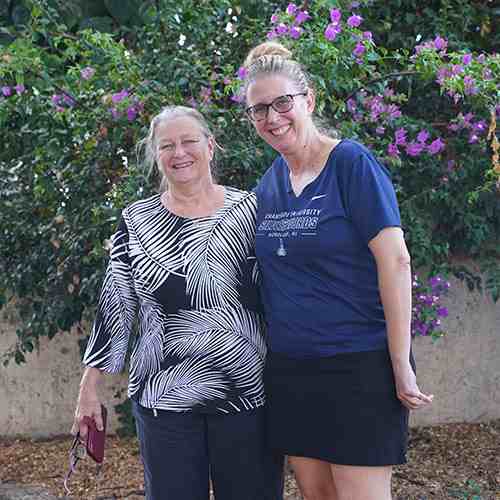
“When I read the email that I received a scholarship from the Kenneth And Diane Matsuura Foundation, I started to bawl,” Reutirez told Diane Matsuura and son Keven Matsuura over lunch. “It was such a huge surprise and a major financial help.”  

Ohta was in disbelief when she learned about her scholarship, thinking at first, that the email was a prank. “I wasn’t expecting it all; I had to read the email a few times because I thought I was reading it incorrectly.” said the 24-year-old Waipahu native and two-time nominee for a U.S. Presidential Scholars Medallion. “This helps me a great deal financially because we can’t work and go to school at the same time. It’s just not possible.”  

With an increasing emphasis on preparing nurses at the baccalaureate and higher degree level, one innovative approach to nursing education is to offer an accelerated degree program for non-nursing graduates. These programs build on previous learning experiences and provide a way for individuals with undergraduate degrees in other disciplines to transition into nursing.  

Having already completed her undergraduate degree in public health, Reutirez decided to pursue her nursing degree, a goal of hers even when she was completing her first bachelor’s. “It’s just a little later than I expected,” said the Ewa Beach resident. “I guess though it’s better late than never.”      

Geared to individuals who have already proven their ability to succeed at college or university, accelerated baccalaureate programs accomplish programmatic objectives in a short time by building on previous learning experiences. Instruction is intense with courses offered full-time with no breaks between sessions. Students receive the same number of clinical hours as their counterparts in traditional entry-level nursing programs.  

“Even when I was completing my bachelor’s degree in biology at the University of Las Vegas, I knew I wanted to be in the medical field,” Ohta says. “This program will help me get there.”  

And so will her Kenneth and Diane Matsuura scholarship.  

“It’s rewarding to meet these young women who have so much passion to become nurses,” Diane Matsuura says. “My husband is currently hospitalized so I see what these nurses have to go through day in and day out. They work long shifts and the job is physically demanding. So, I commend anyone who goes into nursing.”            

Posted by: University Communications & Marketing Filed Under: Campus and Community, Donor Profiles, Homepage, Institutional, Nursing & Health Professions, Students Tagged With: Honors and Awards, Nursing

HaSTA Conference

September 20, 2023

Sixtieth Annual Conference themed ‘Aina, A.I. and the Next Generation of Science Teaching’

After attending a series of workshops over the summer, Shawna “Kumu” Nishimoto, Tina Chan and Clarissa Tores developed engaging curriculum for their students, teaching them the importance of place-based/‘āina-based learning, especially as it relates to our ahupuaʻa.

In a breakout session during the 60th Annual Hawai’i Science Teaching Association (HaSTA) conference, the three middle school educators presented “Creating Stewards of the ‘Āina,” an hourlong discussion that focused on incorporating Native Hawaiian practices into the field of science.  

“Attending the M2M:WET, which stands for ‘Mauka to Makai: Watershed Experience for Teachers,’ helped me deepen my knowledge of watersheds and our ahupuaʻa system,” said Nishimoto ʻ22, who teaches at Ilima Intermediate School. “In this six-day, eighth-grade unit, students had to investigate the ability of tilapia to survive in different types of water to develop an understanding of adaptations and natural selection.”  

Bringing the tilapia to the classroom and separating them into three different aquariums—some in fresh water, others in salt water and the third in brackish waters—Nishimoto had her students test the waters’ salinity with a Monitor Test that she learned how to use during Chaminade’s M2M:WET workshops.  

HaSTA communications director Gail Peiterson, left, and Dr. Katrina Roseler at HaSTA’s 60th Annual Conference at McKinley High School.

“They all said ‘No Way!’ How could the tilapia survive in salt water,” Nishimoto told attendees. “It really engaged them because it opened a lot of self-questioning and peer-questioning.”  

Thanks to a grant from the National Oceanic and Atmospheric Administration (NOAA), Chaminade’s Teacher Preparation Programs Director and Education Associate Professor, Dr. Katrina Roseler, and Environmental Sciences Assistant Professor, Lupita Ruiz-Jones, Ph.D., were able “to enhance the capacity of Hawaii’s secondary science teachers to engage their students in ahupua‘a education and cultivate stewardship.”    

The summer workshops aligned with NOAA’s Bay Watershed Education (B-WET) initiative, an environmental education program that promotes place-based experiential learning for K–12 students and related professional development for teachers.  

“If you haven’t already done so, I encourage you to take your students to Kapapapuhi Point (formerly called West Loch Community Shoreline Park), where they can help restore vegetation, remove invasive species and learn about the mo‘olelo of the place,” said Chan, who teaches at Highlands Intermediate School. “The goal is to create future stewards of our ‘āina.”  

In her “Malama ‘Aina—To Care & Honor The Land,” Clarissa Torres detailed the learning outcomes for her Mililani Middle students. At the end of her class, she said they should be able to define or explain the term ahupua‘a; describe the  Native Hawaiian’s view of the importance of streams; observe positive and negative human impact on ecosystems; and create their own solutions based on their new knowledge of ahupua‘a systems.  

Running through her PowerPoint presentation, Torres stopped on a slide with a salmon image that linked to the “Salmon Survival Board Game” developed by NOAA Fisheries West Coast Region. “The salmon could easily be substituted with one of our local indigenous fishes,” says Torres, ’20 (Bachelor’s in biology) and ’22 (Master of Arts in Teaching). “The dice game goes through the life cycle of the salmon and shows the many manmade and natural challenges throughout their lives. It really brings into question what we could do to help fish, in this instance salmon, survive in the open waters.”  

Although they weren’t presenting at the Saturday morning conference, Chaminade students Paige Garcia ’24, Gabe Zapata-Berrios ’24, Naomi Noguchi ’24, Madisyn Polendey, ’25, Kylie Ye ’25 and Kelsey Davidson ’24, attended the “‘Aina, A.I., and the Next Generation of Science of Teaching” to build connections with other educators.  

“It exposes us to teachers who are already in the field,” Garcia said. “We get to network and learn about resources that we might not be aware exist.”  

Also present was Jessica Mountz, a participant in the M2M:WET summer program. “The main drive for participating in the workshops was to better understand Hawaii culture and its relevance in teaching science,” said the Hanalani Schools high school teacher. “It was also a great avenue to connecting with other teachers and resources.”              

Posted by: University Communications & Marketing Filed Under: Education, Featured Story, Institutional, Students Tagged With: Conference, Elementary Education

New College Rankings

September 19, 2023

Chaminade makes 2024 annual listing by US News & World Report

The US News & World Report released its 2024 annual ranking list of the nation’s “Best Colleges” on Monday, and Chaminade University once again fared strongly in several categories, ranking No. 10—bumping up a spot from 2023—for Best Value among regional universities in the west. The University was also recognized as No. 29 in Social Mobility for graduates and No. 30 as Best in the Western Region.

“Chaminade combines many of the advantages of a large university—such as innovative programs, dedicated faculty, research programs and real-world learning opportunities—with the personal attention and close-knit culture of a small, private institution,” said Chaminade President Lynn Babington, Ph.D. “We offer a unique blend of liberal and professional studies that provides our students with the skills, knowledge and experience they need to build successful lives and achieve their dreams.”  

This year, US News made several changes to the metrics it uses to rank colleges, such as introducing new criteria tied to first-generation students, and placing more weight on retention of and graduation rates for students who received need-based Pell grants. The system also adds greater emphasis on “social mobility,” which generally refers to an individual making gains in education, income and other markers of socioeconomic status.  

“The significant changes in this year’s methodology are part of the ongoing evolution to make sure our rankings capture what is most important for students as they compare colleges and select the school that is right for them,” U.S. News CEO Eric Gertler said in a statement to USA TODAY.  

The rankings were calculated using as many as 19 key measures of academic quality to evaluate nearly 1,500 U.S. four-year bachelor’s degree-granting institutions. These statistics reflect educational excellence and graduate outcomes, as well as considerations that vary person-to-person, like campus culture, strength in specific majors and financial aid offered.  

Chaminade was also recognized favorably from two other sources. Recently, Forbes ranked both Chaminade’s Master’s of Education online program and the Bachelor’s of Education online program in the top 10 across the country. Both programs accommodate working adults and others who need a flexible college experience.  

CounselingPsychology.org—a website devoted to providing educational resources for aspiring counselors and psychologists—also ranked Chaminade’s online bachelor’s degree in Psychology as #1. This recognition is a testament to Chaminade’s faculty, staff and students who contribute to making this program one of the best in the country.  

“Our comprehensive excellence is notable,” Babington said. “Many of our peer institutions are weighted heavily toward certain disciplines, but we are fortunate to have a balanced portfolio of strengths. Indeed, we have nationally recognized programs that range from nursing to forensics.”  

U.S. News and World Report Rankings*:  
Regional Universities West #30
Best Value – Regional Universities West #10
Social Mobility – Regional Universities West #29  
*These rankings are based on in-depth analyses of a wide variety of data points, as explained in the Best Colleges methodology article.  

Posted by: University Communications & Marketing Filed Under: Campus and Community, Diversity and Inclusion, Featured Story, Innovation, Institutional, Students Tagged With: Honors and Awards, Student Government

Early College Exposure

September 14, 2023

Sacred Hearts Academy students experience university-level courses

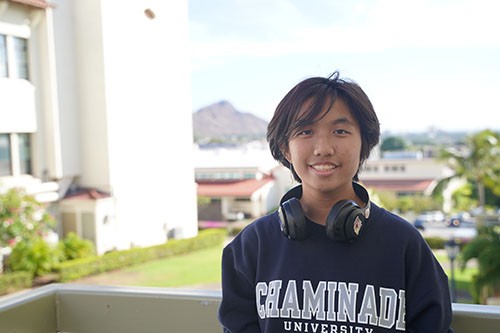
On Mondays, Wednesdays and Fridays, Lindsey Dimaya takes college-level communications and history classes. On Tuesdays and Thursdays, she attends biology lab and expository writing courses. And in between, the 16-year-old Sacred Hearts Academy Lancer still has to juggle the requirements for her high school diploma.  

While the rest of Dimaya’s classmates decided to participate in a dual enrollment program between Sacred Hearts Academy and Chaminade University in early March, the Aiea resident didn’t render her final verdict until mid-summer. For the high school junior, the question of finishing high school and simultaneously earning college credit was one of the toughest decisions she has had to ever make in her 16 years.  

“It was a big decision,” says Dimaya, an inspiring journalist interested in the media industry. “I wasn’t sure if I was ready for the college experience and the added workload.”  

Lindsey Dimaya is glad she enrolled in the dual enrollment program between Sacred Hearts Academy and Chaminade.

Finances, however, also played a major role in Dimaya’s mind. Since she is one half of fraternal twins, her parents would have had to pay for college for two kids at the same time. And that adds up quickly. Earning college credits in high school could reduce the financial barrier to college for many students—and help address the student debt crisis. Indeed, it can be a faster, cheaper way to get a college degree.

“My parents encouraged me to participate in the dual enrollment program because it was a more affordable option,” Dimaya says. “In addition to getting a head start in college, I could also save my parents a lot of money.”  

States—including Hawaii—have prioritized college and career readiness as a key goal of high school, reflecting the reality that most jobs require postsecondary education. The Early College High School Initiative (ECHSI) was established in 2002 by the Bill & Melinda Gates Foundation, along with the Carnegie Corporation of New York, the Ford Foundation, and the W.K. Kellogg Foundation. Over the past two decades, Early Colleges have expanded rapidly nationwide.

In a 2019 American Institutes for Research (AIR) study, researchers found that, over four years, Early Colleges cost about $3,800 more per student than traditional high schools. However, the estimated return on that investment was about $33,709 in increased lifetime earnings for each student. Furthermore, a cost-benefit study by AIR found that Early College programs pay off with lasting benefits for students and the broader population. (Chaminade’s program is separate from this consortium of Early Colleges, which are partnerships among school districts, charter management organizations or high schools, and two- or four-year colleges or universities.)

Also called concurrent enrollment, dual enrollment programs offer many cost-saving benefits, making these types of options popular among high schoolers. But many students, particularly those who are low-income and/or of color, lack access to a well-rounded high school education. Inadequate preparation in high school leaves high school graduates with fewer choices and pathways to postsecondary education. As a result, postsecondary enrollment and completion gaps persist. Early College High Schools focus explicitly on overcoming these challenges.  

“This is really a part of Chaminade’s service-oriented mission, which is to make higher education accessible to all Hawai’i students,” says Janet Davidson, Ph.D., Vice Provost of Academic Affairs and the driving force behind the University’s early college initiatives. “We launched a similar program with Kapaa High School in 2021. But unlike this new early college program, Kapaa participants only had the opportunity to earn high school and college credit at the same time. Sacred Heart students can actually earn their Associate’s degree in Liberal Arts.”  

Since this trend began, AIR researchers have conducted a number of comprehensive studies on their impact, finding overall that Early Colleges show strong and lasting evidence of effectiveness for all students. Promoting postsecondary access and success can be an effective policy strategy for improving postsecondary enrollment and completion rates.  

“Early college exposure is inspiring and formative,” says Kim Baxter, Chaminade’s Early College Director. “Sacred Hearts students will earn their Associates degree in May 2025, and two weeks later, they’ll graduate from high school.”  

Dimaya’s grateful that she opted in this program, which will prepare her to be better equipped when she continues to pursue her bachelor’s degree either at Chaminade or Portland University.  

“At first, I was afraid of the workload, but now I see that I can handle it,” Dimaya says confidently. “I think that this early college exposure has helped me manage my time, as well as taught me to be more independent and disciplined.”  

Read Lindsey’s story in the Sacred Hearts Academy newspaper.

Posted by: University Communications & Marketing Filed Under: Campus and Community, Catholic, Early College, Featured Story, Institutional, Students Tagged With: Communication, Early College Experience, Office of Student Activities and Leadership

Environmental Leaders

September 13, 2023

Changemakers discuss their path to policymaking

One is nicknamed by her husband as the “Irresistible Force.” The other is known as “The Enforcer.” And the third has a spouse who wholeheartedly stands behind him—even if it means wielding a tire iron. Together, Althine Clark, Celeste Connors and William Aila, Jr., respectively, represent a “super power” to contend with when it involves environmental policy and activism in the islands.  

“The goal of this session is to have our guest speakers talk about how they got where they are today,” said Clark, a Chaminade adjunct professor who recently retired as the National Oceanic and Atmospheric Administration’s (NOAA) superintendent of Papahānaumokuākea Marine National Monument. “You’ll hear real-life examples of what it’s like to live a life in environmental policy.”  

In his opening story, Aila recalled a time when he was young with a fervent commitment to do whatever it took to preserve the aina–even if it meant physical confrontation. “I saw these three guys one day and I confronted them because they were mistreating a cultural site,” Aila shared with the students. “I asked them to stop and I started to move towards them. When you’re about to get into a fight, you look at the person’s eyes and then watch their shoulder. But these guys kept looking behind me so I thought I was going to be ambushed. And when I had a second to look back, I saw my wife standing there with a tire iron in her hands.”  

Today’s environmentalists are faced with many forms of violence—and even death at times. The non-governmental organization Standing Firm has published an annual report on the killings of land and environmental defenders around the world every year since 2012, after the murder of Chut Wutty, a Cambodian environmentalist who worked with the Global Witness CEO Mike Davis investigating illegal logging.  

While stationed in Greece as an economics officer with the U.S. Mission to the United Nations, Celeste Connors once remembered seeing a bullet lodged in her office window. “There was so much anti-American sentiment at the time,” said Connors, Executive Director of Hawaiʻi Green Growth, which is a United Nations Local 2030 hub that brings together diverse stakeholders committed to economic, social and environmental priorities. “But when I told them I was from Hawaii, everyone started reaching out because they can connect with Hawaii.”

Indeed, Hawaii holds a special place with Connors who decided to come home in 2015 after serving as a diplomat in Saudi Arabia, Greece, Germany and U.S. Mission to the UN. She later was named the Director for Environment and Climate Change at the National Security Council and National Economic Council in the White House (2008-2012), where she helped shape the Administration’s climate and energy policies, including the Sustainable Development Goals (SDGs). Connors also worked with the United Nations on the Paris climate agreement that was signed in 2016, which she sees as inspiration for Hawai‘i Green Growth’s goals.  

“The world is at a point where we desperately need solutions,” Connors asserted. “Since I left home, there has been a cultural renaissance, and other nations are now looking to indigenous models, such as Hawai’s ahupua‘a system, to become sustainable and independent. Think locally but act globally.”  

With a background in urban and regional planning, Clark understands the complexity of environmental law and policy, a class (ENV 300) that she is currently teaching to sophomores and juniors. Her introductory course outlines environmental policy and law—specifically its nature, development, flexibility, and growth, and to the ethical dimensions surrounding the creation of state, national and international environmental policy and law.  

“No is not an option nor an answer,” Clark said. “I’m now seeing lots of communities get engaged. One of the reasons I agreed to teach at Chaminade is because the University encourages students to get involved in projects that benefit society.”  

Asked by a student how to deal with climate change deniers, Aila said try to first reason with them. “And if that doesn’t work, go around him, go above him, go below him,” he advised. “Don’t let anyone tell you, you can’t. Instead, use those words as a motivator, and go out and make a difference.”                

Posted by: University Communications & Marketing Filed Under: Campus and Community, CIFAL Honolulu, Diversity and Inclusion, Homepage, Institutional, Students Tagged With: Campus Event, CIFAL Center, Environmental Sciences, Environmental Studies

  • « Go to Previous Page
  • Page 1
  • Interim pages omitted …
  • Page 5
  • Page 6
  • Page 7
  • Page 8
  • Page 9
  • Interim pages omitted …
  • Page 36
  • Go to Next Page »

Footer

Chaminade University Logo

3140 Waialae Avenue
Honolulu, Hawaii 96816

Contact Us
Phone: (808) 735-4711
Toll-free: (800) 735-3733

facebook twitter instagram youtube linkedin

Visit

  • Plan Your Visit
  • Campus Map (PDF)
  • Events

Resources

  • Campus Security
  • Student Consumer Information
  • Concerns, Feedback, and Reporting
  • Institutional Review Board
  • Title IX / Nondiscrimination Policy
  • Compliance
  • Emergency Information
  • Careers
  • Institutional Statement

People

  • Students
  • Parents
  • Alumni
  • Faculty & Staff

Policy

  • Privacy Policy
  • Terms and Conditions of Use


© Chaminade University of Honolulu