• Skip to primary navigation
  • Skip to main content
  • Skip to footer
Chaminade University of Honolulu

Chaminade University of Honolulu

  • VISIT
  • APPLY
  • GIVE
  • STUDENTS
  • PARENTS
  • ALUMNI
  • FACULTY/STAFF
  • Admissions
    • Admissions Home
    • Undergraduate Students
      • First-Year Students
      • Transfer Students
      • Admitted Students
    • Graduate Students
    • Flex Online Undergraduate Program
    • Military Students
    • Non-Degree/Visiting Students
    • Experiential Honors Program
    • Early College Program
    • New Student Orientation
  • Tuition & Aid
    • Financial Aid Home
    • Tuition & Expenses
    • Federal Updates & Changes
    • Scholarships
    • $5,000 Graduate Scholarship
    • VA Education Benefits
    • Net Price Calculator
  • Academics
    • Academics Home
    • Academic Programs
    • Office of Student Success
      • Academic Advising
      • Records and Registrar
    • Kōkua ʻIke (Support Services)
      • ADA Accommodations
      • Career Services
      • Proctoring Services
      • Tutoring Services
    • Sullivan Family Library
    • Undergraduate Research & Pre-Professional Programs
    • Commencement
  • Campus Life
    • About Campus Life
    • Student Engagement
    • Student Government Association
    • Residence Life and Housing
      • Summer Conference Housing
    • Health Services
    • Marianist Leadership Center
    • Counseling Center
    • Campus Ministry
    • Campus Security
    • Dining Services
    • Bookstore
  • Athletics
  • About
    • Chaminade University News
    • Our Story
    • Leadership
    • Chaminade University Strategic Plan 2024-2030
    • Mission & Rector
    • Association of Marianist Universities
    • Facts & Rankings
    • CIFAL Honolulu
    • Accreditation & Memberships
    • Montessori Laboratory School
Search
×

Search this web site

Institutional

Medical School Journey

January 17, 2024

Rachel Arakawa enters her final year at George Washington

She’s more accustomed to dispensing medicine than she is advice. So, when asked what she would advise students to expect when they’re in medical school, Rachel Arakawa ’20 offered this simple suggestion: “Keep focus on your goals. And remember, you are just as qualified as anyone there.”

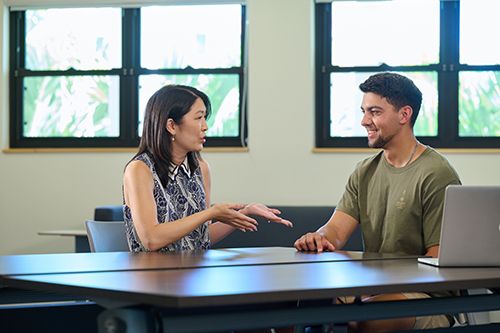
During a casual information session with students enrolled in Dr. Amber Noguchi’s HP 390 class–Advanced Topics in Health Professions Preparation—Arakawa shared her journey to George Washington University’s School of Medicine and Health Sciences. Like many freshmen who entered college amid a global pandemic in 2020, the former Silversword soccer and tennis player had to decide whether to stay home or move to Washington D.C.

“Even though all my courses were going to be online, I decided anyway to move to D.C.,” said Arakawa, who hopes to do her residency either in the Maryland–Virginia area or on the west coast. “That first year was really tough because it was my first time being away from home, and I had six to eight hours of online lectures every day, and then another two to three hours of reviewing the previous day’s content. We covered everything I learned as an undergraduate in two months.”

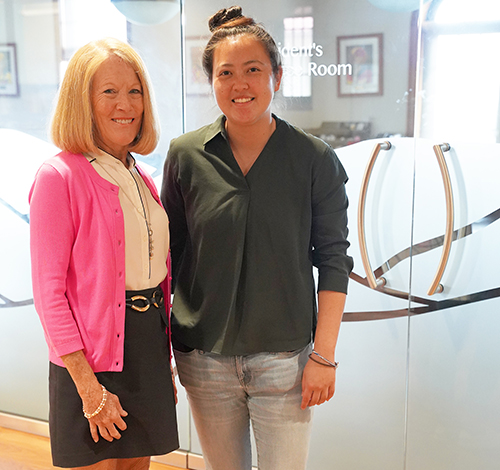
Chaminade President Dr. Lynn Babington welcomed Rachel Arakawa '20 back to campus this month for an informal discussion with students.
Chaminade President Dr. Lynn Babington welcomed Rachel Arakawa ’20 back to campus this month for an informal discussion with students.

Discipline and academic rigor, though, weren’t new to Arakawa. At the beginning of her sophomore year, the Kaneohe native decided to formally enter into an Articulation Agreement between Chaminade and George Washington University’s School of Medicine and Health Sciences.

At its essence, an articulation agreement document is a formal arrangement between two colleges or universities, outlining a structured transfer plan for specific program offerings. Depending on the program and degree, students have the opportunity to initiate their path towards advanced studies as undergraduates. This involves building a robust academic record and fulfilling prerequisites during their time at Chaminade. The agreement benefits students by guaranteeing the transfer of all completed classes (credits) and providing a clear pathway for ongoing academic progression.

Students who want to take advantage of participating in an articulation agreement, for example with George Washington University, should apply in January of their sophomore year. “This timeline avoids any gap year between undergraduate and graduate programs,” Noguchi noted. “Applicants are required to have spent two years (four semesters) in an undergraduate program of the contractual college and to have completed approximately 60 semester hours of course work by the end of the semester during which they apply.”

Articulation agreements streamline the transfer process for everyone involved. This will help alleviate the stress surrounding the application process, the credit transfer process, and several other issues students might encounter when applying to a graduate program. By simplifying this process with transfer agreements, it is beneficial to all parties involved.

Third year bio-medical major, Joshua Dumas ’25, plans to go to med school even though he didn’t pursue an articulation agreement. The aspiring physician’s decision was based on his preference to attend a school on the west coast so he can be closer to Hawaii and family.

“I was studying all winter break for the MCATs, but I decided to wait until I was better prepared,” said Dumas, a Regent Scholarship awardee and COPE Health Scholar with Adventist Health Castle. “It was inspiring to hear how her Chaminade experience helped her in med school, as I am sure it will help me.”

Now in her fourth year and two of three medical licensing exams behind her, Arakawa has applied to various residency programs and received 20 interviews. Her choice of post-graduate training will be in emergency medicine, a specific area that she has been interested in ever since she started her academic track in the health field.

“I did a lot of event medicine, like at concerts and marathons, and I really enjoyed it,” Arakawa told the students. “I get to look at trauma, but it’s not for everyone. You’ll have to find your own passion and specialty.”

Asked by sophomore Ku‘ulei Koko ’26 if she ever experienced the impostor syndrome, Arakawa unhesitatingly answered yes. “I am a first-generation medical student and the only Hawaiian–Japanese in my class,” Arakawa added. “Some of the other students were also more familiar with the social cues and mores of the medical field since they weren’t first gen. But, I overcame impostor syndrome by not comparing myself with others, and got involved with activities that I liked.”

Healthcare is indeed the perfect complement to Chaminade University’s mission. As a Marianist institution, faculty members educate their students to embrace adaptation and change, family values and community service, which are all core components of our healthcare system. And as a liberal arts school, Chaminade ensures that graduates have a wide breadth of knowledge and are able to think critically across a range of disciplines.

“I learned a lot during my years at Chaminade years—inside and outside of the classroom,” Arakawa said. “The small class sizes and the supportive faculty helped shaped my belief in serving the community and being an empathetic individual that can make a transformational impact.”  

Posted by: University Communications & Marketing Filed Under: Alumni, Homepage, Institutional, Natural Sciences & Mathematics, Undergraduate Research & Pre-Professional Programs Tagged With: Alumni, Guest Speakers, Transformation

‘Native Voices’

January 4, 2024

Traveling exhibit makes its first Hawaii stop at Sullivan Family Library

Among medical librarians, the “Native Voices: Native Peoples Concepts of Health and Illness” art exhibit is its own version of Taylor Swift’s “The Era Tours,” having traveled across the U.S. for more than a decade now. Officially opened at the U.S. National Library of Medicine (NLM) on October 5, 2011, the multi-media interactive exhibition explores the interconnectedness of wellness, illness and cultural life for Native Americans, Alaska Natives and Native Hawaiians.

With a keen and long-held desire to help improve public understanding of Native American health challenges and honor the culture, tradition and healing ways of Native Peoples, Donald A.B. Lindberg M.D. (National Library of Medicine’s director from 1984-2015) interviewed more than 80 Native American health and community leaders, resulting in over 250 video clips, the largest such collection of Native American videos known to exist.

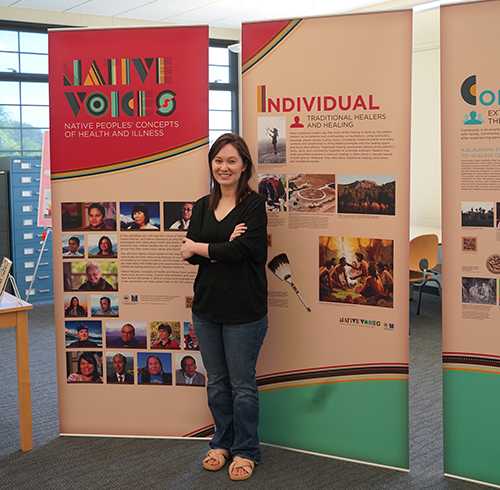
While the exhibition’s usual iPad stands didn’t make the trip to Hawaii, you can still watch the videos online. The traveling exhibition that’s on display at Sullivan comprises six free-standing banners: the title banner introduces the exhibition; and each of the other five banners focuses on one of the main themes of Individual, Community, Nature, Tradition and Healing. The categories touch upon such topics as Native views and definitions of health and illness, Native views of land, food, community, the earth/nature, and Spirituality as they relate to Native health and illness, and contemporary and historical roles of traditional healing in Native Hawaiian, Alaska Native and Native American cultures.

Krystal Kakimoto stands in front of the free-standing panels that make up “Native Voices: Native Peoples Concepts of Health and Illness.”

“I think this exhibit will resonate with Chaminade students, and the community in general, because they might see parts of themselves reflected back to them in the panels of the exhibit,” says Krystal Kakimoto, ’22 (MBA), Sullivan Family Library’s liaison librarian and director of library technical services. “For too long, Native knowledge surrounding health has been dismissed. This exhibit gives viewers a chance to reflect and critically think about health and wellness while learning about the resilience and adaptation to change inherit to Native communities.”

Stories drawn from both the past and the present examine how the determinants of health for Native Hawaiians, Alaska Natives and American Indians are tied to community, the land and spirit. Through personal interviews, Native Peoples describe how individual and community wellness were affected by the political and cultural events of the 19th and 20th centuries. Individual reflections show the impact of epidemics, federal legislation, the loss of land and the inhibition of culture on the health of Native individuals and communities today. Collectively, these stories convey how Native people use both traditional and Western methods to enhance wellness, ultimately presenting an inspiring account of renaissance, recovery and self-determination.

Indeed, indigenous art often serves as a powerful medium for expressing cultural values, beliefs and experiences related to health and illness. Many indigenous cultures also hold holistic views of health that encompass physical, mental, spiritual and community well-being. “Native Voices” lays bare these interconnected aspects, emphasizing the importance of balance and harmony.

“I think the special twist on the Native part is that it’s so embedded in the land,” says one of the exhibit’s early key collaborators Marjorie Mau, M.D., physician and Chair of the Department of Native Hawaiian Health at the John A. Burns School of Medicine, in one of the 250 video clips. “It’s like if the land is abused or misused or not cared for, the people are reflected by that. Hopefully, future generations will understand at least when Native people are talking about who they are, and how they can take ownership of their wellness, that they’ll understand their wellness can spring from their homeland and from where they come from.”

“Native Voices: Native Peoples Concepts of Health and Illness” will be on display at the Sullivan Family Library until January 19.

“Chaminade University connects academic learning with the local community, environment and culture, creating a unique college experience for our students,” says Kakimoto, chairwoman of the Hawaii-Pacific Chapter of the Medical Library Association, an organization of consisting of professional librarians, individuals and institutions in health sciences libraries. “This philosophy takes learning beyond the traditional classroom and aims to make learning more relevant, engaging and applicable to the real world. I hope this exhibit continues our tradition of place-based learning to contextualize health in relation to the ʻāina.”

Posted by: University Communications & Marketing Filed Under: Alumni, Campus and Community, Homepage, Institutional, Nursing & Health Professions Tagged With: Art Exhibit, Campus Event, Office of Health Professions Advising and Undergraduate Research

Early College Exposure

December 21, 2023

High school students earn college credit

For the past two years, Kapaa High School seniors, Tatum Harper and Taeani Largusa, have taken several synchronous online courses with Chaminade University professors, earning college credit while simultaneously fulfilling their high school requirements. The hours of studying and discipline paid off. Learning she just got into Columbia University, Harper was ecstatic.

“It’s my dream school,” said Harper, during Chaminade’s inaugural Early College Summit, which was attended by a mix of 70 students from Kapaa High School, Sacred Hearts Academy and Saint Louis. “Participating in this program has really prepared me for college.”

Largusa echoed the same sentiment, adding that she expects to hear from Syracuse University soon. “When I took the virtual campus tour I fell in love with it,” says the first generation, soon- to-be-college student. “This program has given me confidence in knowing that I can handle the demand of college courses.”

Early college programs can provide several benefits, including the opportunity for students to accelerate their education, which can lead to the completion of college degrees at an earlier age. There’s also the perk of cost savings, reducing tuition costs for future higher education.

Sacred Hearts Academy counselors Ashley Luke and Sharlene Chock both agreed that Chaminade’s early college program will help students become familiar with the expectations and rigor of college-level coursework, easing their transition to full-time college later on.

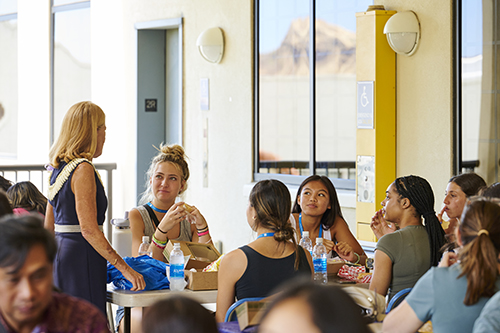
Students circled the room to fill out their bingo-like cards.
Saint Louis and Kapaa High School students mingled during the Early College Summit.
Sacred Hearts Academy students played a bingo-like game, with the first one to fill all 25 boxes with the right answers winning the grand prize.
Chaminade’s Early College Director, Kim Baxter, addressed the students at the T.C. Ching Conference Center in Eiben Hall before they set off to visit other campus locations.
Sacred Hearts Academy juniors completed their first semester of college courses.

“Some struggled initially with the transition because of the extra studies involved in taking college-level courses,” said Luke, who counsels 10th and 11th graders. “Even our top students were stretched because they didn’t understand process versus perfection, which they’re used to achieving in high school.”

With this first cohort of 17 Lancers, Chock believes the college exposure will help them navigate the waters of post-secondary education. “They have already been individually challenged,” said the 12th grade counselor. “I think the experience shows them that college is attainable.”

Saint Louis School students Landon Dimaya, Cash Acorda and Kevin Simmons will begin their college courses next semester. The three Crusaders cited different reasons for participating in the program. Dimaya is a fraternal twin whose sister Lindsey is already a Sacred Hearts Academy participant. “I want to reduce the financial burden on my parents,” he said. “It would be really expensive to have to pay tuition for me and my sister at the same time.”

“I want to get ahead,” offered Acorda, who plans to apply to Stanford, with Simmons further noting that the experience would look good on his application.

Research demonstrates that early college programs show strong and lasting evidence of effectiveness for all students. It promotes both post-secondary access and success. The data is undeniable that students who participate in such programs will be ahead of their peers and graduate from a four-year university either debt-free or with very little federal student loan debt. The latest data further supports the claim that students who participate in these programs are better prepared to transfer to a four-year university than students who attend the university without prior college experience. 

Moreover, encouraging students to attend college improves individuals’ earnings over a career, increases the amount of taxes the government collects, and reduces government spending on federal assistance programs. 

“This program is such a great opportunity for these high school students to earn dual credits,” said Kim Baxter, Chaminade’s Early College Director. “And it gives them that real college experience.”

Posted by: University Communications & Marketing Filed Under: Campus and Community, Catholic, Diversity and Inclusion, Early College, Featured Story, Innovation, Institutional Tagged With: Campus Event, Early College Experience

Budget Analyst

December 19, 2023

Carol An Nacario ’23 to start new position with the Legislature

He had her at pizza. While walking past a classroom at Kieffer Hall, Carol An Nacario was swayed by School of Business and Communication assistant dean, Asoke Datta, Ed.D., to come in for some lunch. Not one to turn down free food — what college student does — Nacario willingly ambled through the door. Only then did she realize that she had just been recruited to enter the Silversword Business Competition.

“I only came in for the pizza,” laughs Nacario ’23, a business administration major. “I knew about the competition, but I had no intention of entering.”

Not only did she enter the competition, but on Nov. 16, she and her team members, Kelsey Sablan ’23, Epifania “Epi” Petelo ’23 and Elizabeth “Liz” Devine ’23, walked away with the grand prize of $1,500 for their “Re-Thread” entrepreneurial concept, which “sews new life into unused fabrics and transforms them into stylish and sustainable pouches.”

“Carol has been a highly driven student who values self-learning and entrepreneurial opportunities for growth in the world of business,” says Assistant Professor and MBA Director Eddie Merc. “This business plan competition event was an ideal opportunity to showcase her passion for teamwork and giving back to the community through service and sustainability efforts. I’m very proud of Carol and her team to represent School of Business and Communication so well at this important entrepreneurial venue.”

Re-Thread members (Elizabeth “Liz” Devine ’23 is missing) from left, Carol An Nacario, Kelsey Sablan and Epifania ‘Epi’ Petelo, won the $1,500 grand prize. The competition’s judges included, from left, David Oyadomari, Dr. Gail Grabowsky, Eric Fujimoto, Sharon Weiner and Hogan program director Dr. Roy Panzarella.

This was just the first victory for Nacario, who will end her collegiate experience on a winning streak. The second has even greater consequences. After seeing a flyer advertising that “The Hawaii State Senate is HIRING,” the Guam native decided to apply for one of the openings.

“I got a call asking me to choose an interview date,” Nacario says. “I chose Nov. 2 and a couple of weeks later, I found out I was hired, and I received an offer letter signed by Hawaii State Senator Donovan Dela Cruz, the Chair of the Senate Committee on Ways and Means.”

Starting in January, Nacario will be a budget analyst with the powerful Senate Committee on Ways and Means (WAM), which oversees programs relating to overall state financing policies, including revenue enhancement, taxation, other revenues, and cash and debt management; statewide implementation of planning, programming, budgeting and evaluation; and government structure and finance.

“The day before the interview, I approached Dr. Merc for some advice about what to expect,” Nacario recounts. “He told me to relax, and to be prepared to be asked about my strengths and weaknesses.”

Nacario also summoned the STAR method—a lesson that she had learned from visiting assistant professor, Pamela Estell, Ph.D.—which is an interview technique that gives interviewees a straightforward format they can use to tell a story by laying out the Situation, Task, Action and Result.

“I was very nervous at first,” Nacario says. “They asked me a lot of questions about budgets and if I had ever worked on government budgeting. I had mentioned VLOOKUP, which is an Excel function that I learned from Shari Young (Director of Finance & Operations for Make-A-Wish Hawaii) during my internship, and they were impressed.”

For the 21-year-old Chamorro, the opportunities afforded to her by Chaminade almost never happened. She was initially enrolled to attend the University of Guam until a close friend convinced her to apply to Chaminade. Two weeks before the start of classes in Guam, Nacario finally received an acceptance letter from Chaminade University.

“For some reason, the letter was delayed and it was never delivered when it should have been,” Nacario recalls. “It was the year of COVID and I had to quickly make a decision.”

She made the right one. As she finishes her final exams and celebrates her 22nd birthday on Dec. 16, Nacario reflects back on her four years at Chaminade with a wide smile on her face.

“When I came to Hawaii, I had never been to any other mainland state,” Nacario says. “I don’t think I would have grown in Guam, like I have here. I was an introvert and intimidated with titles, but now I am able to work in a professional environment, like the State Legislature.”

Posted by: University Communications & Marketing Filed Under: Business & Communication, Hogan Entrepreneurial Program, Homepage, Institutional Tagged With: Business Administration, Hogan Entrepreneurs Program, School of Business and Communication

True Calling

December 18, 2023

As a Zoo Camp instructor, Sara Aliza Sahagon finally found her true passion—to teach.

Sara Aliza Sahagon ’24 holds down two jobs: her regular day job as a long-term substitute teacher at Kauai High School and what she defines as her “heart job,” which is taking care of her community service programs, a passion she has maintained since she was a young Chamorro in Guam.

“I wanted to become a social worker when I was younger,” says Sahagon, who will walk in the May 2025 Commencement Ceremony. “I was volunteering with Youth for Youth LIVE! Guam, which is a non-profit community-based, youth-centered, youth-driven drug prevention program for teens between the ages of 11 and 17. This is what I thought I was going to do for the rest of my life.”

Sara Aliza Sahagon serves as the head advisor with Kauai High School's Key Club, which focuses on community service.
Sara Aliza Sahagon serves as the head advisor with Kauai High School’s Key Club, which focuses on community service.

Her mom, Stacey Coletta, had other plans for her daughter. Although accepted into Stanford, Coletta was restrained from attending the private research university due to tuition and board costs. Understandably, she wanted Sara and her older sister, Hanna, to move off island, and to explore and experience the world through another lens.

In her senior year at Notre Dame in Talo’fo’fo’, Sahagon applied to the University of Hawaii–Manoa and Hawaii Pacific University (HPU). Unfortunately, she admittedly missed the Chaminade University application deadline.

“I wanted to find an open world,” Sahagon says. “I wanted to meet new people who weren’t related to me. I wanted to experience new things, but I still wasn’t ready to leave the island lifestyle all behind, like my older sister did when she went to school in San Diego. So, Oahu was perfect for me.”

Accepted to HPU, Sahagon was excited to go to college … until she got there. The classrooms, she says, felt like they were closing in on her and doubts of her academic knowledge crept in, incapacitating her from thinking and constantly intimidated by her fellow classmates. It was a shock to Sahagon because she had always been at the top of her class back in Guam, earning As and merits for her work.

“I couldn’t deal with traditional college,” Sahagon says. “I felt dumber than everyone in the room, and it really brought me down. So, I dropped out after my first year.”

After bouncing from job to job, from Kate Spade to Bath & Body Works, Sahagon landed an instructor position with the Honolulu Zoo’s “Zoo Camp.” After years of searching, the 23 year old finally found her true calling. She flourished, and learned and absorbed everything she could about zoology—from the various species to their different habitats.

“I worked at the Zoo for three years until COVID hit,” Sahagon laments. “I loved teaching and I knew that’s what I wanted to do. I did find another position with After-School All-Stars Hawaii, which provides school-based, after-school and summer programs for underserved communities and students. I ran my own site.”

As fruitful and satisfying as the experience was at After-School All-Stars Hawaii, constantly nagging in the back of Sahagon’s mind was college. By now, her mom—a lifetime educator and the current vice principal (Academy of Human Services) at Kauai High School—had moved to the Garden Isle, and they would frequently speak of Sahagon returning to college. Sahagon, though, was trapped in that circuitous 9-5 cycle on Oahu. She would constantly tell herself that she was going to be a teacher and no one was going to stop her—except herself.

Sara Aliza Sahagon's experience as a Zoo Camp instructor led her to finally find her true calling.
Sara Aliza Sahagon’s experience as a Zoo Camp instructor led her to finally find her true calling—to teach.

Although Coletta initially discouraged her two daughters from becoming teachers—only because she knew how hard it is to be a teacher— having been one herself for years—she was now supporting Sara’s dream. It was now or never.

“My mom told me that if I wanted to become a teacher, now was the time because there’s a shortage of teachers every where,” Sahagon recalls. “She had one stipulation: I had to move to Kauai. She said to me, ‘You’re going to get it done and you’re going to do great things.'”

It was enough of a push to motivate Sahagon to move with her mom and stepdad. She began researching various programs and colleges, and looked into the online programs at University of Phoenix. In the end, Chaminade’s Flex option won her over.

“I chose Chaminade because it keeps spirituality at the forefront, which helps keep me grounded,” asserts Sahagon, now the head adviser of the high school’s Key Club, which focuses on community service. “I also hold the same Marianist-Catholic values. I know that everything I do has a purpose; every exam, every activity and every paper has meaning.”

Now in her second year of the Flex program, Sahagon’s Chaminade experience is the antipode of HPU. These days, it’s just her in the competition, and she feels she has “strong support” from the University’s faculty and staff. Sahagon says, with her Chaminade education, she will be well prepared to have her own classroom. She has already applied concepts that she has learned in her classes with her students. And she has learned different teaching strategies that are effective. 

“I wish I had applied to Chaminade earlier,” Sahagon says. “It’s been a very positive experience and I love being a Silversword. I feel truly blessed to be able to finish my college degree at Chaminade.”

Posted by: University Communications & Marketing Filed Under: Education, Featured Story, Institutional, Student Life Tagged With: FLEX Program, Secondary Education

Senate Confirmation

December 12, 2023

Shanlyn Park ’91 confirmed in a bipartisan vote

The District of Hawaii has its first Native Hawaiian woman to serve on the federal bench as a district court judge. Shanlyn Park ’91 is a current state court judge and former federal public defender. She was nominated for the judgeship on September 27, and sat for her hearing before the Senate Judiciary Committee on October 4. She was confirmed on November 30.

In a bipartisan U.S. Senate vote, Shanlyn Park ’91 was confirmed as the first Native Hawaiian woman to serve on the federal bench as a district court judge.

“Judge Park’s unique combination of experience, tenacity and genuine kindness will be a huge asset to the federal bench,” said Chief U.S. District Judge Derrick K. Watson in a released statement. “We are excited to have her join us as our colleague in 2024.”

Park was confirmed on a bipartisan vote of 53-45. The lifetime appointment is particularly significant in terms of representation as Native Hawaiians comprise 21.8 percent of the population in the district where she will preside.

Born and raised in Hawaii, Park has been a state circuit court judge since 2021. She previously worked in private practice and at the Office of the Federal Public Defender for the District of Hawaii. While a practicing attorney, she has also represented individuals on a pro bono basis, including cases of employee discrimination.

In a joint statement, U.S. Sen. Brian Schatz and U.S. Sen. Mazie Hirono applauded Park’s confirmation, saying she “led a distinguished career dedicated to public service.”

“She has exhibited a commitment to justice, fairness and impartiality throughout her career, and is highly qualified to serve on the U.S. District Court,” the senators said. “As the first Native Hawaiian woman to serve as a federal district court judge, Judge Park’s confirmation reflects the Biden-Harris Administration’s commitment to building a federal judiciary that reflects the diversity of our communities.”

Park was the second Hawaii judge to be confirmed in November. The Senate also voted to confirm Micah Smith, a federal prosecutor, to a district court judgeship. Appointed under Article III of the U.S. Constitution, federal district court judges are nominated by the president, confirmed by the U.S. Senate and serve lifetime appointments upon good behavior.

Both Park and Smith fit into President Joe Biden’s broader goal of diversifying the federal judiciary.

“They have the legal acumen as well as the character and temperament required to fulfill the duties of US District Court judges,” Sen. Schatz (D-HI) said at the September 27 hearing. “It’s for these reasons that I’m proud to support their nominations to the federal bench.”

Park is expected to fill the seat currently held by U.S. District Court Judge Leslie Kobayashi, who is expected to go on senior status in October 2024. “Judge Park’s credentials are impressive by any measure, Schatz said. “But the historic nature of her nomination should not be lost on anyone.”

Schatz added that Park has a commitment to equal justice and has spent two decades as a public defender “giving voice to those most in need.”

“She represented low-income defendants on a variety of complex cases, earning a reputation among colleagues and opposing counsel alike as a highly-skilled, compassionate and solutions-oriented attorney,” Schatz said. “And she has brought her integrity and sound judgment to the bench since becoming a state court judge in 2021.

Smith will fill the seat currently held by U.S. District Court Judge J. Michael Seabright, who will go on senior status in January.

Appointed under Article III of the U.S. Constitution, federal district court judges are nominated by the president, confirmed by the U.S. Senate and serve lifetime appointments upon good behavior.

Posted by: University Communications & Marketing Filed Under: Alumni, Diversity and Inclusion, Featured Story, Institutional, Press Release Tagged With: Alumni, Honors and Awards

  • « Go to Previous Page
  • Page 1
  • Interim pages omitted …
  • Page 7
  • Page 8
  • Page 9
  • Page 10
  • Page 11
  • Interim pages omitted …
  • Page 34
  • Go to Next Page »

Footer

Chaminade University Logo

3140 Waialae Avenue
Honolulu, Hawaii 96816

Contact Us
Phone: (808) 735-4711
Toll-free: (800) 735-3733

facebook twitter instagram youtube linkedin

Visit

  • Plan Your Visit
  • Campus Map (PDF)
  • Events

Resources

  • Campus Security
  • Student Consumer Information
  • Concerns, Feedback, and Reporting
  • Institutional Review Board
  • Title IX / Nondiscrimination Policy
  • Compliance
  • Emergency Information
  • Careers
  • Institutional Statement

People

  • Students
  • Parents
  • Alumni
  • Faculty & Staff

Policy

  • Privacy Policy
  • Terms and Conditions of Use


© Chaminade University of Honolulu