
 “You can get very good information and quick answers for families,” according to Gutierrez, who earned a master’s degree in Forensic Sciences from Chaminade in 2016. “If the bone fragments are from a human, you go to the next step – DNA analysis.” But if the remains are from an animal, he said, the probe can stop there.
“Lots of police departments could use forensic microanthropology for crime scene investigations,” Gutierrez added. “That’s my goal – to spread the word.”
Along with spreading the word among Chaminade students, Gutierrez recently presented his research and conducted workshops at the third UCENM International Forensic Sciences Conference in Honduras, and at the fifth Forensic Sciences, Law and Public Safety International Conference in Acapulco, Mexico.
Before coming to Chaminade, Gutierrez served as director of a criminalistics laboratory in his native Chile, where he notably led efforts to identify victims of two massive disasters. One tragedy involved a deadly fire in 2007 at a hostel in Punta Arenas, and the other was a 2010 earthquake and tsunami that devastated the city of Constitution.
Two years ago, Gutierrez and his wife Ana Acuna founded Honolulu-based True Forensic Science, LLC with guidance from the Hogan Entrepreneurs Program at Chaminade. Their company provides training, consulting and products in the forensic sciences, especially for clients in Latin American countries.
Chaminade University’s Division of Natural Sciences and Mathematics offers a bachelor of science degree and a minor in Forensic Sciences. Students enrolled in these programs can prepare for careers in biology, medicine, pharmacy, anthropology, criminal justice, psychology, law and other fields.
“You can get very good information and quick answers for families,” according to Gutierrez, who earned a master’s degree in Forensic Sciences from Chaminade in 2016. “If the bone fragments are from a human, you go to the next step – DNA analysis.” But if the remains are from an animal, he said, the probe can stop there.
“Lots of police departments could use forensic microanthropology for crime scene investigations,” Gutierrez added. “That’s my goal – to spread the word.”
Along with spreading the word among Chaminade students, Gutierrez recently presented his research and conducted workshops at the third UCENM International Forensic Sciences Conference in Honduras, and at the fifth Forensic Sciences, Law and Public Safety International Conference in Acapulco, Mexico.
Before coming to Chaminade, Gutierrez served as director of a criminalistics laboratory in his native Chile, where he notably led efforts to identify victims of two massive disasters. One tragedy involved a deadly fire in 2007 at a hostel in Punta Arenas, and the other was a 2010 earthquake and tsunami that devastated the city of Constitution.
Two years ago, Gutierrez and his wife Ana Acuna founded Honolulu-based True Forensic Science, LLC with guidance from the Hogan Entrepreneurs Program at Chaminade. Their company provides training, consulting and products in the forensic sciences, especially for clients in Latin American countries.
Chaminade University’s Division of Natural Sciences and Mathematics offers a bachelor of science degree and a minor in Forensic Sciences. Students enrolled in these programs can prepare for careers in biology, medicine, pharmacy, anthropology, criminal justice, psychology, law and other fields.
HUMAN OR ANIMAL BONES? LECTURER CARLOS GUTIERREZ SHARES HOW TO TELL THE DIFFERENCE WITHOUT DNA TEST
When crime scene investigators discover small bone fragments, it’s often difficult to initially determine if the remains are animal or human.
Conducting a costly and time-consuming DNA analysis in a laboratory is one way to resolve the question. Or, as Chaminade University lecturer Carlos A. Gutierrez points out, a much simpler and far less expensive examination could reveal the answer on site that same day.
Gutierrez specializes in forensic microanthropology, a new field of study with broad implications for crime scene investigators around the world – especially those working in economically disadvantaged countries and in small towns with limited resources.
As part of his research, Gutierrez developed a bone identification technique involving polarized microscopy analysis.
“You can get very good information and quick answers for families,” according to Gutierrez, who earned a master’s degree in Forensic Sciences from Chaminade in 2016. “If the bone fragments are from a human, you go to the next step – DNA analysis.” But if the remains are from an animal, he said, the probe can stop there.
“Lots of police departments could use forensic microanthropology for crime scene investigations,” Gutierrez added. “That’s my goal – to spread the word.”
Along with spreading the word among Chaminade students, Gutierrez recently presented his research and conducted workshops at the third UCENM International Forensic Sciences Conference in Honduras, and at the fifth Forensic Sciences, Law and Public Safety International Conference in Acapulco, Mexico.
Before coming to Chaminade, Gutierrez served as director of a criminalistics laboratory in his native Chile, where he notably led efforts to identify victims of two massive disasters. One tragedy involved a deadly fire in 2007 at a hostel in Punta Arenas, and the other was a 2010 earthquake and tsunami that devastated the city of Constitution.
Two years ago, Gutierrez and his wife Ana Acuna founded Honolulu-based True Forensic Science, LLC with guidance from the Hogan Entrepreneurs Program at Chaminade. Their company provides training, consulting and products in the forensic sciences, especially for clients in Latin American countries.
Chaminade University’s Division of Natural Sciences and Mathematics offers a bachelor of science degree and a minor in Forensic Sciences. Students enrolled in these programs can prepare for careers in biology, medicine, pharmacy, anthropology, criminal justice, psychology, law and other fields.
“You can get very good information and quick answers for families,” according to Gutierrez, who earned a master’s degree in Forensic Sciences from Chaminade in 2016. “If the bone fragments are from a human, you go to the next step – DNA analysis.” But if the remains are from an animal, he said, the probe can stop there.
“Lots of police departments could use forensic microanthropology for crime scene investigations,” Gutierrez added. “That’s my goal – to spread the word.”
Along with spreading the word among Chaminade students, Gutierrez recently presented his research and conducted workshops at the third UCENM International Forensic Sciences Conference in Honduras, and at the fifth Forensic Sciences, Law and Public Safety International Conference in Acapulco, Mexico.
Before coming to Chaminade, Gutierrez served as director of a criminalistics laboratory in his native Chile, where he notably led efforts to identify victims of two massive disasters. One tragedy involved a deadly fire in 2007 at a hostel in Punta Arenas, and the other was a 2010 earthquake and tsunami that devastated the city of Constitution.
Two years ago, Gutierrez and his wife Ana Acuna founded Honolulu-based True Forensic Science, LLC with guidance from the Hogan Entrepreneurs Program at Chaminade. Their company provides training, consulting and products in the forensic sciences, especially for clients in Latin American countries.
Chaminade University’s Division of Natural Sciences and Mathematics offers a bachelor of science degree and a minor in Forensic Sciences. Students enrolled in these programs can prepare for careers in biology, medicine, pharmacy, anthropology, criminal justice, psychology, law and other fields.
 Dr. Fryxell, a former Faculty Senate president, teaches courses in Development Psychology, Career Counseling, Cross-Cultural Counseling and other topics. His research interests include: autism, violence prevention, positive behavioral supports and educational reform.
 Dr. Edelson has won numerous awards and honors, including Chaminade’s 2013 Father John Bolin Excellence in Scholarship Award, and the 2010 President’s Award from the National Popular Culture Association/American Culture Association.
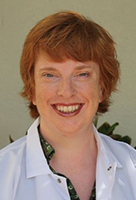 Chaminade University President Dr. Lynn Babington has named Dr. Helen Turner, an internationally-regarded cellular immunology researcher, as the institution’s first Vice President for Innovation. The appointment is in addition to Dr. Turner’s responsibilities as Dean of
  Sr. Malia, a religious studies senior lecturer with Chaminade University’s Division of Humanities and Fine Arts, co-led a Christian-Buddhist dialogue entitled “Wisdom and Insight: Cross-cultural Perspectives.” She joined the Venerable Karma Lekshe Tsomo, Ph.D. in discussing how their respective religions help bring about a more peaceful society.
 Sr. Malia, who attended the event through a Chaminade faculty development award, helped create a photo collage that served as the formal