• Skip to primary navigation
  • Skip to main content
  • Skip to footer
Chaminade University of Honolulu

Chaminade University of Honolulu

  • VISIT
  • APPLY
  • GIVE
  • STUDENTS
  • PARENTS
  • ALUMNI
  • FACULTY/STAFF
  • Admissions
    • Admissions Home
    • Undergraduate Students
      • First-Year Students
      • Transfer Students
      • Admitted Students
    • Graduate Students
    • Flex Online Undergraduate Program
    • Military Students
    • Non-Degree/Visiting Students
    • Experiential Honors Program
    • Early College Program
    • New Student Orientation
  • Tuition & Aid
    • Financial Aid Home
    • Tuition & Expenses
    • Federal Updates & Changes
    • Scholarships
    • $5,000 Graduate Scholarship
    • VA Education Benefits
    • Net Price Calculator
  • Academics
    • Academics Home
    • Academic Programs
    • Office of Student Success
      • Academic Advising
      • Records and Registrar
    • Kōkua ʻIke (Support Services)
      • ADA Accommodations
      • Career Services
      • Proctoring Services
      • Tutoring Services
    • Sullivan Family Library
    • Undergraduate Research & Pre-Professional Programs
    • Commencement
  • Campus Life
    • About Campus Life
    • Student Engagement
    • Student Government Association
    • Residence Life and Housing
      • Summer Conference Housing
    • Health Services
    • Marianist Leadership Center
    • Counseling Center
    • Campus Ministry
    • Campus Security
    • Dining Services
    • Bookstore
  • Athletics
  • About
    • Chaminade University News
    • Our Story
    • Leadership
    • Chaminade University Strategic Plan 2024-2030
    • Mission & Rector
    • Association of Marianist Universities
    • Facts & Rankings
    • CIFAL Honolulu
    • Accreditation & Memberships
    • Montessori Laboratory School
Search
×

Search this web site

Diversity and Inclusion

Beyond Academics: Co-Curricular Awards

May 12, 2021

2021 Co-Curricular Awards at the Silverswords Student Appreciation event

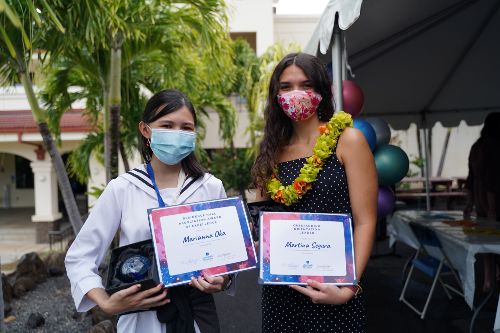
Every year, the Co-Curricular Awards recognize members of Chaminade’s student body, clubs and organizations, and staff and faculty members whose efforts to make the campus and the community a better place go above and beyond—and embody the University’s mission of public service.

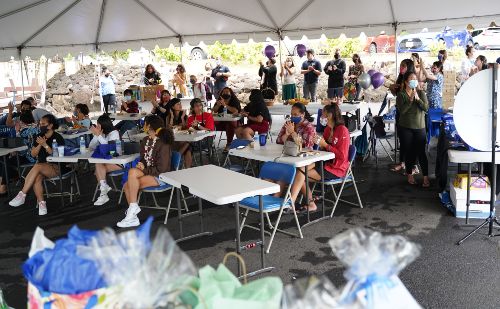
This year’s in-person awards presentation was particularly poignant, honoring those who truly exemplified the Silversword spirit despite the challenges presented by the pandemic. Honorees were recognized during a Silversword Student Appreciation event on April 28, which was also an opportunity to thank all students for their resilience and flexibility in grappling with COVID’s many impacts.

This was the 16th annual Co-Curricular Awards event.

The recipient of the Silversword Award, which recognizes a student-athlete who represents the Marianist philosophy with sportsmanship, integrity and respect for others, was Chaminade women’s tennis captain Catrina Liner. In addition to her hard work on the court, Liner serves as president of the Student-Athlete Advisory Committee and has also provided input on COVID safety procedures and protocols as the student-athlete representative at athletic department meetings on the topic.

Her efforts in the classroom are also impressive. She is a three-time member of the Pac-West All-Academic, which recognizes student-athletes who maintain a cumulative 3.0 GPA after completing at least two semesters at their institution while participating in regular season competition.

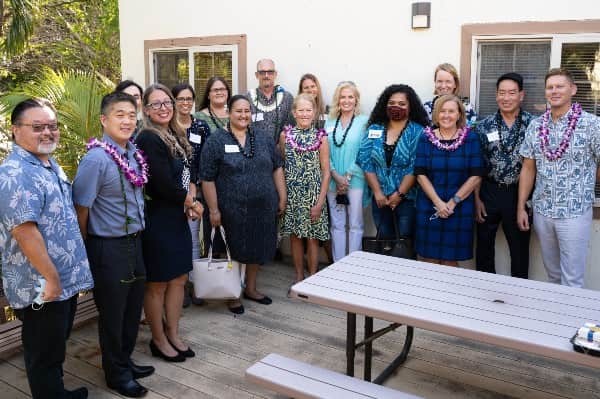
Silversword Student Appreciation event and Co-Curricular Award presentation

Meanwhile, there were two recipients this year of the Service Award: Connor and Lillie Flynn. The Service Award acknowledges those who demonstrate outstanding servant leadership, specifically in the areas of restorative justice and service for the people and lands of Hawaii. And the Flynn twins have done just that, working on countless community service projects to make a positive difference.

Both are part of the Chaminade Scholars program, through which they have sought to pursue their shared passions of protecting Hawaii’s environment while using what they’ve learned to help others.

Student leader Reyna Riesgo was honored with the Outstanding Peer Mentor Award, which recognizes upper-class students who work tirelessly as peer mentors to ensure that first-years feel supported as new members of the Chaminade ‘ohana. Peer mentors commit significant hours of their time as co-teachers of CUH 100 First-Year Experience Seminar, and prepare for the position with training and class preparation.

Riesgo has not only shown herself to be an outstanding peer mentor. She has served as a leader, collaborating with her fellow CUH 100 team members to make the first-year experience even better.

This year’s Tutor of the Year is Rachel Reedy, a student-athlete who has managed to help her fellow students make progress in their academic journey as she also juggles her own studies and excels on the volleyball court. The Tutoring Center has lost count of the number of students she’s helped.

Dominic Coffey was honored with the Dean of Students’ Special Recognition Award for his strong leadership skills, including as a Resident Assistant. The award spotlights those whose contributions have helped build a better community. Coffey has done that while preserving his affable leadership style.

Five students were recognized with the Bro. Joseph Becker Award of Excellence. The award acknowledges undergraduates who display exceptional leadership, demonstrate strong initiative and motivation, and show outstanding character, service, integrity and scholarship.

The freshman honoree was Sean Lorenzo, whose peers and Chaminade mentors can attest to his uncanny ability to motivate others around community service, including through his tireless work with the Student Government Association and Office of Student Activities and Leadership.

There were two sophomore honorees: Pamela Oda and Montserrat Lanfranco. Mentors say Oda has provided exceptional Office of Student Activities and Leadership virtual programs during the pandemic to ensure members of the Chaminade can connect and feel supported. Lanfranco, similarly, has demonstrated a tireless work ethic—and is always willing to help a fellow Silversword.

The Junior honoree was Celine Mesiona-Perez, who has proven to be a key asset to both Campus Ministry and the Office of Student Activities and Leadership. She has embraced her role as a servant leader, stepping up to the responsibilities before her and making sure she isn’t leaving anyone behind.

Finally, the senior honoree was Keahealailani Takushi, who has put in innumerable hours as part of student leadership activities since her very first year at Chaminade. Takushi, who has secured several internships and conducted research projects, has also been recognized for her scholarly achievements.

Among the faculty and staff members recognized was School of Nursing and Health Professions Professor Denise Cooper, who received the Rev. David Schuyler Award. The award acknowledges faculty or staff members who advise a student organization, supporting them in their endeavors, expanding their horizons and demonstrating a commitment to meeting the community’s needs.

Cooper serves as an advisor to Chaminade’s HOSA-Future Health Professionals chapter, and has helped to expand its membership significantly and bolster participation in innovative projects. HOSA members are particularly excited about the organization’s future growth and community service opportunities.

2021 Co-Curricular Awardees:

Male Athlete of the Year: Isaac Amaral-Artharee
Female Athlete of the Year: Randi Fontes
Athletics’ Silversword Award: Catrina Liner
Campus Ministry Award: Edward-James Adachi
Liturgy Award: Kamaile Aipa and Taylor Skye Diego
Retreat Leader of the Year: Keanu Whitfield and Sierra Murobayashi
Service Award: Connor Flynn and Lillie Flynn
Outstanding Orientation Leader: Martina Segura
Outstanding Peer Mentor: Reyna Riesgo
Tutor of the Year: Rachel Reedy
Resident Assistant Award of Excellence: Tihani Rivera
Residence Hall Association Award of Excellence: Marianna Oka
Dean of Students’ Special Recognition: Dominic Coffey
Bro. Joseph Becker Award of Excellence: Sean Lorenzo, Pamela Oda, Montserrat Lanfranco, Celine Mesiona-Perez and Keahealailani Takushi
Bro. Elmer Dunsky Outstanding Student Organization Award: Chemistry Club
Rev. David Schuyler Advisor of the Year Award: Professor Denise Cooper
Fr. Stephen Tutas Program Award for Excellence: Taste of Culture (CSGA)
Frederick K.K. Kauhane, Sr. Aloha Spirit Award: Kamaile Aipa
Henry Halenani Gomes Alaka‘i Award: Edward-James Adachi

Posted by: University Communications & Marketing Filed Under: Athletics, Campus and Community, Catholic, Diversity and Inclusion, Featured Story, Student Life, Students Tagged With: Honors and Awards

Healthcare Forum: Building a Healthy Community after COVID-19

April 7, 2021

Chaminade President Dr. Lynn Babington hosted an engaging and timely forum at the University on April 6 to explore the post-pandemic healthcare needs of Hawai‘i’s communities, how innovation can play a role in addressing inequities in care, and what type of healthcare workforce the state should build to address gaps in services and ensure the best outcomes for patients and their families.

The University’s School of Nursing and Health Professions organized the event—called “Looking Forward: Building a Healthy Community After COVID-19″—to mark National Public Health Week. Lt. Gov. Josh Green, an emergency room physician and Hawai‘i’s COVID-19 Liaison, The Queen’s Health Systems President and CEO Dr. Jill Hoggard Green, Waimānalo Health Center CEO Dr. Mary Frances Oneha, and Hilton Raethel, Healthcare Association of Hawai‘i President and CEO, tackled key questions as the event’s panelists.

COVID’s exposure of vulnerabilities

All of them agreed the pandemic exposed significant vulnerabilities in Hawai‘i’s healthcare system, including a shortage of key medical professionals in disadvantaged and rural communities. The health impacts of COVID on the hardest-hit populations, they added, could be felt for years and years to come.

But, said Dr. Jill Hoggard Green, there is reason for optimism.

“As we step out of this, we have learned so much,” she said. “The innovation and the ability for us to lean in—between government, business leaders, healthcare and all of our communities—have helped us demonstrate we can do so much more. We need the next generation and we need a lot of innovation.”

Oneha added that it’s important to note that healthcare inequities don’t happen in a vacuum. Addressing social community needs, including unemployment, poverty, food insecurity, homelessness and education, are all part of working to ensure healthier outcomes.

Lt. Gov. Josh Green agreed that addressing the healthcare provider shortage is key to helping communities meet post-pandemic needs, and said the surge in telehealth services because of COVID-19 could be a real opportunity to expand access to care. “It’s particularly good that programs like Chaminade are ramping us up and creating more nurses, nurse practitioners,” he added.

Raethel said the healthcare system also needs more investment, including from government, and a renewed focus on preventative care centered around innovation. “We need to move in that direction. We need to invest in communities,” he said. “It’s a real challenge getting equal access to care.”

Preparing for tomorrow

So how can the state prepare a healthcare workforce to meet Hawaii’s needs today and tomorrow?

Babington noted that the “team-based” model to care has shown the best outcomes, stressing collaboration between primary care physicians and other healthcare professionals, including nurses, mental health counselors or psychologists, specialists, and healthcare educators or coaches.

Dr. Jill Hoggard Green also expressed support for the team-based model, saying that focus will be especially vital as Hawai‘i healthcare organizations and their patients “catch up” on health screenings—for everything from cancer to diabetes—that were missed because of the pandemic.

Oneha expressed similar concerns, pointing out that many families are also behind in childhood immunizations and wellness screenings and that health maintenance efforts also need to be addressed.

“We need to be lifetime partners to individuals,” Green said.

She noted the success of telehealth during the pandemic is a real high point—and a “dramatic opportunity for us to improve access” to underserved areas. Before the pandemic, Queen’s was getting about 400 telemedicine visits a month. But in April 2020, that surged to 14,000.

“We know we can use technology. I believe it’s one of our greatest opportunities.”

Raethel also underscored the promise of telehealth in improving health outcomes and broadening access. “The pandemic has created these alternative ways of providing care. So many more people have tried telemedicine,” he said. “It really demonstrated how effective telemedicine can be.”

Importance of healthcare professionals

In discussing how to improve health outcomes, Babington also touched on the importance of community health workers—health educators, coaches, advocates and others who serve as partners to patients and help support them “to achieve their highest level of wellness.”

Oneha said those professionals are a vital part of the healthcare workforce. Healthcare information needs to be provided in a diversity of languages, she said, and delivered by trusted health partners. She said the community also needs to be part of the conversation—”and part of the solution”—in discussions about expanding care and delivering innovations in health and wellness.

During a question-and-answer session, the panelists tackled more elements of Hawai‘i’s healthcare response to the pandemic and what the future could hold. One participant asked about the potential for burnout among healthcare workers on the frontlines of the pandemic and how to support them.

Dr. Jill Hoggard Green, of Queen’s, said during the height of the pandemic healthcare workers were moving quickly to learn whatever they could about the disease, improve patient care and get all the necessary supplies. She held back tears as she recalled the “inspiring courage and great compassion” of healthcare teams who came into work, day after day, despite the personal health threats they faced.

“When you think about the amount of pain and suffering our caregivers saw, of course there is a dramatic potential for burnout,” she said. “Most of our caregivers put all of their energy into taking care of the person.” Throughout the pandemic until today, she added, Queen’s has been providing a significant amount of mental health and other supports to its healthcare workers.

“Our teams are working extraordinarily hard,” she said.

Investing in Hawai‘i’s healthcare

Raethel added that while Hawai‘i must expand access, invest in healthcare and embrace innovation, the state should also be proud of its response to COVID. Throughout the pandemic, Hawai‘i has had the nation’s lowest infection and death rates. He noted that early estimates put the number of possible fatalities from COVID in the islands at between 2,000 and 8,000 in a year.

Instead, Hawai‘i is currently below 500.

He attributes that to the response of healthcare workers, mitigation measures and on a sense of community responsibility in the islands. “It’s one of the great things about Hawai‘i: That sense of ‘ohana, the aloha spirit,” he said, adding that gives him great hope for Hawai‘i’s healthcare system in the future.

“I believe a number of the issues that we’re talking about are solvable in the state of Hawai‘i, whether it’s homelessness, whether it’s mental health. These are finite problems and there are solutions to these problems. It’s going to require collaboration and cooperation between the public and private sector, but there’s an incredibly strong desire to address these issues. We can make these things happen.”

Looking Forward: Building a Healthy Community after COVID-19

Posted by: University Communications & Marketing Filed Under: Campus and Community, Diversity and Inclusion, Featured Story, Institutional, Nursing & Health Professions, President

Mulatta—Not So Tragic

March 8, 2021

To commemorate Black History Month, Chaminade English Professor Dr. Allison Francis recently collaborated with Karla Brundage, an adjunct professor at the university, to present a thought-provoking virtual renshi poetry reading session entitled, “Mulatta—Not So Tragic?”

Mulatta—Not So Tragic Poetry Reading - Allison Paynter

As part of the event, Francis and Brundage also engaged in a conversation with participants on the history of “mulatta”—which they described as a controversial label “traditionally used to signify progeny of African and European parents.” In unpacking the term and its history, the two also touched on their own life experiences and those of family members seeking to grapple with identity and race.

Renshi poetry is also known as “linked poetry.” It’s a contemporary form of verse that relies on collaboration to uncover new understandings of the world and explore shared themes. Collaborators connect their poems by repeating the last line of the previous author’s work.

Francis and Brundage said renshi poetry was uniquely equipped to allow them to explore the “sometimes devastating and celebratory dynamics of being bi-racial women in the 21st century.” Brundage noted that renshi poetry doesn’t just connect verses, it links the poet collaborators.

Mulatta—Not So Tragic Poetry Reading - Karala Brundage

She said the two started examining the theme of “being mulatta or being mixed” about a year ago.

It was Francis who started the spoken word performance of their poem, “We Feel the Thunder.”

“Such a brave woman,” the poem begins, “Rolling words through our heads like boulders.”

Following the reading, Francis and Brundage delivered a joint presentation to further explore the themes of “being mulatta.” Francis noted that Hawai’i presents unique—and refreshing—conversations about “hapa” identity, but stressed it is not a place devoid of racism or discrimination.

“I think there is a space that many of us can create here living in the islands that allows for us to embrace both worlds and not have to entirely dismiss one or the other,” Francis said, as she showed a photo of her daughter and explained she grew up in Hawai’i. “But,” Francis added, “that might just be a bubble we created for her and it’s something we continue to explore in this poetry.”

Francis teaches and conducts research across a range of topics, including Victorian and Scottish literature, African-American and Caribbean Women’s literature from the 19th century, and women’s literature with a focus on science fiction and fantasy. She has published extensively, is a performance poet and playwright, and is currently collaborating on a scholarly collection on Scottish literature.

Brundage publishes poetry, short stories, and critical essays. In 2020, her poem “Alabama Dirt” was nominated for the Pushcart Prize. She holds a Master’s in Fine Arts in Poetry from Mills College and is currently working to co-create a Hawaii-based publishing company, Pacific Raven Press.

Watch their full renshi poetry reading and related presentation below.

Posted by: University Communications & Marketing Filed Under: Campus and Community, Diversity and Inclusion, Faculty, Featured Story, Humanities, Arts & Design, Student Life

New Online School Counseling Program for Neighbor Islanders

March 5, 2021

Say you’ve just graduated on one of the neighbor islands with a bachelor’s degree in psychology. You want to get a master’s degree next, so you can become a school counselor and make a positive difference to your community’s students and their families—but there’s no appropriate master’s program on your island. Chaminade University is the only Hawai‘i university that offers a Master of Science in Counseling Psychology (MSCP) program with a concentration in School Counseling. You’d have to quit your job and relocate to O‘ahu for two-and-a-half years.

Or rather, that would have been your only choice last year.

Starting this spring semester, exclusively for neighbor island students, Chaminade will offer an online version of its Master of Science degree in Counseling Psychology (MSCP) with the School Counseling concentration. It solves two problems—not only that of neighbor island student demand but also the state’s need for more trained school counselors throughout Hawai‘i.

Dr. Darren Iwamoto, clinical director of School Counseling in Chaminade’s School of Education and Behavioral Sciences, says neighbor island students have always been interested in the MSCP program, and it’s always been hard for the school to meet that need because administrators assumed they needed to teach it in person. Pre-COVID-19, they had started working on a plan to send instructors to Maui and Hawai‘i Island to offer the MSCP program there.

But then came the pandemic, and with it, of course, remote learning. Iwamoto says the university discovered something surprising.

“Our faculty found they can be just as effective at teaching using Zoom and other kinds of video conferencing,” he says. He said they found online education still provided personalized learning and allowed students to connect with one another. “Our instructors found that even when they couldn’t teach in person, they were successfully getting that human interaction over video. It was working.”

The department conducted a needs assessment to see if there was current demand for the MSCP program among neighbor island students, and it came back positive. So they decided to start an online program specifically for neighbor island students.

While the School Counseling focus starts this spring, Chaminade will begin offering online versions of the other two Counseling Psychology concentrations, Mental Health and Marriage and Family, in the fall. Once all three concentrations are offered this fall, they will be available to students located anywhere.

“At that point, we’ll be running a complete MSCP online program alongside the in-person program,” says Iwamoto. “So students won’t have to fly to O‘ahu. Although they can participate in the in-person commencement.”

The online, 60-credit-hour, cohorted School Counseling program is taught in four 10-week terms per year. The year-round program, geared toward working professionals, can be completed in 30 months.

Upon completing the program, students not only receive a master’s in counseling psychology but are also eligible for a provisional K-12 counseling license and to be hired as a school counselor. “Because they’re trained in school counseling in general, they will also have the skillset and knowledge to work as a counselor in our private and charter schools,” says Iwamoto.

He says that while school counselors have always been crucial, that need has been even more significant since the COVID-19 pandemic began a year ago. He says stress, anxiety, and mood challenges, which were already high, have increased with COVID.

“What we’re finding is that the lack of social connection has probably played the biggest role in altering people’s moods,” he says. “That’s where counselors can really help, especially in regards to social-emotional learning and helping students, especially the younger ones, learn how to regulate their emotions better.”

As the school developed its MS in Counseling Psychology program, it carefully considered the university’s Marianist values, including the importance of providing an integral quality education. The program was specifically designed with an “integral quality education” in mind by ensuring it educates the whole person. It does this by not only focusing on academics. “We also educate them in terms of their personal and social development, and spiritually, in terms of getting them in tune with who they are and their value systems, ethics, and morals,” says Iwamoto.

“When students go on to become school counselors, they pass those same values on to the community,” he says. “They support students and their families and make a positive difference in their lives.”

The program also meets the Chaminade value of educating for adaptation and change. “That’s really what all this is about,” says Iwamoto. “Educating students to improve on their social-emotional skills is actually educating them for adaptation and change, for that ability to adapt and be flexible. That’s really been a theme with COVID, and so that’s what we’re promoting.”

The Master of Science in Counseling Psychology program is part of Chaminade’s School of Education and Behavioral Sciences. Dr. Dale Fryxell, Dean of the School of Education and Behavioral Sciences, says there’s long been a need for more trained school counselors, who play such an essential role in helping students, on the neighbor islands. “This program will really help our neighbor island students get the training they need to help students in their own communities with mental health and other issues.”

“School counselors really do help mold the future by emphasizing the importance of education and promoting students’ success,” agrees Dr. Lynn Babington, Chaminade University president.

“We’re so glad to be able to take the MSCP school counseling program online,” she says. “There’s a need on the neighbor islands, and when more of our neighbor island students become licensed school counseling professionals, they will truly be able to make a powerful difference in students’ lives.”

Learn More About the MSCP Program
Apply to the MSCP Program

Press Release >>

HINow Segment about MSCP in School Counseling Online Program >>

Posted by: University Communications & Marketing Filed Under: Behavioral Sciences, Campus and Community, Diversity and Inclusion, Featured Story Tagged With: Master of Science in Counseling Psychology

Islands of Opportunity: First-Ever Virtual DataCamp

January 16, 2021

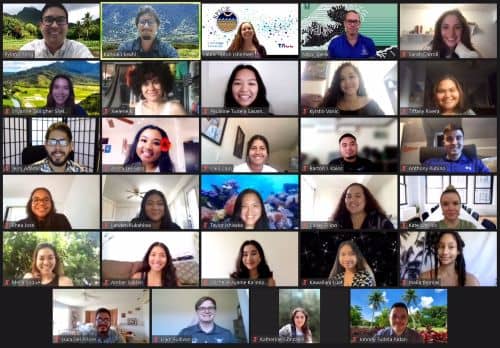
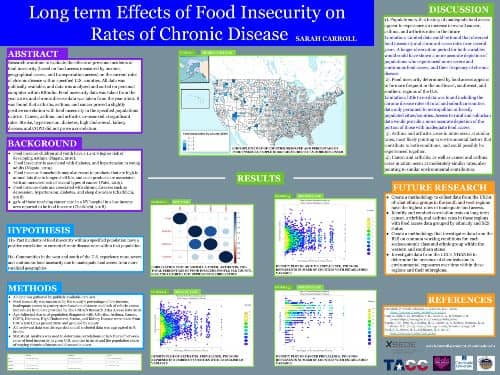
In November 2020, the Islands of Opportunity-Louis Stokes Alliances for Minority Participation (IOA-LSAMP) and Chaminade University Honolulu partnered to launch an online data analytics proficiency course for university STEM students from Hawai‘i and the Pacific. The DataCamp was run by Chaminade faculty and staff under the supervision of a molecular immunologist and biologist. The program offered a unique opportunity for Native Hawaiian and Pacific Islander students to learn about the data analytics field through hands-on learning modules.

The University of Hawai‘i Hilo was also a participant in the DataCamp. Check out this article to learn more about the professors and students involved. We see bright futures ahead for Hawai‘i’s next generation of data scientists and can’t wait to see them use their newfound skills in our community! IOA-LSAMP includes 10 institutions across the Pacific region: Chaminade University of Honolulu, American Samoa Community College, College of the Marshall Islands, College of Micronesia—FSM, Guam Community College, Hawaiʻi Pacific University, Northern Marianas College, Palau Community College, University of Guam and University of Hawaiʻi at Mānoa.

Posted by: University Communications & Marketing Filed Under: Campus and Community, Diversity and Inclusion, Featured Story, Natural Sciences & Mathematics Tagged With: Data Science

Events at the Nation’s Capitol

January 7, 2021

President Lynn Babington’s Statement Regarding Violence at the U.S. Capitol

Chaminade community:

Today has been a difficult day for our nation.

The actions undertaken by protesters at the US Capitol should shock us all—and give us pause.

As a Marianist Catholic institution of higher learning, we condemn violence of any kind and call on everyone to seek peaceful and respectful avenues for dialogue. The scenes we have witnessed on the news in recent hours are not emblematic of our nation, its peoples or our shared principles.

As we seek to make sense of all that has occurred, let us recommit ourselves to peace, to social justice and to creating spaces for a diversity of opinions shared thoughtfully and respectfully. We know the value of debate; it deepens our understanding of one another and helps us find common ground.

As educators, we have a duty to prepare an involved and engaged citizenry. Indeed, inspiring tomorrow’s leaders and preparing them to serve in a vibrant and functioning democracy is the most important role we have. That role is now more critical than ever.

Please join me in praying that our elected leaders find the courage they will need during this trying time.

Regards,
Lynn Babington, Ph.D.
President, Chaminade University

What is a faithful soul to do in the chaos of events which seem to swallow it up? Sustain itself calmly by that faith which assures us that all things work together unto good for those who love God.
~ Blessed William Joseph Chaminade ~

Posted by: University Communications & Marketing Filed Under: Campus and Community, Diversity and Inclusion, Featured Story, President

  • « Go to Previous Page
  • Page 1
  • Interim pages omitted …
  • Page 16
  • Page 17
  • Page 18
  • Page 19
  • Page 20
  • Interim pages omitted …
  • Page 23
  • Go to Next Page »

Footer

Chaminade University Logo

3140 Waialae Avenue
Honolulu, Hawaii 96816

Contact Us
Phone: (808) 735-4711
Toll-free: (800) 735-3733

facebook twitter instagram youtube linkedin

Visit

  • Plan Your Visit
  • Campus Map (PDF)
  • Events

Resources

  • Campus Security
  • Student Consumer Information
  • Concerns, Feedback, and Reporting
  • Institutional Review Board
  • Title IX / Nondiscrimination Policy
  • Compliance
  • Emergency Information
  • Careers
  • Institutional Statement

People

  • Students
  • Parents
  • Alumni
  • Faculty & Staff

Policy

  • Privacy Policy
  • Terms and Conditions of Use


© Chaminade University of Honolulu