• Skip to primary navigation
  • Skip to main content
  • Skip to footer
Chaminade University of Honolulu

Chaminade University of Honolulu

  • VISIT
  • APPLY
  • GIVE
  • STUDENTS
  • PARENTS
  • ALUMNI
  • FACULTY/STAFF
  • Admissions
    • Admissions Home
    • Undergraduate Students
      • First-Year Students
      • Transfer Students
      • Admitted Students
    • Graduate Students
    • Flex Online Undergraduate Program
    • Military Students
    • Non-Degree/Visiting Students
    • Experiential Honors Program
    • Early College Program
    • New Student Orientation
  • Tuition & Aid
    • Financial Aid Home
    • Tuition & Expenses
    • Federal Updates & Changes
    • Scholarships
    • $5,000 Graduate Scholarship
    • VA Education Benefits
    • Net Price Calculator
  • Academics
    • Academics Home
    • Academic Programs
    • Office of Student Success
      • Academic Advising
      • Records and Registrar
    • Kōkua ʻIke (Support Services)
      • ADA Accommodations
      • Career Services
      • Proctoring Services
      • Tutoring Services
    • Sullivan Family Library
    • Undergraduate Research & Pre-Professional Programs
    • Commencement
  • Campus Life
    • About Campus Life
    • Student Engagement
    • Student Government Association
    • Residence Life and Housing
      • Summer Conference Housing
    • Health Services
    • Marianist Leadership Center
    • Counseling Center
    • Campus Ministry
    • Campus Security
    • Dining Services
    • Bookstore
  • Athletics
  • About
    • Chaminade University News
    • Our Story
    • Leadership
    • Chaminade University Strategic Plan 2024-2030
    • Mission & Rector
    • Association of Marianist Universities
    • Facts & Rankings
    • CIFAL Honolulu
    • Accreditation & Memberships
    • Montessori Laboratory School
Search
×

Search this web site

Behavioral Sciences

Ocean Protection

February 22, 2024

Martina Sagapolu ’88 helps enforce ocean regulations

When she first entered Central College in Pella, Iowa, in the early 1980s, Martina Sagapolu’s interest was largely in political science. However, as she quickly found out from one of her professors, she was woefully behind in her knowledge of current events, and it would require a lot of hours to get on par with most of the other students on campus.

“I grew up in American Samoa so our AP News and television broadcasts were all pre-recorded and two weeks late,” says Sagapolu ’88. “So, when I arrived on campus, I learned for the first time that a woman (Kathryn D. ‘Kathy’ Sullivan) had just gone to space, yet that happened at least a month prior to my arrival.”

Sagapolu, though, wasn’t late in choosing a major. Because her heroine was the fictional teenage sleuth Nancy Drew when she was growing up in Pago Pago, she decided to pursue a degree in Criminal Justice. After spending a bitterly cold winter in Iowa, the American Samoan native decided to leave Central College for Chaminade University of Honolulu.

“Central College was in the middle of nowhere,” Sagapolu says. “I remember there were only 19 minorities on the entire campus. One of the first mornings I woke up in the dorm, I could smell someone cooking SPAM and rice, and I knew that person had to be from Hawaii. It turned out there were three girls from Kauai and we’ve all kept in touch ever since.”
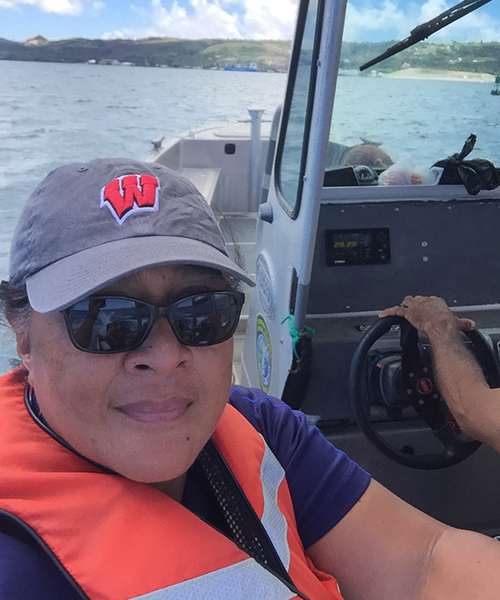
NOAA's Assistant Director of the Office of Law Enforcement helps enforce ocean regulations in the Pacific Islands region.
NOAA’s Assistant Director of the Office of Law Enforcement helps enforce ocean regulations in the Pacific Islands region.

Now wholly committed to the Criminal Justice major, Sagapolu decided to participate in a U.S. Department of Justice co-op program that the then-Immigration and Naturalization Service (INS) had just rolled out. The program was designed to attract talented individuals—particularly college students—to gain work experience and potentially pursue careers in government service as civil servants. Students were provided with opportunities for internships or part-time employment during the academic year, as well as full-time employment during summer breaks.

“The pilot program started in San Diego and then came to Chaminade,” Sagapolu recalls. “There were seven of us who decided to participate, and we first had to travel to Arizona for a one-week training period.”

With the mentorship of such professors as Dr. Greg Mark and Dr. Mel Masuda who helped Sagapolu with her writing skills, the future Criminal Justice graduate was well on her way to becoming part of the law enforcement field. Meanwhile, she was nearing graduation and eyeing a position with INS. Because of her participation in the co-op program, she could be fast tracked through the usually slow federal hiring process, skipping the civil servant exam, interviews and other required bureaucratic steps.

“I graduated on December 8, 1988,” Sagapolu recalls, “and I was sworn in on January 3, 1989. There was no time to holoholo.”

Five years in as an INS agent, Sagapolu received a call from one of the students who also participated in the same INS co-op program, asking if she was interested in working in the Field Office of the National Fisheries Service, a division of the National Oceanic and Atmospheric Administration (NOAA), in American Samoa. Returning home had always appealed to Sagapolu but she had her reservations about moving from one federal agency to another.

“It was going to be a huge learning curve,” Sagapolu says. “I was going to go from chasing illegal immigrants to investigating infractions in the ocean. Going to fisheries was definitely intimidating.”

But as dedicated Sagapolu was to INS, she has been fiercely entrenched with NOAA for more than two decades. As the Administration’s Assistant Director for the Pacific Islands Division’s Office of Law Enforcement, Sagapolu oversees the protection and management of the largest geographic area of NOAA’s five divisions. The Pacific Islands, comprised of American Samoa, Guam, Hawaii, the Northern Mariana Islands, and other U.S. Pacific Islands, span a total of 583,000 square miles of ocean, teeming with marine wildlife and dotted with sanctuaries, including Papahānaumokuākea Marine National Monument.

“In concert with the Coast Guard, and other federal and state agencies, our mission is to ensure the laws and regulations protecting and conserving our nation’s marine resources are followed,” Sagapolu says. “I also serve as an enforcement advisor to domestic and international stakeholders on enforcement-related matters.”

She’s now also updated on the world’s current events.
Posted by: University Communications & Marketing Filed Under: Alumni, Behavioral Sciences, Diversity and Inclusion, Homepage, Innovation, Institutional Tagged With: Alumni, Criminology and Criminal Justice

Student Research Project

November 17, 2023

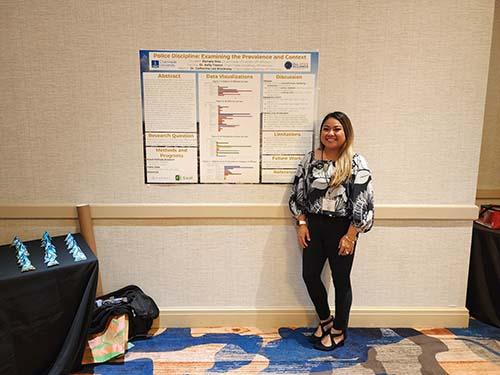
Pam Oda presents her research findings in Texas

It’s just the beginning stages of her research, but Pam Oda ’24 has already presented her preliminary findings at the Society for Police and Criminal Psychology (SPCP) in Arlington, Texas, thanks to monies from the Alliance Supporting Pacific Impact through Computational Excellence (ALL-SPICE) grant. Standing in front of her presentation board, Oda explained the importance of education in the law enforcement field, which has long been debated. While many agencies have historically required little to no college coursework for entry-level positions, research suggests a positive correlation between education and job performance at all levels of law enforcement.

With the mentorship and encouragement of Dr. Kelly Treece, Criminology and Criminal Justice director and associate professor, Oda’s study evaluated disciplinary actions taken against Honolulu Police Department officers. With access to open records, Oda was able to obtain the types of allegations of police misconduct, which are divided into four sections: administrative investigation, criminal investigation, quality assurance and accreditation.

“Most of the violations were for administrative reasons,” said Treece, a former sergeant and trainer with the Pewaukee Police Department in Wisconsin. “Pam did a really good job with her presentation, and she handled herself very well in front of a lot of professionals.”

Pam Oda stands next to her poster board in Arlington, Texas.

The recent calls for police reform—combined with mounting evidence that an educated police force can have positive effects—have sparked a nationwide conversation about raising education requirements for police officers.

“Currently, the minimum qualification to become an HPD officer only requires having a high school diploma or your GED,” Oda said. “I think we need to raise that standard in Hawaii.”

In her presentation, Oda noted that 51.25 percent of officers received a High School Diploma or GED, 27.5 percent held a bachelor’s degree and 15 percent have received their associate’s degree or completed 60 semester credits or more. The numbers are consistent with national statistics, which show that only one percent of local police departments across the U.S. require their officers to hold four-year degrees and only eight percent call for officers to have attended any college at all.

Oda further noted that early research indicates that there is a broad performance difference between officers who have a college education and those who do not.

Citing a paper written by S.M. Smith and M.G. Aamodt (1997) in the Journal of Police and Criminal Psychology, the co-authors found that police officers who possess college degrees are better performers than those with only high school degrees, including overall performance, communication skills and decision-making ability. 

According to Oda, this type of research has been ongoing yet most departments are not implementing these findings into policy and practice. In addition, in a study conducted by the Police Executive Research Forum (2019), officers with a four-year college degree had significantly fewer civilian complaints than those with only a high school diploma. 

Oda also pointed out that research shows higher education has significant benefits for law enforcement officers, including the ability to navigate the complexities of modern-day policing, which consists of critical analysis, enhanced communication abilities and a comprehensive understanding of the criminal justice system (S. Christopher, 2015, in Policing: A Journal of Police and Practice). 

Now in her fifth year at Chaminade, Oda will complete a double major in Criminology and Criminal Justice and Data Science, Analytics and Visualization with minors in Computer Information Systems and Psychology in December. The Hilo native hopes to continue her research with Treece at Chaminade while pursuing her graduate degree in Criminal Justice.

“That’s the plan right now,” said Oda, who serves as the president for the Chaminade Student Government Association, as well as the president of the Restauranteers Club. “Since starting in fall 2019, I have taken advantage of the countless opportunities that Chaminade has to offer, from student clubs and organizations to research and internship opportunities to student employment and the ‘ohana spirit.”

Treece, too, plans to expand the research to include the Sheriff Division of the Hawaii Department of Public Safety, which will then include statewide statistics and a broader representation. By doing so, she and Oda will be able to capture a more robust picture of the correlation between education and law enforcement.

“The next step is to write a paper, which I’ve asked Pam to help me co-author,” Treece said. “She’s a little hesitant and nervous about it, just like she was when I first approached her about presenting in Texas. I think she’ll do great.”

Posted by: University Communications & Marketing Filed Under: Behavioral Sciences, Diversity and Inclusion, Featured Story, Innovation, Student Life Tagged With: Criminology and Criminal Justice, Master of Science in Criminal Justice Administration

Faculty Award Winners

August 18, 2023

Faculty Institute Awardees Drs. Chong, Halston and Mukina honored for their work

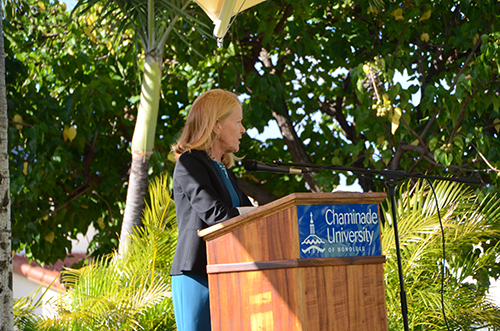
Acknowledging the tragedy that befell Maui residents and visitors alike, Chaminade President Dr. Lynn Babington asked faculty and staff to take a moment of silence to honor the victims of the worst natural disaster in U.S. history in more than a century. “Let’s keep them in our thoughts and prayers today and in the coming days,” she said, before delivering her welcoming remarks.

As the new academic year begins, Babington first looked back at the University’s many “points of pride” during the past year, including another successful Commencement at the Waikiki Shell, as well as the inaugural graduation ceremony of eight Halawa Correctional Facility inmates. It was indeed, as she said a “chicken-skin moment” for all those in attendance.

Chaminade President Dr. Lynn Babington delivered a welcoming address to faculty and staff on the Sullivan Family Library Lawn.

Looking ahead, Chaminade University will welcome one of its largest incoming classes of new students with a projected 1,572 undergraduate students and 642 graduate students for a total of 2,214 student enrollment. The incoming class of freshmen and transfer students amounts to 481.

“This will be one of the largest incoming classes in recent history,” Babington said. “It’s gratifying to see so many local high school graduates and others selecting Chaminade as the institute to pursue their higher education. We also have the highest graduation rate of Hawaiʻi colleges, according to the National Center for Education Statistics, and that’s something of which we’re really proud.”

During lunch at the Sullivan Family Library Lawn, Jim Heller Sutton, Assistant Provost for Faculty Development and Director, Center for Teaching & Learning, was proud to announce the three faculty winners of the Chaminade University of Honolulu (CUH) Excellence in Teaching Award, the Fr. John F. Bolin Excellence in Scholarship Award and the Dr. Joseph Allen Collegiality Award.

Education Assistant Professor, Travis Mukina, Ph.D., was honored with the CUH Excellence in Teaching Award, recognizing his approach to teaching mathematics that involves challenging and reshaping students’ pre-conceived beliefs about the subject.

“My goal is to ‘un-teach’ the negative beliefs that students hold towards math,” Mukina said. Rather than traumatize them, I want to ease their fears of numbers and calculations, guiding them to find their own solutions.”

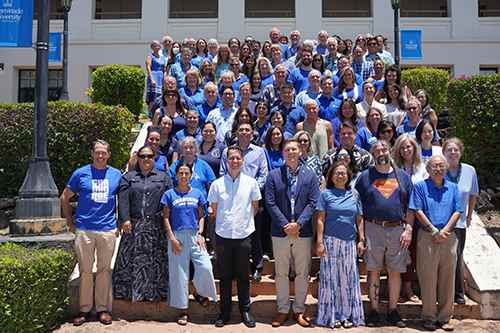
Faculty members gather for a group shot on the steps of Eiben Hall.

“Clearly, Dr. Mukina is making a positive and lifelong impact on his students,” wrote Katrina Roesler in her nomination of Mukina. “And it is our great privilege to present him with this award.”

Designed to recognize a full-time faculty member for achieving excellence in scholarship, the Fr. John F. Bolin Excellence in Scholarship Award went to Dr. Abby Halston, Ed.D, NCC, LMFT. Dr. Halston’s research philosophy centers on the transformative power of scholarly inquiry and mentorship for academic and personal growth. Embracing collaboration and a student-centered approach, she fosters an environment that encourages critical thinking, ethics and creativity in research.

“She is dedicated to mentoring undergraduates, providing meaningful research experiences and empowering the next generation of scholars,” said Dr. Darren Iwamoto, who nominated Halston for the award. “The Fr. John F. Bolin Excellence in Scholarship Award recognizes a faculty member with a clear research philosophy who has advanced knowledge in their field, and it is our pleasure to recognize Dr. Halston with this award.”

Data Science Program Director and Assistant Professor, Rylan Chong, Ph.D., was honored with the Dr. Joseph Allen Collegiality Award, recognizing his extensive engagement with fellow faculty members, and his mentorship, collaboration and teamwork across a wide array of university activities, including research endeavors and curriculum development.

“His collegial work spans student programs, admissions, advising, faculty policies, career development, and community outreach, exemplifying his clear role in promoting Chaminade’s mission and values,” said Laura Tipton, a former Chaminade Data Science, Analytics, and Visualization Assistant Professor. “Dr. Chong’s wide-reaching involvement in the institution and his investment in developing relationships within the university ‘ohana has made a significant impact at Chaminade. I can think of no one more deserving of a collegiality award than Dr. Chong.”

Posted by: University Communications & Marketing Filed Under: Behavioral Sciences, Education, Faculty, Featured Story, Institutional, Natural Sciences & Mathematics Tagged With: Faculty, Honors and Awards

Silversword Reunion Blooms

July 31, 2023

Criminal Justice alumni reunite at Vi and Paul Loo Student Center

Dr. Greg Mark makes it clear that Criminal Justice reunions involve more than just those who may have been one-time dorm mates or who may have taken classes together. Because attendees come from varied disciplines with different majors, the event holds a lot more meaning and makes for a qualitatively powerful experience, according to Mark.

“There’s lots of spirit and camaraderie,” says Mark, a former Criminal Justice professor with Chaminade from 1977-1989. “I’ve been involved with a couple of reunions, one eight years ago at The Willows and a second on campus, which took place right before COVID.”

When Mark taught at Chaminade, the program was called Justice Management until he took over the chairmanship of the department. Because he obtained his doctorate in Criminology—a degree not many people in the country held at the time—and simultaneously taught Ethnic Studies, the then young 20-something-year-old professor decided to change the name to Criminal Justice, which was more accurately reflective of what they were teaching at Chaminade.

Dr. Babington welcomed Criminal Justice alumni and faculty back to campus.
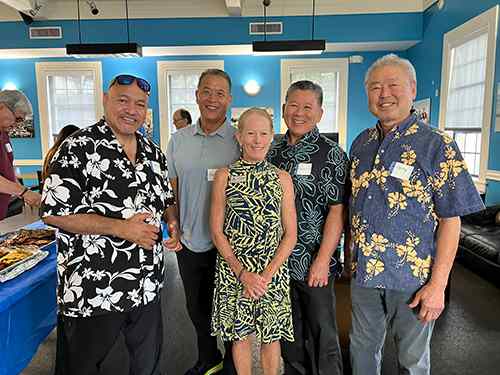
Chaminade President Lynn Babington, Ph.D., welcomed Criminal Justice alumni and faculty, including, from left Pulasi “Sam” Puletasi, Frank Okamura, Kevin Shimoda and Dr. Greg Mark.

“I took fragments of Management Justice and developed a criminology curriculum,” says Mark, who recently attended a Criminal Justice mini reunion held at the Vi and Paul Loo Student Center on campus. “It was a very exciting time to be part of the Chaminade faculty.”

A Criminal Justice major who graduated in 1986, Frank Okamura remembers taking Mark’s Criminal Justice Agencies class and describing him as fair and just like “one of us.” This may be true since some of the students—like Okamura, already a father of two and working as a U.S. Customs Service Inspector and bartender—were closer in age to Mark.  

“I think he (Mark) felt sorry for me because he named me ‘Outstanding Student’ or something like that,” laughs Okamura, who also attended the recent reunion on campus and had a chance to spend some time with his former professor. “I really enjoyed his class, which provided me a better understanding of the different law enforcement agencies.”

A tight-knit group, Criminal Justice alumni members will often socially meet either for lunch or dinner, reminiscing about their days as Silverswords, updating each other on their kids and grandkids, and their achievements since graduation.   

“During my time at Chaminade, we did so many things together, which brought us closer together,” says Mark, referring to students and faculty. “There was a lot of aloha among people in the department and it was a dynamic time.”

At the mini reunion, Okamura was impressed that Chaminade President, Dr. Lynn Babington,  had showed up to welcome them back to campus, making them all feel like they were home.

“Chaminade provided me with a path that I would have never known,” says the 62-year-old retiree and grandfather of five grandkids. “Whenever I needed help, my professors were always there; they were always so supportive and attentive. I am just so appreciative and grateful for my time there.”

Asked if they plan to attend the October Silversword Reunion, Okamura and Mark unhesitatingly said “Yes.” “It will be another chance to talk about each other and some of the work we did together,” Mark says. “Teaching at Chaminade was a great experience. It’s where I grew up professionally, and it’s where I developed my academic and administrative skills.”

Posted by: University Communications & Marketing Filed Under: Alumni, Behavioral Sciences, Education, Featured Story Tagged With: Alumni, Criminology and Criminal Justice, Master of Science in Criminal Justice Administration

NCIS Special Agents in Hawaii

July 19, 2023

Chaminade Alumni Represent True NCIS Agents

They don’t go around pointing their guns at people. They don’t detonate bombs. And they certainly don’t solve major crimes in an hour. But, what five Chaminade alumni do help to accomplish is to keep Hawaii safe.

​​As special agents for the Hawaii Field Office of NCIS headquartered at Pearl Harbor Naval Base, Chris Meana ’12, Pia Teves ’85, Tamara Kenessey ’16, Olivia DeQuiroz ’12 and Kay Een ’02  are tasked with monitoring crime, conducting polygraph tests, supporting criminal investigations, and providing analytical support and technical surveillance countermeasures (TSCM).

They’re important jobs for sure. And for Meana, it has been a “life calling.”

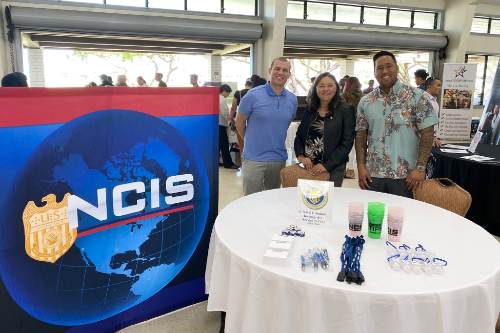
Chris Meana, right, and Kay Een promote NCIS at a recruitment affair.

“When I attended Chaminade, I was really into my religious classes, and I thought that was my calling,” says Meana, an Intelligence  Specialist with NCIS since 2015 who also acts as NCIS Honors Student Internship Coordinator, and is a member of Member of the Special Agent in Charge Advisory Group. “But then I served with the Hawaii National Guard and I refined my calling, wanting to make an impact in my hometown.”

For DeQuiroz, it was not so much a calling but a necessity that led her to the NCIS Hawaii Field Office. “I needed to pay for college so I applied for an administrative position,” says the Polygraph Examiner. “Then a job came up and I was encouraged to apply, and I passed a series of tests during the hiring process.”

Today, DeQuiroz provides counterintelligence, monitoring spies, terrorists and any matter that pertains to our national security across all branches of the military. She’s also involved with “Operation Keiki Shield,” which is part of the Hawaii Department of the Attorney General’s Internet Crimes Against Children Task Force that is comprised of a national network of 61 coordinated task forces, representing more than 5,400 federal, state and local law enforcement.

“Internet crimes are always challenging,” DeQuiroz says. “But we’ve managed to arrest more than 100 child predators in our Task Force in Hawaii.”

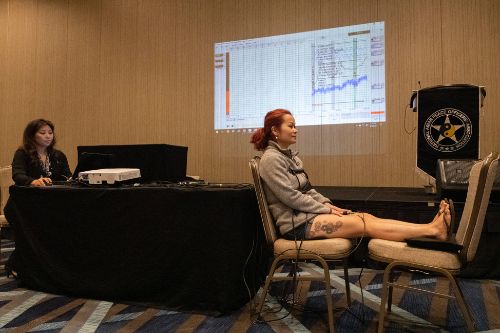
Olivia DeQuiroz administers a mock polygraph test.

With the nation’s strategic focus shifting towards the Indo-Pacific region, the NCIS Hawaii Field Office’s multi-faceted capabilities are even more in demand. Stretching from the Pacific coastline to the Indian Ocean, the area  is home to more than half of the world’s people, nearly two-thirds of the world’s economy and seven of the world’s largest militaries. And in the years ahead, as the region drives as much as two-thirds of global economic growth, its influence will only grow—as will its importance to the United States.

A former electrician with his family’s business, Teves started as a Technical Investigative Specialist (TIS) Agent in 1987 and became a Technical Enforcement Officer in 2014. He is now the sole provider of technical support for the Internet Crimes Against Children Task Force, as well as providing technical security for the entire Pacific Command.

“Before there was internet, I was looking at an actual bulletin board while I was on campus, and I came across this poster that read: Naval Investigative Service  (NIS), Office of Naval Intelligence (ONI), Special Agent position. Overseas travel, Worldwide locations,” recalls Teves, whose official NCIS title is currently Technical Surveillance Specialist. “I had no idea what it was, but it sounded sexy so I applied. About nine months later, I was hired as an Agent.”

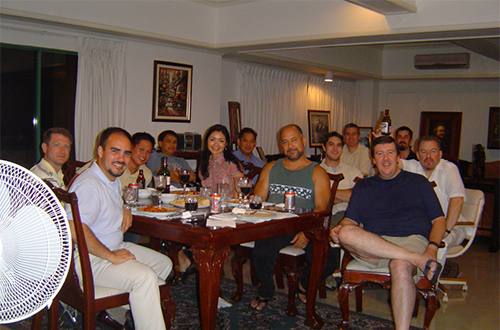
Pia Teves, wearing tank top, were on temporary duty travel to provide protective service for Adm. Samuel J. Locklear, Commander, U.S. Pacific Command during his official visit to Manila, Philippines in 2004.
Pia Teves, wearing tank top, and his colleagues were on temporary duty travel to provide protective service for Adm. Samuel J. Locklear, Commander, U.S. Pacific Command, during his official visit to Manila, Philippines in 2004.

Often misperceived as a branch of the military, NCIS is not. It is, however, the federal law enforcement arm of the Department of the Navy. Comprised primarily of civilian 1811 special agents and a small cadre of active duty Marine Corps active duty investigators, NCIS has more than 14 field offices and over 190 locations. Its special agents are stationed worldwide in support of military operations.

With historical roots tied to the Office of Naval Intelligence, the modern NCIS was formally established in 1966 as the Naval Investigative Service.  It was re-organized and assigned a civilian director in 1992, along with a name change to the now Naval Criminal Investigative Service. With this re-branding, NCIS also became a primarily civilian agency as an insulation against military command influence.

“We’re an agency of around only 2,500 members, which is relatively small compared to the major players, like the DEA, ATF and FBI,” Meana points out. “But our capabilities are well respected, and we are well known for our role in counterintelligence, protective service and force protection operations.”

Solving crimes and catching the bad guys, though, aren’t the only issues that the NCIS Hawai‘i Field Office faces. Integrating itself into the local community is vital, as well, which is why the team can be seen throughout the year at a variety of functions. Some outreach efforts focus on awareness and education, spanning across such topics as internet safety and sexual assault prevention to identity theft and cybercrime.

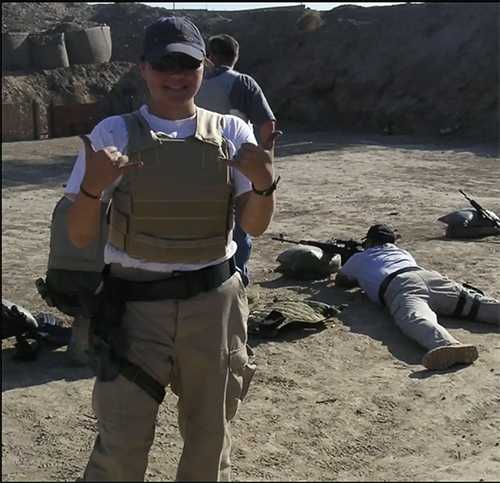
Kay Een flashes a shaka while in Baghdad, Iraq circa 2005.

A Special Agent since 2020, Kenessey deals with death investigations, child enticement, fraud, arson and all federal-level investigations that involve criminal and security matters with the Navy.

Upon learning that her mentor, Associate Professor Dr. Joe Allen, passed away in December 2021, Kenessey was saddened by the news. “Technically I wouldn’t be here if Dr. Allen hadn’t written a letter, and told me to check out NCIS,” Kenessey says. “I think Chaminade lost a valuable professor and mentor. As I said, he was an integral part of where I am today both academically and professionally.”

Kay Een, meanwhile, praises Chaminade for its welcoming atmosphere and for the experiential learning that helped her land a job with NCIS. As NCIS’ Chief Diversity and Inclusion Officer,  Een supports NCIS’ progression in the DEI arena by supporting enterprise initiatives to implement the best business practices, encouraging collaboration, and delivering proven solutions to nurture a ready and resilient, globally-engaged workforce. She was introduced to the NCIS Honors Internship Program while a Silversword.

“Much like my time at Chaminade, I believe there is great value being surrounded by people with different backgrounds, experiences and perspectives,” says Een, who is now in her 20th year with NCIS. “Being in a place that fosters diversity through inclusion is key to growing an innovative and agile workforce.”

As far as the authenticity of CBS’ popular NCIS franchise, Meana, Teves, DeQuiroz, Kenessey and Een agree that the drama doesn’t always get it right. “We have a close relationship with the show, and we’ve worked with them closely,” Meana says. “They try to stay close to reality, but they do add their own fictional twist.”

Posted by: University Communications & Marketing Filed Under: Alumni, Behavioral Sciences, Featured Story, Homepage, Institutional Tagged With: Alumni, Forensic Sciences, Psychology

PsyD Candidate Realizes Her Dream

June 13, 2023

Getting through a Transportation Security Agency (TSA) check point is no laughing matter. Nor should it be a crying one, unless you just learned that you’ve just been accepted to your dream university. After flying to Hawaii to visit Chaminade University, Jodie Gerson ’23 was en route home to Las Vegas when she was notified that she was accepted into the Doctor of Psychology Program in Clinical Psychology at Chaminade’s Hawai‘i School of Professional Psychology.

“I got up to the TSA agent and he asked if I was OK,” Gerson laughed. “I told him I was crying out of joy because I just received a call about my acceptance into Chaminade.”

Gerson, who had already held a master’s in Clinical Psychology and another master’s of science in Marriage, Family and Child Therapy, was already an accomplished professional, holding such management roles as Clinical Program Manager with the Nevada Youth Parole Bureau, Director at WestCare, Nevada, and Director of Performance Improvement and Risk Management with Spring Mountain Treatment Center and Spring Mountain Sahara Hospital.

“My wife, Chris, told me that I had met all my goals, except one, which was to apply to doctoral programs,” said Gerson, who is completing her internship with the Superior Court of the District of Columbia this July. “I had several offers across the board, but Chaminade really appealed to me so I flew out to visit.”

Chaminade President Dr. Lynn Babington and Dr. Sean Scanlan present Jodie Gerson with her PsyD degree.

Once on campus, Gerson said the setting was perfect, and she knew immediately that Chaminade was the right fit. Not only did it offer a doctoral program that she liked, but the university checked off another one of her boxes: cultural diversity.

“Oh my gosh, I thought to myself,” Gerson recalled. “This is THE one. After I did my interview, I took a tour of the campus, and it just felt right. I had to get in.”

Her interview was on a Tuesday and by Friday she received the call from the admissions team. Informed of her next steps in order to reserve her spot, Gerson immediately called Chris, and asked if she could send a deposit since she would be in the air.

“I didn’t even have a chance to tell Chris that I was accepted, and now I was asking her to send money to Chaminade,” Gerson smiled. “Even though they gave me a few extra days to complete the necessary steps, I didn’t want to take a chance of losing my spot. There was no way I was letting this opportunity slip by.”

A Certified Expert Trauma Professional who has worked in the field for more than 25 years, Gerson said she was still challenged by the doctoral program, which helped her gain a deeper analysis and understanding of clinical psychology. She also formed strong bonds with her fellow doctoral candidates.

“She has an incredible resume, and has been on multiple boards, including HPA (Hawai‘i Psychological Association) and APA (American Psychological Association),” said Dr. Sean Scanlan, Clinical Psychology Director with the School of Education and Behavioral Sciences. “Her work experience, with adults, adolescents and children, includes assistance and intervention with the homeless, individuals with mental illness, minors in foster care, forensics, youth parole and persons with HIV/AIDS.”

When Gerson returns from Washington, D.C. in July, she will begin a new job with the Department of Health Family Court Liaison Branch at the Hawai‘i Youth Correctional Facility and Detention Home, where she will advocate for teens, and assess risk, needs and protective factors in our youth populations.

She will also continue her studies, seeking to attain her Board certification by taking the Association of State and Provincial Psychology Boards’ Examination for Professional Practice in Psychology (EPPP), a rigorous process that could take as long as her PsyD program.

“Service to the community is one of the values that Chaminade upholds, and it’s one that I strongly believe in as well,” Gerson said “It has been a great experience, and I have no regrets.”

Posted by: University Communications & Marketing Filed Under: Alumni, Behavioral Sciences, Campus and Community, Diversity and Inclusion Tagged With: Doctor of Psychology in Clinical Psychology, Psychology

  • « Go to Previous Page
  • Page 1
  • Page 2
  • Page 3
  • Page 4
  • Page 5
  • Page 6
  • Interim pages omitted …
  • Page 11
  • Go to Next Page »

Footer

Chaminade University Logo

3140 Waialae Avenue
Honolulu, Hawaii 96816

Contact Us
Phone: (808) 735-4711
Toll-free: (800) 735-3733

facebook twitter instagram youtube linkedin

Visit

  • Plan Your Visit
  • Campus Map (PDF)
  • Events

Resources

  • Campus Security
  • Student Consumer Information
  • Concerns, Feedback, and Reporting
  • Institutional Review Board
  • Title IX / Nondiscrimination Policy
  • Compliance
  • Emergency Information
  • Careers
  • Institutional Statement

People

  • Students
  • Parents
  • Alumni
  • Faculty & Staff

Policy

  • Privacy Policy
  • Terms and Conditions of Use


© Chaminade University of Honolulu