• Skip to primary navigation
  • Skip to main content
  • Skip to footer
Chaminade University of Honolulu

Chaminade University of Honolulu

  • VISIT
  • APPLY
  • GIVE
  • STUDENTS
  • PARENTS
  • ALUMNI
  • FACULTY/STAFF
  • Admissions
    • Admissions Home
    • Undergraduate Students
      • First-Year Students
      • Transfer Students
      • Admitted Students
    • Graduate Students
    • Flex Online Undergraduate Program
    • Military Students
    • Non-Degree/Visiting Students
    • Experiential Honors Program
    • Early College Program
    • New Student Orientation
  • Tuition & Aid
    • Financial Aid Home
    • Tuition & Expenses
    • Federal Updates & Changes
    • Scholarships
    • $5,000 Graduate Scholarship
    • VA Education Benefits
    • Net Price Calculator
  • Academics
    • Academics Home
    • Academic Programs
    • Office of Student Success
      • Academic Advising
      • Records and Registrar
    • Kōkua ʻIke (Support Services)
      • ADA Accommodations
      • Career Services
      • Proctoring Services
      • Tutoring Services
    • Sullivan Family Library
    • Undergraduate Research & Pre-Professional Programs
    • Commencement
  • Campus Life
    • About Campus Life
    • Student Engagement
    • Student Government Association
    • Residence Life and Housing
      • Summer Conference Housing
    • Health Services
    • Marianist Leadership Center
    • Counseling Center
    • Campus Ministry
    • Campus Security
    • Dining Services
    • Bookstore
  • Athletics
  • About
    • Chaminade University News
    • Our Story
    • Leadership
    • Chaminade University Strategic Plan 2024-2030
    • Mission & Rector
    • Association of Marianist Universities
    • Facts & Rankings
    • CIFAL Honolulu
    • Accreditation & Memberships
    • Montessori Laboratory School
Search
×

Search this web site

Business & Communication

Living Legacy

January 26, 2023

A Place Close to the Heart: Honoring an Alumnus’s Final Wishes

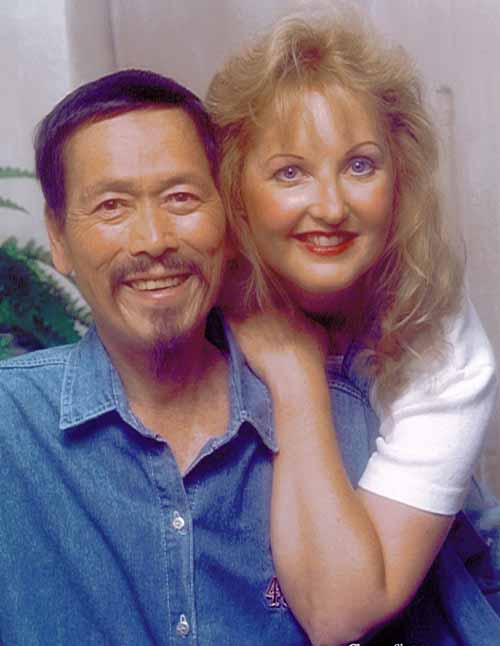
Before losing his battle to hypopharyngeal cancer on July 15, 2017 in San Leandro, CA., Thomas “Tom” Siu-Wing Watt ’68 made his spouse of more than 35 years, Carol-Anne Tucker-Watt, grant him two final wishes: One of them was to have Frank Sinatra’s version of “My Way” played at his funeral and another was “to fly.”

“He made it clear that he was fine with cremation, but he did not want his ashes buried, stuck in a niche or dumped over the side of a boat,” Tucker-Watt says. “He wished for his mortal remains to be ‘free like the wind.’” 

Tom and Carol-Anne Watt were together for more than 35 years.

Indeed, Watt was a free spirit, developing close friends while attending Saint Louis School where he experienced academic success and a penchant for mathematics and sciences. After high school, he aspired to be an engineer—one of three popular professions chosen among Chinese immigrants at the time—and enrolled in the engineering department at the University of Hawai‘i Mānoa. 

Unfortunately, his first-year experience would mark his last. 

“The professors of the introductory engineering classes assumed that the students were already familiar with the fundamentals of mechanical drawing, but Tom was not,” Tucker-Watt recalls. “It did not take long for him to decide that he and UH were not a good fit, and that he would need to pivot.”

Having attended Saint Louis, Watt was familiar with the Chaminade campus, and several of his Saint Louis classmates were already attending what was then Chaminade College. There was one problem: Chaminade did not have an engineering program, so he decided to pass on his engineering books, drafting board and T-square to his younger brother and switched to a business major where he could apply both his math and English skills.

“Chaminade always held a place close to his heart,” Tucker-Watt says. “After retirement from a long and successful career with the Social Security Administration, Tom was able to connect with fellow alumni living in the San Francisco Bay Area, as well as students about to start at Chaminade.” 

But having scattered Tom’s ashes in mid-air meant that there would be no headstone. “There would be nothing to mark his time on earth,” Tucker-Watt says. “And so it occurred to me that the best way to give him an ongoing legacy was to endow a scholarship at Chaminade.”

The scholarship has a single criterion: Students have to maintain a 3.5 grade point average, something that Tom successfully managed to do while studying at Chaminade.

“He would have been proud, and glad that he could help young Chaminade students,” Tucker-Watt says. “I miss him terribly, but I still feel his guiding hand. He still has my back.”

Posted by: University Communications & Marketing Filed Under: Alumni, Business & Communication, Campus and Community, Catholic, Donor Profiles Tagged With: Scholarship

One and Done

December 9, 2022

Program offers business students a fast track to an MBA degree

One Year MBA students in New Zealand for their international study trip

Unlike the contestants in the “Amazing Race,” Chaminade students did not encounter any detours nor face any roadblocks when they visited Aukland, New Zealand. The adventure was part of the new One Year MBA program that the University introduced in the fall of 2021.

“I had experience with such programs at three other universities,” says Dr. Bill Rhey, dean of the School of Business and Communication. “The data points out that when students look for an MBA program, they consider time of completion, cost, convenience and quality of faculty. This MBA meets all four.”

The cohort model for the One Year MBA program differs greatly from the traditional 18-month track. Foremost, as Rhey explains, students enrolled in this 12-month curriculum are in “lockstep,” which means they all must take the mandatory classes together.

“They start here and they finish here—together,” Rhey emphasizes. “This first cohort of students really bonded and supported each other every step of the way.”

The advantages of enrolling in a one-year program are many. But perhaps one of the most salient reasons refers back to an old adage: time is money. Obviously, paying a year’s tuition—versus two—saves a lot of cash. Tuition also includes books, meals on Saturdays and the international trip. Secondly, classes meet on alternate Saturdays and through online coursework. And thirdly, this type of educational model fosters collaboration and helps develop close bonds with fellow classmates.

One Year MBA students in class

“When I was packing my bags, I began to question my decision, asking myself ‘Why am I doing this,’” recalls Katelin Korman, who moved to Hawaii from her hometown of Surrey, British Columbia. “I didn’t know anyone in Hawaii but it turned out to be the best experience of my life and I have no regrets.

“The hybrid model also meant that I could continue working while also completing my studies,” Korman further notes. “I loved the idea of having a small cohort and a more personalized experience.”

The idea of being in a tight-knit group also drew Rebecca Miller. “I was so fortunate to have been part of this particularly amazing group of people, and I mean that sincerely,” says Miller, a licensed optician with LensCrafters. “Having been able to share this time together helped us learn how we worked with each other as individuals.”

Initially accepted into the traditional MBA program, Mario Macagba later learned about the accelerated alternative and decided this option would work best for his circumstance. The trip to New Zealand was another alluring factor.

“In preparation for the trip, professor Callahan provided us assignments that allowed us to learn about New Zealand,” Macagba says. “We learned about its culture and did research about Hawaii’s link to New Zealand and the similarities with regards to tourism and culture.”

In the past, Rhey has led other student groups on similar trips to Malawi and South African but never to Auckland. According to Rhey, New Zealand was chosen because it’s an island country, which has a Polynesian history and a large tourism/hospitality sector.

One Year MBA students in New Zealand for their international study trip

“It is, also, an English-speaking country with direct flights from Honolulu,” Rhey points out. “I have a friend (Rob Scharar) who is engaged with many leaders and businesses in New Zealand, and he was happy to help design the tour.”

A supporter of MBA programs and education overall, Scharar’s invaluable knowledge and connections provided students with an insider’s look into the New Zealand economy and politics.

“It was a mini business seminar for four days,” asserts Scharar, President of FCA Corp., a 50-year-old leading global investment management and financial advisory firm that also owns a stake in Unparalleled Journeys, which arranged the itinerary. “We had guest speakers from the New Zealand Stock Exchange, U.S. Embassy,  FCA Corp’s investment team, Representatives from the U.S. Commercial Service for Australia and New Zealand, and Commonwealth Australia-New Zealand investment managers. The goal was to give these students some exposure to international trade and business.”

After discussing the impact of COVID on the travel industry, Unparalled Journeys tasked the students to prepare a presentation and summary of strategies and protocols that could possibly mitigate the effects of another potential global pandemic.

“The students had a lot of great ideas, from the use of technology to strategic messaging in anticipation of another COVID-like pandemic,” Scharar says. “They all passed. This was a wonderful group of young adults who were pretty humble and grounded, which made it fun for me.”

“Traveling with Mr. Rob Scharar was a fantastic experience,” Miller says. “He really brought to life a sense of what we were working to achieve. Watching him command a room, and interact with individuals everywhere from Parliament to the Stock Exchange was very enlightening.”

One Year MBA students in New Zealand for their international study trip

Macagba’s biggest takeaway from the trip was a pointed lesson in leading. “Servant leadership is valuable,” he says, “and we need to make sure we serve and lead in our community, home, work and social circles, and to view our culture not as black and white but gray.”

Korman was most impressed with the level of awareness that Kiwis hold for their surroundings, giving her a new perspective on the quality of life and living in general.

“I learned that New Zealand is a lot like Canada where I am from,” says the British Columbia native. “It is extremely similar in the way it’s run and governed, the landscape, environment and climate, as well as the people and their interests and hobbies. Our money and tax system are also alike and both countries are part of the British Commonwealth.”

The one-year program is targeted—but not limited—to mid-management professionals who are already working in a specific industry, and seek a track to the executive level. Its goal is to provide growth, leadership, thoughtful decision-making, engagement and new opportunities.

Before obtaining her MBA, Korman had only worked at small companies with few employees and even fewer opportunities for professional growth. However, this changed in November when she landed a marketing coordinator position with Save-On-Foods, one of Western Canada’s largest supermarket chains.

“I think the MBA definitely helped me get this job,” says Korman, who believes this is her first step to upward mobility. “I learned so much more about business, including data science, analytics, strategic thinking and marketing.”

During a banquet dinner to celebrate their graduation, students from the 2021 class had the opportunity to welcome the next cohort of MBA graduates, passing the torch on to some of the incoming class members.

“I know the students took away a sense of confidence in their ability to make recommendations as business consultants for our host company, Unparalled Journeys,” Rhey concludes. “I also believe that most had their horizons broadened, and experienced a greater appreciation for how business is done, and how different life is outside of Hawaii.”

Posted by: University Communications & Marketing Filed Under: Business & Communication, Featured Story Tagged With: One Year MBA

Chaminade University Awarded $600,000 Federal Grant

November 22, 2022

Chaminade University of Honolulu was among seven minority educational institutions that received $1.75 million in grants from the Minority Business Development Agency (MBDA). The monies are part of an expanded pilot program to support entrepreneurship for undergraduate students.

“This marks another proud achievement and win for our faculty members,” says Chaminade University of Honolulu president Lynn Babington. “Principal Investigator, Dr. Helen Turner, and a supportive leadership team shepherded this grant through a rigorous vetting process, and deserve all the recognition for bringing this nationally competitive award to the university.”

Submitted to the MBDA’s Minority Colleges and Universities Grant Competition, the award will allow Chaminade to develop the “‘Inana Sustainability Entrepreneurship Program,” which aims to spark minority entrepreneurial innovation among Hawaii-Pacific undergraduates.

“As a Native Hawaiian Serving Institution, Chaminade University of Honolulu’s proposal demonstrated a comprehensive understanding of the mission and goals of MBDA, and the requirements of the Federal Funding Opportunity Announcement,” says Donald R. Cravins, Jr., Under Secretary of Commerce for Minority Business Development, in a prepared statement. “In addition, their application presented evidence of the expertise and community resources necessary to meet these goals.”

The Minority Colleges and Universities pilot program will help fund the development of curricula, pilot courses, seminars, and replicable products and tools that address inclusive innovation, entrepreneurship and general economic development.  The award is worth $600,000, funded annually over a two-year span.

“The ‘Inana program is highly collaborative and builds on foundations laid by Chaminade’s more-than-20-year history of promoting business and entrepreneurship,” Dr. Turner says. “`Inana will bring together our new UN Sustainability Center, our outstanding School of Business and Communication, and the highly regarded Hogan Entrepreneurs Program, as well as our Marianist Leadership Center and Experiential Honors program. Together we will laser-focus on supporting the next generation of sustainability focused entrepreneurs for Hawaii and our Pacific region.”

# # #

Chaminade University of Honolulu believes in the power of education to drive positive change, broaden perspectives and deepen our understanding of one another. With an emphasis on transformative service-learning experiences, we prepare students to serve as tomorrow’s leaders, inspiring and challenging them to use their minds and their hearts to help build stronger and more just communities. We are proud to serve as Hawai‘i’s only Marianist university, and rely on these values to guide us in delivering a high-quality education with an individualized approach and a focus on excellence, innovation and change. Established in 1955, we offer more than 30 undergraduate and graduate programs, including doctoral degrees in education, psychology and nursing practice. Learn more at chaminade.edu.

Posted by: University Communications & Marketing Filed Under: Business & Communication, CIFAL Honolulu, Diversity and Inclusion, Featured Story, Hogan Entrepreneurial Program, Innovation, Press Release

Chaminade University Receives $50,000 Grant from the McInerny Foundation

September 27, 2022

Chaminade University of Honolulu recently received a $50,000 grant from the McInerny Foundation to support the school’s Economic Education Center for Excellence. The grant will fund financial literacy programs at the center for the 2022-2023 school year.

The Chaminade Economic Education Center for Excellence (EECE) promotes economic empowerment for families and communities in Hawaii and the US-affiliated Pacific through accessible and sustained economic and personal financial literacy training that is culturally responsive. The research projects improve understanding of barriers to economic empowerment which shed light on policies and practical interventions to overcome these barriers in Hawaii and beyond. 

The McInerny Foundation grant aims to serve approximately 30 public school teachers with professional development workshops in how to incorporate financial literacy into the K-12 classroom, and 20 high school students with age appropriate coursework in economics and personal finance. Chaminade students also benefit from the programs as EECE workshop teaching assistants.

# # #

Chaminade University of Honolulu believes in the power of education to drive positive change, broaden perspectives and deepen our understanding of one another. With an emphasis on transformative service-learning experiences, we prepare students to serve as tomorrow’s leaders, inspiring and challenging them to use their minds and their hearts to help build stronger and more just communities. We are proud to serve as Hawai‘i’s only Marianist university, and rely on these values to guide us in delivering a high-quality education with an individualized approach and a focus on excellence, innovation and change. Established in 1955, we offer more than 30 undergraduate and graduate programs, including doctoral degrees in education, psychology and nursing practice. Learn more at chaminade.edu.

Posted by: University Communications & Marketing Filed Under: Business & Communication, Featured Story, Press Release Tagged With: Economic Education Center for Excellence, Grants

Pre-College Summer Institutes 2022

August 30, 2022

“Cooking with Chemistry”

“Think Like a Champion”

“Psychology of Happiness”

Those might sound like great reads—or fascinating TED Talks.

But they were actually some of the engaging and hands-on courses offered at Chaminade University over the summer to groups of Hawaii high schoolers. The students were participants in Chaminade’s Summer Institutes, made possible at the university thanks to a partnership with the federal GEARUP program.

The workshops are designed to give high school students a taste of college—and get them hooked.

Participants this year for the seven, two-week sessions included ninth to 12th graders from Farrington, Kaimukī, Ānuenue and McKinley high schools. And in addition to going on field trips and tackling fun projects, they got the chance to attend co-curricular sessions on college readiness. The topics covered everything you’d need to know as you prepare to graduate from high school and plan for college, including applying for financial aid, navigating admissions and student life.

Pure Imagination

Aaron Williamson, assistant professor of Accounting, taught a session called “The Successes of Pure Imagination: Business Development and Entrepreneurial Mentorship.” He said the course was designed as “an immersion into the world of entrepreneurship”—from business plan development, brainstorming sessions, strategic thinking skills-building and the application of “principles of success” in daily life.

“The entire process of teaching the course was memorable—from idea inception to business plan presentations,” he said. “Having a small part in assisting students to see how an idea can impact the world and developing theoretical businesses that will be on the streets of tomorrow is so enjoyable.”

Cooking with Chemistry
Chaminade University Summer Institute - Cooking with Chemistry

In Dr. Francis Sakai-Kawada’s “Cooking with Chemistry” course, students tie-dyed their lab coats to better understand the chemistry of dyes, made their own bars of soap as they explored the properties of saponification, and took chemistry into the kitchen to make butter, mayonnaise, boba and ice cream.

“The goal was develop activities that were hands-on and engaging,” he said. “We had the creative license and flexibility to tie underlying scientific and chemistry concepts to every activity. Our priority was to incorporate an element of fun. We wanted our students to see that so much of what we deal with in our daily life can be related to chemistry, from food to household cleaning products.”

Kawada added that students started the course a little shy, but slowly opened up.

And the highlight of the session: visiting the IL Gelato Factory to talk story with owner Dr. Dirk Koeppenkastrop (a fellow chemist), who discussed his path from a chemistry lab to studying the art and science of gelato in Italy and the “perfect ratio of ingredients” that goes into the sweet treat.

Psychology of Happiness
Chaminade University Summer Institute - Psychology of Happiness

Dr. Abby Halston, an assistant professor of psychology at Chaminade and clinical director of the university’s Marriage and Family Counseling program, taught the “Psychology of Happiness” course—which incorporated everything from guided meditation and breathing to personal journaling.

Students also put together personal stress management plans, worked to identify their hopes and dreams for college and beyond, and participated in mock career development interviews. The group also got to go on a field trip to Beyond Monet, an immersive experience into the artist’s works.

“I wanted to create a fun and life-changing institute where high school students could gain deep personal insight into their psychological wellbeing while learning personal management skills that could be utilized throughout their lifespan,” Halston said. “We focused on understanding the keys to happiness … and the power of our mindset to achieving our hopes and dreams.”

She added, “I cannot wait until next summer’s institute!”

For the Love of Math
Chaminade University Summer Institute - For the Love of Math

For the Summer Institutes course on “Creating Number Sense to Increase Love of Math,” Assistant Professor of Education Dr. Travis Mukina wasn’t just teaching math fundamentals, but un-teaching some bad math habits. “Most days consisted of mental math activities that forced students to view numbers in ways their elementary school teachers did not allow,” Mukina said. “We broke numbers apart, changed their values and accommodated for the change at the end of the problem.”

“Hands-on manipulatives were also used daily to allow students to visually see how the numbers were working with each other in multiple different strategies. Every activity ensured the students were learning from each other rather than from me. It was amazing to witness!” Mukina added.

He said one of the big takeaways for students was that math isn’t a set of rules and procedures to memorize, but about creativity and flexibility. Mukina also wanted participants to see how math can be used seamlessly in everyday life—and how even complicated things can be broken down.

“I feel so honored to be part of this summer institute,” he said.

Living Pono
Chaminade University Summer Institute - For the Love of Math

For the “Living Pono” institute, School of Nursing and Health Professions Professors Dr. Jennifer Nafarrete and Dr. Edna Magpantay-Monroe covered a wide range of health topics—from nutrition to human anatomy and physiology to reproductive health. Along the way, students tried their hand at cooking, engaged in some friendly competition, and put together presentations to tackle big topics.

Magpantay-Monroe said students really enjoyed the concepts of emotional intelligence and mindfulness, and especially loved their field trip to Ho‘omaluhia Botanical Garden—where they were challenged to strengthen their ability to “notice” and “be with nature.”

“I really enjoyed being a source of information to these students—helping them realize self-care is important but they also need to be self-aware of what is happening around them,” she said. “Being with nature helped increase their capacity to be mindful and reduce their stressors.”

Nafarrete added she was also happy to give students actionable, healthy solutions they can use everyday—like recipes. “My thought process was to find fun ways to engage students into making conscious choices about their health while considering how it affects the environment,” she said.

Think Like a Champion
Chaminade University Summer Institute - Think Like a Champion

Dr. Guanlin Gao, associate professor of Economics at Chaminade and director of the Economic Education Center for Excellence, focused on personal finance literacy in her course, “Think Like a Champion.” She wanted students to walk away with a better understanding of how to handle money.

“We spent one day visiting a local financial institution to learn more about how they operate and contribute to managing personal finances,” Gao said. “We spent another day on a fun team competition that involved budgeting, shopping and cooking. We even played a game that was all about inflation.”

Gao said the point of all the exercises was to help students see how better (and smarter) financial decisions ultimately lead to happier lives. “Interacting with the students was my favorite part,” she said. “For many of them, our trip to a bank was the first time they’d seen an actual vault. During our cooking competition, they all made nutritious meals. The best part: they were so proud of themselves.”

Posted by: University Communications & Marketing Filed Under: Behavioral Sciences, Business & Communication, Campus and Community, Diversity and Inclusion, Early College, Featured Story, Institutional, Natural Sciences & Mathematics, Nursing & Health Professions Tagged With: Summer Institutes

Economic Center for Excellence: Providing Financial Literacy Resources

August 22, 2022

What does cooking have to do with economics? Dr. Guanlin Gao is glad you asked.

High school students learning how to budget for a meal

Gao, a professor of economics and director of the Economic Education Center for Excellence at Chaminade, is on a mission to bolster financial literacy, education, and research in Hawaii. That’s why on a recent weekday she was cooking with a group of teens after giving them a budget to plan a menu.

The exercise was part of a hands-on financial literacy workshop for Hawaii high school students—and one of the economic center’s latest educational offerings. EECE also recently welcomed 28 Hawaii State Department of Education teachers to campus from 15 Oahu K-12 schools for an innovative educator training program. The aim: help them incorporate accessible and real-world financial literacy lessons into their curriculum.

“We’re here to help people understand just how important economics is to their everyday lives. Financial literacy education has the power to promote economic empowerment, ultimately strengthening our communities, our families, and the broader local economy,” Gao said.

With the support of community stakeholders and several organizations, Chaminade launched the Economic Education Center for Excellence in 2021 with an ambitious mission: “to advance prosperity and economic justice in Hawaii and the Pacific through integrated economic education, training and research.”

Gao notes that financial literacy in Hawaii is a significant area of need.

Nearly 7 in 10 Hawaii residents are considered “financially unhealthy.” Approximately 59% of Hawaii families report they’re struggling financially. And while 21 states require high school students to complete a personal finance or financial literacy course, Hawaii isn’t one of them.

Economic Education Center for Excellence educator workshop

“We use a train-the-trainer approach at the center,” Gao said. “In other words, our educational approaches, initiatives and projects have exponential power because everyone who comes through our center has the tools and the capacity to pass on what they’ve learned on to others.”

Chaminade President Lynn Babington, PhD, said the university was also the perfect place to house the Economic Education Center for Excellence because of its wealth of academic expertise, strong connections with the community, and institutional mission of public service.

“The center has not been operating for long, but it is already making a positive impact in the community,” Babington said. “Over the last year, we have also learned just how strong the demand for economics education and financial literacy is across the state. We look forward to continuing our expansion of the center’s programming to reach more Hawaii educators and students.”

Gao said the center is focused on:

  • providing accessible training programs to K-12 educators and students;
  • engaging with community networks to bolster financial literacy discussions;
  • undertaking research that explores barriers to economic empowerment;
  • and demonstrating measurable outcomes and impacts.

She added that another key focus is offering educational programming on the Neighbor Islands. “We want to reach people statewide with high-quality teacher training and financial literacy tools, and we’ve already started to make connections with Neighbor Island teachers and schools,” Gao said.

Since kicking off in April 2021, the center has already offered hands-on training opportunities for teachers and workshops for students—like the Summer Research Institute seminar where Gao found herself cooking with teens. She said the students got $15 to cook a nutritious meal for a family of four. Along the way, they learned key skills, from budgeting to product affordability and planning.

Also as part of the workshop, the students visited HawaiiUSA Federal Credit Union and walked into the vault. The idea was to explore the importance of personal banking and savings, and make financial institutions less mysterious.

Gao said the teacher training seminar is just as hands-on.

Economic Education Center for Excellence educator workshop

Educators round out the workshop by sharing their lesson plans with their colleagues and walking through the exercise together. “Teachers are passionate about sharing these important financial literacy skills with their students,” Gao said, adding reviews of the courses were overwhelmingly positive.

“They want to share what they’ve learned with their fellow teachers and they have strongly recommended the trainings,” Gao said. “The next step is reaching more educators and then building and building on what they’ve learned. The center’s focus is all about scaling up but also about repetition.”

Gao said the center is also interested in working with the Hawaii Department of Education to incorporate financial literacy lessons into the social studies curriculum, and already sees the workshops with educators as core to weaving grade-level appropriate economics education into classrooms.

Speaking of big goals, Gao has no shortage of them.

Within five years, she wants the center’s training opportunities to have reached hundreds of Hawaii teachers—and their thousands of students. She is also seeking new grant funding, pursuing research for publication in journals, and excited about the potential for welcoming affiliate faculty or advisors.

“We know we have work to do when it comes to financial literacy in Hawaii. But we are proud to be making a difference and serving as a hub for economics education,” Gao said. “Financial literacy doesn’t have to be hard and unreachable. In fact, financial literacy should be accessible to everyone.”

Posted by: University Communications & Marketing Filed Under: Business & Communication, Campus and Community, Featured Story, Innovation, Institutional Tagged With: Economic Education Center for Excellence

  • « Go to Previous Page
  • Page 1
  • Interim pages omitted …
  • Page 8
  • Page 9
  • Page 10
  • Page 11
  • Page 12
  • Interim pages omitted …
  • Page 25
  • Go to Next Page »

Footer

Chaminade University Logo

3140 Waialae Avenue
Honolulu, Hawaii 96816

Contact Us
Phone: (808) 735-4711
Toll-free: (800) 735-3733

facebook twitter instagram youtube linkedin

Visit

  • Plan Your Visit
  • Campus Map (PDF)
  • Events

Resources

  • Campus Security
  • Student Consumer Information
  • Concerns, Feedback, and Reporting
  • Institutional Review Board
  • Title IX / Nondiscrimination Policy
  • Compliance
  • Emergency Information
  • Careers
  • Institutional Statement

People

  • Students
  • Parents
  • Alumni
  • Faculty & Staff

Policy

  • Privacy Policy
  • Terms and Conditions of Use


© Chaminade University of Honolulu