• Skip to primary navigation
  • Skip to main content
  • Skip to footer
Chaminade University of Honolulu

Chaminade University of Honolulu

  • VISIT
  • APPLY
  • GIVE
  • STUDENTS
  • PARENTS
  • ALUMNI
  • FACULTY/STAFF
  • Admissions
    • Admissions Home
    • Undergraduate Students
      • First-Year Students
      • Transfer Students
      • Admitted Students
    • Graduate Students
    • Flex Online Undergraduate Program
    • Military Students
    • Non-Degree/Visiting Students
    • Experiential Honors Program
    • Early College Program
    • New Student Orientation
  • Tuition & Aid
    • Financial Aid Home
    • Tuition & Expenses
    • Federal Updates & Changes
    • Scholarships
    • $5,000 Graduate Scholarship
    • VA Education Benefits
    • Net Price Calculator
  • Academics
    • Academics Home
    • Academic Programs
    • Office of Student Success
      • Academic Advising
      • Records and Registrar
    • Kōkua ʻIke (Support Services)
      • ADA Accommodations
      • Career Services
      • Proctoring Services
      • Tutoring Services
    • Sullivan Family Library
    • Undergraduate Research & Pre-Professional Programs
    • Commencement
  • Campus Life
    • About Campus Life
    • Student Engagement
    • Student Government Association
    • Residence Life and Housing
      • Summer Conference Housing
    • Health Services
    • Marianist Leadership Center
    • Counseling Center
    • Campus Ministry
    • Campus Security
    • Dining Services
    • Bookstore
  • Athletics
  • About
    • Chaminade University News
    • Our Story
    • Leadership
    • Chaminade University Strategic Plan 2024-2030
    • Mission & Rector
    • Association of Marianist Universities
    • Facts & Rankings
    • CIFAL Honolulu
    • Accreditation & Memberships
    • Montessori Laboratory School
Search
×

Search this web site

Alumni

Microbes are Hot Topic in Forensic Science; Book by Chaminade’s Dr. David Carter Tells All About It

May 9, 2017

After more than a century of absence from forensic science investigations, microbes are once again in the spotlight. And a new book by Associate Professor David Carter, director of Chaminade University’s Forensic Sciences Program, explains why.

Dr. David Carter

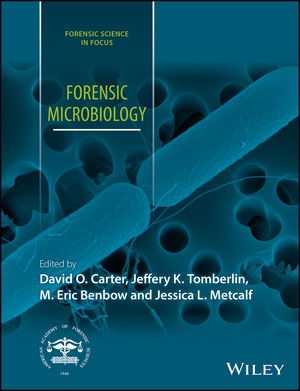
“Forensic Microbiology,” edited by Dr. Carter and co-authored with two Chaminade graduate students, tells all about those tiny bugs. Specifically, the book details how microbes help scientists determine when a person died, how they died and where they were before they died.

“Using microbes is the hottest, trendiest, sexiest area of forensic science right now,” Dr. Carter says. “This is the thing everybody wants to know about because it’s new.”

Actually, the use of microbes in forensic science is both old and new. The new part involves cutting-edge technology that enables scientists to extract DNA evidence from microbes and sequence the material with a genetic analyzer.

The old part of using microbiology to solve crimes is really old. So old, in fact, that the practice far predates “CSI” TV shows and the invention of television itself.

“There were folks using microbes in the 19th Century as evidence,” Dr. Carter says, “and then people forgot about them for a hundred years. Now people are coming back to microbes and going: ‘Huh. Maybe this is worthwhile.’”

Although Dr. Carter emphasizes that microbes won’t replace more mundane forms of evidence – such as fingerprints, cell phone records, etc. – these tiny organisms do have “one huge advantage.”

“Microbes are present everywhere a human goes,” Dr. Carter says, “because they are always on you, they are always in you. And not all forms of evidence do that.”

Forensic Microbiology Book

Dr. Carter’s book, which he describes as “the first of its kind,” provides a much-need resource for university students and forensic science professionals, including investigators, microbiologists and pathologists. Among those contributing to the book were leading scientists from America, the United Kingdom, France, Australia and other countries.

Helping Dr. Carter write the 424-page book was Emily Junkins, who graduated from Chaminade in 2016 with a master’s degree in forensic science. She’s currently pursuing a doctorate degree in microbiology at the University of Oklahoma.

“Being a co-author for two chapters in this book, and chapters in other books or manuscripts, has had a major impact on me pursuing a Ph.D.,” according to Junkins, who credits her Chaminade education with providing valuable opportunities for in-depth research.

“I would not be the scientist I am now without these opportunities,” says Junkins, who plans a career in academia as a professor and principal investigator focused on microbial biology.

Also serving as a book co-author was Whitney Kodama, who’s graduating from Chaminade this spring with a master’s degree in forensic science.

“I think this experience helped me gain a better understanding of the scope of my research project as well as insight into a field of forensics that I was not aware of before entering the program,” Kodama says.

“I also think this experience has helped the quality of my scientific writing,” adds Kodama, who recently accepted an investigator position with the City and County of Honolulu Department of the Medical Examiner.

“I learned that stepping out of your comfort zone and doing something that seems intimidating/difficult at first can only benefit you in the future,” Kodama says. “One can grow from these experiences, and I feel that has happened to me.”

Editing “Forensic Microbiology” with Dr. Carter were Dr. Jeffery K. Tomberlin from Texas A&M University’s Department of Entomology, Dr. M. Eric Benbow from Michigan State University’s Department of Entomology, and Dr. Jessica L. Metcalf from Colorado State University’s Department of Animal Sciences.

All royalties from book sales support student research projects of the American Academy of Forensic Sciences.

Chaminade University’s Division of Natural Science and Mathematics is accepting applications for its bachelor’s degree program in forensic sciences. This degree provides students with a wide range of graduate school and career options in the fields of law, medicine, veterinary medicine, dentistry and pharmacy.

Posted by: University Communications & Marketing Filed Under: Faculty, Natural Sciences & Mathematics, Students Tagged With: Alumni, Forensic Sciences, Publications

Business Alumnus Juno Chung ’07 Relishes the Small Successes Leading Up to the Big Goals

May 3, 2017

Juno Chung Koa Cafe (B.A. Business '07)Drawn back to Chaminade University out of gratitude, the proud alumnus Juno Chung, B.A. Business ’07, accepted the invitation to participate in the Hogan Entrepreneurs Program Speaker Series this spring. “As an entrepreneur, you always have the freedom to do what makes you happy,” shared Juno, who during the last 10 years since his graduation has acquired much wisdom and experience.

Juno took over his family’s business on September 10, 2014, seven years after graduating from Chaminade University with a bachelor’s degree in Business.  He will always remember that day. His parents held a company party and announced to all the employees of the six Koa Pancake House restaurants in operation that they were retiring and turning over the business to Juno.

For many, it seemed like an automatic given, but in reality that Rubicon moment came after years of grooming, struggles, pushbacks, and challenges.  Juno grew up in the restaurant business from a very early age.  He remembered being nine or 10 sitting in the back of the cash register with his calculator.  People would come up to pay.  Always good with math, he would figure out the costs, take their money and give them their change.

In high school, he had liked cars and wanted to work as a valet.  Dad nixed that idea and told him firmly that if he were going to work anywhere other than at one of the Koa Pancake House restaurants, it would have to be at another restaurant.  So Juno took a job at Zippy’s.

Juno’s parents Il Man and Sam Soon Chung were immigrants from Korea who did not graduate from college, and Juno was their only son. Therefore, he was expected to carry on the name and take over their business. Mr. Chung did not think that college was necessary and wanted Juno to work full time at the restaurants so that he could teach his son everything he knew. Juno thought that at least he could go to Kapi’olani or Windward Community College.  However, Mrs. Chung, adamant on a four-year college for her son, stepped in and settled the discussion.

So after graduating from Maryknoll High School, Juno chose Chaminade University with its rolling enrollment.  Both schools were small and had small class sizes. Chaminade was a small enough university that everyone seemed to know his name (in fact, he still stays connected to Chaminade classmates and faculty members).  The teacher to student ratio fitted him well.  Juno admitted to not being the best of students, but the faculty found ways to bring the best out of him.  With the family business always top of mind, Juno tuned into everything taught in class that he thought would be relevant for the restaurants. He remembered fondly on how his accounting professor, Wayne Tanna, reached out to his students.  Tanna was the one to first bring up issues of second-generation businesses including tax challenges and the need for a business plan. Juno appreciated Tanna’s business law and ethics classes.

As Juno moved forward, graduating in 2007, he sought his own way in the world.  His parents had their very traditional ways, and he had new ideas and new approaches. As the conflict peaked, Juno realized that it was time to strike out on his own and moved to New York.

Juno’s love and respect for his parents were clearly evident as he shared his story.  “I valued the relationship I have with them so much. Moving away was an opportunity to save that relationship,” he said.

In New York, he would develop his successful product and clothing brand MyOutlet, which grew out of life’s frustrations.  He included a non-profit aspect to his line and strived to be socially responsible in his business decisions and his profits. He also cofounded JCBL Products.It was a good enough life.

Then his sisters called him with their concerns about their parents’ health. They asked that he try to get their parents to sell the business and retire.  Juno reached out to his aging parents and found that they were both having health issues.  He asked them what they wanted to do. They shared that they had always meant to hand the business over to him.

Juno thought carefully about his decision.  His sisters did not want the restaurant business. Juno, who identified with the character Neo from the Matrix film series, felt that like Neo, he was “the one.” He accepted his destiny with one major stipulation.  Though his parents would be welcomed advisors, Juno would be in full control.    Happily and full-heartedly, they accepted their son’s leadership.  Since then, Juno has added two Koa Cafes and continues to run the other six Koa Pancake Houses.

Juno, like Neo, has moved through a personal metamorphosis that draws him back to the Matrix. He has wrestled with his destiny and has won. This is not to say that business did not have its ups and downs, or that Juno did not have doubts about whether he belonged in the restaurant business or not.  “‘Money doesn’t come easy. If it did, everyone would be rich. When you make mistakes, recognize them early,’ my dad used to tell me,” Juno recalled as he was going through a particularly tough business loss. “My mistakes are like I’m earning my master’s degree at an Ivy League school. This is part of the journey,” he said with inner resilience.

Juno’s parents and his fiancée are foundational reminders that he is where he was supposed to be. His parents are available as sage advisors, and his fiancée reminds him to be grateful.  The relationships are strong and loving. He has also found that noticing the small successes along the way to the big goal makes him happy and gives him encouragement for the long haul.

His enthusiasm for his alma mater continued to be unfettered. He humbly shared that Chaminade contributed to making him who he was.

If there was anything he would tell students, it would be to take advantage of the opportunities available to them at the school.  “Enjoy the friends and the faculty mentors along the way,” he said.

Chaminade’s School of Business and Communication offers a Master of Business Administration degree. Undergraduate degrees are available in Accounting, Business Administration, Communication and International Trade, along with a minor in Computer Information Systems. The school also offers undergraduate degrees in Management and Business Administration through the Professional and Continuing Education (PACE) online program.

Posted by: University Communications & Marketing Filed Under: Business & Communication Tagged With: Alumni, Business Administration, Hogan Entrepreneurs Program

Alum Shares His Journey from Employee to Business Owner

May 2, 2017

Brittain Komoda and Grelyn Rosario
Brittain Komoda (Hogan Entrepreneurs Program student) and Grelyn Rosario (B.A. Business ’94, McDonald’s Franchise Owner)

It was a privilege to hear from Chaminade alumnus, Mr. Grelyn Rosario, owner and operator of Maui McDonald’s of Dairy Road, Kahana, Kahului, Lahaina, Pukalani, and Wal-Mart of Kahului.

Mr. Rosario is a second generation owner of McDonald’s franchises. In 1969, his mother moved to Oahu from the Philippines and started working at McDonald’s. Mr. Rosario also worked at McDonald’s at the age of 16. After graduating from Aiea High School, Mr. Rosario’s mother moved to Maui to open her own franchise. Mr. Rosario stayed back in Oahu to attend Chaminade University. He continued to work at McDonald’s throughout his undergraduate and graduate career and was able to learn more about the ins and outs of the company. After receiving his MBA degree, Mr. Rosario moved to Maui and attended Hamburger University. With timing, luck, and preparation, he opened his first franchise in Wal-Mart on Maui. Today, he owns and operates six McDonald’s on Maui.

Mr. Rosario shared with us McDonald’s “three-legged stool.” McDonald’s foundation is based upon three “legs”: franchise, corporation and its suppliers. The balance and relationship between the three legs is vital to McDonald’s journey to success. Mr. Rosario also emphasized the importance of serving the community. He has served the community through supporting educational projects, feeding needy children and providing the necessary materials to upkeep church in Ilocos Sur, Philippines. Serving the community provides the opportunity to positively impact the society, especially the community around you.

Lastly, he ended his talk with a very memorable phrase: “fire in your belly!” This means finding your motivation, your muse, and your inspiration. Mr. Rosario’s “fire in his belly” was his mother. She motivated and inspired him to be the success that he is today. He also told us that it is okay to fail because that’s how you learn and succeed. It doesn’t matter what you want to do in life, just be the best at it.

“Failure is success in progress,” – Albert Einstein

Written by: Hogan Entrepreneurs Program student, Brittain Komoda
Speaker Session with Grelyn Rosario 4/12/17

Posted by: University Communications & Marketing Filed Under: Business & Communication Tagged With: Alumni, Business Administration, Guest Speakers, Hogan Entrepreneurs Program

Bridges to the Future Campaign Nears $100 Million Goal

April 26, 2017

Bridges to the Future Campaign Nears $100 Million Goal

With a shiny, newly renovated campus and more building blessings and dedications on the way, Chaminade’s $100 million “Bridges to the Future” comprehensive campaign has gathered serious momentum — some $95 million, in fact.

With just eight months left to reach the total, the University is reaching out to alumni, friends and the community at large to join forces and propel the campaign successfully past its finish mark.

Bro. Bernard J. Ploeger, S.M., will complete his tenure as president in June. However, that has not slowed down the pace of fundraising in the least. “Meeting with the generous Chaminade donors who, one by one, have agreed to help us achieve our goals has been gratifying and rewarding for me personally,” he said.

After the initial launch in July of 2008, tremendous early campaign support came from the Clarence T. C. Ching Foundation, The Atlantic Philanthropies, and the US Department of Education’s Title III (for Native Hawaiian Serving Institutions).

In recent years, however, alumni and board members have quietly stepped up, as have local organizations. In the past year alone, a $5.4 million grant from the Kamehameha Schools for the Ho’oulu STEM scholarships and another $1 million from the Alaka`ina Foundation through Chaminade University Board of Regents chair Vaughn G. A. Vasconcellos have moved the university into striking range of its goal.

“Chaminade’s story is an unparalleled ‘Little College That Could’ story,” said Vasconcellos, recalling the famous basketball upset when Chaminade defeated top-ranked Virginia in 1982. In the mid-1990s, newly appointed President Mary Civille “Sue” Wesselkamper, D. S.W. brought on Ploeger and, with the help of the Marianists and the Catholic religious community which sponsor Chaminade, ushered in an era of growth and transformation.

Last year, Chaminade celebrated six decades of educating students for “life, service and successful careers” and looks forward to welcoming a new president in August. Dr. Lynn Babington will be the third woman to head a university in the state.

On hand for the campus salute to the outgoing president, Babington congratulated Ploeger and the team for their efforts related to the Bridges to the Future campaign. “Chaminade represents a beacon in the higher education realm due to its remarkable achievements with the under-served, particularly the Native Hawaiian community. I congratulate Bro. Bernie on the tremendous success of the campaign to date and look forward to joining efforts to surpass our overall goal.”

The campaign focuses on four critical areas: (1) ensuring student access and support (via new scholarships, for example); (2) advancing academic programs (such as recent grants to renew Chaminade’s pedagogy); (3) building a richer campus life (through the renovation of the Clarence T.C. Ching Hall and other facilities); and (4) renewing Chaminade’s athletics tradition. Gifts and grants in this latter area have enabled the renovation of the campus tennis courts as well as the construction of new coaches’ offices dedicated this year and a locker room and training facility to open in fall 2018.

For more information or to contribute to Chaminade’s Bridges to the Future campaign, interested individuals should contact Diane Peters-Nguyen, Vice President of Institutional Advancement at [email protected] or 808.735-4772.

Posted by: University Communications & Marketing Filed Under: Campus and Community, Press Release Tagged With: Alumni

Milken Foundation Honors Chaminade Grad Nakoa as ‘Teacher of Promise’

April 19, 2017

The Milken Family Foundation recently presented one of its prestigious awards – often called “the Oscars of teaching” – to Chaminade University graduate Peter Kai Mana Nakoa, an instructor at Nānākuli Elementary School.

Affectionately known by his students as “Kumu Kai Mana,” Nakoa was named “Teacher of Promise” for the Nānākuli/Waiʻanae Complex and Leeward District. He is also the first Hawaiian Language Immersion Education teacher to win this award.

Since graduating from Chaminade in May 2015 with a master of arts degree in teaching, Nakoa has assumed additional leadership roles at his school. This includes joining a cohort that’s integrating technology in the classroom to support a Digital Common Core Curriculum.

Nakoa credits Chaminade with providing a solid understanding of the latest teaching methods – including the use of digital technology – that help his students excel in innovative ways.

“I was able to apply what I learned in my classes and use it with my current students at the time and get real results and data that I could then use to drive my instruction,” Nakoa says.

And after learning to use online platforms for completing and submitting his Chaminade assignments, Nakoa applied that tech knowledge at Nānākuli Elementary.

“It has given me the confidence to integrate different forms of technology in my classroom as part of my curriculum and approach in teaching my students,” Nakoa says, “and how to support my students’ families when they go home.”

Another benefit of his Chaminade education, Nakoa says, is learning how to adapt his teaching methods for multiple grade levels.

“Because I teach combination and multiple grades at one time, learning how to differentiate my instruction really does help me to address all benchmarks and standards for all my students, regardless of their grades,” Nakoa says.

And that has become key, he says, “to ensuring that all my students succeed and holomua (progress).”

The Milken Educator Awards, an initiative of the Milken Family Foundation, honor top teachers across the country who inspire excellence in the world of education. Candidates are chosen through a confidential selection process, reviewed by panels appointed by the state departments of education, and given final approval by the Milken Family Foundation.

The Master of Arts in Teaching (MAT) program is part of the Division of Education. The program is designed for students who graduated with a Bachelor’s degree and are seeking licensure to teach. The Master of Arts in Teaching includes these state-approved teacher licensure programs: Elementary Education with Licensure, Secondary Education with Licensure (with emphasis in Math, Science, English or Social Studies), Special Education and Early Childhood Education with Licensure. Chaminade University’s undergraduate and graduate education degree programs are accredited by the Hawai’i Teacher Standards Board. The Montessori Program is accredited by the Montessori Accreditation Council for Teacher Education and affiliated with the American Montessori Society.

Posted by: University Communications & Marketing Filed Under: Education Tagged With: Alumni, Honors and Awards, Master of Arts in Teaching

Alumna Expounds on the Value of Interprofessionalism for Healthcare-Career Success

April 17, 2017

Charissa Kahue (BS Biology ’07) speaking to studentsDr. Charissa Kahue BS Biology ’07 returned recently to her Chaminade University alma mater to meet with students of the HP 390–Advanced Topics in Health Professions Preparation class. The Office of Health Professions Advising and Undergraduate Research (OHPAUR) invited her to share on March 28 and March 31 about interprofessional healthcare and collaboration and then on life after Chaminade.

The Office of Health Professions Advising and Undergraduate Research regularly features guest speakers from health-professions schools and health professionals. These speakers are invited to share valuable information and insight with Chaminade students through its guest speaker series each semester. Also offered are HP 190 for first-year students and HP 390 for upper-division students. HP 390 addresses advanced topics regarding the preparations necessary for applying to schools of medicine or schools of other health professions.

Students were impressed and listened intently to Dr. Kahue, as she shared her experiences and clarified career pathways to success.

Chaminade student Ann-Janin Bacani said, “I was able to understand the importance of having a group of individuals from different disciplines that can communicate and work well with each other to work towards specific goals together.”

Another Chaminade student, Melissa Ponce, agreed. “In healthcare, it requires an entire team to make sure that the patient is well taken care of. Communication is highly substantial when deciding what treatment or procedure is best for the patient. However, before Dr. Charissa Kahue’s presentation, I had no idea the number of professionals needed to treat one patient,” she said.

Looking ahead to her personal career goals, Chaminade student Kaikeline McCarthy shared, “As a future healthcare professional, I can practice being a professional individual now, especially when I am at conferences, internships, and dealing with superiors.”

Stories of Dr. Kahue’s experiences at Chaminade as an undergraduate student, her transition to a two-year research experience for her post-baccalaureate, then entrance into Vanderbilt School of Medicine and her matched residency for the specialty of Otolaryngology inspired Bacani and Ponce.

Charissa Kahue (BS Biology ’07) with students“Her decision to leave for medical school to grow and explore her options for her medical career pathway was one of the things that stood out because this is a decision that I will need to consider when it comes to applying and deciding whether or not I would want to leave home to attend medical school,” said Bacani.

Ponce asked Dr. Kahue, “Have you ever had any moments in your career where you told yourself that you couldn’t do it anymore, and if so, how’d you motivate yourself to keep going?”

Dr. Kahue shared that many medical students either drop out in the middle of medical school or decide to pursue a different career path after they graduated. Every medical student will go through doubts and challenges.

“A final thought that I took as words of wisdom was Dr. Kahue’s statements on perseverance and determination. Although there are obstacles that we may encounter during the pathway into the medical field, a strong mind and motivation will conquer,” Bacani said.

Dr. Kahue felt honored for the opportunity to give back to Chaminade and believed that she was where she was today because of the university.  Through Chaminade’s network of partners, access to national conferences, and amazing faculty and administrators, she was able to gain access to opportunities that she did not know existed. “I was able to work under the guidance of prestigious researchers and present that work at conferences. I learned that an even greater emphasis was being placed on research experience in considering medical school applicants,” remarked Dr. Kahue in a Chaminade Quarterly interview.

Dr. Kahue graduated from Chaminade University in December 2007 and was distinguished with the honor of the Outstanding Biology Graduate of her class.While at Chaminade, she participated in summer research programs and presented her research at several national conferences. In the summer of 2006, Dr. Kahue participated in a Pediatric Oncology Education Program internship at St. Jude’s Children’s Research Hospital–Department of Biochemistry in Memphis, Tennessee. At St. Jude’s, she collaborated with a postdoctoral fellow on a research project involving novel drug therapy for imatinib-resistant chronic myelogenous leukemia. She collaboratively published with fellow researchers in the Journal of the American Society of Hematology in 2007 on the results of their hematological anti-cancer research. In 2007, Dr. Kahue participated in Yale’s Biomedical Sciences Training Program and Enrichment program. In 2007, she was honored by the Council on Undergraduate Research (CUR) along with nearly 80 other undergraduate students from across the nation for their undergraduate research, by presenting her work at the “Posters on the Hill” (Capitol Hill, Washington, D.C.) event.

After graduating from Chaminade, Dr. Kahue completed a post-baccalaureate research fellowship from 2008 to 2010 at the National Cancer Institute in Bethesda,  Maryland under the mentorship of Dr. Ira Pastan. She graduated from Vanderbilt School of Medicine in Nashville, Tennessee in May 2014. In July 2014, she began her five-year residency program at Vanderbilt in otolaryngology/head and neck surgery.

The Office of Health Professions Advising and Undergraduate Research assists students who seeking advanced academic opportunities. It provides students with information and advising about careers they wish to pursue after graduation, guidance for planning their academic and professional timeline, and expertise to strengthen their applications to their desired program of study. Services include advising, test preparation, internship and shadowing opportunities,  summer research programs, professional seminars, guest speaker engagements, and community service activities.

Posted by: University Communications & Marketing Filed Under: Students Tagged With: Alumni, Office of Health Professions Advising and Undergraduate Research

  • « Go to Previous Page
  • Page 1
  • Interim pages omitted …
  • Page 13
  • Page 14
  • Page 15
  • Page 16
  • Page 17
  • Go to Next Page »

Footer

Chaminade University Logo

3140 Waialae Avenue
Honolulu, Hawaii 96816

Contact Us
Phone: (808) 735-4711
Toll-free: (800) 735-3733

facebook twitter instagram youtube linkedin

Visit

  • Plan Your Visit
  • Campus Map (PDF)
  • Events

Resources

  • Campus Security
  • Student Consumer Information
  • Concerns, Feedback, and Reporting
  • Institutional Review Board
  • Title IX / Nondiscrimination Policy
  • Compliance
  • Emergency Information
  • Careers
  • Institutional Statement

People

  • Students
  • Parents
  • Alumni
  • Faculty & Staff

Policy

  • Privacy Policy
  • Terms and Conditions of Use


© Chaminade University of Honolulu