• Skip to primary navigation
  • Skip to main content
  • Skip to footer
Chaminade University of Honolulu

Chaminade University of Honolulu

  • VISIT
  • APPLY
  • GIVE
  • STUDENTS
  • PARENTS
  • ALUMNI
  • FACULTY/STAFF
  • Admissions
    • Admissions Home
    • First-Year Students
    • Transfer Students
    • Graduate Students
    • Flex Online Undergraduate Program
    • Military Students
    • Non-Degree/Visiting Students
    • Experiential Honors Program
    • Early College Program
    • New Student Orientation
  • Tuition & Aid
    • Financial Aid Home
    • Tuition & Expenses
    • Federal Updates & Changes
    • Scholarships
    • $5,000 Graduate Scholarship
    • VA Education Benefits
    • Net Price Calculator
  • Academics
    • Academics Home
    • Academic Programs
    • Office of Student Success
      • Academic Advising
      • Records and Registrar
    • Kōkua ʻIke (Support Services)
      • ADA Accommodations
      • Career Services
      • Proctoring Services
      • Tutoring Services
    • Sullivan Family Library
    • Undergraduate Research & Pre-Professional Programs
  • Campus Life
    • About Campus Life
    • Student Engagement
    • Student Government Association
    • Residence Life and Housing
    • Health Services
    • Marianist Leadership Center
    • Counseling Center
    • Campus Ministry
    • Campus Security
    • Dining Services
    • Bookstore
  • Athletics
  • About
    • Chaminade University News
    • Our Story
    • Leadership
    • Chaminade University Strategic Plan 2024-2030
    • Mission & Rector
    • Association of Marianist Universities
    • Facts & Rankings
    • CIFAL Honolulu
    • Commencement
    • Accreditation & Memberships
    • Montessori Laboratory School
Search
×

Search this web site

Nursing

Pinning Ceremony

May 8, 2024

Seventy-one newly graduated nurses receive ceremonial Nursing Pin

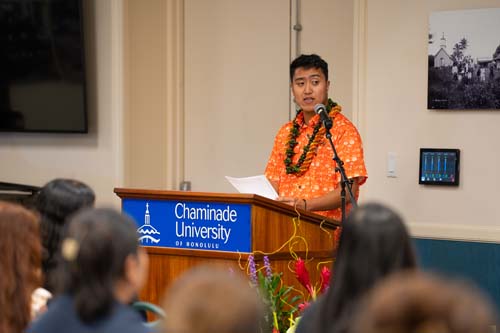
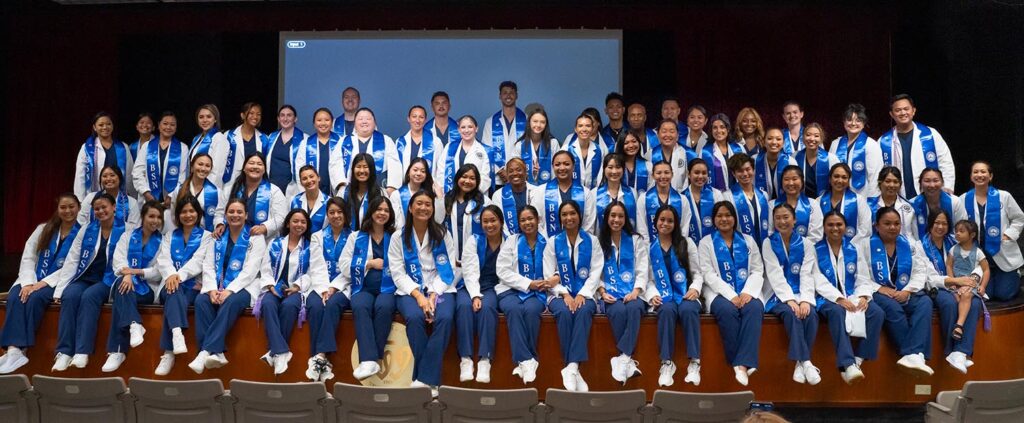
For the past four years, Brittany Johnson quipped that “all I’ve ever known are the overly caffeinated nursing majors.” As the undergraduate student speaker during Chaminade’s 66th Commencement Ceremony, the newly minted nurse took the opportunity to share the life lessons that she has learned during her years at Henry Hall. Earlier in the day, she and 70 of her fellow Bachelor of Science in Nursing (BSN) degree candidates experienced another milestone: they received their symbolic pins during the Pinning Ceremony at Sacred Hearts Academy.

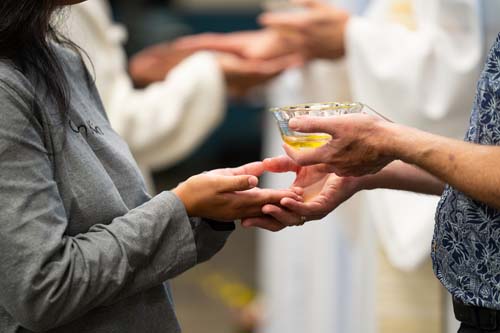
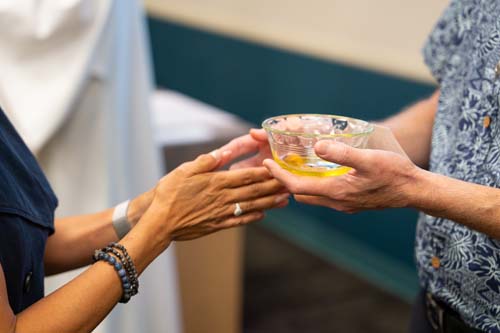
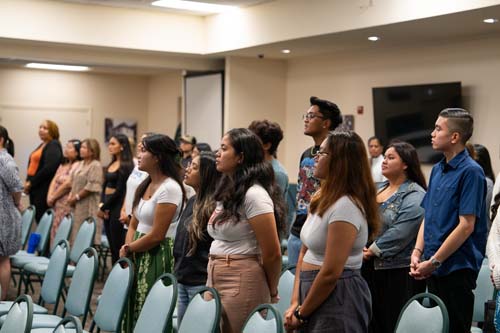
Seventy-one nursing students received their ceremonal Nursing Pins during the annual Pinning Ceremony that occurs the morning of commencement.

“Your position in life will change, so put your head down and work with pride in whatever position you may find yourself in in this life,” Johnson advised to her fellow graduates. “You never know where you might end up.”

The Pinning Ceremony represents a significant rite of passage for nursing students, marking their transition from nursing school to the professional world. It is a meaningful tradition with a rich history, symbolizing the nurses’ dedication to their field, their commitment to patient care and their readiness to join the nursing profession.

“A pinning ceremony is a time to welcome newly graduating nurses to the profession,” said Pamela Smith, Interim Co-Dean of the School of Nursing and Health Professions. “We gather for this occasion to mark the transition from student nurse to graduate nurse, and to celebrate the start of a professional practice in nursing.”

The tradition of pinning dates back to the 12th century, when the Crusaders received a badge to distinguish them for their service in caring for the sick and injured. Later in the 1860s, Florence Nightingale devoted herself to caring for casualties of the Crimean War. In recognition of her service, she was awarded The Red Cross of St. George.

Nightingale then extended the honor by presenting medals of excellence to the most deserving student graduates at The Nightingale School of Nursing in London. Today, nursing schools around the world give a Nursing Pin to represent a medal of excellence to their student nurses upon graduation. Each school of nursing pin has its own distinct design, which represents the symbols, colors and phrases that illustrate the mission and philosophy of the school.

“In addition to congratulating each member of our Class of 2024 nursing students, I would like to personally thank you all for your pledge to serve in this noblest of professions,” said Dr. Lynn Babington, Chaminade president, who is also a former nurse and healthcare administrator. “Nursing is a noble profession, requiring dedication of mind, body and heart. Nurses make a difference every day, touching lives and changing outcomes for the better.”

Posted by: University Communications & Marketing Filed Under: Diversity and Inclusion, Featured Story, Nursing & Health Professions Tagged With: Nursing

Nurturing Nurses

April 2, 2024

Answering the call for Hawaii’s need for more healthcare providers

Some graduates work at The Queen’s Medical Center while others are employed by Hawaii Pacific Health and Kaiser Permanente. A few work in telemedicine with Pali Momi and Straub Medical Center. Since the Hawai‘i State Board of Nursing officially gave Chaminade University the green light to launch a nursing program in Fall 2010, the School of Nursing and Health Professions (SNHP) has graduated more than 600 nurses who have contributed to our community’s healthcare needs in various settings, including hospitals, doctors’ offices, clinics and other environments.

“Our nursing program has a highly distinctive approach to nursing,” says Chaminade Provost and Senior Vice President Lance Askildson. “Our graduates are well rounded and play an essential role in their communities to advocate for health promotion.”

Nursing stands as the cornerstone of the healthcare workforce, yet the demand for nurses is poised to escalate in the coming decade. Shifting population dynamics, advancements in technology and evolving healthcare models are set to catalyze an expansion in nursing roles, necessitating a highly educated nursing workforce. Compounded by the aging of the current nursing workforce and the impending wave of retirements, the United States is on track to face a significant nursing shortage by 2025, with Hawai‘i projected to experience a deficit of 3,311 professional nurses, according to an article published in Hawai‘i’s Journal of Medicine & Public Health.

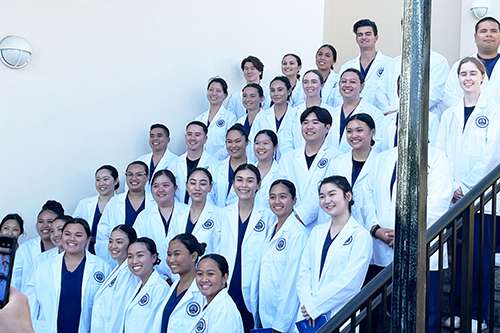
This year's White Coat Ceremony included 119 nursing students who are now officially in their clinical stages of their education.
This year’s White Coat Ceremony included 119 nursing students who are now officially in their clinical stages of their education.

In their research titled, Hawaii’s Nursing Workforce: Keeping Pace with Healthcare, the co-authors Sandra A LeVasseur, Ph.D., RN and Kristine Qureshi, Ph.D., RN, FAAN conclude that as healthcare needs change, academic, healthcare and community partners must be prepared to respond by developing innovative educational delivery models, new specialty programs and diverse clinical placement opportunities to ensure a pipeline of competent nurses across the state.  

“The school just went through an external review” Askildson says. “The purpose of the review was to examine the current curriculum, capacities and profile of the School in order to identify opportunities for strategic investment and change that will strengthen academic excellence and student success in keeping with our University mission and ethos, and the enduring values of our School of Nursing and Health Professions.”

In compiling their report on the SONHP, external reviewers Meredith Kazer, Ph.D., APRN, FAAN, (Team Lead), Beth P. Beckman, DNS, RN, FNP, NEA- BC, FAAN, Carrie M. Oliveira, Ph.D. and Marcia B. Proto, M.Ed, CAS met with faculty, staff, students and administrators, engaging stakeholders indiscussions that explored curricular issues, faculty and staff workload, the University’s commitment to ensuring a developmental approach to nursing and public health education, and exploring opportunities to further integrate SNHP programs in the service of Hawaii and its multicultural peoples.

Furthermore, the reviewers note that the supportive culture that has been created and maintained throughout SNHP and the University is a tremendous strength of the School, and provides a strong foundation upon which to build. Throughout all their meetings, reviewers wrote they found a “strong sense of teamwork and collaboration, and there is a strong mission-focus throughout Chaminade and the SNHP team that embodies the mission in their work.”

Presently, Hawai‘i boasts nine nursing programs dispersed across public and private universities and colleges. These programs have united in their efforts to align with the Institute of Medicine’s recommendations for the future of nursing. Through strategic partnerships and collaboration, the nursing landscape in Hawai‘i is undergoing a transformation. Practice boundaries are expanding, diverse pathways to advanced nursing education are being established, and nurses are forging alliances with other stakeholders to revolutionize healthcare delivery.

To guide strategic planning efforts, the Hawai‘i State Center for Nursing diligently collects and analyzes data on the nursing workforce. This ongoing assessment allows for informed decision-making tailored to the unique needs of the state’s population and healthcare landscape. Identified gaps in nursing specialty education, particularly in areas such as school health and mental health, are being addressed through targeted initiatives aimed at bolstering education and training opportunities in these critical areas.

“We want to continue to invest in our nursing program, which is one of the recommendations of the external reviewers,” Askildson says. “We want to continue to produce nurses without being transactional. Our nursing graduates are prized because they care deeply about their patients since they have a holistic approach to healthcare.”

Posted by: University Communications & Marketing Filed Under: Alumni, Diversity and Inclusion, Homepage, Institutional, Nursing & Health Professions Tagged With: Alumni, Doctor of Nursing Practice, Doctorate of Nursing Practice, Nursing

Triennial Aircraft Disaster Exercise

November 6, 2023

First responders put skills to the test during emergency response drill

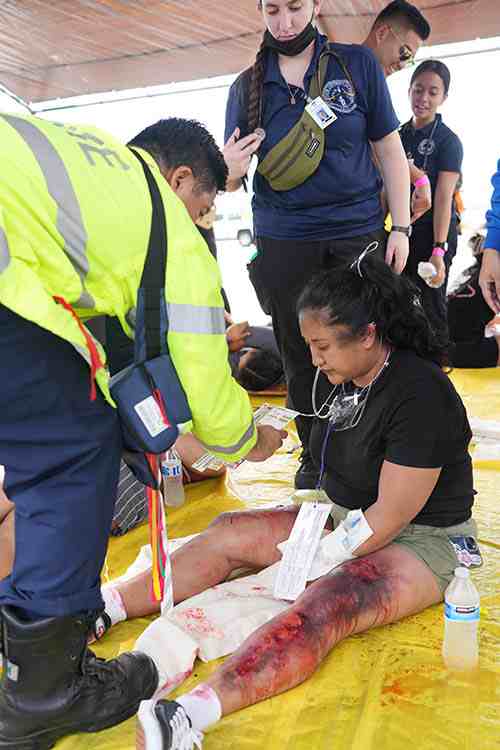
Imagine an aircraft explosion on landing and the immediate aftermath. The moments after an airplane crash are undoubtedly critical, as nursing student Sigfried Halili ’23 learned firsthand during the Triennial Aircraft Disaster Exercise. This every-three-year, mandatory certification requirement by the Federal Aviation Administration tests airfield disaster preparedness and response by simulating a full-scale aircraft emergency disaster. The drill tests and evaluates the operational capacity of emergency response in a stress environment.

Mock patients in moulage (make-up) are treated by Chaminade nursing students during the Triennial Aircraft Disaster Exercise.

Divided among four groups colored Red, Green, Yellow and Black, Chaminade nursing students treated patients with varying injuries, with the Red group receiving the most seriously injured, the Green team tending to those with superficial abrasions and contusions, the Yellow team looking after patients in between Red and Green, and Black team announcing mortality.

“The firefighters and EMS would perform triage and assess where the injured passengers would be taken,” explained Halili, the senior representative of the Student Nursing Association. “Of the five patients I treated, one was mortally injured, another belonged to the Green category and the three others were in critical condition.”

This triennial, multi-agency exercise involved hundreds of volunteers—including 175 nursing students from Chaminade University—and airport personnel who acted as injured passengers. Participating agencies included Hawaii Department of Transportation (HDOT) Airports Division staff, HDOT Aircraft Rescue Fire Fighting (ARFF) units, Securitas, the Federal Aviation Administration, the Transportation Security Administration, City & County of Honolulu Fire and Police Departments, Emergency Medical Services, American Medical Response, Joint Base Pearl Harbor Hickam Federal Fire Department, U.S. Coast Guard, Hawaii Department of Public Safety and airline personnel.

Volunteers portrayed passengers who were injured, uninjured, unresponsive, fainting, deceased, family, friends, responders, medical personnel and other miscellaneous roles. Make-up (moulage) was applied to simulate varying injuries, from deep lacerations to serious tissue wounds. Participants were also asked to “role play,” pretending to cry, scream with injuries and yell confusedly. Others acted grief stricken, angry and demanding information. All these roles were to simulate a real-life event to help responders to be better prepared. This exercise is an opportunity to get an on-scene and behind-scene view of a real-life emergency simulation.

The main focus for the nursing students during the exercise was to practice use of the Incident Command System— a systemic tool used for the command control and coordination of emergency response—and perform disaster triage and treatment skills. The event was a great opportunity for nursing students from three local nursing schools—including Chaminade—to work cohesively in an intense and stressful environment, an experience most of them had never encountered.

“This was the first triennial exercise that I participated in,” said Halili, who will graduate in December and take the National Council Licensure Examination to become a fully licensed Certified Nurse. “It was amazing to see how many people get involved when an emergency happens on an airport tarmac.”

Posted by: University Communications & Marketing Filed Under: Featured Story, Institutional, Nursing & Health Professions, Students Tagged With: Nursing

Board Appointment

October 4, 2023

Dr. Rhoberta Haley Elected to AACN Board of Directors

The American Association of Colleges of Nursing (AACN) has announced that Rhoberta Haley, Ph.D., RN, FNP, dean of the School of Nursing and Health Professions at Chaminade University of Honolulu, has been elected to the AACN Board of Directors. She will serve as a Member-at-Large through March 25, 2024. AACN held a special election in August/September to fill an unexpired term on the Board with votes cast by member deans.  

“As the national voice for baccalaureate and graduate nursing education, AACN is committed to transforming health care and helping to lead the drive toward health equity,” said AACN Board Chair Cynthia McCurren, Ph.D, RN in a statement released in February after the organization’s announcement of the results of its 2023 election to fill seats on the AACN Board of Directors and Nominating Committee. “I look forward to collaborating with the new and returning members of the AACN Board and Nominating Committee to magnify the impact AACN has on ensuring quality in nursing education, research and practice.”  

AACN is governed by a 14-member Board of Directors, which includes four elected officers (Chair, Chair-Elect, Treasurer, and Secretary), seven at-large members representing schools of nursing, and two members representing practice. AACN’s President and Chief Executive Officer serves on the Board as an ex-officio member.  

Haley currently serves on the AACN Doctoral Conference Planning Committee, and previously served on the Finance Committee. She has participated in 13 CCNE evaluations for either initial accreditation or re-accreditation as a faculty member, director/dean or consultant. She has been dean at Chaminade University, School of Nursing and Health Professions since 2019.  

According to Haley, the benefits of serving as a Board of Director are many and include: a high level and significant role in advancing excellence in academic nursing; engagement in discussions about strategic goals and priorities, higher education and healthcare issues, and challenges facing the nursing profession.  

AACN is the national voice for university and four-year college education programs in nursing. Representing more than 560 member schools of nursing at public and private institutions nationwide, AACN’s educational, research, governmental advocacy, data collection, publications and other programs work to establish quality standards for bachelors and graduate degrees in nursing education. The governing body also assists deans and directors to implement those standards, influence the nursing profession to improve health care, and promote public support of baccalaureate and graduate nursing education, research and practice. Task forces are appointed by the AACN Board of Directors as issues arise that require study and action.  

AACN’s work to inform members about key issues in higher education includes: offering conference sessions and webinars focused on trends in higher education, including a special panel presentation at the Academic Nursing Leadership Conference in October featuring thought leaders; and advocating for legislation that supports higher education and schools of nursing.

Posted by: University Communications & Marketing Filed Under: Featured Story, Nursing & Health Professions Tagged With: Board Appointment, Doctor of Nursing Practice, Doctorate of Nursing Practice, Nursing

Kenneth and Diane Matsuura Foundation

October 3, 2023

Scholarship fund helps future nurses

After consistently hearing about the need for nurses during the pandemic, Kenneth and Diane Matsuura decided to do something about it. Rather than park their money in investments, the couple was driven to establish a foundation that would support future healthcare workers, knowing the essential role nurses play in and outside of hospital settings.  

“During the pandemic, we saw the perseverance of nurses,” says Diane Matsuura, a retired music teacher. “I could never do what they do; they work tirelessly to help their patients heal. And we’re fortunate enough to be able to start this foundation to help future nurses attain their degrees.”  

The COVID-19 pandemic was not in sight when the World Health Organization (WHO) declared 2020 as the Year of the Nurse and Midwife, with a goal to raise awareness of the need for “nine million more nurses and midwives to achieve universal health coverage by 2030.”

In Hawaii, there are currently 1,000 vacant nursing positions across the state, according to the State Department of Labor and Industrial Relations. State data further shows the demand for more nurses will grow by more than 100 positions each year.  

Tiannah Ohta and Genie Reutirez heard that calling and decided to answer it by applying to Chaminade’s nursing program. As part of the cohort of students in the accelerated track to earn a bachelor of science in nursing, Ohta, Reutirez and their fellow nursing students will complete their degrees in five back-to-back terms (20 months, as opposed to the traditional four years) through a rigorous academic schedule.

“When I read the email that I received a scholarship from the Kenneth And Diane Matsuura Foundation, I started to bawl,” Reutirez told Diane Matsuura and son Keven Matsuura over lunch. “It was such a huge surprise and a major financial help.”  

Ohta was in disbelief when she learned about her scholarship, thinking at first, that the email was a prank. “I wasn’t expecting it all; I had to read the email a few times because I thought I was reading it incorrectly.” said the 24-year-old Waipahu native and two-time nominee for a U.S. Presidential Scholars Medallion. “This helps me a great deal financially because we can’t work and go to school at the same time. It’s just not possible.”  

With an increasing emphasis on preparing nurses at the baccalaureate and higher degree level, one innovative approach to nursing education is to offer an accelerated degree program for non-nursing graduates. These programs build on previous learning experiences and provide a way for individuals with undergraduate degrees in other disciplines to transition into nursing.  

Having already completed her undergraduate degree in public health, Reutirez decided to pursue her nursing degree, a goal of hers even when she was completing her first bachelor’s. “It’s just a little later than I expected,” said the Ewa Beach resident. “I guess though it’s better late than never.”      

Geared to individuals who have already proven their ability to succeed at college or university, accelerated baccalaureate programs accomplish programmatic objectives in a short time by building on previous learning experiences. Instruction is intense with courses offered full-time with no breaks between sessions. Students receive the same number of clinical hours as their counterparts in traditional entry-level nursing programs.  

“Even when I was completing my bachelor’s degree in biology at the University of Las Vegas, I knew I wanted to be in the medical field,” Ohta says. “This program will help me get there.”  

And so will her Kenneth and Diane Matsuura scholarship.  

“It’s rewarding to meet these young women who have so much passion to become nurses,” Diane Matsuura says. “My husband is currently hospitalized so I see what these nurses have to go through day in and day out. They work long shifts and the job is physically demanding. So, I commend anyone who goes into nursing.”            

Posted by: University Communications & Marketing Filed Under: Campus and Community, Donor Profiles, Homepage, Institutional, Nursing & Health Professions, Students Tagged With: Honors and Awards, Nursing

‘Sudisfaction’ Guaranteed

September 1, 2023

Brothers establish essential men’s care

In 2020, Jacob Fernandez ’23 was in flight school until he was grounded by a once-in-a-lifetime pandemic. With only 50 hours left to earn his private pilot license, the California native made, what he described, “as a spontaneous decision” to fly in a completely different direction—towards Hawaii.

“I had a friend who was going to Chaminade, and he told me it was a great school,” Fernandez says. “So, I decided to do my due diligence, and I looked into the nursing program, which I’ve always been interested in. Ironically, my friend decided he didn’t like nursing so he dropped out, but here I am in my final year.”

Unfortunately, the COVID-19 pandemic took higher education into unprecedented times. The necessary pivot from in-person to online teaching and learning proved to be difficult for many students, educators and administrators. Undergraduate nursing programs faced an even more complex decision because large portions of the curriculum rely on hands-on clinical experience. Ultimately, most programs completed the remainder of the Spring 2020 semester remotely, while the Fall 2020 semester looked different for many programs, some moving forward with in-person learning, others virtual.

Jacob Fernandez holds one of Broessentia’s handmade soaps.

On a positive note, there were opportunities for students to develop interventions and improve their experience, including changing the environment, learning via virtual gatherings, responding to the flexibility of faculty, undertaking supplemental learning and pursuing intentional self-care. 

That last point of self-care resonated with Fernandez and his older brother, Chris Fernandez. “Growing up, our mother would make natural, personal care products, which made us more conscious of what we used on our bodies,” says Jacob Fernandez. “So, my brother and I started a company that focuses on men’s personal care, and called it Brossentia.”

A portmanteau of brother and essential, Brossentia officially launched online on May 17, 2020, offering a line of natural, handcrafted bar soaps, which are made with a base of olive, coconut, jojoba or sustainable palm oil.

In between his nursing studies and starting an online business, Fernandez decided to enroll in the one-year Hogan Entrepreneurial Program, which he now credits for teaching him some valuable business skills. 

“The Hogan Program has provided insightful experiences through listening to entrepreneurs and hearing their journeys towards success,” Fernandez says. “It was inspiring to hear them speak about how they overcame their diversities and challenges.”

At the April 2023 Hogan Entrepreneurial Leadership Program Induction/Graduation Ceremony, Fernandez was honored with this year’s “In the Arena” Award for outstanding entrepreneurship. It was a well-deserved recognition, according to Hogan Entrepreneurial Program Director Roy Panzarella, Ph.D.
“Jacob will be a senior in the nursing program, which is one of the toughest and most demanding programs we have at Chaminade today,’” Panzarella says. “He’s also the first nursing major to be a Hogan Entrepreneur.”

Along with the objective to create a business and a product, the brothers conducted market research, which ranged from consumer type and market size to earth-friendly packaging and trends. Unlike commercial brands, Jacob and Chris Fernandez handcraft each bar in-house—literally, in their mom’s Hermosa, Calif., kitchen—to ensure the highest quality control. They also developed their own molds, using material that they bought from Home Depot. 

Their cold-process soap is made by combining oils and sodium hydroxide lye, which causes a chemical reaction called saponification. In the process, they get to choose the oils, scents, colorants and any other ingredients. Their line of soaps includes Bay Citrus, Black Moss, Crisp Mint and the popular Goated, which is made with oatmeal, a combination of oils, shea butter, essential oils of spearmint and eucalyptus and, yes, goat’s milk.

“Our competitors use drop-ship soap, which means they buy their soaps from a manufacturer and brand it as their own,” Jacob Fernandez explains. “Our cold-process soap is tedious, and it takes about a month for our soaps to cure.”

As Brossentia business takes off, Jacob Fernandez remains grounded, following the Hogan Entrepreneurial Program’s motto, “Doing business things that make social sense. Doing social things that make business sense.” 

“I would say that our business aligns with the Marianist value of family spirit,” the 22-year-old says. “Through shared experiences, we plan to partner with grassroot organizations that promote and expand quality mental healthcare for men, donating one percent of our sales to nonprofits.

“Chaminade has put me in a better position to become a registered nurse,” Jacob Fernandez continues. “Balancing life, studies, clinical hours, a part-time job and Brossentia can be demanding. Going into my fourth year, I feel like I need to fit a few more pieces into the puzzle before graduating, but I am excited for the future.”

As Brossentia’s tagline goes: Sudisfaction Guaranteed.

Posted by: University Communications & Marketing Filed Under: Diversity and Inclusion, Featured Story, Hogan Entrepreneurial Program, Nursing & Health Professions, Student Life Tagged With: Hogan Entrepreneurs Program, Honors and Awards, Nursing

  • « Go to Previous Page
  • Page 1
  • Page 2
  • Page 3
  • Page 4
  • Go to Next Page »

Footer

Chaminade University Logo

3140 Waialae Avenue
Honolulu, Hawaii 96816

Contact Us
Phone: (808) 735-4711
Toll-free: (800) 735-3733

facebook twitter instagram youtube linkedin

Visit

  • Plan Your Visit
  • Campus Map (PDF)
  • Events

Resources

  • Campus Security
  • Student Consumer Information
  • Concerns, Feedback, and Reporting
  • Institutional Review Board
  • Title IX / Nondiscrimination Policy
  • Compliance
  • Emergency Information
  • Careers
  • Institutional Statement

People

  • Students
  • Parents
  • Alumni
  • Faculty & Staff

Policy

  • Privacy Policy
  • Terms and Conditions of Use


© Chaminade University of Honolulu