• Skip to primary navigation
  • Skip to main content
  • Skip to footer
Chaminade University of Honolulu

Chaminade University of Honolulu

  • VISIT
  • APPLY
  • GIVE
  • STUDENTS
  • PARENTS
  • ALUMNI
  • FACULTY/STAFF
  • Admissions
    • Admissions Home
    • Undergraduate Students
      • First-Year Students
      • Transfer Students
      • Admitted Students
    • Graduate Students
    • Flex Online Undergraduate Program
    • Military Students
    • Non-Degree/Visiting Students
    • Experiential Honors Program
    • Early College Program
    • New Student Orientation
  • Tuition & Aid
    • Financial Aid Home
    • Tuition & Expenses
    • Federal Updates & Changes
    • Scholarships
    • $5,000 Graduate Scholarship
    • VA Education Benefits
    • Net Price Calculator
  • Academics
    • Academics Home
    • Academic Programs
    • Office of Student Success
      • Academic Advising
      • Records and Registrar
    • Kōkua ʻIke (Support Services)
      • ADA Accommodations
      • Career Services
      • Proctoring Services
      • Tutoring Services
    • Sullivan Family Library
    • Undergraduate Research & Pre-Professional Programs
    • Commencement
  • Campus Life
    • About Campus Life
    • Student Engagement
    • Student Government Association
    • Residence Life and Housing
      • Summer Conference Housing
    • Health Services
    • Marianist Leadership Center
    • Counseling Center
    • Campus Ministry
    • Campus Security
    • Dining Services
    • Bookstore
  • Athletics
  • About
    • Chaminade University News
    • Our Story
    • Leadership
    • Chaminade University Strategic Plan 2024-2030
    • Mission & Rector
    • Association of Marianist Universities
    • Facts & Rankings
    • CIFAL Honolulu
    • Accreditation & Memberships
    • Montessori Laboratory School
Search
×

Search this web site

Natural Sciences & Mathematics

Chaminade University Now Accepting Applications for Four-Year Scholarship Program

January 24, 2020

HONOLULU (January 23, 2020) – Chaminade University is now accepting applicants for its Ho‘oulu Scholarship program for Native Hawaiian students. Developed in partnership with Kamehameha Schools, the program was designed to grow the number of Native Hawaiians graduating with science, technology, engineering and mathematics degrees.

The four-year scholarship is open to first-year and transfer applicants seeking degrees in Biology; Biochemistry; Chemistry; Data Science, Analytics and Visualization; Environmental Sciences; Environmental Studies; Forensic Sciences; and Nursing. The scholarship provides:

  • Full tuition (100 percent of tuition not to exceed the published amount) assistance for four years
  • Consideration for partial housing subsidy for on- or off-campus housing for neighbor island or rural students
  • Wraparound academic support services to promote on-time graduation
  • Participation in Chaminade’s four-year graduation guarantee
  • Access to post-graduate career paths via Chaminade’s suite of articulation agreements with medical and graduate schools
  • Paid internships for professional development
  • Financial support for career development activities, such as MCAT and GRE preparation

Now in its fifth year, the Ho‘oulu Scholarship gives preference to applicants of Native Hawaiian ancestry to the extent permitted by law. To date, 125 students have received Ho‘oulu scholarships at Chaminade.

“We’re extremely proud of the Ho‘oulu program at Chaminade,” said President Dr. Lynn Babington. “Both our persistence and four-year graduation rates are close to 100 percent for these scholars, who not only receive financial aid but more importantly intensive wraparound academic support services to help them succeed.”
The application submission deadline is March 16, 2020. For an application, visit chaminade.edu/hooulu.

# # #

Chaminade University of Honolulu provides a collaborative and innovative learning environment that prepares graduate and undergraduate students for life, service and successful careers. Established in 1955, the university is guided by its Catholic, Marianist and liberal arts educational traditions, which include a commitment to serving the Native Hawaiian population. Chaminade offers an inclusive setting where students, faculty and staff collectively pursue a more just and peaceful society. For more information, visit chaminade.edu.

Posted by: University Communications & Marketing Filed Under: Featured Story, Innovation, Institutional, Natural Sciences & Mathematics, Press Release Tagged With: Scholarship

“Forensic Microbiology” Goes International

January 3, 2020

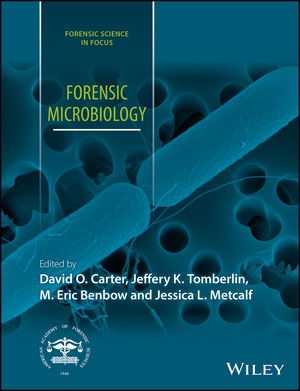
In 2017, Chaminade Professor Dr. David Carter co-authored a textbook on the emerging (and groundbreaking) role of microbes in forensic science. Three years later and “Forensic Microbiology” is not only a seminal text in the field, but an Arabic version is slated to be published in December 2021.

Dr. David Carter

Carter, director of the Forensic Sciences program at Chaminade, co-wrote and served as one of the book’s four co-editors to focus on the emerging role of microbiology in forensic science investigations.

As he notes, microbes (or microorganisms) don’t replace more mundane forms of evidence – think fingerprints or cell phone records – but they can prove vital in establishing a cause of death, estimating when a person has died, and analyzing changes to a body after death along with evidence at a scene.

Using microbes – one of the “trendiest” areas of forensic science – can involve cutting-edge DNA analysis or tools and procedures that were invented more than a century ago, Carter previously told Campus News. ““There were folks using microbes in the 19th Century as evidence,” Carter said, adding that some of those techniques were forgotten and then recently unearthed to determine their efficacy.

Why microbes? Because they’re “present everywhere a human goes,” Carter said.

They’re always on us – and in us – “and not all forms of evidence do that.”

Forensic Microbiology Book

The planned Arabic translation of “Forensic Microbiology,” which is already in use at institutions nationally and around the globe, underscores the growing utility of microbiology in forensic science – and how Chaminade’s Forensic Sciences program is at the forefront of that effort.

Indeed, the focus of Carter’s research is the structure and function of the postmortem human microbiome and the process of human decomposition, especially in tropical environments. In his decades of work analyzing crime scenes, Carter has consulted with investigative agencies around the globe, published in high-profile scientific journals, and served as a leader in the academic field.

He has also mentored scores of Forensic Sciences students, including two Chaminade University graduates who contributed to “Forensic Microbiology”: Emily Junkins (’16) went on to pursue a doctoral degree in microbiology while Whitney Kodama (’17) joined the Honolulu Office of the Medical Examiner.

Posted by: University Communications & Marketing Filed Under: Faculty, Featured Story, Natural Sciences & Mathematics Tagged With: Forensic Sciences

Alumna Pursues Passion at Chaminade and Beyond

October 23, 2019

Jennifer Lai Hipp became a forensic sciences buff in high school, but she never saw it as a career path.

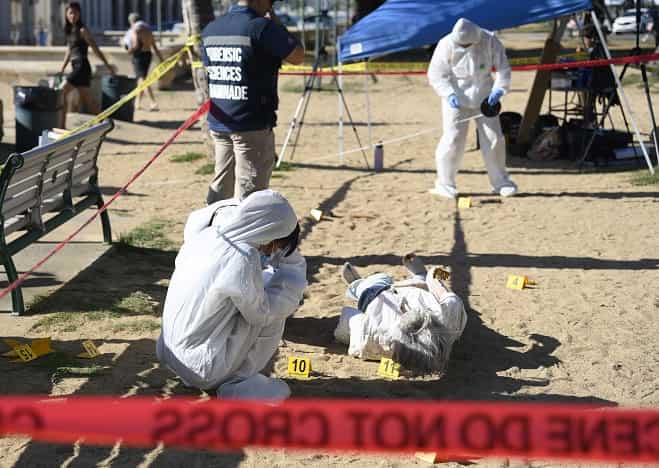
Forensic Sciences CSI class at Kaimana Beach

That is, until the college program she was in – studying American Sign Language – was put on hold.

Hipp, who graduated from Chaminade in 2017 with a bachelor’s degree in forensic science, is now pursuing a master’s degree in human biology at the University of Indianapolis and has her sights set on a future in forensic anthropology. She said she’s even considering getting a doctoral degree.

“I took it as a sign I should follow my true passion and knew that Chaminade had one of the best forensic science programs in the country,” she said. “I decided to apply and luckily I got in.”

Hipp said she’s thankful for the strong educational foundation she built at Chaminade, where she thrived with small class sizes and engaging learning opportunities.

“The lab courses at Chaminade are built to give us hands-on experience that we can take into the real world,” she said. “I learned crime scene investigation techniques, including crime scene mapping and photography, latent fingerprint processing, and bloodstain pattern analysis.”

Along the way, she was able to build strong relationships with her professors and her peers.

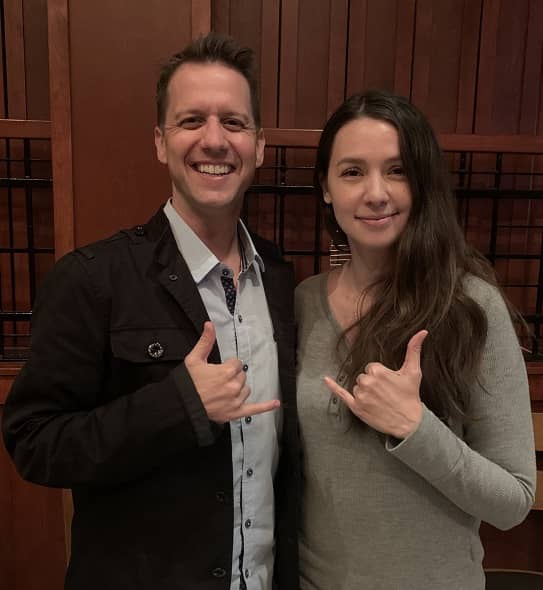
Dr. David Carter and Jennifer Lai Hipp '17
Dr. David Carter and Jennifer Lai Hipp ’17 had a chance to catch up while Dr. Carter was in Indianapolis.

One of those mentors was Dr. David Carter, director of the Forensic Sciences program at Chaminade.

Hipp said Carter was “integral” to her success at Chaminade — and beyond.

“He helped me with everything from registering for classes and planning out my academic year to giving me advice about careers and applying for graduate school,” she said.

“I was nervous about attending college, but Dr. Carter was always positive and supporting. He was also great to talk to when I needed a break from studying.”

Hipp said that Chaminade’s Dr. Robert Mann also helped her immensely in the program, including by serving as a “source of inspiration” and advice about jobs in the field.

She said Mann even helped her secure internship opportunities and encouraged her to pursue her dream of becoming a forensic anthropologist.

“The faculty of the Forensic Sciences program at Chaminade integrated their work experience in the field into the classroom, which I believe was an important part of my education. They were able to relate the material in the textbooks to the real world,” Hipp said.

“They also worked closely with all the forensic sciences students to create a resume, critique scientific journal articles, and practice giving professional presentations.”

All that preparation proved key to Hipp’s next steps: Seeking a graduate degree in pursuit of a career.

“Being a non-traditional student, I did not have the typical college experience,” Hipp said.

“But I found my professors very easy to relate to and had a wealth of knowledge about both college and the working world.”

Posted by: University Communications & Marketing Filed Under: Alumni, Featured Story, Natural Sciences & Mathematics Tagged With: Forensic Sciences

Students Present Findings at Leadership Alliance Symposium

October 21, 2019

Chloe Talana has a mantra in life: Don’t wait for opportunities to knock, go out and get them.

That how’s the Chaminade senior found herself researching Hepatitis C in a lab at New York University’s School of Medicine over the summer and then presenting her findings at a national conference alongside other undergraduates selected for the competitive Leadership Alliance program.

“You have to find the initiative,” she said. “That’s how I see opportunities. You go and find them.”

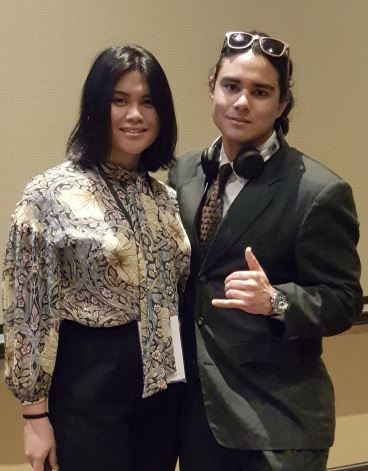
Chloe Talana and Nainoa Norman Ing at the Leadership Alliance Conference

Talana was one of two Chaminade students who participated this summer in Leadership Alliance, designed to prepare underrepresented minorities for academic research and graduate degrees. Also representing Chaminade: Nainoa Norman Ing, who conducted research at Vanderbilt University.

Chaminade is one of 35 institutions nationwide that are part of the Leadership Alliance. Other participating universities include Harvard, Yale and Stanford. Through the program, Chaminade students gain access to valuable research, mentoring and career development opportunities.

“This program specifically tries to gather people from different walks of life and really bring them together to let them see you’re not alone in this journey,” said Talana, who came to Chaminade from Farrington High. “Their mission is to really make sure that students who want to pursue Ph.D. in any field are able to do it, regardless of their background and the challenges they face along the way.”

It was actually the second year that both Talana and Norman Ing participated in the program, completing internships that give them real-life experiences in labs and then presenting what they learned to their peers – and to experts in the fields they’re interested in pursuing.

Norman Ing said the Leadership Alliance symposium, held in Connecticut this year, is aimed at giving researchers-in-training a taste for what it’s like to defend your conclusions – while also considering what you might have missed. He added that the experience of working in a cutting-edge university lab and then reporting on what you’ve learned is aimed at preparing students for graduate school.

“This experience … reminded me that while I live and learn on this island, the world is a much bigger place,” Norman Ing said. “One of the biggest lessons I learned from experiencing living with people from across the country in a diverse setting is just how important it is to be grounded in one’s own culture.”

He said that while he’s learned so much at Vanderbilt University about organic chemistry – his presentation at the conference was titled, “A vision for vaccines built from fully synthetic cell-surface antigens” – the biggest takeaway of the internship for him was that he could envision a future for himself in academics. It was “just the pure experience in and around the university,” he said.

As for Talana, she said she’s already gunning for that next opportunity.

After graduation from Chaminade, she hopes to secure a post-baccalaureate appointment at a university on the mainland in order to further build a foundation of knowledge. After that, she plans to seek a dual medical and doctoral degree, with a focus on infectious diseases.

She added that she’s grateful for all of the opportunities she’s been able to grab at Chaminade. “The attention from faculty is amazing,” she said. “The help they provide to students, I can’t even pick words to describe it. It’s really wonderful how they’re able to help students pursue what they want to do.”

Posted by: University Communications & Marketing Filed Under: Diversity and Inclusion, Featured Story, Natural Sciences & Mathematics, Students Tagged With: Research

Scholars Welcome Dinner

September 19, 2019

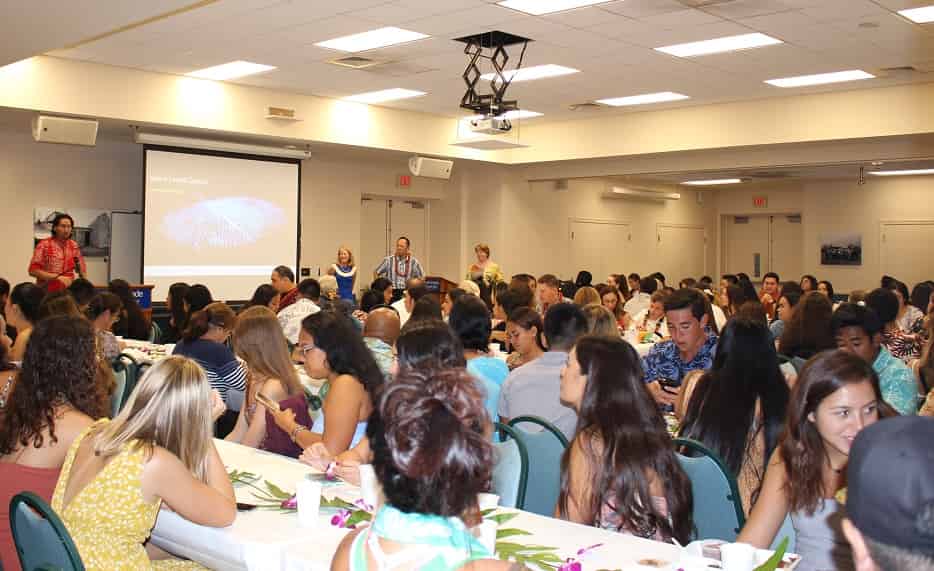
With oli and inspirational speeches, a special welcome dinner this month celebrated 27 recipients of competitive Chaminade scholarships geared toward those interested in STEM-related careers.

Students and families at scholars welcome dinner

The dinner Sept. 6 honored Ho’oulu scholars and awardees of the National Science Foundation S-STEM scholarship.

In addition to the scholars and their families, attendees included previous recipients of the Ho’oulu Scholarship, representatives from Chaminade University and Kamehameha Schools, and invited guests.

The Ho’oulu scholarship was made possible thanks to an innovative partnership with Kamehameha Schools, and is geared toward helping those interested in STEM fields achieve their career goals.

Awardees receive 100 percent tuition assistance to Chaminade along with access to career-preparation opportunities and programs that help students ensure they stay on track to graduate in four years.

Current and previous recipients of the scholarship have worked toward careers in a broad cross-section of STEM fields, from data science and medicine to forensic sciences and biotechnology.

Eighteen incoming Ho’oulu scholars were recognized at the welcome dinner.

Also in attendance: Nine students who received the National Science Foundation S-STEM scholarship this school year. The $10,000 merit scholarship is distributed over four years, and also includes innovative development programs, from research opportunities to internships. Speakers at the event included Dr. Helen Turner, vice president of Strategy and Innovation at Chaminade, Kamehameha Schools CEO Jack Wong, and Lauren Nahme, vice president of strategy and transformation at Kamehameha Schools.

Posted by: University Communications & Marketing Filed Under: Diversity and Inclusion, Featured Story, Innovation, Natural Sciences & Mathematics, Students Tagged With: Scholarship

Summer Research Program Brings Experiential Learning Opportunities

September 7, 2019

While many of their peers were hitting the beach this summer, Chaminade students Christian Crisolongo and Donna Cottrell were getting intensive instruction and career coaching as part of a rigorous UCLA program designed to help underrepresented students pursue careers in medicine.

The two were among just 80 students from across the country to be selected for UCLA’s 2019 Summer Health Professions Education Program. In recent interviews, both said the experience not only helped them grow as learners but allowed them to see themselves as future doctors.

“My biggest takeaway is that I can do it. Before coming to this program, I had a little doubt,” said Cottrell, ‘22, a biology major who wants to become a pediatrician. “After coming out of this program it left me with a lot of hope and motivation — and inspired me to do more.”

Christian Crisolongo at UCLA doing summer research

Crisolongo, ’21, added that he realized at the enrichment program that “I’m not alone.”

“It’s just awesome to see that it’s not just me that has these struggles,” he said.

The rigorous summer program, funded with grants, offers participants a host of experiential learning opportunities. Cottrell and Crisolongo said during their very full days of learning — from 9 a.m. to 5 p.m. — they were able to get a taste of different specialties in medicine.

Over the course of six weeks, students participated in a slew of hands-on learning exercises, working with mannequins that “breathed” and even with one that simulated childbirth, tackling tough clinical cases in small groups and making molds of teeth in a dental lab.

Importantly, the program also includes key instruction on life skills, helping students think through how they’ll go about applying for and paying for a graduate degree, handle the stress involved in pursuing a career in health care, and figure out how to strike a school-life balance.

Crisolongo said one of his favorite parts of the program was problem-solving with his peers. “We all see from different perspectives,” he said. “It was refreshing to see another person’s point of view. I didn’t think of it that way, but then when they say it, I was like, ‘Oh wow.’”

In addition to helping students get hands-on experience, the program also stresses a greater understanding of disparities in the health care system. Crisolongo said those disparities were eye-opening. He and his team members, for example, decided to look at how minorities are significantly over-represented among the population in Alabama with diabetes.

The group, he said, challenged themselves to consider possible solutions and interventions.

And while the days were chock full of learning, Cottrell said she was also able to squeeze in a little summertime fun alongside her fellow program participants. They were able to explore Los Angeles, sightsee in Beverly Hills and Hollywood, and make it to a few amusement parks.

“The whole experience is just so amazing,” she said. “People came from everywhere, from Guam, California, Mississippi. It’s really interesting to see how their experiences shaped them and why they want to be in the medical field. It was basically like a whole community.”

Posted by: University Communications & Marketing Filed Under: Featured Story, Natural Sciences & Mathematics, Students

  • « Go to Previous Page
  • Page 1
  • Interim pages omitted …
  • Page 11
  • Page 12
  • Page 13
  • Page 14
  • Page 15
  • Interim pages omitted …
  • Page 20
  • Go to Next Page »

Footer

Chaminade University Logo

3140 Waialae Avenue
Honolulu, Hawaii 96816

Contact Us
Phone: (808) 735-4711
Toll-free: (800) 735-3733

facebook twitter instagram youtube linkedin

Visit

  • Plan Your Visit
  • Campus Map (PDF)
  • Events

Resources

  • Campus Security
  • Student Consumer Information
  • Concerns, Feedback, and Reporting
  • Institutional Review Board
  • Title IX / Nondiscrimination Policy
  • Compliance
  • Emergency Information
  • Careers
  • Institutional Statement

People

  • Students
  • Parents
  • Alumni
  • Faculty & Staff

Policy

  • Privacy Policy
  • Terms and Conditions of Use


© Chaminade University of Honolulu