• Skip to primary navigation
  • Skip to main content
  • Skip to footer
Chaminade University of Honolulu

Chaminade University of Honolulu

  • VISIT
  • APPLY
  • GIVE
  • STUDENTS
  • PARENTS
  • ALUMNI
  • FACULTY/STAFF
  • Admissions
    • Admissions Home
    • Undergraduate Students
      • First-Year Students
      • Transfer Students
      • Admitted Students
    • Graduate Students
    • Flex Online Undergraduate Program
    • Military Students
    • Non-Degree/Visiting Students
    • Experiential Honors Program
    • Early College Program
    • New Student Orientation
  • Tuition & Aid
    • Financial Aid Home
    • Tuition & Expenses
    • Federal Updates & Changes
    • Scholarships
    • $5,000 Graduate Scholarship
    • VA Education Benefits
    • Net Price Calculator
  • Academics
    • Academics Home
    • Academic Programs
    • Office of Student Success
      • Academic Advising
      • Records and Registrar
    • Kōkua ʻIke (Support Services)
      • ADA Accommodations
      • Career Services
      • Proctoring Services
      • Tutoring Services
    • Sullivan Family Library
    • Undergraduate Research & Pre-Professional Programs
    • Commencement
  • Campus Life
    • About Campus Life
    • Student Engagement
    • Student Government Association
    • Residence Life and Housing
      • Summer Conference Housing
    • Health Services
    • Marianist Leadership Center
    • Counseling Center
    • Campus Ministry
    • Campus Security
    • Dining Services
    • Bookstore
  • Athletics
  • About
    • Chaminade University News
    • Our Story
    • Leadership
    • Chaminade University Strategic Plan 2024-2030
    • Mission & Rector
    • Association of Marianist Universities
    • Facts & Rankings
    • CIFAL Honolulu
    • Accreditation & Memberships
    • Montessori Laboratory School
Search
×

Search this web site

Natural Sciences & Mathematics

Bethesda Bound

May 6, 2020

Like most soon-to-be college graduates, the world outside of Chaminade was a bit intimidating for Chloe Talana.

The aspiring doctor knew she wanted to gain more research experience through a post-baccalaureate program, but they can be hard to come by.

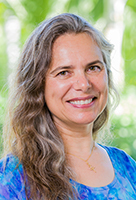
Chloe Talana

She tried several times, unsuccessfully, to find the right research position and was beginning to feel uneasy. “You put so much into those applications,” says Talana. “And then if you end up not getting in…to me that’s just not cool.”

Just as she was starting to come up with a backup plan, she got an email from the Vaccine Research Center at the National Institute of Allergy and Infectious Diseases (NIAID).

Led by Dr. Tony Fauci, NIAID has been thrust into the limelight lately as they diligently work to address the spread of COVID-19. Talana’s heart lies in finding a cure to another global pandemic, though—HIV. And it was the HIV vaccine lab that reached out.

“I was just so happy because at least someone noticed me,” beams Talana. “They noticed that I might be of help and that, to me, is just so rewarding.”

One of Talana’s first research opportunities was through a summer program at Johns Hopkins University, where she studied blood samples from HIV infected individuals to document how their immune cells function.

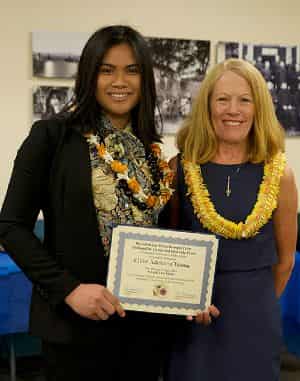
Chloe Talana receiving the Sue Wesselkemper Award during Na Liko Na'auao

After her project, she was one of eight students selected out of a group of 103 to be named best poster presentation at the Annual Biomedical Research Conference for Minority Students. She also received the President Sue Wesselkamper Prize for being an outstanding student at Na Liko Na’auao, Chaminade’s annual undergraduate research conference.

“HIV is my favorite virus to study because it’s just so clever in tricking the body so it can use the important components it needs to stay alive,” says Talana. “HIV is just so fascinating to me.”

There’s currently no cure or vaccine for HIV. But the lab at NIAID is studying ways to stimulate a body’s natural ability to produce antibodies to combat HIV, known as broadly neutralizing antibodies. Given the rate at which HIV replicates and mutates, this type of vaccine is widely considered to have the most potential.

When the email came that Chloe had been offered the position at NIAID, her initial excitement was immediately followed by fear.

“At first, I actually didn’t want to accept it because my inner saboteur was telling me I wouldn’t be good enough,” confesses Talana. “But with the help of the Chaminade faculty, I was able to clear my mind. They kept reminding me that the reason I had been accepted was because I could do this.”

For the Farrington High School graduate, this will be her first time living off-island for more than two-months—though she knew an eventual move to the mainland was inevitable with her career goals.

Talana has her eyes set on dual M.D. and Ph.D. degrees. Her time at Johns Hopkins opened her eyes to the powerful work that can be done when research and medicine go hand-in-hand. She got to shadow the principal investigator of her lab, and saw how he would bring blood samples from his patients straight back into the lab.

“I found it so amazing and eye-opening. I want to do that—I don’t want to just be able to care for my patients and treat their symptoms, I want to help them alleviate their pain and suffering by actually finding a cure.”

In between preparing for her move and researching her new home in Bethesda, Maryland, Chloe reminisces about her time at Chaminade.

With COVID-19, her time on campus came to an abrupt halt and her graduation ceremony was postponed to December. Now, she’s not sure when she’ll be able to see her professors again—who to her are more like mentors and friends—and she won’t be able to say goodbye in person. “I’m grateful for everyone at Chaminade and for Chaminade itself,” shares Talana. “I’ve said this many times before, but without them, I would not have been able to get to where I am today and I’m very grateful for that.”

Posted by: University Communications & Marketing Filed Under: Diversity and Inclusion, Featured Story, Natural Sciences & Mathematics, Students

Student Videos: Tips & Guidance For Pandemic

May 1, 2020

When students fist returned from winter break to start their spring term, little did they know that taking BI 312: Epidemiology and Public Health would be more applicable now more than ever.

With the COVID-19 pandemic posing a real-world problem and threat, biology professor Michael Weichhaus took the opportunity to have his students apply their classroom learnings to the current situation. The students were broken into groups and were assigned to develop a short video to provide tips and guidance to their fellow students about COVID-19 risks and personal responsibilities that should be taken to flatten the curve.

Watch the videos the students produced:

Posted by: University Communications & Marketing Filed Under: Featured Story, Natural Sciences & Mathematics

Healthcare Heroes

April 30, 2020

In the midst of this global pandemic, our healthcare system has taken centerstage. Every day we see healthcare heroes on the frontlines–sacrificing their own health and wellness to serve their communities, stepping up in times of need, making due with minimal resources and finding creative solutions on the daily.

For our nine soon-to-be-alumni heading into graduate healthcare programs this fall, these images are shaping their vision of who they want to become. They know there’s never been a more important time to become a healthcare provider.

We’re proud and honored to help them answer this call, and to support them in their dreams of becoming doctors, dentists, therapists, nurses, pharmacists and more. It’s why we recently launched a new MBA track in Healthcare Administration. It’s why we’re launching a new B.S. in Community and Public Health this fall. And it’s why we’ve set up partnership agreements with medical schools around the country.

We currently have articulation agreements with 11 different healthcare graduate schools across the nation, including A.T. Still University, Boston University, George Washington University, Pacific University, Samuel Merritt University, Tufts, University of Dayton and Western University. Through these agreements, our students are eligible for early admission provided they meet certain criteria and take certain classes.

These agreements range across the spectrum of healthcare, from medical to dental to pharmacy. Through A.T. Still University, for example, students can choose between osteopathic medicine, physical therapy, occupational therapy, audiology or dental medicine.

With Boston University and George Washington University, our students participate in their early selection programs designed to be a direct pipeline into their medical schools. Some time in their sophomore or junior year, they enter into an agreement with the university. As long as they meet all academic requirements, they are provisionally accepted into the university’s medical school upon graduation. 

Four of our students are taking advantage of these programs this fall, and 19 of our graduates are currently enrolled in one of the programs.

We’re also a member of The Leadership Alliance, a consortium of 32 academic institutions dedicated to addressing the shortage of diversity in graduate schools and academia. Through the program, we’ve built partnerships with universities who want to admit our students into summer research programs. Our students have participated in programs at Harvard, Yale, Purdue and UCLA–to name just a few. This early exposure to research greatly enhances a student’s graduate school application, particularly for medical schools.

It’s no surprise that Hawai‘i ranks No. 1 in healthcare. It takes a certain kind of person to become a health provider. Someone with compassion, heart and patience–all values that go hand in hand with our island culture.

Healthcare is the perfect complement to Chaminade University’s mission. As a Marianist institution, we educate our students to embrace adaptation and change, family values and community service–core components of our healthcare system. And as a liberal arts school, we ensure our graduates have a wide breadth of knowledge and are able to think critically across a range of disciplines.

Congratulations to our future medical care providers. We thank you for your dedication and service, and we are honored to be a part of your journey.

Chaminade Students Entering Healthcare Programs This Fall

  • Rachel Arakawa* – M.D., George Washington University School of Medicine and Health Sciences, Washington D.C.
  • Camille Burgos – M.D., Ponce Health Sciences University, Puerto Rico
  • Theresa Dao* – D.O., A.T. Still University School of Osteopathic Medicine, Arizona
  • Noelle Dasalla – D.V.M., Colorado State University College of Veterinary Medicine and Biomedical Sciences, Colorado
  • Estelita Estay* – D.O., A.T. Still University Kirksville College of Osteopathic Medicine, Missouri
  • Jerika Gomez – Pharm.D., UC San Diego Skaggs School of Pharmacy and Pharmaceutical Sciences, California
  • Hiʻilei Ishii-Chavez* – D.O., A.T. Still University School of Osteopathic Medicine, Arizona
  • Tomomi Kohno – Pharm.D, UH Hilo Daniel K. Inouye College of Pharmacy, Hawaii
  • Ann-Janin Bacani – Pharm.D., UH Hilo Daniel K. Inouye College of Pharmacy, Hawaii

*denotes students who are entering their program through an articulation agreement

Posted by: University Communications & Marketing Filed Under: Featured Story, Innovation, Natural Sciences & Mathematics, Students Tagged With: Articulation Agreements

COVID-19 Data Provides Learning Opportunity for Students

April 28, 2020

When COVID-19 (coronavirus) first grabbed big headlines in the US and began to shut down American cities, Chaminade Biology Professor Michael Dohm wanted to give his genomics students an opportunity to put their theoretical knowledge to the test on a very real-world problem. He drew up a series of lessons that would have them studying COVID-19 genome sequences as they became available worldwide.

Dohm’s students had spent the beginning of the term honing their bioinformatics skills, the process of searching and retrieving sequences from databases, looking for similarities, and then building algorithms to represent evolutionary relationships. The point of all that work? To test hypotheses about diseases.

Because his students were studying virus genomes, Dohm decided to have them apply what they’d learned to the novel coronavirus. Peer into the origins of COVID-19, he told them, and try to sleuth out how the virus that triggered a global pandemic is related to other coronaviruses common to humans.

Dohm said the hands-on work wasn’t just relevant to the moment. It was exactly what genomic scientists around the world were doing. “The objective is to provide our students a glimpse into a small part of what Centers for Disease Control and Prevention and other experts are doing right now as the spread of the virus continues,” he said.

He kicked off the project after spring break.

At that point, students were learning fully online and communicating with Dohm regularly remotely to talk through their findings. To unpack COVID-19, his students used bioinformatics software, grabbing sequences from publicly available databases. They also used evolutionary models to estimate rates of mutation in the sequences and then follow the rapid spread of coronavirus worldwide.

COVID-19 genome sequences are being collected around the world, as labs collect patient data, and thousands of samples are now publicly available in databases maintained around the world. “The basic idea of the project,” Dohm said, “is that we are utilizing the rapidly growing number of genetic sequences…to explore how experts can use the sequences to trace the virus’ origins.”

But he also wanted students to consider how the virus was evolving.

Such work has been compared to tracking the travel of COVID-19 as if looking at passport stamps.

While the work is challenging, Dohm was there with his students every step of the way, creating worksheets to help his students get unstuck as they pored over the data. He also had them keep their work for a portfolio to represent not only what they found—but the steps they took to get there.

Posted by: University Communications & Marketing Filed Under: Featured Story, Natural Sciences & Mathematics Tagged With: Biology

Undergraduate Summer Research Institute Goes Digital

April 15, 2020

In-classroom learning may be temporarily suspended, but that doesn’t mean hands-on research opportunities have to be suspended as well. 

In true Marianist fashion, the Undergraduate Research and Pre-Professional Program (URPPP) has adapted to the current times and moved its Undergraduate Summer Research Institute online.

As part of the institute, Chaminade undergraduate students will be able to gain invaluable research experience from the comfort and safety of their own homes. The institute will run for 8 weeks and students who are accepted into the institute will receive a $2,000 stipend for their participation.

Each summer, the institute matches students with Chaminade professors to explore a research question of interest to them. The students spend 8-weeks participating in weekly group meetings to learn more about the research process while undertaking their project. At the end of the 8 weeks, students submit a final project thesis and present their outcomes and findings to the group. This year, the institute will take a similar form—the only difference is that it will be virtual instead of in-person.

“Opportunities like this are so important because they help our students strengthen their resume while also allowing them to gain research experience, which can be very insightful for students who are looking to continue their studies in graduate school,” says Dr. Amber Noguchi, director of Chaminade’s Undergraduate Research and Pre-Professional program. “We wanted to make sure these hands-on learning experiences could continue while we’re apart.” 

To be eligible, students must be a rising sophomore, junior or senior at Chaminade University; have at least a 2.5 GPA; have completed at least two semesters at Chaminade before the program begins; and have at least one semester of education remaining before the program begins. 

Native Hawaiian students are highly encouraged to apply, and priority will be given to students in non-natural science disciplines, including biochemistry, chemistry and data science. To apply, students must complete the institute’s application by the April 27 deadline and include two short written statements, a personal statement and a statement of research interest.

For more information, students are encouraged to contact Dr. Noguchi at [email protected].

Posted by: University Communications & Marketing Filed Under: Diversity and Inclusion, Featured Story, Natural Sciences & Mathematics, Students Tagged With: Research, Undergraduate Research & Pre-Professional Program

Data Science National Competition

January 30, 2020

Chaminade’s data science program made another strong showing recently at a national competition aimed at challenging young people to use computing for positive social change.

And students and faculty members say they’re already gearing up for the next challenge.

Students at Computing4Change in Denver, Colorado
First cohort (L-R): Sophia Riffo-Jenson, Clara-Nathele Trainer, Nainoa Norman Ing, Kahoalii Keahi-Wood, Rylan Chong, Hoano Rosario & Skye Haraga

Three Chaminade students were among 25 undergraduates from around the country to participate in the most recent Computing4Change challenge in Denver. Over three days in November, participants worked in small teams to use data analysis, computational thinking, and the latest data science tools to see how computing can be a driver for social good.

In this case, they sought to better understand the causes of infant mortality.

Dr. Rylan Chong, a data scientist and postdoctoral researcher at Chaminade, accompanied students to the challenge and a connected data science conference. He said Chaminade has actually sent three separate cohorts of students to the competition since the University launched its data science program in fall 2018 as a first-of-its-kind offering in Hawaii.

And Chong said the program is preparing to send its next cohort in July.

He said the gatherings not only help students apply their learning, but offer them vital opportunities beyond the classroom, from internships to networking that could lead to jobs.

Students at Computing4Change in Denver, Colorado
Third cohort (L-R): Kahoalii Keahi-Wood, Lillianna Flynn, Casandra Tanare, Rylan Chong

“From a curriculum standpoint, participating in these events, students experience an exciting hands-on opportunity to work in a multidisciplinary team with mentors to make an impact on a real-world problem, interact with a supercomputer and big datasets, and get exposed to and apply the latest data science technologies and approaches,” Chong said, in an email.

The challenges, which are sponsored by the Association for Computing Machinery’s Special Interest Group on High Performance Computing, also give students the chance to stretch their leadership muscles. Chong said Chaminade students frequently serve as leaders in their teams.

Chenoa Faletoi was one of the students who participated in this year’s cohort. She said the challenge was high pressure – and a great test of her skills. “I would say the biggest takeaway was knowing the difference between data and information,” she said, adding that the competition also solidified her choice to switch to the data science major.

“Data science is everywhere and can be applied in all fields,” Faletoi said. “In my perspective, I have opened up more opportunities. I am not limited to a specific area of work because data science involves technology and technology is evolving and being incorporated in all fields.”

Student Maria Fratinardo also competed in the challenge.

She said at the end of the three days, she was “super proud” about what she’d accomplished. “It’s made realize that I want to be able to use my skills to help people,” Fratinardo said, adding that she’s interested in focusing on applying data science in healthcare. “I’m learning how to find raw data in order to answer questions to problems that we are currently facing.”

Posted by: University Communications & Marketing Filed Under: Featured Story, Natural Sciences & Mathematics, Students Tagged With: Data Science

  • « Go to Previous Page
  • Page 1
  • Interim pages omitted …
  • Page 10
  • Page 11
  • Page 12
  • Page 13
  • Page 14
  • Interim pages omitted …
  • Page 20
  • Go to Next Page »

Footer

Chaminade University Logo

3140 Waialae Avenue
Honolulu, Hawaii 96816

Contact Us
Phone: (808) 735-4711
Toll-free: (800) 735-3733

facebook twitter instagram youtube linkedin

Visit

  • Plan Your Visit
  • Campus Map (PDF)
  • Events

Resources

  • Campus Security
  • Student Consumer Information
  • Concerns, Feedback, and Reporting
  • Institutional Review Board
  • Title IX / Nondiscrimination Policy
  • Compliance
  • Emergency Information
  • Careers
  • Institutional Statement

People

  • Students
  • Parents
  • Alumni
  • Faculty & Staff

Policy

  • Privacy Policy
  • Terms and Conditions of Use


© Chaminade University of Honolulu