• Skip to primary navigation
  • Skip to main content
  • Skip to footer
Chaminade University of Honolulu

Chaminade University of Honolulu

  • VISIT
  • APPLY
  • GIVE
  • STUDENTS
  • PARENTS
  • ALUMNI
  • FACULTY/STAFF
  • Admissions
    • Admissions Home
    • Undergraduate Students
      • First-Year Students
      • Transfer Students
      • Admitted Students
    • Graduate Students
    • Flex Online Undergraduate Program
    • Military Students
    • Non-Degree/Visiting Students
    • Experiential Honors Program
    • Early College Program
    • New Student Orientation
  • Tuition & Aid
    • Financial Aid Home
    • Tuition & Expenses
    • Federal Updates & Changes
    • Scholarships
    • $5,000 Graduate Scholarship
    • VA Education Benefits
    • Net Price Calculator
  • Academics
    • Academics Home
    • Academic Programs
    • Office of Student Success
      • Academic Advising
      • Records and Registrar
    • Kōkua ʻIke (Support Services)
      • ADA Accommodations
      • Career Services
      • Proctoring Services
      • Tutoring Services
    • Sullivan Family Library
    • Undergraduate Research & Pre-Professional Programs
    • Commencement
  • Campus Life
    • About Campus Life
    • Student Engagement
    • Student Government Association
    • Residence Life and Housing
      • Summer Conference Housing
    • Health Services
    • Marianist Leadership Center
    • Counseling Center
    • Campus Ministry
    • Campus Security
    • Dining Services
    • Bookstore
  • Athletics
  • About
    • Chaminade University News
    • Our Story
    • Leadership
    • Chaminade University Strategic Plan 2024-2030
    • Mission & Rector
    • Association of Marianist Universities
    • Facts & Rankings
    • CIFAL Honolulu
    • Accreditation & Memberships
    • Montessori Laboratory School
Search
×

Search this web site

Innovation

Chaminade University’s “Community First” Approach Sparks an Innovative Data Science Collaboration

July 24, 2021

A Collaborative Vision: Waianae Coast Community Scorecard and Dashboard Project

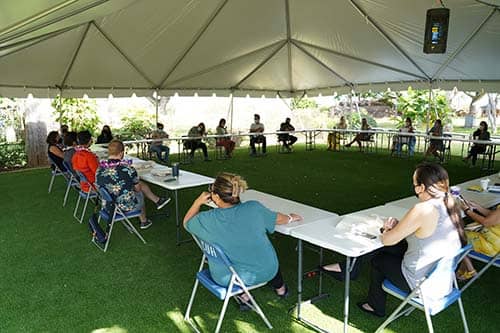
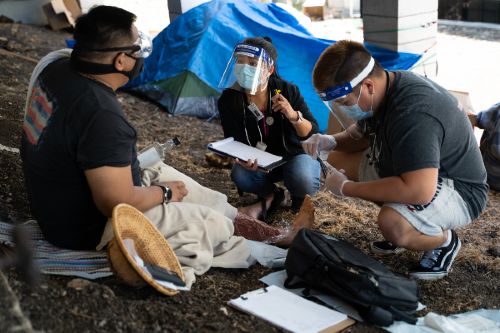
As part of an innovative partnership, Data Science students at Chaminade University are teaming up with community groups in the Waianae Coast to develop a Waianae Coast Community Scorecard and Dashboard. This project is designed to be regularly conducted to measure community sentiment and report results that are easy-to-use, meaningful and actionable. The results will shine a spotlight on areas of opportunity and community wellbeing, and will help prioritize initiatives. Dr. Helen Turner, vice president of Chaminade’s Center for Strategy and Innovation and faculty of the Data Science program says, “this project is part of a broader vision that embraces Chaminade University’s ‘community first’ approach and the work done at the Center to foster an Innovation Moku in the Waianae Coast to build a refreshed economic reality that is resilient and fits with community priorities and wishes.”

This project is advised by Dr. Rylan Chong, director of the Data Science program and assistant professor at Chaminade University and by Joseph Lapilio, the executive director of the Waianae Economic Development Council and Waianae Moku Navigators.

Joseph Lapilio says “the Waianae Moku Navigators, made up of more than two dozen community organizations, is excited about the Chaminade Innovation Moku partnership and the prospect of having a reliable—and replicable—tool for gauging public opinion, welfare, wellbeing and key quality of life metrics in the Waianae Coast. A lot of what we do now is based on anecdotes or emotional reaction to issues going on. But actual data,” Lapilio said, “has power that could incite real action.”

The Partnership: Working, Learning, and Growing Together

The Waianae Coast Community Scorecard and Dashboard project was first piloted in fall 2020 and continued through spring 2021. Students enrolled in the Data Science 301: Community-Engaged Computing class worked with the Waianae Moku Navigators and the Waianae Economic Development Council to create an initial scorecard and dashboard.

Lapilio said he’s been “very impressed with how hard Rylan and his students have worked on the project. Rylan has been extremely open to community input,” he said. “Our long-term goal is not only in terms of a scorecard. It is also in terms of—how do we connect community members to data collection so it is more than just us? How do we work together? How do we connect?” The scorecard hasn’t merely been an academic exercise, but a growing experience for Chaminade students and for members of the community. “They need to be able to engage with the community, to see the community as a partner in this work,” Lapilio said.

The next step for this project is launching the initial scorecard to a test group before taking the scorecard community-wide to collect responses. The scorecard incorporates a host of data points, including information on food security, household income, housing, health, feelings about safety, technology infrastructure and acceptance, and a sense of belonging.

The Experience: Hands-On, Collaborative, Meaningful

Dr. Gail Grabowsky, dean of the School of Natural Sciences and Mathematics at Chaminade  says, “real-world projects and partnerships like the Innovation Moku get our students involved and allows them to apply their data science skills in a collaborative environment to address the wellbeing of their communities.” Chong adds, “the Waianae Coast Community Scorecard and Dashboard project is about providing the students with a taste of what data science can actually do and the positive impacts they could have in the Data Science discipline.”

Students participating in this project say the effort has been fulfilling.

“My biggest takeaway from the project was how far-reaching an effect data science can have,” Chaminade Data Science senior Aaron Walden said. He assisted with the effort in Fall 2020 and said it helped him understand how “data science can be used to identify community initiatives.” The scorecard, he said, “is a tool to visually see trends to support prioritization of the community initiatives.”

Senior Hunter Yamanaka, who is majoring in Biochemistry with a minor in Data Science, also participated in the scorecard and dashboard project in Fall 2020. He said “working with the community while digging into the numbers helped him understand how similar efforts could benefit organizations and the public. Data Science has endless ways of improving society,” he said.

“For instance,” says Data Science major Taylor Ishisaka, “data science can turn lists of data points and numbers into something visual and meaningful that everyone can understand. It can shape how we see the world.” Ishisaka, who participated in the scorecard and dashboard project Spring 2021, said “it has been eye-opening to see how much work and collaboration goes into a project like this.” Data science in Hawaii and the Waianae Coast Community Scorecard and Dashboard project is more than collecting data, programming, and analyzing data. When data science is applied to this project, it’s clearly a powerful discipline that can be applied to any field, provide a platform for a community to voice their opinions, inspire discovery and innovation, connect communities, and has the potential to confirm or make ethical societal or policy changes. As Ishisaka and Lapilio said, “when it comes to data science, the possibilities are endless, with real potential for inciting action and implementing positive change in our communities.”

Posted by: University Communications & Marketing Filed Under: Campus and Community, Featured Story, Innovation, Natural Sciences & Mathematics Tagged With: Data Science

Kosasa Foundation Awards Grant for Emerging Scholars Program

July 22, 2021

Through the Center for Strategy and Innovation, Chaminade University recently received a $25,000 grant from the Kosasa Foundation to support its Emerging Scholars pilot program aimed at promoting pathways to college for rural high school students on Kauai. The first cohort of students will begin the year-long program in the fall.

Prior to the pandemic, Chaminade offered a number of early college programs as part of the statewide Hawaii P-20 initiative promoting pathways to college. When the University pivoted to online learning, dual-enrollment and pre-college courses were canceled due to COVID-19 restrictions. Chaminade has revamped and redesigned its college readiness programs to be offered online or through a mixed online/in-person format.

There will be two types of Emerging Scholar programs: 1) a non-credit Summer Institute for high school students, which will mostly be paid for by the federal college-readiness initiative, GEAR UP, and 2) an academic year dual-enrollment program for high school students to take courses and receive both high school and college credits that can be used toward a college degree.

“We are excited to initiate this pilot program for Kauai students this fall,” said Chaminade President Dr. Lynn Babington. “The pandemic has created significant educational challenges for those residing in rural areas, including the neighbor islands. A lack of technology and broadband access has made online learning difficult for many students. The Emerging Scholars program will ensure students who are disproportionately disadvantaged by distance learning will have everything they need to excel online.”

Program administrators have identified a basic technology package—laptop, headphones, storage and backup—that will be provided on loan to its high-need college students, including those in the Emerging Scholars programs.

During the program, 40 students from Kauai high schools will take four dual-enrollment, introductory courses each semester. The courses will be enhanced with guest speakers who will participate in each course. Faculty will fly to Kauai to physically meet the students prior to each semester start. At the end of the year, Chaminade will fly the participating students to Oahu to stay overnight in the residence hall. During their stay, they will meet with advisors and faculty from each division, and participate in college prep workshops.

Chaminade is reimagining the COVID-19 crisis as an opportunity to adapt to changing learner needs, and to rethink and transform approaches to higher education. This program seeks to provide students on Kauai with new opportunities and ensure success in pursuit of learning.

# # #

Chaminade University of Honolulu provides a collaborative and innovative learning environment that prepares graduate and undergraduate students for life, service and successful careers. Established in 1955, the university is guided by its Catholic, Marianist and liberal arts educational traditions, which include a commitment to serving the Native Hawaiian population. Chaminade offers an inclusive setting where students, faculty and staff collectively pursue a more just and peaceful society.

Posted by: University Communications & Marketing Filed Under: Campus and Community, Featured Story, Innovation, Institutional, Press Release

New Doctorate of Education Trains Leaders for Adaptation and Change

March 12, 2021

Professionals who are ready to step onto that highest rung of the educational ladder and earn a doctoral degree have a new online option.

Chaminade University’s new Doctorate of Education (EdD) in Organizational Leadership for Adaptation and Change is for working professionals in industries such as education, business and healthcare. The 60-credit program is being offered for the first time starting in July.

Dr. Dale Fryxell (dean, School of Education and Behavioral Sciences) standing in classroom

“We developed this program to meet the needs of busy, active, working adults who have careers and families,” says ​Dr. Dale Fryxell​, Dean of the School of Education and Behavioral Sciences. “An online program lets them fit school into their schedules because they can do the coursework on their own time. It just gives people so much more flexibility. It’s a more efficient way for busy people to get a degree and improve their opportunities as a professional.”

A Doctorate in Education helps people build an impressive skill set and advance their careers. It also generally means a higher pay level.

According to Chaminade President Dr. Lynn Babington, leadership is both an art and a science, and she says the new EdD program has a strong foundation in both.

“Here at Chaminade, we believe that transformational leaders are not born that way but are developed,” she says. “To that end, we designed our new, online EdD program to prepare students to become inspirational leaders who are extremely skilled at adapting to changing conditions and new variables while also motivating people and communities.”

That focus on adaptation and change is one factor that sets Chaminade’s new program apart from other EdD in Organizational Leadership programs. “Educating for adaptation and change” is one of the essential Marianist principles that guide Chaminade University in all its decision-making.

While the COVID-19 pandemic has emphasized the importance of pivoting and finding creative solutions, being skilled at working with adaptation and change has always been critical in organizational leadership and always will be.

EdD for educators, business professionals and leaders of indigenous-serving organizations

Chaminade’s new EdD program prepares students in organizational transformation for success, growth and positive impact in one of three concentrations—educational leadership, indigenous leadership or organization development.

The educational leadership track primarily targets experienced education professionals—teachers and administrators—who want to develop their leadership skills and advance in their careers. Fryxell says there are many career paths for those with a doctorate in education, including going into post-secondary education and becoming a professor or moving into administrative positions at K-12 or higher education schools. Others may become director of a religious organization or school or move up to a district- or state-level education position.

Dr. Blendine Hawkins teaching a class

The educational leadership concentration helps develop action-oriented leaders who are well-equipped to lead person-centered learning communities and promote social justice and positive change. Courses specific to this track include Leadership for Educational Administrators, and School Community Relations.

The indigenous leadership concentration focuses on preparing leaders, especially Native Hawaiians and other Pacific Islanders, who work in indigenous cultural organizations.

Fryxell points out there are different indigenous leadership styles and approaches to leading people. A positive aspect of this concentration is what he calls “cross-pollination,” or sharing how different cultural groups approach leadership or create pathways.

Specific courses in the track include Indigenous Leadership and Organizational Management, and Power, Politics and Policy: Historical and Contemporary Perspectives.

There is also an indigenous leaders speakers series, which students in any of the concentrations can attend to learn from indigenous leaders around the world.

Fryxell says it’s common for people on the U.S. mainland to follow the third track, an EdD in organization development, after earning an MBA.

“That’s what a lot of MBAs do,” he says. “They lead organizations. This program is an opportunity for them to focus even more on developing leadership skills, looking at and using data for decision-making and learning how to streamline their organization and make it more effective.”

The organization development track provides an interdisciplinary approach for professionals in the business, healthcare, nonprofit and public sectors who want to drive positive change and transform their organization for success.

Many nurses get an EdD in organization development, says Fryxell, and use that as a springboard into teaching at the college level. This concentration also attracts training and development managers, human resources personnel, nonprofit directors and high-level management staff. Its track-specific courses include Leading Organizational Change, and Consulting Skills.

Mentorship and real-world problem solving

Program directors will work closely with each student, looking at their career goals and aspirations and helping them plan their path through the doctorate.

Professor teaching online to her students

The fact that the new student-centered Chaminade EdD program is 100 percent online does not constrain its emphasis on mentorship. The program is designed to foster mentor relationships that promote personal growth, critical thinking and robust dialogue. In addition to working online with professors, students are also welcome to meet with them in-person on campus.

Every dissertation committee, chaired by the EdD director, will also consist of a faculty member and someone from the community. “For example, if a student is going to do their dissertation on, say, DOE leadership, they might ask an assistant superintendent to be on their dissertation committee; somebody that’s working in the field and really knows the field to help them through that process,” says Fryxell.

“Then they also have the faculty member who’s going to help them with the academic rigor, the writing process, and the dissertation development process,” he says. “And then the chair, the EdD director, who will shepherd them through the entire dissertation process, keeping them motivated and on target so they can get that dissertation done and finish up the program.”

He says a goal of the EdD program is for students to identify a real-world problem or issue that their organization—whether it’s a school, business or indigenous organization—is currently facing and turn that into a research project. They will determine the problem, come up with a testable hypothesis, research data about the problem and develop a solution. That allows them to come up with innovative solutions in a real-world setting.

“As they go along in leadership positions throughout their careers, they will have to make decisions,” he says. “And looking at an action research process will help them be good users of previous knowledge and data to take their organizations to where they want to lead them.”

All dissertation work happens as part of a student’s coursework, and students can finish the entire EdD program in 36 months.

Fryxell says the program is an excellent opportunity for anyone looking to further his or her career and also advance themself as a person.

“I think they’ll be able to take what they learn in this program and make positive changes in everything they do. I think it’s going to be a great program and have a big impact, not only on our students but also on the community and Hawai‘i and across the Pacific.”

Networking and collaboration for resilient leadership

Throughout the EdD program, students will be able to participate in enrichment activities. A virtual brown bag series, for instance, will feature leaders who speak on various topics.

Virtual professional practice writing circles will break classes into small groups that can work together on their writing. “A lot of doctoral work involves writing,” says Fryxell, “and this way students can bounce their ideas and papers off their classmates.”

Dr. Hans Chun speaking

He stresses the importance of students supporting each other, discussing each other’s ideas, and being resources for each other.

“A lot of being successful throughout a career has to do with networking and your ability to form and keep relationships, so we’re hoping this program will really enhance that,” he says.

An EdD student organization will allow students to coordinate social or community service events, whether in-person when possible or else online. “We’re expecting there will be students from the mainland and from throughout the Pacific, but there will be various ways for them to connect.” 

An annual Research Symposium will provide opportunities to participate in local and national conferences, offering more opportunities for students to meet, interact and support one another.

Educating the whole person

While the academics at Chaminade are innovative, modern and up-to-date, it’s never only about academics. A central Chaminade principle, built into every academic program, is to educate the whole person.

“To be a well-rounded person and a good leader,” says Fryxell, “you have to have psychological strength, intellectual strength and certainly moral strength. You have to take care of your body through exercise and diet. With all our programs, we try to help people remember it’s not about any one area of your life. It’s really about improving all areas of your life in order to be a better, more effective person.”  

The school’s professors, themselves leaders and experts in their field and the community, aim to develop future leaders who lead with open minds and understanding in their hearts, are part of the solution, and make a difference in their community. Ideally, students not only move their careers forward but also become changemakers.

A Chaminade education is also about values and ethics, including social justice. That’s one of Chaminade’s defined values—educating for service, justice and peace—and it’s an important focus of the EdD program.

“The need for social justice is infused throughout our whole program,” he says, “because no matter what organization you’re working for or what environment you’re in, that’s what you have to keep top-of-mind: What am I doing to help my community? What am I doing to help my workers? How am I contributing to the betterment of mankind?”

Online EdD offers flexibility and access

“If there’s one thing we’ve all learned during the COVID-19 pandemic, it’s how to pivot,” says Fryxell. “How to make things fit into our new lives. How to make it happen.”

As we move forward, he says, organizations also must adapt to new and continually changing environments and situations.

“What we hope to do in this program is really prepare students to be able to make those continuous changes they’re sure to face in their careers,” he says. “I think COVID brought this issue to the forefront—that you have to be adept at changing the way your organization does things, or your organization won’t survive. That’s why the ability to adapt and change is the focus of our entire program. But it’s not only because of COVID. Those abilities were important before the pandemic, and they’ll still be important afterward.”

He predicts we’re going to continue seeing significant changes at all levels of education as technology keeps moving forward.

“I think online programs will continue to grow and develop, and as technology advances and new software comes up, it will be amazing. We can do things online now that you couldn’t do even a year ago. Hardly anybody even knew what Zoom was one year ago.”

He says there’s already been a strong online presence at Chaminade for some time. “So many of our professors, including myself, have been teaching online since the beginning of online education. So with COVID and the forced move to technology, it just really had to do with bringing more people along into a modern online world. It’s something we’re really well-prepared for, and I think it’s going to keep evolving and developing.

“And at Chaminade, we’ll be there continuing to evolve and develop right along with it.”

For more information, see the EdD in Organizational Leadership. Applications for the first online EdD session, which starts on July 6, 2021, are due on June 18.

Posted by: University Communications & Marketing Filed Under: Education, Featured Story, Innovation, Institutional Tagged With: Doctor of Education

Healthcare Heroes

April 30, 2020

In the midst of this global pandemic, our healthcare system has taken centerstage. Every day we see healthcare heroes on the frontlines–sacrificing their own health and wellness to serve their communities, stepping up in times of need, making due with minimal resources and finding creative solutions on the daily.

For our nine soon-to-be-alumni heading into graduate healthcare programs this fall, these images are shaping their vision of who they want to become. They know there’s never been a more important time to become a healthcare provider.

We’re proud and honored to help them answer this call, and to support them in their dreams of becoming doctors, dentists, therapists, nurses, pharmacists and more. It’s why we recently launched a new MBA track in Healthcare Administration. It’s why we’re launching a new B.S. in Community and Public Health this fall. And it’s why we’ve set up partnership agreements with medical schools around the country.

We currently have articulation agreements with 11 different healthcare graduate schools across the nation, including A.T. Still University, Boston University, George Washington University, Pacific University, Samuel Merritt University, Tufts, University of Dayton and Western University. Through these agreements, our students are eligible for early admission provided they meet certain criteria and take certain classes.

These agreements range across the spectrum of healthcare, from medical to dental to pharmacy. Through A.T. Still University, for example, students can choose between osteopathic medicine, physical therapy, occupational therapy, audiology or dental medicine.

With Boston University and George Washington University, our students participate in their early selection programs designed to be a direct pipeline into their medical schools. Some time in their sophomore or junior year, they enter into an agreement with the university. As long as they meet all academic requirements, they are provisionally accepted into the university’s medical school upon graduation. 

Four of our students are taking advantage of these programs this fall, and 19 of our graduates are currently enrolled in one of the programs.

We’re also a member of The Leadership Alliance, a consortium of 32 academic institutions dedicated to addressing the shortage of diversity in graduate schools and academia. Through the program, we’ve built partnerships with universities who want to admit our students into summer research programs. Our students have participated in programs at Harvard, Yale, Purdue and UCLA–to name just a few. This early exposure to research greatly enhances a student’s graduate school application, particularly for medical schools.

It’s no surprise that Hawai‘i ranks No. 1 in healthcare. It takes a certain kind of person to become a health provider. Someone with compassion, heart and patience–all values that go hand in hand with our island culture.

Healthcare is the perfect complement to Chaminade University’s mission. As a Marianist institution, we educate our students to embrace adaptation and change, family values and community service–core components of our healthcare system. And as a liberal arts school, we ensure our graduates have a wide breadth of knowledge and are able to think critically across a range of disciplines.

Congratulations to our future medical care providers. We thank you for your dedication and service, and we are honored to be a part of your journey.

Chaminade Students Entering Healthcare Programs This Fall

  • Rachel Arakawa* – M.D., George Washington University School of Medicine and Health Sciences, Washington D.C.
  • Camille Burgos – M.D., Ponce Health Sciences University, Puerto Rico
  • Theresa Dao* – D.O., A.T. Still University School of Osteopathic Medicine, Arizona
  • Noelle Dasalla – D.V.M., Colorado State University College of Veterinary Medicine and Biomedical Sciences, Colorado
  • Estelita Estay* – D.O., A.T. Still University Kirksville College of Osteopathic Medicine, Missouri
  • Jerika Gomez – Pharm.D., UC San Diego Skaggs School of Pharmacy and Pharmaceutical Sciences, California
  • Hiʻilei Ishii-Chavez* – D.O., A.T. Still University School of Osteopathic Medicine, Arizona
  • Tomomi Kohno – Pharm.D, UH Hilo Daniel K. Inouye College of Pharmacy, Hawaii
  • Ann-Janin Bacani – Pharm.D., UH Hilo Daniel K. Inouye College of Pharmacy, Hawaii

*denotes students who are entering their program through an articulation agreement

Posted by: University Communications & Marketing Filed Under: Featured Story, Innovation, Natural Sciences & Mathematics, Students Tagged With: Articulation Agreements

Chaminade University Now Accepting Applications for Four-Year Scholarship Program

January 24, 2020

HONOLULU (January 23, 2020) – Chaminade University is now accepting applicants for its Ho‘oulu Scholarship program for Native Hawaiian students. Developed in partnership with Kamehameha Schools, the program was designed to grow the number of Native Hawaiians graduating with science, technology, engineering and mathematics degrees.

The four-year scholarship is open to first-year and transfer applicants seeking degrees in Biology; Biochemistry; Chemistry; Data Science, Analytics and Visualization; Environmental Sciences; Environmental Studies; Forensic Sciences; and Nursing. The scholarship provides:

  • Full tuition (100 percent of tuition not to exceed the published amount) assistance for four years
  • Consideration for partial housing subsidy for on- or off-campus housing for neighbor island or rural students
  • Wraparound academic support services to promote on-time graduation
  • Participation in Chaminade’s four-year graduation guarantee
  • Access to post-graduate career paths via Chaminade’s suite of articulation agreements with medical and graduate schools
  • Paid internships for professional development
  • Financial support for career development activities, such as MCAT and GRE preparation

Now in its fifth year, the Ho‘oulu Scholarship gives preference to applicants of Native Hawaiian ancestry to the extent permitted by law. To date, 125 students have received Ho‘oulu scholarships at Chaminade.

“We’re extremely proud of the Ho‘oulu program at Chaminade,” said President Dr. Lynn Babington. “Both our persistence and four-year graduation rates are close to 100 percent for these scholars, who not only receive financial aid but more importantly intensive wraparound academic support services to help them succeed.”
The application submission deadline is March 16, 2020. For an application, visit chaminade.edu/hooulu.

# # #

Chaminade University of Honolulu provides a collaborative and innovative learning environment that prepares graduate and undergraduate students for life, service and successful careers. Established in 1955, the university is guided by its Catholic, Marianist and liberal arts educational traditions, which include a commitment to serving the Native Hawaiian population. Chaminade offers an inclusive setting where students, faculty and staff collectively pursue a more just and peaceful society. For more information, visit chaminade.edu.

Posted by: University Communications & Marketing Filed Under: Featured Story, Innovation, Institutional, Natural Sciences & Mathematics, Press Release Tagged With: Scholarship

Scholars Welcome Dinner

September 19, 2019

With oli and inspirational speeches, a special welcome dinner this month celebrated 27 recipients of competitive Chaminade scholarships geared toward those interested in STEM-related careers.

Students and families at scholars welcome dinner

The dinner Sept. 6 honored Ho’oulu scholars and awardees of the National Science Foundation S-STEM scholarship.

In addition to the scholars and their families, attendees included previous recipients of the Ho’oulu Scholarship, representatives from Chaminade University and Kamehameha Schools, and invited guests.

The Ho’oulu scholarship was made possible thanks to an innovative partnership with Kamehameha Schools, and is geared toward helping those interested in STEM fields achieve their career goals.

Awardees receive 100 percent tuition assistance to Chaminade along with access to career-preparation opportunities and programs that help students ensure they stay on track to graduate in four years.

Current and previous recipients of the scholarship have worked toward careers in a broad cross-section of STEM fields, from data science and medicine to forensic sciences and biotechnology.

Eighteen incoming Ho’oulu scholars were recognized at the welcome dinner.

Also in attendance: Nine students who received the National Science Foundation S-STEM scholarship this school year. The $10,000 merit scholarship is distributed over four years, and also includes innovative development programs, from research opportunities to internships. Speakers at the event included Dr. Helen Turner, vice president of Strategy and Innovation at Chaminade, Kamehameha Schools CEO Jack Wong, and Lauren Nahme, vice president of strategy and transformation at Kamehameha Schools.

Posted by: University Communications & Marketing Filed Under: Diversity and Inclusion, Featured Story, Innovation, Natural Sciences & Mathematics, Students Tagged With: Scholarship

  • « Go to Previous Page
  • Page 1
  • Interim pages omitted …
  • Page 9
  • Page 10
  • Page 11
  • Page 12
  • Go to Next Page »

Footer

Chaminade University Logo

3140 Waialae Avenue
Honolulu, Hawaii 96816

Contact Us
Phone: (808) 735-4711
Toll-free: (800) 735-3733

facebook twitter instagram youtube linkedin

Visit

  • Plan Your Visit
  • Campus Map (PDF)
  • Events

Resources

  • Campus Security
  • Student Consumer Information
  • Concerns, Feedback, and Reporting
  • Institutional Review Board
  • Title IX / Nondiscrimination Policy
  • Compliance
  • Emergency Information
  • Careers
  • Institutional Statement

People

  • Students
  • Parents
  • Alumni
  • Faculty & Staff

Policy

  • Privacy Policy
  • Terms and Conditions of Use


© Chaminade University of Honolulu