• Skip to primary navigation
  • Skip to main content
  • Skip to footer
Chaminade University of Honolulu

Chaminade University of Honolulu

  • VISIT
  • APPLY
  • GIVE
  • STUDENTS
  • PARENTS
  • ALUMNI
  • FACULTY/STAFF
  • Admissions
    • Admissions Home
    • Undergraduate Students
      • First-Year Students
      • Transfer Students
      • Admitted Students
    • Graduate Students
    • Flex Online Undergraduate Program
    • Military Students
    • Non-Degree/Visiting Students
    • Experiential Honors Program
    • Early College Program
    • New Student Orientation
  • Tuition & Aid
    • Financial Aid Home
    • Tuition & Expenses
    • Federal Updates & Changes
    • Scholarships
    • $5,000 Graduate Scholarship
    • VA Education Benefits
    • Net Price Calculator
  • Academics
    • Academics Home
    • Academic Programs
    • Office of Student Success
      • Academic Advising
      • Records and Registrar
    • Kōkua ʻIke (Support Services)
      • ADA Accommodations
      • Career Services
      • Proctoring Services
      • Tutoring Services
    • Sullivan Family Library
    • Undergraduate Research & Pre-Professional Programs
    • Commencement
  • Campus Life
    • About Campus Life
    • Student Engagement
    • Student Government Association
    • Residence Life and Housing
      • Summer Conference Housing
    • Health Services
    • Marianist Leadership Center
    • Counseling Center
    • Campus Ministry
    • Campus Security
    • Dining Services
    • Bookstore
  • Athletics
  • About
    • Chaminade University News
    • Our Story
    • Leadership
    • Chaminade University Strategic Plan 2024-2030
    • Mission & Rector
    • Association of Marianist Universities
    • Facts & Rankings
    • CIFAL Honolulu
    • Accreditation & Memberships
    • Montessori Laboratory School
Search
×

Search this web site

Featured Story

2024 Hogan Entrepreneurial Program and American Savings Bank Nonprofit Business Plan Competition

April 18, 2024

The biennial event attracts various not-for-profits

From recycling and technology to mental health and publishing, the services delivered by the winners of the 11th annual Hogan Entrepreneurial Program and American Savings Bank Nonprofit Business Plan Competition are as diverse as the clients they serve.

“We narrowed it down to eight finalists from the 23 entries that were submitted,” said Chaminade President Lynn Babington, Ph.D., in her opening remarks. “It was not easy, but the objective of this competition is to encourage excellence and innovation. The work that nonprofits do is absolutely vital to our communities.”

Chaminade’s Hogan Entrepreneurial Program and American Savings Bank’s Nonprofit Business Plan Competition is held every other year and is open to Hawaii nonprofit organizations seeking to start new ventures that will benefit society. The competition aims to stimulate public interest and support in nonprofit organizations—and encourage excellence and innovation in socially-motivated entrepreneurs.

“This biennial competition aligns well with our Marianist mission,” said Dr. Roy Panzarella, director of the Hogan Entrepreneurial Program. “These nonprofits are doing a lot of good for their communities.”
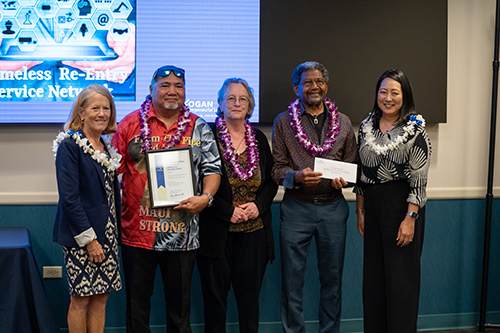
WorkNet members, from left, Mo Kalaikai, Stephanie Ann and Chas Williams were congratulated by Chaminade President Lynn Babington, Ph.D., far left, and American Savings Bank’s President and CEO Ann Teranishi.

In all, the Hogan Entrepreneurial Program and American Savings Bank awarded $41,000 to nine Hawaii nonprofit organizations who participated in the competition this year. The first-place winner, Worknet Inc., walked away with the $15,000 prize.

“I’m overwhelmed and seldom am I at a loss for words,” said WorkNet Founder, Executive Director and President Chas Williams, upon receiving his award. “We rarely have a chance to revel in the work we do, so I am proud to be here. For once, we’re recognized for the work we do.”

WorkNet is an innovative nonprofit that prepares prison inmates for a successful re-entry into community living to reduce recidivism. The organization specializes in offender re-entry services, which include helping parolees find jobs, secure housing, obtain a driver’s license and restore identity documents so they can have a higher success rate with their reintegration into our communities.

“To be in this company (among other nonprofits), I feel rewarded beyond belief,” says Williams, pssionatley shaking his fist. “This institution (Chaminade) is the training ground, and I offer myself to share my knowledge and ideas with people who are in this field.”

The second-place winner was Mothers Against Drunk Driving, which received $11,000 toward its Teen Influencer Summer Institute, a five-week program that aims to educate today’s youth about the dangers and tragedies of drinking and driving.

Third place went to Pasefika Presence, a nonprofit magazine with a mission to provide a space for voices of the Pacific to share their stories through the publication of their writing and art.

“It’s not easy juggling school and running a nonprofit magazine at the same time,” said Epifania “Epi” Petelo ’23. “We aim to help preserve our stories through this publication and provide Pasefika people, especially youth, with a magazine that they can actually see themselves in.”

Fourth place went to Mood USA. All dressed in the same Mood USA logo T-shirts, Waioli Misajon and her family members—including her 2-year-old daughter—said she was inspired by the competition two years ago, adding that her nonprofit was then just a dream. “This award comes with much appreciation for all the supporters and consultants who have helped develop the nonprofit Mood USA,” said the Nanakuli native of Mood USA, which supports mental health for children in the Leeward area.

The remaining five finalists included Hear 4 Hope, Downtown Art Center’s Metal Lab, PAWsitive Adventures, ThriveHI and Two Times Recycling. Each received a $1,000.

“American Savings Bank is proud to be a sponsor of this competition for many years now,” said American Savings Bank’s President and CEO Ann Teranishi. “The work that you’re doing is not easy, but please continue the work of nonprofits. Our communities need you.”
Posted by: University Communications & Marketing Filed Under: Alumni, Business & Communication, Featured Story, Hogan Entrepreneurial Program, Institutional Tagged With: Alumni, Campus Event, Hogan Entrepreneurs Program, Honors and Awards

Scholarly Research

April 9, 2024

Students present their thought-provoking research findings

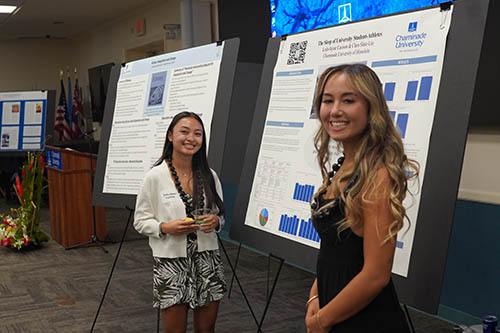
Psychology major juniors Leila-Jayne Casison and Clara Slate-Liu are on their way to the National Conference of Undergraduate Research (NCUR) in California. But before presenting their findings on a national stage, the two Silversword athletes presented their research at the annual Na Liko Na‘auao Symposium, allowing them to fine tune their presentation and to anticipate any questions they may have to field.

“I think today was a good trial run for us in terms of getting used to discussing our study with others, especially those who we’ve never met before,” Casison said. “I also think we’re getting better with having meaningful conversations with those who find interest in our study on our athletes.”

Titled “The Sleep of University Student-Athletes,” Casison’s and Liu’s study looked at sleep patterns of fellow Swords, and they concluded that soccer players have the worst sleeping habits of all the athletes.

“Their practices start at 6 in the morning and they go to bed late,” Casison and Slate-Liu said. “So, of course, they’re going to experience daytime fatigue. It should be an issue that our coaches and athletic director are made aware of.”

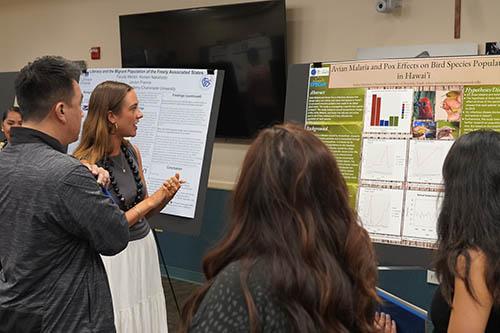
A Silversword tennis player, Sydney Danielson was tireless in her pursuit of learning about avian malaria and avian pox effects on Hawaiian birds, such as the ‘amakihi, apapane and ‘i‘wi. A passionate naturalist, the Minnesota native looked at the two diseases and their impact on native birds’ population.

“Symptoms include swollen, tumor-like lesions on unfeathered parts of a bird’s body, such as the feet, legs, eyes and base of the bill,” Danielson explained of avian pox. “Both diseases are very difficult to manage, and the continued viability of our native forest birds depends on the preservation of their habitat.”

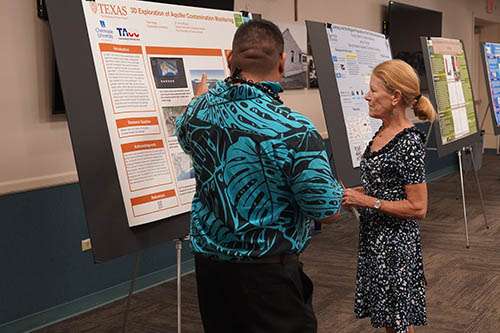
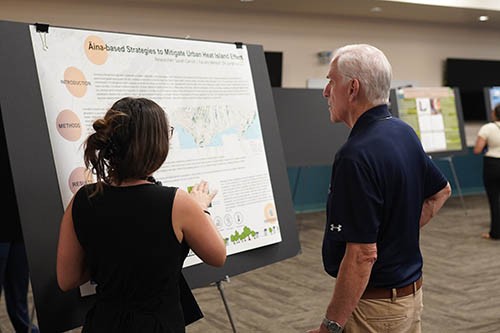
Sarah Carroll explains her research to Fr. Martin Solma during the Na Liko Na'auao Symposium.
Sarah Carroll explains her research to Fr. Martin Solma during the Na Liko Na’auao Symposium.
Professor Tracy Trevorrow, Ph.D., discusses the research findings of Clara Slate-Liu, left, and Leila-Jayne Casison.
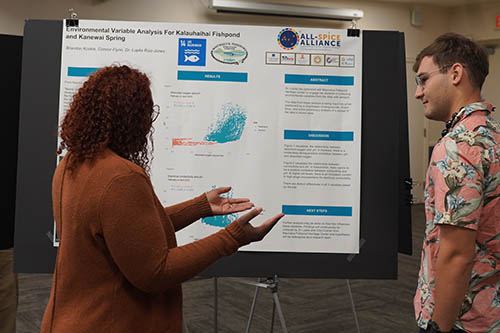
Brittany Johnson commented on Brandon Koskie's research project on Kalauhaihai Fishpond and Kanewai Spring.
Brittany Johnson commented on Brandon Koskie’s research project on Kalauhaihai Fishpond and Kanewai Spring.
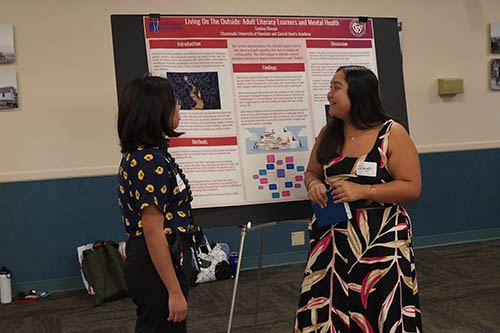
Lindsey Dimaya, left, a junior at Sacred Hearts Academy and a participant in Chaminade’s early college program, presented her findings to Joleigh Ballesteros-Magdaro.
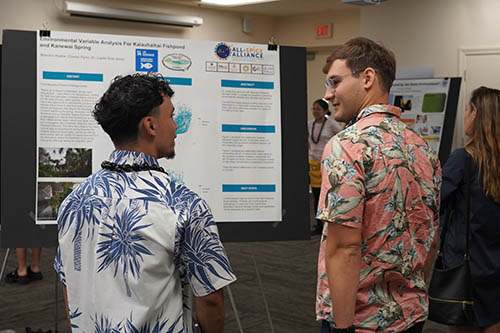
Brandon Koskie, right, discusses his research findings on two fishponds with Anson Ekau, who developed a dashboard for the Maunalua Fishpond Heritage Center.
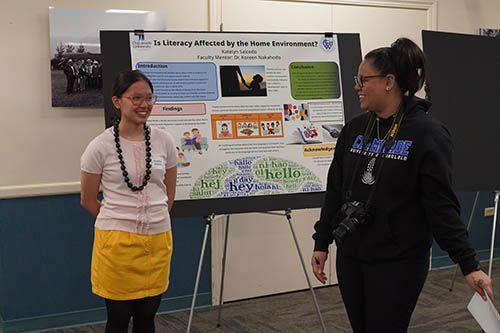
Katelyn Salcedo's hypotheses posed the question: Is Literacy Affected by the Home Environment.
Katelyn Salcedo’s hypotheses posed the question: Is Literacy Affected by the Home Environment.
Sydney Danielson explains the effects of avian malaria and avian pox to attendees at the Na Liko Na'auao Symposium.
Sydney Danielson explains the effects of avian malaria and avian pox to attendees at the Na Liko Na’auao Symposium.
Dr. Lynn Babington listened to what Kole Nagai had to say about his research findings during the 22nd Annual Na Liko Na'auao Symposium.
Dr. Lynn Babington listened to what Kole Nagai had to say about his research findings during the 22nd Annual Na Liko Na’auao Symposium.
Leila-Jayne Casison, left, and Clara Slate-Liu, studied the sleeping patterns of Silversword athletes.

For the past 22 years, student scholars have presented their yearlong work during this annual Symposium, allowing them to explain their research and answer questions from faculty, peers and at-large community members. In the past, students’ presentations have focused on mental health—especially the impact of COVID—physical health problems, substance abuse and even “climate monstrosities.”

According to Amber Noguchi, Ph.D., Undergraduate Research and Pre-Professional Programs director, undergraduate and graduate research experience can look like a number of things. It can range from formal and clinical studies to data analysis, and creative works and beyond.

“All of these presentations stem from research projects that have been collaborations between the student researchers and their faculty mentors,” Noguchi explains. “This undergraduate conference celebrates student scholars from across all academic disciplines.”

For the past several months, Lindsey Dimaya has locked herself in her room, unwilling to share with her parents the project that she was working on for the Na Liko Na‘auao Symposium. An avid reader, the 17-year-old teenager chose to do research on adult literacy and its impact on mental health.

Pointing to her presentation, dad Don Dimaya quipped that Lindsey finally explained why she isolated herself in her bedroom for all those hours. “Now it makes sense,” he said with a laugh. “Instead of getting her driver’s license last summer, she was busy with this.”

“I looked at the correlation between adult literacy and mental health,” said Dimaya, a junior at Sacred Hearts Academy and a participant in Chaminade’s early college program. “One of the reasons I was interested in this research was because of a story I had heard about a mother who wanted to bake her daughter a birthday cake, but she couldn’t because she didn’t know how to read.”

Dimaya’s research yielded some interesting findings, including a connection between improved reading skills and better mental health, and regaining childhood memories that emerged as a result of enhanced literacy.

“The breadth and depths of these projects have blown me away,” said President Lynn Babington, Ph.D., in her closing remarks at the Symposium. “I have been truly impressed walking around the room, and listening to your presentations and your interests.”

In his oral presentation, Anson Ekau ’25 demonstrated a beta dashboard that he developed for the Maunalua Fishpond Heritage Center, helping the nonprofit to monitor the health of the pond and its inhabitants.

“This fishpond once stretched all the way to Mauanlua Bay,” Ekau said. “Now you can walk around it in two minutes. However, fishponds are crucial to the survival of native species, and they also allow us to promote and preserve Native Hawaiian culture.”

The Symposium concluded with a presentation of the President Sue Wesselkamper Award, which acknowledges a student who has demonstrated extensive community and university service. In order to qualify for the prize, a student must have a minimum 3.5 GPA, show scholarship beyond classroom requirements by undertaking their own independent research or study, and must have presented their work both on and off campus. This year’s award went to Victoria Francois ’25, who gave a presentation on chronic pain among young adults and the effects of mindfulness.

“I would do this again in a heartbeat,” said Francois of her research. “In doing research, I found that the world is your oyster, and that everything is open to you.”

Posted by: University Communications & Marketing Filed Under: Behavioral Sciences, Campus and Community, Diversity and Inclusion, Faculty, Featured Story, Institutional Tagged With: Campus Event, Honors and Awards, Scholarship

Sustainable Entrepreneurship

April 2, 2024

New ENV 490 Sustainability Innovation class stimulates paradigm shift

Aside from being tongue twisters when said in succession, the terms sustainability and entrepreneurship are indeed big words, as pointed out by ’Inana Sustainability Entrepreneurship Program’s coordinator, Mariane Uehara. Tasked with creating a curriculum for the inaugural ENV 490 Sustainability Innovation course, Uehara admitted that she “jumped into the unknown” when she joined the United Nations’s CIFAL Center at Chaminade University.

At the core of the ENV 490 is a student-driven project that’s in partnership with a local company. The goal was to balance the triple bottom line—people, planet and profit—while addressing the long-term impact of business activities on the environment and society. Sustainable entrepreneurship recognizes the interdependence of economic development, social well-being and environmental health, and seeks to create value in a way that is responsible and ethical.

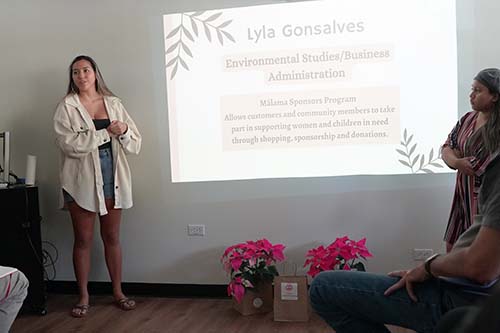
Lyla Gonsalves, left, and Jasmine Mondelo discussed possible solutions for Ten Tomorrow to become more sustainable.
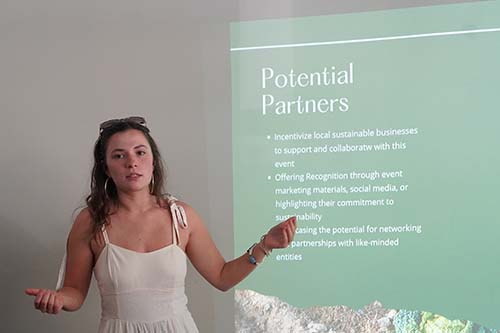
Sarah Carroll '25 identified potential partners that could help Re-use Hawaii and its sustainable efforts.
Sarah Carroll identified potential partners that could help Re-use Hawaii gain greater community support.
Ten Tomorrow designer Summer Shiigi, center, liked the ideas presented by Chaminade students, from left, Ka‘I‘inipu‘uwai “Mini” Keli‘iho‘omalu-Holz ’24, Lyla Gonsalves ’25, Jasmine Mondelo ’25 and LaVelle White ’26.
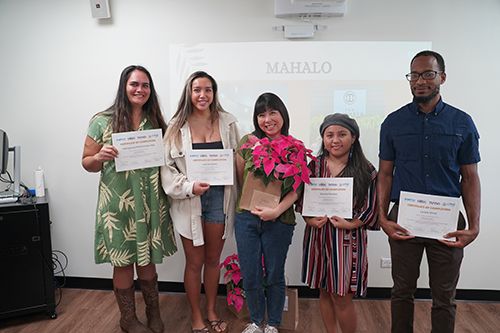
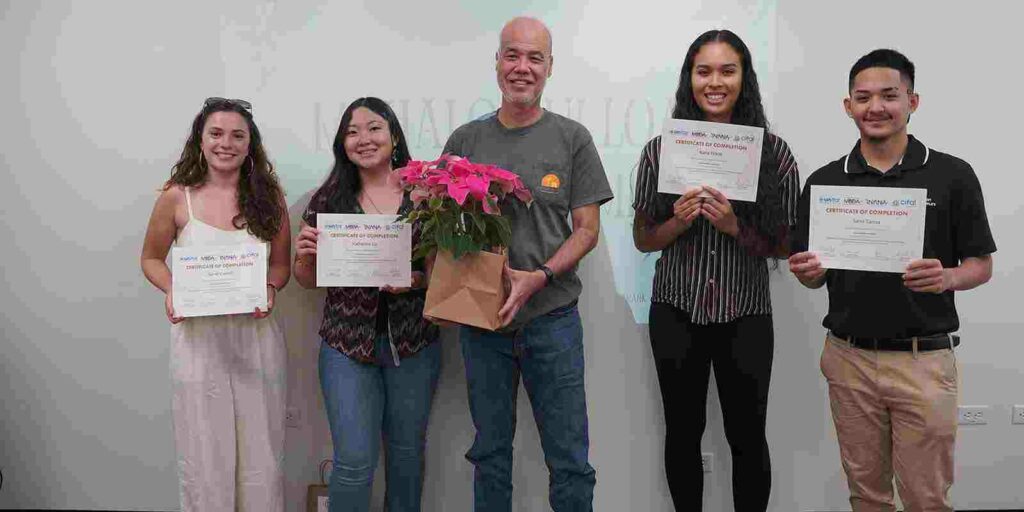
Re-use Hawaii's Workforce Development Coordinator Nathaniel Pak saw value in Chaminade student's sustainable efforts for the nonprofit. Team members included, from left, Sarah Carroll '25, Katherine “Kat” Liu ’26, Kaila Frank ’24 and Sano Tanna ’24.
Re-use Hawaii’s Workforce Development Coordinator Nathaniel Pak saw value in Chaminade students’ sustainable efforts for the nonprofit. Team members included, from left, Sarah Carroll ’25, Katherine “Kat” Liu ’26, Kaila Frank ’24 and Sano Tanna ’24.

“All the students’ projects had to align with at least one of the United Nations’s 17 Sustainable Development Goals (SDGs),” Uehara explained. “Although the vision was blurry at first, we figured out the puzzle together, and we had fun while doing so.”

According to Uehara, the three goals of the ’Inana Program are: 1) To develop and implement programs for the education and training of undergraduate students in subjects directly relating to successful entrepreneurship; 2) To support minority business enterprises (MBEs), including building a diverse entrepreneurial pipeline to grow the number of MBEs; and 3) to create a UN Certificate program in sustainability entrepreneurship.

Divided into three teams, 14 students presented their final entrepreneurial projects, working alongside with Ten Tomorrow, Re-use Hawaii and Plantoem. Under the mentorship of Uehara, and Cort Isernhagen and Jamie Lui of Diamond Head Research—a company that helps small companies track and assess their activities to identify trends and innovative business models that best support Corporate Social Responsibility, Environmental, Social and Corporate Governance, and philanthropic initiatives—the aspiring entrepreneurs demonstrated their ability to think outside the box.

“First of all, who are you guys,” rhetorically asked Lui after listening to the students’ presentations. “You’re a completely different group from when we started this class a few months ago.”

Exuding confidence, Sarah Carroll ’25 proposed a “Hanau Hana Aloha Event,” which would advertise Re-use Hawai’i as a community-based nonprofit worthy of long-term patronage and donation. Additionally, it would also pose these solutions: Engage an eco-conscious audience; showcase Re-use Hawaii’s mission beyond social media; and connect with long-term donors through a captivating experience.

“Hosting an upcycle consignment event for Re-use Hawaii would present an innovative solution to address several pressing challenges,” the Data Science and Visualization major said. “It would help Re-Use connect with the community and give it more visibility, as well as broaden its donor pool.”

Other Re-use Hawaii members included Katherine “Kat” Liu ’26, Sano Tanna ’24, Lihau Keoneula ’24 and Kaila Frank ’24.

Pairing with Ten Tomorrow designer Summer Shiigi, Jasmine Mondelo ’25, Ka‘I‘inipu‘uwai “Mini” Keli‘iho‘omalu-Holz ’24, Lyla Gonsalves ’25 and LaVelle White ’26 aligned their entrepreneurial proposals with the local clothing company’s line of modern resort wear. An Environmental Studies major, Keli‘iho‘omalu-Holz identified the problem of having to bring in fabric, which contributes to carbon emissions, microplastics and landfills.

Keli‘iho‘omalu-Holz’s solution was to source fabric that would be less harmful to the environment. She cited such alternatives as hemp, organic cotton, bamboo, recycled material and Tencel fabrics, which are produced with environmentally responsible processes from sustainably sourced natural raw wood fibers. Tencel textiles are also certified biodegradable.

“I have a really keen interest in fashion, which is why I chose Ten Tomorrow ,” Keli‘iho‘omalu-Holz noted. “I wanted to find cost-effective solutions and sustainable fabrics that didn’t have a negative impact on our environment.”

Alexandra Zingarelli ’24, Sydney Danielson ’25, Pūnohu Keahi ’25, Aleeyah Lemons ’24 and Conor McMahon ’24 partnered with Zoe Zhang of Plantoem, a portmanteau of plant and poem, and suggested a “Plantoem’s Appreciation March 2024.” Each week would tackle a different aspect, from the significance of native plants and “Aloha ʻĀina: Environmental Health Talk Story Event” to carbon offset, plant therapy and sustainable living workshops.

“They really listened to what I had to say,” said Zhang, who founded Plantoem because of her love for plants and poetry. “Their proposal to me is highly viable. Since we came up with the awareness month idea during their second visit, I have already been in touch with some of the speakers who are interested in participating. The basic structure of the event month has already been sketched out. And the students are coming back to help work on the events in March.”

In his closing remarks, Isernhagen commented on the diversity of ideas and the prototypes the students developed. “I liked the fact that you met the businesses where they were,” he concluded. “Your lenses were all sharply focused around sustainability. And I liked the fact that you collectively approached one problem but each of you came up with your own individual solution.”

Posted by: University Communications & Marketing Filed Under: Business & Communication, CIFAL Honolulu, Diversity and Inclusion, Featured Story, Hogan Entrepreneurial Program, Innovation, Institutional Tagged With: CIFAL, CIFAL Center, Hogan Entrepreneurs Program, School of Business and Communication

Provost Speaker Series

April 2, 2024

Kupu co-founder founder John Leong shares his entrepreneurial journey

After finishing his degree at the Wharton School of the University of Pennsylvania, John Leong had three options: to accept a job offer in New York City, to enter seminary school or to return to Hawaii. He chose the latter, deciding that he wanted to come home to lead conservation efforts. And that was 25 years ago.

As the guest speaker of the Provost Speakers Series, Leong shared his arduous journey that started when he and his wife, Julianna, established Pono Pacific in 2000. The company had a sole mission to assist conservation managers and landowners with the monumental task of protecting Hawaii’s natural resources. It would eventually lead him to co-find Kupu, now one of the most impactful environmental leadership organizations in the Pacific.

“My call to return to Hawaii was strong,” Leong said. “If you’re created to do something, and if you don’t follow that calling, the world loses out.”

Hawaii certainly would have had Leong not adhered to his vision, one of three primary tenets that  he cited as being pivotal to his journey. The other two are character and moral fortitude. Growing up in one of the most isolated archipelagos in the world, Leong didn’t fully appreciate Hawaii’s environmental vulnerabilities. It was not until he participated in Chaminade adjunct professor Althine Clark’s youth conservation program—which provided an opportunity for Hawaii’s youth to make positive change and contribute to our islands’ long-term sustainability—did he see Hawaii’s environmental perils.”

John Leong shared his entrepreneurial journey that led him to establish Pono Pacific and Kupu.

“It gave me a sense of Hawaii’s challenges with the environment and our endangered species,” Leong said. “It gave me a sense of my kuleana to care for Hawaii’s natural resources, which was work that was under-resourced and an uphill battle at that time.”

With Pono Pacific, the Leongs sought to provide cost-effective natural resource management services, working with private and government land owners to activate working lands, create sustainable food systems, restore sensitive ecosystems, protect both endemic and indigenous species, protect vital watersheds, manage conservation lands, and repair, construct nature trails.

“We charged like $15 an hour, which yielded more like $2 in profit,” Leong said laughingly. “It cost more to do the work, but this was our responsibility. I remember once builidng a conservation fence line around a Big Island trail, hauling large jugs of water for miles, waking up early and finishing late; it was hard work for sure. I would get calls from my Wharton classmates—some of whom were working at JP Morgan—and they would ask me: “What is it that you are now doing?”

It was during that time on the Big Island that Leong came across the kupukupu, an endemic sword fern that would sow the seed for his next nonprofit enterprise with his spouse Julianna and best friend Matt Bauer. Together, the trio started Kupu in 2007, a local 501(c)3 nonprofit organization with a mission “to empower youth to serve their communities through character-building, service-learning and environmental stewardship opportunities that encourage pono (integrity) with ke Akua (God), self and others.”

“When you do things of consequence, there are consequences,” Leong said. “But if you don’t do anything, then it’s inconsequential. Change doesn’t happen overnight nor is it linear, and you have to have the tenacity to move forward, to be the light.”

For four years, Kupu strove to establish what is now known as the Harry and Jeanette Weinberg Hoʻokupu Center in Kewalo Basin. Seeking the support of community board members and approval from government officials, Leong and his team spent hours on end to secure land rights to a valuable piece of waterfront property. It would certainly be difficult and almost defeating.

“But I look back now and think, what would have happened had we just quit and given up?” said Leong of all the work and effort that was put into the Kakaako community center. “What if we had not listened to that little voice inside that kept saying ‘just keep at it,’ and instead listened to our anxieties and fears?”

Today, the center is also home to the Kupu Community Program, which prepares under-resourced youth for the workforce by providing them with life skills training, green jobs, volunteer opportunities and encouragement to consequentially impact their local communities through service. To date, the yearlong program has served thousands of Hawaii’s youth, who participate in significant and demanding work to rehabilitate Hawaii’s ecosystems and increase the sustainability of the ʻāina.

“We give them an ʻāina-based model upon which to build a common community,” Leong said. “We give these under-privileged youth a purpose and a pathway to lead a meaningful life.”

In the final minutes of his talk, Leong spoke of the importance of being selected as an Obama Foundation Fellow, and having the opportunity to spend time with Barack and Michelle Obama, who taught him that character is shaped by adversity, and to surround yourself by supportive people who push you “to become a better version of yourself.”

“The last lesson I want to share is this: that we’re just one part of a bigger body,” Leong concluded. “You have to have humility. We can only do our part, but it’s important that we do that part.”

Posted by: University Communications & Marketing Filed Under: Campus and Community, Diversity and Inclusion, Featured Story, Institutional, Service Learning Tagged With: Campus Event, Environmental Studies, Guest Speakers

Higher Education in Prison

March 15, 2024

Program helps with reintegration into community

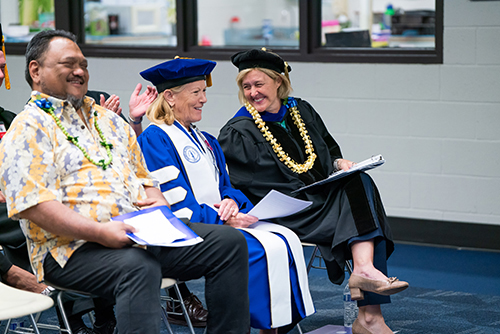
Drs. Janet Davidson and Lynn Babington share a light-hearted moment. Seated next to them is Mark Patterson, Chair Hawaii Correctional Oversight Commission and Hawaii Youth Correctional Facility, Warden.

It was the best news that Dr. Janet Davidson could have ever received on a Friday morning. After receiving an email message from Gabrielle Schechter, Health Policy Advisor with the Office of U.S. Senator Brian Schatz, Chaminade’s Vice Provost for Academic Affairs and a leader in criminology couldn’t believe what she was reading.

“I had to ask Jacki (Sanqui) to come to my office and read the message to make sure that I was reading it correctly,” said Davidson, who has spearheaded Chaminade’s Higher Education in Prison program. “She told me this was really great news and I was reading it correctly. The note said, ‘Your Higher Education in Prison Program earmark request to Senator Schatz’s office for FY24 was funded at $1.5 million!’ I was shocked.”

With the successful graduation of the pilot class, the second cohort of students from Halawa Correctional Facility includes 11 inmates, three more than the inaugural graduating class. Studies have clearly shown that higher education in prisons offers a multitude of benefits, particularly concerning re-entry into society and reducing rates of recidivism. Research further indicates that individuals who participate in educational programs while incarcerated are significantly less likely to return to prison upon release. Specifically, those who attain an associate’s degree have notably improved odds of successfully re-integrating into society compared to their counterparts without such credentials.

Yet, in our legal system and legislative practices, mass incarceration remains deeply entrenched. Despite efforts over the past half-century, initiatives such as the war on drugs have failed, leading to a troubling escalation in sentencing, probation and pretrial incarceration. But there is hope. In March, the U.S. Senate passed the second half of a bipartisan government funding bill that includes $31.8 million in new congressionally directed spending, also known as earmarks, secured by U.S. Senator Brian Schatz (D-Hawai‘i), chair of the Senate Appropriations Subcommittee on Transportation, Housing and Urban Development. The new funding follows nearly $400 million in earmark funding for Hawaii secured by Schatz in the first half of the appropriations deal signed into law earlier this month. Chaminade University of Honolulu was awarded $1.5 million, which will be used to build capacity of the prison education program.

“At Chaminade, one of our primary Marianist values is to advocate for social justice for transformative change,” says Chaminade President Lynn Babington, Ph.D. “We support a rehabilitation-through-education narrative, which we know is essential to incarcerated individuals finding a pathway to a second chance and a better future.”

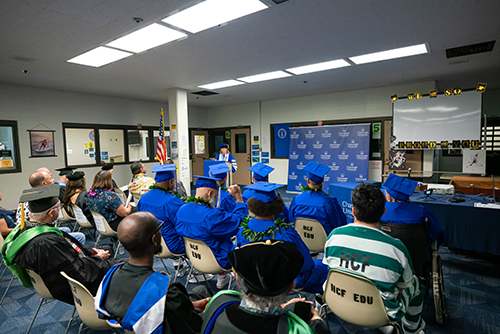
Last year's first graduating class attended a commencement ceremony at Halawa Correctional Facility.
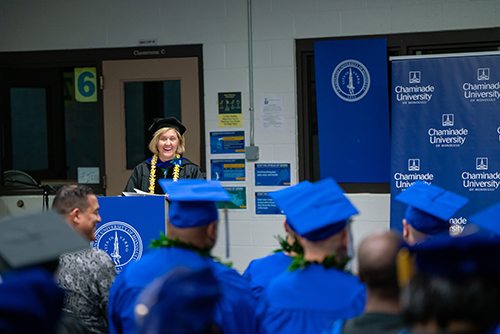
Chaminade President Dr. Lynn Babington congratulated graduates during a commencement ceremony at Halawa Correctional Facility.

Hawaii’s correctional facilities epitomize the challenges the state face, grappling with chronic overcrowding and deteriorating conditions. In 1978, Hawaii’s incarceration rate stood at one per 1,000 people. Since then, national rates have skyrocketed, with Hawaii’s incarceration rate at 439 per 100,000 people (including prisons, jails, immigration detention and juvenile justice facilities), meaning that it locks up a higher percentage of its people than almost any democratic country on earth, according to the non-profit, non-partisan Prison Policy Initiative, whose research and advocacy is at the center of the national conversation about criminal justice reform and over-criminalization.

Following its re-designation, the Hawaii Department of Corrections and Rehabilitation underscored the importance of transitioning away from punitive justice, making rehabilitation a core aspect of its mission. With a staggering 95 percent of incarcerated individuals eventually returning to society, this shift is deemed crucial for achieving successful reintegration. As part of its restructuring, law enforcement functions previously under Department of Public Safety were transferred to a newly established Department of Law Enforcement. The move reflects a broader commitment to address the root causes of criminal behavior and promote long-term societal wellness. By prioritizing rehabilitation and reintegration programs, the Department of Corrections and Rehabilitation aims to create safer communities and support individuals in their journey toward positive change.

“The motto for our department is ‘He Au Hou,’ which means ‘a new era,’” said Tommy Johnson, Director of the new Department of Corrections and Rehabilitation, which re-establishes the Hawaii Department of Public Safety. “We’re able to focus our full attention, resources, and energy on rehabilitation and restoration to support those in our custody and care. We envisioned this over two years ago and it’s exciting to see this coming to fruition. We may not see changes occur overnight. We know there is always room for improvement, but I’m confident we’re headed in the right direction.”

Chaminade Vice Provost for Academic Affairs, Dr. Janet Davidson, addressed graduates during last year's commencement ceremony at Halawa Correctional Facility.
Chaminade Vice Provost for Academic Affairs, Dr. Janet Davidson, addressed graduates during last year’s commencement ceremony at Halawa Correctional Facility.

Davidson shares Johnson’s optimism, and she hopes to expand Chaminade’s Higher Education in Prison program to include an interdisciplinary bachelor’s degree program and a new women’s program at Women’s Community Correctional Center. The commitment to these educational programs reflects a fundamental paradigm shift towards a justice system focused on rehabilitation rather than punitive measures. By providing access to education, prisons foster a culture that prioritizes personal growth and skill development, ultimately empowering individuals to become productive members of society upon release.

This non-punitive approach not only benefits the individuals directly involved but also contributes to broader societal outcomes, including reduced crime rates and enhanced community safety. Embracing higher education within the prison system signifies a commitment to justice that extends beyond punishment, striving instead for meaningful rehabilitation and long-term societal transformation.

“I don’t know how to do life out there,” one of the Halawa students told Matthews, referring to re-entering society after being released from prison, adding that they feel that she talks to them, and that she understands them. Empathy is indeed a powerful message for those incarcerated, who often say they don’t “feel treated as human beings.”

“I feel like a ‘wounded healer,’” says Matthews, quoting a term coined by Shadd Maruna, Ph.D., the dean of the School of Criminal Justice at Rutgers University Newark. “Many prisoners and former inmates express a desire to receive mentoring from formerly incarcerated persons who are ‘making it’ in conventional society.”

Prison reentry is a complex process that requires comprehensive strategies involving legislation, regulations, support programs, and community involvement. By prioritizing rehabilitation and reintegration, society can help individuals leaving incarceration rebuild their lives and become productive members of society. Through concerted efforts and collaboration, we can bridge the gap between prison and society, paving the way for successful reentry and reducing recidivism rates in the long run.

Posted by: University Communications & Marketing Filed Under: Diversity and Inclusion, Education, Featured Story, Innovation, Institutional Tagged With: Andrew W. Mellon Foundation Grant, Education in Prison, Marianist, Second Chance Pell

Matching Tuition

March 13, 2024

Chaminade’s Hawaii Guarantee Program matches UH Manoa’s resident tuition

Chaminade defies the age-old adage that nothing in life is guaranteed. Unless it concerns tuition. Last fall, the University assured that all incoming freshmen from Hawaii would pay the resident undergraduate rate of $11,304—the same amount students shell out at the University of Hawaii at Manoa—a steep discount on Chaminade’s typical tuition price of $29, 970. In subsequent years, Chaminade’s resident tuition will change if and only when UH Manoa’s does.

“After we launched the Hawaii Guarantee program, we saw a 30 percent increase in Hawaii applications/deposits,” says Jennifer Creech, Vice President for Enrollment Management and Student Success. “And we’ve also seen an increase of 27.36 percent from Fall 2022 to Fall 2023. Overall, we’re trending in the right direction.”

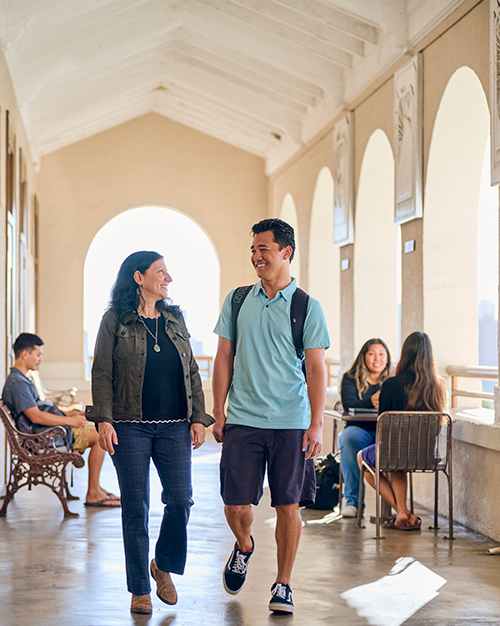
School of Humanities, Art and Design Dean Dr. Cheryl Edelson walks through Henry Hall with senior Sean Lorrenzo.
School of Humanities, Art and Design Dean Dr. Cheryl Edelson walks through Henry Hall with senior Sean-Zacharry Lorrenzo.

The cost of college has become a subject of significant concern and discussion in recent years. Rising tuition fees, along with additional incidental expenses such as textbooks, housing and meal plans, have made pursuing higher education financially daunting for many individuals and families.

This, of course, has led to concerns about accessibility and affordability, particularly for low-income and middle-class families. In response, policymakers, educators and advocacy groups have been exploring various strategies to address the issue, such as increasing need-based financial aid, expanding access to community colleges and trade schools, and implementing tuition-free or reduced-cost college programs at the state or national level.

“This effort is really a part of Chaminade’s service-oriented mission, which is to make higher education accessible to all Hawaii students,” says President Lynn Babington, Ph.D. “Across the country, less than half of students graduate on time. Our Hawaii Guarantee is designed to help students map out their academic journeys, and receive the course offerings and advising support needed to get them there. They will have a clear path to a four-year graduation.”

In addition to the predictable tuition rate, the Hawaii Guarantee amount of $11,304 can be reduced with various financial aid opportunities, including scholarships, grants and work-study programs, to further stem the financial burden on students, and to ensure that all students have access to the resources they need to succeed academically and professionally. However, to receive the Hawaii Guarantee rate, freshmen must be continuously enrolled at Chaminade for consecutive semesters and graduate in four years.

“We are committed to helping make the dream of higher education attainable,” Babington asserts. “Today’s students hold the power to change the world for the better—and we are proud to develop that next generation of leaders right here at home.”

When asked about the impetus for the new tuition schedule for local students, Creech said the University wanted to strengthen its commitment to the community. “Chaminade is a community-first University,” she added. “We wanted to remind our local residents that Chaminade is here and that the school is a good option to pursue their higher education.”

Enrollment at Chaminade has remained strong in recent years, and this Fall’s 484 incoming students represents the largest number in 20 years. The Hawaii Guarantee program is designed to offer students a transparent and predictable tuition structure, helping them plan for their educational expenses more effectively. Through this program, Chaminade pledges to keep tuition costs stable for students throughout their four years of undergraduate study, providing peace of mind and financial stability for both students and their families.

Furthermore, Chaminade is committed to providing a supportive learning environment that fosters student success. Through small class sizes, personalized attention from faculty and staff, and a strong sense of community, students can thrive academically and personally while pursuing their educational goals.

“Education is transformative,” Babington said. “Overall, the Hawaii Guarantee program exemplifies Chaminade’s dedication to making higher education affordable for all students in Hawaii. By removing financial barriers and providing comprehensive support services, Chaminade empowers students to achieve their full potential and make meaningful contributions to their communities and society at large.”

Posted by: University Communications & Marketing Filed Under: Campus and Community, Diversity and Inclusion, Featured Story, Institutional, Students Tagged With: Hawaii Guarantee, Tuition Savings

  • « Go to Previous Page
  • Page 1
  • Interim pages omitted …
  • Page 34
  • Page 35
  • Page 36
  • Page 37
  • Page 38
  • Interim pages omitted …
  • Page 92
  • Go to Next Page »

Footer

Chaminade University Logo

3140 Waialae Avenue
Honolulu, Hawaii 96816

Contact Us
Phone: (808) 735-4711
Toll-free: (800) 735-3733

facebook twitter instagram youtube linkedin

Visit

  • Plan Your Visit
  • Campus Map (PDF)
  • Events

Resources

  • Campus Security
  • Student Consumer Information
  • Concerns, Feedback, and Reporting
  • Institutional Review Board
  • Title IX / Nondiscrimination Policy
  • Compliance
  • Emergency Information
  • Careers
  • Institutional Statement

People

  • Students
  • Parents
  • Alumni
  • Faculty & Staff

Policy

  • Privacy Policy
  • Terms and Conditions of Use


© Chaminade University of Honolulu