• Skip to primary navigation
  • Skip to main content
  • Skip to footer
Chaminade University of Honolulu

Chaminade University of Honolulu

  • VISIT
  • APPLY
  • GIVE
  • STUDENTS
  • PARENTS
  • ALUMNI
  • FACULTY/STAFF
  • Admissions
    • Admissions Home
    • Undergraduate Students
      • First-Year Students
      • Transfer Students
      • Admitted Students
    • Graduate Students
    • Flex Online Undergraduate Program
    • Military Students
    • Non-Degree/Visiting Students
    • Experiential Honors Program
    • Early College Program
    • New Student Orientation
  • Tuition & Aid
    • Financial Aid Home
    • Tuition & Expenses
    • Federal Updates & Changes
    • Scholarships
    • $5,000 Graduate Scholarship
    • VA Education Benefits
    • Net Price Calculator
  • Academics
    • Academics Home
    • Academic Programs
    • Office of Student Success
      • Academic Advising
      • Records and Registrar
    • Kōkua ʻIke (Support Services)
      • ADA Accommodations
      • Career Services
      • Proctoring Services
      • Tutoring Services
    • Sullivan Family Library
    • Undergraduate Research & Pre-Professional Programs
    • Commencement
  • Campus Life
    • About Campus Life
    • Student Engagement
    • Student Government Association
    • Residence Life and Housing
    • Health Services
    • Marianist Leadership Center
    • Counseling Center
    • Campus Ministry
    • Campus Security
    • Dining Services
    • Bookstore
  • Athletics
  • About
    • Chaminade University News
    • Our Story
    • Leadership
    • Chaminade University Strategic Plan 2024-2030
    • Mission & Rector
    • Association of Marianist Universities
    • Facts & Rankings
    • CIFAL Honolulu
    • Accreditation & Memberships
    • Montessori Laboratory School
Search
×

Search this web site

STEM

Embracing STEM Innovation in Education

October 6, 2025

How is STEM changing how teachers teach—and students learn?

That was the focus of a recent conference on Chaminade’s campus organized by the Hawaii Science Teaching Association (HaSTA) and Hawaii Council of Teachers of Mathematics (HCTM).

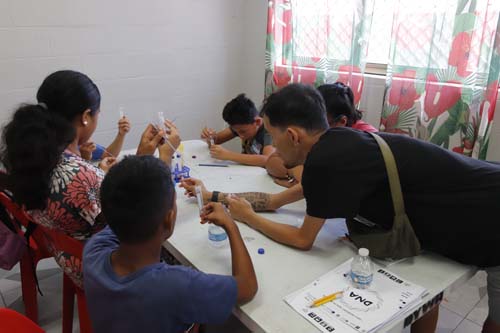
Nearly 70 participants gathered for the event, entitled, “Power of STEM: Operations and Observations,” which encouraged teachers to explore the intersection of science and mathematics in their classrooms. The day included collaborative sessions and a keynote address from natural resources educator Jackie Frietas, who was named Hawaii’s Teacher of the Year for 2024.

Katrina Roseler, Ph.D., a professor of Education and director of Teacher Preparation Programs at Chaminade, said attendees walked away with new ideas and pedagogical approaches for fostering STEM (Science, Technology, Engineering and Mathematics) literacy in today’s classrooms.


Never miss a post! Follow Chaminade University on Facebook and Instagram.


One of the biggest takeaways for many educators was the importance of hands-on learning.

“Participants valued creating more interactive, hands-on, and exploratory experiences for students that connect learning to real-life contexts,” she said, noting those experiences could include labs, games, classroom stations and field-based activities.

“Another strong theme was the importance of integrating math, science, and other disciplines, using inquiry-based approaches to deepen connections and engagement. Teachers highlighted strategies that promote active engagement, collaboration, and thinking classrooms, such as … purposeful games.”

The conference comes amid a broad push to not only integrate more STEM learning into classrooms, but look for ways to help students develop tools for critical thinking and problem solving for a fast-changing world and workforce. Roseler said one key theme in the conference was encouraging teachers to leverage existing resources and partnerships to enrich classroom instruction in actionable ways.

“The conference provided an energizing and practical learning experience, equipping educators with strategies they can immediately implement in their classrooms,” Roseler said.

“The sessions reinforced the power of leveraging diverse resources and partnerships—from digital platforms to community organizations—to enrich teaching and learning. Finally, participants were inspired by the energy and modeling of the presenters, leaving with renewed enthusiasm and actionable ideas to bring back to their classrooms right away.”
Posted by: University Communications & Marketing Filed Under: Education, Featured Story, Homepage Tagged With: STEM, Teacher Preparation

Silversword STEM Camp in American Samoa

August 26, 2024

Chaminade’s I Am a Scientist program is all about hands-on learning

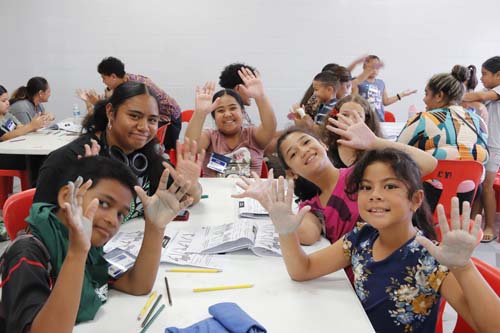
For the first time since its founding in 2009, Chaminade’s popular I Am a Scientist summer camp traveled thousands of miles away to American Samoa this year, setting up base at the Lyndon B. Johnson Tropical Medical Center in Fagaalu on the eastern shore of Pago Pago Harbor.

Rhea Jose, an outreach coordinator for Chaminade’s CIFAL Center, said the two-week health sciences boot camp was geared toward first to eighth graders. In all, 169 students from elementary to high school attended the camp, getting a taste for what scientists do every day. “We brought six large luggage, which were packed with all kinds of equipment, including microscopes, DNA extraction kits, pulse oximeters, blood pressure cuffs, pipettes, thermometers, black lights, even glitter,” Jose said.

Since its inception, the I Am A Scientist outreach program has reached 72,339 students and visited 450 schools across Hawaii, Guam, Saipan and now American Samoa, according to Lori Shimoda, I Am A Scientist founder and research associate in the Natural Sciences and Mathematics department.


Never miss a post! Follow Chaminade University on Facebook and Instagram.


Shimoda said before the program was launched, she had several discussions with CIFAL Honolulu Research Director Dr. Helen Turner about the need for a program that allowed keiki to experience what it means to be a scientist first-hand. “We were at a loss for how to do it,” Shimoda added, until her son—in third grade at the time—came home from school complaining that his science lessons were boring.

The reason? “They did not get to use the cool scientific equipment in the laboratory.”

The comment became the blueprint for the IAS program.

With the help of other faculty members and Silversword students, Shimoda started to take actual scientific equipment and supplies into classrooms to teach keiki about science by letting them become real scientists, using real scientific experiments and techniques.

“IAS takes real scientists and science undergraduates into the classroom so keiki can meet and talk to them about what it’s like to be a scientist, and how to go to school to become one,” Shimoda said.

“We offer a unique and fun science experience using equipment not typically found in schools. The science lessons are robust, and taught by working scientists.”

Funded by the Frederic Duclos Barstow Foundation for American Samoans, the IAS-AS camp was a unique collaboration between Chaminade and the Lyndon B. Johnson Tropical Medical Center, which ranks among the best medical facilities in the Pacific and is the only hospital in American Samoa.

Other partners included the American Samoa Telecommunication Authority, American Samoa Department of Youth and Women’s Affairs, the American Samoan Department of Education School Lunch Program, The National Science Foundation’s Alliance Supporting Pacific Indigenous Computing Excellence (ALL-SPICE) and CIFAL Honolulu. The camp focused on health science, a key need area.

“We remove barriers to participation by going to the school and being free,” wrote IAS-AS program staff member and Associate Professor of Biology Jolene Noelani Cogbill, in a write-up on the camp.

“We received daily comments from parents and community members, expressing their gratitude for bringing Science, Technology, Engineering and Mathematics to elementary-aged students to American Samoa, and asking if the IAS-AS program would be coming back regularly.”

They also noted how there are few educational STEM opportunities for students in American Samoa, and those that do exist are targeted towards high school students, Cogbill said in her report.

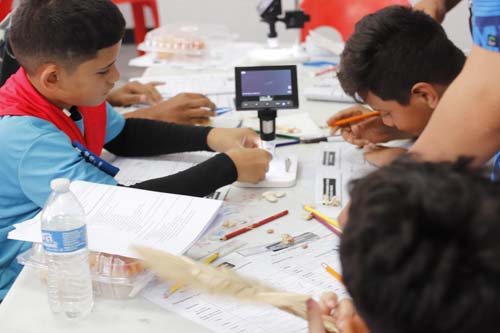
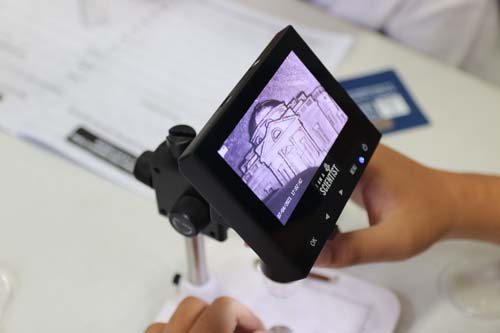
  • American Samoa students got to use various science equipment, including this mini microscope.
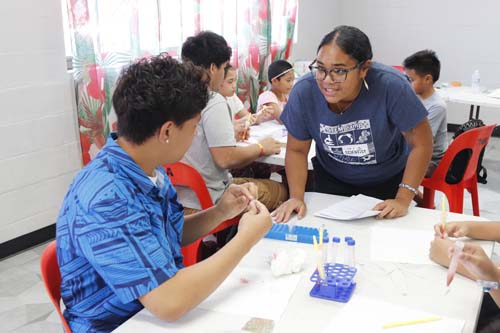
  • Chaminade Student Ambassador La‘a Gamiao helped students with science lab work.
  • Rhea Jose, Outreach Coordinator for Chaminade’s United Nations CIFAL Center and I Am A Scientist–American Samoa (IAS-AS) program staff member, provides one-on-one help with one of the students.
  • One of the modules focused on how easily germs spread and the importance of hygiene management. Campers were also asked to pick an environment (shoe, table, hands, etc) to swab and culture on agar plates so they could visualize “germs” on Day 3 of camp.
  • In this module students were introduced to the importance of OBSERVATION as a key part of not only the scientific process, but in our daily lives. They used their 5 senses as well as various scientific tools, such as magnifying glasses, digital and dissecting microscopes.
  • Chaminade Cultural Engagement Specialist Kahoalii Keahi-Wood assisted students with their science exercises.
  • Posted by: University Communications & Marketing Filed Under: CIFAL Honolulu, Featured Story, Institutional, Natural Sciences & Mathematics Tagged With: STEM

    Footer

    Chaminade University Logo

    3140 Waialae Avenue
    Honolulu, Hawaii 96816

    Contact Us
    Phone: (808) 735-4711
    Toll-free: (800) 735-3733

    facebook twitter instagram youtube linkedin

    Visit

    • Plan Your Visit
    • Campus Map (PDF)
    • Events

    Resources

    • Campus Security
    • Student Consumer Information
    • Concerns, Feedback, and Reporting
    • Institutional Review Board
    • Title IX / Nondiscrimination Policy
    • Compliance
    • Emergency Information
    • Careers
    • Institutional Statement

    People

    • Students
    • Parents
    • Alumni
    • Faculty & Staff

    Policy

    • Privacy Policy
    • Terms and Conditions of Use


    © Chaminade University of Honolulu