
It was a day of learning, mentorship and inspiration.
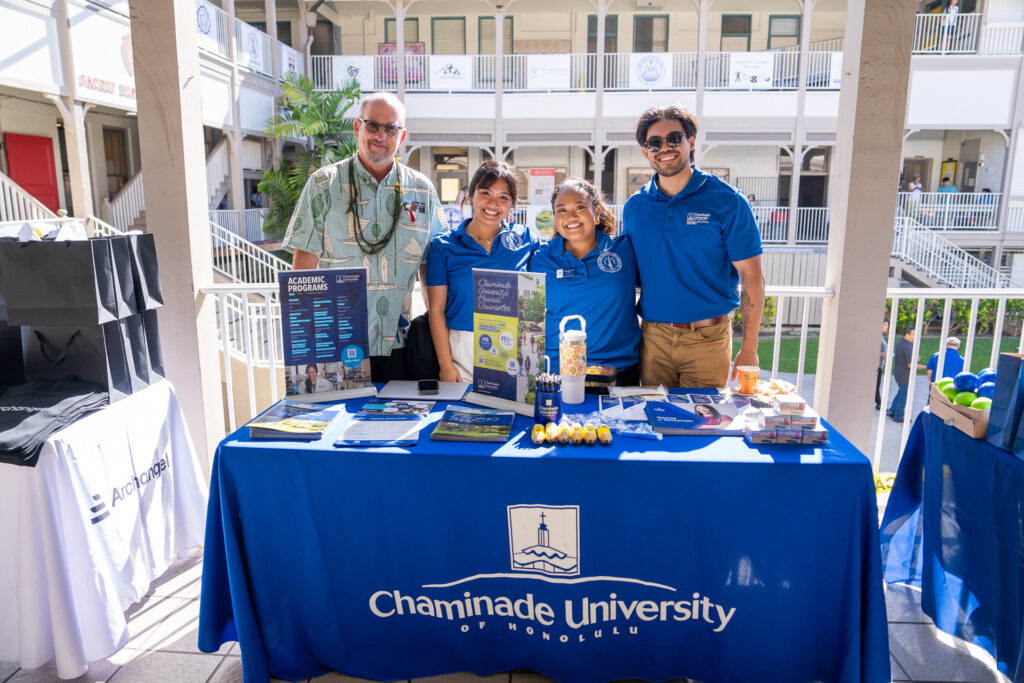
Several Chaminade professors, staff members and administrators served as speakers at this year’s Conference for Catholic School Educators, held Jan. 31 at Sacred Hearts Academy.
Their presentations touched on everything from leveraging AI in the K-12 classroom to the unique identity and role of Catholic schools in the islands and nationally.
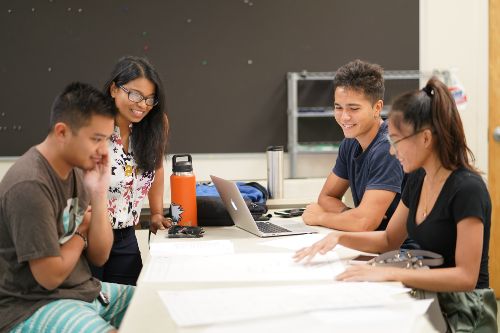
Tiffany Akiyama, an educational technologist at Chaminade’s Center for Teaching and Learning, focused her presentation on the power of combining curriculum development and technological tools to transform spaces for active student learning.
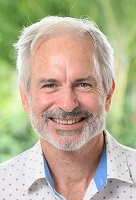
“I’ve had the incredible opportunity to help design and implement active learning spaces that are reshaping active learning at Chaminade,” said Akiyama, who delivered her talk with Dr. Scott Wylie, director of the Center for Education in Oceania at Chaminade.
They said redesigns focused on the importance of flexibility, collaboration and creativity.
“We took a fresh look at how students learn best and designed classrooms that adapt to them—not the other way around,” Akiyama said. Added Wylie: “Flexibility means students and faculty can move things around. Collaboration means fostering spaces where ideas can be built together. Creativity means giving students tools to express their thinking.”
Other Chaminade speakers at the conference included:
- Dr. Katrina Roseler, associate professor of Education;
- Dr. Denise Dugan, Education instructor
- Dr. Allison Jerome, vice president for Student Affairs and dean of students;
- Andrew Ancheta, student engagement coordinator;
- and Fr. Martin Solma, S.M., university chaplain and special assistant to the president.
Solma and Ancheta delivered a talk on Catholic education entitled “Those who Sow Generously, Reap Generously.”
They explored the ethos and identity of Catholic schooling, and spoke to educators on the importance of character development in young people.
In the AI talk, the Chaminade team underscored how AI-driven technologies are revolutionizing traditional teaching models and offered educators and stakeholders with practical and innovative strategies for integrating AI into today’s K-12 classrooms.
 “We are a teaching university,” said Davidson, who took on the University’s newly created role as associate provost for academic affairs in 2017. “Our faculty really want to improve the delivery of their material to their students. There’s a hunger for it.”
 The center offers a host of seminars, including those on culturally appropriate teaching, student engagement, and improved testing. It also offers grant-writing support and hosts faculty-led talks that have covered everything from how to use social media as a teaching tool to the power of service learning and study abroad in engaging students.