• Skip to primary navigation
  • Skip to main content
  • Skip to footer
Chaminade University of Honolulu

Chaminade University of Honolulu

  • VISIT
  • APPLY
  • GIVE
  • STUDENTS
  • PARENTS
  • ALUMNI
  • FACULTY/STAFF
  • Admissions
    • Admissions Home
    • Undergraduate Students
      • First-Year Students
      • Transfer Students
      • Admitted Students
    • Graduate Students
    • Flex Online Undergraduate Program
    • Military Students
    • Non-Degree/Visiting Students
    • Experiential Honors Program
    • Early College Program
    • New Student Orientation
  • Tuition & Aid
    • Financial Aid Home
    • Tuition & Expenses
    • Federal Updates & Changes
    • Scholarships
    • $5,000 Graduate Scholarship
    • VA Education Benefits
    • Net Price Calculator
  • Academics
    • Academics Home
    • Academic Programs
    • Office of Student Success
      • Academic Advising
      • Records and Registrar
    • Kōkua ʻIke (Support Services)
      • ADA Accommodations
      • Career Services
      • Proctoring Services
      • Tutoring Services
    • Sullivan Family Library
    • Undergraduate Research & Pre-Professional Programs
    • Commencement
  • Campus Life
    • About Campus Life
    • Student Engagement
    • Student Government Association
    • Residence Life and Housing
      • Summer Conference Housing
    • Health Services
    • Marianist Leadership Center
    • Counseling Center
    • Campus Ministry
    • Campus Security
    • Dining Services
    • Bookstore
  • Athletics
  • About
    • Chaminade University News
    • Our Story
    • Leadership
    • Chaminade University Strategic Plan 2024-2030
    • Mission & Rector
    • Association of Marianist Universities
    • Facts & Rankings
    • CIFAL Honolulu
    • Accreditation & Memberships
    • Montessori Laboratory School
Search
×

Search this web site

Student Life

Office of Student Success

February 22, 2024

The emergence and significance of universities’ Offices of Student Success

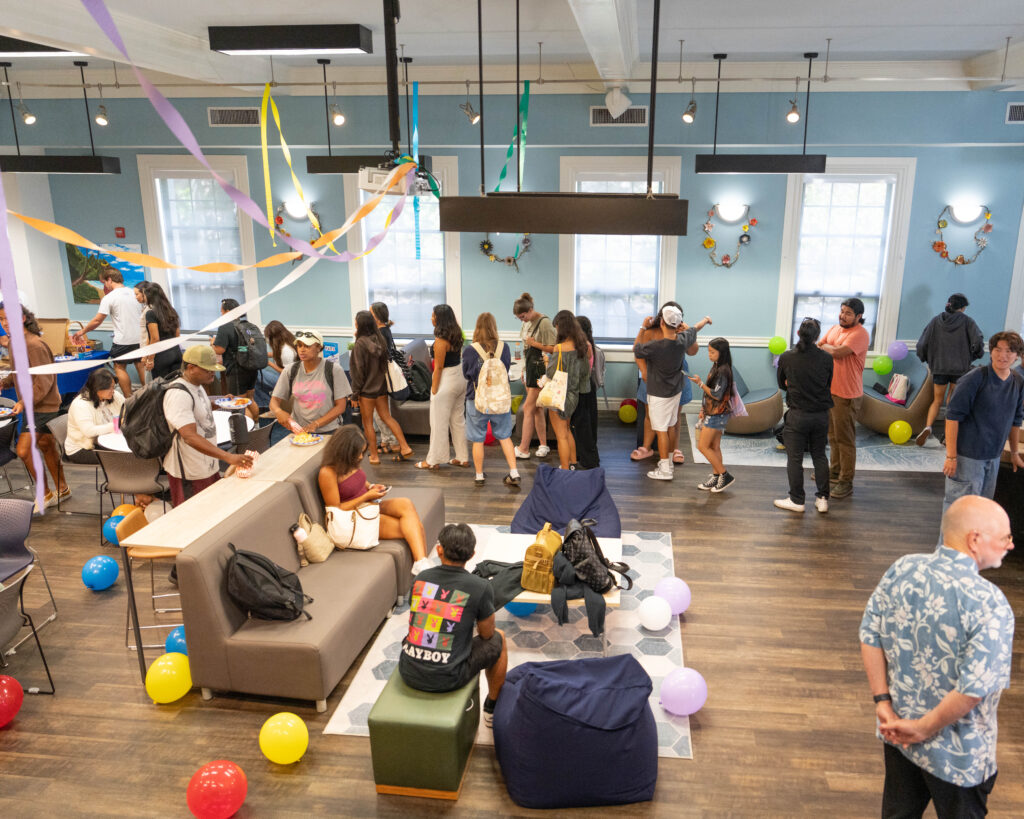
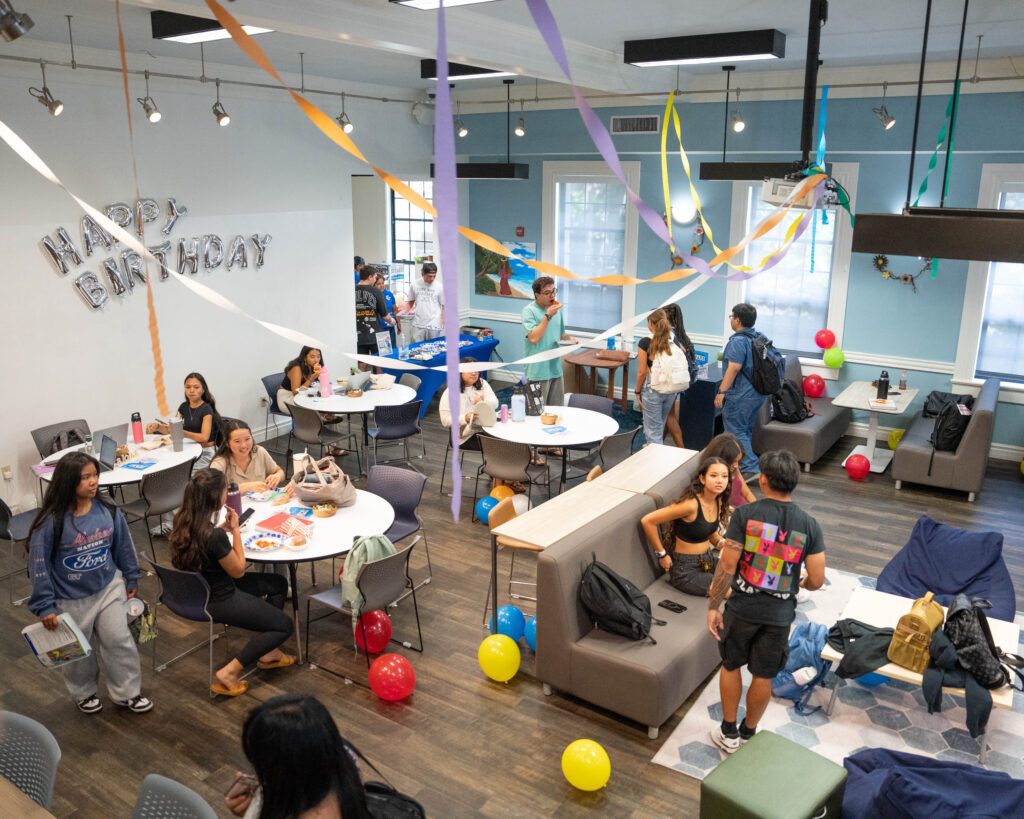
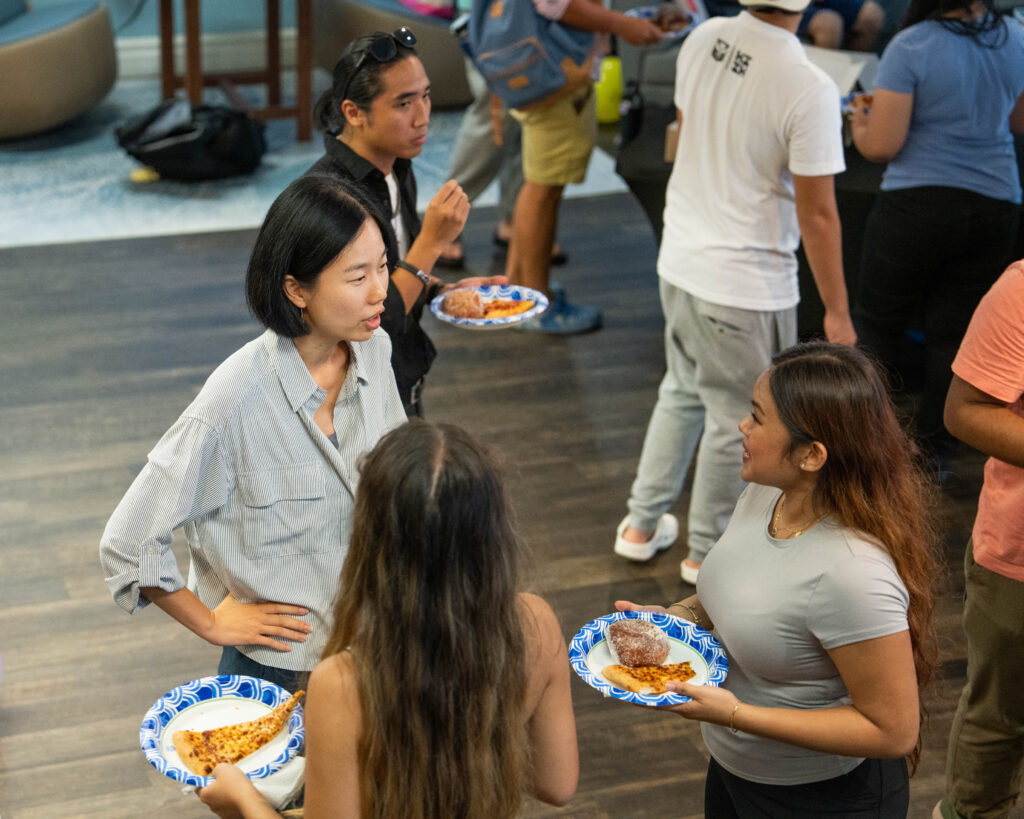
Trachelle Iwamoto ’26 wasn’t quite sure what to expect when she arrived on campus from Kapa‘a, Kauai. Nor did Kryzandreah Español ’26 and Easton DelaCruz ’26. As freshmen, Iwamoto, Español and Dela Cruz felt anxious about the transition from high school to university, uncertain about the rigors of academia and their own self expectations.

Dani Masuda provides some academic advice.

However, it’s not uncommon for freshman to feel nervous when experiencing what many consider a rite of passage from the teen years to early adulthood. In response, universities have undergone significant transformations in recent years, marked by an increased focus on student success.

“In 2020, we re-evaluated our support services and designed a one-stop center—Office of Student Success—that includes academic advising, career development, tutoring and learning services, military student benefits, registrar and records, and study abroad,” says Jennifer Creech, Vice President for Enrollment Management and Student Success. “We’re committed to providing comprehensive support and resources to ensure that students not only excel academically, but also thrive in their overall collegiate experience.”

The concept of student success has evolved from a narrow focus on academic achievement to a more holistic approach, which encompasses personal growth, career readiness and well-being. Historically, universities primarily concentrated on instructional and administrative functions, with less emphasis on proactive student support. The changing dynamics of higher education, including shifting demographics, technological advancements and an increased awareness of the diverse needs of students, prompted the establishment of dedicated offices to address these challenges.

“If I have a question or experience any difficulty, I’ll go to the Student Success Office,” says Español, who is studying to be a nurse and aspires to become a cardiothoracic surgeon. “I feel truly supported in every aspect of my academic journey here. Chaminade has created a supportive environment that extends beyond just academic assistance, making me feel connected and valued.”

Before the start of their freshman year, Español, Iwamoto and Dela Cruz all attended the Apo Haumana Retreat, a program introduced in 2021 as a faculty-led initiative to help first-year students transition to Chaminade through building connections with faculty and peers outside of the classroom.

“It gave me a foothold into the university,” Iwamoto says. “I met a lot of other students, mentors, staff and faculty who were all welcoming and personable. I felt like they wanted to know who I was as a person.”

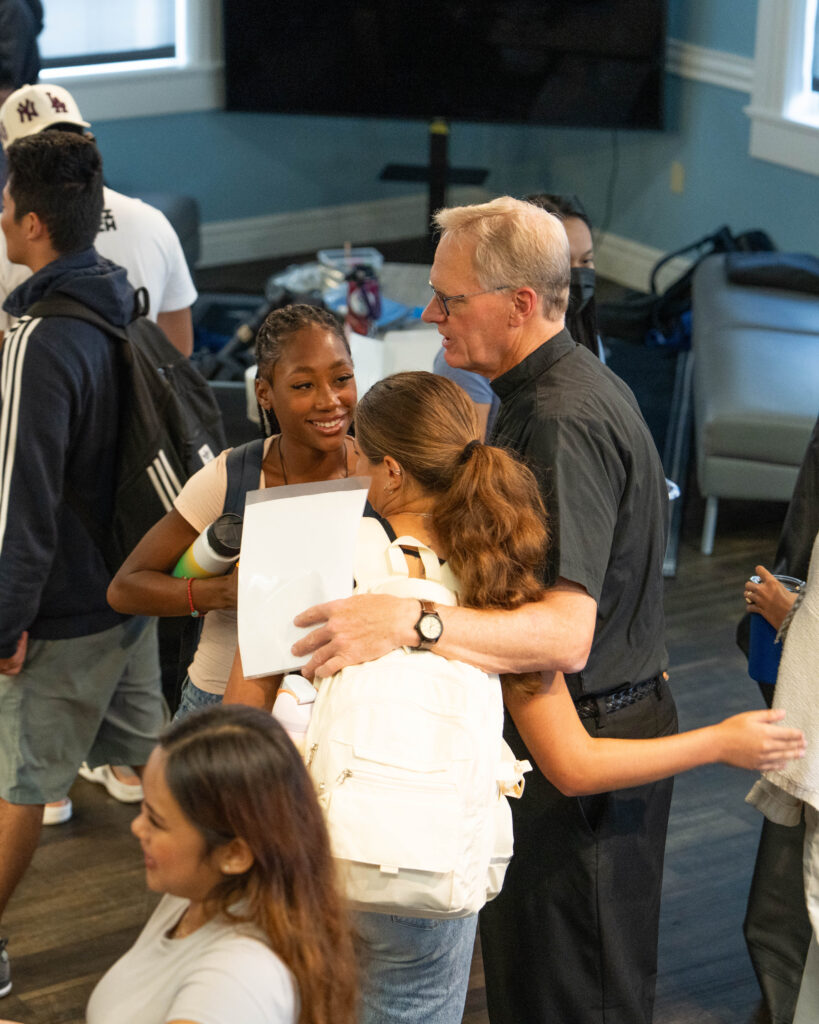
Chaminade President Dr. Lynn Babington welcomes incoming freshmen during the New Student Orientation.

Now a peer advisor with the Apo Haumana program, DelaCruz works closely with the Office of Student Success to create helpful workshops for first-year students. He also assists program participants with different obstacles they may face throughout their first year.

“Having been a member of the program during my first year, I felt that it benefited me as I transitioned from high school to college,” says DelaCruz, who has ambitions to run for the Governor’s office when he returns to Saipan. “This is my way of giving back to Chaminade since I’ve personally received so much support in my academic journey.”

Many institutions offer programs specifically designed to support students during their first year, helping them smoothly shift into the university environment. At Chaminade, that support is tailored to each student. Unlike the past, according to Creech, interactions between advisers and students seemed transactional; students were being told what classes to take and what to do as opposed to the student owning his/her own educational journey.

“We’re here to help them navigate that journey,” Creech says. “Everything is tailored; it’s not one size fits all. We triage and assess the problem to make sure that our Chaminade students succeed. We complement what the faculty are already doing—mentoring, advising and counseling. The Office simply adds another layer of support.”

Research has shown a positive correlation between the presence of robust student success initiatives, and improved retention and graduation rates. By addressing challenges early, providing targeted interventions, and cultivating a supportive community, the Office of Student Success plays a crucial role in ensuring that students persist through their academic journeys and successfully attain their degrees.

“When we re-structured the office, we leveraged technology and we updated our student portal,” Creech explains. “Today, we use predictive analysis to identify students who may be at risk and we intervene before they drop out. Our fall 2023–spring 2024 retention rate is 88.3 percent, and our enrollment numbers for undergraduate FTE (full-time equivalency” is up by eight percent. All positive news.”

Posted by: University Communications & Marketing Filed Under: Campus and Community, Diversity and Inclusion, Featured Story, Institutional, Student Life Tagged With: Campus Event, Student Success

Artificial Intelligence

January 18, 2024

Embracing the use of AI in education

Dr. Denise Dugan believes that AI will only continue to progress and evolve as new data flows in.
Dr. Denise Dugan believes that AI will only continue to progress and evolve as new data sets flows in.

Long before it was reduced to an uppercase two-letter acronym, artificial intelligence (AI) was already present in education with early systems focused on using simple algorithms to automate certain educational tasks. In the 1970s, the emergence of Intelligent Tutoring Systems (ITS) was designed to provide personalized instruction based on individual student needs, more commonly known today as Individual Educational Plans. These days, OpenAI dominates the conversation and headlines.

“AI has been in education in some iteration for decades now,” says Denise Dugan, Ph.D., Assistant Professor of Special Education and Elementary Education. “The danger of AI these days is that current students have too much reliance on it, rather than simply using it as another available resource.”

In an op-ed to the “Chicago Tribune,” Chaminade Provost Lance Askildson opines that recent advances in artificial intelligence have given rise to hyperbolic predictions of the decline of many human roles and professions.

“In fact, purported AI platforms such as ChatGPT will never be meaningful replacements for writers, educators or people in general,” Askildson writes. “To understand why this is true, it is critical to remind ourselves of what ChatGPT is and how its architecture and capabilities relate to the science of human learning and the arts of writing and teaching, respectively.”

The conversation around AI didn’t just begin in 2023. The U.S. Department of Education initiated a project exploring the use of generative AI in 2020, partnering with Digital Promise to collect information and insights. Recently, the outcomes of that work were released by the U.S. Department of Education Office of Educational Technology. Titled “Artificial Intelligence and the Future of Teaching and Learning: Insights and Recommendations,” the new report addresses the clear need for sharing knowledge, engaging educators, and refining technology plans and policies for artificial intelligence (AI) use in education.

The report further describes AI as a rapidly-advancing set of technologies for recognizing patterns in data and automating actions, and guides educators in understanding what these emerging technologies can do to advance educational goals—while evaluating and limiting key risks. This paper also explains AI in education and gives a pros-and-cons summary, and suggests districts develop a policy defining parameters for AI use in education.

During an educator workshop hosted by Hawaii Education Association, Dugan and Chaminade students Abigail Eli ’23 Gabe Zapata-Berrios ’24 were among the attendees who discussed not only the ethical dimensions of AI, but also its legal ramifications.

“I can see how AI is having an impact on educators and students,” says Eli, who is pursuing her master’s in counseling psychology at Chaminade and is one of three Community Homeless Concerns liaisons with the Hawaii Department of Education in the Nanakuli-Waianae Complex Area. “I think it could be beneficial for our Waianae students who struggle with the concept of writing. I think they can learn from seeing something that’s well written.”

Starting his student teaching in Kailua, Zapata-Berrios has experimented with AI in his own studies, using it, for example, to create lesson plans, which typically take a lot of time.

“AI will write a complete lesson plan in less than 10 seconds,” Zapata-Berrios says. “This lesson plan is typically pretty good as a first draft. If I want I can ask the AI to revise it for me or I can just take that draft and revise it myself. I would always recommend revising it yourself because AI is not perfect.”

Abigail Eli '23 is now pursuing her master’s in counseling psychology at Chaminade.
Abigail Eli ’23 is now pursuing her master’s in counseling psychology at Chaminade.

While academic dishonesty tops the list of educators’ concerns about AI in education, teachers also worry that increased use of AI may mean learners receive less human contact. It’s a valid point that Askildson succinctly affirms in his letter to the editor, noting that “the science of human learning has shown us that students learn not only through their abilities of reasoning, interpretation and creative expression—which ChatGPT lacks— but also with the help of teachers who engage them in a two-way dialogue accompanied by feedback that is adjusted to their understanding and overall needs.”

From a student’s perspective, the use of AI in education comes with both benefits and potential pitfalls. Some view AI-powered tools as a way to provide additional support to students with diverse learning abilities, making education more inclusive. It can then assist in addressing specific challenges students may face.

Others are skeptical about its accuracy and its susceptibility to spread misinformation and disinformation. It’s also biased since AI can only be as smart or effective as the quality of data it is provided, and algorithms can be manipulated and skewed.

“Some of the teachers we heard from said they wanted to stay away from AI all together, that it was too controversial,” Dugan says. “They were afraid of plagiarism and cheating, and not being able to detect it. But I say AI is here to stay; it’s not going to go away and it will only progress.”

“AI is going to keep growing and infiltrating more parts of our lives,” adds Zapata-Berrios. “It’s already all over the place and constantly analyzing and improving. It will become more prevalent in classrooms, however, I don’t think it will become something that the students use to outsource their thinking. I think it’ll be present without the students knowing it’s there.”

Posted by: University Communications & Marketing Filed Under: Education, Faculty, Homepage, Innovation, Institutional, Student Life Tagged With: Elementary Education, Master of Arts in Teaching, Secondary Education

True Calling

December 18, 2023

As a Zoo Camp instructor, Sara Aliza Sahagon finally found her true passion—to teach.

Sara Aliza Sahagon ’24 holds down two jobs: her regular day job as a long-term substitute teacher at Kauai High School and what she defines as her “heart job,” which is taking care of her community service programs, a passion she has maintained since she was a young Chamorro in Guam.

“I wanted to become a social worker when I was younger,” says Sahagon, who will walk in the May 2025 Commencement Ceremony. “I was volunteering with Youth for Youth LIVE! Guam, which is a non-profit community-based, youth-centered, youth-driven drug prevention program for teens between the ages of 11 and 17. This is what I thought I was going to do for the rest of my life.”

Sara Aliza Sahagon serves as the head advisor with Kauai High School's Key Club, which focuses on community service.
Sara Aliza Sahagon serves as the head advisor with Kauai High School’s Key Club, which focuses on community service.

Her mom, Stacey Coletta, had other plans for her daughter. Although accepted into Stanford, Coletta was restrained from attending the private research university due to tuition and board costs. Understandably, she wanted Sara and her older sister, Hanna, to move off island, and to explore and experience the world through another lens.

In her senior year at Notre Dame in Talo’fo’fo’, Sahagon applied to the University of Hawaii–Manoa and Hawaii Pacific University (HPU). Unfortunately, she admittedly missed the Chaminade University application deadline.

“I wanted to find an open world,” Sahagon says. “I wanted to meet new people who weren’t related to me. I wanted to experience new things, but I still wasn’t ready to leave the island lifestyle all behind, like my older sister did when she went to school in San Diego. So, Oahu was perfect for me.”

Accepted to HPU, Sahagon was excited to go to college … until she got there. The classrooms, she says, felt like they were closing in on her and doubts of her academic knowledge crept in, incapacitating her from thinking and constantly intimidated by her fellow classmates. It was a shock to Sahagon because she had always been at the top of her class back in Guam, earning As and merits for her work.

“I couldn’t deal with traditional college,” Sahagon says. “I felt dumber than everyone in the room, and it really brought me down. So, I dropped out after my first year.”

After bouncing from job to job, from Kate Spade to Bath & Body Works, Sahagon landed an instructor position with the Honolulu Zoo’s “Zoo Camp.” After years of searching, the 23 year old finally found her true calling. She flourished, and learned and absorbed everything she could about zoology—from the various species to their different habitats.

“I worked at the Zoo for three years until COVID hit,” Sahagon laments. “I loved teaching and I knew that’s what I wanted to do. I did find another position with After-School All-Stars Hawaii, which provides school-based, after-school and summer programs for underserved communities and students. I ran my own site.”

As fruitful and satisfying as the experience was at After-School All-Stars Hawaii, constantly nagging in the back of Sahagon’s mind was college. By now, her mom—a lifetime educator and the current vice principal (Academy of Human Services) at Kauai High School—had moved to the Garden Isle, and they would frequently speak of Sahagon returning to college. Sahagon, though, was trapped in that circuitous 9-5 cycle on Oahu. She would constantly tell herself that she was going to be a teacher and no one was going to stop her—except herself.

Sara Aliza Sahagon's experience as a Zoo Camp instructor led her to finally find her true calling.
Sara Aliza Sahagon’s experience as a Zoo Camp instructor led her to finally find her true calling—to teach.

Although Coletta initially discouraged her two daughters from becoming teachers—only because she knew how hard it is to be a teacher— having been one herself for years—she was now supporting Sara’s dream. It was now or never.

“My mom told me that if I wanted to become a teacher, now was the time because there’s a shortage of teachers every where,” Sahagon recalls. “She had one stipulation: I had to move to Kauai. She said to me, ‘You’re going to get it done and you’re going to do great things.'”

It was enough of a push to motivate Sahagon to move with her mom and stepdad. She began researching various programs and colleges, and looked into the online programs at University of Phoenix. In the end, Chaminade’s Flex option won her over.

“I chose Chaminade because it keeps spirituality at the forefront, which helps keep me grounded,” asserts Sahagon, now the head adviser of the high school’s Key Club, which focuses on community service. “I also hold the same Marianist-Catholic values. I know that everything I do has a purpose; every exam, every activity and every paper has meaning.”

Now in her second year of the Flex program, Sahagon’s Chaminade experience is the antipode of HPU. These days, it’s just her in the competition, and she feels she has “strong support” from the University’s faculty and staff. Sahagon says, with her Chaminade education, she will be well prepared to have her own classroom. She has already applied concepts that she has learned in her classes with her students. And she has learned different teaching strategies that are effective. 

“I wish I had applied to Chaminade earlier,” Sahagon says. “It’s been a very positive experience and I love being a Silversword. I feel truly blessed to be able to finish my college degree at Chaminade.”

Posted by: University Communications & Marketing Filed Under: Education, Featured Story, Institutional, Student Life Tagged With: FLEX Program, Secondary Education

Iceland Beer Spa

December 11, 2023

E+ID students enter International Architecture/Design Contest

E+ID students' presentation board for the Iceland Beer Spa International Architecture/Design Competition.
E+ID students’ presentation board for the Iceland Beer Spa International Architecture/Design Competition.
E+ID students' presentation board for the Iceland Beer Spa International Architecture/Design Competition.
E+ID students’ presentation board for the Iceland Beer Spa International Architecture/Design Competition.
E+ID students' presentation board for the Iceland Beer Spa International Architecture/Design Competition.
E+ID students’ presentation board for the Iceland Beer Spa International Architecture/Design Competition.
E+ID students' presentation board for the Iceland Beer Spa International Architecture/Design Competition.
E+ID students’ presentation board for the Iceland Beer Spa International Architecture/Design Competition.

After electronically submitting their final design concept to the Iceland Beer Spa International Architecture Competition, Katherine Liu ’26, Farrah Dinh ’25, Jazlynne Williamson ’25 and Soraya Ortiz ’25 were finally able to breathe a sigh of relief. For the past several weeks, the Chaminade Environmental + Interior Design majors were busy conceptualizing an eco-friendly space that would include a brewery, café snack bar, souvenir shop and full-service day spa facility.

“I asked them if they wanted to enter the competition, and they jumped at the chance,” says associate professor of Arts and Design Junghwa Suh, D.Arch, of the four students in her EID 384 class that focuses on sustainability in design. “It’s really impressive what they’ve been able to come up with in such a short amount of time.”

The overall competition was to replace an existing building on the property of the Sel Hotel, a family-run establishment, which is situated right in the Lake Myvatn area next to the legendary Skutustaoagigar craters, offering a prime location for a groundbreaking multi-purpose facility.  The competition sought to create a landmark destination that reflects the spirit of the region and provides an unforgettable experience for both tourists and locals alike.

Katherine Liu ’26, Farrah Dinh ’25, Jazlynne Williamson ’25, Soraya Ortiz ’25 and Dr. Junghwa Suh take a selfie before submitting their final design concept to the Iceland Beer Spa International Architecture Competition.

“Dr. Suh informed us that during her trip to Iceland, a tour guide explained how horses huddle and have formations to maintain warmth,” explains Liu, who initially wanted to pursue a degree in industrial engineering. “We wanted to integrate this idea into our design somehow since Icelandic culture values horses a great deal, and our project was strongly based off of organic forms and the idea of ‘life emulating nature.’

“The showers and bathrooms, for example, represent a cell or ecosystem within the organic crater shape of the building,” Liu adds. “Since we needed a modular element in our design, we decided to have our terrace furniture mimic the horse formations, showing the different groupings, which could be easily rearranged.” 

According to organizers, the competition was a rare opportunity to contribute to the evolution of hospitality and wellness in one of Iceland’s most enchanting regions. Designs had to be innovative and environmentally sensitive with the potential of making a lasting impact on the Myvatn Lake area and the world of architecture and design.

“This was the first time that Chaminade design students entered an international competition of this magnitude,” Suh says. “They’ve worked really hard and I’m proud of the final presentation.”

Praising Dinh, Williamson and Ortiz for their contributions, Liu says there was a lot of trust among them. “Jaz even let me take her laptop home because mine didn’t have some of the functions I needed to edit the design,” adds Liu, a student representative with the American Society of Interior Designers and a former intern with G70, a Honolulu architecture firm. “I even had her remotely take over my computer so we could finish this project on time.”

The finished design, “Da Crater Spa’t” creates a cohesive, functional and inviting space that caters to the various needs of guests. More importantly, the final product harmoniously incorporates the environs of Lake Myvatn, featuring basalt lava rock, natural ventilation, and eco-friendly finishes and materials that balance the serene beauty of the environment with the functional requirements of the project.

“They were super motivated and ambitious,” Suh says. “For three juniors and one sophomore, the level of their work is beyond impressive, and I hope they win.”

However, Liu, Dinh, Williamson and Ortiz acknowledge it’s going to be a difficult path. The competition, after all, is open to international licensed architects and designers who have years of experience in their respective fields. Still, the four Siverswords remain optimistic.

“If we win, we get to go to Iceland,” says Liu who plans on participating in a study abroad program in Florence, Italy next year. “After completing this project, my biggest takeaway was understanding the balance of adhering to a competition project timeline while continuously evolving design concepts through rigorous collaborative efforts.”

Posted by: University Communications & Marketing Filed Under: CIFAL Honolulu, Homepage, Humanities, Arts & Design, Institutional, Student Life Tagged With: Environmental + Interior Design, Honors and Awards

Economic Lesson

November 28, 2023

Chaminade students teach Jarrett Middle School students about economics

Standing in front of 13 William P. Jarrett Middle School students, Chopper Correia ’27, Brayden Braga ’27 and Roselyn Macias ’26 started their lesson by asking the students what they knew—if anything at their age—about economics. Some boisterously screamed out “money,” while others yelled “business.”

“In preparation, we’ve outlined a lesson plan,” said Macias, studying her notes before the class began. “This is my first visit here so I’m not sure what to expect.”

It was the second for Correia and Braga, both freshmen Silversword baseball players and Business Administration majors. “We’ll cover such topics as price control and budgeting,” Correia and Braga echoed. “And we’ll play a little game with them because they can easily associate with playing games.”

Turning to the class, Braga posed a second question: Who has ever heard the terms micro and macro economics? One student asked aloud, “Does it have something to do with money and budget? ” Another fired back with “small and big.” Right, Braga responded to “small and big,” then simplified the terms by explaining that microeconomics and macroeconomics are related, but separate approaches to studying the economy.

Macias took Braga’s explanation even further by expanding the subject to cover the definition of price control, price ceiling and price floor. “Price control comes in two forms,” the sophomore Business Marketing major said. “A price ceiling keeps a price from rising above a certain level—the ceiling. And a price floor keeps a price from falling below a certain level—the floor.”

Roselyn Macias looks on as Jarrett Middle School students complete the task of creating their personal budgets.

Braga, Correia and Macias are all participating in Chaminade’s Office of Service Learning and Community Engagement program, which aims to empower students to define and deepen their classroom learning experience through impactful need-based community engagement rooted in Marianist and Native Hawaiian values.

“Our vision is to foster a collective sense of place through investment in community partnerships, service learning process and pedagogy, and a commitment to serving others,” said Mitch Steffey, Chaminade’s Associate Director of Service Learning and Community Engagement Service. “We envision a campus culture that embraces service and service learning as a valuable community-focused vehicle toward personal growth.”

The benefits of service learning extend to both the students and the communities they serve. For students, service learning allows them to apply classroom theories and concepts to tangible, real-world situations. This hands-on experience enhances their understanding of academic material and fosters critical thinking skills. Students also often acquire a diverse set of skills, including communication, teamwork, problem-solving and leadership. These skills are transferable to various professional and personal contexts, contributing to their overall development.

Meanwhile, the benefits to the community are many. First and foremost, service learning projects are designed to address specific community needs. Whether it’s tutoring, environmental initiatives or healthcare support, students contribute directly to ameliorating the well-being of the community. Secondly, universities and communities can build long-term, mutually beneficial partnerships through service learning programs. These collaborations promote ongoing support for community initiatives and foster a sense of shared responsibility.

“We also have a similar program with Palolo Elementary School,” said Jacob Escuza ’25, a student worker who acts as the Chaminade University liaison between Jarrett Middle School and Palolo Elementary School. “The Palolo program, though, is more of a one-on-one tutorial session with the kids.”

Steffey distinguishes the difference between community service and learning service. Citing an example of the latter, he uses a biology student who could go out in the lo‘i kalo (taro patch) to test the waters to see why one part of the patch produces more kalo than another.

“He/she can test if there’s too much acid in the water,” Steffey explained. “So, we’re going to the community to fulfill a need with the expertise that we already have through our professors, courses and classrooms.

“You don’t have that at beach cleanup,” Steffey continued. “The cleanup is good for the community, but there isn’t much learning being done.”

Jarrett Middle School students certainly learned about budgeting when Correia asked them to take a piece a paper out and pencil, and then pointed to a list on a whiteboard that included such budget line items as rent, food, water, video games, savings, candy, toys, furniture, toiletry and bike. Each was assigned a value from one to three points.

“You have 10 points or consider it the amount of money you make,” Correia instructed. “Now, choose the items you want until you reach 10 points and no more. And that will be your budget.”

The majority of the students prioritized rent and food, followed by video games, candy and bike. “I’m going to need a bike to get to work,” one student rationalized for adding the necessary transportation to the top of his priority list. “And I’m going have to eat, but I’m going to need a place to eat.”

Posted by: University Communications & Marketing Filed Under: Business & Communication, Campus and Community, Featured Story, Hogan Entrepreneurial Program, Service Learning, Student Life Tagged With: Hogan Entrepreneurs Program, Servant Leadership, Service Learning

Student Athlete

November 28, 2023

Haley Hayakawa ’24 has all the bases covered

Haley Hayakawa gets sworn in at the Kapolei field office of the Federal Bureau of Investigation.
Accepted into the FBI’s “Honors Internship Program,”Haley Hayakawa gets sworn in at the Kapolei field office.

Her fellow classmates think she’s playing Candy Crush on her laptop. But in actuality, Haley Hayakawa ’24 is eyeing her Google calendar, which is scattered with different colors, each representing a lab, class or work hours that she has committed to during the week.

When the California native is not in a class or lab, she’s out in left field, shagging flies as a member of the Women’s Softball team. And during the summer, Hayakawa was working 40 hours a week at the Federal Bureau of Investigation’s field office in Kapolei, where she participated in the “Honors Internship Program,” which only accepts a sliver two percent of all its applications.

“It was my first full-time job,” said the 22-year-old Forensic Science major. “It has been the best experience I’ve ever had; everybody there wants to be there, and they all want to help you.”

An avid softball player since the eighth grade, Hayakawa committed to Chaminade University when she was a junior in high school, the earliest a student athlete can officially commit to a Division I or Division II college. 

“I was recruited by Division I and Division II schools, but some wouldn’t allow their recruits to participate in sports if they plan to major in a hard science because of all the required labs,” Hayakawa said. “Chaminade does, and it’s one of the reasons I chose to come here.”

She was also familiar with Chaminade’s Forensics Science program, which requires its students to complete a rigorous, 135-hour internship with such offices as the Honolulu Department of the Medical Examiner, police departments in Hawaii and Guam or the Joint POW/MIA Accounting Command’s Central Identification Laboratory. 

“During my junior year, I interned with the Medical Examiner Department, which gets involved with deaths as a result of violence, substance abuse, trauma, accidents or suicide, among other suspicious causes of death,” Hayakawa explained. “After reading some of the suicide notes, I was thankful to be stressed out because those notes helped put things in perspective for me.”

An ambitious go-getter from an early age, Hayakawa is the only child and holds high expectations from herself—and not her parents, Greg and Myra Hayakawa. In fact, her father often tells her “to be open to changes, and not everything happens as planned.”

“In my freshman year, all I could eye was being awarded summa cum laude, which requires a 3.96 GPA,” Hayakawa notes. “I’ve only had one B and that was in Organic Biochemistry, which lowered my 4.0 GPA to 3.96.”

Ironically, one of her two American Chemical Society awards was being recognized as the Most Outstanding Student in Organic Biochemistry—despite her B—and Most Outstanding Student in Forensic Chemistry, nominated by David Carter, Ph.D., Forensic Sciences director and professor.

Haley Hayakawa gets ready to take off from second base.

“She also has minors in Biochemistry and Chemistry,” Carter says. “She is a stellar athlete on the softball team and she also works as one of our Forensic Sciences Laboratory Assistants.”

Hayakawa’s collegiate experience has certainly had its challenges. Her freshman year was during the height of COVID, which meant Hale Lokelani Residence Hall was in lockdown mode, limiting her interaction with fellow students except for her roommate Naomi Noguchi from Kauai. It was also her first time living away from home, and she couldn’t leave campus for three weeks. Meanwhile, the softball team couldn’t take to the gym and was forced to conduct its workouts via Zoom videos.

“My classes were from 8 a.m. to 5:30 p.m. on Mondays, Wednesday and Fridays, which was crazy,” Hayakawa recalls. “I was so overwhelmed, and when I went home for the winter break, my parents asked if I was OK because I had lost 30 pounds.”

When she returned to campus in the spring, Hayakawa now had to juggle between her softball season and her studies, maintaining a batting average of .377—earning her the team’s batting champion— and a perfect 4.0 GPA. 

“It’s easy to manage time, when your time is managed for you,” Hayakawa quips. “I’m all in … all the time.”

As she completes her final year as a Silversword, Hayakawa fondly reflects back on her time on Kalaepohaku campus, on the softball field, in the labs and with her friends. She already has future plans to attend graduate school, after having turned down a job offer with the FBI field office in Kapolei. 

“I’ve always wanted to help the community through criminal justice,” says Hayakawa, who will graduate as summa cum laude, thus achieving her ultimate freshman goal. “I made the right decision to come to Chaminade, not only because of its small class sizes, but because I got to form relationships with my professors and formed new friendships.”

Posted by: University Communications & Marketing Filed Under: Athletics, Featured Story, Natural Sciences & Mathematics, Student Life Tagged With: Forensic Sciences, Honors and Awards, Scholarship

  • « Go to Previous Page
  • Page 1
  • Page 2
  • Page 3
  • Page 4
  • Page 5
  • Page 6
  • Interim pages omitted …
  • Page 9
  • Go to Next Page »

Footer

Chaminade University Logo

3140 Waialae Avenue
Honolulu, Hawaii 96816

Contact Us
Phone: (808) 735-4711
Toll-free: (800) 735-3733

facebook twitter instagram youtube linkedin

Visit

  • Plan Your Visit
  • Campus Map (PDF)
  • Events

Resources

  • Campus Security
  • Student Consumer Information
  • Concerns, Feedback, and Reporting
  • Institutional Review Board
  • Title IX / Nondiscrimination Policy
  • Compliance
  • Emergency Information
  • Careers
  • Institutional Statement

People

  • Students
  • Parents
  • Alumni
  • Faculty & Staff

Policy

  • Privacy Policy
  • Terms and Conditions of Use


© Chaminade University of Honolulu