• Skip to primary navigation
  • Skip to main content
  • Skip to footer
Chaminade University of Honolulu

Chaminade University of Honolulu

  • VISIT
  • APPLY
  • GIVE
  • STUDENTS
  • PARENTS
  • ALUMNI
  • FACULTY/STAFF
  • Admissions
    • Admissions Home
    • Undergraduate Students
      • First-Year Students
      • Transfer Students
      • Admitted Students
    • Graduate Students
    • Flex Online Undergraduate Program
    • Military Students
    • Non-Degree/Visiting Students
    • Experiential Honors Program
    • Early College Program
    • New Student Orientation
  • Tuition & Aid
    • Financial Aid Home
    • Tuition & Expenses
    • Federal Updates & Changes
    • Scholarships
    • $5,000 Graduate Scholarship
    • VA Education Benefits
    • Net Price Calculator
  • Academics
    • Academics Home
    • Academic Programs
    • Office of Student Success
      • Academic Advising
      • Records and Registrar
    • Kōkua ʻIke (Support Services)
      • ADA Accommodations
      • Career Services
      • Proctoring Services
      • Tutoring Services
    • Sullivan Family Library
    • Undergraduate Research & Pre-Professional Programs
    • Commencement
  • Campus Life
    • About Campus Life
    • Student Engagement
    • Student Government Association
    • Residence Life and Housing
      • Summer Conference Housing
    • Health Services
    • Marianist Leadership Center
    • Counseling Center
    • Campus Ministry
    • Campus Security
    • Dining Services
    • Bookstore
  • Athletics
  • About
    • Chaminade University News
    • Our Story
    • Leadership
    • Chaminade University Strategic Plan 2024-2030
    • Mission & Rector
    • Association of Marianist Universities
    • Facts & Rankings
    • CIFAL Honolulu
    • Accreditation & Memberships
    • Montessori Laboratory School
Search
×

Search this web site

Humanities, Arts & Design

Continuous Learning in Humanities

May 4, 2020

When Dr. Allison Paynter received the call for one-minute plays from the Dramatists Guild, she immediately got to work. The Chaminade English professor had only a few days to write a microplay consisting of no more than 150 words about the novel coronavirus. If selected, her play would become part of The Coronavirus Plays: A Project Created by the One-Minute Play Festival, America’s largest and longest running grassroots theater company.
Allison Paynter

She was sitting in her office with an older performance poster from Willy Wonka and the Chocolate Factory on her wall when the email came through. “It was the first play my son was in,” says Dr. Paynter. “He played Charlie.” The poster provided the perfect inspiration.

Dr. Paynter’s dark comedy emerged to tell the story of two individuals in the time of coronavirus who meet on a street corner. One is carrying a packet of toilet paper, and when the other tries to grab it, a golden ticket falls out—a ticket for a free trip to South Korea and a stay in a luxury hotel, complete with a bidet.

Her play was selected to be part of the festival that aired on Zoom from April 8-17. “Since I’m a new playwright, I wasn’t certain if I could turn something around so quickly and make it accessible,” says Dr. Paynter. “I was very proud that I was able to be part of this collection.”

Dr. Paynter also wrote a play last summer that was scheduled to be performed at Chaminade in April, but it was cancelled due to COVID-19 restrictions. This summer, she will spend a month participating remotely in a New York University fellowship through the Faculty Resource Network, where she plans to write her first musical.

“I’m a continuous learner,” says Dr. Paynter. “It’s such a joyful process to continue lifelong learning.”

She has that in common with her colleague, Dr. Richard Hill. The associate professor of English at Chaminade University was recently published in the journal Humanities.
Richard Hill

“Research and publishing is just something that I really enjoy and have been quite lucky with,” says Dr. Hill. “I am in a small field and it’s really rich to be able to research and do things people have never done before.”

For his recent publication, “From Braemar to Hollywood: The American Appropriation of Robert Louis Stevenson’s Pirates,” he partnered with Dr. Laura Eidam from University of Virginia to explore how today’s popular culture pirate tropes can be traced back to Robert Louis Stevenson’s 1883 novel, Treasure Island.

“I look at stereotypes and try to trace them back to their source,” says Dr. Hill. “Stereotypes get created through literature, and then that literature gets forgotten and you’re left with the stereotype.” His current research explores how illustrations get turned into movies—specifically, how Stevenson’s illustrations get used to create film images.

For Dr. Hill, this historical lens on literature has been a valuable teaching tool. He enjoys taking common perceptions that his students have and tracing them back to historical literary depictions. “I’m lucky that I get to teach some of what I research, and they both feed into each other,” says Dr. Hill “I can bring [my students] through what they know and back into what I teach them.”
His new project is one that is sure to resonate with his students—it explores how the modern day Incredible Hulk is based on Stevenson’s 1886 novel, Strange Case of Dr. Jekyll and Mr. Hyde.
Posted by: University Communications & Marketing Filed Under: Faculty, Featured Story, Humanities, Arts & Design

Green Roofs & Living Walls

April 27, 2020

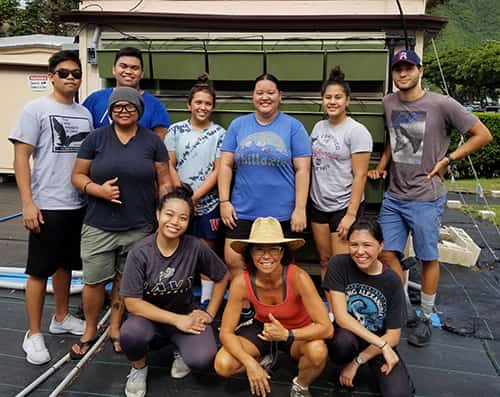
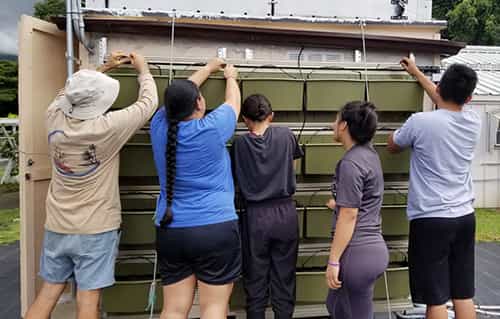
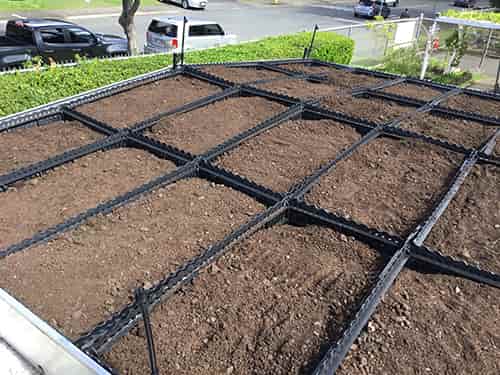
Environmental+Interior Design students participate in service-learning project: green roof and living walls

Lots of times, designers create spaces for working and for living that cut us off from nature.

But an exciting initiative underway at Chaminade is aimed at challenging Environmental + Interior Design students to do the opposite by working to model and construct green roofs and living walls.

It’s all part of Chaminade’s Sustainability in Design course, which is aimed at helping students unpack principles of sustainable design by focusing on key environmental issues and then considering how they relate to other areas of society, including economic inequities and social disparities. The idea: Think through how relatively simple environmentally friendly design changes can have a positive impact.

Environmental+Interior Design students participate in service-learning project: green roof and living walls

That’s where green roofs and living walls come in.

For several years, students in the class have participated in a field project in partnership with the University of Hawaii at Manoa’s College of Tropical Agriculture to install the design elements — along the way exploring the potential benefits of adding more greenery to urban landscapes.

In participating in the hands-on project, students learn first-hand how sustainable design can make a significant difference to city life. Green roofs and living walls can cool buildings, be sources of food, offer aesthetic appeal and can improve air and water quality. They can also provide a much-needed space for recreation or reflection — or even for gathering people together to try their hand at gardening.

Environmental+Interior Design students participate in service-learning project: green roof and living walls

Chaminade Environmental Science major Hiilani Fujihara-Nagamine ‘21 participated in the service learning project and said the class learned all about green roofs and living walls before actually working on them in person. “I can see a future in having these two concepts come to life here in Hawaii,” she said. “The islands seem to be the ideal place for green roofs and living walls due to the wonderful weather all year round. Native plants could be planted to increase the native plant population.”

She said her favorite part of the effort was learning about an actual solution — something tangible designers and environmentalists and even regular people could do to make a positive difference. “I want to make sure that the Earth is still around for the next generations to come,” she said.

“This experience will help me find more solutions that can help solve the problems in this world.”

Posted by: University Communications & Marketing Filed Under: Featured Story, Humanities, Arts & Design, Students Tagged With: Environmental + Interior Design, Service Learning

Students Set Sail Aboard an Outdoor Classroom

March 21, 2020

Learning at Chaminade University, more often than not, takes place beyond the four walls of a classroom.

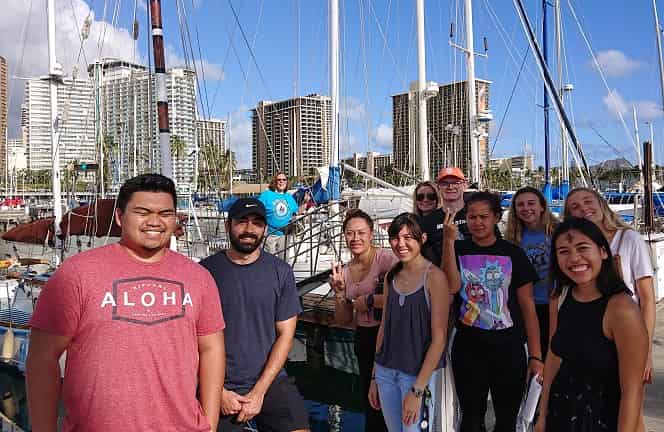
Students on the Golden Rule Peace Boat

Take our RE 431: Environmental Ethics course, for example. Designed to introduce students to effective methods for dealing with ethical issues within environmental studies and sustainable practices, the course has taken a variety of forms, the most recent of which has allowed students to take to the sea aboard the Golden Rule Peace Boat.

It started with professor Sr. Malia Wong, who’d been working closely with a few Buddhist monks with connections to crewmembers aboard the Golden Rule Peace Boat. A project spearheaded by Veterans for Peace, the Golden Rule first set sail in 1958 to promote opposition to nuclear weapons and war. Following a restoration, the Golden Rule once again set sail on an expedition to the Marshall Islands and Japan to commemorate the lives of those affected by nuclear warfare.

Docked at the Ala Wai Boat Harbor in Honolulu, the Golden Rule is a majestic and historic sight to behold. The restored vessel—and the vision of world peace it symbolizes—has inspired books, poems, lyrics and songs over the course of its 62-year existence. And in its 62nd year, a group of Chaminade students and Sr. Malia had the privilege of boarding and later sailing on the boat by invitation from the crewmembers, who are also peace movement activists.

For the students, climbing aboard the Golden Rule was an incredible, once-in-a-lifetime experience.

According to Dean of Humanities Cheryl Edelson, the mission of the Golden Rule Peace Boat is intricately linked to the efforts to protect the environment that she’s currently teaching her students. It also embodies Chaminade’s own commitment to the Marianist values of service, justice, and peace.

“It was an amazing experience,” said student Cara Gutierrez ’23, a communication major who’s passionate about climate change. “While on the boat, our class had the chance to talk with Helen, the project manager. She shared that the boat actually inspired Green Peace, which really hooked me and drew me in.”

Gutierrez is now working closely with Helen as a youth ambassador for the Golden Rule in Hawaii.

“During our sail, I had a great conversation with Helen about how much I admired her passion and her lifelong devotion to this project,” Gutierrez said. Chaminade is proud to equip our students with opportunities to explore the world beyond the classroom. During field trips such as the Golden Rule sail, students are embracing experiential learning while making memories that will last a lifetime.

Posted by: University Communications & Marketing Filed Under: Featured Story, Humanities, Arts & Design, Students Tagged With: Experiential Learning

Growing as a Writer and Learner

March 9, 2020

Sami Eastwood published her first book at 17, when she was a freshman at Chaminade.

Three years later, she’s completing final edits on a sequel and has already started working on a third novel in her science fiction series. She’s also the co-founder of a boutique publishing house, helps her parents grow their business in her spare time and is a year away from finishing her bachelor’s degree.

If that’s not impressive enough, Eastwood decided to double major in English and History.

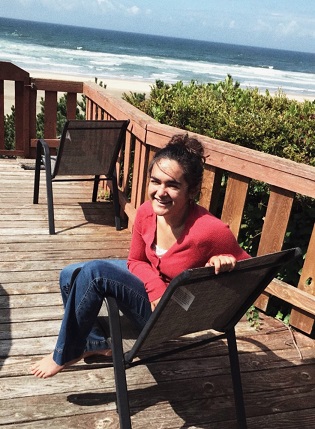
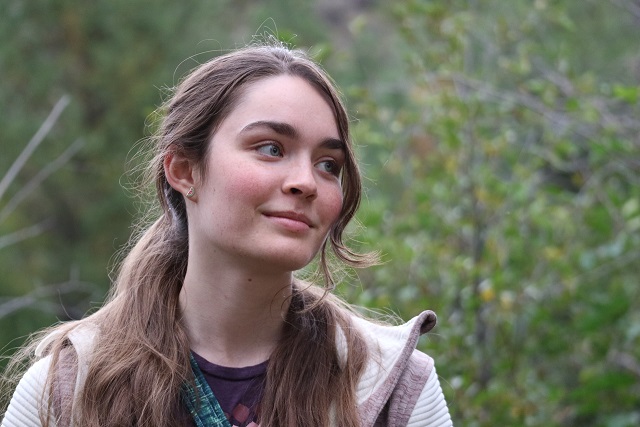
Sami Eastwood, an online undergraduate student who lives in Oregon

Eastwood is an online undergraduate student at Chaminade, taking classes, completing assignments and communicating with professors and her peers remotely. While she lives in Oregon, she said she counts her professors as close and valuable mentors who have helped her grow as a writer and a learner.

“Every term I’m learning new things that contribute to sparking my creativity,” Eastwood said.

She said she decided to pursue her degree at Chaminade after taking a few classes at a large public university that she said wasn’t a right fit. Chaminade’s Marianist tradition of helping others and building a better world was an especially important element to her and her family, Eastwood said.

“I decided on an English major because I want to write books for a living and it’s good to know the rules of any trade you go into and how to analyze other works of fiction and nonfiction,” Eastwood said. “I chose history as well because I’ve always been fascinated by it, especially American history.”

In fact, Eastwood said she’s also interested in pursuing a future career in museums.

Her first love, though, is writing. And she has no plans to give that up. “My goal is to stay as closely connected to both worlds as possible,” Eastwood said. “The literary world of writing books along with the historical world, and I’m hoping my degrees can help me with that process.”

To publish her first book, Eastwood worked closely with another online undergraduate student at Chaminade–English major Jodi Clark. The two are good friends (and Oregon residents) and have found the university’s online program has allowed them to pursue their passions.

Clark even served as Eastwood’s editor for her first book, “Blackstone Asylum.”

The book is set 100 years in the future in a world in which superpowers are common and misunderstood. The novel’s heroine, Andrea Rosales, was born with the ability to heal. It’s that power that makes her a target for a villain who kidnaps paranormal children to turn them into weapons.

Eastwood said all she’s learned at Chaminade has given her a multitude of new story ideas and techniques for tackling them. “I learn endless amounts of information from both my English and history classes,” she said. “Even the smallest fact can blossom into (yet another) story idea.”

Posted by: University Communications & Marketing Filed Under: Featured Story, Humanities, Arts & Design, Students Tagged With: English, Historical and Political Studies, Online Undergraduate Program

The World is Our Classroom: E+ID Students Travel to Vancouver

March 4, 2020

Every year, students in Chaminade’s Senior Commercial Design dream up a major project to execute.

And this year, they wanted to design a boutique hotel.

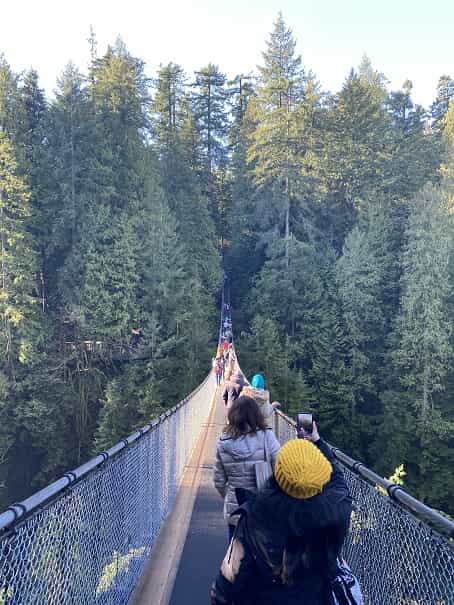
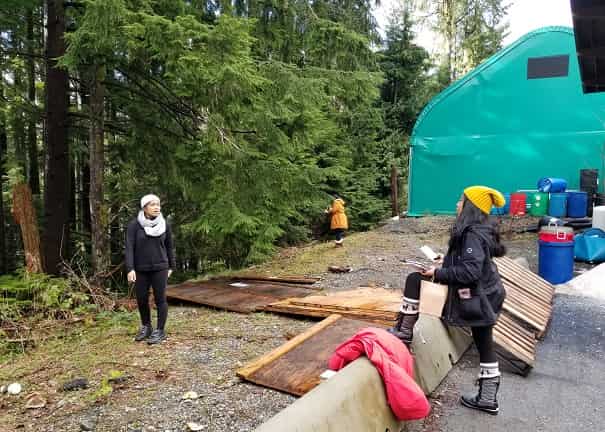
Environmental + Interior Design Students in Vancouver for their experiential learning field trip

Dr. Elizabeth Lockard, associate professor of Environmental + Interior Design, was on board with the idea. But she also threw in a few curve balls. She required that the hotel be situated in a cold climate, where students would have to insulate for below freezing temperatures and strong winter storms. She also said the students would need to use the metric system.

The stipulations were meant to be especially challenging to a class studying in oh-so-balmy Hawaii.

That’s why, Lockard said, a central component of the design class is to visit a destination where their project could be centered. The idea: allow students to see firsthand how a given environment can be incorporated into their final design.

To meet Lockard’s requirements, the group settled on Vancouver and started raising funds to make the trip.

Environmental + Interior Design Students in Vancouver for their experiential learning field trip

And last month, four seniors and Lockard jetted off to the city for some invaluable hands-on research.

From February 6 to 9, they walked the city, visiting art galleries, trekking up Grouse Mountain and touring hotels and a proposed project site.

They walked away knowing so much more about cold climate design than a book or a lecture could ever tell them, Lockard said, allowing them to understand a place “viscerally as well as intellectually.”

“It allowed them to internalize their knowledge in a way that it could not happen in the classroom alone,” she said.

Allisen Caberto, who hopes to graduate in May, said the real-world exercise was rich with “ah-ha! moments.”

“Rather than role-play hypothetically, you get to become part of the lesson,” she said.

Caberto added the trip also hammered home for her how vital it is to consider sustainability in a final design project. “Whatever we build and create has an impact on it, and so as designers who have a larger influence on building designs, we should try to build consciously and harmoniously with the natural environment to help reduce human footprint,” she said.

Environmental + Interior Design Students in Vancouver for their experiential learning field trip

“And from visiting Vancouver, it is visibly clear they keep the natural environment in mind and embrace the outdoors.”

Senior Elyssa Shirai also took the trip and said it left her “inspired.”

“Not only are you seeing a place that isn’t like Hawaii but also to take in the lifestyle of the people who live there, the amazing sceneries and different landscapes of that place,” she said. “There were many special moments on this trip.”

Lockard said one of the major takeaways for students is that interior design is a practical field that requires hands-on learning. She noted that details like pedestrian or vehicular traffic patterns can have a significant impact on a design and can’t be discerned solely by looking at a map.

The trip allowed the seniors to “internalize” their knowledge, she said.

That kind of transformational experience “could not happen in the classroom alone,” Lockard said.

Posted by: University Communications & Marketing Filed Under: Featured Story, Humanities, Arts & Design, Students Tagged With: Environmental + Interior Design

There are No Boundaries When Pursuing Your Passion

February 25, 2020

Jodi Clark knew by the time she was 10 that she wanted to be a writer.

“I wrote a 400-page manuscript that has never seen the light of day,” said the English major, who’s minoring in History and Political Studies. “I fell in love with writing dialogue and complex characters.”

Jodi Clark, online undergraduate student

Fast forward a decade and change and Clark is still as inspired by words as she was back then. The difference? They’re central to her job now, and not just a hobby. In addition to seeking her undergraduate degree at Chaminade online, Clark is a content editor for a small publishing house and social media manager.

She says that being able to attend class remotely — she lives in Oregon — has allowed her to feel connected to her Chaminade professors and to the university while completing her coursework on her own schedule. “The online program at Chaminade is fantastic because despite weekly deadlines, there are no strict requirements for when and where you have to ‘show up’ for class,” Clark said.

She added the flexibility allows her to arrange her schedule in a way that makes sense for her.

Clark enrolled at Chaminade in winter 2018, after doing research about universities nationwide. She knew that she wanted to opt for an online program because she wanted to remain near her family. She was also looking for an institution that honored her religious values and belief in giving back to others.

“After much thought, we decided on Chaminade because of its religious values and because of its location since the Hawaiian Islands are very dear to my family and me,” Clark said, adding that what’s surprised her the most is how warm and welcoming the university community is — even from afar.

“Even from a distance, the family spirit of the school puts me at ease,” she said, adding that she’s planning to spend her senior year on campus. “My time at Chaminade feels so well spent and I am looking forward to the day I can visit … the people who have helped me pursue my education.”

People like Dr. Brooke Carlson, one of her English professors, who has helped Clark learn the “technicalities of writing” and challenged her to think more critically. Professor Justin Wyble, who encouraged Clark to take more risks in her writing. And Professor Karla Brundage, who worked with Clark on poetry.

Clark has also brought her own contributions to courses as a “beta reader.” She works for MaileKai Publishing, where she’s helped fellow Chaminade student Sami Eastwood publish her debut young adult novel “Blackstone Asylum” on Amazon and is in the revisions process for a sequel.

“Sami Eastwood came to me with the idea for ‘Blackstone Asylum’ as she wrote it,” Clark said. “I provided ideas and advice when and if she needed them. I started providing content editing for the book in about 2018, and by 2019, I helped plot and point out issues in large-scale revisions.”

She said working as a content editor, she enjoys “untangling knots in stories in their earliest stages.”

And her time at Chaminade has helped her become even more adept at that untangling, providing inspiration and feeding her creativity to as she works to develop her confidence in editing and writing. “When I was younger, my work ended up being either very formulaic or very scattered,” Clark said. “Thanks to my time in Chaminade’s online program, I feel that I have the tools … to take creative risks and see them through. My degree will be helpful for pursuing a variety of jobs in the writing world.”

Posted by: University Communications & Marketing Filed Under: Featured Story, Humanities, Arts & Design, Students Tagged With: English, Historical and Political Studies, Online Undergraduate Program

  • « Go to Previous Page
  • Page 1
  • Interim pages omitted …
  • Page 7
  • Page 8
  • Page 9
  • Page 10
  • Page 11
  • Interim pages omitted …
  • Page 15
  • Go to Next Page »

Footer

Chaminade University Logo

3140 Waialae Avenue
Honolulu, Hawaii 96816

Contact Us
Phone: (808) 735-4711
Toll-free: (800) 735-3733

facebook twitter instagram youtube linkedin

Visit

  • Plan Your Visit
  • Campus Map (PDF)
  • Events

Resources

  • Campus Security
  • Student Consumer Information
  • Concerns, Feedback, and Reporting
  • Institutional Review Board
  • Title IX / Nondiscrimination Policy
  • Compliance
  • Emergency Information
  • Careers
  • Institutional Statement

People

  • Students
  • Parents
  • Alumni
  • Faculty & Staff

Policy

  • Privacy Policy
  • Terms and Conditions of Use


© Chaminade University of Honolulu