• Skip to primary navigation
  • Skip to main content
  • Skip to footer
Chaminade University of Honolulu

Chaminade University of Honolulu

  • VISIT
  • APPLY
  • GIVE
  • STUDENTS
  • PARENTS
  • ALUMNI
  • FACULTY/STAFF
  • Admissions
    • Admissions Home
    • Undergraduate Students
      • First-Year Students
      • Transfer Students
      • Admitted Students
    • Graduate Students
    • Flex Online Undergraduate Program
    • Military Students
    • Non-Degree/Visiting Students
    • Experiential Honors Program
    • Early College Program
    • New Student Orientation
  • Tuition & Aid
    • Financial Aid Home
    • Tuition & Expenses
    • Federal Updates & Changes
    • Scholarships
    • $5,000 Graduate Scholarship
    • VA Education Benefits
    • Net Price Calculator
  • Academics
    • Academics Home
    • Academic Programs
    • Office of Student Success
      • Academic Advising
      • Records and Registrar
    • Kōkua ʻIke (Support Services)
      • ADA Accommodations
      • Career Services
      • Proctoring Services
      • Tutoring Services
    • Sullivan Family Library
    • Undergraduate Research & Pre-Professional Programs
    • Commencement
  • Campus Life
    • About Campus Life
    • Student Engagement
    • Student Government Association
    • Residence Life and Housing
      • Summer Conference Housing
    • Health Services
    • Marianist Leadership Center
    • Counseling Center
    • Campus Ministry
    • Campus Security
    • Dining Services
    • Bookstore
  • Athletics
  • About
    • Chaminade University News
    • Our Story
    • Leadership
    • Chaminade University Strategic Plan 2024-2030
    • Mission & Rector
    • Association of Marianist Universities
    • Facts & Rankings
    • CIFAL Honolulu
    • Accreditation & Memberships
    • Montessori Laboratory School
Search
×

Search this web site

Faculty

Mulatta—Not So Tragic

March 8, 2021

To commemorate Black History Month, Chaminade English Professor Dr. Allison Francis recently collaborated with Karla Brundage, an adjunct professor at the university, to present a thought-provoking virtual renshi poetry reading session entitled, “Mulatta—Not So Tragic?”
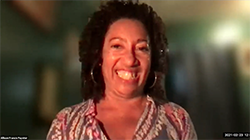
Mulatta—Not So Tragic Poetry Reading - Allison Paynter

As part of the event, Francis and Brundage also engaged in a conversation with participants on the history of “mulatta”—which they described as a controversial label “traditionally used to signify progeny of African and European parents.” In unpacking the term and its history, the two also touched on their own life experiences and those of family members seeking to grapple with identity and race.

Renshi poetry is also known as “linked poetry.” It’s a contemporary form of verse that relies on collaboration to uncover new understandings of the world and explore shared themes. Collaborators connect their poems by repeating the last line of the previous author’s work.

Francis and Brundage said renshi poetry was uniquely equipped to allow them to explore the “sometimes devastating and celebratory dynamics of being bi-racial women in the 21st century.” Brundage noted that renshi poetry doesn’t just connect verses, it links the poet collaborators.
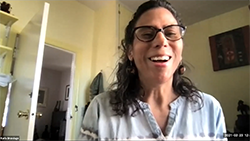
Mulatta—Not So Tragic Poetry Reading - Karala Brundage

She said the two started examining the theme of “being mulatta or being mixed” about a year ago.

It was Francis who started the spoken word performance of their poem, “We Feel the Thunder.”

“Such a brave woman,” the poem begins, “Rolling words through our heads like boulders.”

Following the reading, Francis and Brundage delivered a joint presentation to further explore the themes of “being mulatta.” Francis noted that Hawai’i presents unique—and refreshing—conversations about “hapa” identity, but stressed it is not a place devoid of racism or discrimination.

“I think there is a space that many of us can create here living in the islands that allows for us to embrace both worlds and not have to entirely dismiss one or the other,” Francis said, as she showed a photo of her daughter and explained she grew up in Hawai’i. “But,” Francis added, “that might just be a bubble we created for her and it’s something we continue to explore in this poetry.”

Francis teaches and conducts research across a range of topics, including Victorian and Scottish literature, African-American and Caribbean Women’s literature from the 19th century, and women’s literature with a focus on science fiction and fantasy. She has published extensively, is a performance poet and playwright, and is currently collaborating on a scholarly collection on Scottish literature.

Brundage publishes poetry, short stories, and critical essays. In 2020, her poem “Alabama Dirt” was nominated for the Pushcart Prize. She holds a Master’s in Fine Arts in Poetry from Mills College and is currently working to co-create a Hawaii-based publishing company, Pacific Raven Press.

Watch their full renshi poetry reading and related presentation below.
Posted by: University Communications & Marketing Filed Under: Campus and Community, Diversity and Inclusion, Faculty, Featured Story, Humanities, Arts & Design, Student Life

Students and Professor Co-Author Publication

March 3, 2021

Two Nursing students at Chaminade and a recent graduate are making important academic contributions to the field, with separate co-authored publications in a noted peer-reviewed nursing journal that focuses on nursing trends, policy issues and clinical practice in Asia and the Pacific.

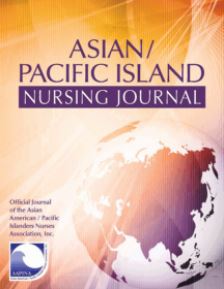
The publications appeared in the December 2020 issues of Asian/Pacific Island Nursing Journal.

Asian/Pacific Island Nursing Journal

Nursing student Nainoa Gaspar-Takahashi, a sophomore, was the lead co-author with Nursing and Health Professions Professor Dr. Edna Magpantay-Monroe of an article entitled, “Experiential Lens in Nursing Education and Thriving Lahui (Community): A Native Hawaiian and Pacific Islander Student Experience.” The piece explores high-impact, community-centered learning that benefits nursing students, allowing them to hone critical thinking skills and empathy for those they serve.

In the article, Gaspar-Takahashi discusses how he has taken to heart Chaminade’s commitment to service learning and described two recent community projects he contributed to, including one that focused on Native Hawaiian ways of learning and knowing with hands-on service in the community.

“The ability to inspire others, leaving their comfort zone to learn about other communities and recognize the strength of it can form deeper understanding and acknowledge the place students call home,” Gaspar-Takahashi wrote with Magpantay-Monroe, in the journal article.

“The impact to nursing as a profession is the integration of evidence-based care to clinical practice.”

Dr. Edna Magpantay-Monroe

The same issue of the Asian/Pacific Island Nursing Journal included an article in which Magpantay-Monroe joined Nursing student Kamaile Aipa and recent Chaminade Nursing graduate Ofa-Helotu Koka to underscore the importance of community engagement in forming nursing students’ professional identities and helping them become “well-rounded,” community-minded future nursing leaders.

The trio also discussed how vital it is to ensure students participate in professional development opportunities so they can see themselves as active participants in a robust learning community. “Being an active participant of professional conferences allow students to be a part of conversations with those who have practiced in different aspects of nursing,” exposing them to situations that help them “think more critically and professionally, guiding their actions as future nurses,” the three wrote in the piece.

Magpantay-Monroe is also adding to the body of research in Nursing in other ways. She recently contributed and co-wrote a chapter in the professional resource, “Veteran-Centered Care in Education and Practice: An Essential Guide for Nursing Faculty.” She intends to use the text for supplementary material in the Nursing elective course, “Introduction to Veterans and Military Health Care.”

Posted by: University Communications & Marketing Filed Under: Faculty, Featured Story, Nursing & Health Professions Tagged With: Nursing, Publications

Excellence in Scholarship and Teaching

March 1, 2021

Two Chaminade professors have been recognized for excellence in teaching and academic scholarship.

Jolene Cogbill

Dr. Jolene Cogbill, assistant professor of Biology, was named the inaugural recipient of the 2020 Chaminade University Excellence in Teaching Award. The honor celebrates teaching that has lasting and positive impacts on students and exemplifies innovative or transformative teaching practice.

Chaminade Provost Dr. Lance Askildson helped establish the Excellence in Teaching Award to underscore Chaminade’s commitment as a teaching institution. Award recipients receive $1,500 and public acknowledgment with a permanent display at Sullivan Family Library.

“Teaching excellence can make all the difference in a student’s academic career and should be recognized for its incredible importance to our University and broader community,” Askildson said.

“Great teaching can inspire students, challenge them and ignite their academic passions.”

Cogbill specializes in in Cellular and Molecular Biology, Developmental Biology and the teaching and design of biological lab techniques. She is also a Ho’oulu STEM academic navigator and coordinator of academic enrichment and outreach programs at the School of Natural Sciences and Mathematics.

Her accomplishments in the classroom include:

  • Developing a central theme to connect the semester and various lab units;
  • Focusing each lab around the scientific method with an emphasis on hands-on learning;
  • And creating a place-based curriculum that intentionally—and authentically—incorporates Native Hawaiian culture and ways of knowing, allowing for points of connection for all students.
Guanlin Gao

Dr. Guanlin Gao, assistant professor of economics, was also honored for her work.

Gao was named the 2020 recipient of the Fr. John F. Bolin Excellence in Scholarship Award, which recognizes Chaminade faculty members who have contributed substantial scholarship to their field of study. Awardees also receive a $1,500 prize and acknowledgment in a permanent display.

Gao is an applied microeconomist who conducts policy-driven research in behavioral, public and experimental economics and the economics of education. She seeks to deploy research-based evidence to help policymakers make decisions that benefit society, and in the last 12 months has published four papers in peer-reviewed journals and presented at five academic conferences.

Gao said she has also a strong commitment to innovative pedagogical approaches.

“I encourage the development of my students’ moral character and personal competencies,” she said, adding that she seeks to educate her students for adaptation and change but also challenges them to be the change. “I deeply believe that everyone can do their share to make the world a better place.”

Askildson congratulated both Cogbill and Gao for their achievements. “These two professors exemplify excellence in teaching and scholarship,” he said. “These awards recognizing their outstanding efforts are well-deserved and I look forward to all they will bring to our academic community—and to our students—in the years ahead.”

Posted by: University Communications & Marketing Filed Under: Business & Communication, Faculty, Featured Story, Natural Sciences & Mathematics Tagged With: Honors and Awards

Design for the Community

February 3, 2021

In a significant honor, the Interior Design Education Council has awarded Environmental + Interior Design Associate Professor Joan Riggs its Community Service Award in recognition of her many contributions to the field, to her students and to the broader community.

Joan Riggs

Riggs will be presented with the award at a virtual ceremony in February during IDEC’s annual conference.

In notifying Riggs that she had won, IDEC President Ellen Fisher praised the professor for incorporating interior design into a long list of community service projects. Over the years, Riggs has challenged students to incorporate their interior design skills in community-centered spaces, from youth correctional facilities to safehouses for human trafficking victims to training centers.

She has also helped students reimagine interior design in nursing homes and healthcare facilities.

“The essence of Joan’s character, as well as her approach as an educator, is to serve the greater public good through design,” wrote Professor Dr. Elizabeth Lockard, in nominating Riggs for the community service award. “Service-learning is at the core of her pedagogical philosophy.”

Lockard added that Riggs sees interior design as a profession with an obligation to serve the underserved, elevating everyone’s wellbeing and quality of life. She has a particular passion in “universal design,” which seeks to underscore the social value of designing for inclusivity.

Riggs, who joined the Environmental + Interior Design faculty in 2003 and has served as its program director for the last 12 years, said placing service learning and community service at the center of design education gives students an awareness of their impact—and a greater compassion for those they serve.

“In partnerships, they deepen their ability to adapt—their thinking, their perspective and their understanding—with respect to how diversity is a strength and problem solving is a gift to be shared,” she said. “As an educator, what greater reward than to see students emerge as skilled, compassionate and successful designers? I am truly blessed to be part of this process.”

Her award, she added, is icing “on a marvelous multi-layered cake.”

Posted by: University Communications & Marketing Filed Under: Faculty, Featured Story, Humanities, Arts & Design Tagged With: Honors and Awards

The Women Who Shaped Our Nation

November 24, 2020

Chaminade University and Hawaii Council for the Humanities recently teamed up with the New York Historical Society to bring their Women and the American Story initiative to educators in Hawaii.

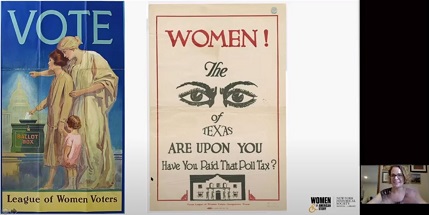
Women and the American Story Workshop

The initiative connects teachers across the country with a free curriculum and resources to highlight the various ways women have helped shape our nation. The collaboration hosted a virtual workshop on November 7 to introduce Hawaii teachers to the curriculum and help them find ways to incorporate more perspectives and contributions of women in their classrooms.

The free curriculum is broken up into ten chronological units, each one exploring a different period of time in U.S. history. The November workshop focused on two of the ten time periods: Settler Colonialism and the Revolution (1692-1783) and Confidence and Crises (1920-1948).

Led by Mia Nagawiecki, the Vice President of Education at the New York Historical Society, the interactive session walked participants through various resources, including paintings, texts, documents, letters and videos and explored how each depicted women and what they said about the roles that women played during that time. For each, Nagawiecki shared tips and strategies on how to utilize the resource in the classroom to prompt a discussion and encourage critical thinking.

The training began by outlining four core questions for participants to think about during the course of the workshop, including: How did women actively participate in the Revolution? What effect did a woman’s race have on her experiences? And why are women’s stories essential to understanding the events of the American Revolution?

The first half of the workshop examined the lives of colonial women from various geographic regions, including Russia, Alaska, Spanish California, French Louisiana and England’s 13 Colonies. It also explored the lives of women from diverse ethnicities, including Black, White, and Native American, and analyzed how women helped shape the American Revolution.

After, participants joined break out rooms to discuss the four questions posed at the beginning. They also explored how they could utilize the resources in their own classrooms and how they could incorporate more women’s perspectives and contributions into their lesson plans.

The second half of the workshop focused on the Confidence and Crises module and explored the role women played during the Great Depression, the Second World War and the beginning of the Cold War, and how women gained the right to vote. This was a period of overt racism, when African American women lived under “Jim Crow” laws, and Asian, Jewish, Italian and Eastern European women faced racist immigration laws.

For this section, participants were asked to think about the dramatic shifts women experienced in their roles as women and citizens as well as the ways in which the Great Depression and World War II affected the rush toward modernity that was driving the 1920s. At the conclusion of the section, participants once again joined breakout rooms to discuss what they had just learned and how to incorporate the teachings and resources into their classroom.

“We are thrilled to have had the opportunity to collaborate with the Hawaii Council of the Humanities and bring this incredible initiative to Hawaii’s teachers,” says Dr. Cheryl Edelson, dean of the School of Humanities at Chaminade and a speaker at the workshop. “It’s so important that our students see themselves in the stories we teach, and that we introduce them to a broader range of experiences to help them value our nation’s diversity. Through this training and curriculum, the New York Historical Society is helping us do that.”

Settler Colonialism and the Revolution
(1692-1783)
Confidence and Crises
(1920-1948)

Posted by: University Communications & Marketing Filed Under: Campus and Community, Chaminade History Center, Faculty, Featured Story, Humanities, Arts & Design

US-China Relations: Duel or Duet

September 21, 2020

“The Chinese government, over the several years, has started to try and change its development model quite substantially, and COVID-19 has put these efforts on steroids,” stated Chaminade Professor Dr. Chris McNally during the opening of The Annual Dr. N.H. Paul Chung Memorial Lecture.

Dr. N.H. Paul Chung Memorial Lecture. Panelists, Dr. Chris McNally along with Professor Charles Booth from the William S. Richardson School of Law at UH Manoa, Senior Instructor Ji Chen from University of Colorado at Denver, and Emeritus Professor Stephen C. Thomas also from the University of Colorado at Denver

The lecture, presented by the Pacific Asian Management Institute and the University of Hawaii Center for Chinese Studies on September 11, consisted of a panel of experts that explored the U.S.’s relations with China. Panelists included McNally along with Professor Charles Booth from the William S. Richardson School of Law at UH Manoa, Senior Instructor Ji Chen from University of Colorado at Denver, and Emeritus Professor Stephen C. Thomas also from the University of Colorado at Denver.

The panel offered a fascinating glimpse into the intricacies and complexities that surround the U.S.’s relationship with China amidst an ongoing trade war and a tumultuous global pandemic. The hour-long discussion briefly touched on a plethora of topics, including the recent change in China’s relationship with Hong Kong, human rights, economic sustainability and development, technology infrastructure, COVID-19 and the upcoming U.S. election.

A large question loomed over whether China would surpass the U.S. as an economic leader in coming years, particularly when it comes to technology and the development of artificial intelligence. “Whether or not they will be ahead of us by 2030 is very difficult to judge,” says McNally. “How much China is able to leapfrog us, that is still really a question for the future.”

But he did concede that China’s economy had fared far better than the U.S.’s during the COVID-19 pandemic. “There is no doubt now that the Chinese have fared a lot better economically during this COVID-19 pandemic than most other large economies,” says McNally. “In terms of manufacturing, the economy has recovered very rapidly. But in terms of consumption the Chinese economy is still lagging.”

According to McNally, that is bad news for the U.S. “That basically portends some rather dire futures for us, because we look at the Chinese as having recovered much more rapidly than other economies, yet their consumption power is still lacking.” says McNally. “So for the U.S. and Europe, this means we will have real difficulties getting our consumption fully back up.”

McNally also warned of the potential long-term damage of the Trump administration’s approach to trade. “It’s not just the Chinese, it’s many other countries and industries that are looking at U.S. supplies and saying ‘Can we trust them in the future?’ and ‘Should we diversify?’” says McNally. “All you’re doing is basically incentivizing the rest of the world to try to become less dependent on the United States.”

For McNally, that could have devastating effects for the U.S. economy and threaten our position as a global economic leader. “The whole idea of decoupling is not so much the U.S. decoupling from China, it’s the rest of the world decoupling from the United States,” says McNally. “And that is not something you want to happen…you don’t even want to put that idea into people’s heads.”

As for the upcoming election, McNally says it’s anyone’s guess who the Chinese would prefer to win. “For the Chinese, another four years of Trump would mean another four years of chaos and another four years of delegitimizing the U.S., which would help China in the long term,” predicts McNally. He believes a Biden administration would mean more stability, and the Chinese value stability. “But a Biden administration is likely to rally allies and try to create a united front to face the Chinese. That would tell the Chinese they need to play by certain rules of the game.”

At the end, the panelists were each asked to give a short summary of what they wanted the biggest takeaway to be, as well as a word or phrase to end on. Most speakers sided with McNally’s political lean. Professor Booth took the opportunity to stress just how important this upcoming election was, while Ji Chen emphasized McNally’s point that decoupling is not the solution. “Historically, China is not the enemy,” says Ji Chen who is originally from China. “The only thing the Chinese want is a better way of life.” McNally took that one step further by declaring that “China is not Russia.”

“Yes, China is a massive challenge to the United States, no doubt,” concluded McNally. “But the Chinese have an enormous stake in keeping the international order intact, at least the parts they like…they’re not intent on destroying it as the Russians are, clearly. And we seem to have, quite deliberately in my opinion, confused that and made China the enemy…And that, as Ji Chen mentioned, is not the case.”


Posted by: University Communications & Marketing Filed Under: Faculty, Featured Story, Humanities, Arts & Design Tagged With: Thought Leadership

  • « Go to Previous Page
  • Page 1
  • Interim pages omitted …
  • Page 9
  • Page 10
  • Page 11
  • Page 12
  • Page 13
  • Interim pages omitted …
  • Page 21
  • Go to Next Page »

Footer

Chaminade University Logo

3140 Waialae Avenue
Honolulu, Hawaii 96816

Contact Us
Phone: (808) 735-4711
Toll-free: (800) 735-3733

facebook twitter instagram youtube linkedin

Visit

  • Plan Your Visit
  • Campus Map (PDF)
  • Events

Resources

  • Campus Security
  • Student Consumer Information
  • Concerns, Feedback, and Reporting
  • Institutional Review Board
  • Title IX / Nondiscrimination Policy
  • Compliance
  • Emergency Information
  • Careers
  • Institutional Statement

People

  • Students
  • Parents
  • Alumni
  • Faculty & Staff

Policy

  • Privacy Policy
  • Terms and Conditions of Use


© Chaminade University of Honolulu