• Skip to primary navigation
  • Skip to main content
  • Skip to footer
Chaminade University of Honolulu

Chaminade University of Honolulu

  • VISIT
  • APPLY
  • GIVE
  • STUDENTS
  • PARENTS
  • ALUMNI
  • FACULTY/STAFF
  • Admissions
    • Admissions Home
    • Undergraduate Students
      • First-Year Students
      • Transfer Students
      • Admitted Students
    • Graduate Students
    • Flex Online Undergraduate Program
    • Military Students
    • Non-Degree/Visiting Students
    • Experiential Honors Program
    • Early College Program
    • New Student Orientation
  • Tuition & Aid
    • Financial Aid Home
    • Tuition & Expenses
    • Federal Updates & Changes
    • Scholarships
    • $5,000 Graduate Scholarship
    • VA Education Benefits
    • Net Price Calculator
  • Academics
    • Academics Home
    • Academic Programs
    • Office of Student Success
      • Academic Advising
      • Records and Registrar
    • Kōkua ʻIke (Support Services)
      • ADA Accommodations
      • Career Services
      • Proctoring Services
      • Tutoring Services
    • Sullivan Family Library
    • Undergraduate Research & Pre-Professional Programs
    • Commencement
  • Campus Life
    • About Campus Life
    • Student Engagement
    • Student Government Association
    • Residence Life and Housing
      • Summer Conference Housing
    • Health Services
    • Marianist Leadership Center
    • Counseling Center
    • Campus Ministry
    • Campus Security
    • Dining Services
    • Bookstore
  • Athletics
  • About
    • Chaminade University News
    • Our Story
    • Leadership
    • Chaminade University Strategic Plan 2024-2030
    • Mission & Rector
    • Association of Marianist Universities
    • Facts & Rankings
    • CIFAL Honolulu
    • Accreditation & Memberships
    • Montessori Laboratory School
Search
×

Search this web site

University Communications & Marketing

Alumna Becky Burns ’76 Creates Successful Granola Business

May 12, 2017

Elizabeth “Becky” Mann Burns, BA Psychology ’76 is the owner and founder of Anahola Granola, a successful local company which produces about five tons of delicious, fresh tropical granola per week. Located in Hanapepe, Kauai, the company employs 11 workers and has been in business for more than thirty years. Anahola Granola can be found throughout Hawaii in most upscale hotels, specialty shops, health food and grocery stores, as well as Costco.

Becky Burns (B.A. Psychology '76) and daughterBurns has always had two synergistic parts to her life which have energized her and her business. She has an entrepreneurial streak, and she enjoys people. While growing up, Burns would make cookies weekly for her family. Then during her first year of college on the mainland, she began a birthday cake business.

Using the income from that first business, she was able to buy a one-way ticket to Hawaii, and in her mid-twenties, Burns decided to return to school and complete her degree.

Transferring from the University of Denver, she arrived at Chaminade. The faculty inspired her, igniting her passion for psychology. The smaller classes also suited her well. “I liked it at Chaminade, so I stayed until I graduated,” she explained. “I rode my bike along Harding Avenue back and forth from school,” she reminisced.

Though she did not take a lot of undergraduate classes, she had always liked people and psychology. Her favorite classes were taught by women psychology professors.  She appreciated their insight and their compassion and had a rapport with them because as an older student she was closer in age to her professors than her fellow students. She identified with them.

Burns remembered one particular course.  The course on “Death and Dying” based on Elizabeth Kubler-Ross’ book of the same title moved her.  “The subject matter at that time was very new and cutting edge…I was fascinated,” she said.

Energized by what she had learned, Burns chose to volunteer as the social director for seniors at a home on Waialae Avenue across from Zippy’s.  In fact, she received a recognition award from Chaminade for her work there.

After graduation, Burns had no idea that she would become a business person.  She began making her organic granola. “It wasn’t a surprise I started a business in granola. I always ate well and loved organic gardening. In fact, my first garden I had was on the front lawn of the house where I lived when I went to Chaminade. I got a heap of manure from the Honolulu Zoo and dug it into the ground. In the end, I found out I got too much manure, and the nitrogen killed most of my crops,” Burns shared a smile.

Becky Burns (B.A. Psychology '76) and daughterBecause of her slow growth philosophy, Burns never got a business loan and only used money from the previous week’s sales to buy raw goods and packaging.  “My business is the epitome of slow growth. So slow that perhaps many businesses couldn’t survive as slow as Anahola Granola grew,” said Burns.

Burns recalled that people were very kind to her, and that was what helped her through the years. When she sold her first bags of granola at a Christmas fair, a woman, who owned a store in Kilauea, Kauai, kept coming back for more bags. That woman encouraged Burns to find a certified kitchen so that she could buy more for her store. “Without her, I doubt my granola would have gone any further than the few fairs that winter,” Burns said. “Another gift was the small amount of rent I was charged by All Saints Church. It was a small kitchen, and I paid month by month. I was there right after Hurricane Iniki until I bought a building in Hanapepe. My responsibility now is to give back and help whenever I can.”

Burns is a strong believer in giving back. She helps other small business owners, mentoring them with advice. Her business donates product to various charities on Kauai, including school programs. “I feel that if you are a generous business owner, the rewards come back a million. Obviously, I am not saying to give away all of your product. But whatever you can do, consider doing it,” she advised.

Though she has not been back to Chaminade since she graduated, she will be on Oahu in August for the Made in Hawaii Festival and will try to visit. “Certainly having a degree in psychology has helped me in all realms of my business,” she reflected.

And her love for people and her business acumen made her life abundant.

Posted by: University Communications & Marketing Filed Under: Behavioral Sciences Tagged With: Alumni, Psychology

Breaking Through Student Stress with Fun Relief

May 10, 2017

It was the last week of classes, and the traditional stress storms had hit the campus with a flurry of craziness. Deadlines, unfinished papers, misbehaving printers, readings, chapter reviews and last minute questions for professors compounded by events to attend and job responsibilities stirred up a maddening spirit across the campus. Oh, what’s an exasperated student to do?

The Chaminade Student Programming Board (CSPB) created some healthy ways to release those tensions from May 1-5, the last week of classes. Crazy fun and playful distractions provided students with opportunities to shake off their distress.

The board launched the week with an inflatable obstacle course and a free barbecue lunch on Monday.  Students and faculty members kicked off their shoes and rushed up a balloon mountain, sliding down again.  Many did it over and over again, breaking into a mild cardiovascular sweat. The physical relief from some strenuous exercise made students smile again, and then to do it with their faculty members added cheers and laughter to the noise of the crowd on the library lawn.

The Chaminade Student Government Association (CSGA) also introduced its newly-elected board on Monday at the barbecue. Serving in 2017-2018 are Ashlee Navarro (president), Rena Pascual (executive vice president), Jenny Rose Anacan (vice president of Programming), Tyler Cartaino (vice president of Finance), Marvin Trantham (vice president of Communications), Mica Mariano (vice president of Internal Affairs), and Filmore Timothy (chair of the House of Representatives).

On Tuesday, the programming board set up a mini golf putt course on the lawn between Henry Hall and Clarence T. C. Ching Hall.  Focusing their attentions on their game seemed to refresh students as they forgot their cares and sucked on free Jui Moi pops. Ah, the power of play!

On Wednesday, 200 students enjoyed free smoothies from Jamba Juice and healthy snacks, served at the CSGA office in Clarence T. C. Ching Hall.  The free pick-me-uppers energized the students for the next mile of their academic marathon. CSPB and Residence Hall Association (RHA) also offered an evening at David & Buster’s for some additional fun and relief.

On Thursday morning at Henry Hall Courtyard, Koa Café provided a commuter breakfast for students. The menu included fried rice, scrambled eggs, bacon, Portuguese sausage and guava lava mochi waffles. Students were grateful and hungry. Nothing like a good breakfast to meet the day’s struggles.

On Friday on the library lawn, the programming board presented the “Chaminade + Carnival” portion of the week.  As students hiked up or down Kalaepohaku, they could take a respite on the library lawn and play carnival games, eat a free bento, have a bit of refreshment, and unwind momentarily. The fun sparked their plugs, and the food added fuel to their bodies.

The week’s activities kept the fun alive and provided a bit of sanity during the last week of school, thanks to CSPB members Jerri Francisco (chair), Jenny Rose Anacan, Chris Kanamu, Jana Lazarte, Melissa Ponce, and Angela Williams.

Posted by: University Communications & Marketing Filed Under: Campus and Community, Students Tagged With: Campus Event

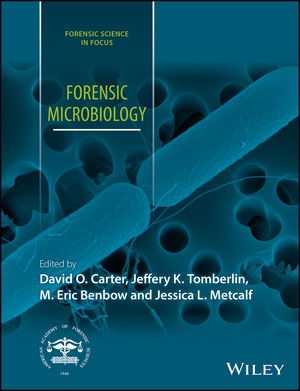
Microbes are Hot Topic in Forensic Science; Book by Chaminade’s Dr. David Carter Tells All About It

May 9, 2017

After more than a century of absence from forensic science investigations, microbes are once again in the spotlight. And a new book by Associate Professor David Carter, director of Chaminade University’s Forensic Sciences Program, explains why.

Dr. David Carter

“Forensic Microbiology,” edited by Dr. Carter and co-authored with two Chaminade graduate students, tells all about those tiny bugs. Specifically, the book details how microbes help scientists determine when a person died, how they died and where they were before they died.

“Using microbes is the hottest, trendiest, sexiest area of forensic science right now,” Dr. Carter says. “This is the thing everybody wants to know about because it’s new.”

Actually, the use of microbes in forensic science is both old and new. The new part involves cutting-edge technology that enables scientists to extract DNA evidence from microbes and sequence the material with a genetic analyzer.

The old part of using microbiology to solve crimes is really old. So old, in fact, that the practice far predates “CSI” TV shows and the invention of television itself.

“There were folks using microbes in the 19th Century as evidence,” Dr. Carter says, “and then people forgot about them for a hundred years. Now people are coming back to microbes and going: ‘Huh. Maybe this is worthwhile.’”

Although Dr. Carter emphasizes that microbes won’t replace more mundane forms of evidence – such as fingerprints, cell phone records, etc. – these tiny organisms do have “one huge advantage.”

“Microbes are present everywhere a human goes,” Dr. Carter says, “because they are always on you, they are always in you. And not all forms of evidence do that.”

Forensic Microbiology Book

Dr. Carter’s book, which he describes as “the first of its kind,” provides a much-need resource for university students and forensic science professionals, including investigators, microbiologists and pathologists. Among those contributing to the book were leading scientists from America, the United Kingdom, France, Australia and other countries.

Helping Dr. Carter write the 424-page book was Emily Junkins, who graduated from Chaminade in 2016 with a master’s degree in forensic science. She’s currently pursuing a doctorate degree in microbiology at the University of Oklahoma.

“Being a co-author for two chapters in this book, and chapters in other books or manuscripts, has had a major impact on me pursuing a Ph.D.,” according to Junkins, who credits her Chaminade education with providing valuable opportunities for in-depth research.

“I would not be the scientist I am now without these opportunities,” says Junkins, who plans a career in academia as a professor and principal investigator focused on microbial biology.

Also serving as a book co-author was Whitney Kodama, who’s graduating from Chaminade this spring with a master’s degree in forensic science.

“I think this experience helped me gain a better understanding of the scope of my research project as well as insight into a field of forensics that I was not aware of before entering the program,” Kodama says.

“I also think this experience has helped the quality of my scientific writing,” adds Kodama, who recently accepted an investigator position with the City and County of Honolulu Department of the Medical Examiner.

“I learned that stepping out of your comfort zone and doing something that seems intimidating/difficult at first can only benefit you in the future,” Kodama says. “One can grow from these experiences, and I feel that has happened to me.”

Editing “Forensic Microbiology” with Dr. Carter were Dr. Jeffery K. Tomberlin from Texas A&M University’s Department of Entomology, Dr. M. Eric Benbow from Michigan State University’s Department of Entomology, and Dr. Jessica L. Metcalf from Colorado State University’s Department of Animal Sciences.

All royalties from book sales support student research projects of the American Academy of Forensic Sciences.

Chaminade University’s Division of Natural Science and Mathematics is accepting applications for its bachelor’s degree program in forensic sciences. This degree provides students with a wide range of graduate school and career options in the fields of law, medicine, veterinary medicine, dentistry and pharmacy.

Posted by: University Communications & Marketing Filed Under: Faculty, Natural Sciences & Mathematics, Students Tagged With: Alumni, Forensic Sciences, Publications

Health Fair Showcased Students On Their Way To Becoming Competent, Caring Nursing Professionals

May 8, 2017

The School of Nursing at held its fifth annual Wellness and Health Fair as the spring semester drew to a close. Sophomore students enrolled in the course Nursing 291: Health Promotion set up their poster boards on various critical health issues. Health Promotion professor Dr. Joy Bliss coordinated the efforts, assisted by the faculty and staff of the School of Nursing.

School of Nursing 2017 Health and Wellness Fair

The displays were opportunities to share with the Chaminade ‘ohana the outreach work students had done during the semester to promote healthy behaviors in the community at large and to promote healthy choices with faculty, staff, and students who attended the fair. The students provided health information on a broad range of topics such as diet and nutrition, oral health, heart health, cancer prevention and early detection, domestic abuse, suicide prevention, sexual health, and more.

Held in the Henry Hall Courtyard on April 28, the Friday before Lei Day weekend, the fair took on a Hawaiian ambiance. The Saint Louis School Hālau made a guest appearance to open the program.

Three Papakōlea women strung lei of plumeria and shared them with the crowd. The community leaders of Papakōlea had conducted a health needs assessment of their Native Hawaiian Homestead residents. Based on the results, project possibilities emerged. The ideas focused on promoting ‘ohana health and aging-in-place safely, enabling the community to remain whole, while providing education and access to healthcare. Students participated in training opportunities for direct service to Papakōlea as furnished by the valued partners. Papakōlea leadership shared with Chaminade School of Nursing students the gift of their mana’o through training sessions of cultural competency, an understanding of community, perspective on the contexts for healthcare and public health nursing, and their respective roles.

Keeping with the Lei Day theme, the fair offered a healthy Hawaiian food plate (low salt, low fat and still ono) and at another table the traditional healing drink of kava. Kupuna (elders) shared their expertise in Native Hawaiian healing therapies including la’au lapa’au (Native Hawaiian herbal remedies) and lomi lomi (Native Hawaiian massage therapy).  The fair also offered alternative and holistic therapies such as “Healing Touch,” an energy therapy in which practitioners consciously use their hands in a heart-centered and intentional way to support and facilitate physical, emotional, mental and spiritual health.

School of Nursing 2017 Health and Wellness Fair
Michelle Selga, Ciana Russ, Shenaniah Romias, and Kyle Ranochak present “Health Promotion for Hawaii’s Homeless”

Dressed in dark blue Chaminade School of Nursing polo shirts, Michelle Selga, Ciana Russ, Shenaniah Romias, and Kyle Ranochak presented their “Homeless in Paradise” project.  They displayed a poster board with accompanying slides on a laptop and discussed details with those who had questions.

The four students did their service learning project in March at a homeless campsite adjacent to Waianae Boat Harbor. Mrs. Elisala, a nurse practitioner and faculty member at the University of Hawaii, coordinated a tour of the homeless community and informed the students on the health needs of the community.

In her reflection, Selga described her experience. “From the outside, you would not even imagine what goes on inside their community. The first step inside, you’re greeted by makeshift houses lined up along a beaten pathway. As you dive further in, you begin to realize how amazing these people are. Towards the center of town, which consists roughly of 200 people, lies a garden and chicken coop,” Selga remarked. “The biggest eye-opener for us was seeing how much help these people needed. A doctor there, who volunteers his time every week, explained to us that the greatest problem is they don’t have enough people to help.”

All the students felt that the experience was meaningful and wanted to do more. “It would be nice in the future to see us collaborate with Mrs. Elisala’s team and be able to give back to the people here in Hawaii. As nurses, we want to be able to give more to the community and expand our experience in the nursing profession,” concluded Selga.

The Homeless project was just one of many presentations exhibiting the broad range of topics that students undertook for their research. The Wellness and Health Fair successfully showcased competent and caring students who were well on their way to becoming competent and caring nursing professionals.

Chaminade’s School of Nursing is a four year, full-time undergraduate program that offers a Bachelor of Science in Nursing degree. The unique program immerses students in nursing preparation with educational curriculum, human-patient simulations, community outreach projects, and service-learning and supervised clinical experiences. The curriculum for our undergraduates program is consistent with the Baccalaureate Essentials of Nursing produced by the American Association of Collegiate Nursing. The nursing program is fully accredited by the Commission on Collegiate Nursing Education.

Posted by: University Communications & Marketing Filed Under: Campus and Community, Nursing & Health Professions, Students Tagged With: Campus Event, Service Learning

Hogan Students Learn How Culture and Business are Intertwined

May 5, 2017

Ramsy Tatum and Elena Farden
Ramsy Taum (President & Founder, Life Enhancement Institute of the Pacific) and Elena Farden (Hogan Entrepreneurs Program student)

LAWE I KA MAʻALEA A KUʻONOʻONO.
Acquire skill and make it deep. This ‘Ōlelo No’eau, or wise proverb, outlines the path of success in becoming good at anything, you must immerse yourself in practice and learning until it becomes part of you. Serving as a guide on this deep journey of enlightenment, was our honored guest speaker, Kumu Ramsay Taum.

Ramsay Taum is the President and Founder of L.E.I, Life Enhancement Institute of the Pacific that provides sustainability consulting, cultural impact assessments and facilitating community engagement and planning. Taum also leads the MBA Island Business concentration program at Chaminade University. Through his work in teaching students and helping companies understand the value-impact vs. the value add of Hawaiian cultural values in the workplace, he describes himself as a community lei maker.

Lei ‘imi na’au’ao (lei of seeking knowledge; enlightenment)
And like an expert lei maker, Taum selects each piece and explains its value to the lei, starting with culture.
“Culture is important,” explains Taum. With culture in place, this moves the conversation from a values-conflict space to prioritizing what’s truly important as a business leader. To successfully navigate this we must understand that we all come with a “supply-side thought”, or preconceived notions, experiences and biases. In business management, when everyone does this they can take weight of their collective principles, values and practices towards shaping things together for deeper impact in business and the community. As Hogan Entrepreneurs, this sentiment resonates with our motto of doing business that makes social sense, and social impact that makes business sense.

Lei haliʻa aloha (Lei of fond remembrance; often said of someone cherished, such as a beloved elder)
As graduate of Kamehameha Schools, US Air Force Academy and University of Southern California, this knowledge Taum shared with the Hogan program wasn’t just given to him, it was gathered and earned. Throughout his life, key mentors such as Papa Lyman, former Bishop Estate Trustee, and Pīlahi Paki, beloved kupuna and cultural expert, pushed Taum to deepen his worldview and identity as a Hawaiian.
Today, Taum is a kumu and mentor himself. He teaches the values he has learned to help local businesses align a place-based approach of people, place, and prosperity in the context and content of how they do business in Hawai’i.

Lei pilina (Lei of closeness; a woven relationship or association)
Above all, the culture that shapes us and the values that help define us are all driven by relationships. Taum explains that culture is the lens that gives us new eyes – new eyes to see and new eyes to see how success is measured. To that he closed the evening with a simple question to measure if you are successful as a leader and business: did you eat.
If you can feed your family, if your workers can feed their families, if your community has access to food and the means to feed others less fortunate in the neighborhood, then you are successful.

Written by: Hogan Entrepreneurs Program student, Elena Farden
Speaker Session with Ramsay Taum 4/19/17

Posted by: University Communications & Marketing Filed Under: Business & Communication, Faculty Tagged With: Guest Speakers, Hogan Entrepreneurs Program, Master of Business Administration

The Fujitani Interfaith Program at Chaminade University Focused on Pathways to Peace

May 4, 2017

Maya Soetoro-Ng, Ph.D., the keynote speaker, asked the crowd to reflect in silence on their personal definitions of peace and peacebuilding.  The nearly 100 people in Mystical Rose Oratory obediently paused and reflected.  They had gathered on April 28 – a Friday night – for a presentation by the Bukkyo Dendo Kyokai (BDK) Fujitani Interfaith Program of Chaminade University featuring “Pathways to Peace in the Workplace: How Practices of Faith Bring Peace within Diverse Career Fields.”

“All right, please share your thoughts.  We’ll do it popcorn-style,” said Soetoro-Ng.

People popped up with their definitions, ranging from personal peace, spiritual harmony, and working in harmony. She encouraged people to connect with strangers around them and share their definitions of peace.

Affirming everyone, Soetoro-Ng shared that the Matsunaga Institute for Peace and Conflict Resolution also defines peace as action and will work through public policies and innovative social projects.  The organization looks for “opportunities to nourish peace in the actions we take” as a way to develop peacebuilding leaders.

Soetoro-Ng serves as the director of Community Outreach and Global Learning at the Matsunaga Institute for Peace and Conflict Resolution and earned her doctorate at the University of Hawaii in multicultural education. She has taught multicultural education, social studies methods, and peace education for many years at the University of Hawaii’s College of Education at both the undergraduate and graduate levels

Soetoro-Ng told stories of her mother as a social-cultural anthropologist and as a bridge builder. Soetoro-Ng recalled the poignant story of her mother’s desire to have her ashes scattered in the ocean so that “Mom could share herself and connect with all the people she had ever worked with and loved in her lifetime.”

Soetoro-Ng also shared stories of compassion shown across diverse communities that she saw during her global travels. “The vast majority of the world are comprised of the faithful. What if people of all faiths mandated peace and peacebuilding as their goal? Can you imagine how expansive that embrace would be for the family of humans?” she asked.

Soetoro-Ng then turned the discussion to the respondents.

Vima Lamura had led the audience in meditation earlier that evening.  As the audience meditated aloud, she orchestrated the diverse sounds into a chorus and pulled the participants into a harmonious choir.  Lamura spoke about the value of being at peace and in harmony in work with choirs and orchestras.  She had spent her life immersed in the traditional ancient wisdom of the Vedas, chant, sacred sound and mantra, which have inspired her creative works in music, speaking and writing.  She shared how meditation was useful for her inner peace and in building peace with the people she collaborated with on music tours, concerts, studio recordings, and operas.

Pieper Toyama, the founding head of the Pacific Buddhist Academy, spoke of integrating Buddhist values in an academic setting.  The school discipline, curriculum, and relationships between students, faculty, and staff needed to reflect these values, including the fostering of peace, pursuing inner peace and the practice of peace with others. Toyama has retired from Pacific Buddhist Academy, the first Shin Buddhist high school in the Western Hemisphere, and currently serves as president of Hawaii’s organization of Hongwanji’s 34 Buddhist temples.

James P. Walsh, Jr., the director of Pastoral Planning for the Diocese of Honolulu, worked in Hawaii’s medical field from 1975 to 2009 in various executive positions at Straub Clinic and Hospital and with HMSA.  He has taught at Chaminade University from 1979 to 1999 as an adjunct Business professor. Walsh spoke about negotiating between employees and employers and practicing his faith through conflicts. He encouraged people to become more aware of what they are grateful for and challenged them to look for opportunities to correct inequities.

Soetoro-Ng asked the audience for their thoughts and questions, as well as to connect with others in the room. The discussion was robust.

In closing, Soetoro-Ng shared an Indonesian phrase she learned as a child that translates to “wash your eyes.” “Yes, wash your eyes; refresh your gaze,” she repeated. “Make a commitment to faith and peace in action. Remember small connections can build an organism that can grow to supplant major power. ”

The Bukkyo Dendo Kyokai Reverend Fujitani Interfaith Program, established in 2003, brings together the Buddhist community with all other religious communities in Hawaii to promote interfaith dialogue and provide opportunities for understanding and action for peace and justice in our communities.

Chaminade’s Religious Studies program offers the student an opportunity for in-depth reflection into the nature of religious experience, the communities which arise in response to it, and their actions. Grounded in Roman Catholic theology and Marianist educational philosophy, this reflection is ecumenical and conducted in the context of a multicultural, interfaith dialogue, exploring the meaning of the faith and working for justice among many peoples and cultures. The program fosters an understanding of human responses to the sacred that invite personal and communal commitment to faith in action and spiritual growth.

Posted by: University Communications & Marketing Filed Under: Catholic, Humanities, Arts & Design Tagged With: Campus Event, Marianist, Religious Studies

  • « Go to Previous Page
  • Page 1
  • Interim pages omitted …
  • Page 133
  • Page 134
  • Page 135
  • Page 136
  • Page 137
  • Interim pages omitted …
  • Page 151
  • Go to Next Page »

Footer

Chaminade University Logo

3140 Waialae Avenue
Honolulu, Hawaii 96816

Contact Us
Phone: (808) 735-4711
Toll-free: (800) 735-3733

facebook twitter instagram youtube linkedin

Visit

  • Plan Your Visit
  • Campus Map (PDF)
  • Events

Resources

  • Campus Security
  • Student Consumer Information
  • Concerns, Feedback, and Reporting
  • Institutional Review Board
  • Title IX / Nondiscrimination Policy
  • Compliance
  • Emergency Information
  • Careers
  • Institutional Statement

People

  • Students
  • Parents
  • Alumni
  • Faculty & Staff

Policy

  • Privacy Policy
  • Terms and Conditions of Use


© Chaminade University of Honolulu