• Skip to primary navigation
  • Skip to main content
  • Skip to footer
Chaminade University of Honolulu

Chaminade University of Honolulu

  • VISIT
  • APPLY
  • GIVE
  • STUDENTS
  • PARENTS
  • ALUMNI
  • FACULTY/STAFF
  • Admissions
    • Admissions Home
    • Undergraduate Students
      • First-Year Students
      • Transfer Students
      • Admitted Students
    • Graduate Students
    • Flex Online Undergraduate Program
    • Military Students
    • Non-Degree/Visiting Students
    • Experiential Honors Program
    • Early College Program
    • New Student Orientation
  • Tuition & Aid
    • Financial Aid Home
    • Tuition & Expenses
    • Federal Updates & Changes
    • Scholarships
    • $5,000 Graduate Scholarship
    • VA Education Benefits
    • Net Price Calculator
  • Academics
    • Academics Home
    • Academic Programs
    • Office of Student Success
      • Academic Advising
      • Records and Registrar
    • Kōkua ʻIke (Support Services)
      • ADA Accommodations
      • Career Services
      • Proctoring Services
      • Tutoring Services
    • Sullivan Family Library
    • Undergraduate Research & Pre-Professional Programs
    • Commencement
  • Campus Life
    • About Campus Life
    • Student Engagement
    • Student Government Association
    • Residence Life and Housing
      • Summer Conference Housing
    • Health Services
    • Marianist Leadership Center
    • Counseling Center
    • Campus Ministry
    • Campus Security
    • Dining Services
    • Bookstore
  • Athletics
  • About
    • Chaminade University News
    • Our Story
    • Leadership
    • Chaminade University Strategic Plan 2024-2030
    • Mission & Rector
    • Association of Marianist Universities
    • Facts & Rankings
    • CIFAL Honolulu
    • Accreditation & Memberships
    • Montessori Laboratory School
Search
×

Search this web site

nathanial

Criminal Justice program awarded $1 million grant for new training institute

February 17, 2026

Legal and law enforcement professionals from throughout the Pacific region will soon enjoy additional training and support thanks to one of Hawai‘i’s senators in Washington.

Chaminade University’s Criminology and Criminal Justice program, part of the School of Education & Behavioral Sciences, is receiving a $1 million federal education grant. The money will be used to establish a new institute for training criminal justice professionals from the Pacific Islands, especially South Pacific island nations and territories.

The new institute will be housed at Chaminade.

Kelly Treece, Associate Professor of Criminology and Criminal Justice and director of the program, said the name of this new institute hasn’t been decided yet. Whatever it’s called, the new institute will serve as “a hub for training and development for every aspect of the justice system,” Treece said.

“There’s nothing like it in the whole state and of course nothing like it in all the South Pacific.” Treece said the funds will be used to offset costs for professionals to travel to Hawai‘i to receive specialized training “so it makes it much more affordable.”

Chaminade University is home to the state’s oldest and largest criminal justice education program. The program already hosts students from Guam, Saipan, and other Pacific islands.
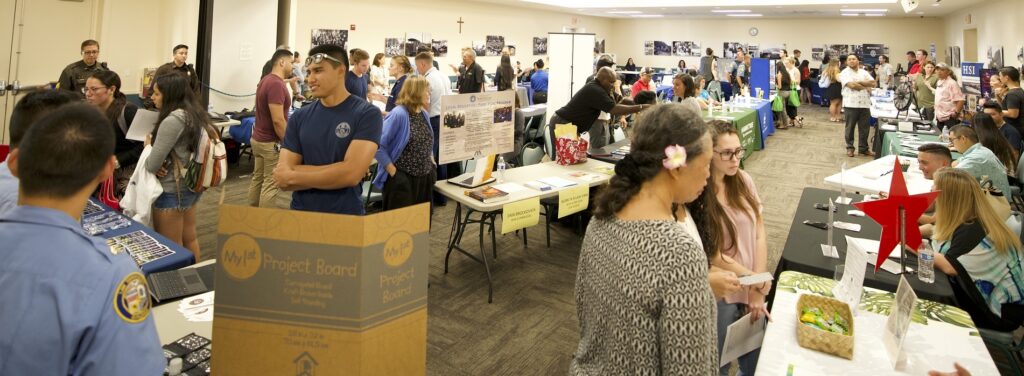
Chaminade University’s Criminology and Criminal Justice program is renowned throughout the Pacific.

The grant was secured as an earmark to a spending bill thanks to the legislative work of U.S. Senator Brian Schatz. Schatz has been serving in the Senate as Hawai‘i’s senator since 2012.

The $1 million grant is part of a larger appropriations package that Senator Schatz negotiated for the state as whole.

“Despite some challenges in Washington, we secured nearly $34 million in new earmark funding for Hawai‘i and expect more to come,” Schatz said in a statement. “These earmarks will give local non-profits and infrastructure projects more resources to serve communities across Hawai‘i.”

His office said additional earmarked funds for the state could be announced within weeks.
Posted by: nathanial Filed Under: Education, Faculty, Featured Story, Homepage Tagged With: Criminology and Criminal Justice, Featured Story, Homepage

Chaminade celebrates Founders’ Week 2026

January 29, 2026

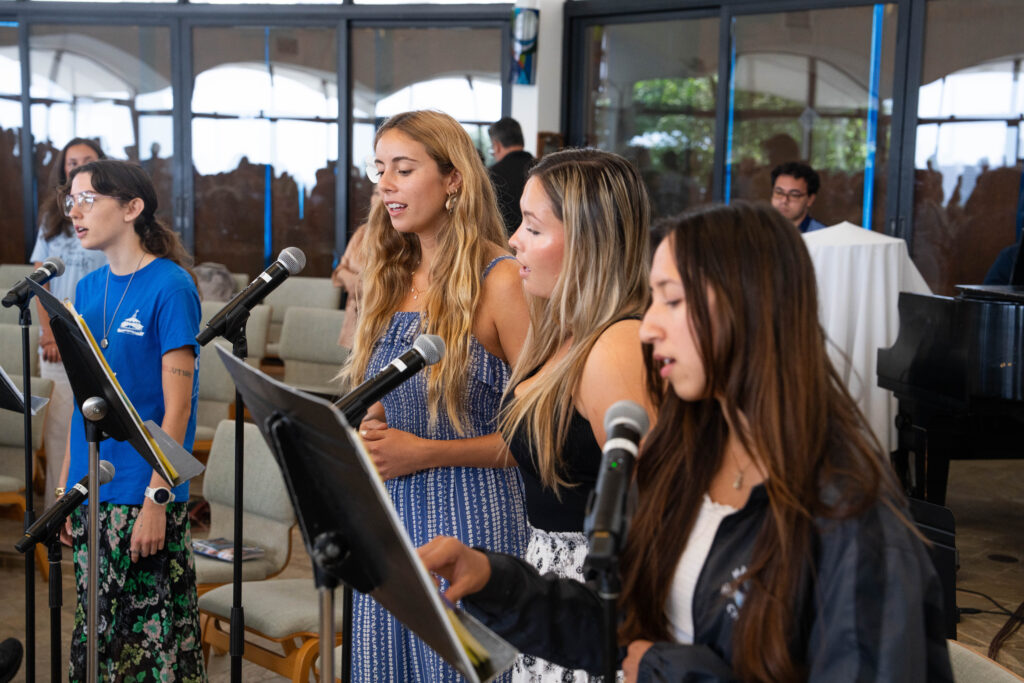
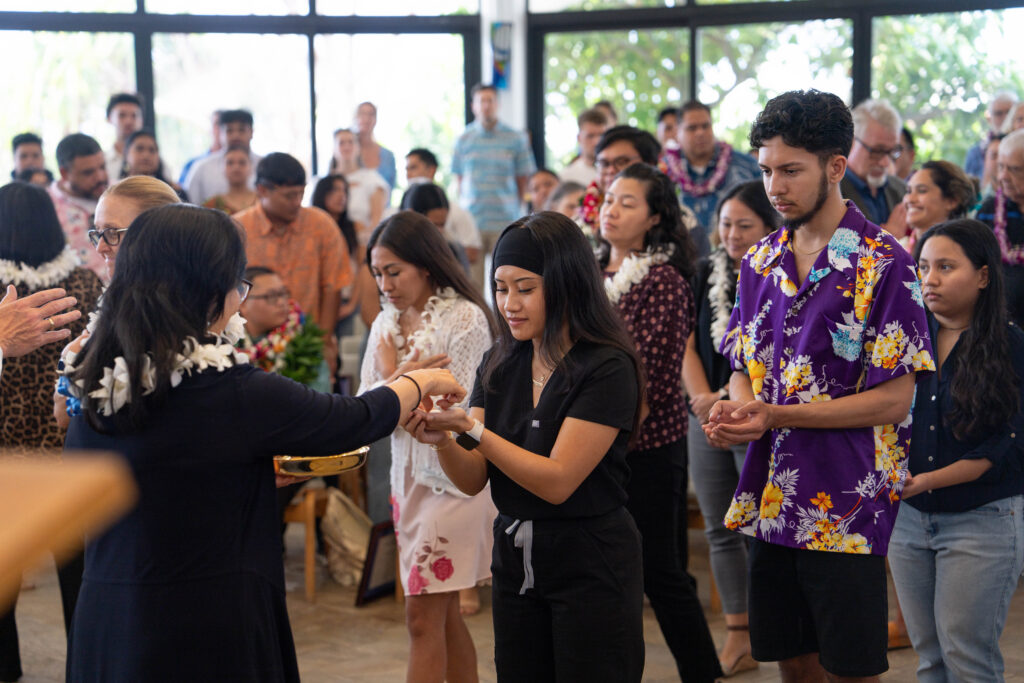
Students, staff, faculty, and the campus ministry have been gathering this week to celebrate Founders’ Week, Chaminade University’s annual time to reflect on the origin of the Marianist mission and to express gratitude for those who came before.

The week-long celebration honors the legacy of Chaminade’s three foundational figures and founders of the Marianist Catholic order: Father William Joseph Chaminade, who established the Society of Mary; the Venerable Adèle de Batz de Trenquelléon; and the Venerable Marie Thérèse Charlotte de Lamourous.

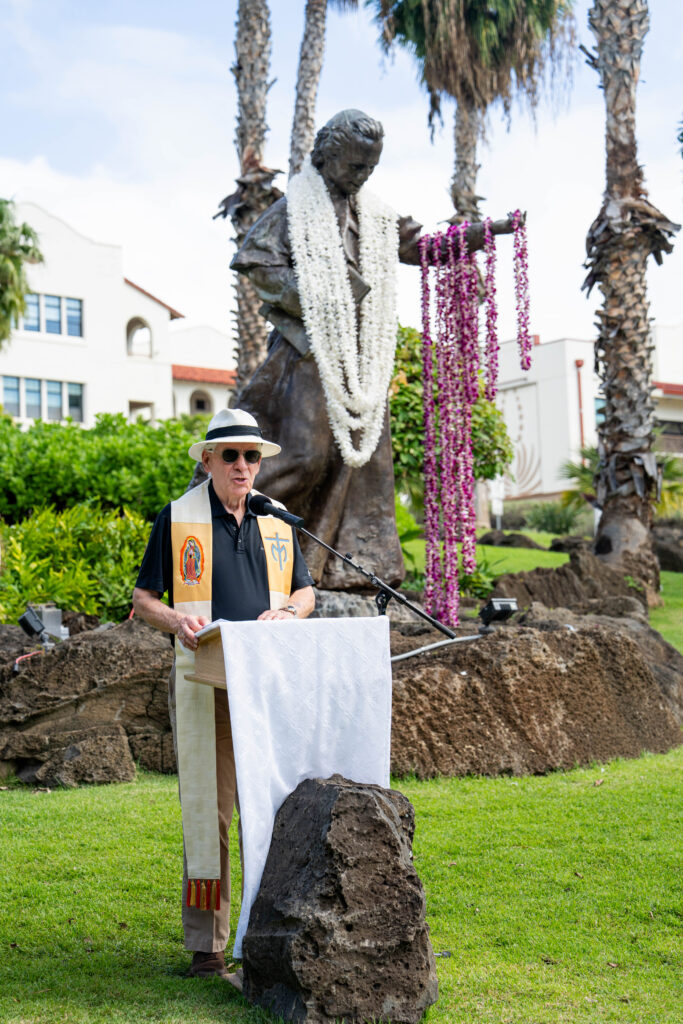
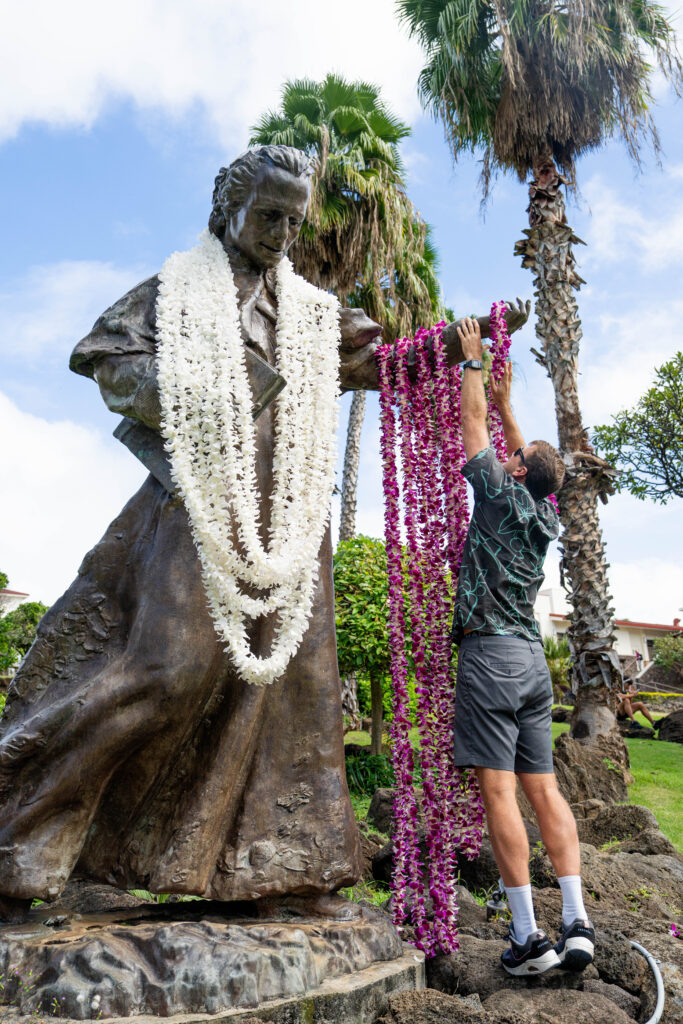
Activities kicked off on Monday when students, staff, faculty, and campus ministry leaders gathered at the foot of the statue of Father Chaminade standing prominently at the entrance to campus. The statue was adorned with colorful, traditional Hawaiian leis, as has been the tradition for decades.

Father Martin “Marty” Solma led Monday’s ceremony, a casual affair under clear skies that followed heavy rain from earlier that morning. Father Marty invited attendees to take inspiration from the statue and the message the artist who created it was trying to convey.

“We all see this image every day when we come to campus,” he said. “May it remind us that without this holy founder, this man of faith, hope, and love, none of us would be here studying, working, learning, and playing on Kalaepōhaku.”

He said the statute’s posture—outstretched arms, facing downwards—should be interpreted as “an invitation to serve.”

“He’s portrayed as looking down, inviting us—students, faculty, staff—to join him in his mission of service to the community, especially to youth and to those least capable.”

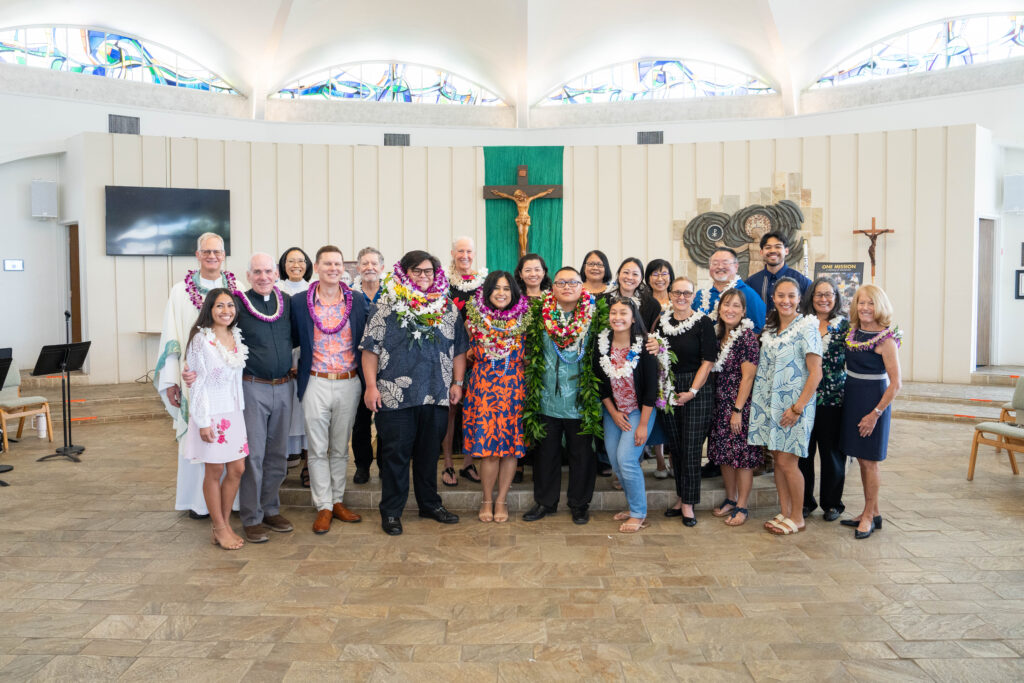
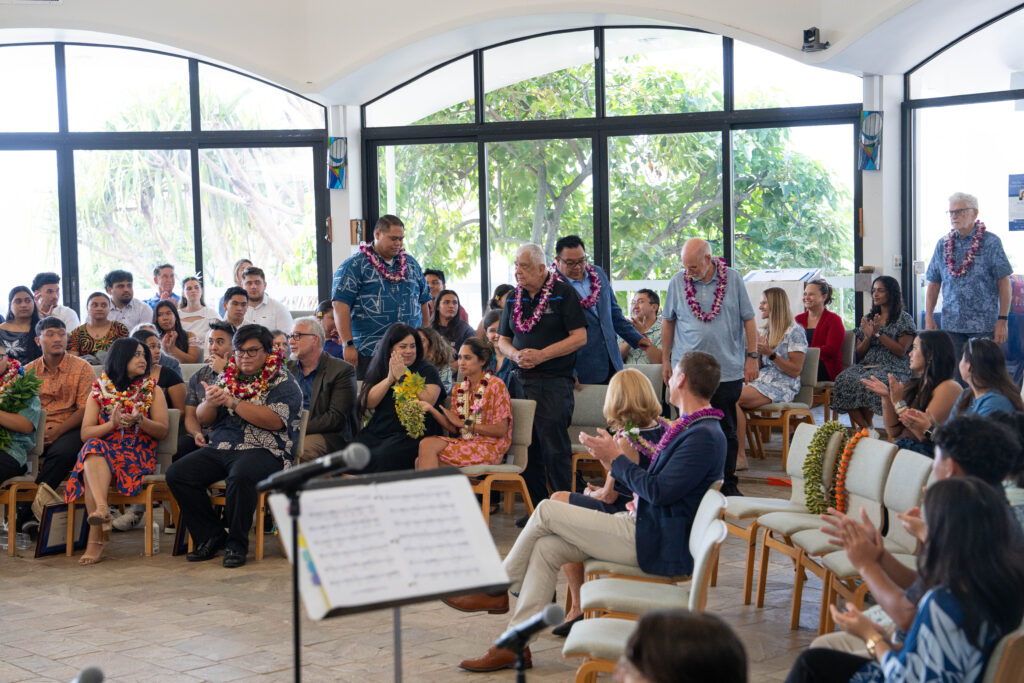
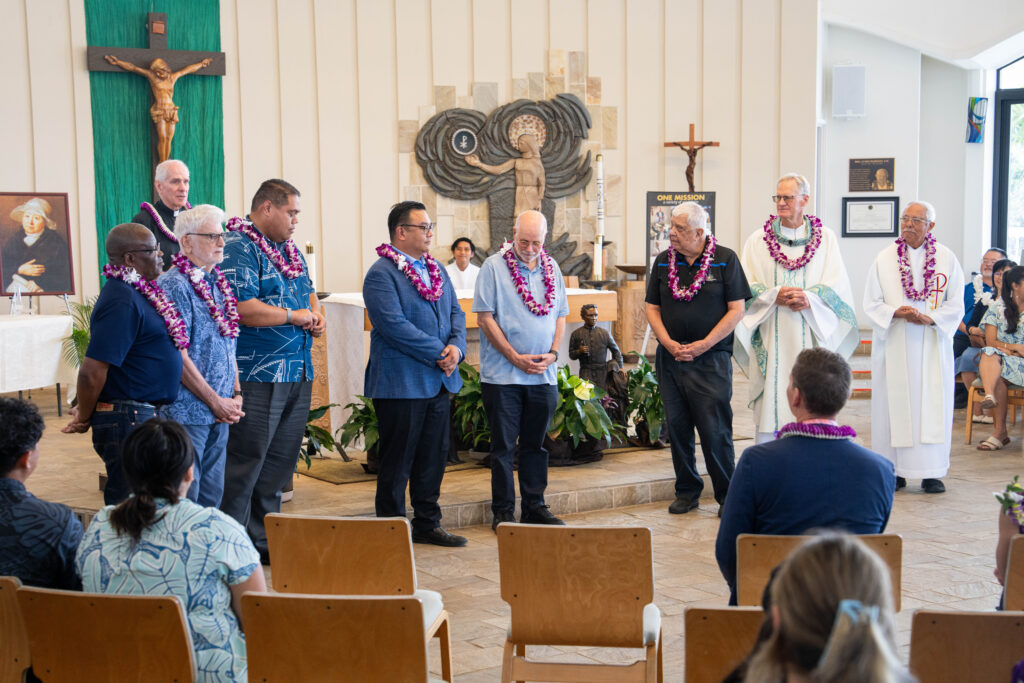
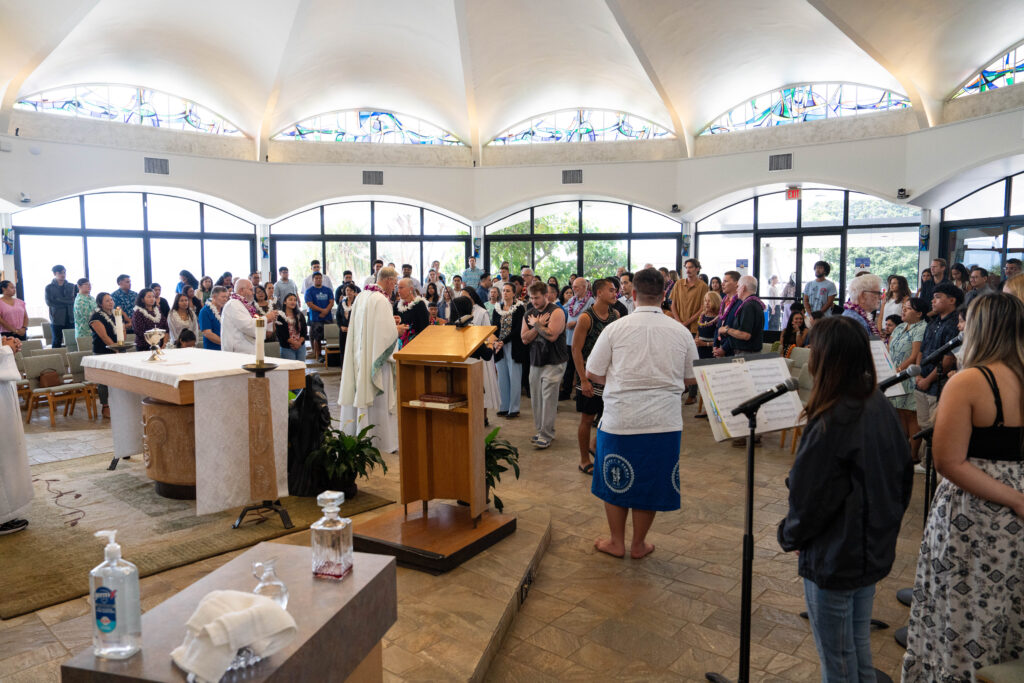
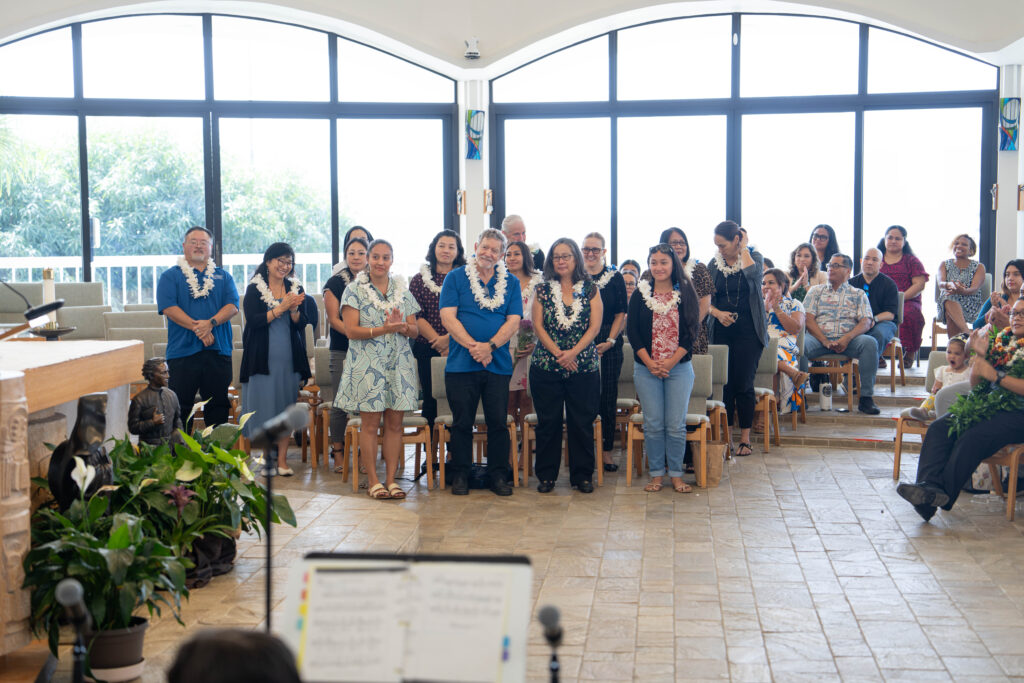
The week of remembrance continued on Wednesday with the main event, the Founders’ Day Mass & Heritage Awards Ceremony. The holy mass was led by Father Christopher Wittmann, known around campus as Father Chris.

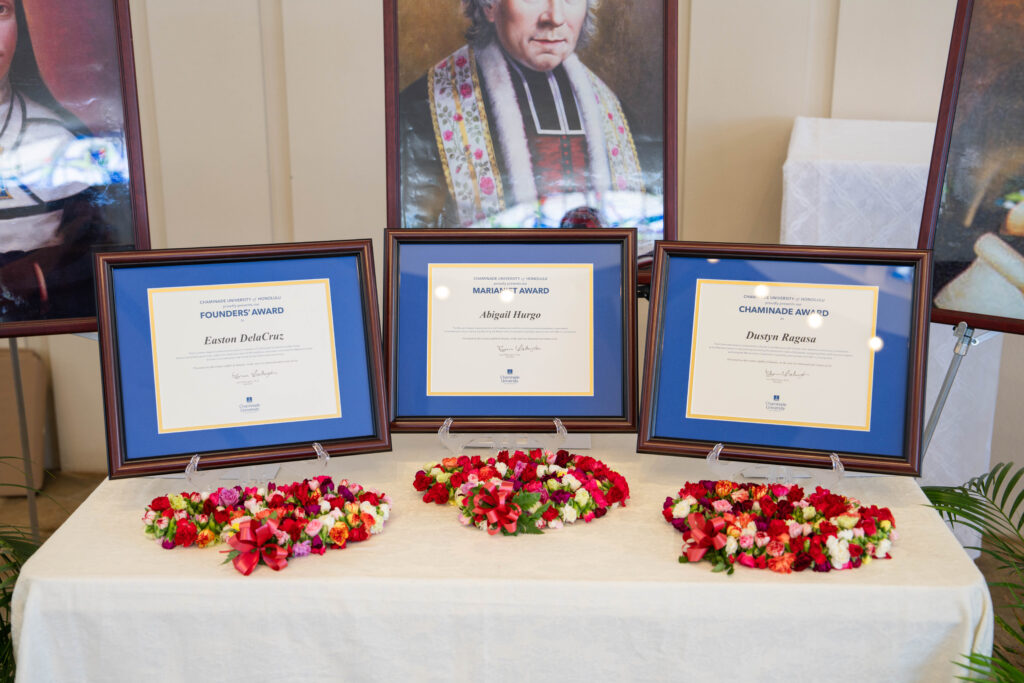
Mirroring the celebration of the university’s three foundational figures, every year the Heritage Awards recognizes three exceptional members of the Chaminade family.

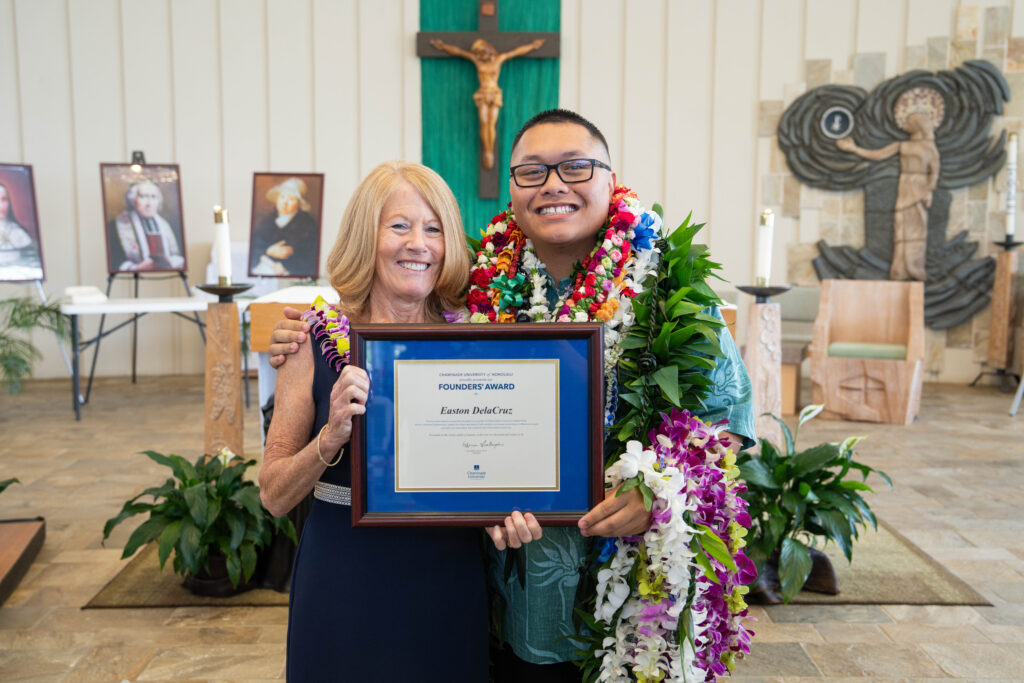
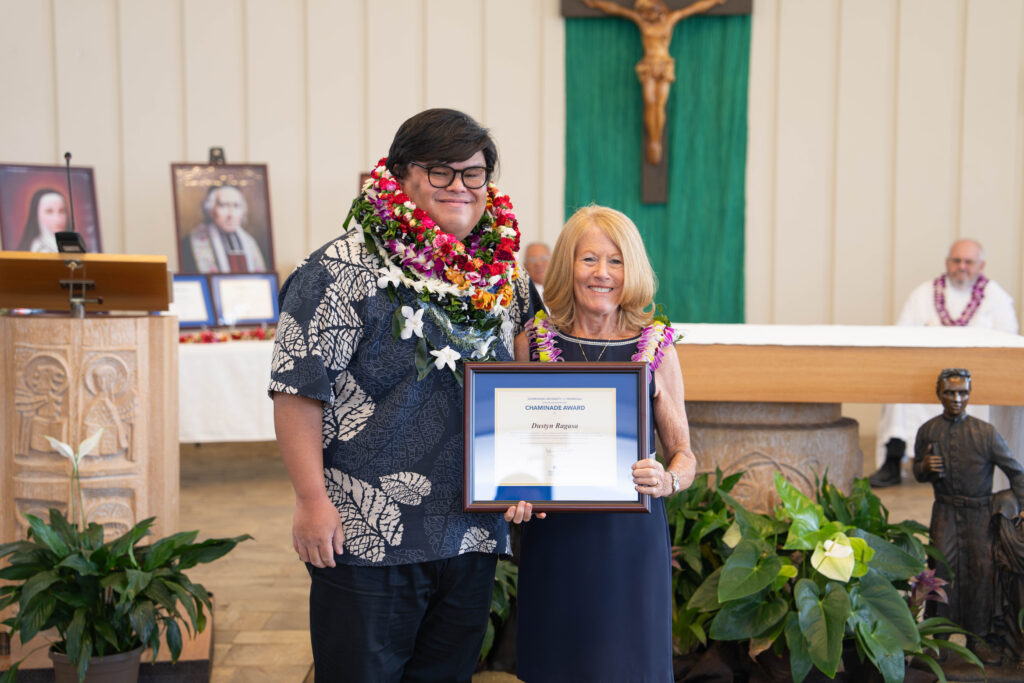
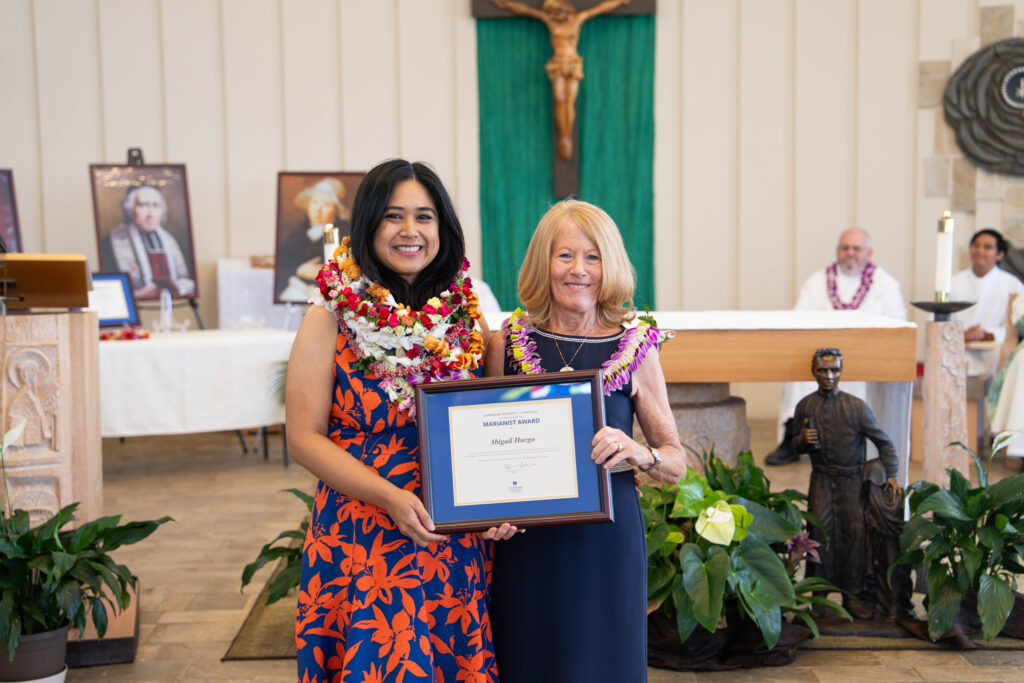
The Chaminade Award recognizes a faculty or staff member who most exemplifies the spirit of the university. The Marianist Award is given to a staff member who demonstrates extraordinary commitment to Chaminade University’s mission. Finally, the Founders’ Award recognizes a student for their exemplary demonstration of respect, generosity, faith, and other Marianist values.

University President Dr. Lynn Babington opened the mass and awards ceremony with a speech reminding everyone of the school’s foundational mission.

“Marianists from the beginning have embraced the idea of education as a mechanism to transform society and support the spirit of openness, mutual respect, and acceptance,” President Babington said. “At Chaminade University of Honolulu, we are committed to being such an environment where students thrive.”

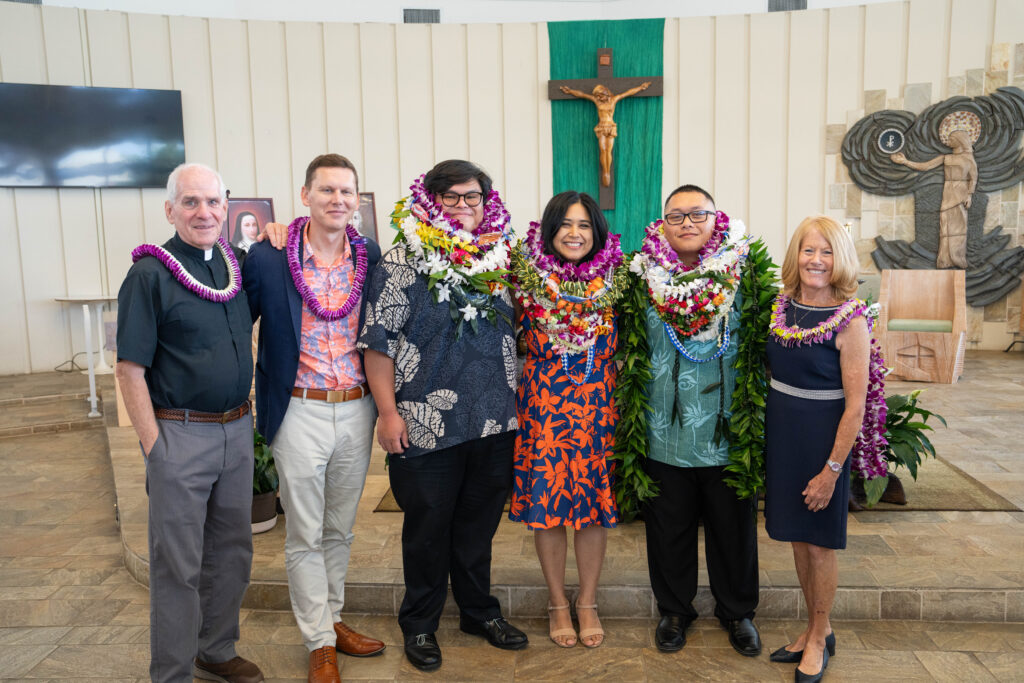
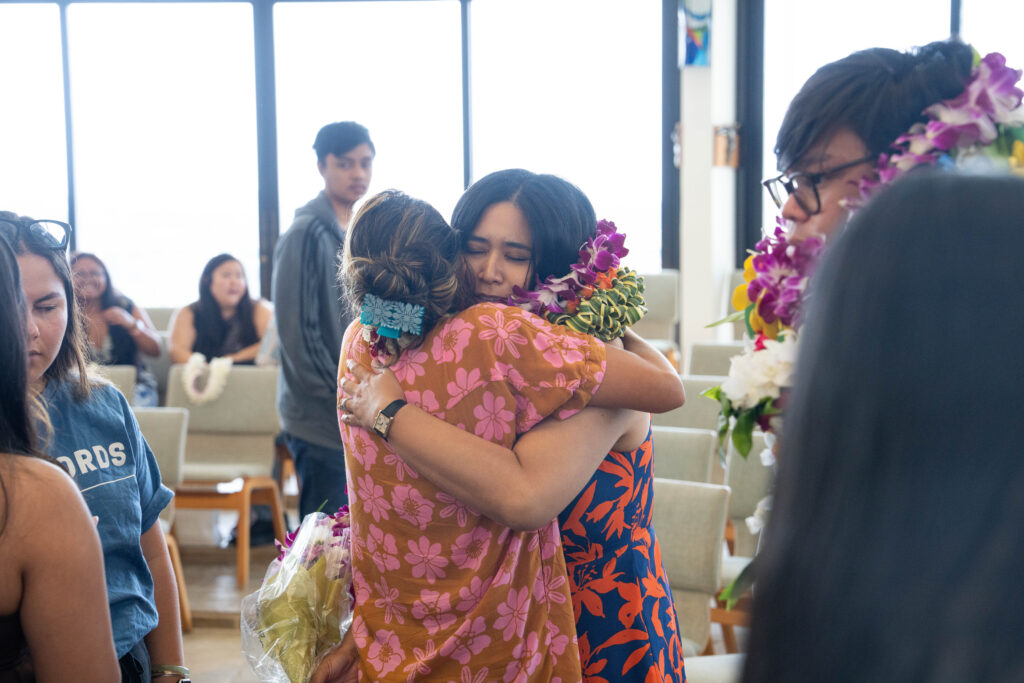
She and Father Marty honored the three award winners: Dr. Dustyn Ragasa ‘07, Abigail Hurgo, and Easton DelaCruz ‘26.

The Chaminade Award went to Dr. Ragasa, a Chaminade professor and Director of the Master of Pastoral Theology Program who is adored by his students. Ragasa is originally from Kauai and holds a doctorate from the Graduate Theological Union.

Abigail Hurgo is this year’s recipient of the Marianist Award for her unflinching commitment to student success. Hurgo is Chaminade’s Assistant Vice President for Enrollment Management and is responsible for organizing and leading New Student Orientation, campus tours, and other events welcoming students to our community.

Easton DelaCruz is the 2026 recipient of the Founders’ Award. Hailing from Saipan, DelaCruz is a student majoring in communications. He was recognized for his active role in campus life, volunteering to assist with dozens of activities and events. DelaCruz is slated to graduate this year.

“It is a wonderful occasion for us to gather,” Father Chris said.

He thanked everyone who gathered at the Mystical Rose Oratory on Wednesday “as we celebrate the Marianist founders, we celebrate our Heritage Award winners, we celebrate the mission and charism that we have inherited from our founders and are privileged to carry forward in our faith.”

Posted by: nathanial Filed Under: Campus and Community, Catholic, Homepage Tagged With: Campus Event, Honors and Awards, Marianist

Ending the AI ‘Arms Race’: An Interview with Provost Lance Askildson

January 27, 2026

Chaminade University takes great pride in maintaining Marianist educational traditions in the face of modern change, and arguably no modern invention has challenged this mission more than artificial intelligence or AI.

Just a few years ago, OpenAI launched the first version of ChatGPT. The impact has been tremendous. College students are now using AI tools to cheat on tests and generate entire term papers. Professors have tried to keep up by using specialized detection software, but it’s proving to be a losing battle.

AI is the topic dominating conversations at campuses throughout the United States. Administrators and faculty members at Chaminade and elsewhere are struggling to comprehend AI technologies and how they’ve transformed higher education and learning in a very short amount of time.

Chaminade University Provost and Vice President for Academic Affairs Lance Askildson characterizes the current state of affairs as a tech battle where students and AI companies hold the upper hand. Combating AI overuse in education will require adopting different tactics, not different technologies, he says.

“I think we felt like we were in an arms race, but at this point, the technology of those armaments have far exceeded any of our technologies to combat it, and so now we’re in sort of a battle of wits,” he said.

A recent survey by the American Association of Colleges and University and Elon University showed faculty hold overwhelmingly negative views about AI. 83 percent of respondents said they believe the technology will worsen students’ attention spans. 95 percent predict students will come to rely too heavily on AI tools over time–there’s fear students will let the machines do the thinking for them. Whatever the concerns may be, 86 percent of American university faculty members polled agree that AI will completely transform how teaching must be conducted.

In a wide-ranging conversation on the impact of AI on higher education, Provost Askildson said he’s adopted a much more nuanced and at times optimistic stance.

A renowned linguistics expert, Askildson penned an opinion piece in the Chicago Tribune three years ago arguing that ChatGPT is no replacement for human educators. He stands by this assessment, though he admits the technology has become more advanced and, in many ways, more threatening since that letter was published. “I do not think that AI is fundamentally changing what a college education is, but it’s challenging us to ask that question anew,” he said.

Provost Askildson is advising Chaminade’s faculty to stop trying to fight AI with detection tools—it’s an arms race they’ll lose. Rather, he’s advising them to retool the way they deliver curriculum, emphasizing that the end goal for a university education isn’t good grades or a diploma, but rather students demonstrating that they’ve acquired new knowledge and critical thinking skills to empower them in an increasingly competitive and complicated world.

Below, we share some of the fascinating conversation we had with Provost Lance Askildson on the impact of AI on Chaminade University and academia.

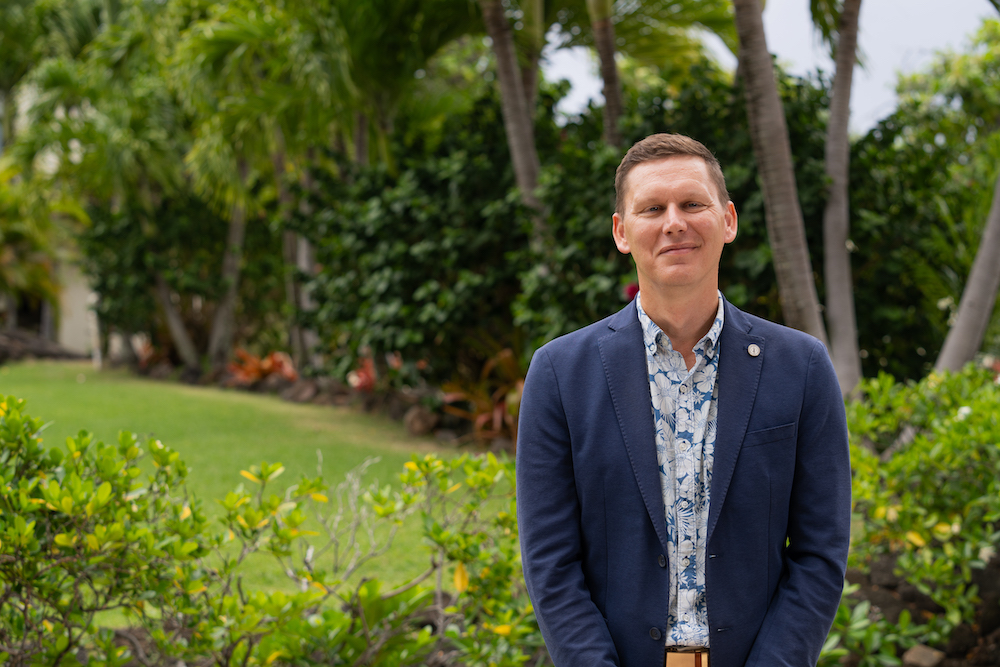
Chaminade University Provost Lance Askildson

Q: What are the implications of AI in higher education today compared to when this technology first came out?

Provost Askildson: The state of large language models and generative AI has changed quite a bit.

The implications for higher ed are significant in that the tools that we had at the beginning of this journey two and a half, maybe three years ago, were pretty consistent in helping us identify when students were using AI—and so they’re called AI detectors, or there were a few different monikers for them. But basically, the technology to detect AI was about as strong as the technology to produce some of this generative language that was pretty polished. And really in the last eight to 12 months, that’s changed considerably.

The AI detector technology has fallen behind the sophistication and diversification of prompts and responses that the average user can get. And so, I think if you looked at the higher ed press two years ago, there was general acknowledgement that we need to recognize the value of AI for educational purposes, find ways to integrate it into the curriculum. And we’ve been having those conversations here at Chaminade since the beginning.

Q: Does Chaminade University currently have an official AI policy?

Provost Askildson: We do, but it’s baked into our academic integrity policy as a whole. We are working on a more explicit AI use policy so it’s less about the cheating with AI and more about what are the range of potential uses of AI that faculty and students should be considering. It’s going to be more of a heuristic rather than a policy.  Does that make sense?

Q: The messaging will be, of course, academic integrity must be upheld. Then, you’ll provide more guidance for faculty while giving them the discretion to determine how to manage this technology in their classrooms.

Provost Askildson: Correct.

I also want it to be written in a way that students can understand that their faculty have true discretion. Some faculty might choose no AI use in their course for particular pedagogical reasons. Others might ask students to actually use AI explicitly as a part of the process and then explain what prompts they used in order to produce certain outcomes, and then critique that. So that might be the assignment.

We just want to acknowledge that there are going to be a range of uses for AI, but that all of the use of AI needs to be explicitly addressed either in the syllabus or in the assignment, or ideally both. And that’s some of the guidance we’ll be providing to faculty.

Q: What can professors do now to adjust their curriculum delivery strategies to sort of mitigate against students’ overreliance on AI?

Provost Askildson: Right now, faculty, when they suspect use of AI, they cannot rely on the detectors because there’s so much concern about construct validity. We just don’t know that the detectors are actually giving us accurate information.

Instead, faculty are returning to the old approach of asking students to basically defend their writing.

They’re saying “can you explain to me why you made this point?” and they’ll read something from the text. And based on the student’s oral response–it’s a bit of an oral interview–they will make a judgement about whether or not the student has used AI.

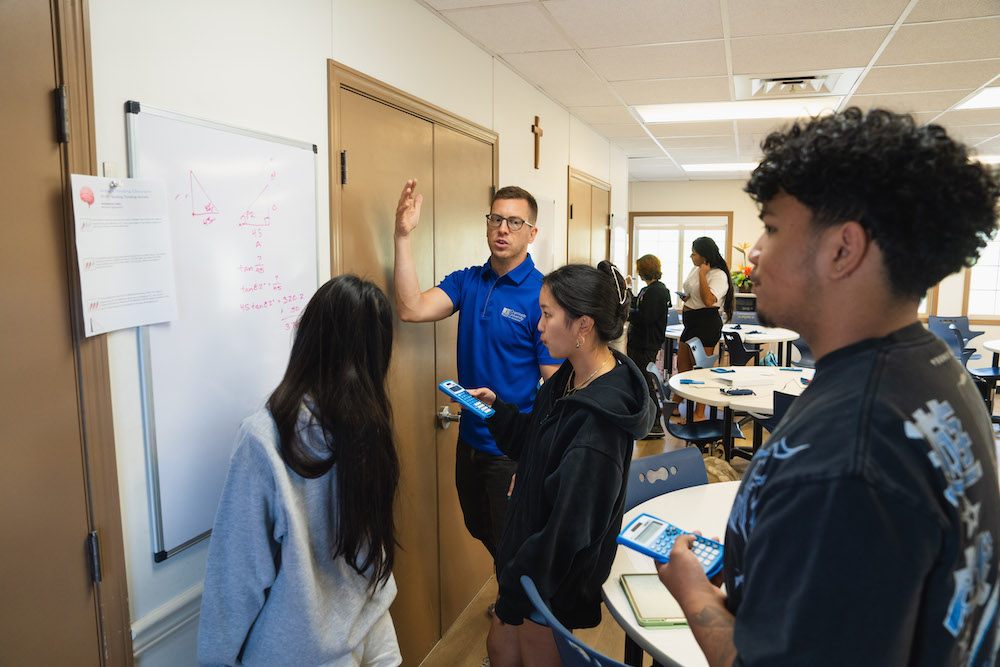
Hands-on pre-calculus instruction at Chaminade is enhanced (not replaced) with technology, in this case, calculators.


It’s not about catching the student’s use of AI. It’s about whether the student has mastered the learning that the faculty member has set out for them to learn sufficiently in the judgement of the professor.

The professor doesn’t need to accuse the student of using AI. They can simply say: “Well, you know, it seems to me that you haven’t fully grasped the content of this assignment. You’re not able to explain your reasoning. I’m not suggesting that you have done this fraudulently, but I’d like some additional evidence of mastery.” And so, they can give them additional assignments, they can have them do some alternative work to show mastery of that learning.

Q: How do you see Chaminade and academia in general moving forward?

Provost Askildson: The way we move forward is by keeping our humanity at the center of everything we’re doing. That means focusing on the human element rather than all of this noise about technology. And it also means recognizing that this is more than just intellectual development we’re aspiring to. It’s character development, it’s whole person development.

At the center of combatting the threats that these new technologies pose, whether it’s AI or some new technology that might be on the horizon, it’s about making sure that the teachers, the faculty, are prepared to approach these new challenges thoughtfully, not in a reactionary way. This is a Father Chaminade quote: “New times call for new methods.” Which is a really prophetic quote from an 18th Century–19th Century priest.

Posted by: nathanial Filed Under: Homepage

Chaminade University forensic sciences lab secures last remains of Saint Marianne of Moloka‘i

January 23, 2026

More than a century after her death, the story of a saint who served those with leprosy and died on Moloka’i is being told anew—through science. Chaminade University’s Forensic Sciences Unit is helping evaluate her remains, uniting Marianist mission and modern forensic expertise to bring history to life in service to the community.

January 23 has been designated the feast day of Mother Marianne Cope, a German-born American Franciscan nun who traveled from Syracuse, New York to the Kingdom of Hawai‘i in the late 1800s to help build the kingdom’s medical infrastructure. She’s credited with modernizing healthcare practices and establishing hospitals on the mainland and in the islands, but she is most famous for her work tending to the spiritual and medical needs of leprosy patients at Kalaupapa, Moloka‘i with the legendary Father Damien.

Born Barbara Koob on January 23, 1838, Mother Marianne died of natural causes in Kalaupapa in 1918. Most of her surviving skeleton was laid to rest at the Cathedral Basilica of Our Lady of Peace in downtown Honolulu, but hundreds of bone fragments remained embedded in soil at her original gravesite on Moloka‘i.

Now, Chaminade University’s Forensic Sciences Unit has been enlisted to help collect these remains at the request of the Church. It’s the first time the Catholic Marianist institution has been called up to assist the Church in this manner.

The remains will be shared among all the main Hawaiian Islands.

“This project is going on because one of our pastors suggested that each island should have a relic of Saint Damien and Saint Marianne,” Bishop Clarence “Larry” Silva, head of the Diocese of Honolulu, said in an interview.

“We have one here of course from each of them. Moloka‘i, of course, has also. But we want to make sure the other islands do, so that’s why,” Bishop Silva explained. “We’ll be able to do that now with these bone fragments we have here and ones that I have that were from Father Damien.”

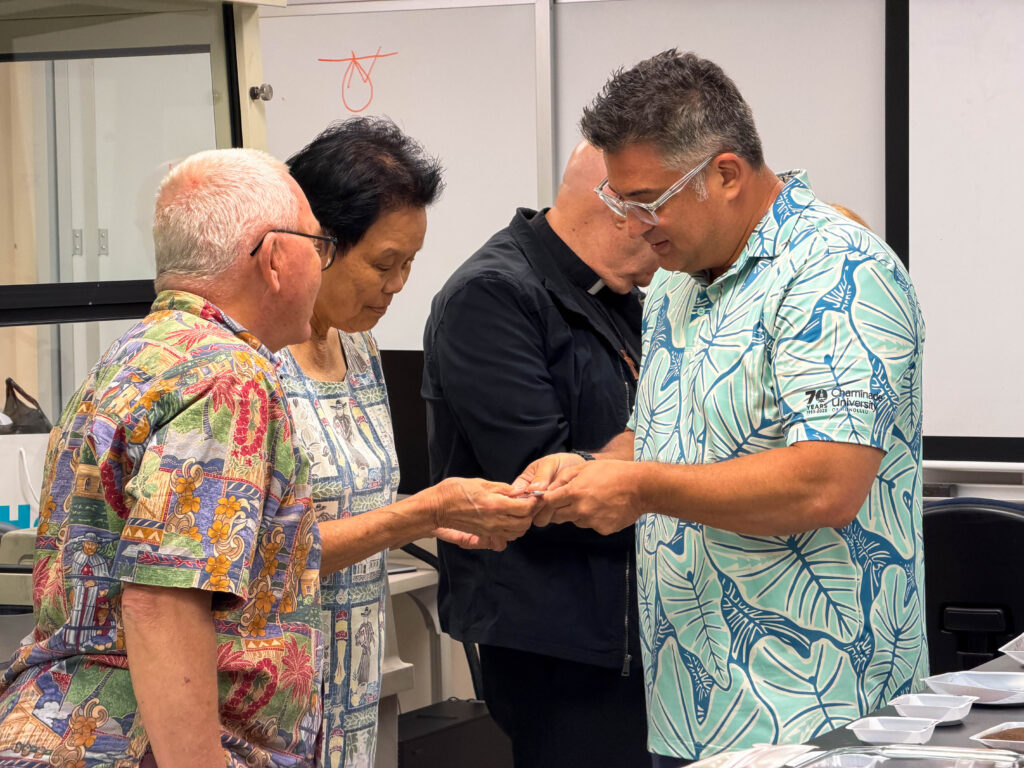
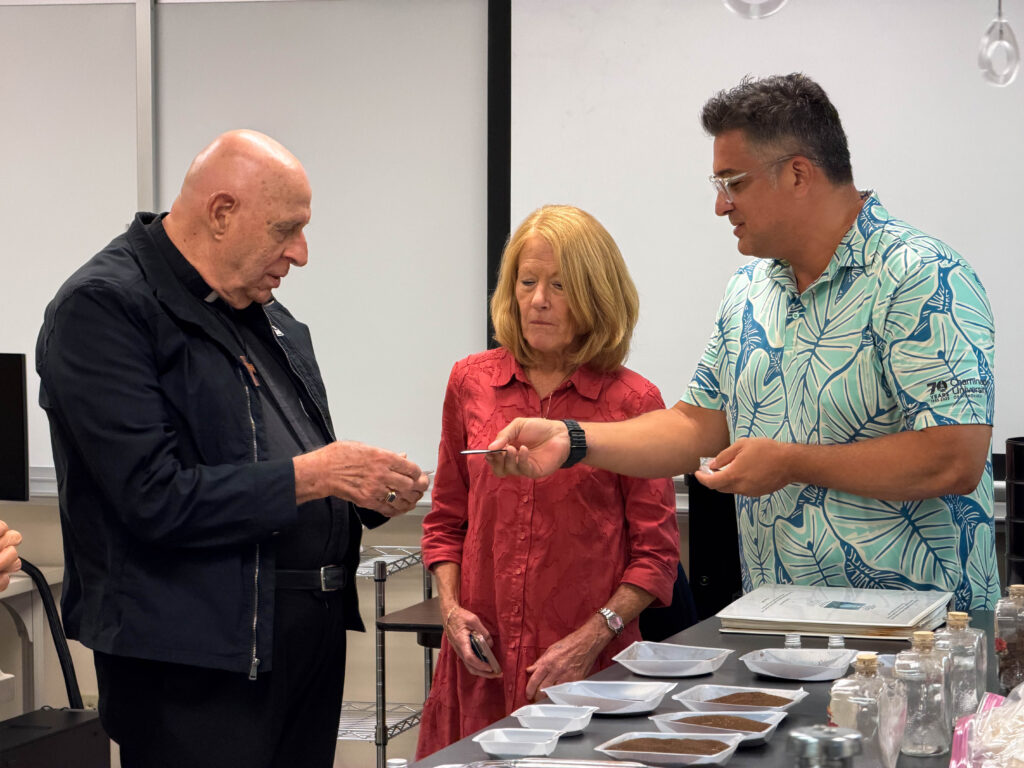
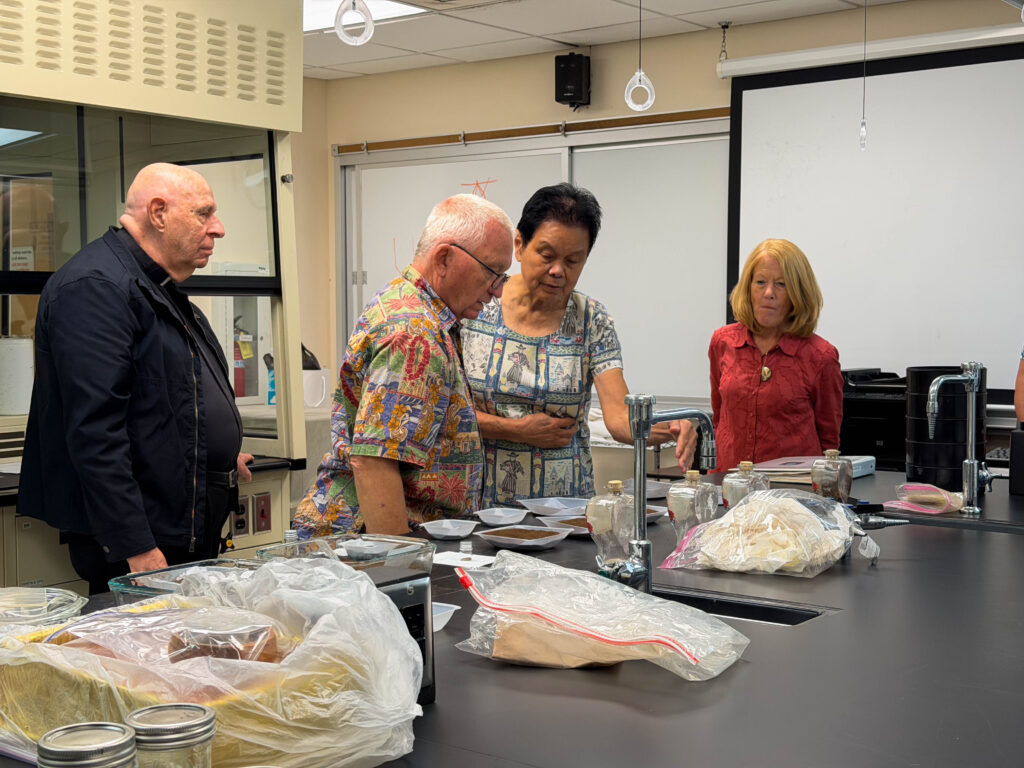
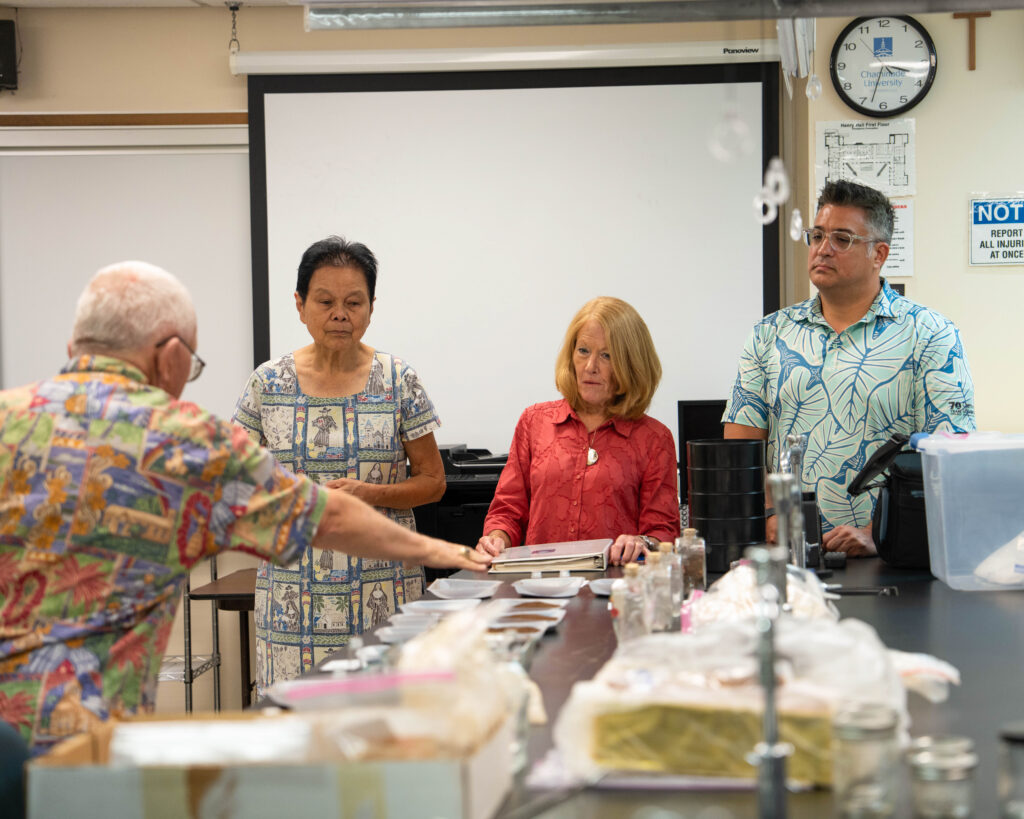
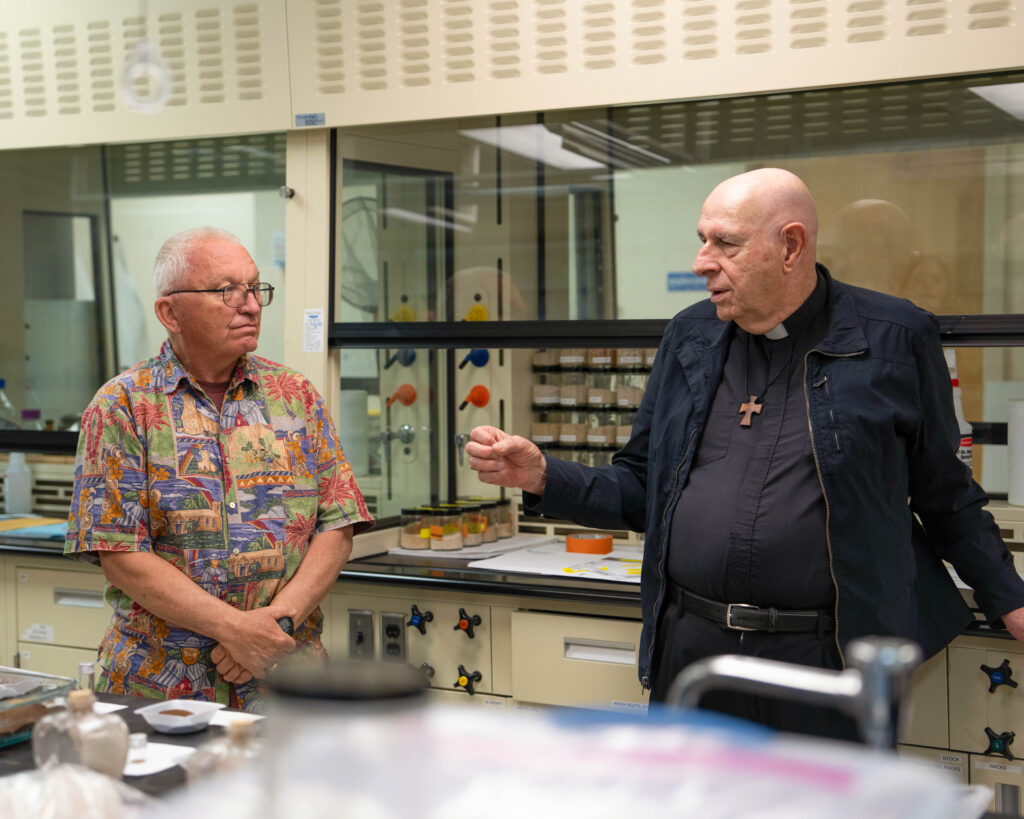
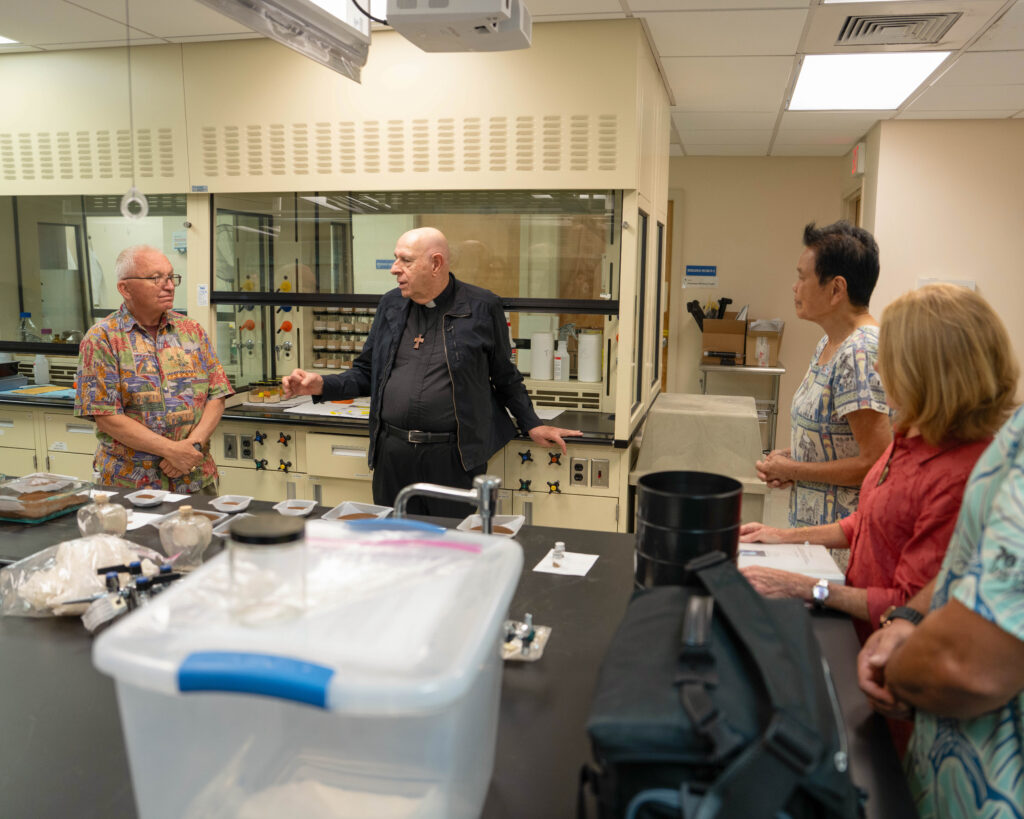
Forensic anthropologist Vincent Sava is leading the work at one of Chaminade’s campus forensic sciences lab, using sifters and microscopes to separate bone from soil and rock, preserving Mother Marianne’s earthly remains for relics and ceremonies.

“This right here, that’s the result of about 10 to 12 hours of work,” Sava said, holding up a small vial filled only partially with tiny chips of Mother Marianne’s bones. “And these are actually relatively large fragments.”

Carlos Gutiérrez Ayala MS ’16, Director and Assistant Professor of the Forensic Sciences Unit at Chaminade’s School of Natural Sciences and Mathematics, said this work with Sava and the Catholic Church is a once-in-a-lifetime opportunity for students and the university. When Sava reached out to him for help, Gutiérrez said he jumped at the opportunity.

“This is the first time, that’s why we’re super happy to give them the help that they need,” he said. “This is a special situation. It’s also forensic work. Different forensic work. We usually work with crimes and trying to help the victims and the community; in this case it’s a totally different way but it’s still a forensic analysis process.”

Chaminade University junior and forensic science major Samantha Casarrubias agreed. When hearing of the opportunity to help the Catholic Church recover the remains of Saint Marriane, she and fellow forensics student Emma Rosales volunteered right away, giving up a three-day weekend. Casarrubias said the week-long project is “very time consuming and tedious, but it’s good work.”

“Yesterday, I was here from 9 am to almost 4 and I haven’t even filled a petri dish yet,” she said.

Sava predicted the work would take about one week to complete. From there, “I turn everything back over to the Church, and then it’s up to them to distribute or dispose of the material as they see fit,” Sava said.

Mother Marianne was beatified by Pope John Paul II in 2004. The following year, Sava led a team to exhume her skeleton from her grave on Moloka‘i. Mother Marianne achieved sainthood in 2011 through canonization by Pope Benedict XVI. Her skeleton was interred in a reliquary at the Basilica in 2014.

Over the years, Sava has been enlisted by the Church to gather remains and historical artefacts from the gravesites of important figures. The scale of this challenge led Sava to reach out to his former student, Gutiérrez, and the Chaminade University Forensic Sciences Unit for help.

“Some of the sisters collected up a lot of that soil and they had it stored over the years, and when the church needs relics for ceremonies or to give to other parishes or other churches, we end up extracting what we need from the soil that was collected during the exhumation,” Sava said.

He explained that Hawai‘i’s volcanic soil isn’t kind to human remains. “The soil is very hard on bone,” he said. Decades of decay and deterioration resulted in hundreds of bone fragments left embedded in the ground when Mother Marianne’s skeletal remains were first removed.

The soil is run through sifters and multiple layers of screens, each layer designed to separate large particles from smaller, finer-grained material until only the smallest particles remain. Sava and Chaminade University students then take this material and place it under microscopes for analysis. Sava trained the students on how to recognize bone from dirt and rock, a critical skill in forensic science.

Samples are scrutinized and bone fragments are carefully collected using special equipment. The fragments are then placed in vials.

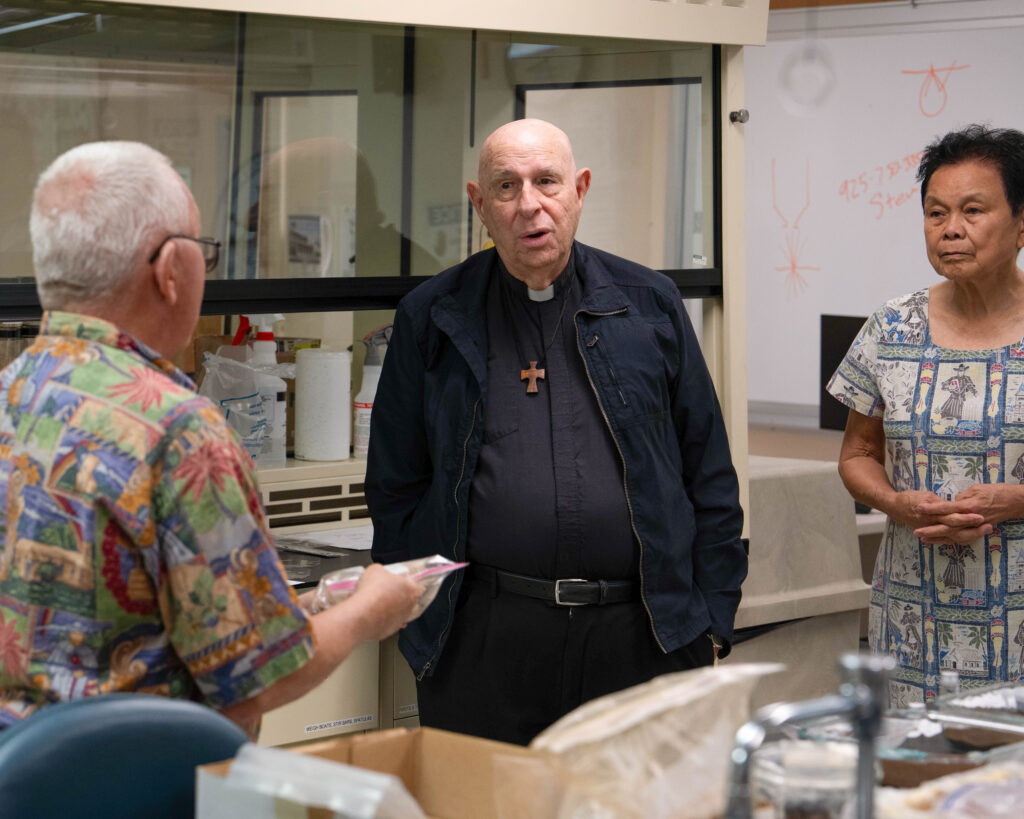
The Bishop visited the lab on Chaminade’s campus on Wednesday to assess Sava and the students’ progress, accompanied by Chaminade University President Lynn Babington. He said Saint Marianne’s history of uplifting the patients of Kalaupapa with joy, compassion, and faith is worth celebrating and is what makes this work so important.

“She was very much a healer in many ways, and of course it’s due to her faith that she trusted in God that she could do this very challenging work and not contract leprosy,” Bishop Silva said. 

Gutiérrez said he, his students, and the advanced forensic facilities at Chaminade University’s campus are always available to the Church for this and other forensic work in the future, should the need arise. “It’s up to the Catholic Church. If they need more help, we are happy to.”

Posted by: nathanial Filed Under: Homepage Tagged With: Forensic Sciences

Hawai‘i Public Radio star shares career tips with aspiring entrepreneurs

January 23, 2026

In an era fraught with troubling headlines and controversial news, Chaminade University was proud and honored to host a local journalist to share her perspectives with students and staff, as well as her advice on how to make the most of the opportunities we have.

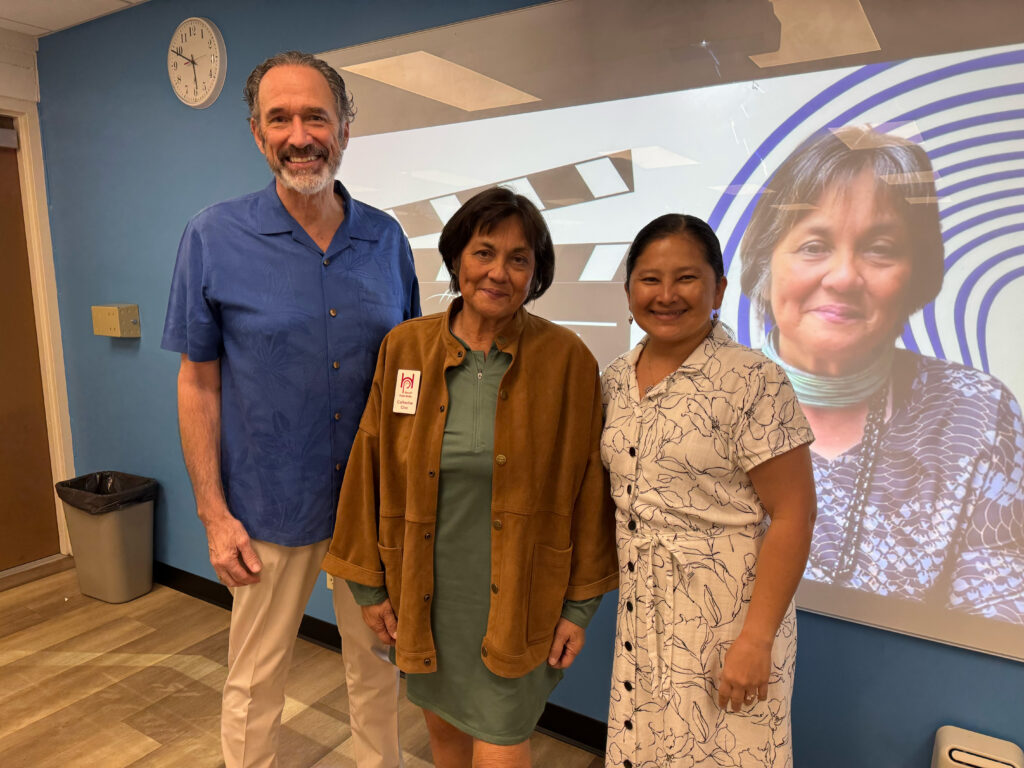
This week, Chaminade University Silverswords were treated to fun stories and words of inspiration from a well-known Hawai‘i media figure: Catherine Cruz.

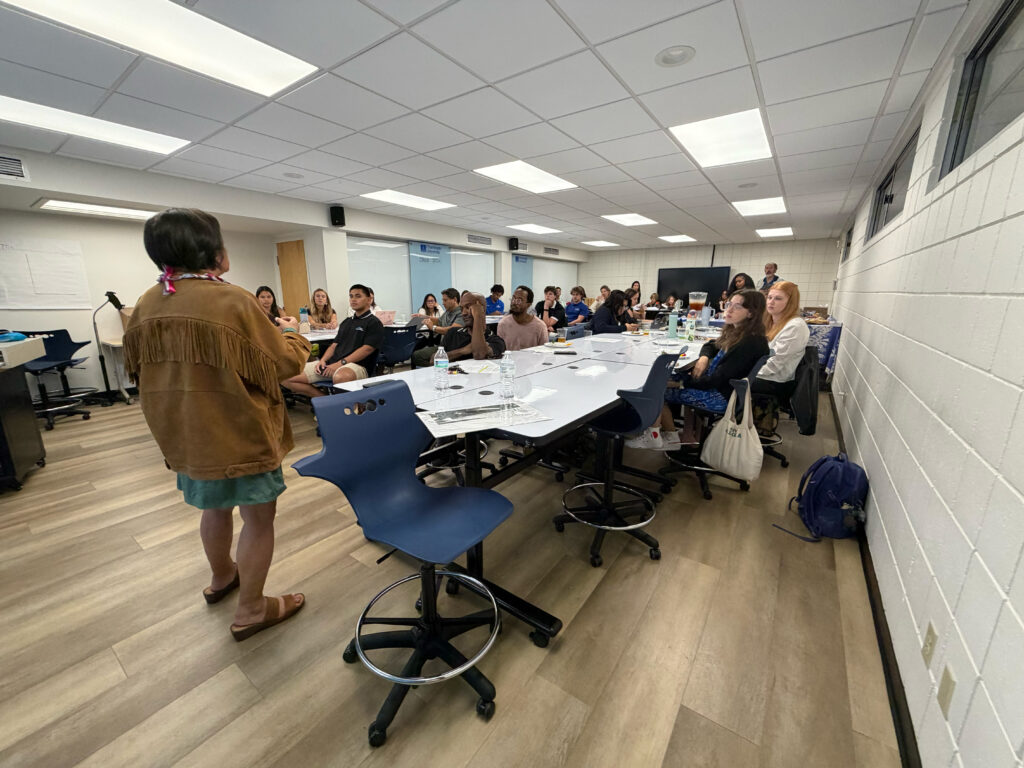
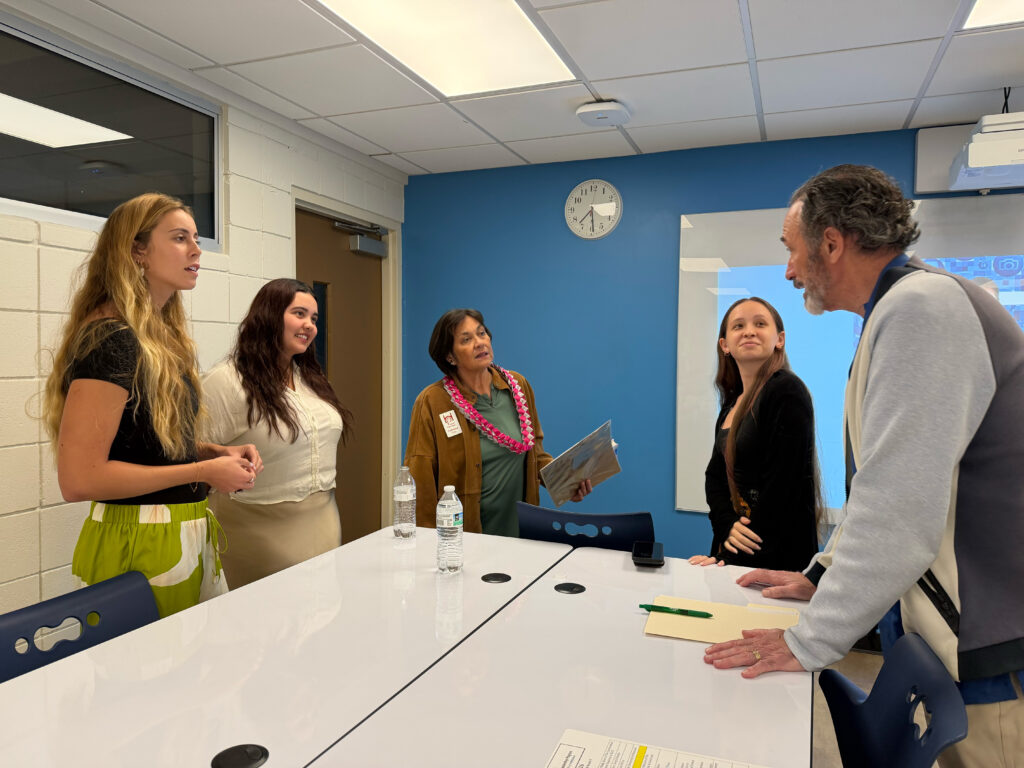
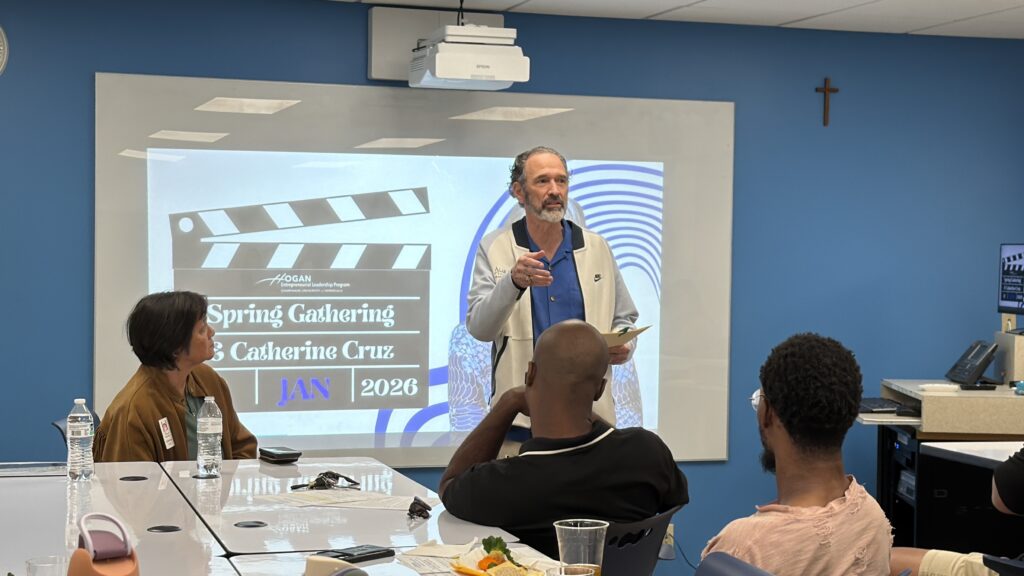
Cruz is the host of the popular show The Conversation on Hawai‘i Public Radio. Her visit to Chaminade University and lecture kicked off the 2026 speaker series hosted by Chaminade’s Hogan Entrepreneurial Program, a forum for students interested in developing future business ideas and models.

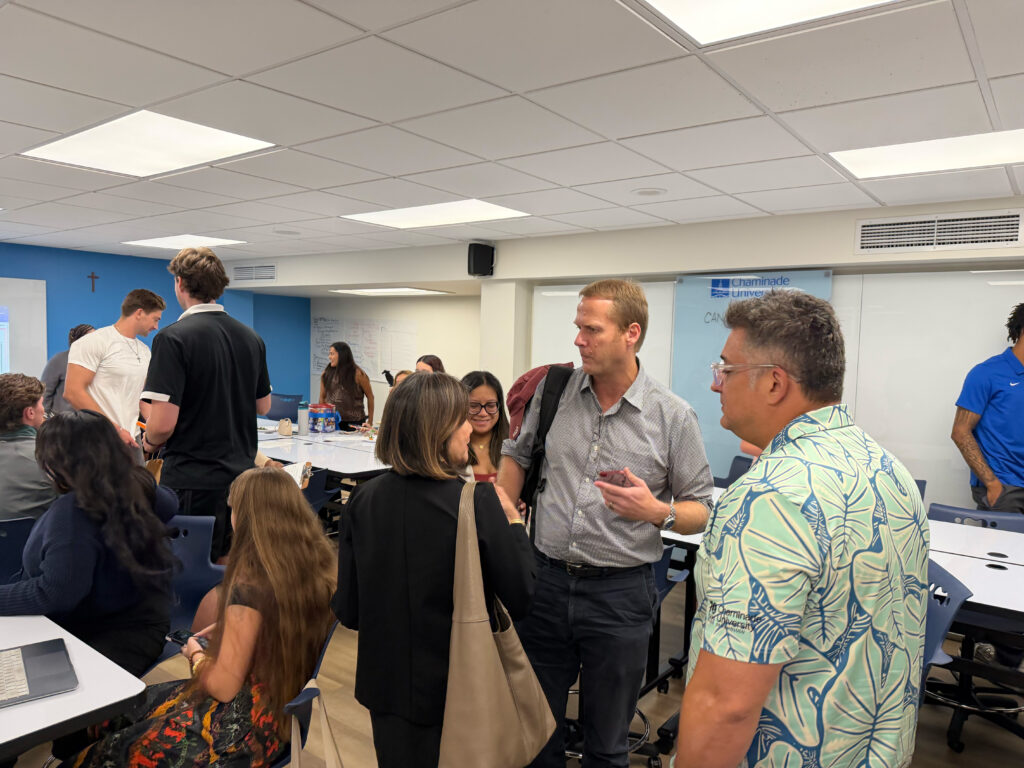
A former KITV television journalist, Cruz was selected to be the first guest speaker for the Hogan Spring Gathering. The event drew strong interest from both on and off campus, packing the Kieffer Hall lecture room with Hogan Entrepreneurial Program participants and alumni, curious Chaminade students, and visitors to our Kaimuki campus.

Cruz kicked off the evening by speaking of her recent travels to London, where she set out on a personal mission to find an 18th Century Chamorran-built outrigger sailing canoe renowned for its speed and sophistication for the time.

The type of vessel in question, the Sakman, was named the “flying proa” by an early English explorer. Cruz said she believes a surviving Sakman could have made its way to London via a collector, sending her off on the quest.

Unfortunately, she was unable to find the canoe on this recent trip of hers to the United Kingdom, but Cruz is undeterred. She shared that she’s planning to return to London soon, confident that she’s on the right track. This determination underscored a main lesson she imparted to the audience, a lesson she took from her years spent interviewing successful entrepreneurs and business people: never give up.

“Don’t get discouraged by the failures,” she said. “Be prepared to fail.”

Cruz, originally from Guam, also shared how she came into a career in journalism.

After college, she applied for a back-office support role at a TV station in Guam but landed in their newsroom instead. She’s never looked back.

Cruz said her journey shows how anyone can overcome adversity. She explained how she was very shy in her youth but quickly learned how to break out of her shell and grow into the public figure she is today thanks to the news business.

“I got over that shyness,” she said.

You can listen to her show, The Conversation, on HPR on weekdays from 11 am.

Posted by: nathanial Filed Under: Business & Communication, Homepage

Footer

Chaminade University Logo

3140 Waialae Avenue
Honolulu, Hawaii 96816

Contact Us
Phone: (808) 735-4711
Toll-free: (800) 735-3733

facebook twitter instagram youtube linkedin

Visit

  • Plan Your Visit
  • Campus Map (PDF)
  • Events

Resources

  • Campus Security
  • Student Consumer Information
  • Concerns, Feedback, and Reporting
  • Institutional Review Board
  • Title IX / Nondiscrimination Policy
  • Compliance
  • Emergency Information
  • Careers
  • Institutional Statement

People

  • Students
  • Parents
  • Alumni
  • Faculty & Staff

Policy

  • Privacy Policy
  • Terms and Conditions of Use


© Chaminade University of Honolulu