More than a century after her death, the story of a saint who served those with leprosy and died on Moloka’i is being told anew—through science. Chaminade University’s Forensic Sciences Unit is helping evaluate her remains, uniting Marianist mission and modern forensic expertise to bring history to life in service to the community.
January 23 has been designated the feast day of Mother Marianne Cope, a German-born American Franciscan nun who traveled from Syracuse, New York to the Kingdom of Hawai‘i in the late 1800s to help build the kingdom’s medical infrastructure. She’s credited with modernizing healthcare practices and establishing hospitals on the mainland and in the islands, but she is most famous for her work tending to the spiritual and medical needs of leprosy patients at Kalaupapa, Moloka‘i with the legendary Father Damien.
Born Barbara Koob on January 23, 1838, Mother Marianne died of natural causes in Kalaupapa in 1918. Most of her surviving skeleton was laid to rest at the Cathedral Basilica of Our Lady of Peace in downtown Honolulu, but hundreds of bone fragments remained embedded in soil at her original gravesite on Moloka‘i.
Now, Chaminade University’s Forensic Sciences Unit has been enlisted to help collect these remains at the request of the Church. It’s the first time the Catholic Marianist institution has been called up to assist the Church in this manner.
The remains will be shared among all the main Hawaiian Islands.
“This project is going on because one of our pastors suggested that each island should have a relic of Saint Damien and Saint Marianne,” Bishop Clarence “Larry” Silva, head of the Diocese of Honolulu, said in an interview.
“We have one here of course from each of them. Moloka‘i, of course, has also. But we want to make sure the other islands do, so that’s why,” Bishop Silva explained. “We’ll be able to do that now with these bone fragments we have here and ones that I have that were from Father Damien.”
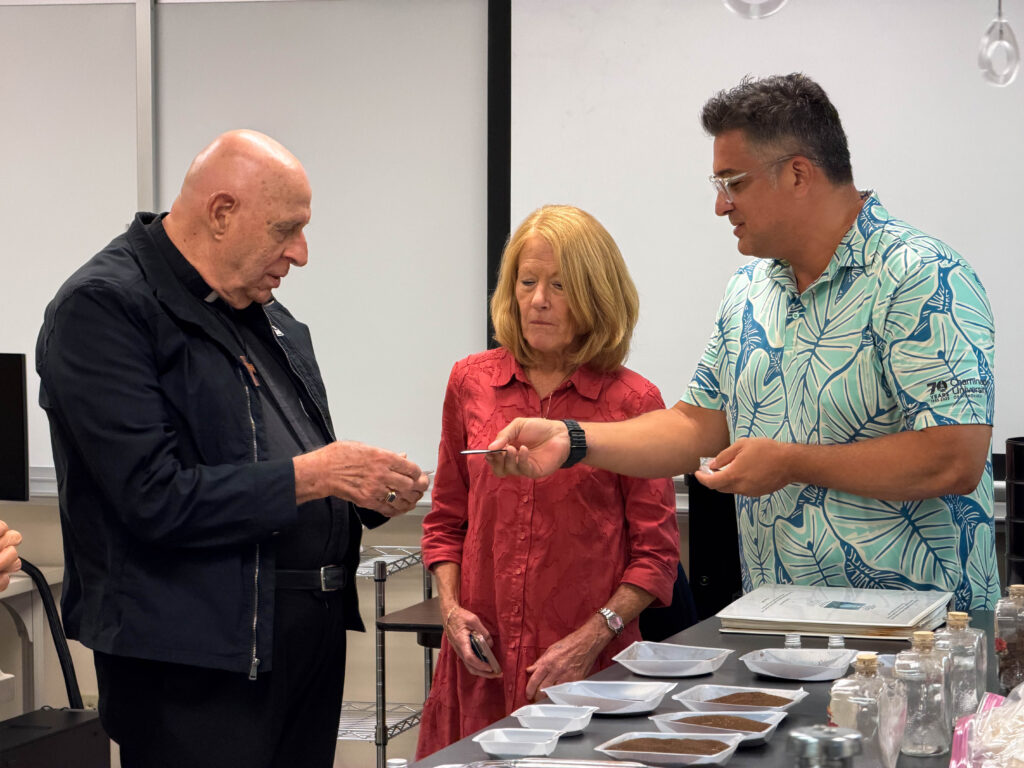
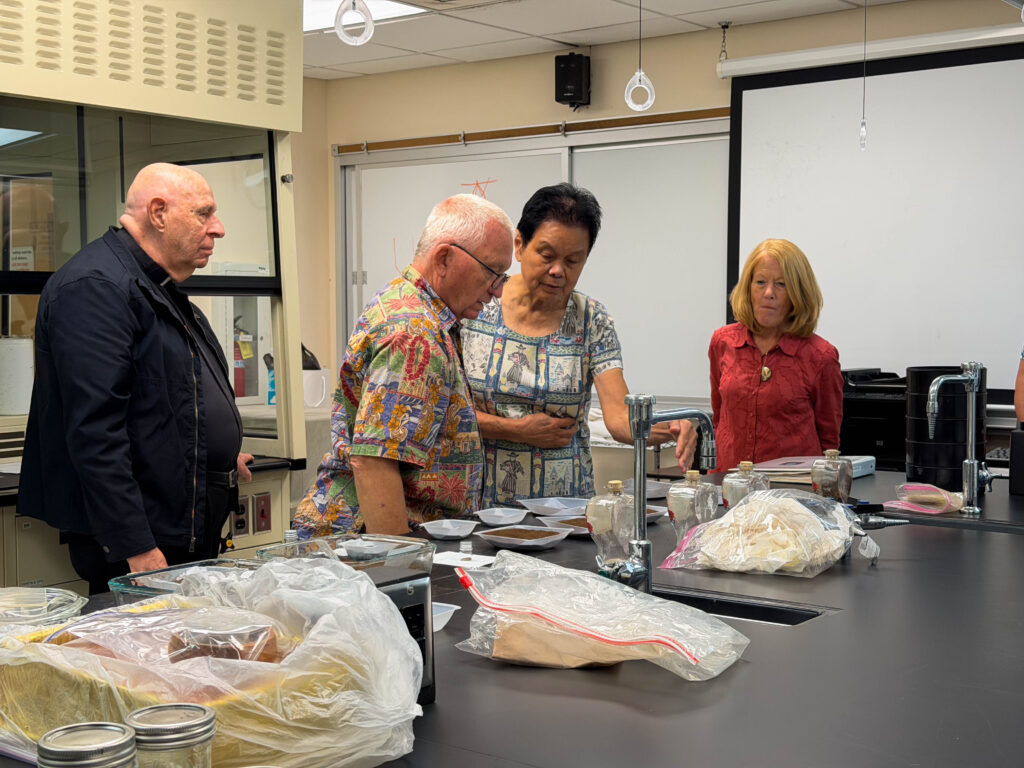
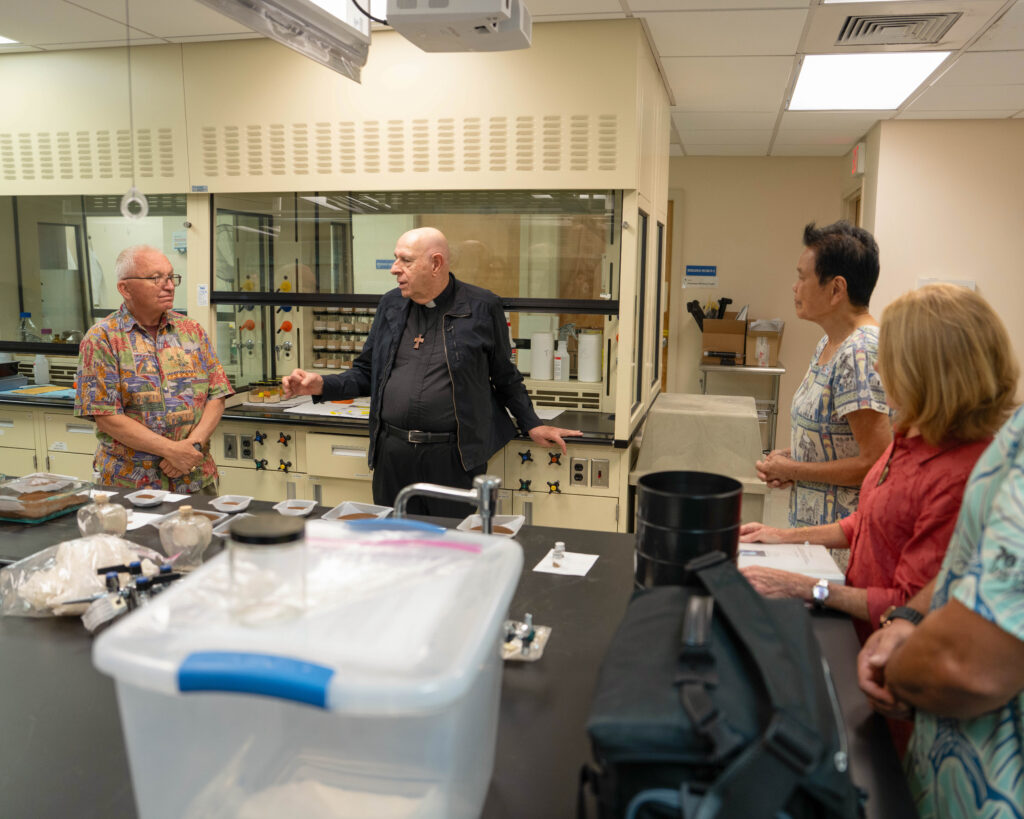
Forensic anthropologist Vincent Sava is leading the work at one of Chaminade’s campus forensic sciences lab, using sifters and microscopes to separate bone from soil and rock, preserving Mother Marianne’s earthly remains for relics and ceremonies.
“This right here, that’s the result of about 10 to 12 hours of work,” Sava said, holding up a small vial filled only partially with tiny chips of Mother Marianne’s bones. “And these are actually relatively large fragments.”
Carlos Gutiérrez Ayala MS ’16, Director and Assistant Professor of the Forensic Sciences Unit at Chaminade’s School of Natural Sciences and Mathematics, said this work with Sava and the Catholic Church is a once-in-a-lifetime opportunity for students and the university. When Sava reached out to him for help, Gutiérrez said he jumped at the opportunity.
“This is the first time, that’s why we’re super happy to give them the help that they need,” he said. “This is a special situation. It’s also forensic work. Different forensic work. We usually work with crimes and trying to help the victims and the community; in this case it’s a totally different way but it’s still a forensic analysis process.”
Chaminade University junior and forensic science major Samantha Casarrubias agreed. When hearing of the opportunity to help the Catholic Church recover the remains of Saint Marriane, she and fellow forensics student Emma Rosales volunteered right away, giving up a three-day weekend. Casarrubias said the week-long project is “very time consuming and tedious, but it’s good work.”
“Yesterday, I was here from 9 am to almost 4 and I haven’t even filled a petri dish yet,” she said.
Sava predicted the work would take about one week to complete. From there, “I turn everything back over to the Church, and then it’s up to them to distribute or dispose of the material as they see fit,” Sava said.
Mother Marianne was beatified by Pope John Paul II in 2004. The following year, Sava led a team to exhume her skeleton from her grave on Moloka‘i. Mother Marianne achieved sainthood in 2011 through canonization by Pope Benedict XVI. Her skeleton was interred in a reliquary at the Basilica in 2014.
Over the years, Sava has been enlisted by the Church to gather remains and historical artefacts from the gravesites of important figures. The scale of this challenge led Sava to reach out to his former student, Gutiérrez, and the Chaminade University Forensic Sciences Unit for help.
“Some of the sisters collected up a lot of that soil and they had it stored over the years, and when the church needs relics for ceremonies or to give to other parishes or other churches, we end up extracting what we need from the soil that was collected during the exhumation,” Sava said.
He explained that Hawai‘i’s volcanic soil isn’t kind to human remains. “The soil is very hard on bone,” he said. Decades of decay and deterioration resulted in hundreds of bone fragments left embedded in the ground when Mother Marianne’s skeletal remains were first removed.
The soil is run through sifters and multiple layers of screens, each layer designed to separate large particles from smaller, finer-grained material until only the smallest particles remain. Sava and Chaminade University students then take this material and place it under microscopes for analysis. Sava trained the students on how to recognize bone from dirt and rock, a critical skill in forensic science.
Samples are scrutinized and bone fragments are carefully collected using special equipment. The fragments are then placed in vials.
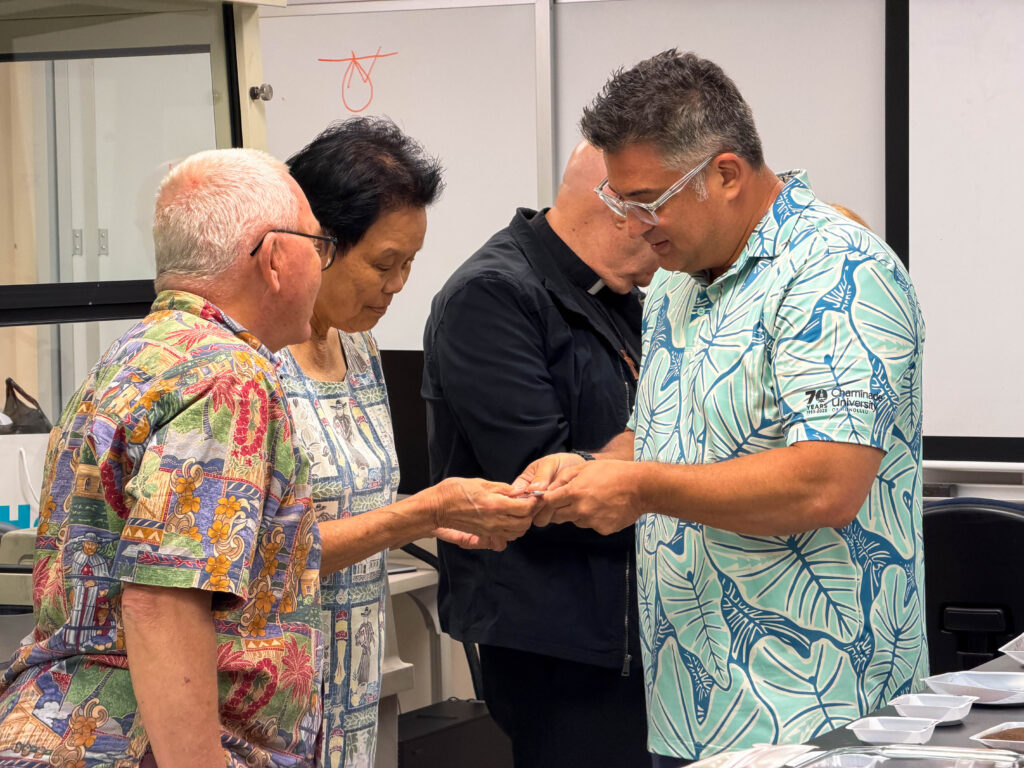
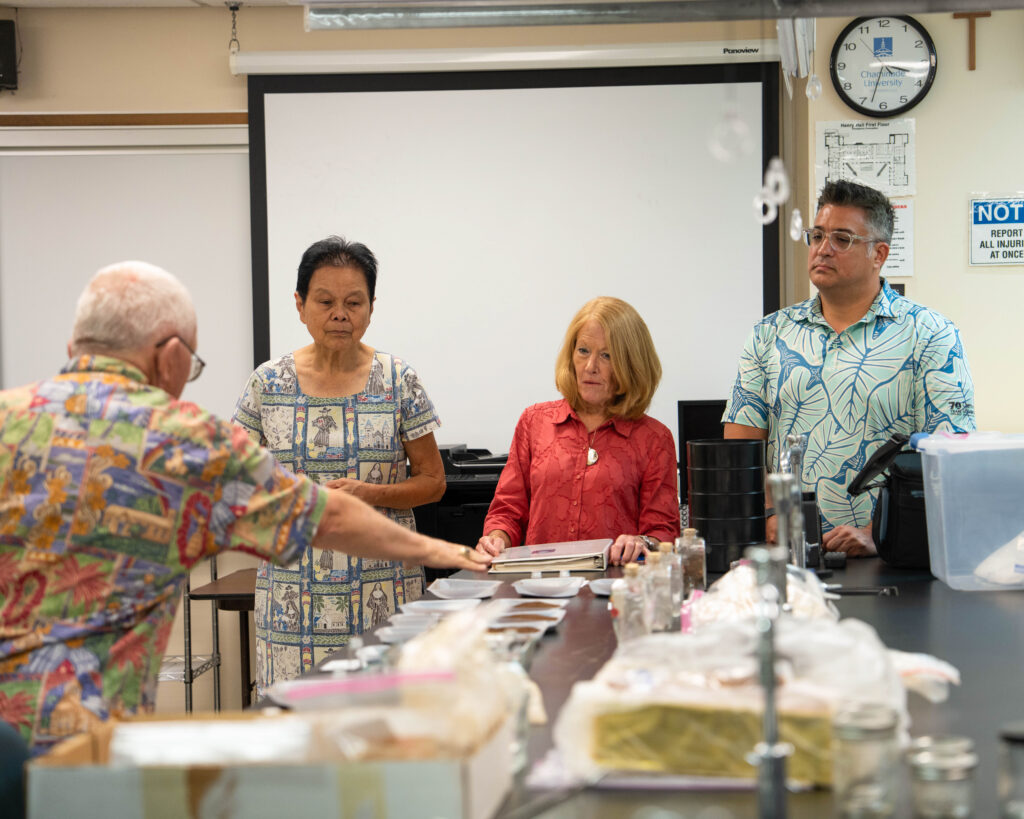
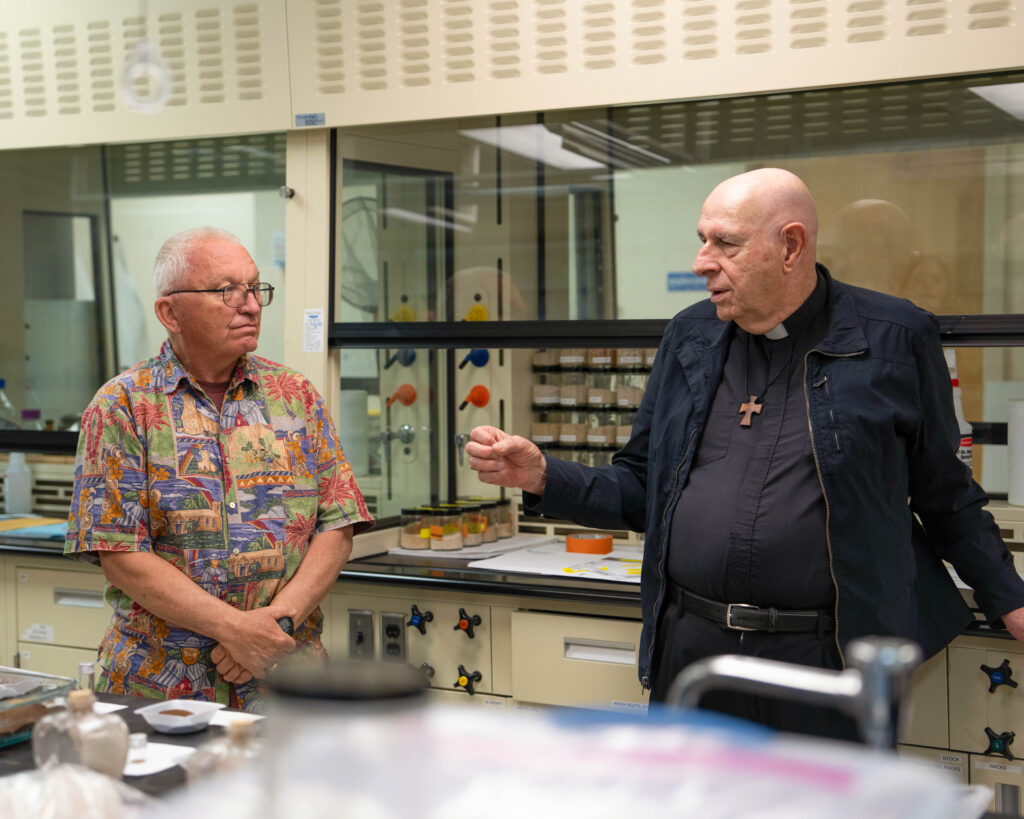
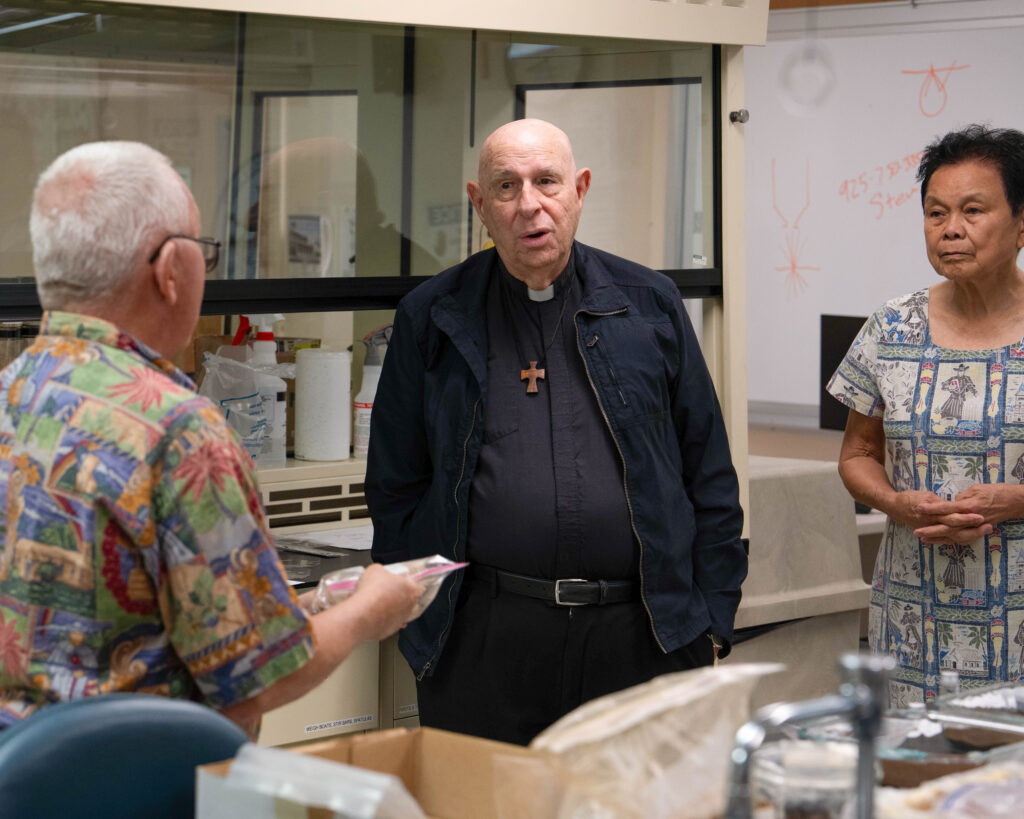
The Bishop visited the lab on Chaminade’s campus on Wednesday to assess Sava and the students’ progress, accompanied by Chaminade University President Lynn Babington. He said Saint Marianne’s history of uplifting the patients of Kalaupapa with joy, compassion, and faith is worth celebrating and is what makes this work so important.
“She was very much a healer in many ways, and of course it’s due to her faith that she trusted in God that she could do this very challenging work and not contract leprosy,” Bishop Silva said.
Gutiérrez said he, his students, and the advanced forensic facilities at Chaminade University’s campus are always available to the Church for this and other forensic work in the future, should the need arise. “It’s up to the Catholic Church. If they need more help, we are happy to.”