• Skip to primary navigation
  • Skip to main content
  • Skip to footer
Chaminade University of Honolulu

Chaminade University of Honolulu

  • VISIT
  • APPLY
  • GIVE
  • STUDENTS
  • PARENTS
  • ALUMNI
  • FACULTY/STAFF
  • Admissions
    • Admissions Home
    • Undergraduate Students
      • First-Year Students
      • Transfer Students
      • Admitted Students
    • Graduate Students
    • Flex Online Undergraduate Program
    • Military Students
    • Non-Degree/Visiting Students
    • Experiential Honors Program
    • Early College Program
    • New Student Orientation
  • Tuition & Aid
    • Financial Aid Home
    • Tuition & Expenses
    • Federal Updates & Changes
    • Scholarships
    • $5,000 Graduate Scholarship
    • VA Education Benefits
    • Net Price Calculator
  • Academics
    • Academics Home
    • Academic Programs
    • Office of Student Success
      • Academic Advising
      • Records and Registrar
    • Kōkua ʻIke (Support Services)
      • ADA Accommodations
      • Career Services
      • Proctoring Services
      • Tutoring Services
    • Sullivan Family Library
    • Undergraduate Research & Pre-Professional Programs
    • Commencement
  • Campus Life
    • About Campus Life
    • Student Engagement
    • Student Government Association
    • Residence Life and Housing
      • Summer Conference Housing
    • Health Services
    • Marianist Leadership Center
    • Counseling Center
    • Campus Ministry
    • Campus Security
    • Dining Services
    • Bookstore
  • Athletics
  • About
    • Chaminade University News
    • Our Story
    • Leadership
    • Chaminade University Strategic Plan 2024-2030
    • Mission & Rector
    • Association of Marianist Universities
    • Facts & Rankings
    • CIFAL Honolulu
    • Accreditation & Memberships
    • Montessori Laboratory School
Search
×

Search this web site

University Communications & Marketing

From Silversword to Olympian

July 26, 2024

Kuany Kuany ’17 says he proud to represent South Sudan ‘in a positive light.’

From proud Silversword to Olympian!

Kuany Kuany ’17 is set to make his Olympics debut at the 2024 Paris Games after recently being named to South Sudan’s national team—which has qualified for the Games for the first time.

Kuany, 30, has been playing for the country for four years—and is team captain.

He said he’s proud to be generating positive headlines for South Sudan.

“It brought so much joy for us,” he told GoSwords.com.

“The war in Sudan, famine, a lot of negative things that the media portrays our country. But we are a nation blessed with great athletes and natural resources. It shows the world what we have to offer in a positive light.”

🇸🇸 @Olympics 1️⃣2️⃣ pic.twitter.com/IC7XnIllzK

— South Sudan Basketball (@SSBFed) July 24, 2024

Kuany played guard on Chaminade’s basketball team from 2013 to 2017, and is one of the most decorated players in school history. As GoSwords notes, he was Chaminade’s first four-time All-Pacific West Conference honoree and ranks third in all-time scoring.

After leaving Chaminade, he has played professionally, including in Australia and Croatia.
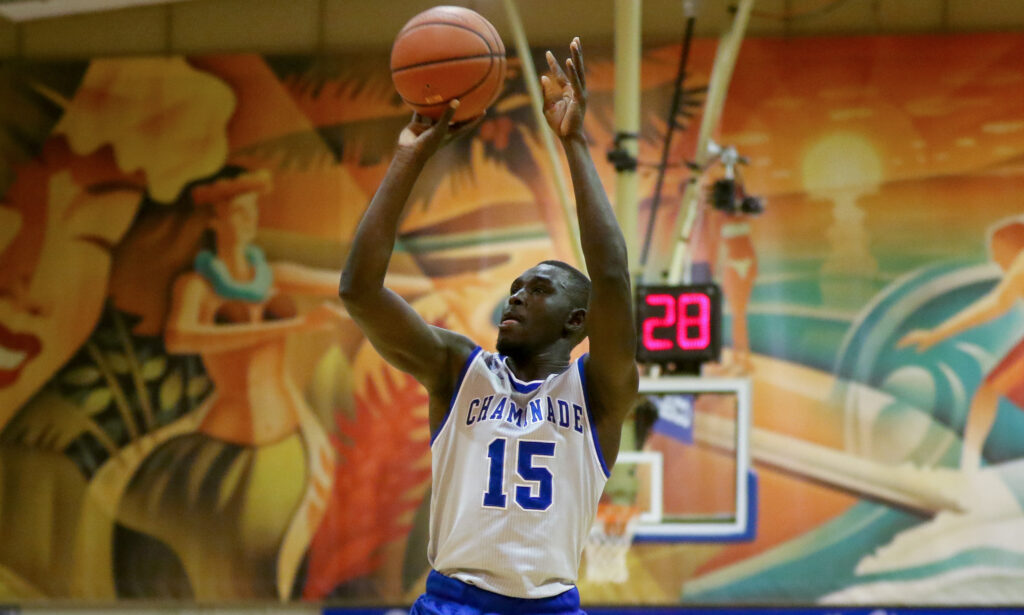
Kuany Kuany ’17 is set to make his Olympics debut in Paris after recently being named to South Sudan’s national team, which qualified for the Games for the first time.

“My time at Chaminade was great,” Kuany told GoSwords.com.

“As a Division II school playing against top opponents in the Maui Invitational, people saw us as the underdogs every time. I feel the same with South Sudan as being the underdogs each game. We believe in ourselves and work really hard to accomplish our goals.”

For details on how to watch South Sudan compete in Paris, click here.
Posted by: University Communications & Marketing Filed Under: Alumni, Athletics, Featured Story Tagged With: Alumni, Athletics

Training the Teacher: Financial Literacy

July 24, 2024

For a third year, this summer workshop at Chaminade sought to help teachers incorporate financial literacy principles into their classroom lessons.

For one week this July, 26 educators from across the island headed back to class at Chaminade.

They weren’t on campus to teach but to learn—as participants in Chaminade’s annual Economic Education Center for Excellence’s Summer Workshop, which ran from July 22 to 26.

Now in its third year, the workshop offers elementary to high school teachers innovative pedagogical instruction for incorporating key economic and finance principles into hands-on class lessons.

Attendee Daniel Quiamas heard about the summer workshop from a friend, Thomas Yeung, a teacher with Farrington High School’s Business Academy who attended last year’s series of workshops. Quiamas—a math teacher at Waipahu High—said after just two days that he had already learned new ways to incorporate economics and finance into his classroom instruction for ninth to 12th graders.

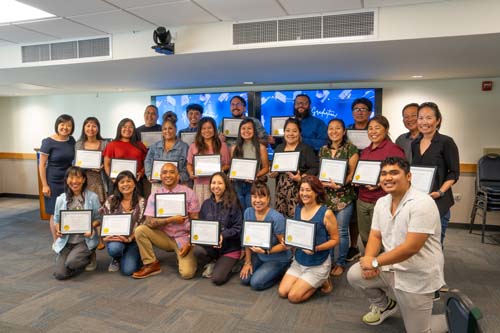
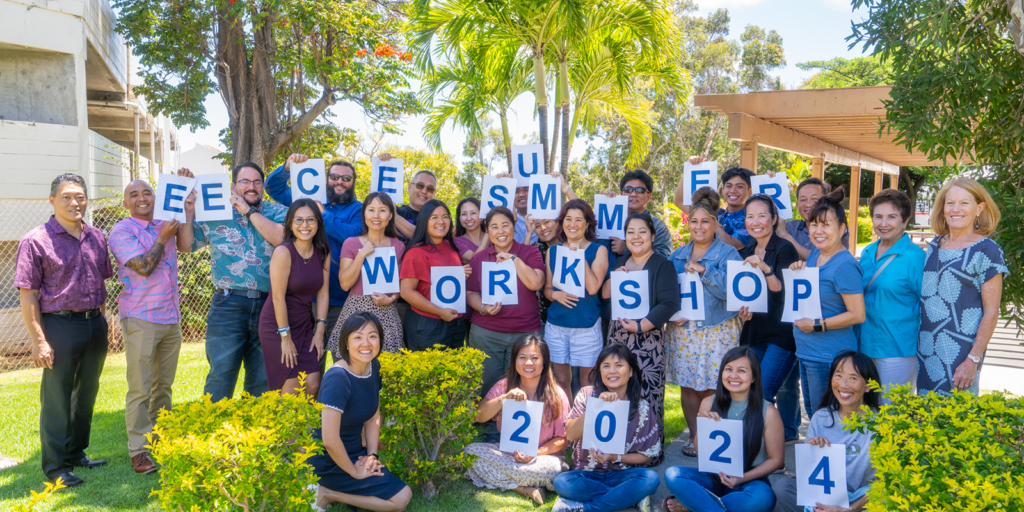
Chaminade President Dr. Lynn Babington, far right, and Greg Young President & CEO of HawaiiUSA Federal Credit Union, far left, pose with participants who held up the EECE Summer Workshop 2024 sign after completing the weeklong program.

“I was never really taught about financial literacy so this workshop is very informative,” said Quiamas, after listening to Joanne Ching, a financial wellness partner with HawaiiUSA Federal Credit Union, which was one of the sponsors of this annual Summer Workshop and a strong proponent of financial literacy.

The ECCE’s summer workshop is taught with a combination of lectures, in-class games and group activities, hands-on projects and field classes. Organizers say the curriculum places an emphasis on real-life examples and situations, and includes economics and personal finance concepts based on the Hawaii Department of Education Social Studies Common Core standards.

Some of the key topics covered include market operations and government interventions, environmental economics, personal finance education and financial wellness.

Guanlin Gao, director of the Economic Education Center for Excellence and an associate professor of economics at Chaminade, said the ECCE’s mission is to advance economic justice in Hawaii and across the Pacific. In addition to offering educational programs for teachers, students and the community, the center tackles research projects that dovetail with its mission—and can help inform policy-making.

Gao said the program has so far trained 62 teachers who work in schools statewide. Its economic literacy curriculum and programs have positively benefited more than 7,400 Hawaii students.

“The importance of financial literacy and basic economic principles can’t be overstated,” Gao said.

“It impacts people’s everyday lives.”

The ECCE’s growing outreach efforts come amid a greater push nationally to underscore financial literacy in schools nationwide. According to the Council for Economic Education’s latest biennial Survey of the States, more than two-thirds of all states now require personal finance classes for high school graduation—a sharp increase from 2022 when fewer than half the states had such mandates.

On the last day of the five-day ECCE workshop, participants were asked to give a presentation on how they plan to incorporate what they’ve learned into their own classrooms. Some said they would use it as a “bell ringer,” devoting the first few minutes of class to financial literacy and personal finances. Others planned to take a more comprehensive approach, developing specific age-appropriate lesson plans.

Social studies teacher John Silang, a 10-year veteran with Kapolei High School’s Business Academy, attended the workshop aspiring to learn how to stop systemic poverty.

“I call it Adulting 101,” Silang said. “I wanted to learn how college educators teach economics and how they apply the theories in the classroom.”

For Gao, the moral imperative of teaching financial literacy is clear.

“We recognize that there is still much to be done to improve financial literacy in Hawaii. However, we take pride in our efforts to make a difference and establish ourselves as a center for economic education,” Gao said. “Financial literacy doesn’t have to be daunting or out of reach. It should be accessible to everyone. In reality, we all have innate economic instincts; you might just not be aware of them—yet.”


  • Workshop participants received their certificates after the weeklong series of workshops.
    Workshop participants received their certificates after the weeklong series of workshops.
  • HawaiiUSA Federal Credit Union Financial Wellness Manager, Bryan Yucoco, was one of the guest speakers during the EECE Summer Workshop.
    HawaiiUSA Federal Credit Union Financial Wellness Manager, Bryan Yucoco, was one of the guest speakers during the EECE Summer Workshop.
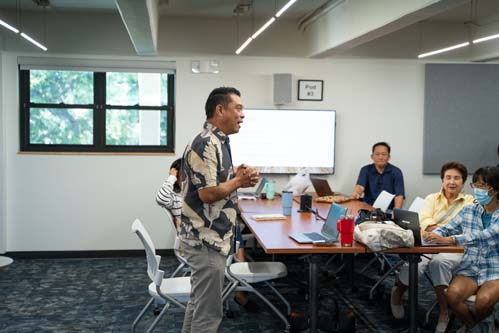
  • Economics Professor, Dr. Guanlin Gao, discussed the basic fundamentals of economics and its functions in society.
    Economics Professor, Dr. Guanlin Gao, discussed the basic fundamentals of economics and its functions in society.
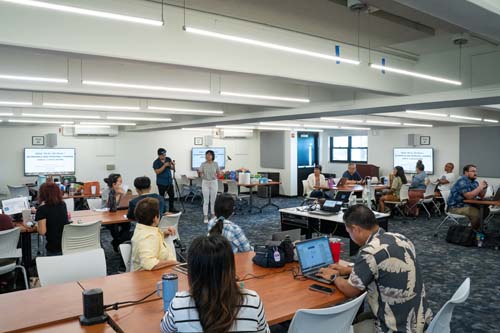
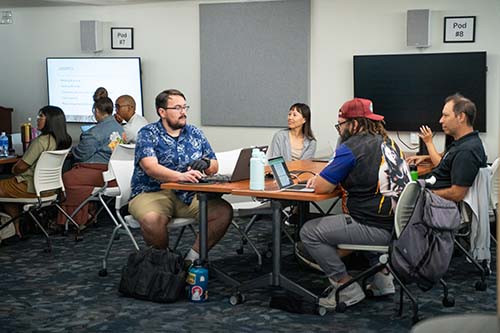
  • For five days, 26 educators from across the island went back to the classroom, not to teach but to learn more about financial literacy.
    For five days, 26 educators from across the island went back to the classroom, not to teach but to learn more about financial literacy.

Posted by: University Communications & Marketing Filed Under: Campus and Community, Featured Story, Innovation Tagged With: Economic Education Center for Excellence, School of Business and Communication

Harnessing the Power of Supercomputers

July 16, 2024

In an innovative summer research institute, Chaminade students used data science to tackle big research questions.

For four intensive weeks this summer, 25 Chaminade students used supercomputers at the Texas Advanced Computing Center to analyze complex data sets. They were looking to test hypotheses to complex research questions. And along the way, they got valuable hands-on experience in data science, one of the nation’s fastest-growing fields in a long list of sectors, from climate science to healthcare.

The Alliance Supporting Pacific Impact through Computational Excellence (ALL-SPICE) Data Science Summer Institute allows students to take a deep dive into their research interests, giving them access to tools and supercomputers that can help synthesize complex data sets into understandable, manageable variables.

“This is not theoretical learning,” says Connor Flynn ’21, a data scientist with Chaminade’s School of Natural Sciences and Mathematics. Flynn participated in ALL-SPICE as a student and now serves as a group leader. “This is literally experiential since some of the students’ research projects require that they go to actual sites to verify what they’ve captured in their data is accurate.”

ALL-SPICE, now in its sixth year, is the product of an innovative Chaminade partnership with the University of Texas at Austin’s Texas Advanced Computing Center. ALL-SPICE is one of just four new National Science Foundation INCLUDES Alliances, and organizers say the ALL-SPICE program helps level the playing field for Native Hawaiian and Pacific Islander (NHPI) students, who are woefully underrepresented in science, technology, engineering and math (STEM) fields.

“The program is transformative for students from Hawaii and the US-affiliated Pacific, from Chaminade and many other colleges,” said Dr. Helen Turner, biology professor and principal investigator for Chaminade’s NSF ALL-SPICE program.

“Students come in with curiosity and a passion to solve their islands’ challenges. They leave as card-carrying data scientists with a high-demand skill set that they can use to change the future.”

Wilneris Carrion-Colon ’25 and Johnny Bae ’26 were among the students who participated in this year’s ALL-SPICE summer intensive program. They are both excited about pursuing careers in STEM.

In the summer program, the two Data and Computer Science majors used imaging technology to detect marine debris found off Windward Oahu. Carrion-Colon said satellite technology has become a valuable tool for detecting and classifying environmental phenomena on both land and aquatic environments.

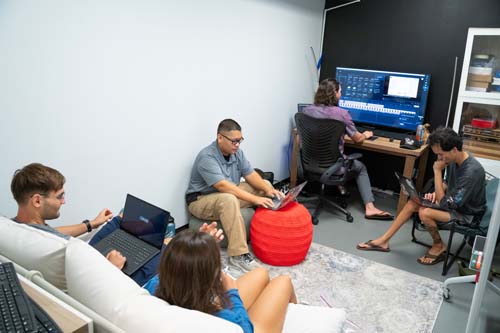
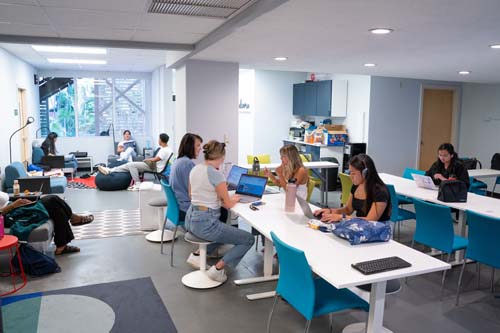
  • The data science classroom was the main hub for the ALL-SPICE Summer Institute.
  • Thirty-two students were divided into three groups then into sub-groups as they pursued their research interests.
  • For four weeks, students researched their interests in environmental management and health disparities.
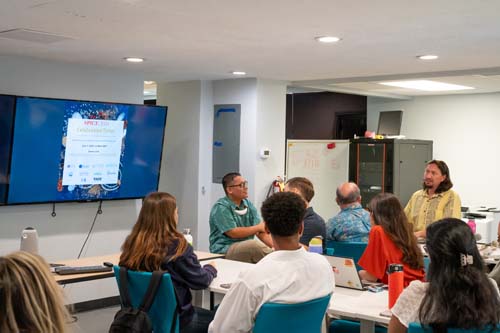
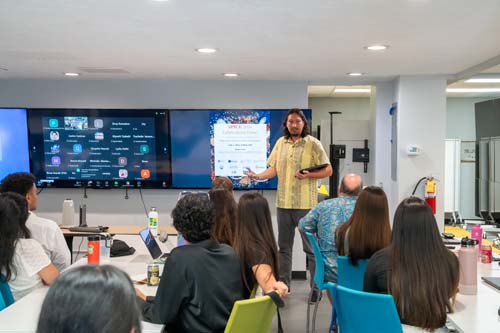
  • Students share their research with Kumu Kahoa Keahi-Wood.
  • Kumu Kahoa Keahi-Wood serves as the Environmental Project Lead and has been with SPICE's first cohort since 2019.

“By analyzing reflectance and absorption of light, spectral bands enable machines to differentiate material classes,” said Carrion-Colon, during her final presentation.

“Notably, the Windward side was chosen because it is particularly susceptible to marine debris accumulation due to prevailing ocean currents.”

Carrion-Colon noted there are limitations to her analysis, but added that’s reason to do more research.

In his research, Bae mapped out ocean plastics using machine learning in waters northeast of Oahu.

Also using multispectral satellite imagery and statistical learning algorithms to detect floating marine debris, Bae sought to underscore the critical role of technology in environmental management.

“Ultimately, this work contributes to protecting marine ecosystems, supporting economic stability and safeguarding public health,” said Bae, in presenting his findings.

“Future research and initiatives—stemming from detecting and mitigating plastic marine debris in Hawaii’s ocean using machine learning and AI—can significantly contribute to the United Nations’ Sustainable Development Goals, specifically SDG 12, which focuses on responsible consumption and production; and SDG 13, which involves evaluating the carbon footprint of plastic debris.”

Open to all majors, from nursing and business to biology and interior design, the ALL-SPICE Data Science Summer Institute also teaches students how to code and use other cutting-edge tech.

Organizers say ALL-SPICE participants represent the region’s diversity, and include significant numbers of women and veterans. Students work in thematic areas that are of central importance to the Hawaii-Pacific region, including climate analytics, health inequity and the impacts of misinformation.

The summer institute also has a strong cultural component and culminates in a ho‘ike—a showcase of student projects). SPICE mentors include faculty, analysts and peers. To learn more, click here.

The SPICE program was funded by NSF INCLUDES ALL-SPICE Alliance #HRD-1744526. Student places were sponsored by ALL-SPICE and the following additional grants (Primary Investigator Dr. Helen Turner): NSF EPSCoR Hawaii (#OIA-2149133), the Pacific Intelligence Innovation Initiative, the Sullivan Family Foundation and NIH grant 3U54GM138062-03S1 (Primary Investigator Dr. Youping Deng, University of Hawaii).

Posted by: University Communications & Marketing Filed Under: Diversity and Inclusion, Featured Story, Innovation Tagged With: Alumni, Environmental Sciences, Environmental Studies, Office of Sponsored Programs

8 Hawaii Leaders Announced to Chaminade Boards

July 10, 2024

Chaminade University has named three new members to the school’s Board of Regents and five new members to its Board of Governors

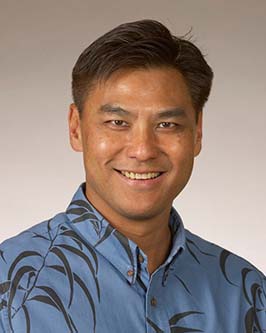
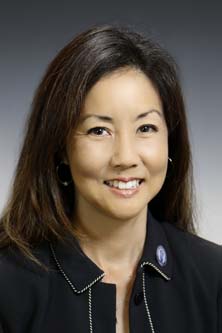
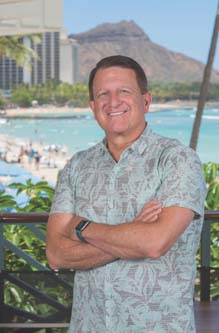
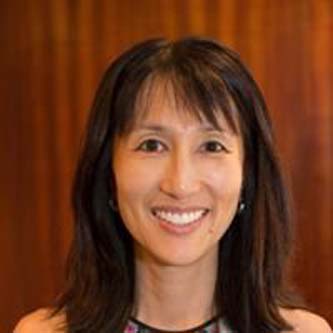
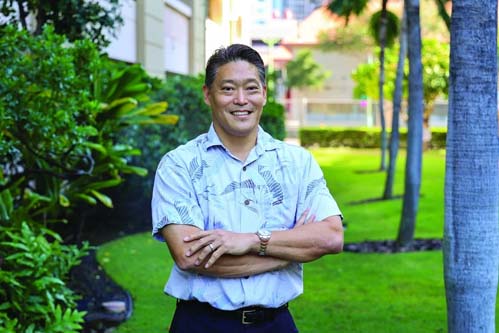
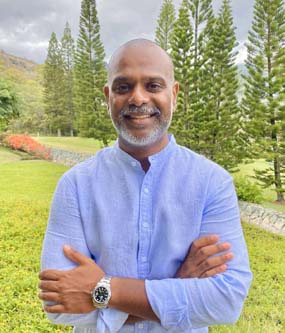
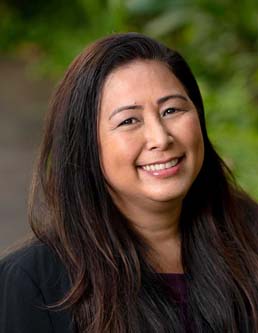
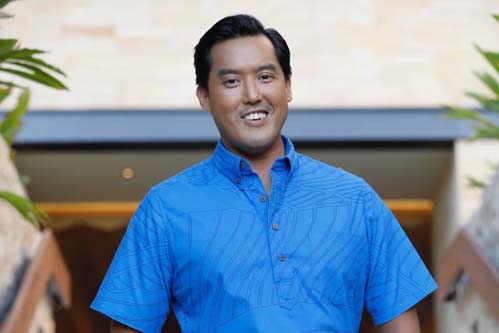
  • Vernon Wong is the Senior Vice-President and Manager in First Hawaiian Bank's Wealth Management Group.
    Vernon Wong is the Senior Vice-President and Manager in First Hawaiian Bank’s Wealth Management Group.
  • Lauren Nahme is the Senior Vice President of Maui Recovery Effort at the Hawaii Community Foundation.
    Lauren Nahme is the Senior Vice President of Maui Recovery Effort at the Hawaii Community Foundation.
  • Jeff Wagoner is president and Chief Executive Officer of Outrigger Hospitality Group.
    Jeff Wagoner is president and Chief Executive Officer of Outrigger Hospitality Group.
  • Nancy Hayashi is the office manager for Dr. Garrett Hayashi, DDS.
    Nancy Hayashi is the office manager for Dr. Garrett Hayashi, DDS.
  • Greg Young was appointed President and Chief Executive Officer of HawaiiUSA in 2021.
    Greg Young was appointed President and Chief Executive Officer of HawaiiUSA in 2021.
  • Ed Barnabas is Vice President of Booz Allen’s Hawaii and Indo-Pacific East businesses.
    Ed Barnabas is Vice President of Booz Allen’s Hawaii and Indo-Pacific East businesses.
  • Dr. Sondra Leiggi Brandon is vice president of Patient Care, Behavioral Health at the Queen's Health Systems.
    Dr. Sondra Leiggi Brandon is vice president of Patient Care, Behavioral Health at the Queen’s Health Systems.
  • Bryan Luke is president and chief executive officer of Hawaii National Bank.
    Bryan Luke is president and chief executive officer of Hawaii National Bank.

Chaminade University’s Board of Regents has elected Ed Barnabas, Lauren Nahme and Vernon Wong to its board, while the school’s Board of Governors has elected Nancy Hayashi, Sondra Leiggi Brandon, Bryan Luke, Jeff Wagoner and Greg Young.

The Chaminade Regents oversee the fiduciary leadership of the university, complemented by the Governors which serve as an advisory role for Chaminade’s mission. Both boards govern Hawaii’s only Catholic Marianist university founded in 1955.

“Our newly elected board members represent the community’s finest and most respected leaders,” said Chaminade University President Lynn Babington. “We are truly honored to have them join our board and know they will make many contributions to our university community in the years ahead.”

The new Regents are filling vacancies created by the retirements of Karen Knudsen, Lydia Park Luis, Bennette E. Misalucha, Lance Mizumoto, Terrance L. Walsh, Jr. and Jeannie M. Wiercinski. Lung-Nien Lee also recently retired from the Board of Governors.

Newly named to the school’s Board of Regents are:

Ed Barnabas is Vice President of Booz Allen’s Hawaii and Indo-Pacific East businesses. With over 20 years of experience in complex technologies, Barnabas focuses on such key areas as artificial intelligence and machine learning, cyber, infrastructure/cloud, augmented reality/virtual reality, and digital transformation.

Lauren Nahme is the Senior Vice President of Maui Recovery Effort at the Hawaii Community Foundation. Previously, she was the Vice President for Strategy & Transformation at Kamehameha Schools.

Vernon Wong is a Senior Vice President and Manager with First Hawaiian Bank’s Wealth Management Group. He joined FHB in 2005 after 21 years at Ameriprise Financial where he led a team of over 100 Financial Advisors.

Newly named to the school’s Board of Governors are:

Nancy Hayashi is the office manager for Dr. Garrett Hayashi, DDS and is a Chaminade parent. Originally from Seattle, she is an active member of the Chaminade University community as a volunteer and community supporter.

Dr. Sondra Leiggi Brandon is vice president of Patient Care, Behavioral Health at the Queen’s Health Systems. She is responsible for developing and implementing business and strategic plans for behavioral health services and programs across the continuum of care.

Bryan Luke is president and chief executive officer of Hawaii National Bank and has more than two decades of experience in finance, previously serving as the bank’s chief operating officer and in roles at Standard & Poor’s and PricewaterhouseCoopers.

Jeff Wagoner is president and Chief Executive Officer of Outrigger Hospitality Group, overseeing all aspects of the company’s multi-branded, global portfolio of hotels, resorts, vacation condominiums, timeshares and retail operations while steering direction, growth and strategic priorities.

Greg Young was appointed President and Chief Executive Officer of HawaiiUSA in 2021. He and the HawaiiUSA team have been integrally involved in the State of Hawaii’s financial literacy efforts and are lead supporters of Chaminade’s Economic Education Center for Excellence (EECE) programs.

Posted by: University Communications & Marketing Filed Under: Institutional, President Tagged With: Board Appointment

Taking Climate Action

July 10, 2024

Chaminade empowers students to seek innovative solutions to environmental challenges

Amid growing concern about the impacts of climate change on Hawaii communities, Chaminade University is developing and expanding programs aimed at empowering students—so they can turn concerns about environmental challenges into projects of positive change.

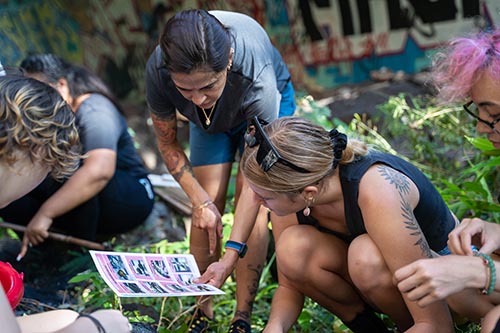
Dr. Lupita Ruiz-Jones shows her ENV 100 students a chart, which helps identify fish in Palolo Stream.
Dr. Lupita Ruiz-Jones shows her Environmental Studies 100 students a chart to identify fish in Palolo Stream.

Vice Provost Janet Davidson has called on each department at Chaminade to identify priorities that closely align with the United Nations’s Sustainable Development Goals, as well as two goals from Laudato Si—Pope Francis’s encyclical letter released in 2015—that resonate with the mission and outcomes of their programs.

“As a Marianist Catholic institution, we are well poised to demonstrate how our programs contribute meaningfully to the goals set forth by Laudato Si and the United Nations,” Davidson told faculty, in a recent memo. “Further alignment with the 2024 Chaminade University of Honolulu Strategic Plan ensures that we remain forward-looking as a university, continually evolving and growing in accordance with our shared strategic vision.”

The United Nations has underscored the scope of the challenge, writing that a comprehensive global effort is needed to avoid “catastrophic, irreversible climate change.”

Provost Lance Askildson said Chaminade is living up to that call to action.

“We are leveraging our degree programs to help address issues as wide-ranging as climate action, social equality and clean water, which are resonant issues here in Hawaii and the Pacific,” he said.

“This is an incredibly well-aligned initiative for Chaminade. And so we see this as an extension of our University mission in many respects, but it is also an opportunity for us to be more intentional about our approach to sustainability and our contributions here within our local community in Hawaii and Pacific Island neighbors.”

In Spring 2022, the United Nations Institute for Training and Research (UNITAR) partnered with Chaminade to establish the CIFAL Center of Honolulu, focused on developing and supporting projects in the Pacific centered on Urban Governance and Planning, Economic Development, Social Inclusion and Environmental Sustainability.

That work is dovetailed with efforts across all of Chaminade’s 25 undergraduate majors and 13 graduate programs, which now incorporate several of the UN’s, Laudato Si’s and the University’s Strategic Sustainable Development Goals.

Some of the common themes—or core competencies—across many of the programs include good health and well-being; peace, justice and strong institutions; climate action; quality education; and responsible consumption and production.

There is also a strong tie-in to workforce development and meeting community needs, university leaders say. According to the National Center for Education Statistics (NCES), sustainability studies was the fastest-growing green program during the last five years. In fact, the number of graduates more than doubled between 2016 and 2021—from 832 to 1,837.

Chaminade has contributed to that growth.

Since introducing Environmental Studies in 2000, the program has evolved from a certificate to then a minor and today a bachelor’s degree with two different concentrations.

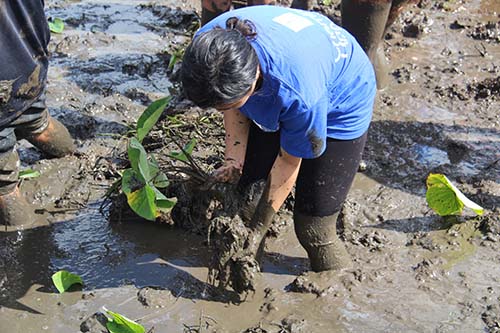
Students help harvest kalo in a Heeia field.

“It was founded at the request of Chaminade’s then-president Sue Wesselkamper, who came to me in 1998 when I was a biology professor and said, ‘Gail we need a major that looks after creation,’ and the rest is history,” recalled Dr. Gail Grabowsky, Dean of the School of Natural Sciences & Mathematics and UN CIFAL Honolulu Executive Director.

“Today, between Environmental Science and Environmental Studies, we have 38 students declaring it as their majors.”

Lucy Lee ’23 decided to pursue a degree in Environmental Studies at Chaminade because she wanted to combine her passion for the environment with her love of the ocean.

Lee is a member of the Polynesian Voyaging Society’s Moananuiākea Voyage, a circumnavigation of the Pacific, which to her, “holds the capacity and stories to change the world.”

“Voyaging is a way to further empowerment of indigenous peoples,” said Lee, adding “it unifies people around common goals like healing the ocean and the earth, and allows for a different pathway for young women to pursue and involve themselves in STEM (Science, Technology, Engineering and Mathematics).”

For Lee, the Environmental Studies program at Chaminade was perfect since her ultimate goal, she said, is to offer legal expertise and representation to sustenance fishing and farming communities in Hawaii.

“They are ingenious, but they struggle in literacy when it comes to law and defending themselves in justice systems,” Lee said, pointing to decades-long legal challenges over water rights for small farmers on Maui. “I started hearing about that case when I was in elementary school.”

Elementary school was also around the same time that Casidhe Mahuka first visited the National Marine Sanctuary of American Samoa, which forever sparked her passion for ocean science.

It was the first time that she discovered that she could not only breathe underwater, but she could also breathe underwater for a living.

“That was it; I was totally hooked,” said Mahuka, ’22, an Environmental Studies major and now invasive species coordinator (ISC) at the Coral Reef Advisory Group (CRAG) in American Samoa.

“I was determined to be an ocean scientist because I have always loved being in the water. And to get paid for it, I was all in.”

Posted by: University Communications & Marketing Filed Under: Diversity and Inclusion, Featured Story, Innovation Tagged With: CIFAL, Environmental Sciences, Environmental Studies

Summer in the Lab

June 17, 2024

Chaminade University students are participating in high-impact STEM research at universities nationwide.

Through Chaminade University’s Undergraduate Research and Pre-Professional Programs, students like freshman Brielle Lo ’27 and Calista Ancog ’27, junior Scott Bowman ’26 and senior Alexandrea Cole Patino ’25 are participating this summer in cutting-edge STEM research at universities nationwide.

As part of a research project with the Social and Behavioral Interventions (SBI) program within the International Health Department of Johns Hopkins University’s Bloomberg School of Public Health, Cole Patino has been involved in an extensive literature review of menstrual health and self-care, from menarche (the first menstrual period in a female adolescent) to menopause.

She said the literature review will be used to inform health care educational materials, self-care and more.

This summer, Cole Patino is participating in Johns Hopkins’s Summer Research Early Identification Program (SR-EIP).

“I will assist in writing, per Johns Hopkins University’s partnership with the World Health Organization, this PICO guideline, which I will present during the Leadership Alliance’s National Symposium in Connecticut in July,” she said.

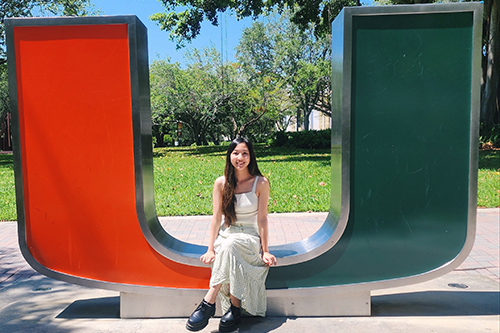
  • Freshman Brielle Lo '27 was accepted into the Leadership Alliance's First Year Research Experience (FYRE) Program at the University of Miami.
    Freshman Brielle Lo ’27 was accepted into the Leadership Alliance’s First Year Research Experience (FYRE) Program at the University of Miami.
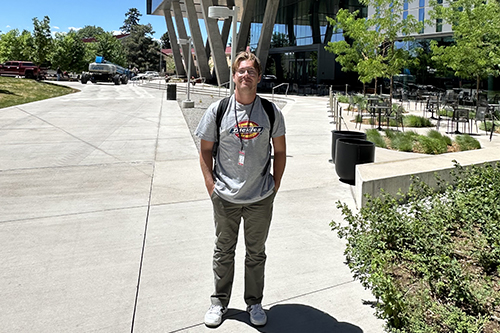
  • Scott Bowman '26 is participating in a summer research program with University of Coloradoʻs Anschutz School of Medicine’s Cancer Research Experience for Undergraduates.
    Scott Bowman ’26 is participating in a summer research program with University of Coloradoʻs Anschutz School of Medicine’s Cancer Research Experience for Undergraduates.
  • Chaminade’s Program Director with the Undergraduate Research & Pre-Professional Programs, Amber Noguchi, met with Calista Ancog ’27, who is currently an intern at Xavier University in Cincinnati.
    Chaminade’s Program Director with the Undergraduate Research & Pre-Professional Programs, Amber Noguchi, met with Calista Ancog ’27, who is currently an intern at Xavier University in Cincinnati.

As one of only 41 member institutions that make up the consortium of the Leadership Alliance at Brown University, Chaminade has helped guide students on how to advance their academic opportunities and enhance their educational experience through the Alliance’s First Year Research Experience (FYRE) Program and Summer Research Early Identification Program (SR-EIP) at select institutions across the nation.

The goal and purpose of the Leadership Alliance is to increase the participation of underrepresented and underserved students in M.D. to Ph.D. training programs.

To date, the Leadership Alliance has mentored more than 6,000 undergraduates and over 1,000 Leadership Alliance summer program alumni, known as Doctoral Scholars, have earned a Ph.D. or M.D. to Ph.D.

“The Leadership Alliance is guided by the principle that promoting and advancing underrepresented talent in research produces a significantly equitable and diverse research workforce and society,” wrote The Leadership Alliance Executive Director Taiese Bingham-Hickman, M.S., MBA, Ph.D., in a recent article titled, “Leading Towards Impact: Diversity and Leadership in Higher Education.”

“Catalyzing a culture of academic achievement, belief in expanding diversity in faculty ranks and promoting mentorship, the Leadership Alliance creates change that promotes and contributes nationally to discourse about diversity, equity and inclusion in our colleges and universities, and the research workforce.”

A participant in the Alliance’s FYRE Program, Lo is studying a type of cell signaling pathway known as the Wingless/Integrated, an ancient and evolutionarily conserved pathway that regulates crucial aspects of cell fate determination, cell migration, cell polarity, neural patterning and organogenesis during embryonic development.

“From what I’ve learned so far from my mentors at University of Miami, it is a fundamental mechanism for establishing polarity in vertebrate limbs during embryo development,” said the Kauai native. “It also ties heavily into cancer and cell fate determination/migration.”

Meanwhile, Bowman is conducting his own medical research with University of Coloradoʻs Anschutz School of Medicine’s Cancer Research Experience for Undergraduates. After losing his good friend, Victor Martinez, to colon cancer last year, the Silversword soccer player wanted to honor him by making an impact in the medical world.

“I started working in Dr. Weichhaus’s cancer research lab at Chaminade last spring, then when I got the opportunity to research colon cancer over the summer, I couldn’t pass up the opportunity,” said Bowman, who is participating in Colorado University’s Cancer Research Experience for Undergraduates.

“I’m expecting to gain practical lab skills and a wider knowledge of both lab procedures and cancer biology in general, as well as where I see my role in health care may be in my future career.”

Since being recast as the Undergraduate Research and Pre-Professional Programs—replacing the former Office of Health Professions Advising and Undergraduate Research (OHPAUR)—students’ appetite for participating in research projects has steadily grown since 2009, according to Amber Noguchi, Ph.D., Chaminade’s Program Director with the Undergraduate Research & Pre-Professional Programs.

“We promote all of the opportunities that we receive—usually via email—through our monthly URPPP (Undergraduate Research and Pre-Professional Program) newsletter and our internal Google site for students,” said Noguchi, who also serves as the Leadership Alliance’s primary coordinator with Chaminade University.

“We also held an Undergraduate Research Workshop Series during which students learned about research opportunities, as well as how to write an effective personal statement and prepare their applications. This past year, Dr. Justin Wyble served as our Faculty Undergraduate Research Coordinator and he ran our workshops.”

After shadowing graduate students and observing the different lab skills they utilize while working on their projects, Lo has grown an affinity of research, citing her own studies in the Wnt signaling pathway, and how it influences the anterior-posterior body plane development of starfish embryos.

“I am investigating this through conducting microsurgery on them, and using various chemical inhibitors to suppress parts of the pathway,” said Lo, who credits Noguchi for convincing her to sign up for the Leadership Alliance’s FYRE Program. “Initially I wasn’t too interested in the idea of research this summer as I wanted to pursue more health-based summer experiences.

“But I think since health depends on biology for the majority of its workings, it would be useful to take time to learn about it a little outside of the classroom,” Lo added. “It is an environment where I can build a variety of skills—from teamwork and presenting information to micropipetting and making an agarose gel.”

Posted by: University Communications & Marketing Filed Under: Featured Story, Innovation, Undergraduate Research & Pre-Professional Programs Tagged With: Biochemistry, Chemistry, Internship, Undergraduate Research & Pre-Professional Program

  • « Go to Previous Page
  • Page 1
  • Interim pages omitted …
  • Page 26
  • Page 27
  • Page 28
  • Page 29
  • Page 30
  • Interim pages omitted …
  • Page 151
  • Go to Next Page »

Footer

Chaminade University Logo

3140 Waialae Avenue
Honolulu, Hawaii 96816

Contact Us
Phone: (808) 735-4711
Toll-free: (800) 735-3733

facebook twitter instagram youtube linkedin

Visit

  • Plan Your Visit
  • Campus Map (PDF)
  • Events

Resources

  • Campus Security
  • Student Consumer Information
  • Concerns, Feedback, and Reporting
  • Institutional Review Board
  • Title IX / Nondiscrimination Policy
  • Compliance
  • Emergency Information
  • Careers
  • Institutional Statement

People

  • Students
  • Parents
  • Alumni
  • Faculty & Staff

Policy

  • Privacy Policy
  • Terms and Conditions of Use


© Chaminade University of Honolulu