• Skip to primary navigation
  • Skip to main content
  • Skip to footer
Chaminade University of Honolulu

Chaminade University of Honolulu

  • VISIT
  • APPLY
  • GIVE
  • STUDENTS
  • PARENTS
  • ALUMNI
  • FACULTY/STAFF
  • Admissions
    • Admissions Home
    • Undergraduate Students
      • First-Year Students
      • Transfer Students
      • Admitted Students
    • Graduate Students
    • Flex Online Undergraduate Program
    • Military Students
    • Non-Degree/Visiting Students
    • Experiential Honors Program
    • Early College Program
    • New Student Orientation
  • Tuition & Aid
    • Financial Aid Home
    • Tuition & Expenses
    • Federal Updates & Changes
    • Scholarships
    • $5,000 Graduate Scholarship
    • VA Education Benefits
    • Net Price Calculator
  • Academics
    • Academics Home
    • Academic Programs
    • Office of Student Success
      • Academic Advising
      • Records and Registrar
    • Kōkua ʻIke (Support Services)
      • ADA Accommodations
      • Career Services
      • Proctoring Services
      • Tutoring Services
    • Sullivan Family Library
    • Undergraduate Research & Pre-Professional Programs
    • Commencement
  • Campus Life
    • About Campus Life
    • Student Engagement
    • Student Government Association
    • Residence Life and Housing
      • Summer Conference Housing
    • Health Services
    • Marianist Leadership Center
    • Counseling Center
    • Campus Ministry
    • Campus Security
    • Dining Services
    • Bookstore
  • Athletics
  • About
    • Chaminade University News
    • Our Story
    • Leadership
    • Chaminade University Strategic Plan 2024-2030
    • Mission & Rector
    • Association of Marianist Universities
    • Facts & Rankings
    • CIFAL Honolulu
    • Accreditation & Memberships
    • Montessori Laboratory School
Search
×

Search this web site

Marianist

Remains of Hawaiʻi Saints Secured by Forensics Lab Returned to Catholic Church

November 12, 2026

A years-in-the-making partnership of science and faith culminated this Monday at the offices of Chaminade University’s Forensic Sciences Unit.

Father Damien of Molokaʻi, canonized in 2009, is the revered saint who sacrificed his life to care for Hansen’s disease patients at the Kaulapapa leper colony in the late 1800s. By his side stood Sister Marianne Cope, who was canonized as a saint by Pope Benedict XVI in 2011.

Some remains of Saint Marianne and Saint Damien–tiny bone fragments painstakingly collected from their graves–will now be laid to rest and venerated as holy relics at Catholic churches throughout Hawaiʻi thanks to the meticulous work of Chaminade University forensic scientists and forensic science students.

On November 10, Sister Davilyn Ah Chick of the Diocese of Honolulu stopped by campus to claim 52 relics prepared by Dr. Carlos A. Gutiérrez Ayala, Department Chair and Assistant Professor of Forensic Science.

Of the relics, 32 contain bone fragments of Saint Damien of Molokaʻi. The other 20 hold the remains of Saint Marianne, secured by Chaminade forensic scientists in a project that began at the start of the year.

“We started in January, early January this year, and now we’re in November, finishing the first round of the first batch of relics,” Gutiérrez said. “We never knew if we’d be able to do all of these.”

The effort at Chaminade’s Forensic Sciences Unit to sort and secure bone fragments from Saint Marianne’s grave for use in holy relics marks the first time that a university forensic sciences department has been enlisted by the Catholic Church for such work. Chaminade carried out this work for the Church on a pro bono basis, in keeping with the university’s Marianist tradition of service to the community.

Given the unprecedented nature of the effort, Gutiérrez prepared a procedures manual for other universities to follow should the Church ask for their support in securing the remains of other saints in the future. This procedural and protocol manual can be used by any university forensics department throughout the world, Gutiérrez said.

“I developed a methodology which didn’t exist for this,” he explained. “So now in the future, if other forensic scientists or the Catholic Church need to do this, at least now we have a protocol.”
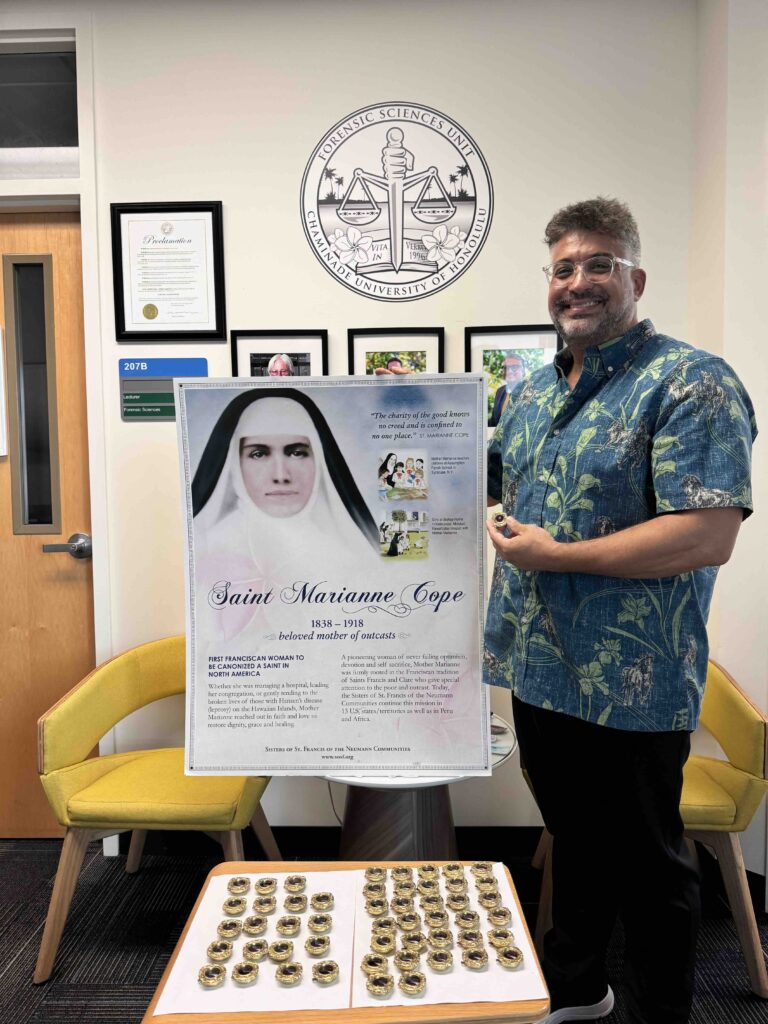
Dr. Carlos A. Gutiérrez Ayala, Department Chair and Assistant Professor of Forensic Science

He said this experience has proven to be a once-in-a-lifetime opportunity for his career.

“I never did something like this before, and I don’t know if other forensic scientists have done something like this before ever,” Gutiérrez said. “I’m privileged, and all of us are privileged here.”

Gutiérrez will present the entire project and experience at an international forensic science conference happening in Orlando, Florida early next year.

Sister Davilyn described the opportunity to enlist Chaminade University’s forensic sciences lab for assistance with securing the remains and producing the relics as “providential.”

“Chaminade University has been very generous to allow us to use it,” she said.

Sister Davilyn said they will make more relics from Saint Marianne’s remaining bone fragments. She will provide the relic encasements, while Gutiérrez will ensure that remaining bone fragments are properly placed and secured using a special adhesive that takes 24 hours to cure.

The relics will then be distributed throughout the islands for each church to display and venerate as they see fit.

“Each of the vicariates we have in the diocese will be getting this at the convocation,” she explained.

Gutiérrez said his experience helping the Church with this important project has been a welcome respite from the usually dark nature of forensic sciences work.

“Usually you work on cases helping victims in terrible situations, but doing this type of job brings some light,” he said.

“It’s a unique situation where faith and science go together and bond.”
Posted by: University Communications & Marketing Filed Under: Campus and Community, Catholic, Faculty, Featured Story, Homepage, Marianist Tagged With: Campus Event, Forensic Sciences

Designed for What’s Next: Chaminade Launches Accelerated 3-Year Applied Management Degree

November 11, 2026

A faster, more flexible path to a bachelor’s degree and career success is coming to Chaminade University in Fall 2027.

The new Bachelor of Science in Applied Management will allow students to earn their degree in just three years through a fully online, 90-credit program designed to help them get a head start on their careers.

In introducing a new three-year accelerated path to a diploma, Chaminade is responding to increasing calls for curriculum that allows students to complete their studies in three years as opposed to the traditional four-year track.

This new accelerated approach is designed to help students control the costs of their higher education while jumping on the career path faster.

“More and more institutions are looking at applied degrees,” said Amir Toosi, Ph.D., Dean of the College of Business, Innovation & Technology. “Not only domestic schools, but international schools are also going to three-year degree programs.”

The shorter time to graduate detracts nothing from the educational experience.

The curriculum is designed for working professionals and full-time students. Practical business and management courses will teach students the ins and outs of effectively and efficiently managing for-profit businesses, government agencies, and nonprofits.

Required courses for the new major will include classes in Business Foundations, Organizational Behavior, Applied Management Concepts, and more. Eligible electives include tracks in Leadership & Communication, Liberal Arts traditions, and Writing, Science and Ethics.

The coursework prepares students for a variety of management-related positions, from project coordinator and business analyst to account manager, human resources specialist, operations associate, and project coordinator, among other fields.

Toosi said the degree is particularly well suited for working professionals looking to “upskill” and acquire additional education and workplace know-how to advance their careers or win promotions at their existing workplaces.

In other words, the three-year Applied Management degree fits “people who know what they want to do, get their degree faster, and then move on quicker,” he said.

Administered by the College of Business, Innovation & Technology, the Applied Management undergraduate degree will become the newest academic program under Chaminade University’s Flex Online Undergraduate program. Flex allows students to complete course requirements online at their convenience. Applied Management

The degree will be Chaminade’s first three-year accelerated undergraduate program. 

Posted by: University Communications & Marketing Filed Under: Business & Communication, Catholic, Education, Faculty, Featured Story, Homepage, Innovation, Institutional, Marianist, Students Tagged With: new degree program

Four Chaminade Veterans Find New Paths After Military Service

November 10, 2026

Three Chaminade students and an adjunct professor reflect on their transitions from military service to college and new careers.

By Justin Siliva

For military veterans, leaving the service can mean adjusting to a different routine, returning to school, or preparing for a new career. 

At Chaminade University of Honolulu, four veterans have taken different paths after serving in the U.S. Army and Air Force. With Veterans Day approaching on Nov. 11, they share how their experiences have shaped their Chaminade education, leadership, and career goals. 

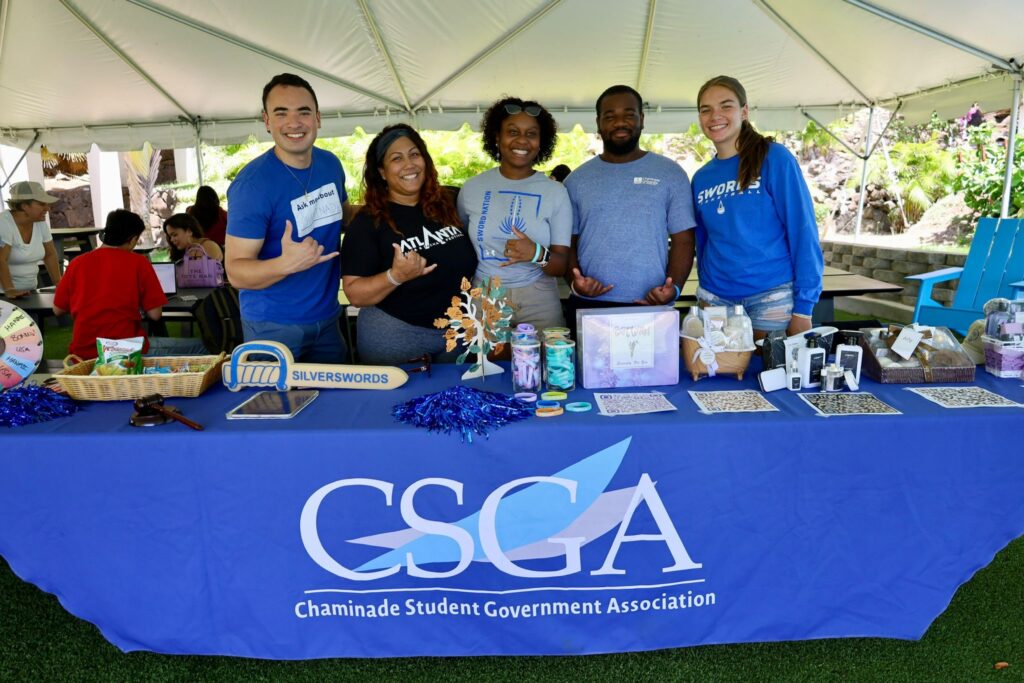
Victoria Francois (second from left and top photo).

Victoria Francois: Bringing Army Lessons to Chaminade

Victoria Francois, 40, grew up in Fayetteville, North Carolina, where she enlisted in the Army at 18 in April 2004. She served nearly 19 years before leaving in February 2023, reaching the rank of sergeant first class (E-7). Francois spent about 17 years of her military career as a surgical technician, assisting with operating room procedures.

The Army brought Francois to Hawaiʻi in 2017, where she was assigned to Tripler Army Medical Center. She later became the perioperative noncommissioned officer in charge, overseeing four departments: same-day surgery, the operating room, post-anesthesia care, and sterile processing. 

While she was still serving, Francois enrolled at Chaminade in 2019 and attended evening classes at Tripler. She began taking classes on campus in 2023. 

Initially concerned about returning to college as an adult learner, Francois has found opportunities to get involved. She served as a senior senator in the Chaminade Student Government Association (CSGA) and participated in the university’s Sustained Undergraduate Research Experience (SURE) program. 

Through the program, Francois met Dr. Abby Halston, who became her mentor. Halston later nominated Francois for the 2024 Sue Wesselkamper Award, which she won. 

Francois earned her bachelor’s degree in psychology from Chaminade in May 2024 and is now pursuing a master’s degree in counseling psychology. She also serves as president of Chaminade’s Psi Chi chapter, a psychology honor society, where she applies her military leadership experience to working with other student officers.

“I may know how to get things done and execute, because that’s just what the military has taught me over and over,” Francois said. “But collaboration is everything, right?”

Francois expects to finish her master’s program in May 2027. Then, she plans to pursue a doctorate in educational psychology while continuing to work as a behavioral health specialist with the Hawaiʻi Department of Education. 

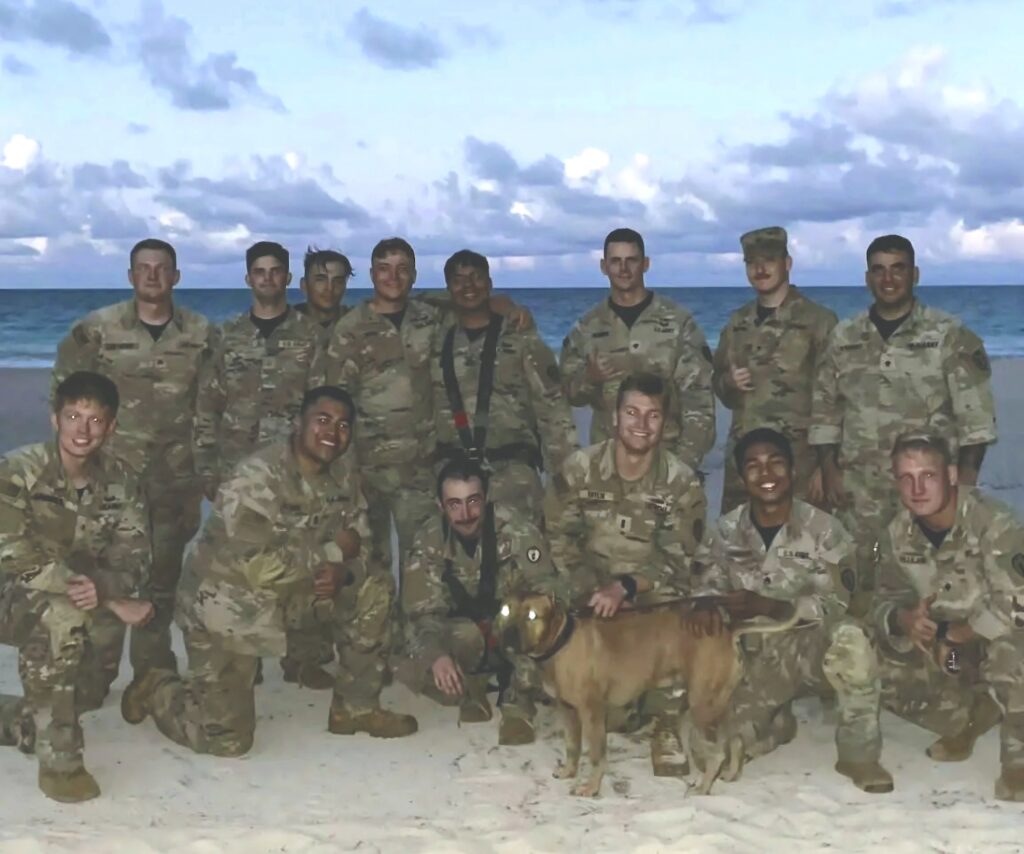
Jonah Martell (back row, second from left).

Jonah Martell: Finding His Way Back to School

Jonah Martell, 22, of Las Vegas, Nevada, joined the Army in 2023 and served as a cavalry scout at Schofield Barracks on Oʻahu. He reached the rank of specialist (E-4) before an injury led to his medical discharge in 2025, ending his military career after about two years. 

As a cavalry scout, Martell conducted reconnaissance, monitored potential threats, and provided security for infantry units. His training also included clearing buildings and operating as a gunner on a Humvee.

One of his most memorable experiences came during a five-day training exercise in Georgia. Martell spent four days in heavy rain, responding to simulated nighttime attacks with little to no sleep. The exercise ended with a 12-mile overnight march carrying a roughly 30-pound rucksack.

After leaving the Army, Martell decided to stay in Hawaiʻi and attend Chaminade because it offered a Sports and Event Management program; that option wasn’t available at other universities he considered.

Now a freshman, he hopes to work in the front office of a professional sports team or become a college athletic director. He also plans to add criminal justice as a second major, giving him another career option in law enforcement. 

Before joining the Army, Martell hadn’t seriously considered attending college. He said his military experience changed how he approached school, leaving him more focused on preparing for a career.

“So, ever since I joined, now I’m more focused and, like, okay, I need to get this done, to start my career, and help myself,” Martell said. “So I think the military really changed my mindset.”

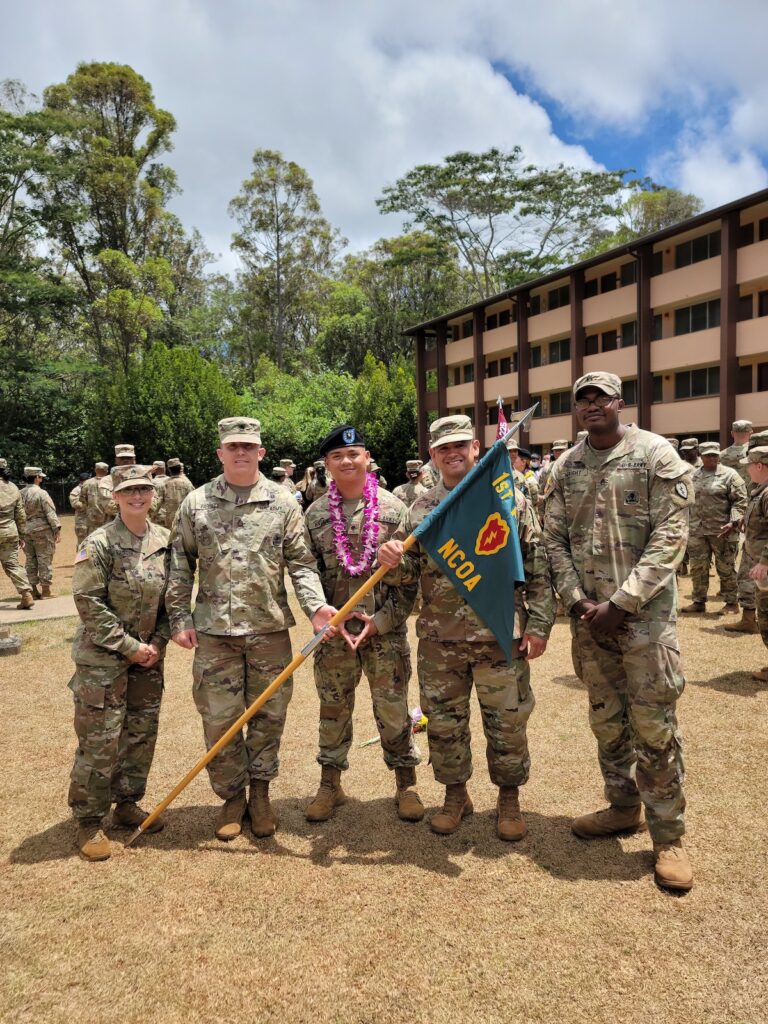
Adam Haley (center).

Adam Haley: Discovering a Passion for Psychology

Adam Haley, 28, grew up in Madison, Alabama, and attended the University of Alabama from fall 2017 to spring 2018, studying management information systems. He left college to join the Army to gain job skills, travel, and avoid student loan debt.

Haley spent six and a half years in the Army working in communications and information technology. He achieved the rank of sergeant (E-5), then worked supervising junior soldiers and maintaining communication networks used during military operations. The Army brought him to Hawai‘i for his first duty station.

After leaving the military, he became a network engineer, putting the technical skills he learned in the Army to use.

But he soon realized the work wasn’t as fulfilling as he’d expected.

While serving in the Army, Haley often found himself listening to fellow soldiers who came to him for advice or needed someone to talk to. As a noncommissioned officer (NCO), he held monthly counseling sessions but preferred talking to people over formal paperwork. He enjoyed those conversations and began to recognize his interest in understanding and helping people.

That interest eventually brought him to Chaminade, where he is now a junior majoring in psychology.

Haley chose the university for its smaller classes, psychology program, and opportunities to interact with professors. He hopes to become a psychologist and pursue a doctoral degree in clinical psychology.

Compared with his previous experience at a larger university, Haley said he now enjoys being back in college and studying something he cares about.

“I never thought I’d be the type to say I love coming to school, love school, or anything like that, but I genuinely look forward to coming to Chaminade,” Haley said. “I really look forward to all my psychology classes.” 

Michael Rose: From the Air Force to the Classroom

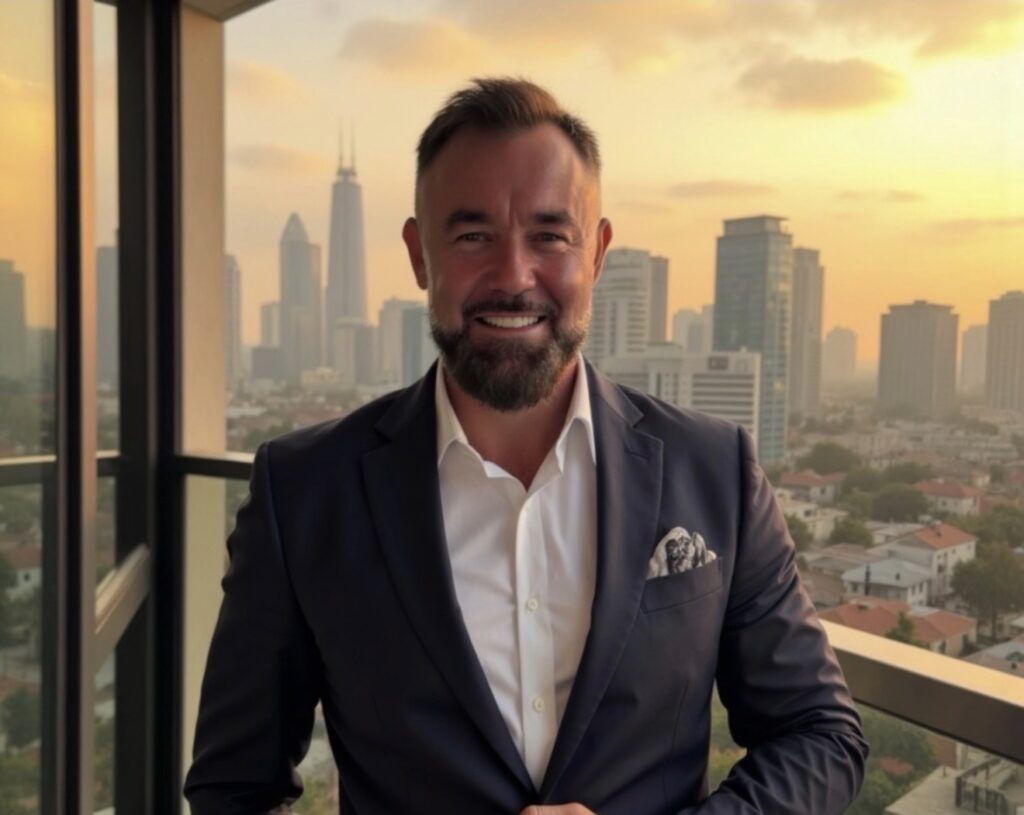
Originally from Buffalo, New York, Michael Rose joined the U.S. Air Force in 2001 following the Sept. 11 attacks. He served for 20 years before retiring in 2021 as a senior master sergeant (E-8).

During his military career, Rose worked in special operations and completed several deployments. His service took him to 58 countries, where some of his most meaningful experiences involved providing humanitarian assistance to women and children in war-torn areas.

Rose said his time in the Air Force helped him develop leadership skills and changed how he viewed his responsibilities to others. After retiring, he initially pictured himself using those skills in the business world, possibly as an executive or someone managing a company division.

With family connections to Hawai‘i, Rose eventually made Oʻahu his home and enrolled at Chaminade to further his education in business and leadership.

During his graduate studies, Rose worked closely with Dr. Eduard “Eddie” Merc, an assistant professor of business analytics and supply chain management and director of Chaminade’s MBA program. Merc’s dedication to teaching and research encouraged Rose to explore opportunities in higher education.

Rose earned his Executive Master of Business Administration degree from Chaminade in 2023. From 2023 to 2025, he worked as a researcher at the university’s School of Business and Communication, studying technology, leadership, and business operations.

Although Rose initially planned to pursue a career in business leadership, he eventually found himself on the other side of the classroom.

He now serves as an adjunct professor at Chaminade, teaching EC 201, Principles of Macroeconomics, through the university’s Early College program at Sacred Hearts Academy.

Not too long ago, Rose was the one sitting in class, listening to lectures and preparing for exams. Now that he’s the one leading the lessons, Rose said the experience has shown him how much preparation goes into teaching, especially when students have questions he needs to answer.

As Veterans Day approaches, Rose hopes people remember the sacrifices military members make throughout their service.

“I think it’s just to not take it for granted,” Rose said. “And to really think about the sacrifice that military members make on a daily basis.” 

Posted by: University Communications & Marketing Filed Under: Alumni, Campus and Community, Education, Featured Story, Homepage, Marianist, Student Life, Students Tagged With: Alumni, veteran students

Designed for What’s Next: Chaminade’s New Ethics & Leadership Degree Program Launches Fall 27

November 9, 2026

Many colleges and universities train leaders, but few set out deliberately to forge the next generation of ethical leaders. Now, at least one institution in Hawai‘i will.

Chaminade University of Honolulu is introducing a new major under the College of Arts & Sciences focused on ethical leadership and thoughtful, humane business practices. The new Bachelor of Arts in Ethics & Leadership degree will launch in Fall 2027; meanwhile, the university is accepting applications to the program now.

The new degree program aligns with the university’s strategic vision of enhancing academic excellence, prioritizing education that meets communities’ and societal needs.

College of Arts & Sciences co-Dean Cheryl Edelson, Ph.D., said this unique business-oriented degree program trains leaders to put people first. “Understanding the human-first approach to all things makes a difference,” she said.

Combining courses in business operations and administration with philosophy and religious studies, the Ethics & Leadership program is designed to train students not only on how to run a business, but how to operate a business in a way that benefits society in a broader sense, said Chaminade Associate Professor of Religious Studies and Philosophy Dustyn Ragasa, Ph.D.

The program is also well-suited for those interested in pursuing careers in nonprofit management and charity work. Ragasa said the new major fits perfectly with “the intellectual heritage, philosophy, and theology of a Catholic university.”

“We want our graduates to be agents for good,” he said, explaining how he and his colleagues in the College of Arts & Sciences designed the new undergraduate degree program. “We realize that no matter what the students are doing, we want them to be able to be beneficial for people who might fall through the cracks.”

The program, Ragasa stressed, is a practical, career-oriented degree designed to train business leaders for a rapidly changing workforce.

Courses on business management, marketing, accounting, and finance are complemented with coursework in philosophy, theology, ethics, and environmental and social responsibility. Legal and ethical matters are covered in the program’s curriculum, as are justice and human rights.

Edelson said the degree program is designed to pair well with a wide variety of other educational pursuits, should students choose to add a minor or second major field of study.

“We really wanted it to be something that’s going to partner really nicely with other majors,” she said. “For example, someone could do Ethics & Leadership and Marine & Oceanic Sustainability.”

The program also includes a required internship, reflecting the importance of students gaining practical, real-world experience before graduation. Students will complete Chaminade’s general education requirements, building a solid academic foundation that prepares them for the major’s curriculum and training.

Ragasa said the Ethics & Leadership degree is suitable for students interested in not only breaking into the business world, but also for those interested in sculpting it. In other words, “people who want to be thought leaders, who want to be in management, people who want to go into politics,” he said.

“One of the things that I love about this new program is it takes the traditionally very abstract 40,000-foot view of philosophy and religious studies, and it answers the question: What is somebody going to do with it? How is it going to be put into practice?”

The hope is that graduates of the Ethics & Leadership program will emerge fully ready to devise ethical solutions to business, environmental, and social problems. Graduates would be taught to place the needs of people, especially vulnerable populations, front and center in their business leadership and decision-making.

Students will be taught how to thoughtfully contemplate core issues vexing society and how to navigate the corporate world through strategic thinking rooted in values and morals.

Ragasa said training in Ethics & Leadership is capped off with two seminars led by practitioners of ethical leadership, whether based at Chaminade University or in Hawai‘i’s larger business community. Individuals invited to lead seminars will be free to structure their lessons however they see fit.

New course offerings will be added over time. Meanwhile, existing courses are being reoriented toward the needs of the new Ethics & Leadership major, in particular courses on philosophy and religious studies. Emphasis is on building knowledge and skills applicable to the business world, not just scholarly theories.

Students will also be trained in ethical entrepreneurship.

Ragasa said he’s excited to launch the new Ethics & Leadership undergraduate degree and looks forward to introducing its eventual graduates to the business community.

“My hope is that this program will develop into something larger that will be known for producing socially responsible, forward-thinking, entrepreneurial leaders,” he said. “We are ready to journey with them as they undertake their vocation to transform the world in all possible ways.”

Posted by: University Communications & Marketing Filed Under: Behavioral Sciences, Business & Communication, Catholic, Education, Faculty, Featured Story, Homepage, Humanities, Arts & Design, Institutional, Marianist, Students Tagged With: Marianist, new degree program

AI Cannot Replace Human Values, Panelists Advise at the 2026 Marianist Lecture

October 20, 2026

Humanity can cope with the rise of artificial intelligence technology, as it has with other technological revolutions, without losing what makes us human. But we must first fully understand what AI is and how it should be used.

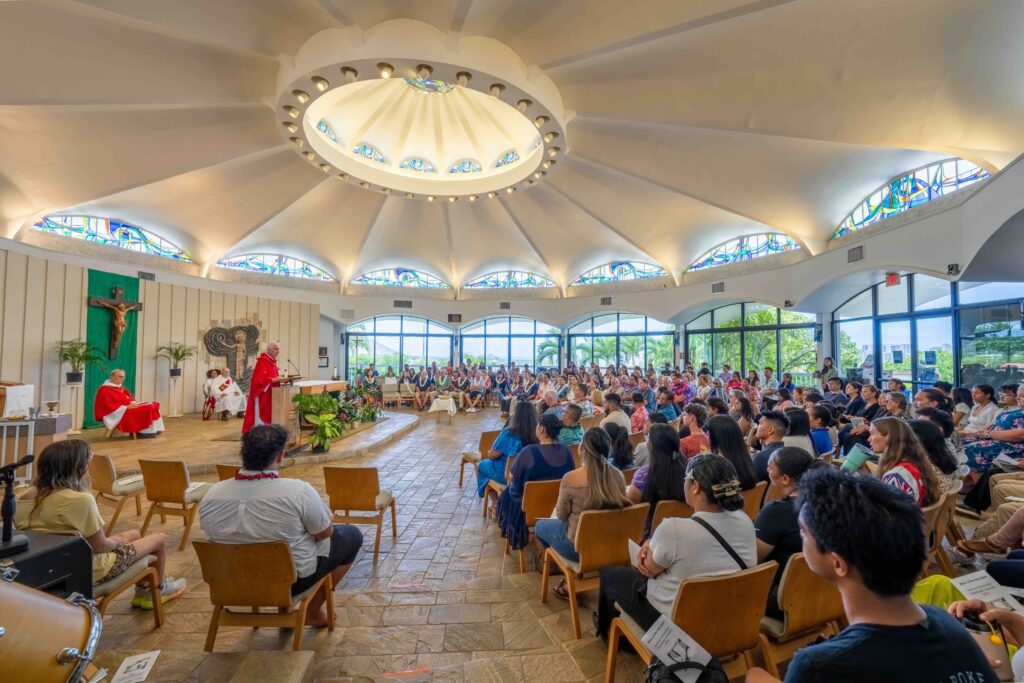
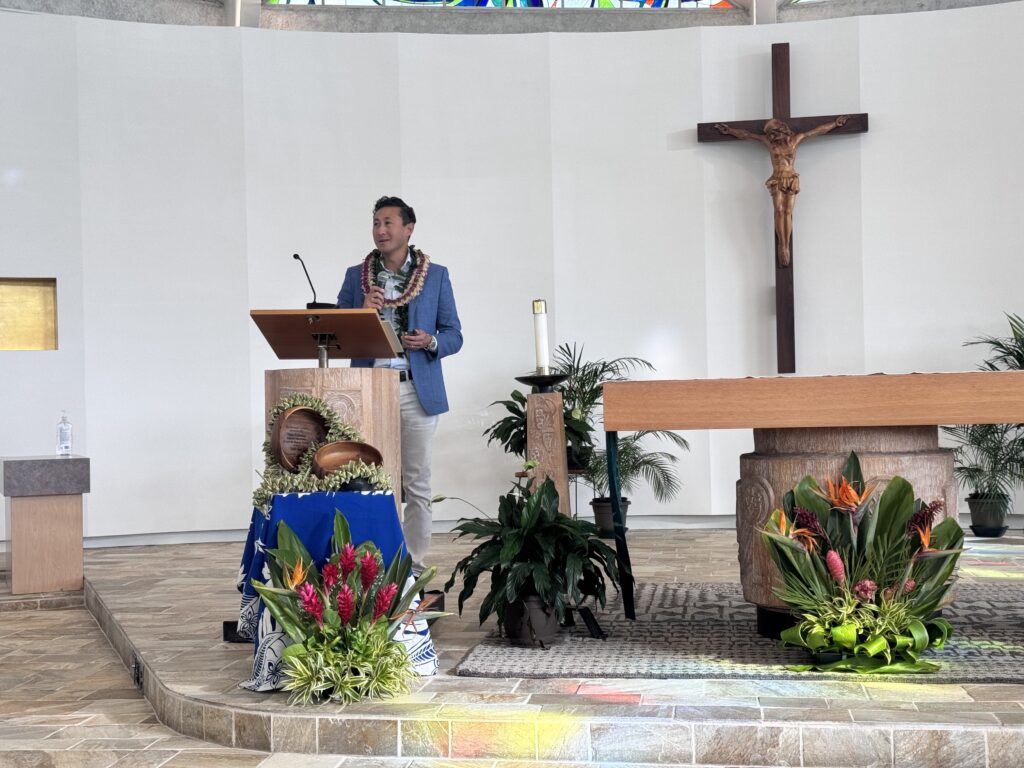
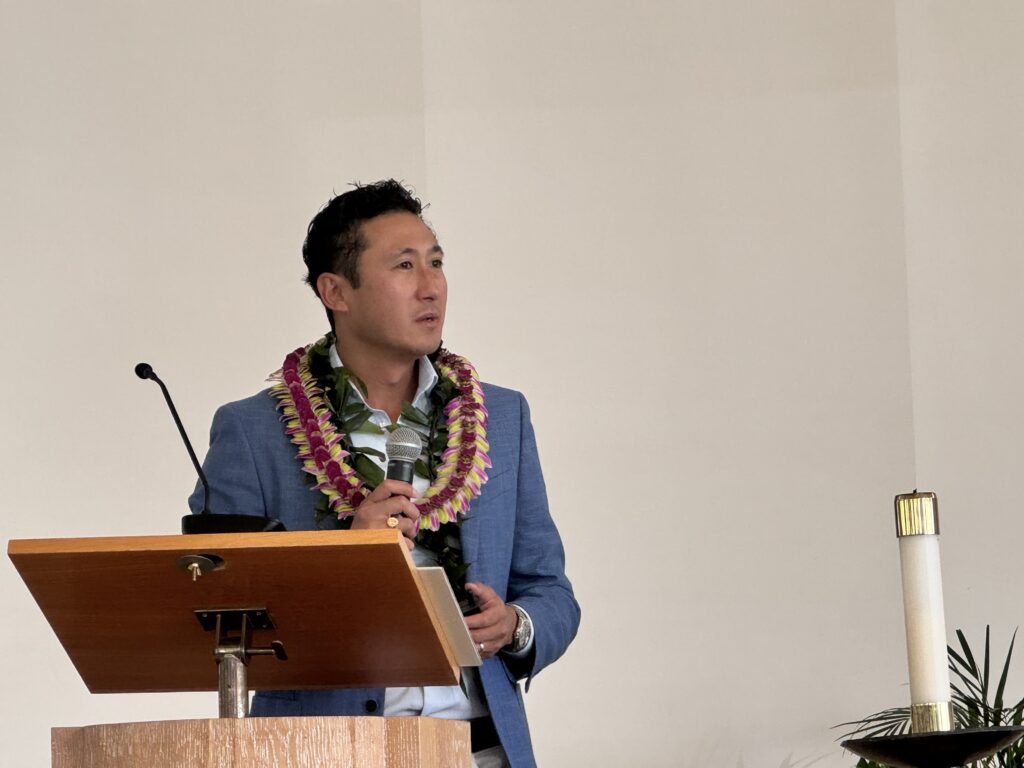
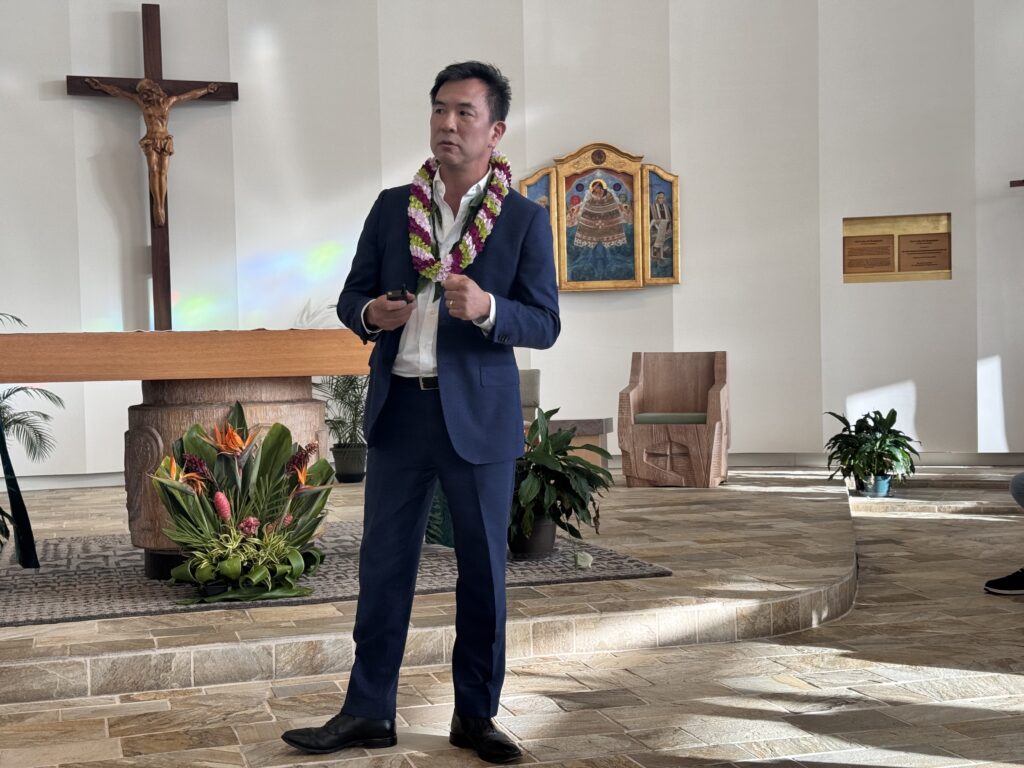
That was the greatest takeaway from this semester’s Marianist Lecture, held this past Sunday at Chaminade University and featuring two experts on AI and the Catholic Church’s position on this technology. The 2026 Marianist Lecture was titled “Timely Technology, Timeless Questions: AI and the Human Person.”

Kyle Ballarta is a venture capitalist and entrepreneur who has written extensively on the intersection of faith and technology. Louis Kim is an executive, technology advisor, and theologian with the Duke Divinity School. Both were this year’s guest lecturers, drawing hundreds to the Mystical Rose Oratory for a Sunday afternoon discussion on AI and human dignity.

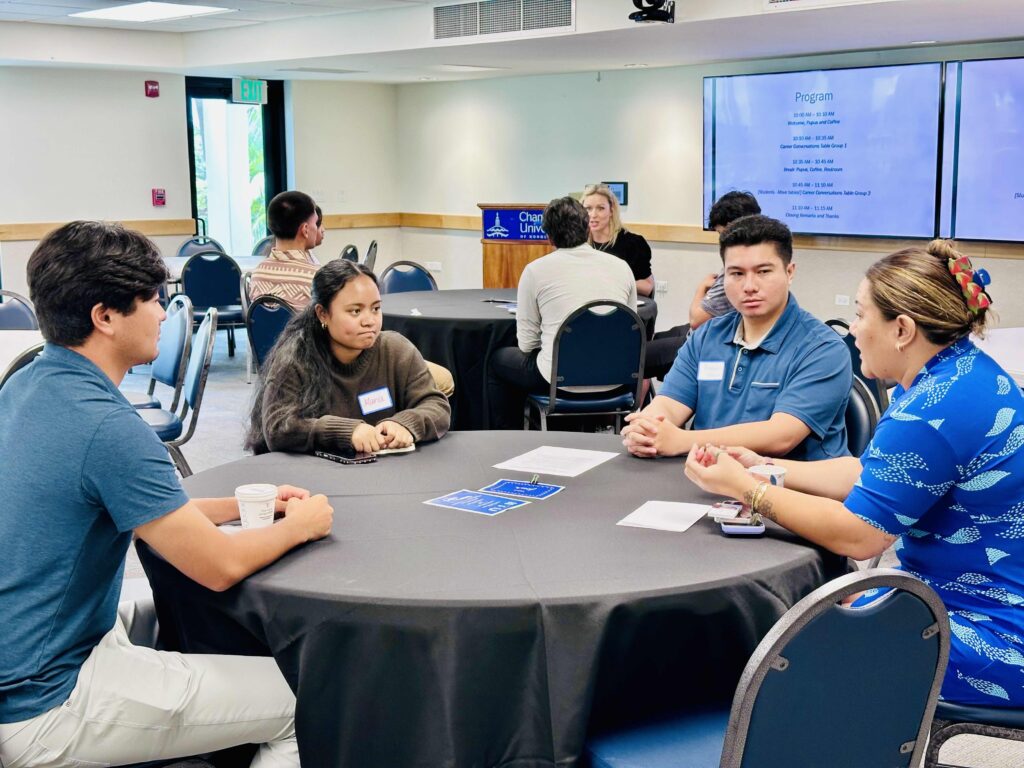
Ballarta and Kim had earlier spoken to students and faculty last Friday to discuss AI as part of the University’s Wellness Week enrichment event. Sunday’s Marianist Lecture involved more formal presentations followed by a brief question-and-answer session with audience members.

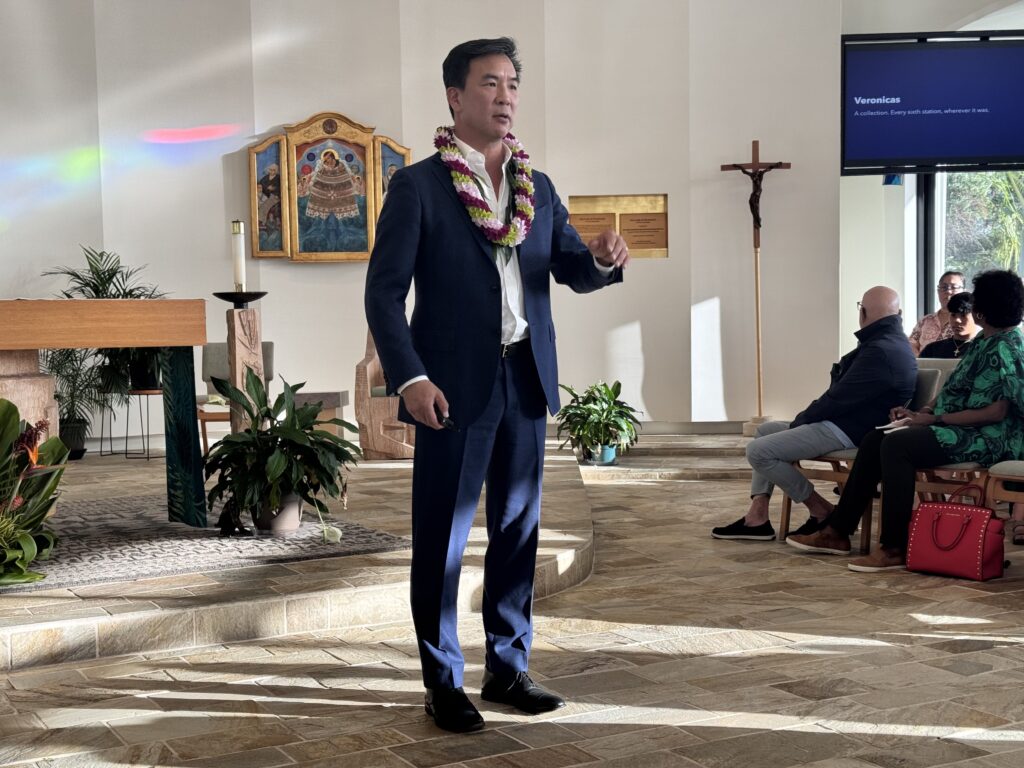
Back in May, His Holiness Pope Leo XIV released his landmark encyclical letter, Magnifica Humanitas. In it, Pope Leo discusses AI technology at length, rejecting arguments that it represents some new form of consciousness similar to human self-awareness while accepting that AI is a powerful tool that must be managed responsibly.

“We cannot consider AI to be morally neutral,” the Pope’s encyclical states.

Ballarta imparted the same words of wisdom during his Marianist Lecture presentation. “We choose values, and those values choose technologies,” he said.

In other words, how this technology is used depends on the values of the people both building it and applying AI. Ballarta reminded the audience that new technologies have always drawn concern throughout human history–from Gutenberg’s printing press to the telephone–yet humanity has always found a way through these changes, incorporating new groundbreaking technologies into everyday life without losing ourselves.

“This has always been about how machines impact humanity,” Ballarta said.

Kim echoed Ballarta’s reflections, acknowledging the anxiety many are feeling about AI, particularly over its potential impact on jobs and human connections.

“What is precious about being human?” he asked the audience. “When AI gets so powerful, what are we going to hold on to?”

AI technologies, in particular the most popular large language models (LLMs) or chatbots, are based on computer processing architectures that empower computers to recognize and replicate common patterns and relationships between data points. Whereas computers could once only process text word-by-word, modern LLMs can read entire paragraphs and even books and recognize how the words and phrases contained within them relate to one another, enabling these machines to generate their own human-like responses to queries.

As impressive as this technology is, we should not mistake this processing power for actual human thought or consciousness, Ballarta cautioned during his talk, echoing one of the main points delivered in Pope Leo XIV’s encyclical. “We are more than numbers and data,” he said.

Meanwhile, Kim offered words of encouragement to people feeling overwhelmed by the rapid progression of AI technology and its intrusion into our daily lives. He argued that faith very much still has a seat at the table for this broader discussion, and that the Catholic Church in particular has a role to play.

The Church “has the power of cultural change,” Kim reminded everyone.

Ballarta agreed. Catholicism “can be a serious instrument in addressing these questions,” he said.

A powerful tool to be managed

On Sunday, Bishop Michael Thomas Tupou Castori, the sixth and presiding Bishop of the Diocese of Honolulu, returned to the Chaminade campus to hear Ballarta and Kim discuss AI and the Church’s position on its rise.

Questions from the audience reflected both general confusion over what AI technology is and genuine concern about how it may negatively impact society. Audience members reminded Kim and Ballarta that the people in Silicon Valley and beyond developing AI technologies do not necessarily have the best intentions in mind.

Kim said he has encountered both good and bad actors in his interactions with Silicon Valley technology company executives. Yet he acknowledged that this concern is legitimate. He said the only response is thoughtful and appropriate regulation of AI technology.

Ballarta agreed, saying governance will matter a great deal in determining how AI technologies ultimately impact humanity. “Does the technology serve us, or are we serving the technology?” he asked, asserting that AI must, of course, serve humanity and not undermine it.

Other audience members expressed anxiety that, given enough time, generative AI technology will become so powerful that it will be difficult, if not impossible, to know when an image, video, or audio recording is real or not.

On this point, Kim offered optimism, recalling his own experiences allowing AI to generate writing on his behalf; no matter how good it is, he said, the AI cannot quite imitate his voice and writing style, suggesting that people will be able to recognize when something is off in encountering AI-generated content.

Humans are keen enough to recognize when something doesn’t quite fit the world we know.

The next Marianist Lecture will feature Msgr. John Paul Kimes and a local panel on “The Saints of Hawaiʻi” and will take place on Sunday, February 21, 2027, at 4 pm. 

Posted by: University Communications & Marketing Filed Under: Campus and Community, Catholic, Featured Story, Homepage, Innovation, Marianist Tagged With: Campus Event, Marianist, Marianist Lecture

Wellness Week is a Wrap!

October 19, 2026

The first-ever Wellness Week at Chaminade University ended Friday with positive reviews from the campus community and calls for another one next year.

Organized as a way to help students reduce stress and recharge halfway through the Fall Semester, Wellness Week featured dozens of campus events organized by colleges and departments.

Instructors also organized mini wellness-themed activities with their classes, taking a break from regular lectures and instruction.

Cheryl Edelson, Ph.D., co-Dean of the College of Arts & Sciences, said she heard very positive things about Wellness Week from students attending the wellness sessions. Her college organized a handful of events, including a “sound bath” in Loo Theatre, a lunch at the Conference Center featuring games and a scavenger hunt, and movie screenings.

“They appreciate the break,” Edelson said, sharing the reactions she’s been receiving from students.

“We were prepping for the midterm exam but also talking about their papers,” she added. “And so, for them, a slower pace, I think, is giving them a little bit of time to catch a breath. The idea is to basically help them kind of recharge.”

The week kicked off with guided meditation sessions at the Mystical Rose Oratory and Zuberano Lawn. Yoga lessons were on offer, along with cooking demonstrations, including lessons on making the perfect onigiri and Spam musubis hosted by Aramark Dining Services.

Carlson Fitness Center guided students on how to design suitable workouts depending on their fitness goals.

Meanwhile, the campus chapter of the Psi Chi honor society of psychology majors organized the “Plant, Paint, and Pause” event on Wednesday. The hour-long gathering was held “to support student wellness by creating an intentional moment to slow down during the semester,” Psi Chi explained.

Pizza was also offered at that special Psi Chi event.

Other Wellness Week activities were more educational in nature. “We tried to put together some arts and humanities-related and science-related activities throughout the week,” Edelson explained.

Wellness Week also saw the return of therapy dogs to Chaminade University. Organized by Campus Ministry, students were invited to the “Puppy Love” therapy dog session held over the Thursday lunch hour, an opportunity to unwind with the official therapy dogs while enjoying rock painting.

Shannon Sheehy, a junior Sports and Event Management major, said she and her friends really appreciated the week-long opportunity to unwind.

“I think it’s been very beneficial,” Sheehy said. “I play volleyball here, so I feel like for our team, it’s been nice to get out and see puppies and have time to take care of ourselves and put the students first.”

Sheehy admitted that a busy first half of the semester had her feeling a bit overwhelmed earlier, but Wellness Week was a good fix for that. “It’s been pretty stressful, but after this week, I feel that it was a good reset to have,” she said.

Mahina, a freshman nursing student, said she and her fellow students were enjoying Wellness Week but that some students suggested a simple break from classes might have been better.

“I feel like it’s going pretty well,” she said.  “But from what I’ve heard, from both my classmates and also just being around, some students preferred to just have a fall break.”

Still, Mahina said Chaminade students were happy with the schedule of activities and of the opportunity to pause mid-semester. “The events have been very well received from what I have seen,” she said. “A lot of people had fun at the events.”

Wellness Week emphasized students’ academic wellness.

Organizers hoped that the mid-semester pause would help students who may be struggling to have a chance to take a break and get the help and attention they needed. With the pause in regular course instruction, faculty members were afforded chances to reconnect with their students and lend assistance to anyone who may need additional support.

Edelson said Chaminade’s leadership plans to poll students afterwards to see what worked well, what didn’t, and how Wellness Week may be operated differently should it return in Fall 2027. She said the concept of a Wellness Week is relatively new but starting to spread rapidly at college campuses across the United States.

“It’ll be interesting to see the data at the end of it,” she said.  “This is really a time of the semester where we can help students kind of turn things around if they need to, or if they’re doing great, they can continue that way and still get a breath,” Edelson added.

Sheehy said Chaminade should definitely consider holding another Wellness Week next year.

“I think it’s very beneficial for everyone.”

Posted by: University Communications & Marketing Filed Under: Campus and Community, Catholic, Featured Story, Homepage, Marianist, Student Life, Student Life blog, Students Tagged With: Campus Event, Guest Speakers, Wellness Week

  • Page 1
  • Page 2
  • Page 3
  • Page 4
  • Go to Next Page »

Footer

Chaminade University Logo

3140 Waialae Avenue
Honolulu, Hawaii 96816

Contact Us
Phone: (808) 735-4711
Toll-free: (800) 735-3733

facebook twitter instagram youtube linkedin

Visit

  • Plan Your Visit
  • Campus Map (PDF)
  • Events

Resources

  • Campus Security
  • Student Consumer Information
  • Concerns, Feedback, and Reporting
  • Institutional Review Board
  • Title IX / Nondiscrimination Policy
  • Compliance
  • Emergency Information
  • Careers
  • Institutional Statement

People

  • Students
  • Parents
  • Alumni
  • Faculty & Staff

Policy

  • Privacy Policy
  • Terms and Conditions of Use


© Chaminade University of Honolulu