
For two decades, a nonprofit organization on Oʻahu has grown by leaps and bounds thanks to one simple mission: sharing the joy of surfing with people who might otherwise never have the opportunity.
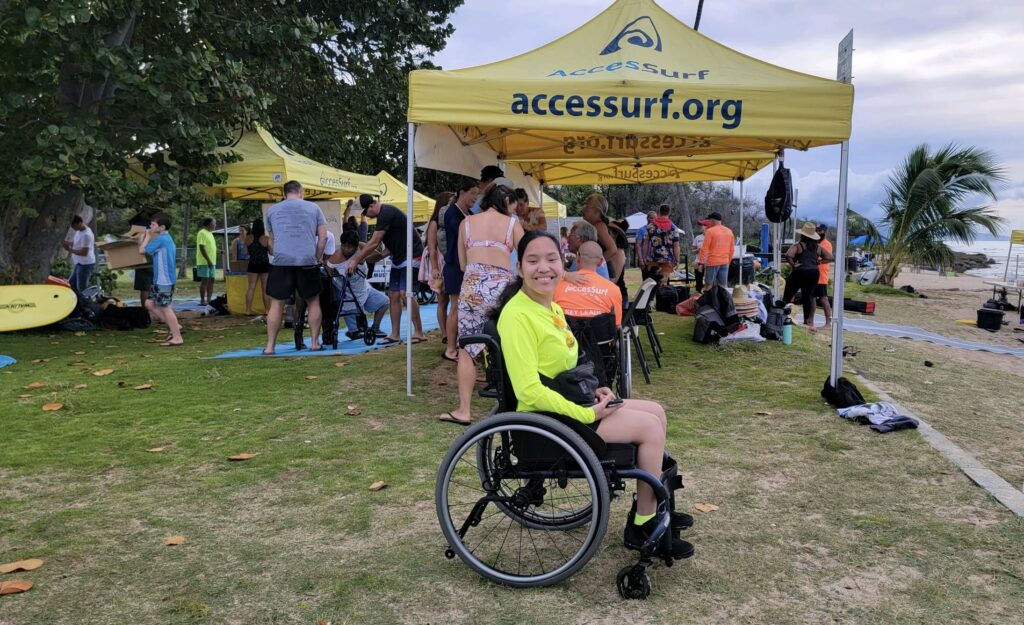
AccesSurf was founded to connect people to the ocean. Every month, an army of volunteers gathers on a beach in West Oʻahu or Waikīkī to help people with disabilities suit up, hop on surfboards, and head out to the breaks to ride a few waves.
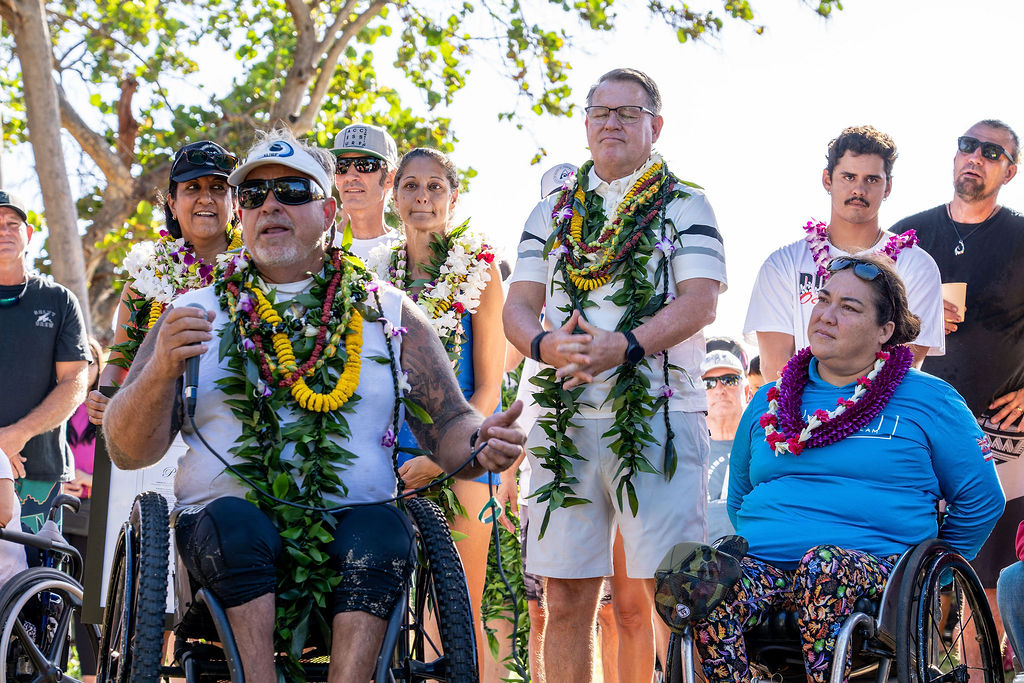
Now led by Chaminade University alum Zoey Lewis, MBA ’24, since January of this year, AccesSurf is celebrating its 20th anniversary of making surfing accessible to everyone, regardless of physical limitations. With its ‘Day at the Beach’ events attracting hundreds, Lewis said the organization is still going strong despite the challenges regularly faced by nonprofits.
As its name implies, AccesSurf exists to promote accessible surfing, she said.
“It’s for anyone with a disability, any age,” Lewis said in an interview. “Any diagnosed disability is welcome. We also run Wounded Warrior Day at the Beach once a month, which is the same format, but it’s just for our veteran population, active duty with a disability, and first responders.”
Madison Makishima ’25, a Chaminade graduate student pursuing a Master’s in Criminal Justice, says she tries to get out on the water with AccesSurf as often as possible.
She first joined AccesSurf as an undergraduate at Chaminade. Makishima said that first experience was like nothing else, one she soon won’t forget.
“It was exhilarating, very joyful,” she recalled. “I felt like I wasn’t feeling stressed being out in the ocean, because I was an undergrad student at the time and classes—criminology is tough, right? I just didn’t feel stressed. I felt happy and just able to enjoy surfing.”
She said the volunteers and staff are very supportive. It may take a while to hit the waves when there is a large number of participants, but she said it’s always worth it.
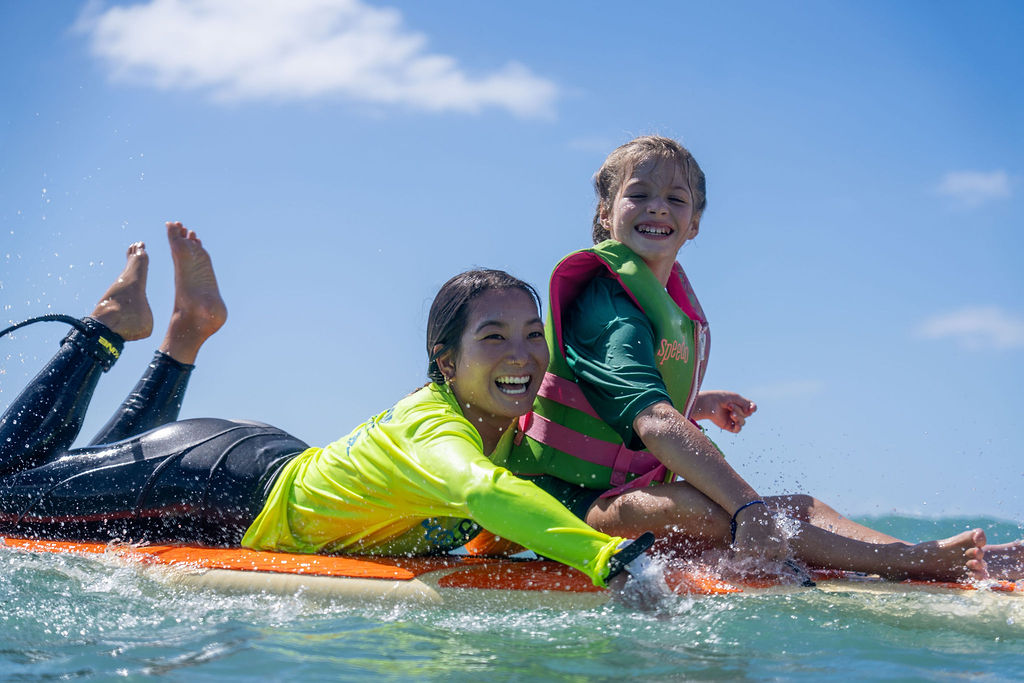
“The volunteers and the staff make sure that when I get on a surfboard with a surf instructor, I enjoy catching the waves,” Makishima said. “They love to interact with all of the participants to give everyone a great experience.”
The concept seems straightforward enough: accompany people with disabilities out into the ocean to experience surfing. The logistics, however, are anything but simple.
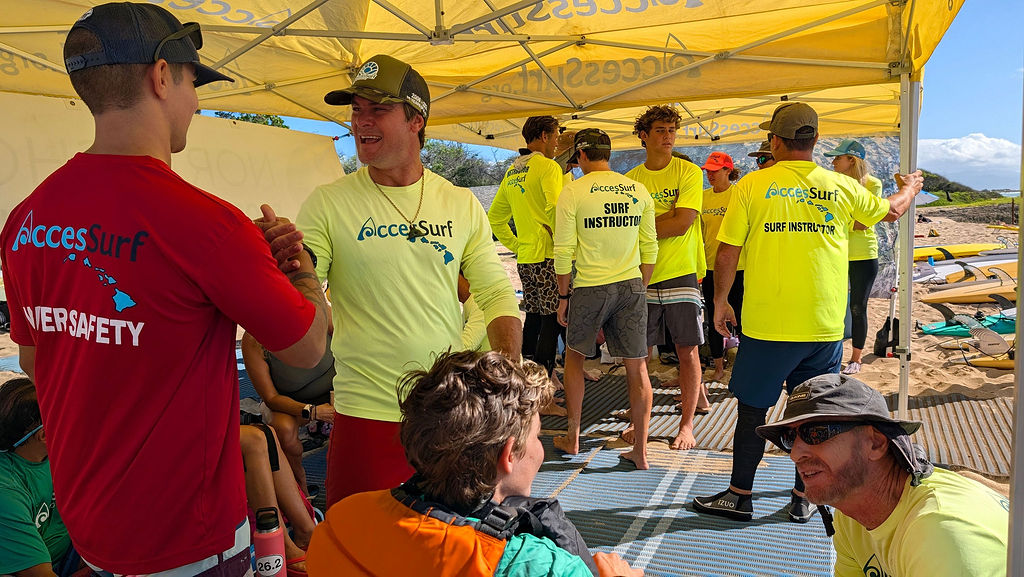
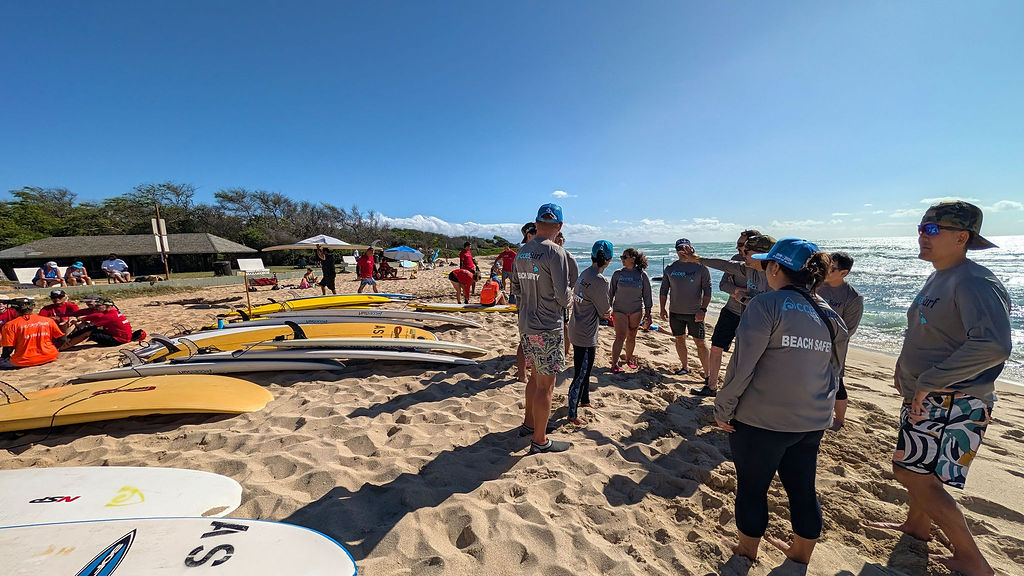
Before each event, AccesSurf recruits volunteers to help organize everything to ensure the surfers are safe and have fun. Lewis said their 20th anniversary event, held November 7 at White Plains Beach in Kalaeola, drew nearly 200 people looking to lend a helping hand.
Volunteers are needed to help surfers get out into the water. Other volunteers, experienced surfers, act as guides, staying at surfers’ sides or riding tandem with them, helping the participants catch the perfect waves. More people are needed to help set up tents, organize lunch, and tear down and clean up when the day is done.
The activities are structured, Lewis said, while stressing that AccesSurf volunteers are taught to let the participants do their own thing without hindrance.
“There is a highly developed process that we have made over 20 years to make sure that the activity is safe for the person with a disability,” she explained. “But also within that—and this is what AccesSurf really hammers home—it gives the person the most freedom within that activity and also challenges them.”
Connor Flynn ’21, a Data Scientist and Adjunct Professor at Chaminade, said he’s been volunteering as a surf instructor and guide for AccesSurf ever since his undergraduate years at the university. He’s still at it to this day, a testament to the way AccesSurf complements Chaminade’s Marianist mission of service to the community.
Flynn said a day on the waves with AccesSurf never disappoints; participants and volunteers alike enthusiastically come out early for each event to enjoy sun, surf, good food, and good company.
“AccesSurf does such a great job of making everyone feel like family, whether it is your first Day at the Beach or your 100th,” he said. “The events are full of positivity, enthusiasm, and genuine care for one another. Every month, I leave feeling fulfilled and grateful to be a part of the day.”
Makishima says she can’t make it to all of AccesSurf’s events, but she makes a point of attending as many as she can. “When I’m out on the ocean, I feel like I’m present and calm in the moment,” Makishima said. “There’s just me and a wave I hope to catch.”
She said surfing is a spiritual experience for her, and she doesn’t plan on stopping anytime soon.
“The ocean keeps me grounded,” Makishima said. “I also feel that, spiritually, there’s a lot of personal growth to reflect on. Surfing helps you grow to become a better version of yourself.”
Lewis said she’s looking forward to continuing to welcome fellow Silverswords and everyone else to AccesSurf’s Day at the Beach and Wounded Warrior surfing events. She said people with disabilities shouldn’t hesitate to reach out, insisting that Hawaiʻi’s famous surf is for everyone.
“There are many ways to surf,” Lewis said. “Of course there’s standing on a surfboard, but there’s also lying prone on a surfboard, kneeling on your knees, sitting on a surfboard, wave skiing, which is with a paddle.”
How they choose to approach surfing is up to the participant, Lewis stressed.
“We don’t just assume when somebody comes to us saying, ‘okay, you’re a wheelchair user, we’re going to get you on your belly, and we’re going to tandem surf you.’ We actually talk to the person, understand their level of function, understand their goals, their physical goals, also psychologically what’s going on with them, and then we’re going to get them to surf in that way.”
“It’s safe for them, but also challenging for them and gives them freedom.”