
Hawaiʻi’s watersheds are critical to the state’s ecosystems and its population.
So how do you go about teaching young people the importance of these natural resources and how to protect them?
That was the question an interdisciplinary group of Chaminade professors and public school teachers sought to investigate as part of a years-long project called “Mauka to Makai: Watershed Experience for Teachers.” The effort was made possible with a competitive Bay Watershed Education and Training grant from National Oceanic and Atmospheric Administration.
Chaminade Education Professor Katrina Roseler and Environmental Science Assistant Professor Lupita Ruiz-Jones served as co-principal investigators for the project, facilitating a series of workshops for teachers and collecting resources to support “classroom visions.”
With support from the Maunalua Fishpond Heritage Center, participating teachers experienced place‑based experiential learning. At the Kānewai Spring and Kalauha‘iha‘i Fishpond, Roseler said, teachers grounded their learning in “authentic cultural and ecological contexts of Maunalua Bay.”
Never miss a post! Follow Chaminade University on Facebook and Instagram.
The result was a cadre of teachers galvanized to inspire their students into action.
Kēhau (Shawna) Nishimoto, a science teacher at ʻIlima Intermediate, first participated in a two-week workshop at Chaminade in 2023, and vividly recalls becoming a “student scientist”—just as she wants her own students to be.
“This is where the push for teacher and student stewardship was born,” said Nishimoto. “I have taken this passion, this fire, and shared it with my students.”
Nishimoto and other “steward-teachers” subsequently presented their watershed education curricula, including at the National Science Teaching Association Conference earlier this year. She said the hands-on learning units are designed to allow students to gain new skills while trying to solve real-world problems and understand their kuleana as “caretakers of their island home.”
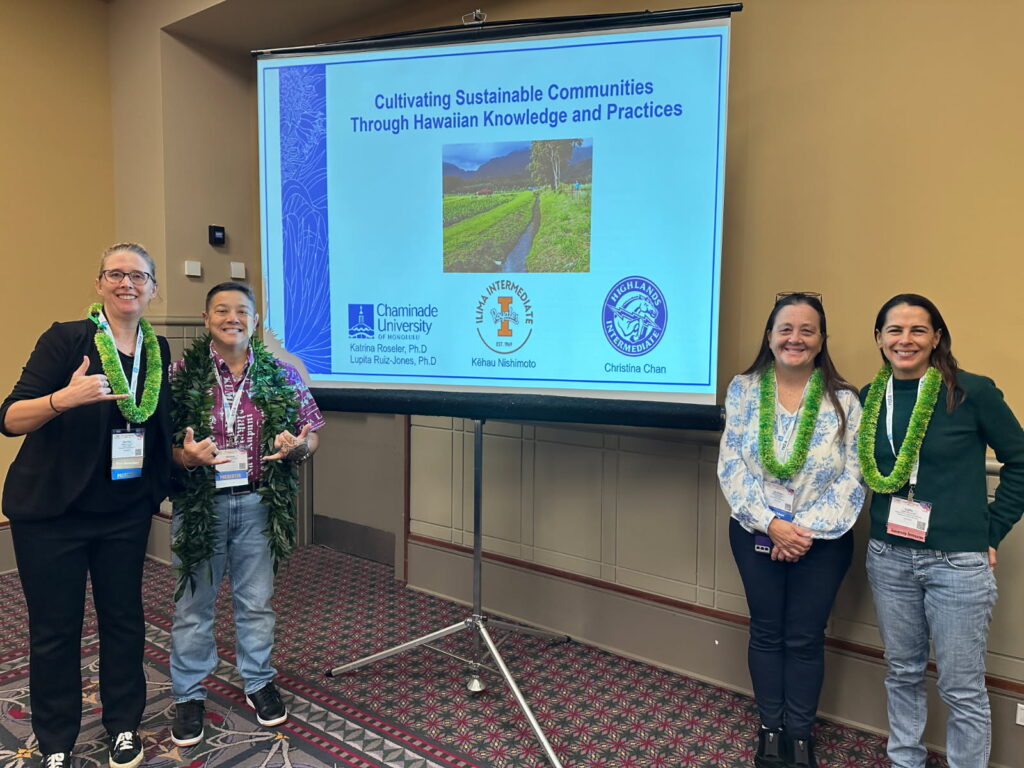
Teacher Christina Chan built her own watershed curriculum for students at Highlands Intermediate, also presenting her work with Nishimoto. She said connecting students to meaningful learning experiences with science and stewardship was a central goal.
“Science education is important for students to be able to understand the world around us,” she said. “Our students are our future ʻāina stewards and decision makers. They need to know what we have so they know what it is they care for, protect and defend.”
Chan added that support and leadership from Roseler and Ruiz-Jones were key.
For Roseler, the grant project was an opportunity to embrace her own personal and academic interests in environmental stewardship and science education.
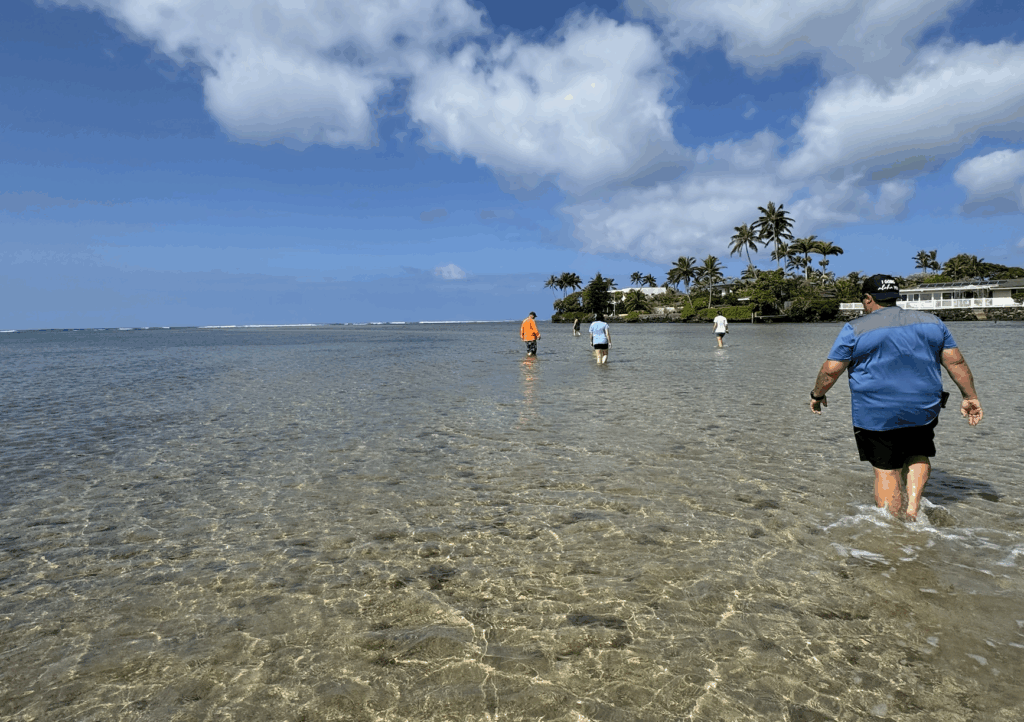
“Science education is more critical than ever in Hawai‘i, where the islands’ unique ecosystems, cultural heritage, and environmental challenges demand a deep, place-based understanding of sustainability” Roseler said.
She also noted the project was guided by United Nations Sustainable Development Goals, specifically “Life on Land,” “Life Below Water,” and “Quality Education.”
Ruiz-Jones said the conference presentations also offered an opportunity to showcase teachers who are “passionate about learning, being outside, and connecting their students to the community” while inspiring educators to learn about the importance of watersheds.
“The more students that become aware and start to care about our Hawaiian watershed the better off our future will be,” she said, adding that “there are so many local efforts underway to steward and restore our precious environment. Getting teachers and their students outside, in the field, to engage in experiential learning deepens their understanding and stewardship.”
To learn more about the project and find lesson plans, click here.