
Office of Institutional Research & Effectiveness
Accurate data and analysis to support decisions across Chaminade.
Facts at a Glance
Fall 2025 · Day Undergraduate Students
Student Profile
- 69% female · 31% male
- Average age 22
- 70% from Hawaii
- 21% live in campus housing
- 97% receive financial aid
- 48% Pell-eligible
- 52% first-generation
- 224 students
(21% Native Hawaiian)
New Freshmen
- 199 entering students
- Average high school GPA 3.52
- 62% from Hawaii
- 100% receive financial aid
- 41% Pell-eligible
- 55% first-generation
Largest Programs
- Nursing — 423
- Business Administration — 127
- Psychology — 96
- Criminology & Criminal Justice — 74
- Forensic Science — 56
Source: Fall 2025 Undergraduate Fact Book, Office of Institutional Research & Effectiveness. Figures reflect day undergraduate students only. Percentages may not total 100% due to rounding.
About OIRE
The Office of Institutional Research & Effectiveness (OIRE) helps the Chaminade community understand and use institutional data. We handle required reporting, maintain the university’s core data systems, and work with faculty and staff to answer questions about student learning, enrollment, and institutional performance. Our goal is to provide accurate, useful information that supports good decisions and reflects our commitment to serving students and supporting the Marianist mission.
Our Mission
OIRE empowers the Chaminade University community to make data-informed decisions that enhance student learning, institutional performance, and mission fulfillment. Through rigorous research, integrated assessment, and continuous improvement, we promote transparency, accountability, and shared responsibility rooted in the Marianist values of adaptation, collaboration, and service.
What We Do
OIRE’s work falls into two connected areas.
Institutional Research
Institutional Research collects, analyzes, and reports the data that shows how the university is doing. It covers major external reporting and regular internal reporting on enrollment, retention, and graduation, and oversees key university surveys — giving campus leaders a reliable picture of trends and outcomes.
- Federal and accreditation reporting (IPEDS, WSCUC)
- College Scorecard and U.S. News & World Report
- Enrollment, retention, and graduation reporting
- University surveys, including NSSE
- Maintaining the university’s core data systems
Institutional Effectiveness
Institutional Effectiveness focuses on the planning and assessment processes that help Chaminade evaluate how well it is meeting its goals. This work helps faculty, staff, and leadership see what is working and where to improve, in alignment with the university’s mission.
- Coordinating course evaluations
- Program Learning Outcome (PLO) assessment
- Managing the program review cycle
- Maintaining the Strategic Plan 2030 KPIs
Looking for our published reports, fact books, and dashboards? Jump to Reports & Data →
Reports & Data
Our published reports, fact books, and required external reporting, all in one place.
Chaminade Publications
Enrollment, demographics, majors, and residence for day undergraduate students, updated each fall.
View the Fact Book →Annual progress against the five Kuleana of Pupukahi i Holomua. Highlights below; full report downloadable.
See the highlights ↓Required & External Reporting
Chaminade reports to a number of federal agencies, accreditors, and publications. These are the public versions of our institutional data.
Strategic Plan 2030 Progress
Pupukahi i Holomua · FY 2026 KPI Dashboard · Second year of data collection
Expand each priority for goal-level scores:
Kuleana 1 · Academic Excellence — 76
Kuleana 2 · Belonging & Wellbeing — 90
Kuleana 3 · Place, Purpose & Values — 95
Kuleana 4 · Institutional Sustainability — 83
Kuleana 5 · Community Impact — 74
Source: Strategic Plan 2030 KPI Dashboard (FY 2026). Scores are composite progress measures on a 1–100 scale. Office of Institutional Research & Effectiveness.
Requesting Data from OIRE
Faculty, staff, and administrators can use OIRE’s Data Request Form whenever they need information that isn’t already available through existing dashboards, reports, or internal systems. The form helps us understand what you’re looking for, how the data will be used, and any deadlines we should know about. Once submitted, we review the request, follow up with clarifying questions if needed, and provide an estimated timeline. Most requests are completed within a few business days, though more complex questions may take longer.
OIRE is committed to protecting student privacy and ensuring all institutional data is used responsibly. All data we provide must be handled in compliance with FERPA and other applicable privacy standards, which means student-level information should only be accessed by those with a legitimate educational need and should never be shared outside the intended purpose. We encourage faculty and staff to use data thoughtfully, store it securely, and avoid redistributing reports without checking whether they contain sensitive information.
Frequently Asked Questions
What counts as a data request?
A data request is anything that requires OIRE to pull, analyze, or format information that isn’t already available in our existing dashboards, reports, or official publications. If you need customized numbers, student- or program-level data, or help interpreting trends, please submit a Data Request Form.
How long does it take?
Most requests are completed within a few business days. More complex requests — especially those involving multiple years of data or new analyses — may take longer. After you submit the form, we’ll review it and let you know the expected turnaround time.
Can students request data?
In most cases, data requests must come from faculty, staff, or administrators. Students who need data for coursework or projects should work through a faculty member, who can submit the request on their behalf.
What if I have an urgent request?
If you have a tight deadline, include that information in the request form. We’ll do our best to accommodate urgent needs, but turnaround times depend on complexity and current workload. When possible, please reach out early so we can support you effectively.
Why do you ask so many clarifying questions?
Data requests often start with a broad or ambiguous question, and small differences in wording can lead to very different results. We ask clarifying questions to make sure we understand exactly what you need, how you plan to use the information, and the specific definitions or populations involved. This helps us get it right the first time and reduces the need for multiple revisions.
Can you help interpret the data?
Yes. OIRE can help explain what the numbers mean, identify trends, and provide context so you can use the information effectively. If you need help understanding a report or making sense of results, just let us know in the request form or a follow-up email.
Resources
Guides, timelines, and tools for assessment, program review, and strategic planning.
Program Review
Strategic Planning
Meet the Team
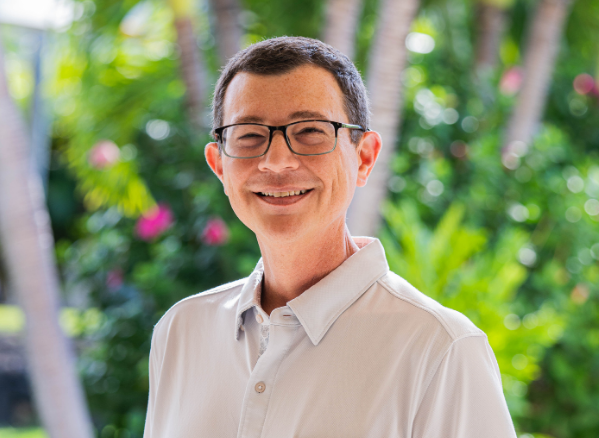
Scott Wylie, Ph.D.
Assistant Provost,
Institutional Research & Effectiveness
Having taught at the secondary, undergraduate, and graduate levels, I’ve seen firsthand how powerful data can be when used to improve learning. My background in coding and information systems helps me translate complex data into clear, actionable insights for our university community. I work remotely from Austin, Texas, where I live with my wife, Jill, and our mischievous pug, Neville. When I’m not deep in spreadsheets, you’ll find me playing board games or planning my next road trip.

Katrina Roseler, Ph.D.
Director of Assessment
I serve as Chair of Elementary and Secondary Teacher Preparation at Chaminade University, where I lead data collection, analysis, and reporting for the university’s educator preparation programs and manage annual reporting to university, state, and national accreditors. I bring ten years of public school teaching experience and more than a decade of facilitating learning at the post-secondary level. Family time in Kona is my favorite way to recharge. Closer to home, I keep busy on long walks and enjoy cooking/baking for my friends, neighbors and colleagues.
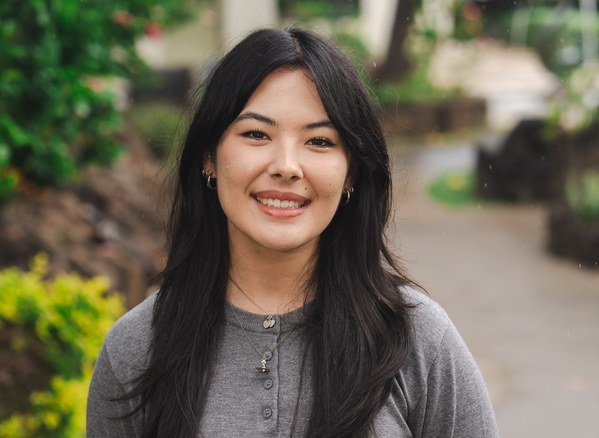
Grace Stewart
Research Analyst
As a recent Chaminade graduate with a double major in Computer Science and Data Science and a minor in Fine Arts, I bring technical skills and a personal understanding of the student experience. Prior to joining OIRE, I was a student researcher at Chaminade and interned with several Department of Defense organizations. Now I query data and produce various reports and dashboards to support internal operations and required external reporting. Outside the office, you’ll often find me grinding competitive video games, drawing, or attending concerts and shows.
Contact
Office of Institutional Research & Effectiveness
3140 Waialae Avenue
Honolulu, Hawaii 96816
U.S.A.
Phone: (808) 735-4711
Toll-free: (800) 735-3733
Email: [email protected]